How to visit Mount Bromo from Bali — routes, costs, sunrise logistics, and what to expect at Java's most dramatic volcanic landscape.
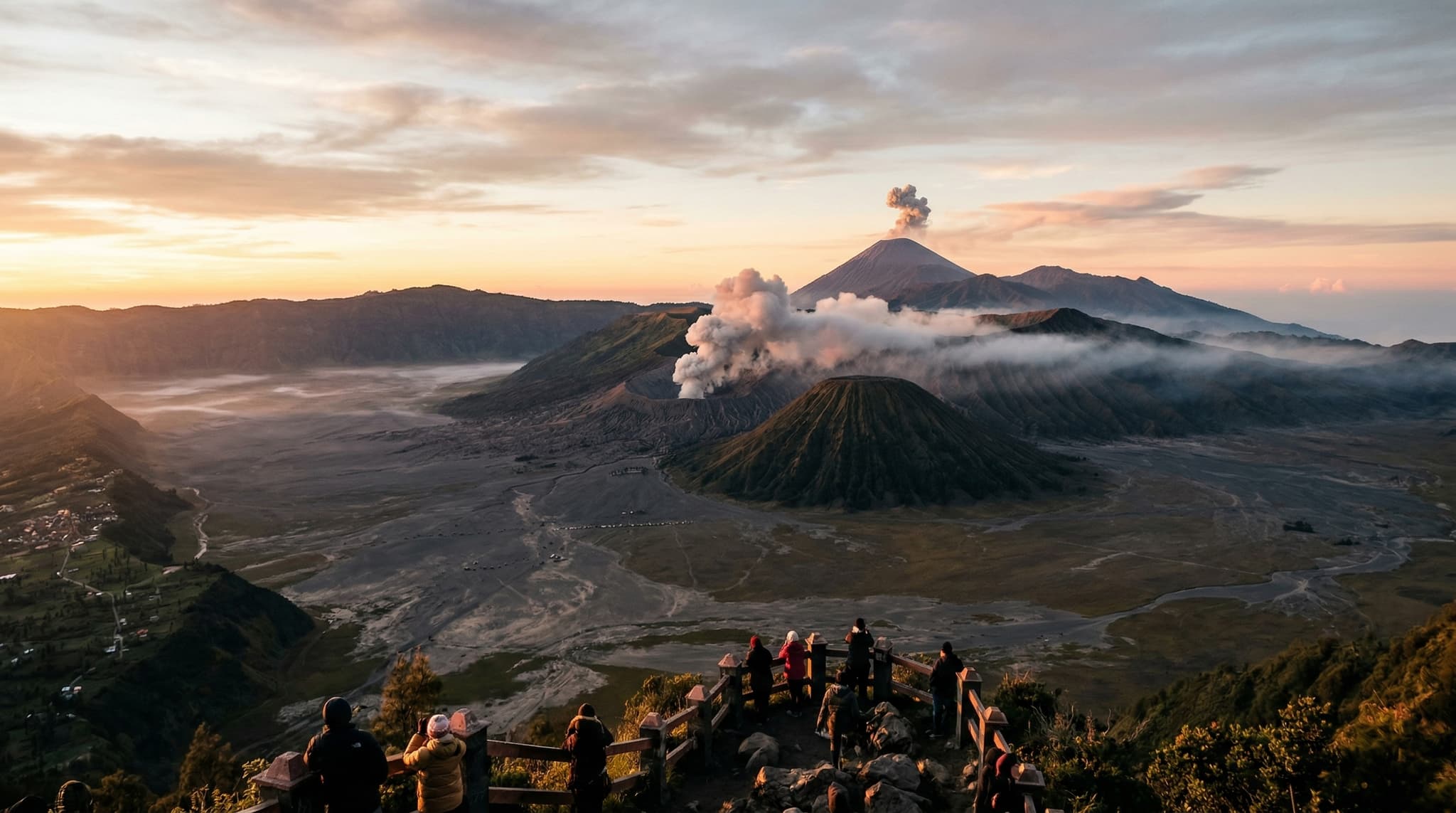
There's a moment, standing on the rim of Mount Bromo at 4:30 in the morning, when the landscape stops making sense. The caldera stretches out below like a lunar basin — a flat expanse of volcanic sand called the Sea of Sand — and from it rises the squat, smoking cone of Bromo itself, flanked by the jagged peak of Mount Batok and the towering mass of Mount Semeru behind it, Indonesia's highest volcano on Java, occasionally pulsing with its own eruptions. The whole scene looks like it was designed for a science fiction film, except it's been here for millennia, and the Tenggerese people who live on its slopes have been making offerings into that crater for centuries.
Most travelers encounter Mount Bromo as a side trip from Bali, and it's one of the best reasons to leave the island — even briefly. Getting there takes some effort, but the payoff is a landscape unlike anything else in Indonesia.
Why Bromo Matters
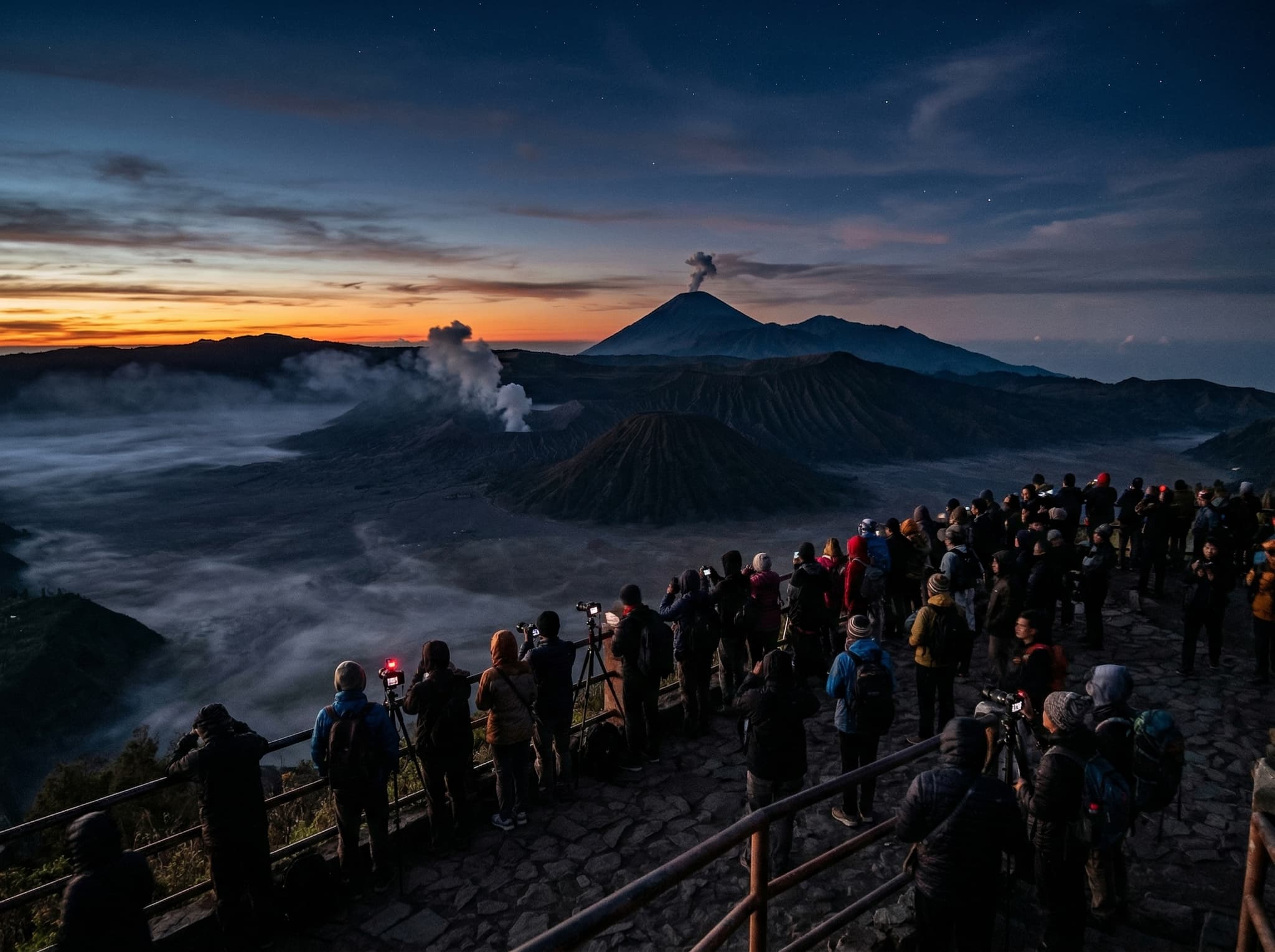
Mount Bromo sits inside the Tengger massif, a vast caldera roughly 10 kilometers across. The volcano itself is modest — just 2,329 meters — but it's the composition of the scene that makes it extraordinary: the caldera floor, the cluster of cones, the sulfurous smoke, and the light at dawn breaking across all of it at once.
This is also one of the few places in Indonesia where you encounter the Tenggerese, a Hindu community that predates the arrival of Islam on Java. Their presence here traces back to the Majapahit Empire, the last great Hindu-Buddhist kingdom in the archipelago, which collapsed in the late 15th century. While most of Java converted, the Tenggerese retreated to these highlands and held on. Every year during the Yadnya Kasada festival (typically June or July), they climb to Bromo's crater and throw offerings — livestock, vegetables, money — into the smoking void. It's one of Java's most remarkable living traditions.
Getting There from Bali
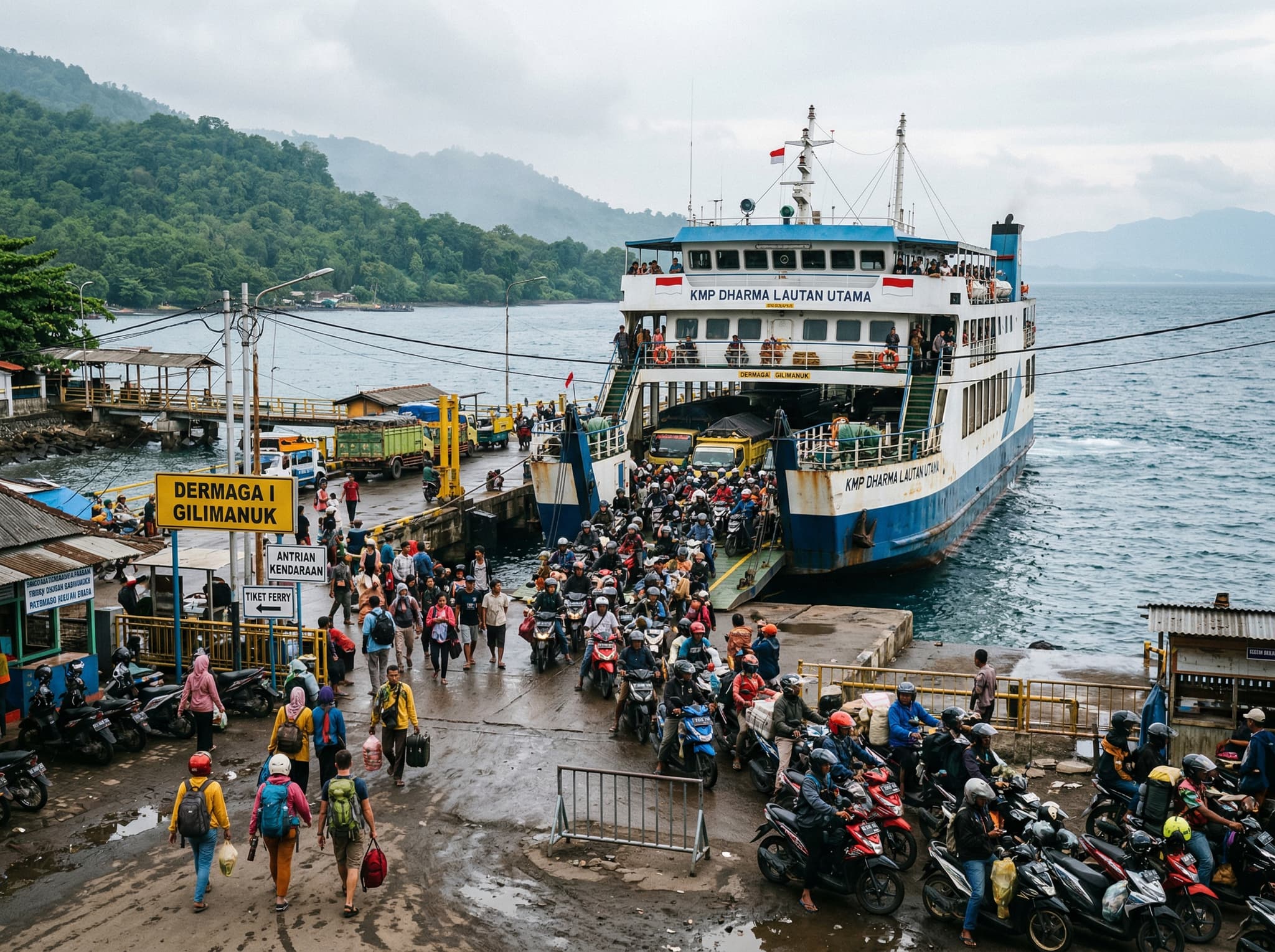
There's no quick way to do this, but there are several workable ones.
Route Options from Bali
Organized Tour
Most common; includes ferry, transport, accommodation, and sunrise trek. Typically 2D/1W.
Independent via Ketapang Ferry
Drive or bus to Gilimanuk (West Bali), ferry to Ketapang (Java), then 5–6 hours to Probolinggo/Cemoro Lawang.
Fly to Surabaya
1-hour flight from Bali's Ngurah Rai to Juanda Airport, then 3–4 hours by car to Cemoro Lawang.
Train + Car
Fly to Surabaya, train to Probolinggo (~2 hours), then local transport up to Cemoro Lawang (~1.5 hours).
The organized tour is the path of least resistance. Dozens of operators in Bali — bookable through hotels, agencies in Ubud and Kuta, or platforms like Klook and GetYourGuide — run two-day, one-night packages. A typical itinerary: afternoon departure from Bali, evening ferry crossing to Java, arrival at a guesthouse in Cemoro Lawang (the village on the caldera rim) around midnight, 3:30 a.m. wake-up for the sunrise viewpoint, morning crater visit, then return to Bali by evening. Prices generally range from IDR 1,200,000 to IDR 2,500,000 ($75–$160) per person depending on group size and inclusions.
Flying to Surabaya is faster and more comfortable but costs more. Budget carriers like Lion Air and Citilink run multiple daily flights. From Surabaya, hiring a private driver to Cemoro Lawang runs roughly IDR 600,000–900,000 ($38–$57) one way. This approach works well if you want to spend an extra night in the area rather than doing a punishing overnight round trip.
The Sunrise Experience
The standard routine: wake up absurdly early, drive or ride a jeep to the Penanjakan viewpoint (about 2,770 meters), and wait in the cold for the sun to come up. The temperature hovers in the single digits Celsius, and most visitors underestimate this — bring layers, even if you packed for Bali's heat.
When the light arrives, it hits the caldera in stages. First the rim, then the Sea of Sand, then the cones emerge from shadow. On clear mornings, Semeru's peak catches the first light and occasionally sends up a plume of ash, perfectly backlit. It's the kind of scene that makes hundreds of people stand in silence with their phones raised, and for once, they're not wrong to.
After sunrise, most visitors descend to the caldera floor, cross the Sea of Sand (by jeep or on foot — walking takes about 45 minutes), and climb the 253 concrete steps to Bromo's crater rim. The sulfur smell is strong. The crater is actively steaming. There are no guardrails in any meaningful sense.
What to Know Before You Go
Cemoro Lawang is the main base village, perched right on the caldera's edge. Accommodation is basic — guesthouses and small hotels, most in the IDR 200,000–600,000 ($13–$38) range. Don't expect Bali-level comfort. Hot water is a selling point here, not a given. A few places worth noting: Café Lava Hostel sits right on the rim with direct caldera views, and Hotel Bromo Permai is a reliable mid-range option.
Jeep hire for the sunrise and crater visit typically costs IDR 500,000–700,000 ($32–$45) per jeep (fits four to five people). Arrange this through your guesthouse the night before.
Clothing: Temperatures at the viewpoint before dawn can drop to 3°C. A proper jacket, hat, and gloves are not optional. Several shops in Cemoro Lawang rent jackets for around IDR 50,000 ($3) if you didn't pack one.
Timing: Dry season (April through October) offers the clearest skies. July and August are peak months — expect crowds at Penanjakan. The shoulder months of April, May, September, and October tend to deliver good weather with fewer people.
Is It Worth the Trip from Bali?
The honest answer: it depends on what kind of traveler you are. The logistics are real — you're looking at a minimum of two days, one of which involves very little sleep. The organized tours are efficient but exhausting. Flying via Surabaya and spending two nights makes the experience far more enjoyable but adds cost and time.
What you get in return is one of Southeast Asia's most dramatic volcanic landscapes and a glimpse of a cultural tradition that has survived on these highlands for five centuries. For travelers already spending a week or more in Bali, it's one of the most rewarding detours in Indonesia — and a reminder that Java, just a short ferry ride away, is a world apart.