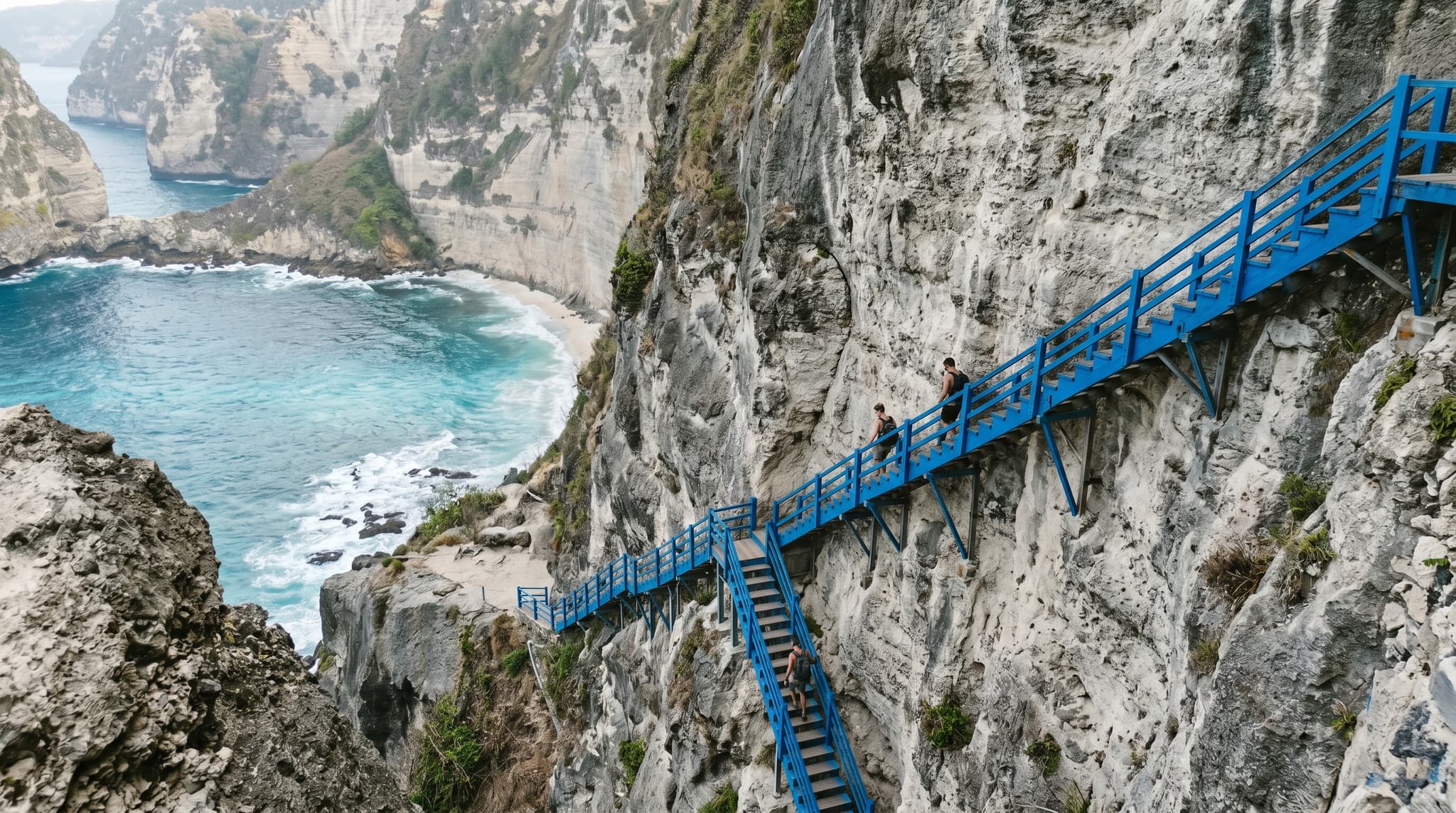
The iconic blue staircase of Peguyangan Waterfall descending the limestone cliff face on Nusa Penida's southeast coast — hundreds of vivid blue-painted metal and wooden steps bolted into the sheer rock, dropping toward the ocean far below, with the turquoise Indonesian sea visible in the background. The defining image of this sacred site and the article's primary subject.

Peguyangan Waterfall: Nusa Penida's Sacred Blue Staircase

Bali, Indonesia
10 min read
AI-generated illustration

A 700-step blue staircase descends Nusa Penida's cliffs to a sacred spring temple. Here's what to expect, how to prepare, and whether you should go.

Most of what draws visitors to Nusa Penida is visible from above — the dinosaur-spine ridge at Kelingking, the impossible blue of Crystal Bay. Peguyangan Waterfall inverts that logic entirely. Here, the attraction is the descent itself: roughly 700 stairs bolted into a limestone cliff, painted an almost absurd shade of blue, dropping you from the scrubby plateau down to a sacred spring temple where the ocean crashes against the rock shelf below.

It's not really a waterfall in the conventional sense. What you'll find at the bottom is a freshwater spring channeled through a pipe — a thin, steady stream that Balinese Hindus have used for purification rituals long before anyone came here for photographs. The temple at the base, where offerings are made and holy water collected, is the reason the stairs exist at all. Everything Instagram-worthy about Peguyangan is, in essence, infrastructure built for prayer.

That context matters, because it shapes what the experience actually feels like. This isn't a hike to a swimming hole. It's a visit to an active sacred site that happens to involve one of the more physically demanding approaches on the island.

Getting There
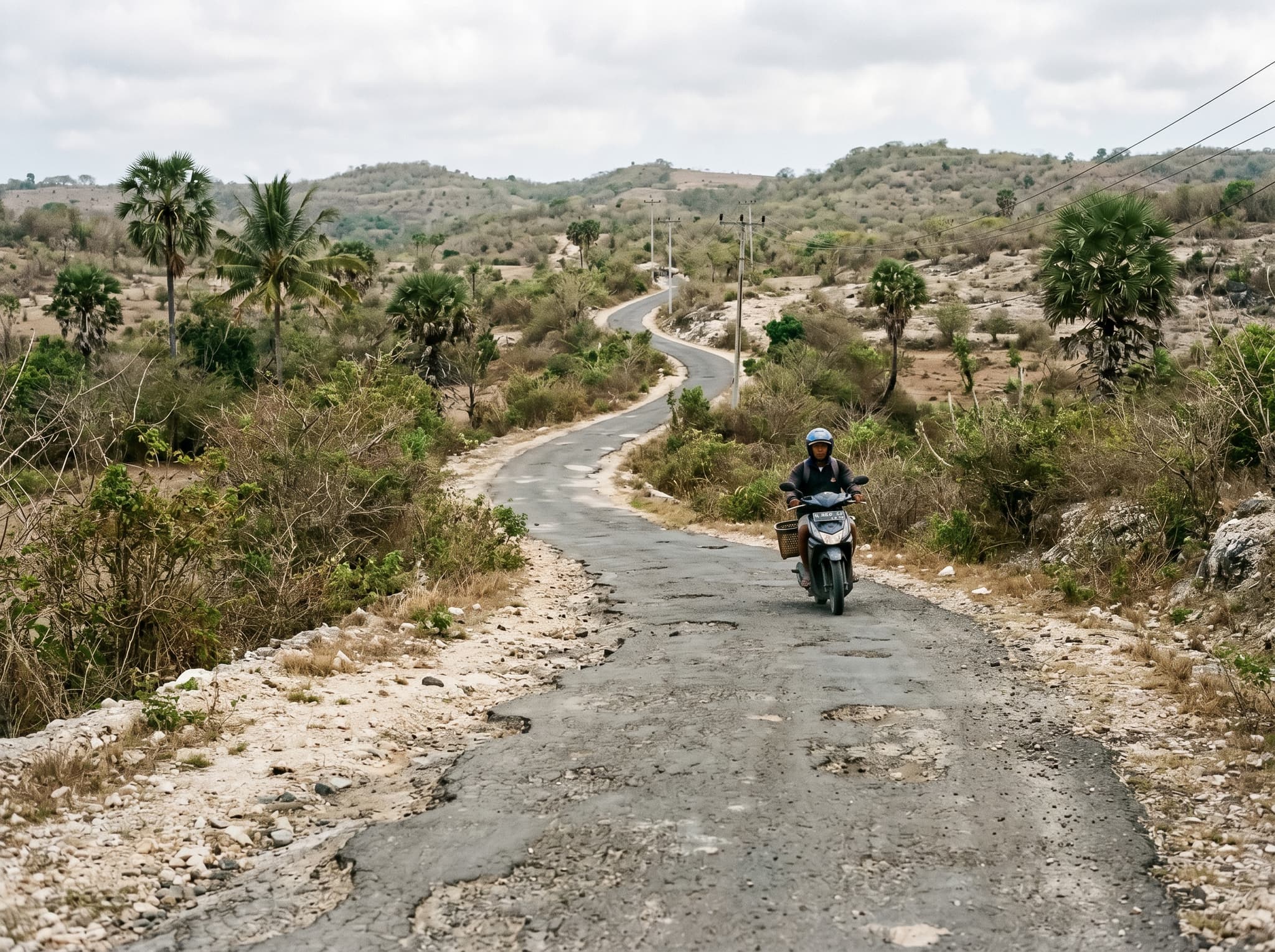
The winding road through Nusa Penida's dry limestone plateau leading toward Batukandik village and the Peguyangan trailhead — rough, potholed asphalt cutting through scrubby tropical vegetation, illustrating the remote, rugged approach visitors must navigate before reaching the staircase.
The winding road through Nusa Penida's dry limestone plateau leading toward Batukandik village and the Peguyangan trailhead — rough, potholed asphalt cutting through scrubby tropical vegetation, illustrating the remote, rugged approach visitors must navigate before reaching the staircase.AI-generated illustration

Peguyangan sits on Nusa Penida's southeast coast, near the village of Batukandik. From Toyapakeh harbor — where most fast boats from mainland Bali arrive — it's roughly 45 to 60 minutes by scooter or car, heading southeast through Sakti village. From Sampalan docks on the north coast, expect about an hour.

Drive Times from Key Points

Toyapakeh harbor

45–60 min

Sampalan docks

~60 min

Kelingking Beach

~40 min

Crystal Bay

~45 min

The final 10 to 15 minutes of road are rough — potholes, loose gravel, the kind of surface that makes you question your scooter rental decisions. It's manageable but slow. A small parking area sits at the trailhead where you'll leave your vehicle and, if you haven't brought your own, rent a sarong. The sarong is mandatory — this is a temple, not a viewpoint.

The Descent
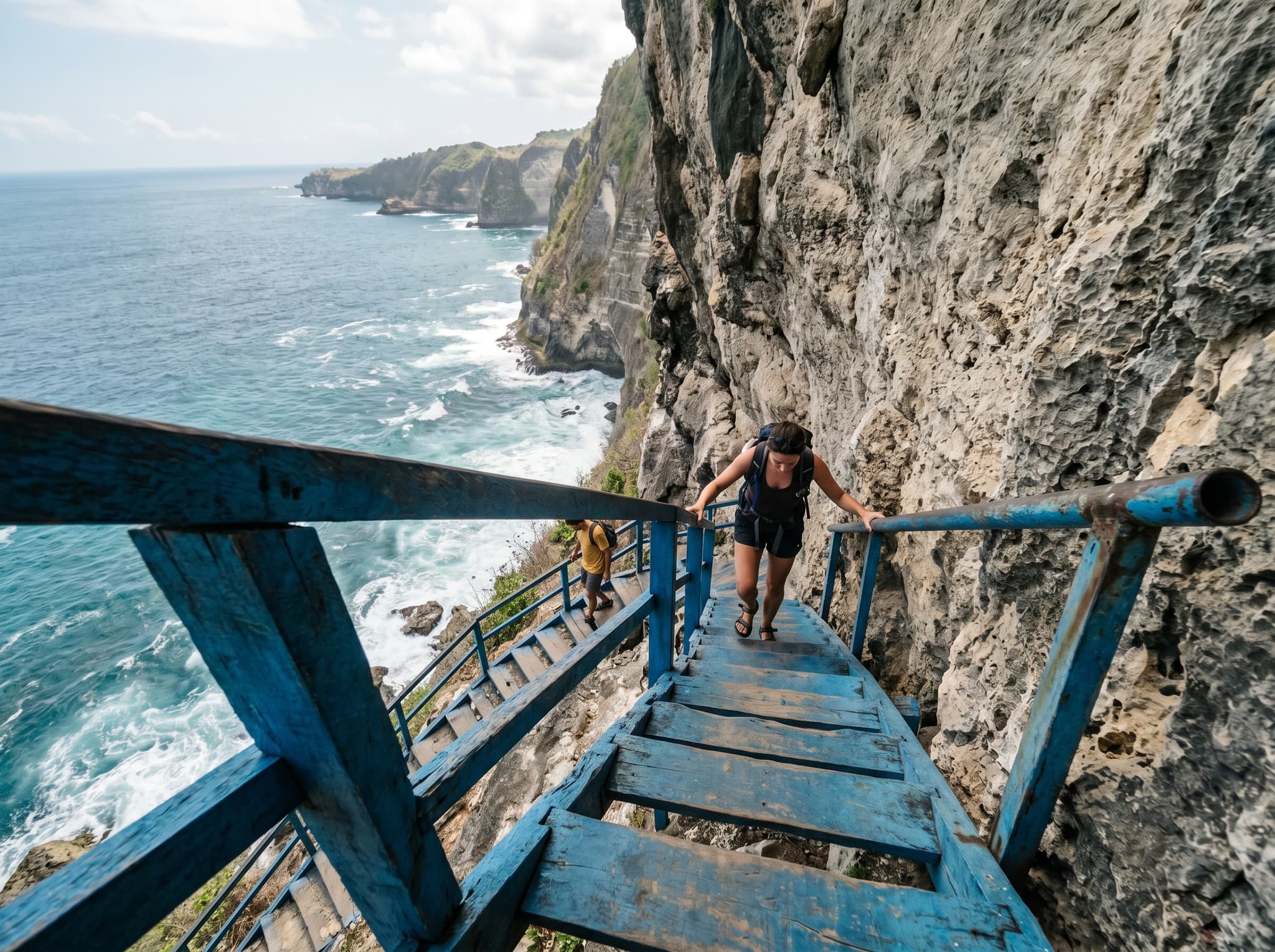
A close perspective on the Peguyangan blue staircase mid-descent — narrow wooden steps fixed to the cliff face, some sections without railings, the sheer drop visible to one side and the ocean below. Captures the physical reality of the descent described in the article: steep, exposed, and demanding.
A close perspective on the Peguyangan blue staircase mid-descent — narrow wooden steps fixed to the cliff face, some sections without railings, the sheer drop visible to one side and the ocean below. Captures the physical reality of the descent described in the article: steep, exposed, and demanding.AI-generated illustration

The blue staircase is Peguyangan's signature, and it earns its reputation. Around 700 steps are fixed to the cliff face in two distinct sections: the upper portion is metal — steep but relatively sturdy — while the lower section transitions to narrower wooden stairs that are uneven, wind-exposed, and slippery when wet. Some sections lack side railings entirely. The stairs accommodate two-way foot traffic on a single narrow path, which means you'll be squeezing past ascending visitors while managing your own footing.

Descent takes 20 to 30 minutes depending on fitness and how cautiously you move. The climb back up is significantly harder and takes longer — budget at least 30 to 45 minutes for the return.

This descent is not suitable for anyone with a fear of heights, vertigo, knee problems, or limited mobility. The stairs were built for lighter frames — multiple sources note they're designed for people under approximately 70 kg (155 lbs) and advise caution for anyone over 90 kg (200 lbs). Accidents have been documented. Assess honestly before you start down.

What You'll Find at the Bottom

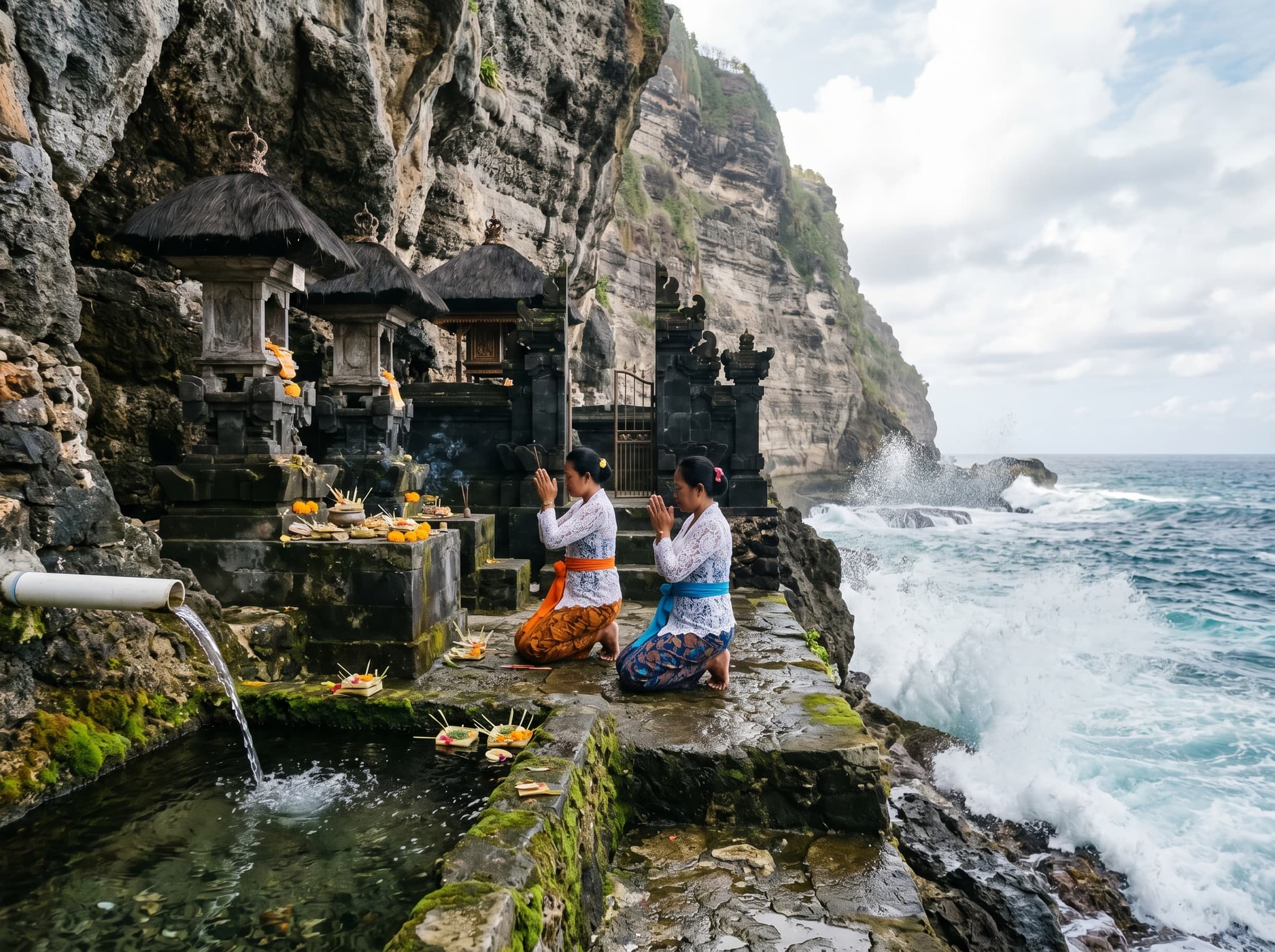
The sacred spring temple complex at the base of Peguyangan's cliff — a small Balinese Hindu temple on a rock ledge above the ocean, with the freshwater spring flowing into ceremonial pools, limestone walls, and ocean surf crashing nearby. Shows the spiritual destination that is the true purpose of the blue staircase descent.
The sacred spring temple complex at the base of Peguyangan's cliff — a small Balinese Hindu temple on a rock ledge above the ocean, with the freshwater spring flowing into ceremonial pools, limestone walls, and ocean surf crashing nearby. Shows the spiritual destination that is the true purpose of the blue staircase descent.AI-generated illustration

At the base of the cliff, a small temple complex sits on a rock ledge above the ocean. The freshwater spring — the "waterfall" — flows into a series of pools where Balinese worshippers perform melukat, a purification ceremony. The setting is genuinely striking: limestone walls, crashing surf, the thin stream of fresh water meeting salt spray. There's also a short natural tunnel where the ocean pushes through the rock, adding to the sense that you've descended into a place the island keeps mostly to itself.

The spiritual significance here is real and ongoing. Treat it accordingly — cover your shoulders and legs with the sarong, don't climb on shrine structures, and give space to anyone performing prayers.

When to Go
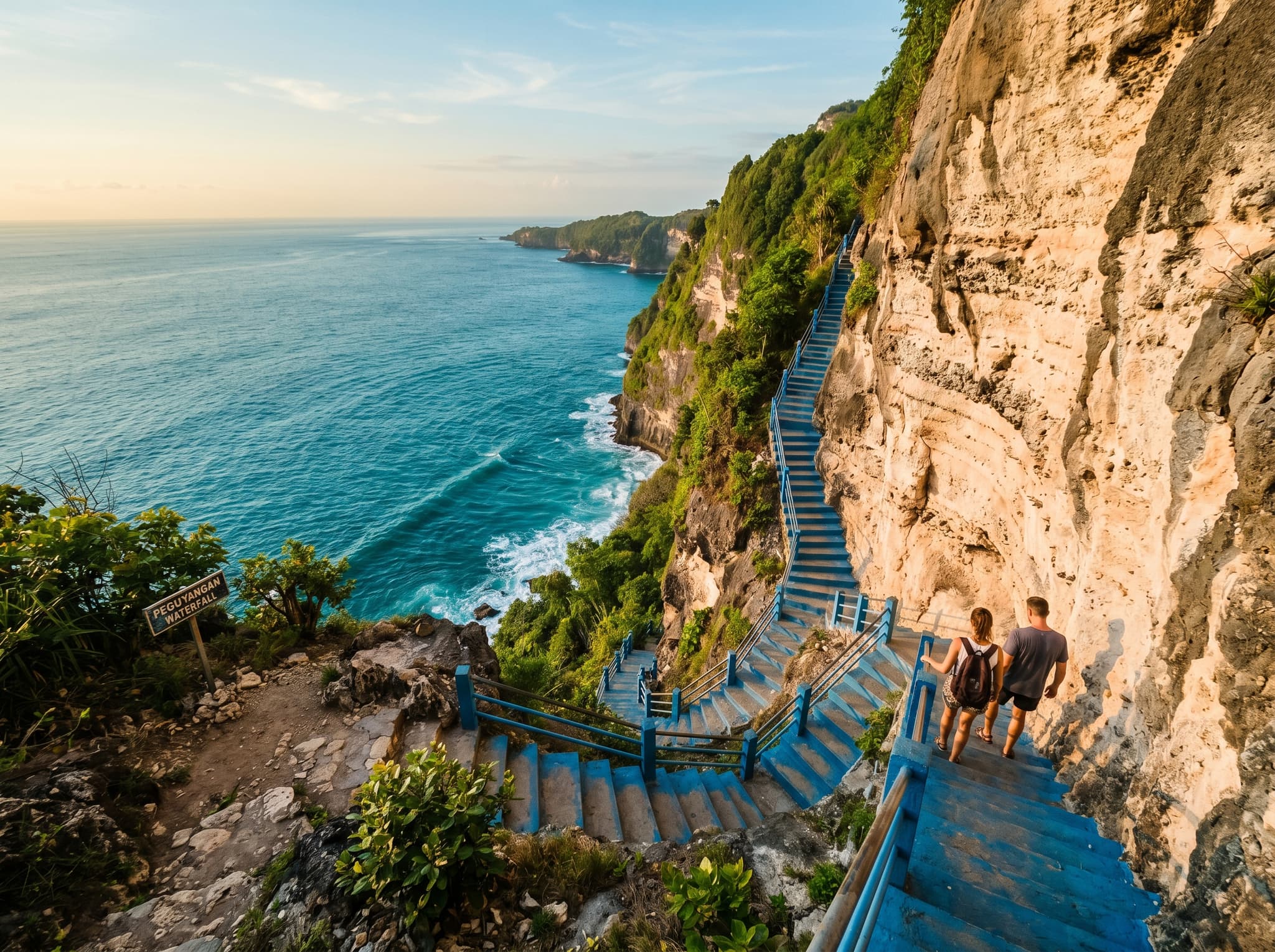
Early morning light on the Peguyangan cliff face and staircase, viewed from the trailhead plateau — the blue stairs catching the low morning sun against the pale limestone, the ocean glittering below, before the heat and crowds of midday. Illustrates the article's advice to arrive before 9 AM for better conditions.
Early morning light on the Peguyangan cliff face and staircase, viewed from the trailhead plateau — the blue stairs catching the low morning sun against the pale limestone, the ocean glittering below, before the heat and crowds of midday. Illustrates the article's advice to arrive before 9 AM for better conditions.AI-generated illustration

The dry season — April through October — is strongly recommended. Wet stairs on an exposed cliff face with inconsistent railings is not a risk worth taking casually. Even during dry months, arrive early. Before 9 AM gets you cooler temperatures, thinner crowds, and better light on the cliff face. Afternoon visitors deal with heat radiating off the limestone and congestion on the single-track staircase.

The freshwater flow varies by season. During dry months, the spring may be reduced to a trickle. Wet season brings fuller flow but dramatically increases the danger of the descent. There's no version of this visit where conditions are perfect in every way — pick your trade-off.

What to Bring

Leave the flip-flops at your guesthouse. Sturdy sneakers with grip are non-negotiable. Bring at least a liter of water — there's nothing available on the stairs or at the bottom. Sunscreen should go on before you descend; you won't want to stop mid-staircase. A small daypack keeps your hands free for the railings that do exist. And bring your own sarong if you can — rentals are available at the top but aren't guaranteed.

Costs (as of early 2025)

Motorbike parking

IDR 5,000–10,000

Sarong rental

IDR 5,000–25,000

Entrance donation

IDR 10,000–15,000 (informal)

Nearby
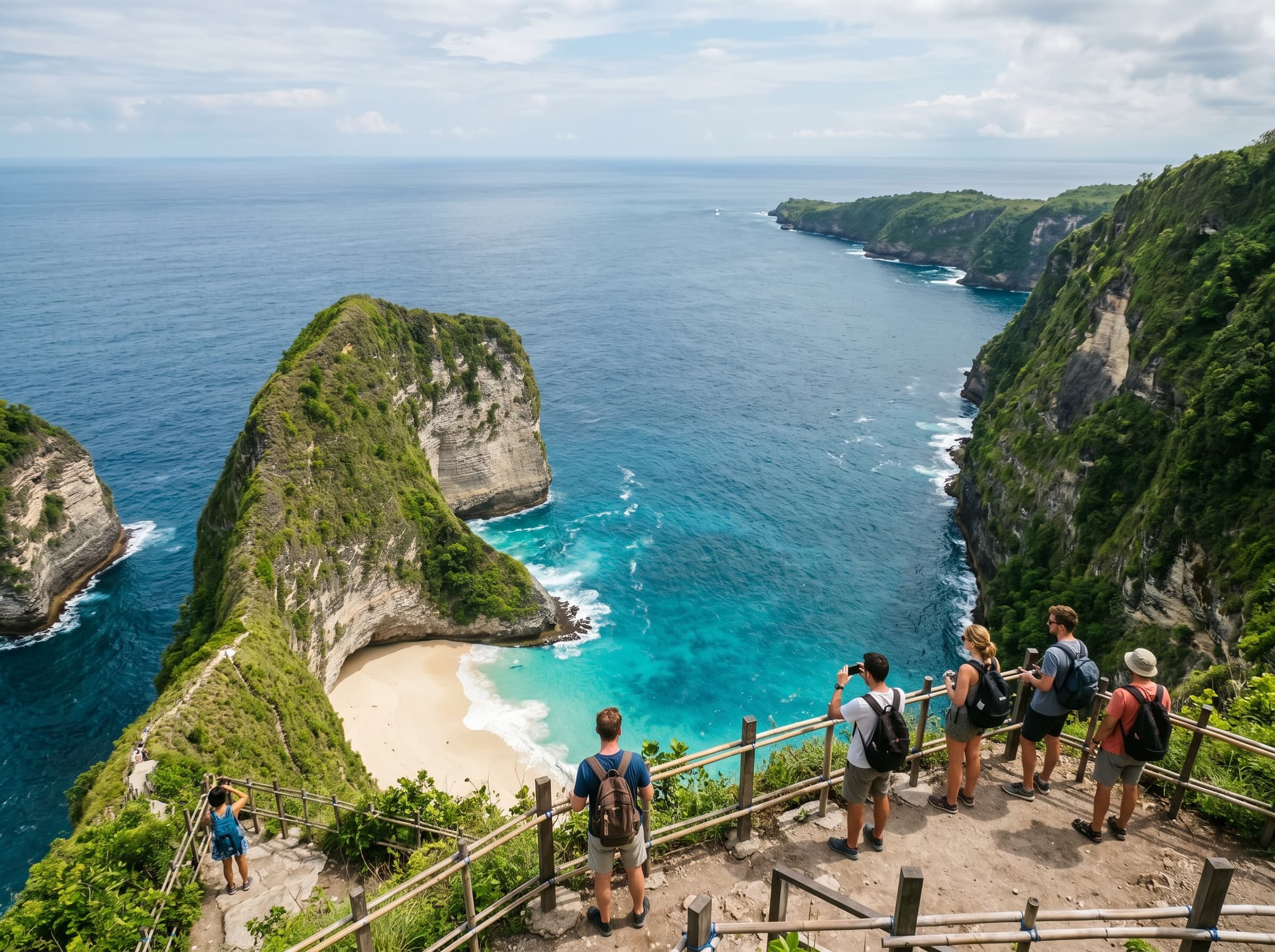
Kelingking Beach viewpoint on Nusa Penida — the famous dinosaur-spine limestone ridge and T-Rex shaped cliff dropping to a white sand beach and turquoise bay, referenced in the article as the island's other iconic viewpoint and a 40-minute drive from Peguyangan.
Kelingking Beach viewpoint on Nusa Penida — the famous dinosaur-spine limestone ridge and T-Rex shaped cliff dropping to a white sand beach and turquoise bay, referenced in the article as the island's other iconic viewpoint and a 40-minute drive from Peguyangan.AI-generated illustration

Peguyangan's location on the southeast coast puts it within reach of several other sites: Tembeling Beach and its natural pools, Banah Cliff Point, and the waters off Manta Point for snorkeling. If you're spending a full day on this side of the island, combining two of these makes sense — but give Peguyangan the morning slot, when conditions are safest.

Frequently Asked Questions

Not in the traditional sense. It's a freshwater spring that flows through a pipe down the cliff face into pools at a temple complex. The draw is the sacred site, the dramatic cliff setting, and the blue staircase descent — not a cascading waterfall.
Moderately fit at minimum. The descent is manageable for most active adults, but the climb back up is strenuous — 700 steps on a steep cliff in tropical heat. Anyone with heart conditions, knee problems, or a fear of heights should skip this one.
The natural pools at the base have been used for wading and cooling off, but a January 2025 landslide damaged the rock ledge and blocked access to the pools and temple. Check current conditions locally before visiting.
It's physically possible but not recommended. The stairs are remote, maintenance is inconsistent, and if something goes wrong, having someone with you matters. Go with at least one other person.
Share

Related Articles