A 10th-century temple near Ubud where Balinese Hindu sects were unified. Visitor guide covering history, access from Ubud, dress code, and ceremonies.
Most visitors to this stretch of road between Ubud and Gianyar are heading to Goa Gajah. The Elephant Cave pulls the tour buses, the Instagram posts, the guided groups with matching lanyards. Pura Samuan Tiga sits less than a kilometer further east, down a quieter lane in Bedulu village, and on most mornings you'll have the compound nearly to yourself.
Which is strange, given what happened here.
The Meeting of Three
In roughly 1001 AD, a priest named Mpu Kuturan convened an assembly at this temple — a pasamuhan, a great meeting — to resolve a problem that was fracturing Balinese society. Three Hindu-Buddhist sects (followers of Siwa, Wisnu, and Buddha) were operating in parallel, each with competing temple systems and loyalties. The island's spiritual life was splintering.
Mpu Kuturan's solution was elegant: he established the Kahyangan Tiga system, requiring every Balinese village to maintain three temples representing the Tri Murti — Brahma, Wisnu, and Siwa. One framework for everyone. The name Samuan Tiga encodes the event itself: samuhan (meeting) and tiga (three).
That assembly is why every village in Bali today has its three temples. This is where that structure was born.
Historical Context
Built
10th century, Warmadewa Dynasty
Key Event
~1001 AD unification assembly
Classification
Pura Kahyangan Jagat (universal worship temple)
Documented In
Lontar Tatwa Siwa Purana, leaf 11
What You'll Find
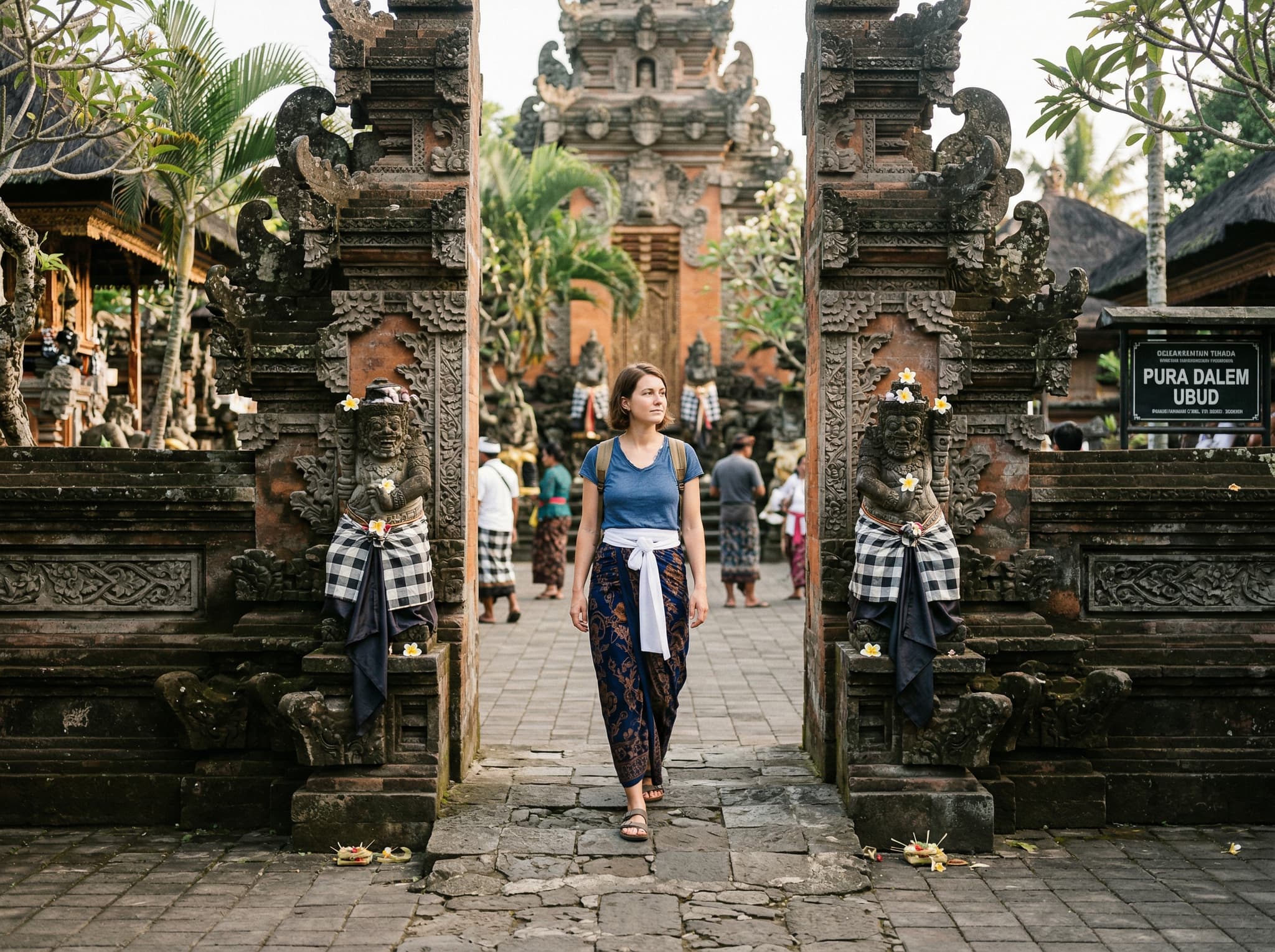
The temple follows the classical tri mandala layout — three concentric zones moving from outer to inner sanctity. You enter through a candi bentar, a split gateway, and the compound opens gradually. There are seven courtyards in total, which is more than most visitors expect from a temple that rarely appears in guidebooks.
The stonework is dark and weathered. Old statues sit among the walls — some partly mossy, some sharp-featured enough to hold your attention. A large banyan tree anchors part of the grounds, its roots gripping the stone in that slow, deliberate way that makes you conscious of how long this place has been standing. The pelinggih shrines are well-maintained, draped in black-and-white poleng cloth, and there are usually fresh offerings at their bases.
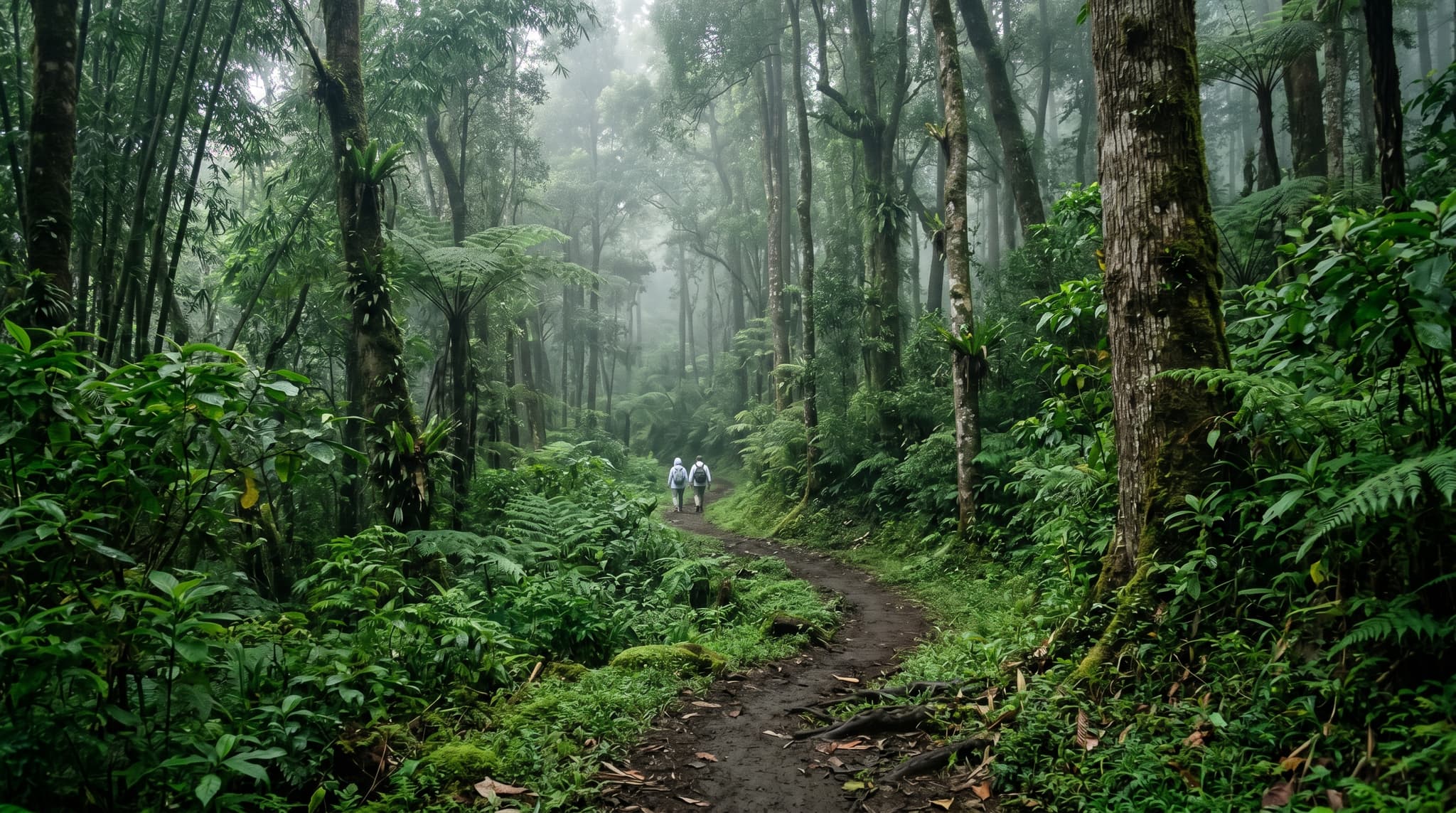
What you won't find: crowds, souvenir stalls, or anyone rushing you through. The quiet here has a particular quality — not emptiness, but a kind of settled stillness. The compound sits low in the landscape, shaded by trees, and the sound that carries most clearly is birdsong.
Getting There
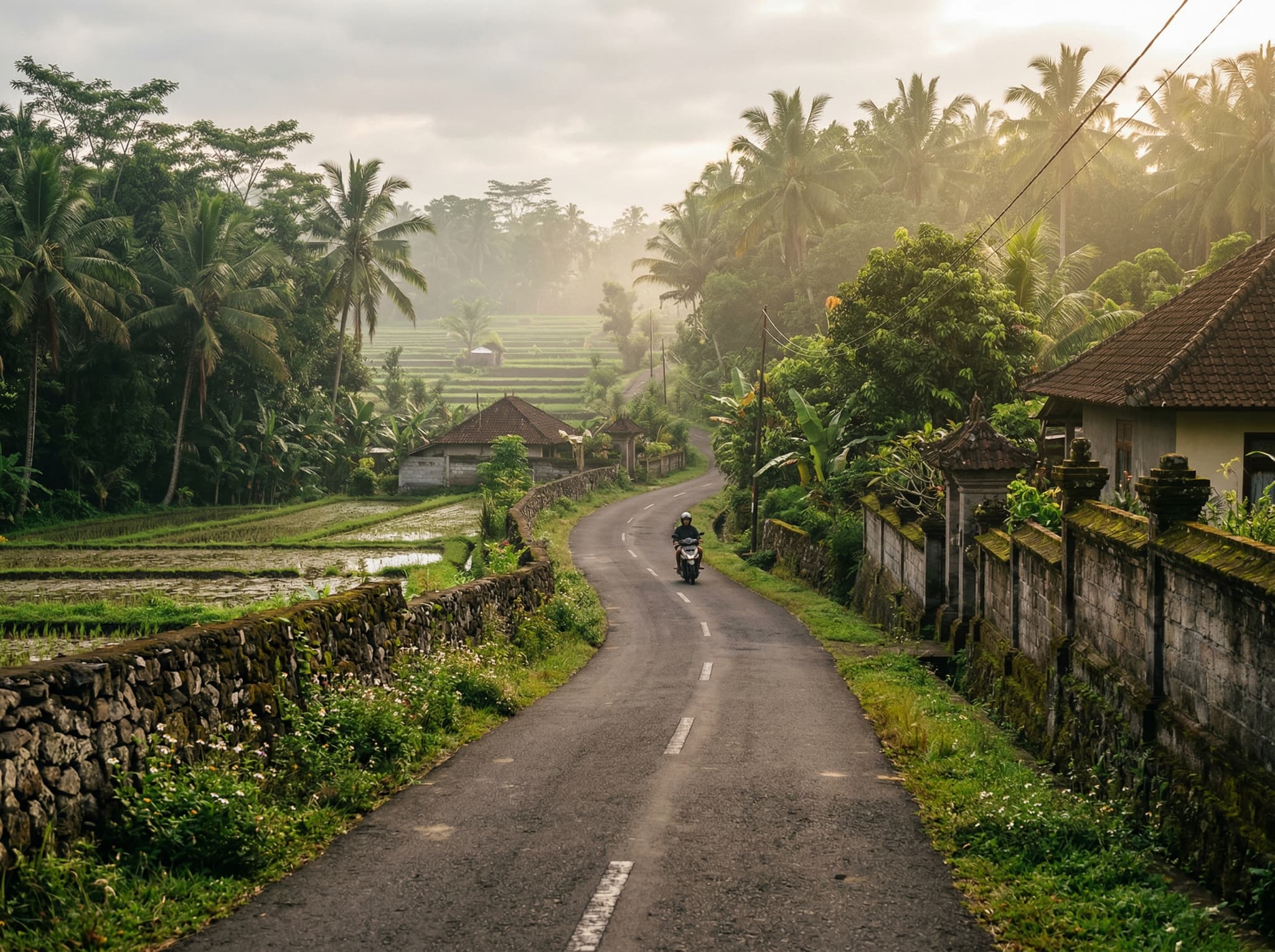
From central Ubud, take Jalan Raya Goa Gajah east toward Gianyar. The ride is about 15 minutes by scooter or taxi, and the temple is signposted just past Goa Gajah.
Transport Options from Ubud
Taxi / ride-hailing
IDR 50,000–100,000 one-way (10–20 min)
Scooter rental
IDR 70,000–150,000/day including helmet
Private driver (half-day)
IDR 300,000–500,000 with waiting time
The most practical approach is to pair Pura Samuan Tiga with Goa Gajah on a single morning trip. Walk or ride the 800 meters between them. Start at Samuan Tiga first — it's calmer early, and you'll appreciate the quiet before the busier site.
Visiting Respectfully
A sarong and sash are mandatory for all visitors, even over long pants or skirts. Free sarongs and sashes are available at the temple entrance. Shoulders must be covered — no sleeveless tops without a shawl. Remove hats and sunglasses in prayer areas. Photography is restricted to outer areas; no selfies, video, or flash in the inner sanctums (jeroan). Per Balinese custom, visitors who are menstruating should not enter.
Temple security is provided by pecalang — traditional Balinese community guards. They're typically calm and helpful, but their instructions carry real authority. Follow them.
There's no fixed admission fee, but a donation of IDR 30,000–50,000 is expected and goes toward temple upkeep. [VERIFY: fee structure varies across sources — some report free entry, others IDR 10,000–15,000 fixed. Confirm current practice locally.]
The Siat Sampian
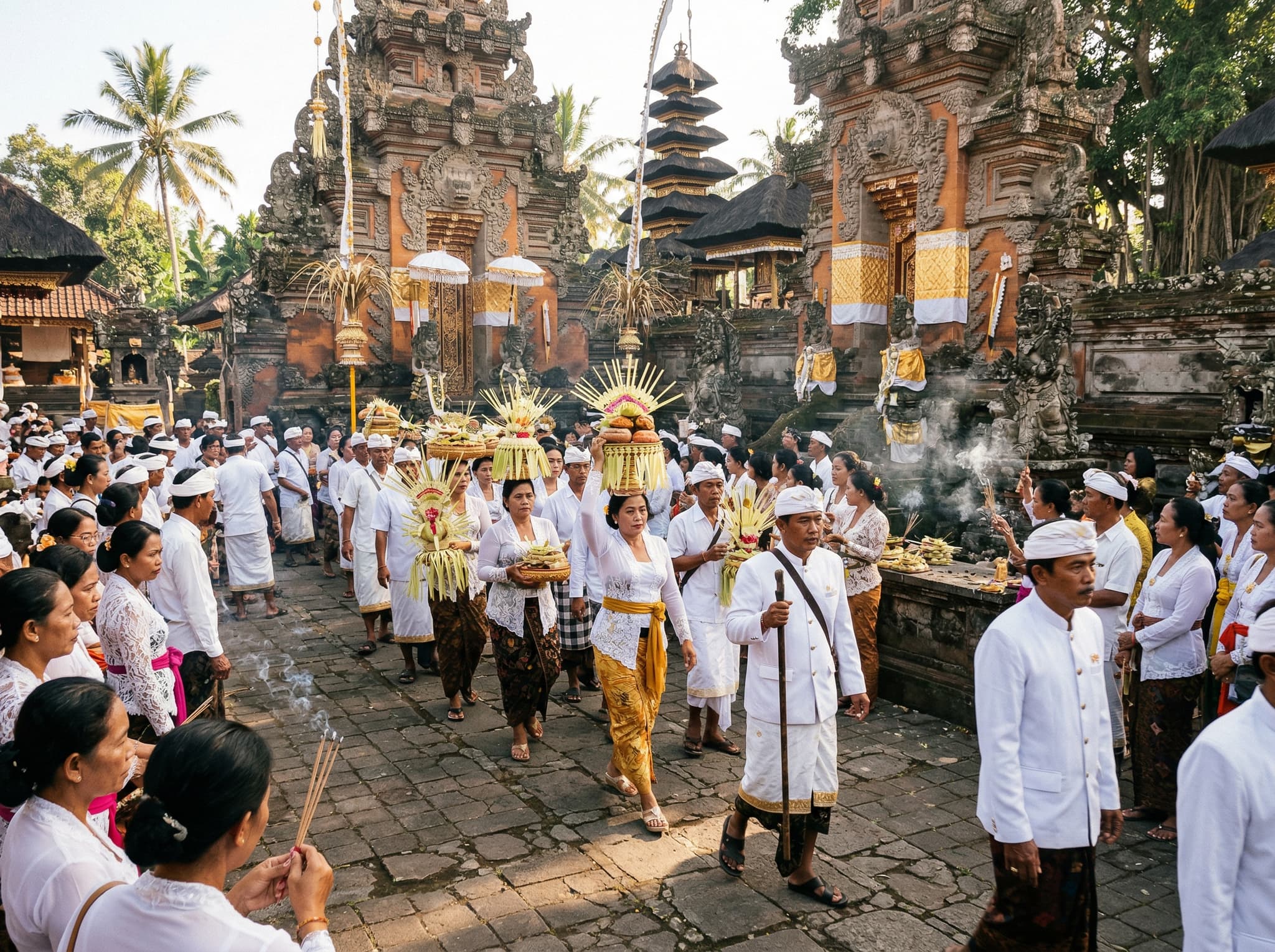
If your timing aligns with the Balinese calendar, the Siat Sampian ceremony is worth planning around. Held annually around the full moon of the tenth month — typically April or May, though the lunar calendar shifts the date each year — it's a ritual in which designated participants (Permas and Parekan) throw arrangements of young coconut leaves at each other in a symbolic battle between dharma and adharma. The ceremony runs roughly 6:00 AM to 1:00 PM and includes processions called Nampyog and maombak-ombak.
The temple's piodalan (anniversary ceremony) occurs every 210 days on the Balinese pawukon calendar, and major celebrations can span up to 12 days, with community processions and blessings of Rangda and Barong symbols.
Ceremony dates follow the Balinese calendar, not the Gregorian one. Ask your accommodation or check with local pengempon (temple caretakers) for current-year dates — published schedules online are often outdated.
Why It Matters
Pura Samuan Tiga isn't the most photogenic temple in Bali, or the most dramatic. It doesn't perch on a cliff or catch the sunset. But it's one of the most historically consequential — the place where the spiritual architecture of every Balinese village was decided, over a thousand years ago. That decision still holds.
Sometimes the most important places are the quietest ones.