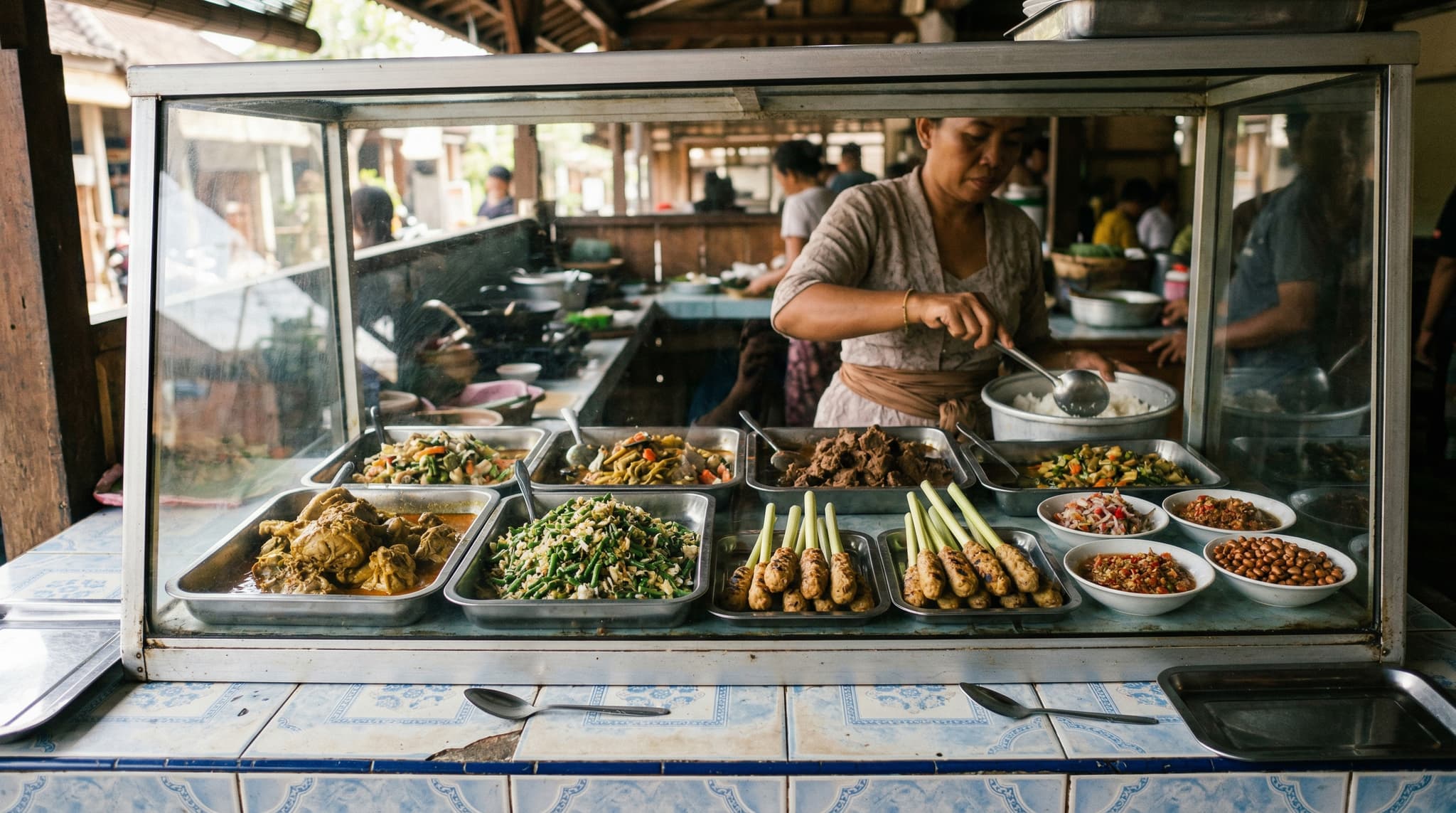
Warung Bu Mi is a nasi campur warung in Pererenan serving Balinese staples like ayam betutu, lawar, and sate lilit from a daily display case. Cash only.
Warung Bu Mi is a nasi campur warung
on one of Pererenan's quieter streets, the kind of place you'd pass without noticing if you weren't looking. No sign worth photographing, no Instagram presence to speak of. What it has is a glass display case filled each morning with Balinese dishes laid out in steel trays, and a steady stream of locals who know exactly what they're coming for.
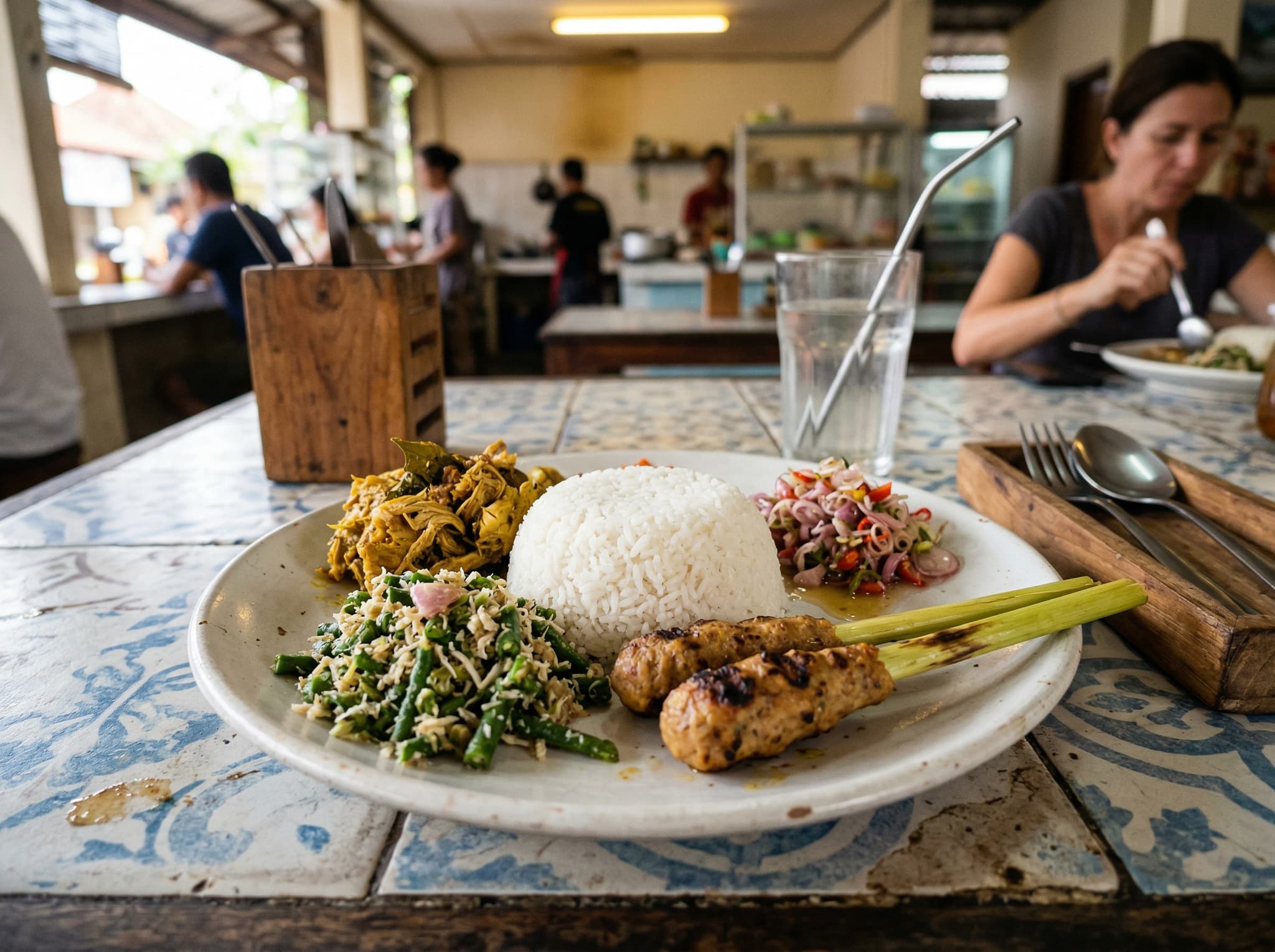
Nasi campur — literally "mixed rice" — is less a single dish than a format. You get a mound of steamed rice and a selection of small portions chosen from whatever's been prepared that day. The composition changes. The principle doesn't. At Warung Bu Mi, the principle is executed with the kind of quiet consistency that keeps a warung alive for years in a neighborhood where new cafés open and close every season.
What to Order
The display case is the menu. You point, the server plates. There's no English-language list, and the selection rotates, but certain dishes appear reliably.
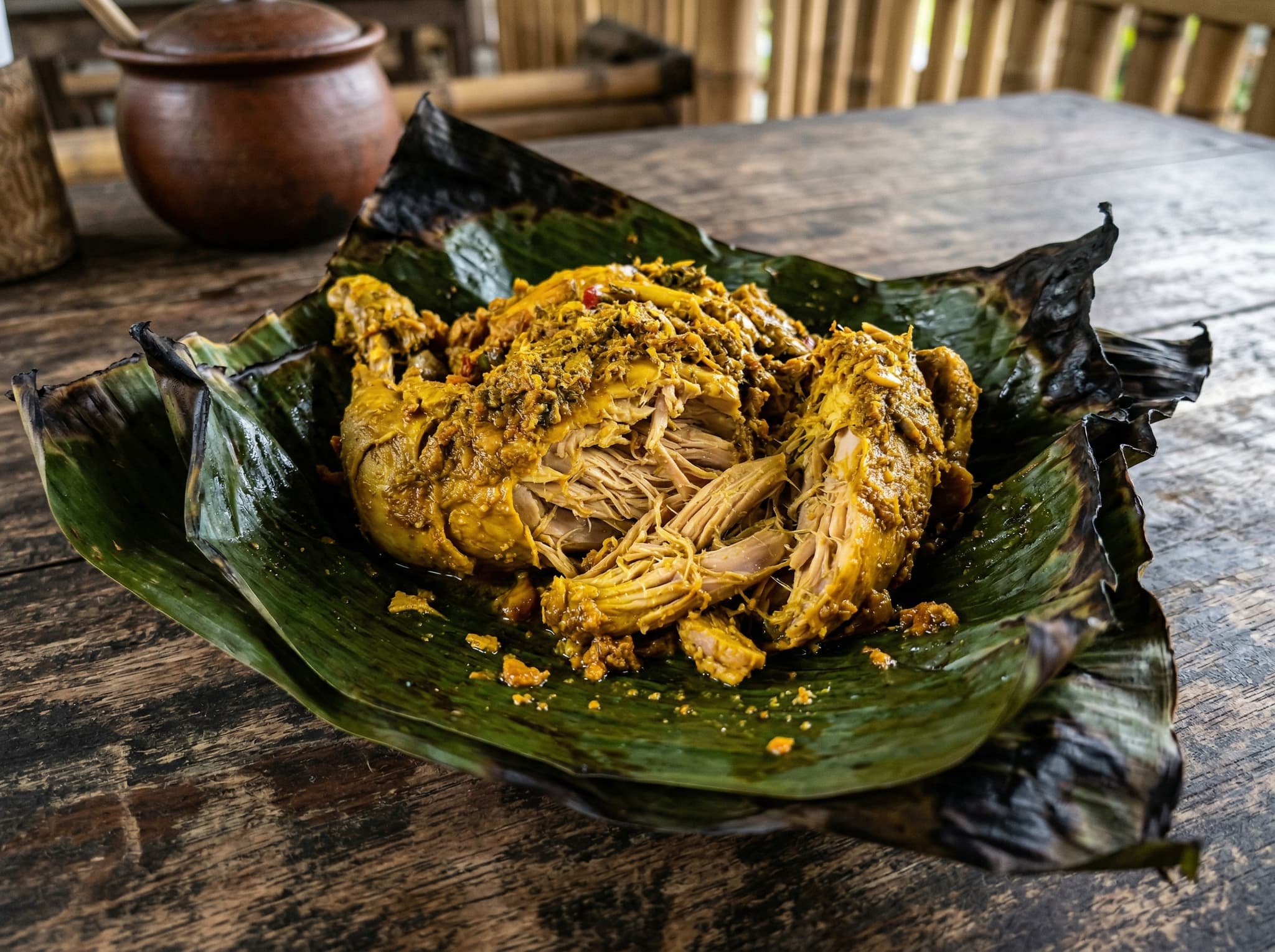
Ayam betutu is the anchor — slow-cooked chicken in a spice paste built around turmeric, galangal, and shallots, wrapped in banana leaf. The meat pulls apart easily, and the spice has had time to work through rather than sitting on the surface. It's not aggressive heat. It's depth.
Lawar, the finely chopped vegetable-and-coconut preparation that's central to Balinese ceremonial food, shows up in varying forms. The version here tends toward a green lawar — long beans, grated coconut, garlic — with enough coconut to round out the spice without dulling it. The texture is fine and well-integrated, not coarse.
Tum ayam — minced chicken steamed in banana leaf with a base paste of lemongrass, kaffir lime, and chili — is worth asking for if it's available. It's a smaller, subtler preparation than the betutu but arguably more aromatic.
Sate lilit, the Balinese minced satay pressed onto lemongrass stalks rather than bamboo skewers, appears most days. The seasoning is coconut-forward, with a slight sweetness that comes from the palm sugar in the paste.
Then there's the sambal. Every nasi campur plate at Warung Bu Mi comes with a sambal matah — raw shallot, lemongrass, chili, and coconut oil — that ties the plate together. It's sharp and bright against the slower, deeper flavors of the cooked dishes. Don't skip it.
Ordering Basics
Format
Point-and-choose from display case
Typical Plate
Rice + 3–5 sides
Best Arrival
Before noon for full selection
Payment
Cash only (IDR)
The Setting
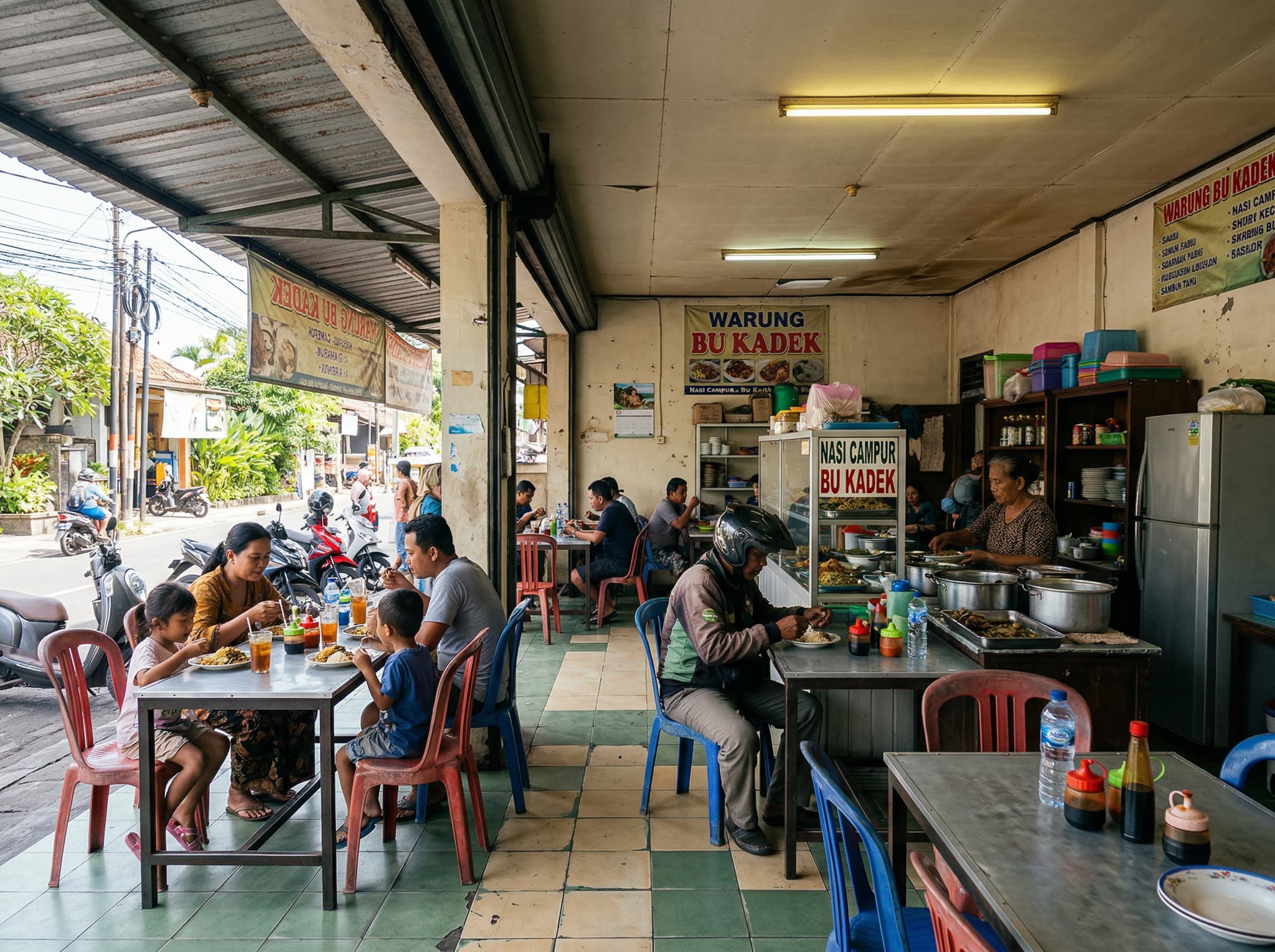
This is a plastic-chair, fluorescent-light warung. The seating area is a covered front patio with a handful of tables. There's no air conditioning, no curated décor, no Wi-Fi password written on a chalkboard. The floor is tile. The lighting is functional. During the midday rush, you might share a table.
None of this is a complaint. It's context. The setting is honest about what the place is — a neighborhood warung where the investment goes into the food, not the furniture. If you've eaten at warungs across Bali, this registers immediately as the real thing. If you haven't, it's a useful calibration.
Who Eats Here
Mostly locals — families, construction workers on lunch break, motorbike drivers between fares. The tourist presence in Pererenan is growing, and a few visitors find their way here, but this isn't a warung that's been "discovered" in any meaningful sense. The crowd is a good sign. It means the food moves, which means the display case gets refilled, which means freshness isn't a concern.
What This Place Isn't
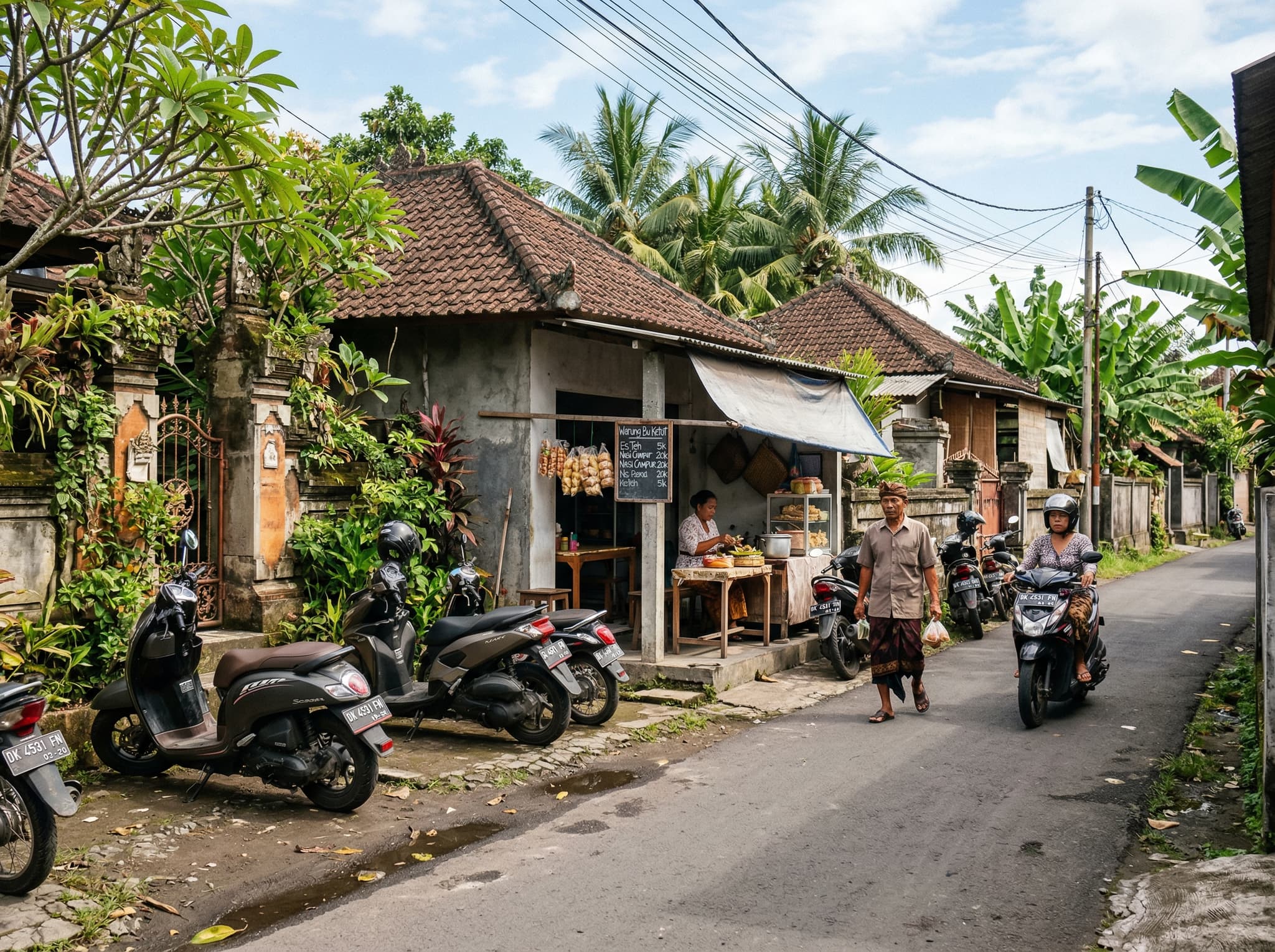
Warung Bu Mi is not a hidden gem. It's not a secret. It's a neighborhood warung doing what neighborhood warungs do across Bali — preparing Balinese food with care, selling it affordably, and serving the people who live nearby. The reason to recommend it isn't that it's exceptional in some dramatic way. It's that the food is well-made, the prices are fair, and it represents something that Pererenan's café-driven development is slowly displacing. Eating here is both a good meal and a small act of choosing the version of Bali that existed before the smoothie bowls arrived.
Arrive before noon. The display case is fullest in the late morning, and popular dishes — especially the ayam betutu — can run out by early afternoon. If the case looks sparse, you're too late.
Getting There
Warung Bu Mi sits along one of the residential roads branching off Pererenan's main strip. If you're staying in Pererenan or nearby Canggu, it's a short motorbike ride. There's no dedicated parking — you'll pull up onto the roadside like everyone else. The warung has no Google Maps listing with reliable pin accuracy, so ask locally if you can't find it on the first pass. "Warung Bu Mi, nasi campur" will get you pointed in the right direction.