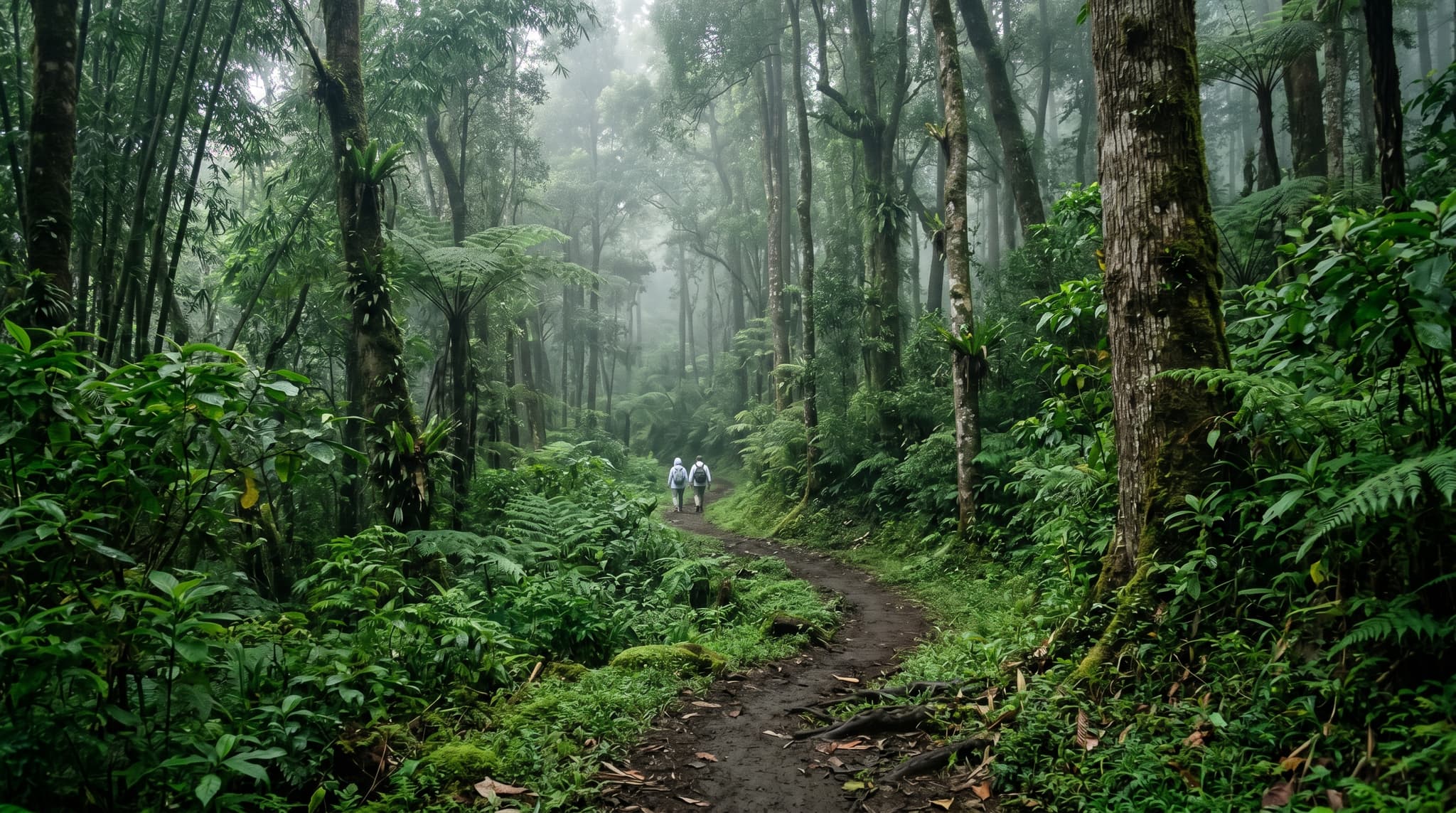
Yeh Pulu is a 25-meter rock relief carved in the 14th century near Ubud, Bali. How to visit this overlooked archaeological site, what the carvings depict, and how to pair it with Goa Gajah.
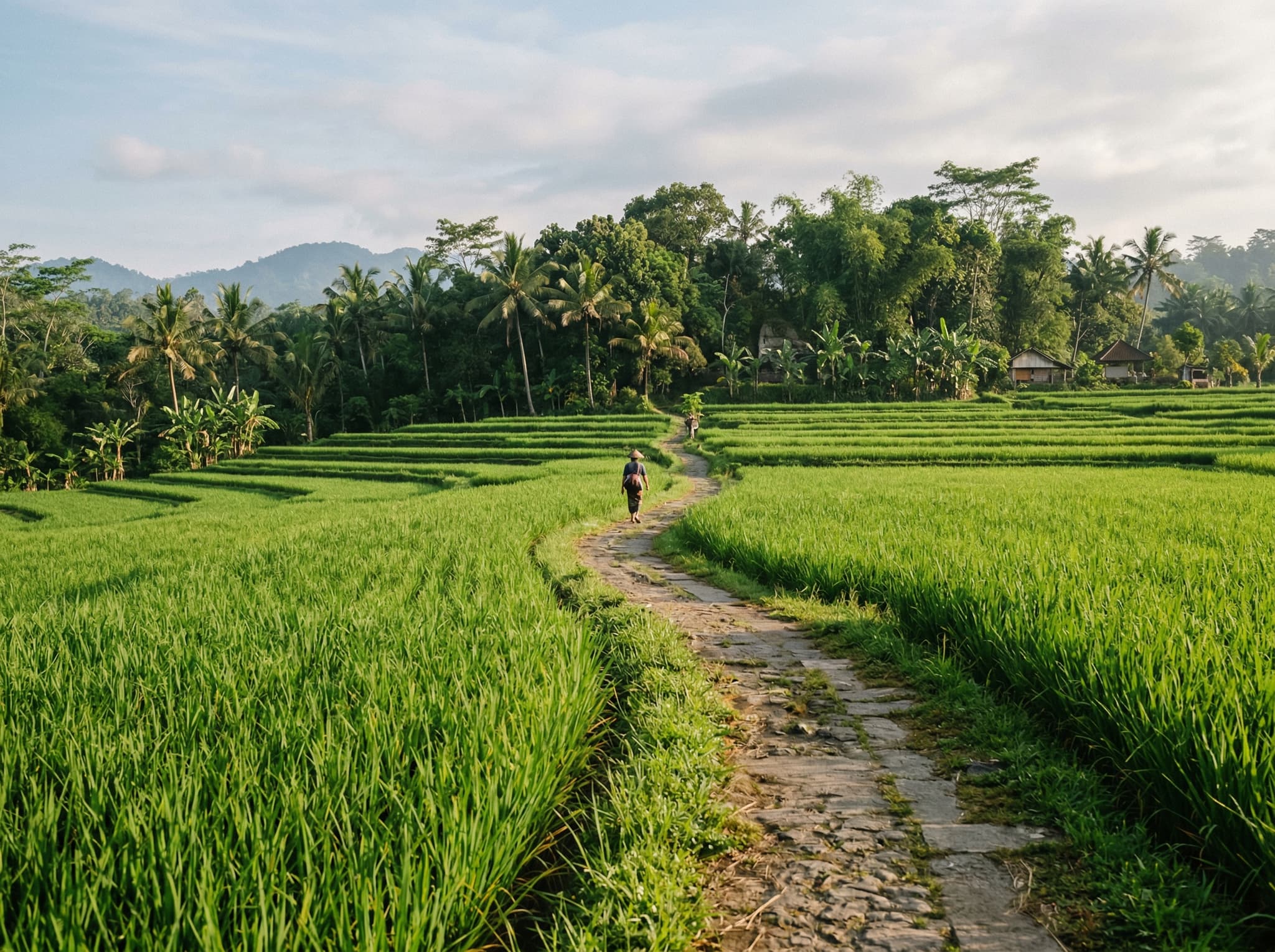
About 400 meters past the turnoff for Goa Gajah — Bali's well-known Elephant Cave — a narrow road leads to a parking area where almost nobody stops. From there, a 500-meter footpath cuts through rice paddies to a cliff face carved with life-sized figures sometime in the late 14th or early 15th century, during the twilight of the Majapahit Empire.
This is Yeh Pulu, and it's one of the largest rock reliefs in Southeast Asia: 25 meters long, roughly 2 meters high, depicting scenes of daily Balinese life that predate the island's modern tourism industry by about six centuries.
What You're Actually Looking At
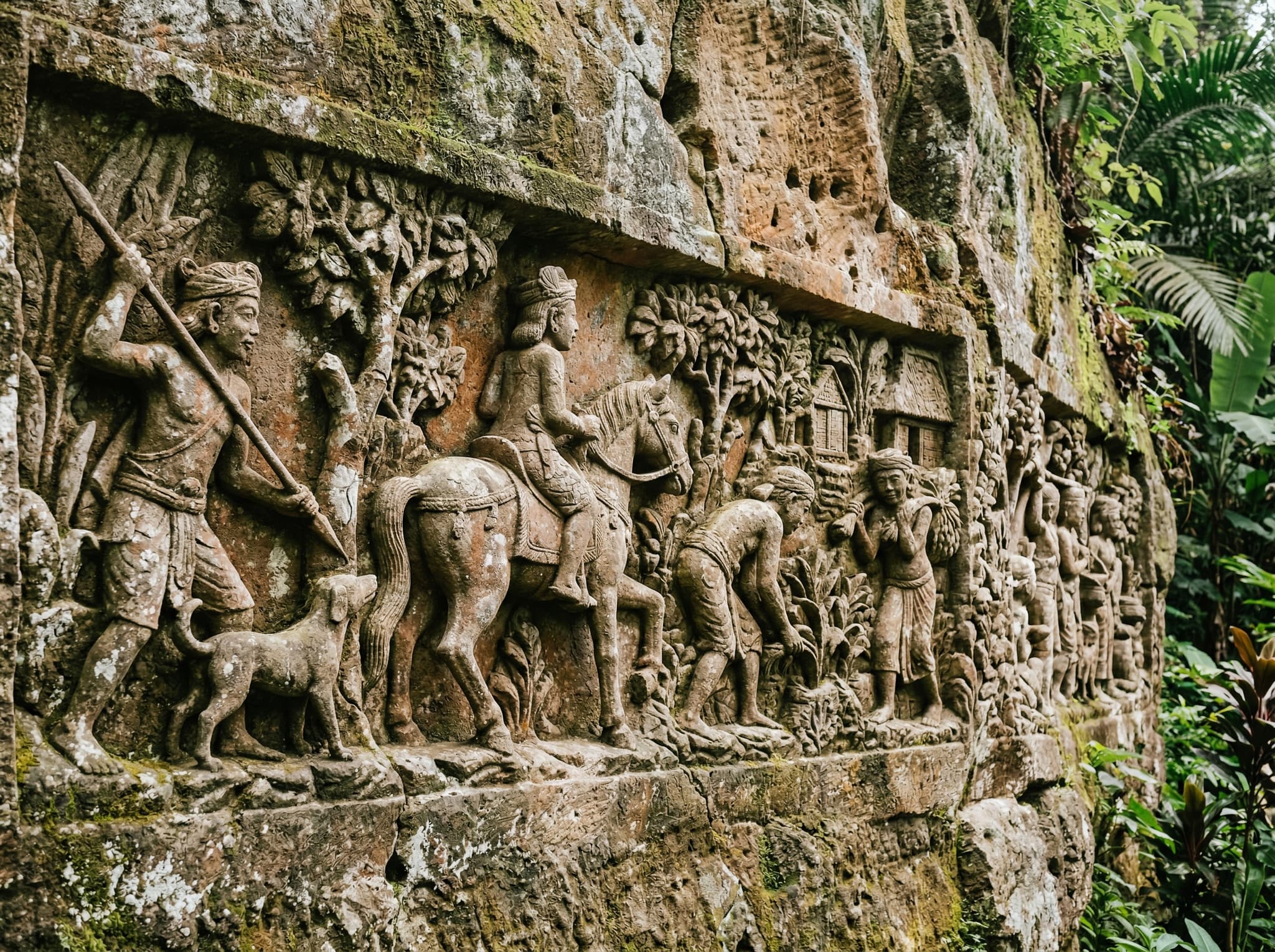
The carvings at Yeh Pulu aren't royal commissions. Scholars believe they were created by hermits or ascetics rather than palace sculptors — which explains their character. Where court-sponsored temple reliefs tend toward formal religious iconography, Yeh Pulu reads more like a narrative mural of ordinary existence.
The panels depict farming scenes, village activities, and forest life from the Kingdom of Pejeng, which controlled this part of Bali before being absorbed by the Majapahit. You'll see hunters, figures on horseback, and agricultural work carved with a directness that feels surprisingly modern. Woven through these daily-life scenes are religious motifs, including what's widely interpreted as Krishna — an incarnation of Vishnu — linking the secular and sacred in a way that's characteristic of pre-colonial Balinese Hinduism.
A small temple, Pura Yeh Pulu, sits within the site and remains active. The entire compound is maintained by the local Krama Subak — the traditional irrigation community — rather than a government tourism board, which partly explains why it hasn't been developed into something louder.
Why It Matters
The site was discovered in the 1920s by a local village chief and has been preserved since 1929, initially through Dutch colonial conservation efforts. But Yeh Pulu never became a major tourist draw the way Goa Gajah did, despite being arguably more visually striking.
The reason is partly access — there's no tour bus parking lot, no vendor gauntlet — and partly narrative. Goa Gajah has a dramatic demon-mouth cave entrance that photographs well and explains itself instantly. Yeh Pulu requires you to slow down, look closely, and ideally have someone explain what you're seeing. It rewards attention rather than demanding it.
That's also what makes it worth the detour. Recent visitors consistently describe the atmosphere as serene — a word that gets overused in Bali travel writing but genuinely applies here. On most mornings, you'll share the site with a handful of people at most.
Getting There and Getting In
Access Details
From Ubud
15–20 min by car or scooter, east on the Ubud–Gianyar road
From Goa Gajah
~1.8 km; 5 min by vehicle or 10–45 min on foot through rice paddies
Parking
Free, on-site
Path to Site
~500 m, mostly flat, partially paved — can be muddy after rain
The most practical approach is to combine Yeh Pulu with a visit to Goa Gajah. The two sites are about 1.8 kilometers apart, connected by a walking path along the Petanu River through rice fields. On a dry day, that walk takes 10–15 minutes and passes additional small shrines along the way — though the path isn't always clearly marked, so confirm the current route with locals before setting out.
If walking isn't appealing, drive the short distance between sites. The turnoff for Yeh Pulu is roughly 400 meters east of the Goa Gajah entrance on the main road.
Guides: Worth It or Not?
Guides are optional and available on-site for around IDR 150,000. The carvings don't come with extensive signage, so without context, the relief can read as a wall of weathered stone figures. A knowledgeable guide identifies specific panels, explains the Pejeng dynasty connection, and points out details — like the Krishna figure — that are easy to miss.
That said, if you've done some reading beforehand, a self-guided visit works fine. The site is compact enough that you won't miss anything physically; the question is whether you'll understand what you're seeing.
Pairing Yeh Pulu With Nearby Sites

Yeh Pulu fits naturally into a half-day loop of Bali's archaeological corridor east of Ubud:
- Goa Gajah — The Elephant Cave, with its demon-mouth entrance and Hindu bathing pools (5 minutes away)
- Pura Samuan Tiga — A historically significant temple nearby, less visited than the big-name sites
- Gedong Arca Museum — A small archaeological museum in the area with artifacts from the region's pre-colonial period
Organized tours from the Denpasar/Jimbaran area commonly bundle Goa Gajah, Yeh Pulu, and Gunung Kawi with waterfall stops, allocating roughly 60 minutes per site. These work logistically but tend to rush the experience. If you're already based in Ubud, hiring a driver for a half-day or renting a scooter gives you more control.
Frequently Asked Questions
Yeh Pulu doesn't compete with Bali's marquee temples for spectacle. It doesn't need to. What it offers is rarer — a 600-year-old window into ordinary life, carved by people who weren't working for a king, preserved by the community that still farms the rice paddies you walk through to reach it.