Manta Alley: Komodo's Underwater Channel Where Mantas Gather by the Dozen
Manta Alley is an advanced drift dive site at Komodo Island's southern tip where reef mantas gather at cleaning stations. Here's what to know before you go.
At the far southern tip of Komodo Island, a cluster of small rocky islets breaks the surface. Below the waterline, the rock continues — carved into a narrow underwater channel where nutrient-rich currents from the Indian Ocean funnel through like a hallway. This is Manta Alley, and the architecture of the place explains everything about why it works.
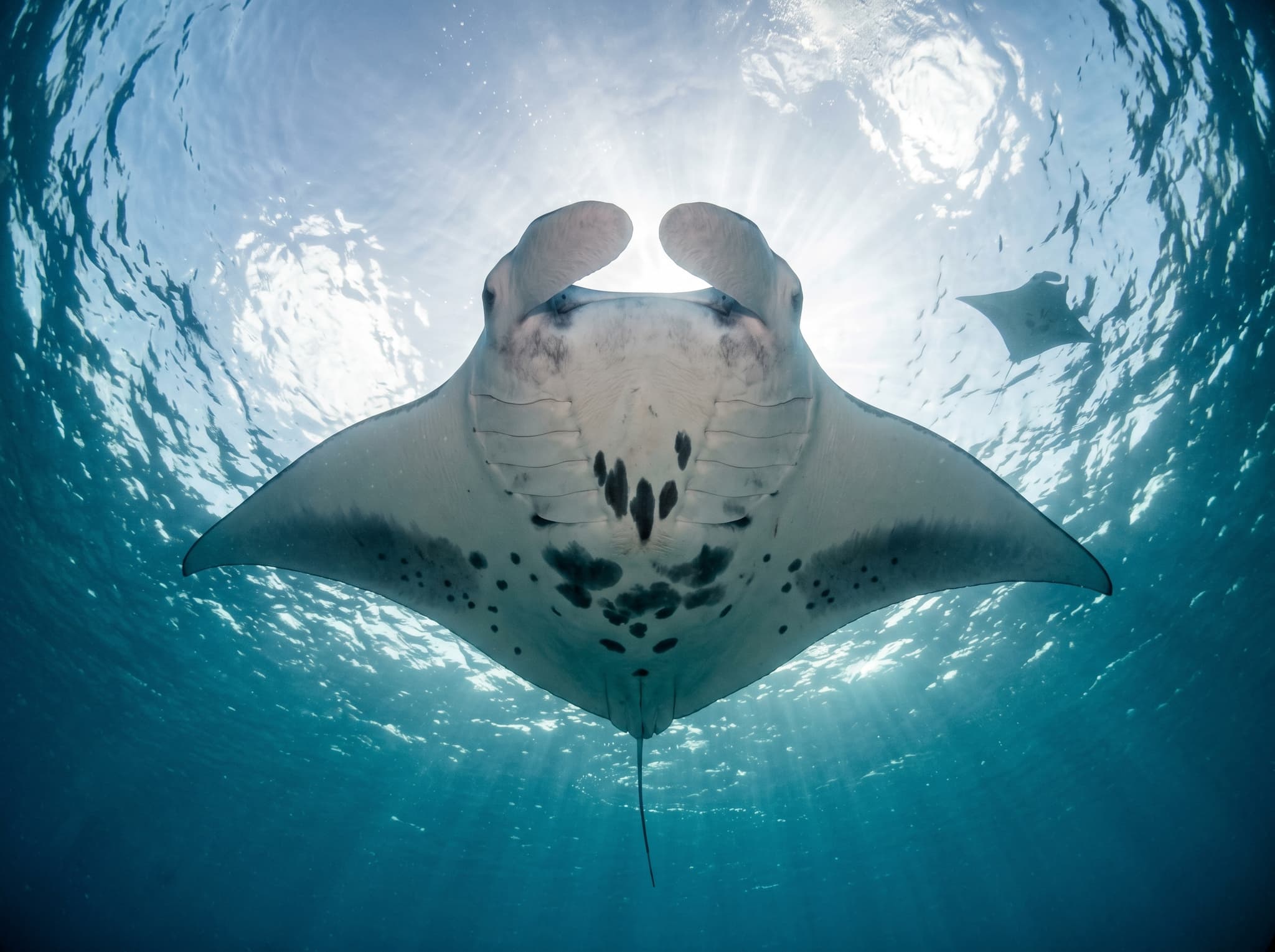
Reef manta rays (Mobula alfredi) don't gather here by accident. The channel creates a current that sweeps plankton-rich water past a series of cleaning stations — rocky outcrops where small wrasses and cleaner fish wait to pick parasites from the mantas' gills and skin. The mantas glide into the channel, slow down, and hover at these stations, wings tipped slightly upward, mouths open. It's a transaction: the smaller fish get a meal, and the mantas get maintenance. During peak season, divers report encounters with 20 to 30 individuals on a single dive.
Why the Mantas Keep Coming Back

Cleaning stations are common across tropical reefs, but Manta Alley's geography concentrates the activity. The channel funnels current — and therefore plankton — directly past the stations, meaning mantas can feed and clean in the same visit. The incoming tide is when activity peaks, as it pushes the richest water through the narrowest part of the channel.
During the wet season, roughly November through early April, warmer water temperatures (26–29°C) and higher plankton density draw the largest congregations. This is also when divers observe what's known as a "manta train" — a courtship behavior where males follow females in long, looping chains through the channel. December through March is the peak window for these encounters.
The trade-off is visibility. Wet season conditions typically drop to 10–15 meters, and the plankton bloom that attracts the mantas is the same thing clouding the water. During the dry season (April through October), visibility can reach 30 meters, but manta sightings at this site become less reliable. The water in southern Komodo drops to 22–25°C in these months — cool enough that many mantas shift their patterns.
Diving vs. Snorkeling Here
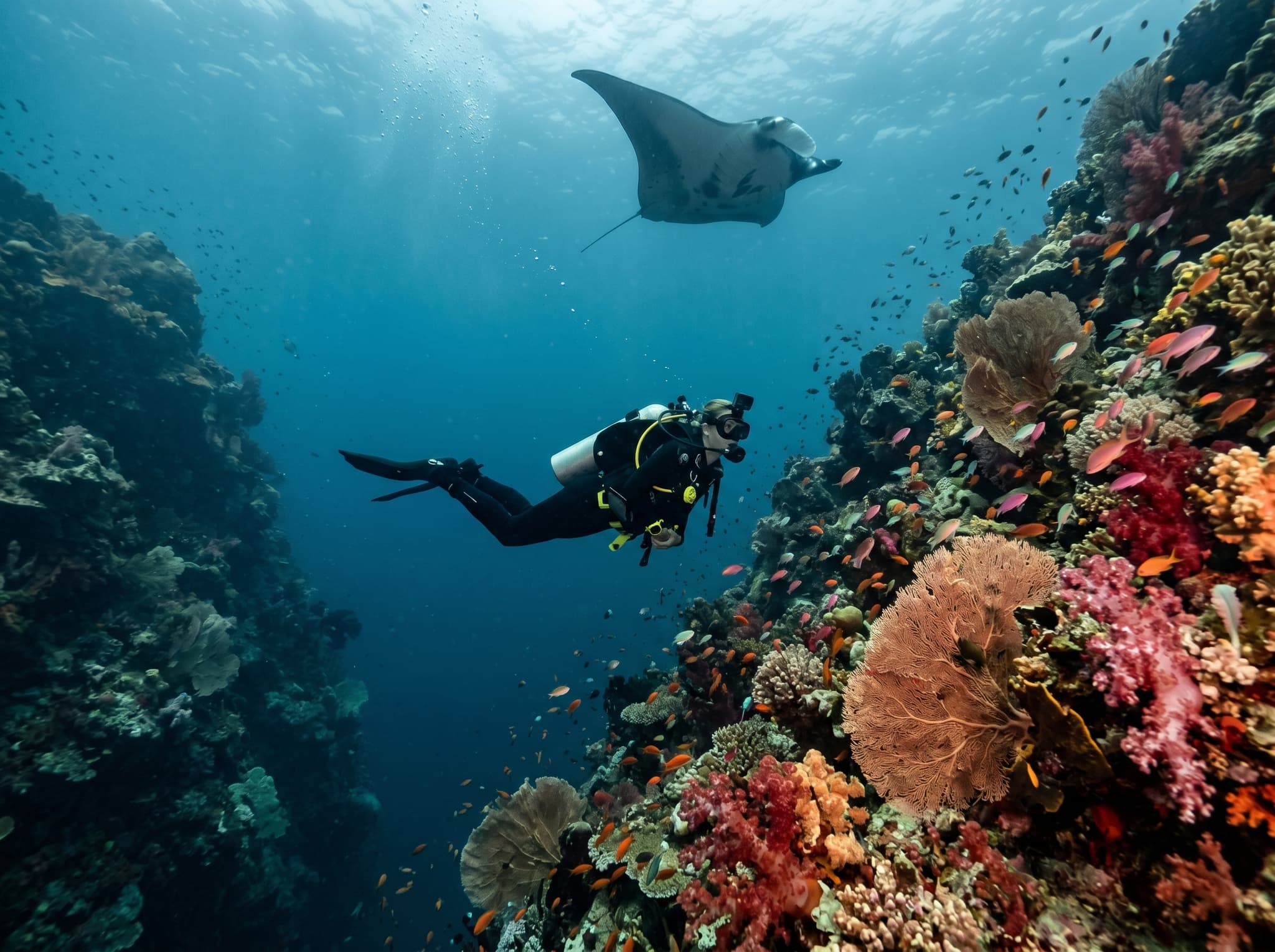
Manta Alley is primarily a dive site, and the conditions reflect that. Currents run strong through the channel — this is a drift dive, not a leisurely reef exploration. Most operators classify it as advanced, and that classification is earned. You'll need to be comfortable managing buoyancy in moving water and staying low enough near the cleaning stations that you don't disrupt the mantas' approach.
Snorkeling is possible but significantly more challenging than at Manta Point, where cleaning stations sit in 4–6 meters of water and the topography provides some shelter from current. At Manta Alley, the channel's depth and current strength mean snorkelers are more dependent on conditions aligning — a calm incoming tide on a good day can work, but this isn't a site where a first-time snorkeler should be in the water.
Conditions at a Glance
Depth
Drift dive, 20–30m channel
Current
Strong; advanced level
Visibility (wet season)
10–15m
Visibility (dry season)
Up to 30m
Recommended Wetsuit
3mm
Best Tide
Incoming
Beyond the mantas, the channel supports a dense reef ecosystem — soft corals along the walls, schools of sweetlips, giant trevally hunting in the current, green turtles, and occasional mobula rays (the mantas' smaller relatives) passing through in groups.
Getting There
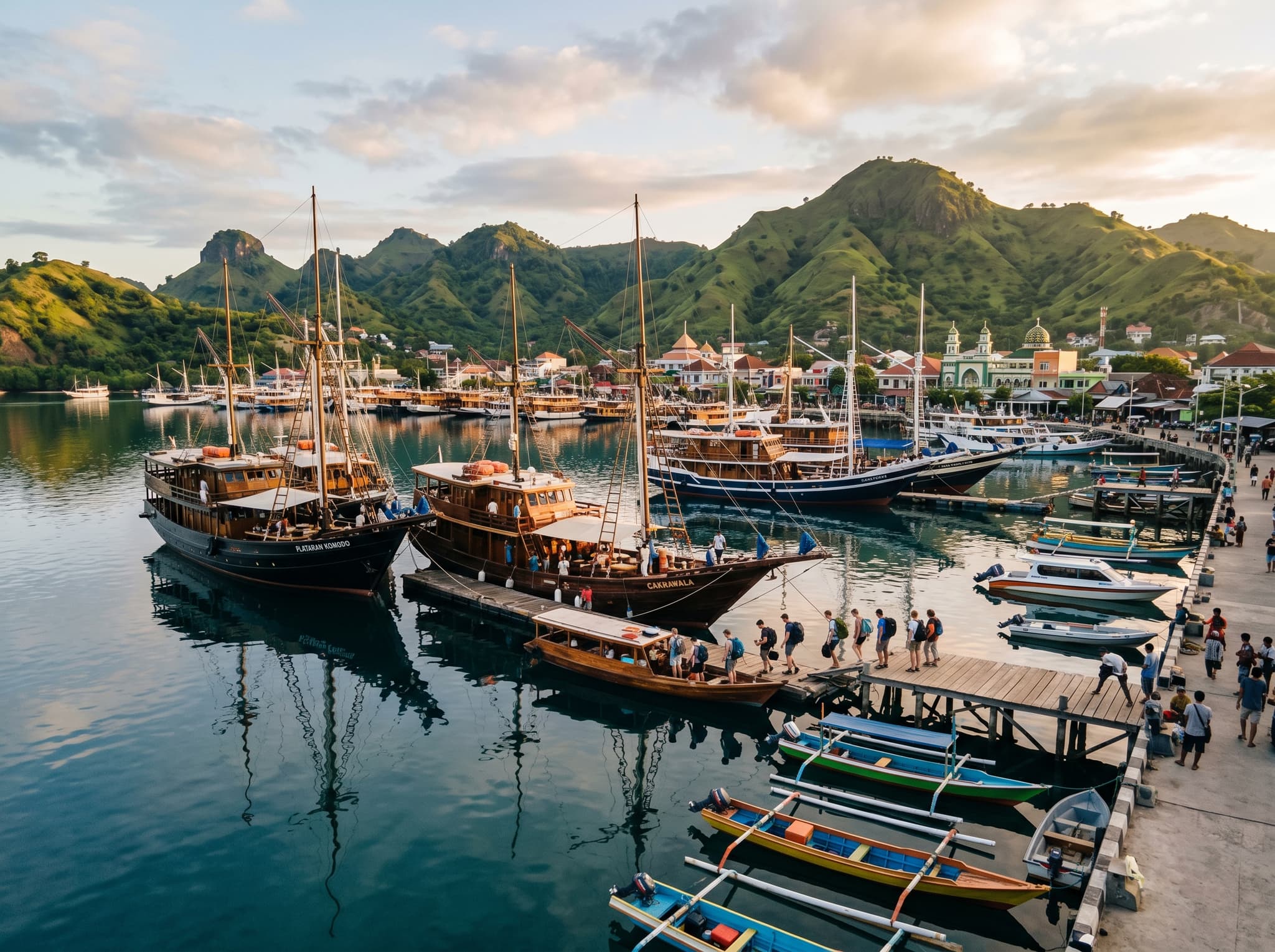
Manta Alley is accessible only by boat from Labuan Bajo, the gateway town on the western tip of Flores. Most visitors fly into Komodo Airport (LBJ), which receives daily flights from Bali, Jakarta, and several other Indonesian cities.
From Labuan Bajo harbor, the boat ride to southern Komodo takes roughly two to three hours by speedboat. Shared day trips that include Manta Alley typically depart between 10 and 11 AM and run six to twelve hours, with prices ranging from $74 to $140 per person. These often combine the site with other southern Komodo stops.
Multi-day liveaboard trips — either on traditional phinisi sailing boats or dedicated dive vessels — are the more common way serious divers access the site, since they allow for multiple dives timed to optimal tidal conditions. Shared three-day, two-night liveaboard trips generally run $277–$350 per person including meals.
Park Fees (2025–2026)
Marine Park Entry (international)
IDR 250,000 (~$16) per day
Marine Park Entry (domestic)
IDR 75,000 (~$5) per day
Diving Surcharge
IDR 25,000 (~$1.60) per diver
Harbor Fee
IDR 25,000 (~$1.60), charged once
Carry IDR cash for any fees paid directly at ranger posts — card payment is rarely accepted.
What Matters Here
Manta Alley isn't the easiest manta encounter in Komodo, and it isn't the most reliable year-round. What it offers is scale. When the season aligns and the tide is right, the channel fills with animals — not one manta circling a cleaning station, but dozens moving through a corridor that funnels them past you. The site's geography does the work. You just have to be in the right place at the right time, which in this case means wet season, incoming tide, and enough experience to handle the current.