Menjerite Island is an uninhabited snorkeling stop in Komodo National Park with shallow reefs, clear water, and no facilities. Here's what to expect.
Menjerite Island is not a destination in the way that word usually gets used.

It's a stop — one point on a day-trip itinerary that typically includes Rinca Island and the bat colony at Kalong. Your boat cuts the engine in a shallow bay, the guide gestures toward the water, and you have maybe an hour, sometimes ninety minutes, before the group moves on. That's Menjerite. But the hour is worth the trip.
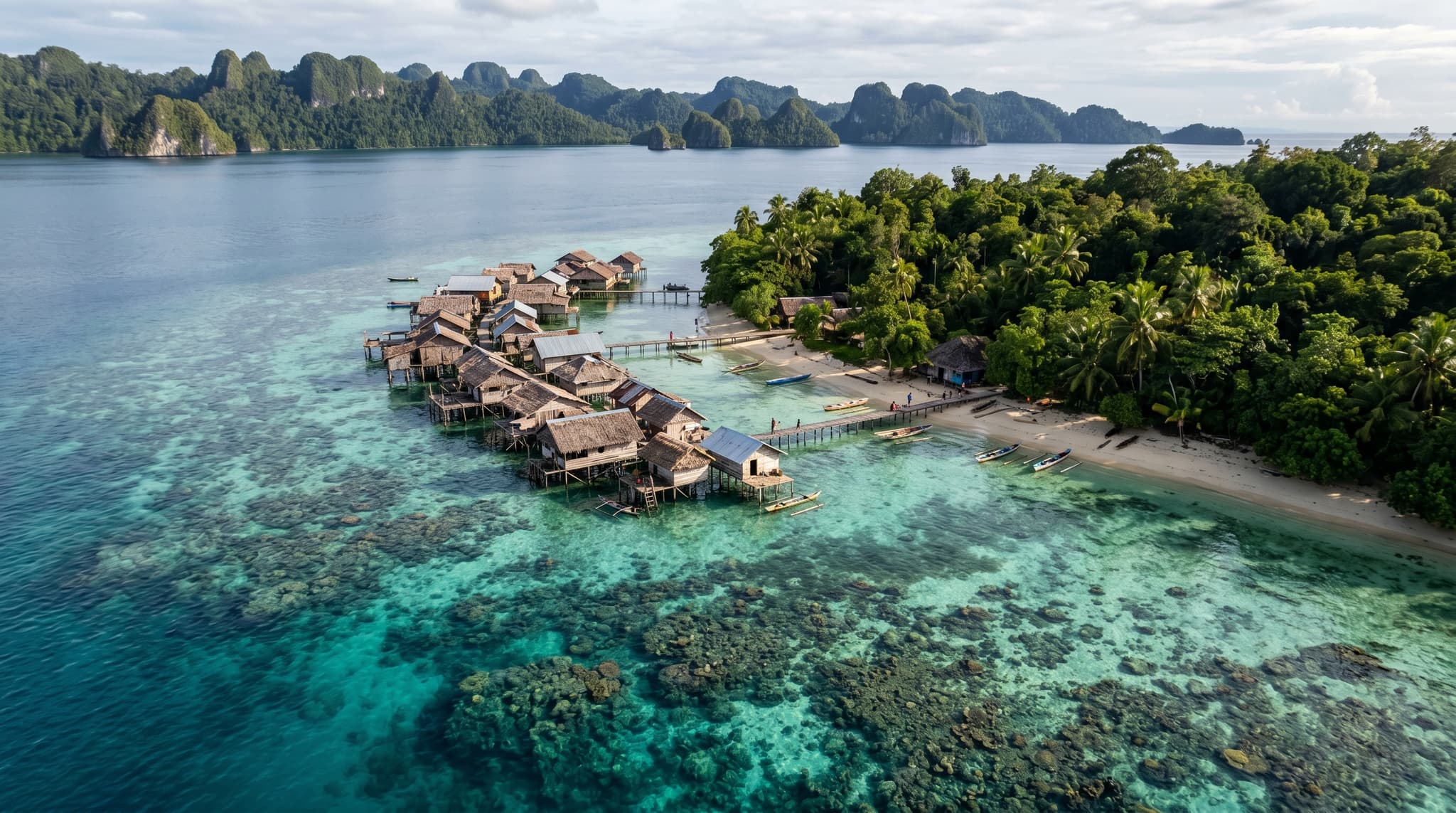
The island sits within Komodo National Park's northern waters, a small uninhabited landmass ringed by reef. There's a strip of pale sand, some scrubby vegetation climbing the hillside, and not much else on land. The point is what's underneath. The shallows here are warm, calm, and startlingly clear — visibility during the dry season can reach 25 to 35 meters, peaking between June and September. The coral starts close to shore, which makes Menjerite one of the more accessible snorkeling sites in the park. You don't need fins to reach it. You barely need to swim.
What the Snorkeling Is Actually Like
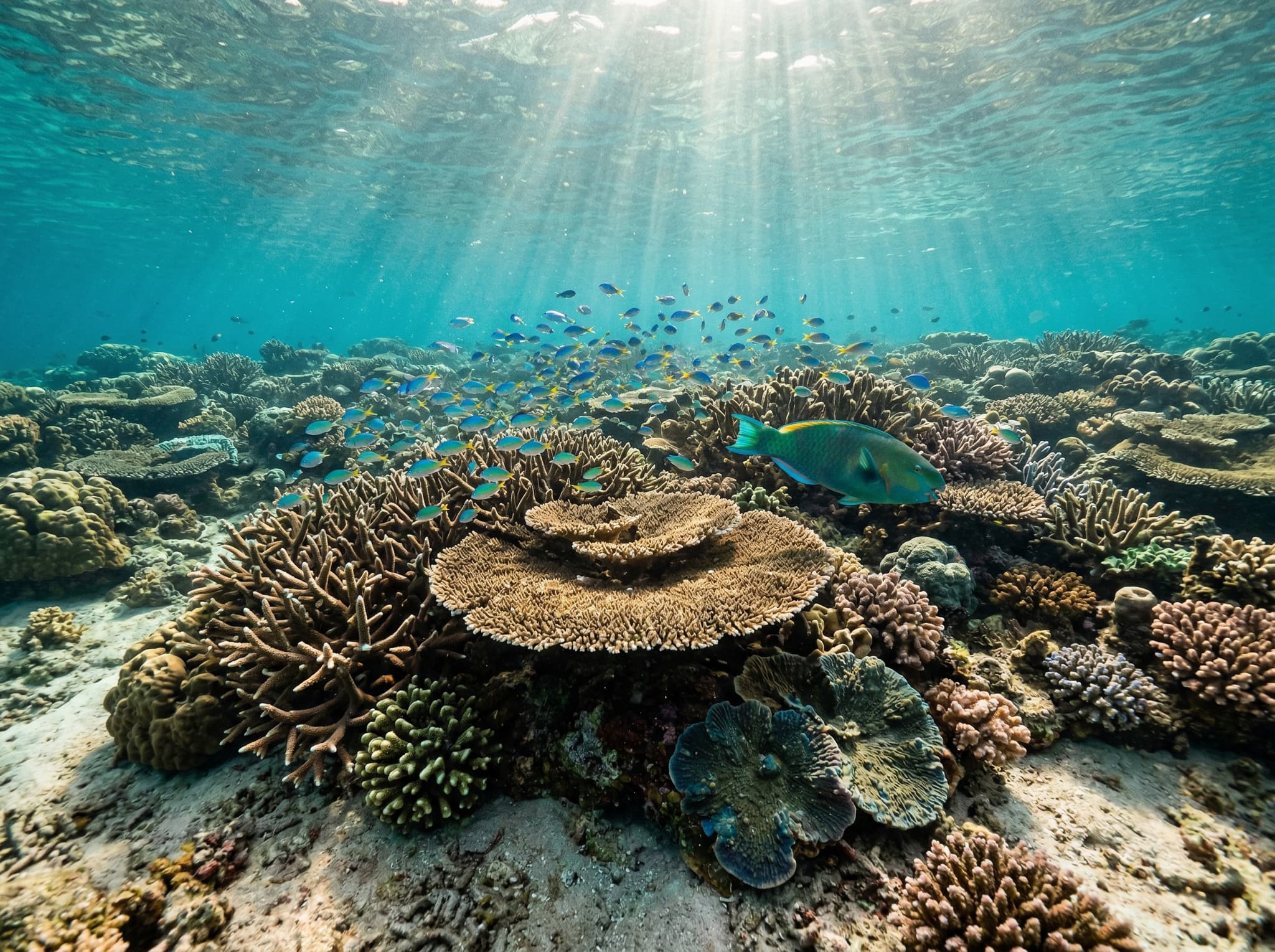
The reef at Menjerite is shallow enough that beginner snorkelers can float above it comfortably. Hard corals dominate the closer sections — tabletop formations, some branching staghorn — and the fish life is dense in the way that healthy Indonesian reefs tend to be: parrotfish, damselfish, the occasional clownfish tucked into an anemone. It's not a wall dive or a manta cleaning station. It's a reef garden in chest-deep water with good light.
What makes Menjerite distinctive among Komodo's snorkeling stops is the ease of it. There's no current to fight, no deep-water entry required. The gradient from sand to coral is gentle. For travelers who are nervous in open water — or who are snorkeling for the first time — this is one of the kinder introductions the park offers.
Snorkeling Conditions
Visibility
Up to 25–35m (June–September peak)
Depth
Shallow — suitable for beginners
Current
Minimal in the bay
Gear
Bring your own or confirm rental with tour operator
That said, the reef here is not Komodo's most dramatic. Sites like Manta Point and Batu Bolong offer bigger encounters and more complex underwater topography. Menjerite is a quieter register — the kind of place where you notice the small things because nothing is competing for your attention. The way a school of fusiliers catches the light and turns silver all at once. The slow pulse of a sea cucumber on the sand floor. If you need spectacle, this isn't it. If you want a calm hour in clear water over healthy coral, it delivers.
Getting to Menjerite Island
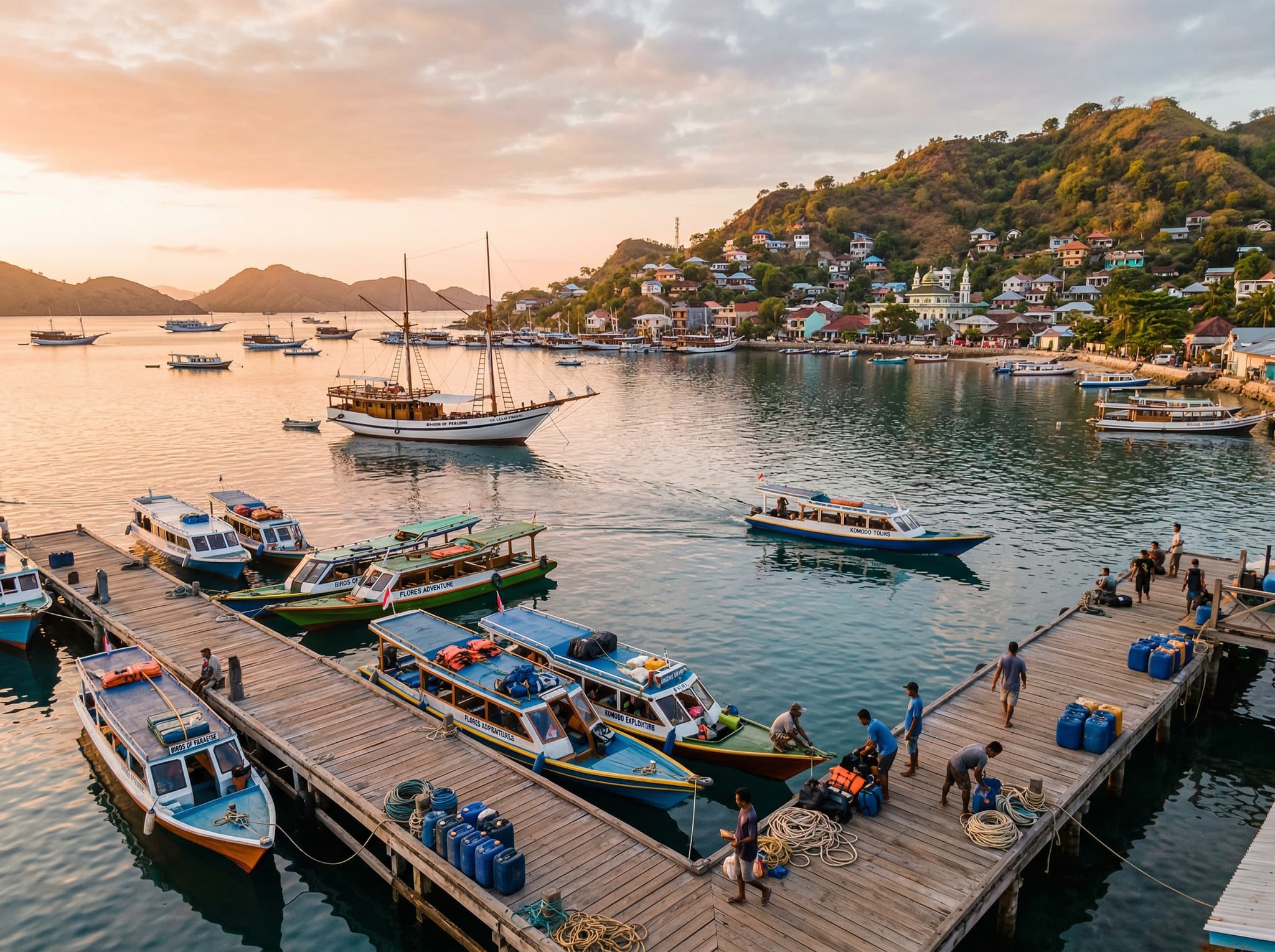
There's no independent way to reach Menjerite. The island is uninhabited, has no dock, and offers zero facilities — no toilets, no shade structures, no fresh water. Every visit happens through an organized boat tour departing from Labuan Bajo.
Most travelers visit Menjerite as part of a day trip that includes other stops. Shared speedboat tours run around USD 105 per person, while private boat charters cost approximately USD 978 per boat — worth considering if you're traveling in a group. Multi-day liveaboard or Pinisi sailing packages, which loop through multiple park sites over two to four days, range from USD 241 to 768 per person depending on duration and vessel.
The standard park entry fee for international visitors is IDR 250,000 (~USD 16–17), plus a IDR 25,000 harbour fee for day trips. Divers pay an additional IDR 25,000 surcharge. There is no separate fee for Menjerite Island beyond the standard Komodo National Park ticket. Indonesian citizens pay IDR 50,000 for park entry.
The 2026 Permit System
As of April 2026, Komodo National Park enforces a strict daily cap of 1,000 visitors across all islands and activities. Entry permits must be booked in advance through the official SiORA app using the Komodo Reservation feature. Walk-in permits are no longer available.
Permits are date-locked and non-transferable. You'll need passport details at the time of booking. If you're joining an organized tour, most operators handle the permit process after receiving your deposit — but confirm this explicitly before paying.
Permit Details
Daily visitor cap
1,000 across entire park
Booking platform
SiORA app (Komodo Reservation)
Walk-ins
Not permitted
Requirements
Passport details, date-specific
For high-season travel in July and August, liveaboard packages book up 6 to 12 months in advance. Day trips are easier to secure on shorter notice, but during peak weeks the daily cap can fill. Book at least a few days ahead, even for shared speedboat tours.
When to Go
The dry season runs from April through November. Within that window, April–June and September–November offer the best combination of calm seas, strong visibility, and fewer boats anchored in the bay. May and June are particularly good — warm water, clear skies, and the peak-season crowds haven't arrived yet.
July and August deliver excellent underwater conditions but bring noticeably more traffic. December through March is wet season: rougher seas, reduced visibility, and a real chance your tour gets cancelled due to conditions.
What Menjerite Isn't
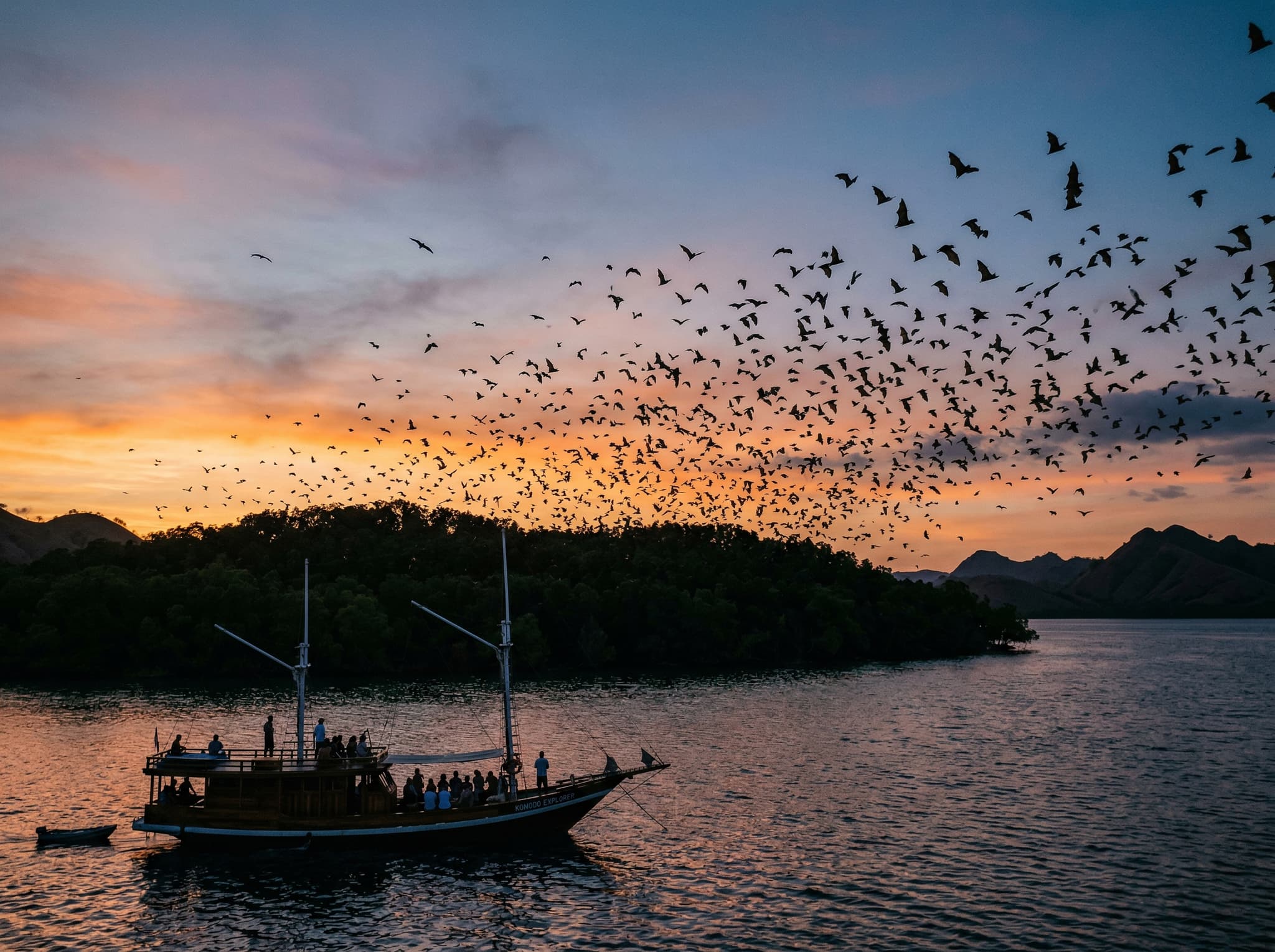
It's not a full-day destination. It's not the reason you fly to Labuan Bajo. It's one stop on a route that includes bigger draws — Komodo dragons on Rinca, manta rays at other sites, the flying foxes at Kalong Island at sunset. But the hour you spend floating over Menjerite's reef, in water so clear it barely seems to be there, is the part of the day that stays quiet in your memory when the rest blurs together. Some places earn their value not by being extraordinary, but by being exactly enough.