Mangku Sakti Waterfall sits in a volcanic gorge on Rinjani's slopes near Sembalun. Here's what to expect, how to get there, and why it pairs well with a farm visit.
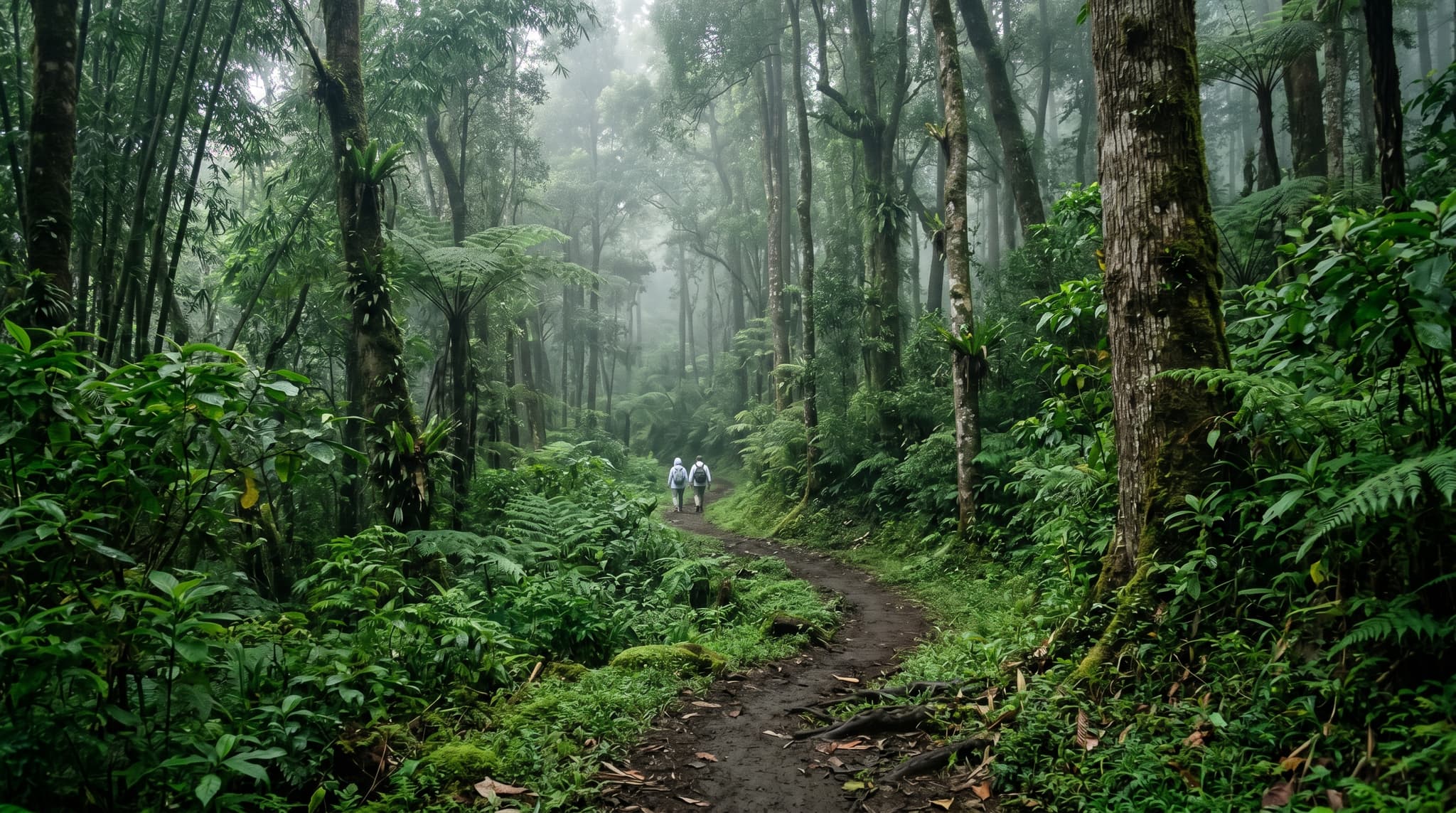
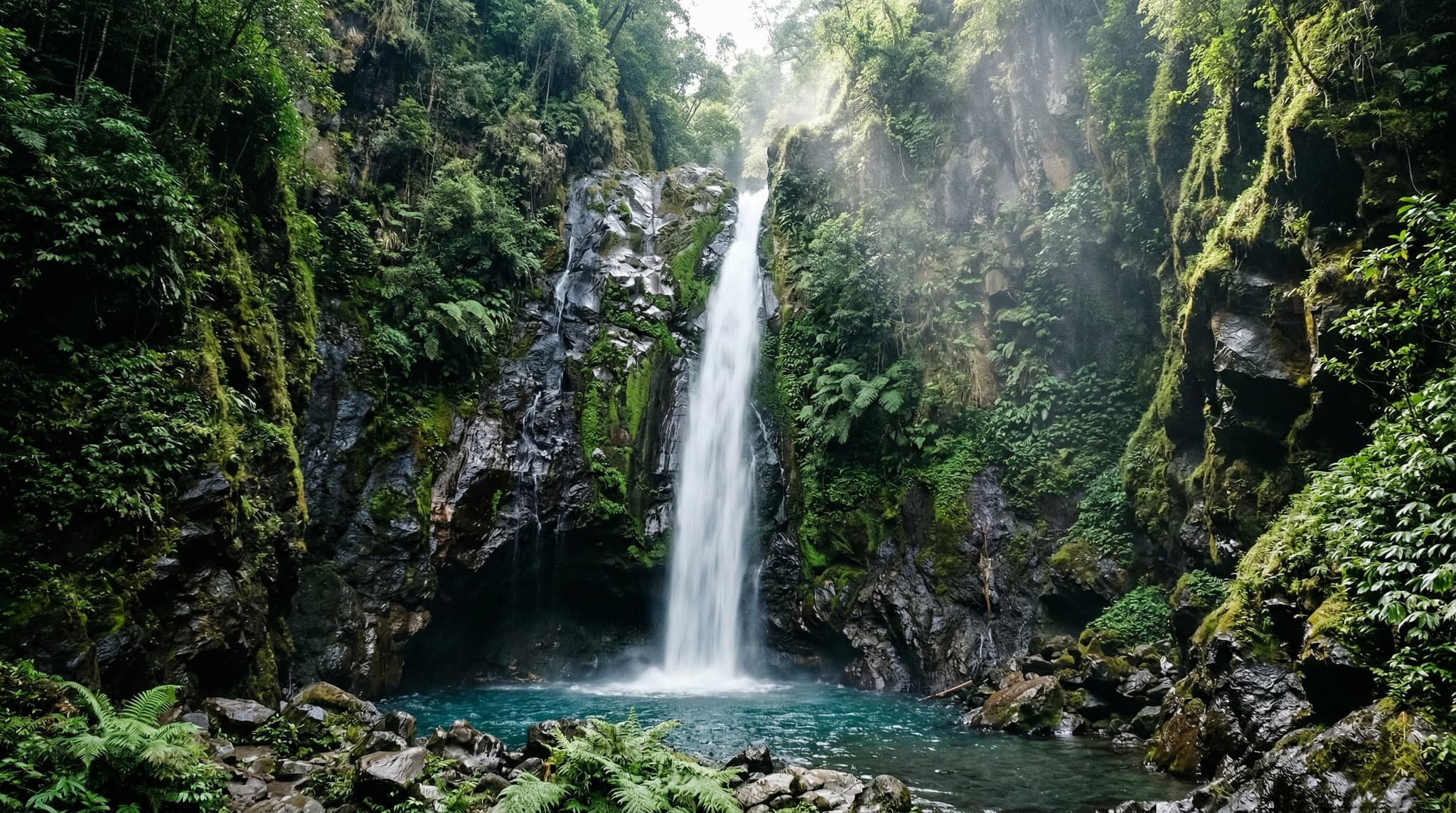
There's a point on the trail to Mangku Sakti Waterfall where the canopy closes overhead and the temperature drops a few degrees. The path narrows, the ground turns from packed dirt to mossy rock, and the sound of water — which you've been hearing faintly for several minutes — becomes the only thing that matters. It's not a dramatic waterfall. It doesn't thunder. But when you come around the last bend and see it falling in a clean white line against dark volcanic stone, it earns the walk.
Getting to Mangku Sakti Waterfall

The waterfall is located in the Sembalun Valley on the eastern side of Mount Rinjani, roughly 2.5 hours by car from Mataram or about 1.5 hours from Senggigi. If you're already in Sembalun — which you should be if you're exploring Lombok's highlands — the trailhead is around 15 minutes by motorbike from the main village.
Access Details
From Sembalun Village
~15 min by motorbike to trailhead
From Mataram
~2.5 hours by car
From Senggigi
~1.5 hours by car
Trail Difficulty
Moderate — uneven terrain, some river crossings
Most visitors hire a local guide at the trailhead, which is both practical and expected. Guides typically charge IDR 100,000–150,000 ($6.50–$10) for the round trip. You don't strictly need one — the path is a single track without major forks — but the river crossings can be tricky after rain, and the guides know where the rocks are stable underfoot. It's worth the money.
The trail itself takes 30 to 45 minutes depending on your pace and conditions. You'll cross the river multiple times, sometimes on stepping stones, sometimes wading through ankle-deep water. Wear shoes you don't mind getting wet. Sandals with good grip work; flip-flops don't.
The Waterfall Itself

Mangku Sakti Waterfall drops roughly 30 meters into a pool at its base. The water comes off Rinjani's slopes, which means it's cold — noticeably colder than lowland rivers in Lombok. The pool is deep enough to swim in, though most people wade in to their waist, take in the temperature shock, and decide that's enough.
What makes this waterfall worth the trip isn't scale. It's setting. The falls sit inside a narrow gorge of dark volcanic rock, streaked green with moss and fern. In the morning, when the light comes in at an angle, the mist off the falls catches it and the whole gorge glows. By midday, the light flattens and the effect disappears. If you have the choice, go early.
The water itself has a faintly mineral quality — locals attribute spiritual significance to it, and the name "Sakti" (meaning "sacred" or "powerful" in Balinese and Sasak tradition) reflects that. You'll sometimes see small offerings near the base. This is an active cultural site, not just a tourist attraction. Respect it accordingly.
What the Walk Feels Like

I want to be honest: I haven't stood at the base of Mangku Sakti Waterfall. What I know comes from research, from conversations with travelers who've been, and from understanding the Sembalun highlands well enough to trust the details. But certain things come through consistently in every account I've read.
People mention the quiet. Not silence — there's the water, the insects, the occasional bird — but the absence of anything mechanical. No generators, no music, no motorbikes. The Sembalun highlands sit at enough altitude that the air feels different from coastal Lombok, cooler and thinner, and the vegetation shifts accordingly. The trail passes through a mix of tropical forest and highland scrub, and the transition is gradual enough that you don't notice it until you're in it.
People also mention the cold. Not the air — mornings in Sembalun are cool but comfortable — but the water. Every account emphasizes it. Coming from the heat of lowland Lombok, the temperature of the pool is a genuine shock.
Combining Mangku Sakti Waterfall with Sembalun Strawberry Farms

This is where the practical thread matters. Mangku Sakti Waterfall sits in the same highland area as the Sembalun strawberry farms, and the two make a natural half-day pairing. The farms are closer to the main village, so the logical sequence is to visit the waterfall first — while you still have morning energy and morning light — then stop at the farms on your way back.
Half-Day Itinerary
Morning (7:00–8:00 AM)
Drive or ride to Mangku Sakti trailhead
Morning (8:00–10:00 AM)
Hike to waterfall, swim, return
Late Morning (10:30–12:00 PM)
Visit Sembalun strawberry farms
Afternoon
Lunch in Sembalun village or drive out
The strawberry farms are a lighter, easier experience — flat ground, no river crossings, and the novelty of picking highland berries at equatorial altitude. Together, the two visits give you a full morning in the Sembalun highlands without requiring Rinjani-level fitness or commitment.
If you're staying in Senggigi or the Gili Islands, this is a long day trip but a feasible one. Leave early, expect to be back by late afternoon. If you're already based in Sembalun — perhaps as a staging point for a Rinjani trek — it's an easy morning before or after the main event.
Who This Is For
Mangku Sakti Waterfall is not a destination that justifies a trip to Lombok on its own. It's a complement — to a Rinjani trek, to a day exploring the Sembalun highlands, to the kind of travel that values a quiet gorge and cold water over a crowded beach. If you're already in the area, it's one of the more rewarding things you can do with a morning.
It's moderate enough for reasonably fit travelers but not suitable for young children or anyone with mobility issues. The river crossings require balance and attention. Bring proper footwear, start early, and give yourself time to sit at the base and let the cold settle in.
Some places earn their reputation through spectacle. Mangku Sakti earns it through atmosphere — the walk in, the sound building, the gorge narrowing, and then the falls, doing exactly what falls do, but in a setting that makes you pay attention.