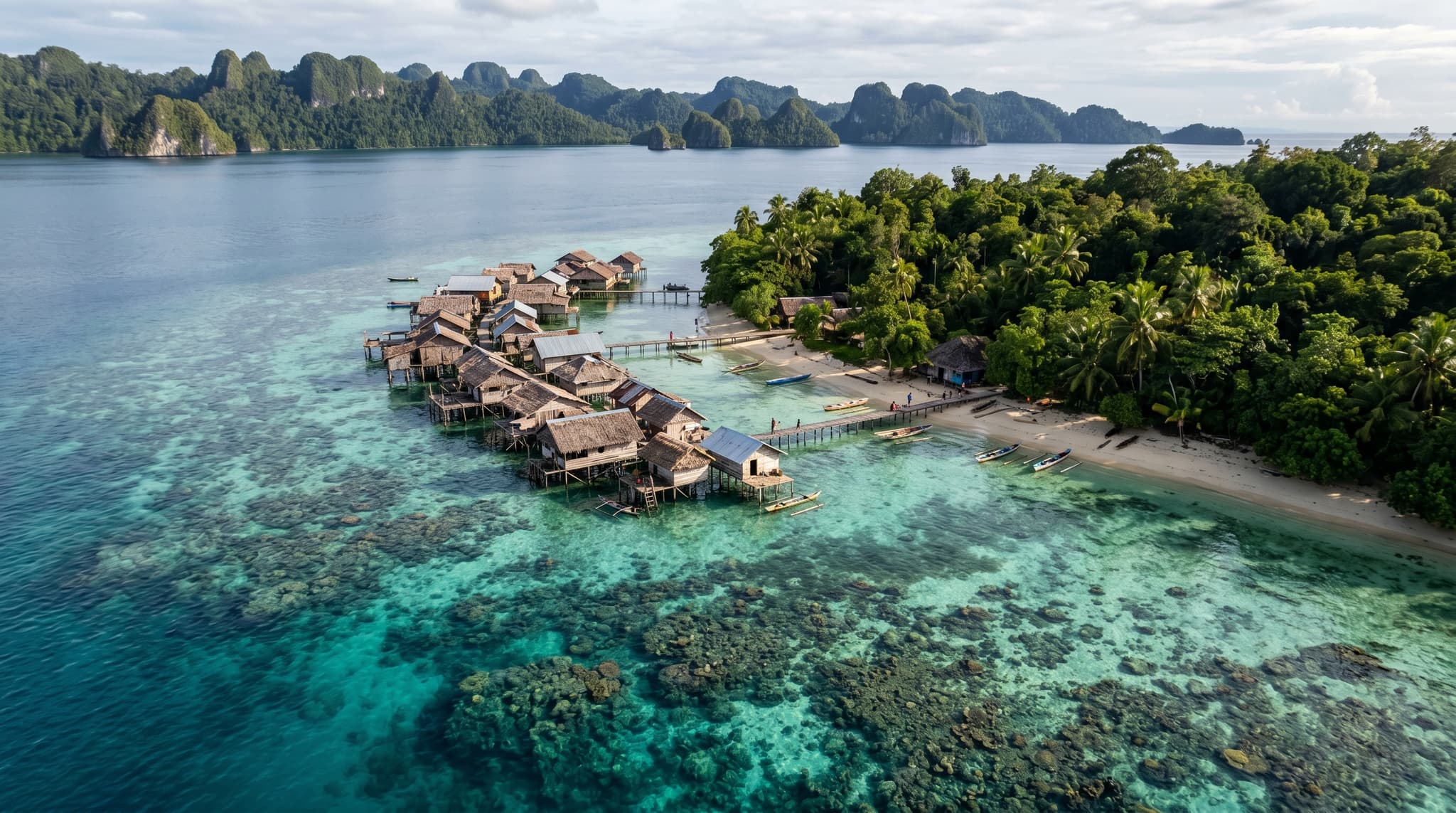
Tanjung Aan's pepper sand and turquoise water remain stunning, but luxury development is reshaping this Lombok beach. Here's what to expect in 2025.
's southern coast and makes it worth the journey to [Lombok](/asia/indonesia/lombok)](/_next/image?url=https%3A%2F%2Fhcsauzofnowpfpbudclf.supabase.co%2Fstorage%2Fv1%2Fobject%2Fpublic%2Farticle-images%2Fb1ecefa1-b15f-47e8-9dd6-c12cecffe135%2Fplace-1.jpg&w=2048&q=75)
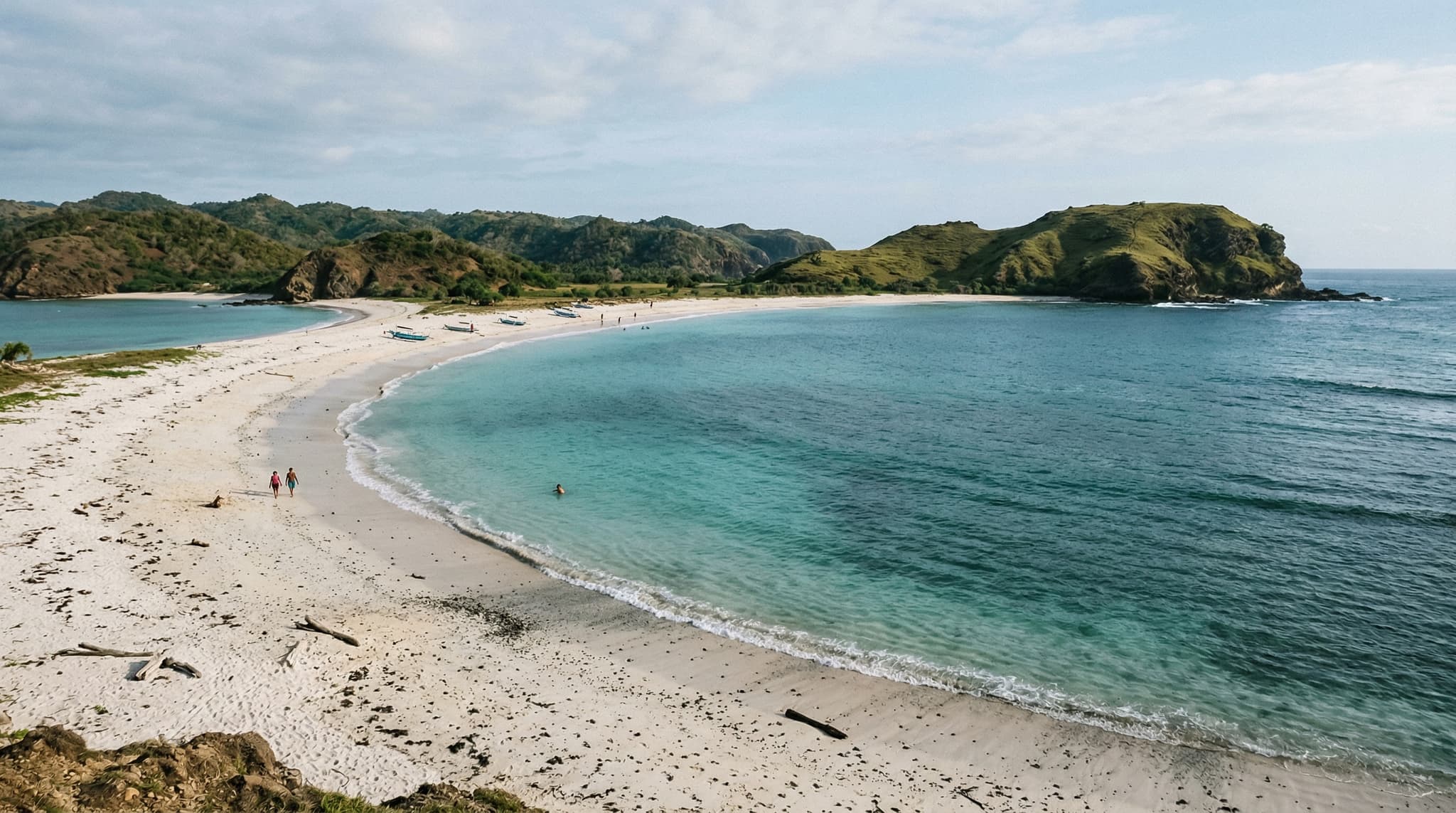
Tanjung Aan is the beach that made people fall in love with Lombok. Two kilometers of white sand flecked with dark pepper grains, turquoise water shallow enough to wade out fifty meters, and — until recently — a handful of warungs selling nasi goreng for pocket change under thatched roofs. It's the beach that showed up in every "Bali alternative" article for a decade, and for good reason. The sand alone is worth the trip: fine, distinctly speckled, unlike anything on Bali's southern coast.
But Tanjung Aan in 2025 is not the Tanjung Aan of those articles. It's a beach in transition, and anyone planning a visit deserves to know what that means on the ground.
What's Happening: The Mandalika Development
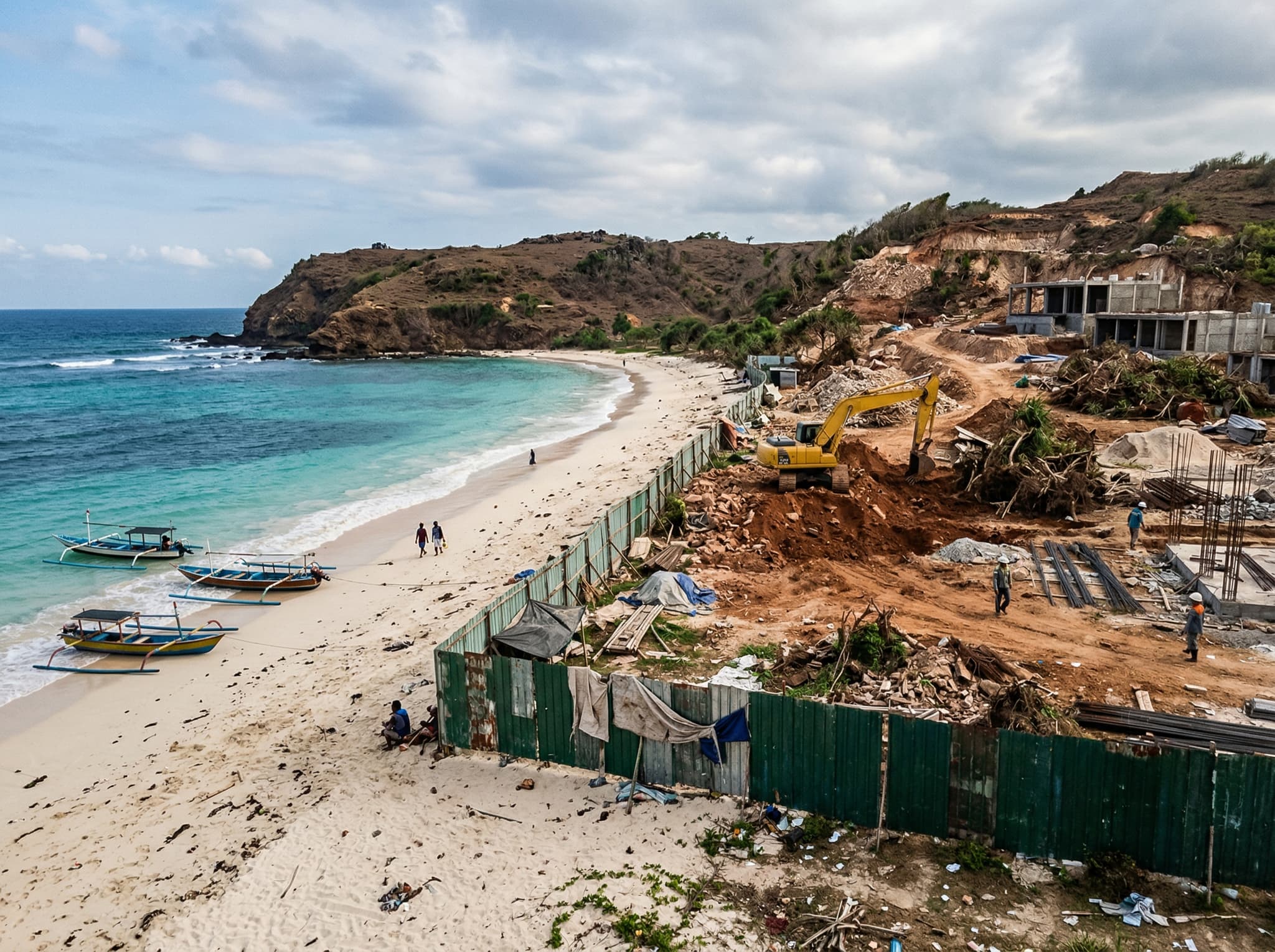
Tanjung Aan sits within the Mandalika Special Economic Zone, part of Indonesia's ambitious "10 New Balis" tourism initiative. The Indonesia Tourism Development Corporation (ITDC) holds land rights over the area, and the government is betting big on luxury development here.
How big? In April 2025, a $124 million joint venture — involving Indonesian, Japanese, and Dubai-based firms — was signed for a 350-room five-star resort on the eastern bay. The plans include villas, a spa, an organic farm, and an equestrian center spread across 157 hectares, with a target opening of 2027.
On July 15, 2025, local food stall owners, coconut sellers, surfboard rental operators, and boat owners were forcibly evicted from the beach area. Seven hundred personnel were deployed to secure the operation. Some displaced residents were offered relocation inland — widely rejected, particularly by boat operators for whom an inland plot is functionally useless.
What It's Still Good For
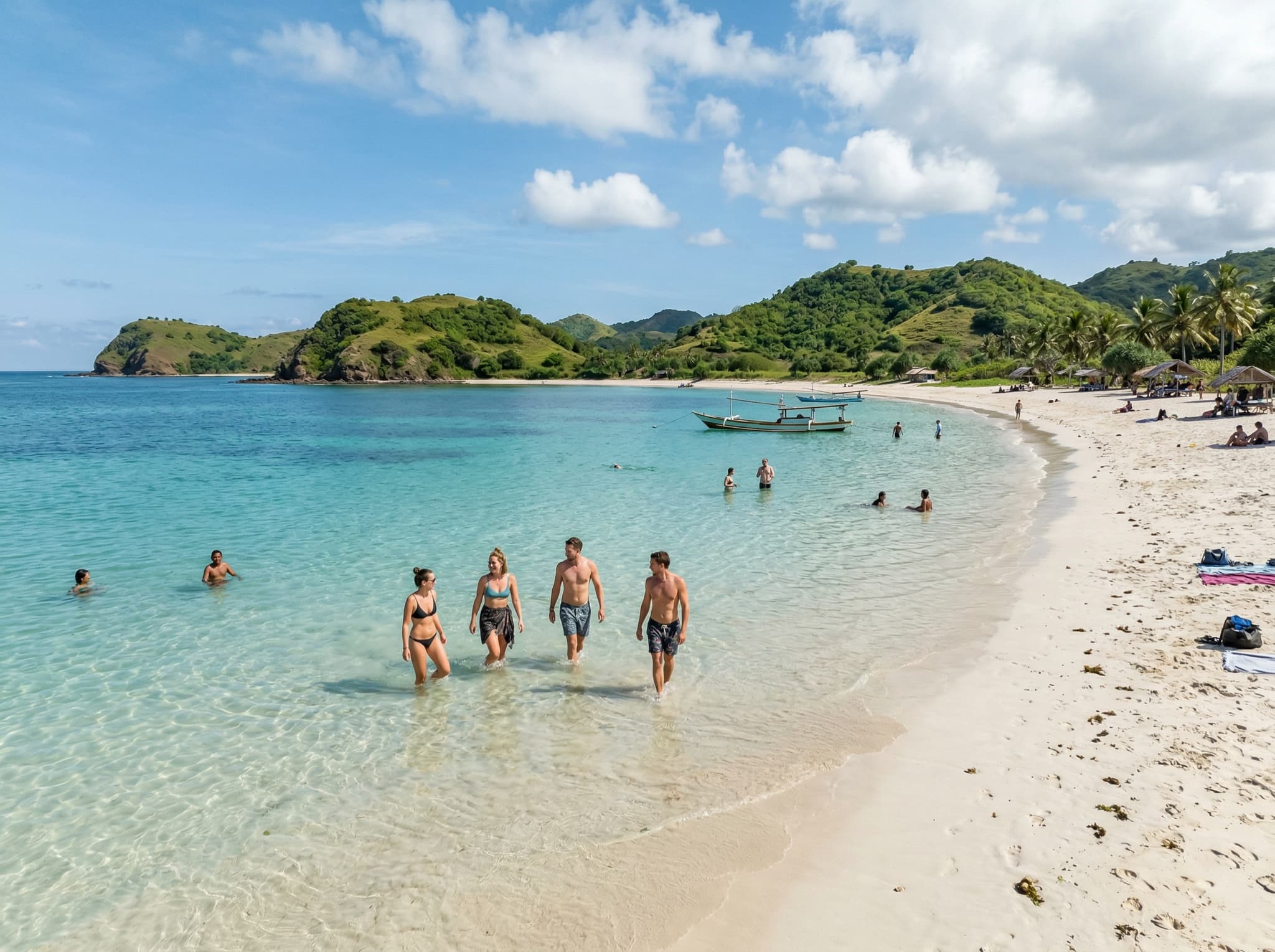
Development controversy aside, the geography hasn't changed. Tanjung Aan is still one of the most beautiful beaches in Indonesia, and the water is still exceptional.
Swimming: The western bay is sheltered and calm, particularly at mid-to-high tide. Dry season (May–September) offers the safest conditions — calmer seas, better visibility, minimal current. During wet season (November–April), rip currents and unpredictable swells increase risk. Avoid reef areas at low tide regardless of season; exposed coral is shallow and unforgiving.
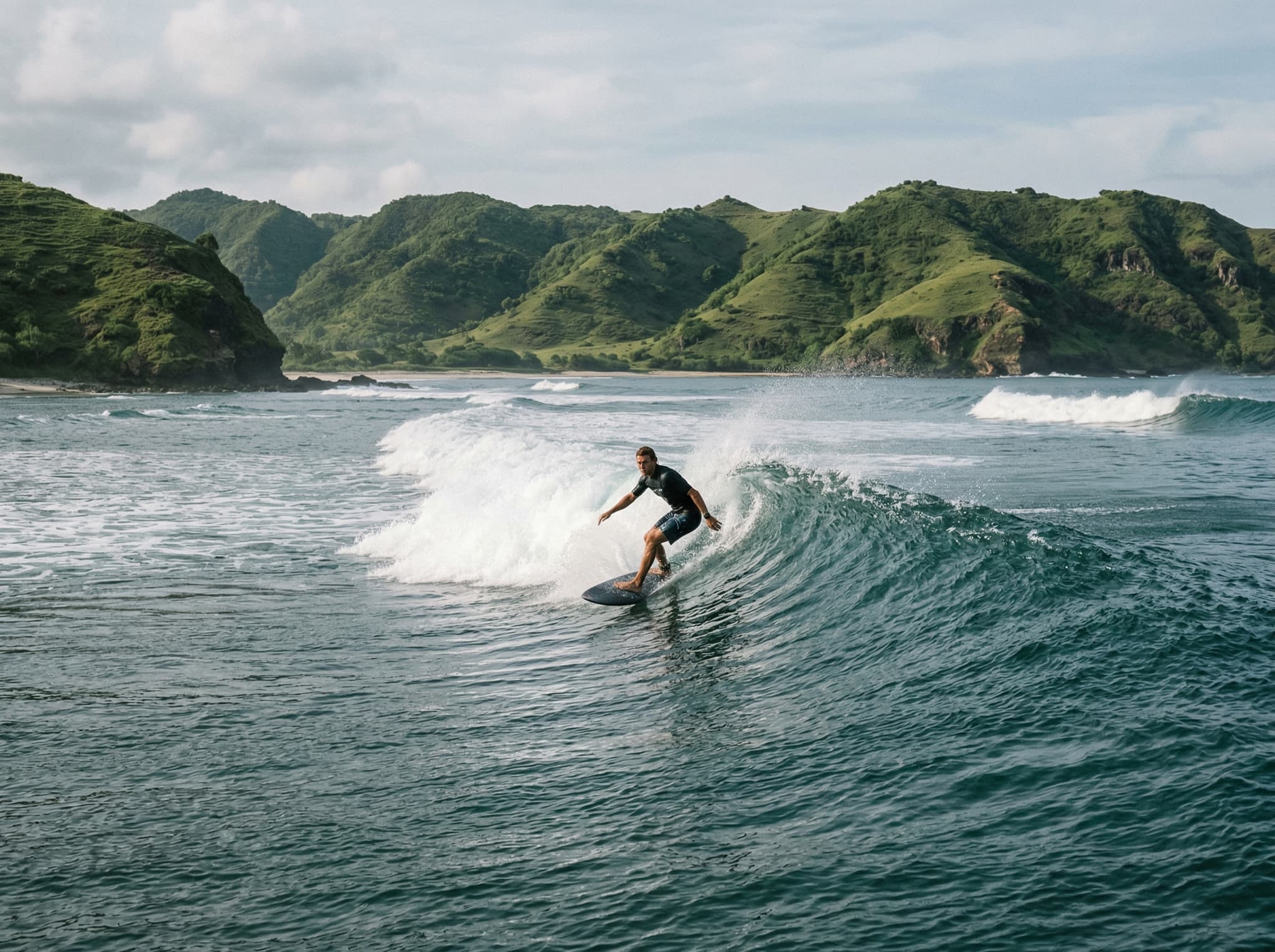
Surfing: The beach offers a mix of gentle beach breaks and reef breaks. Beginners should visit during wet season when waves run 2–6 feet and winds are lighter. Dry season brings southern swells of 4–12 feet — better suited to experienced surfers. Morning sessions are best year-round; offshore winds create glassy conditions before afternoon chop sets in.
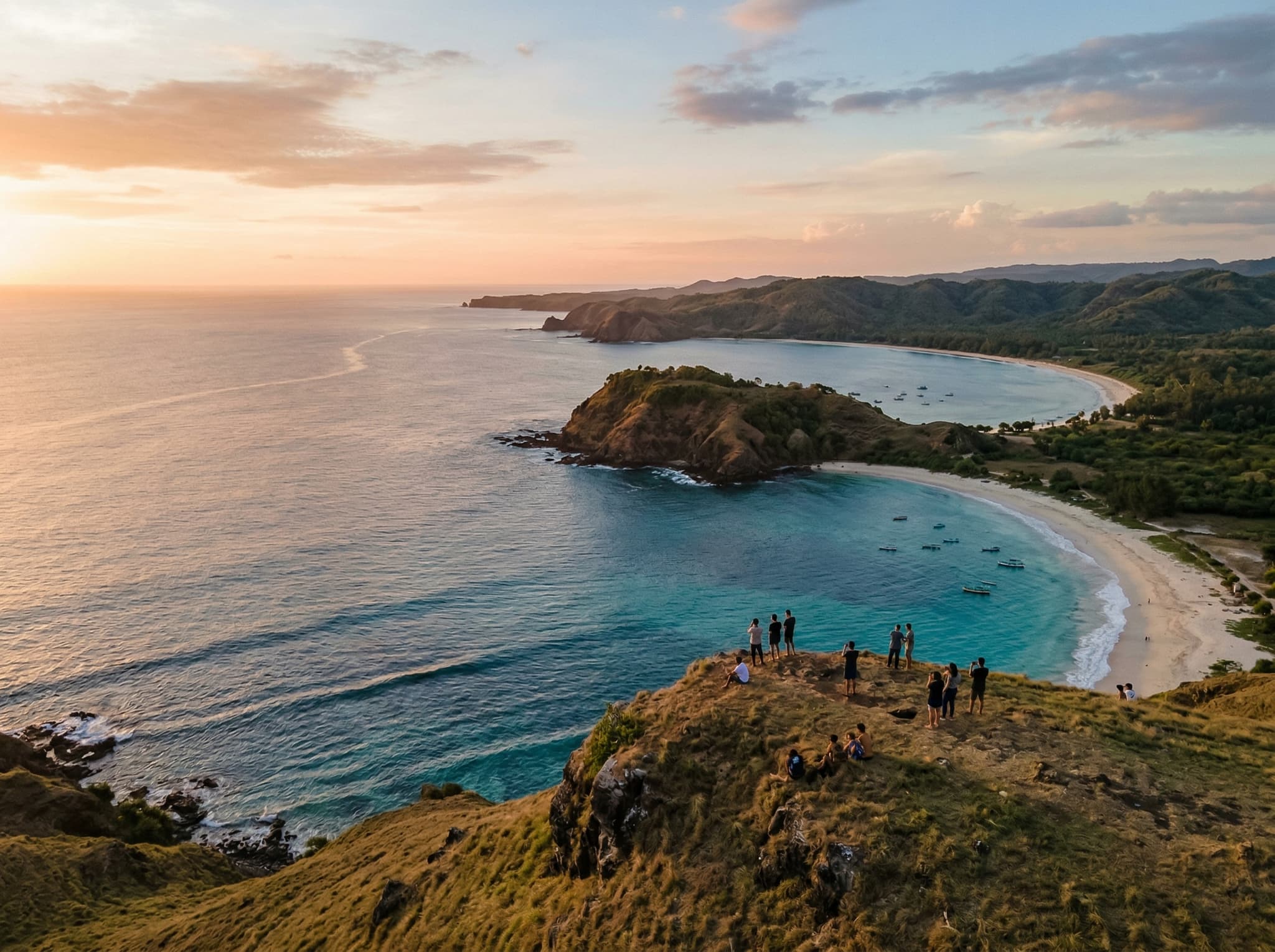
Bukit Merese: The hill at the eastern end of the beach offers panoramic views over both bays. It's a short walk up and the payoff is significant — this is the vantage point that launched a thousand Instagram posts, and it's genuinely stunning at sunset.
Activity Costs
Surfboard Rental
~IDR 100,000 ($6–7) per hour or day
SUP Rental
IDR 100,000 (~$7) per hour
Sun Loungers
Often free with food purchase
Note: availability of rental equipment and food vendors may be reduced or disrupted given the July 2025 evictions. Conditions are fluid — verify locally.
Getting There
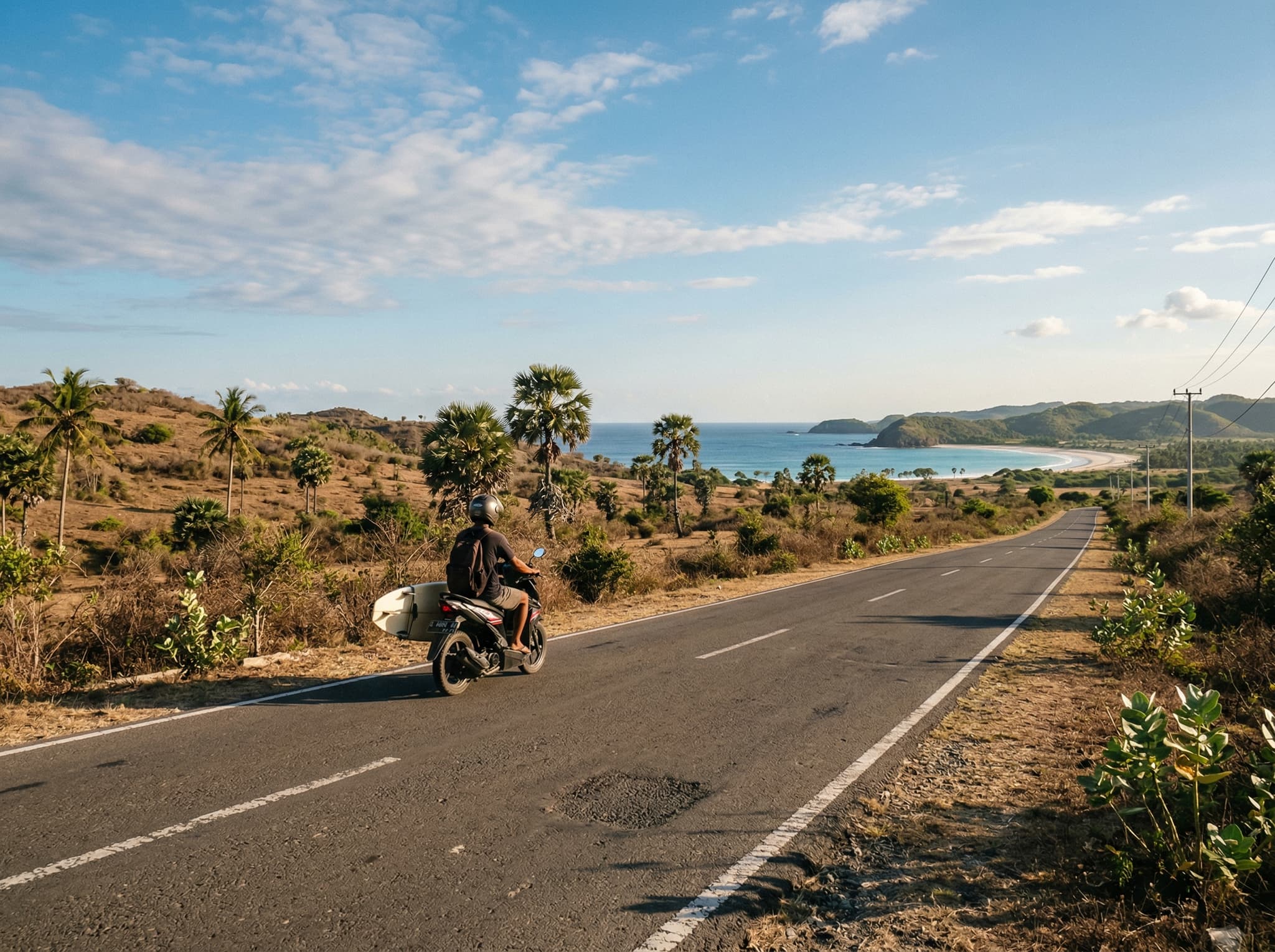
Tanjung Aan is most easily accessed from Kuta Lombok, the small town (not to be confused with Kuta Bali) that serves as the base for south Lombok's beaches.
Transport from Kuta Lombok
Scooter
15–20 min, IDR 50,000–100,000/day rental
Private Driver/Taxi
IDR 70,000–100,000 one-way
Road Condition
Paved from Kuta, gravel near beach
Transport from Mataram
Distance
50–60 km south
Taxi/Private Transfer
IDR 300,000–500,000 one-way, 1.5–2 hours
Bemo + Ojek
IDR 100,000–200,000 with route changes
There's no direct public transport to Tanjung Aan. Grab and Gojek coverage is spotty outside Mataram. A scooter from Kuta is the most practical option — the road is manageable, if dusty near the end. For those coming from the airport or Mataram, arrange a private transfer in advance. Green Rinjani is one operator that covers the route.
When to Go
May through September is the straightforward answer. Clear skies, warm water, calm conditions for swimming and snorkeling. July and August are peak season — busier and slightly pricier for accommodation in Kuta, but the weather is near-guaranteed.
April and October are solid shoulder months: generally good weather, lower costs, though rain probability ticks up. Worth the gamble if you're flexible.
November through April brings tropical showers, higher humidity, and rougher seas. The beach is quieter, and beginner surfers actually benefit from the smaller, mellower waves — but swimming becomes less predictable and snorkeling visibility drops.
Morning visits are best regardless of season. The light is better, the wind is calmer, and by early afternoon the sand can get punishingly hot.
The Honest Assessment
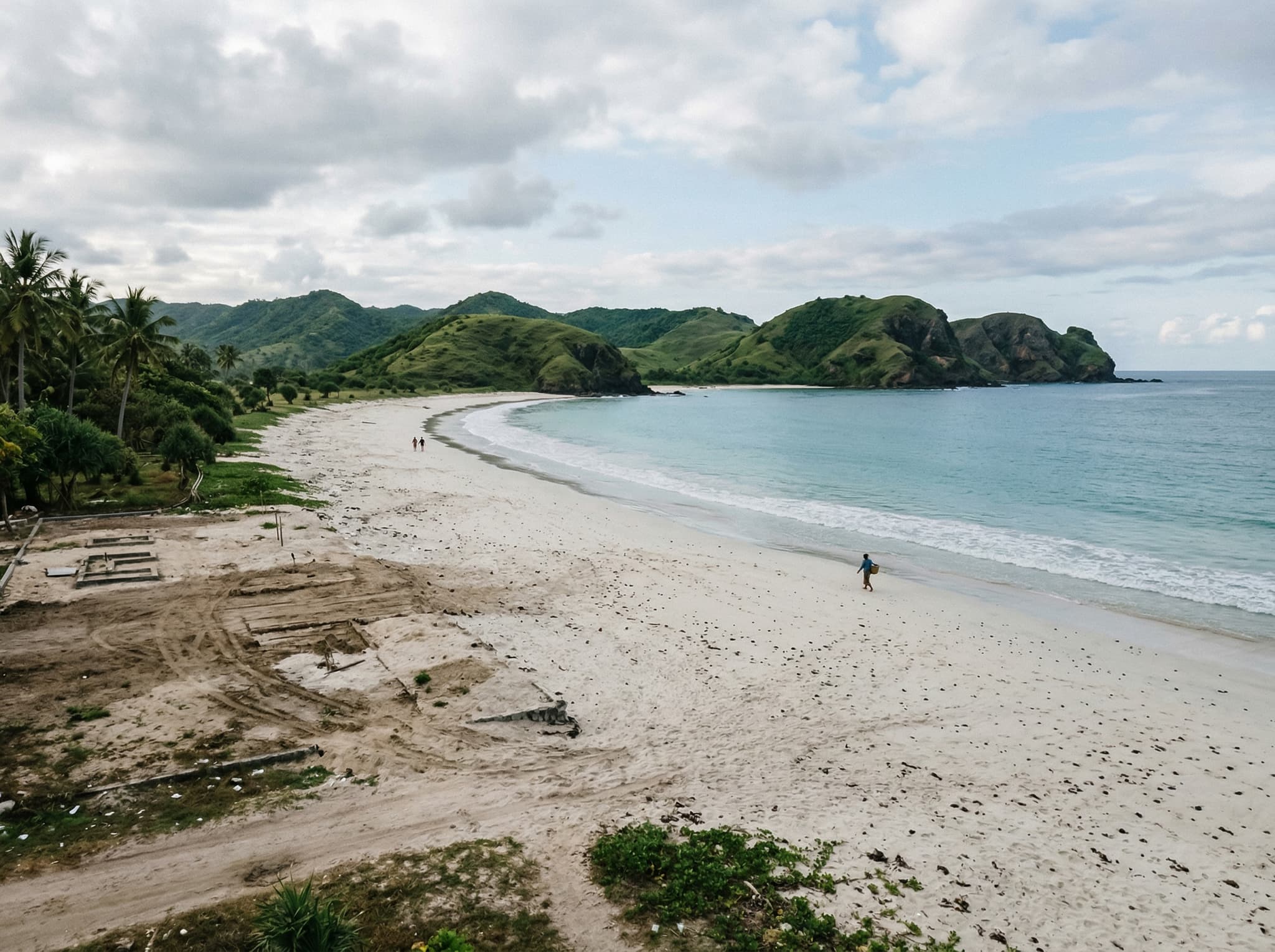
Tanjung Aan's natural beauty is undeniable and unchanged. The sand, the water, the view from Bukit Merese — these remain among the best in Southeast Asia. As a place to swim, surf, or simply sit on a beautiful beach, it still delivers.
But the character of the place is shifting. The warungs that gave it warmth are gone. The development that's replacing them promises luxury but has so far delivered cleared land and displacement. Whether the 2027 resort will coexist with public beach access or gradually restrict it is an open question.
Visit now if you want to see Tanjung Aan in its raw, complicated, in-between state. Just go in with open eyes.