Mandalika blends world-class southern Lombok beaches with Indonesia's biggest tourism development project. Here's what's actually on the ground right now.
If you've heard of Mandalika, it's probably because of one of two things: MotoGP or the Indonesian government's plan to turn southern Lombok into the next big tourism destination. Both of those things are real, and both are complicated. What's actually on the ground right now is a stretch of gorgeous coastline in the middle of a long, uneven transformation — part finished resort zone, part construction site, part wild beach that hasn't changed in decades.
Understanding what Mandalika is, and what it isn't yet, matters if you're planning a trip to southern Lombok. The marketing runs ahead of the reality in places. But the coastline itself is genuinely spectacular, and knowing how to navigate the area means you can enjoy what's already here without being disappointed by what's still coming.
What Mandalika Actually Is
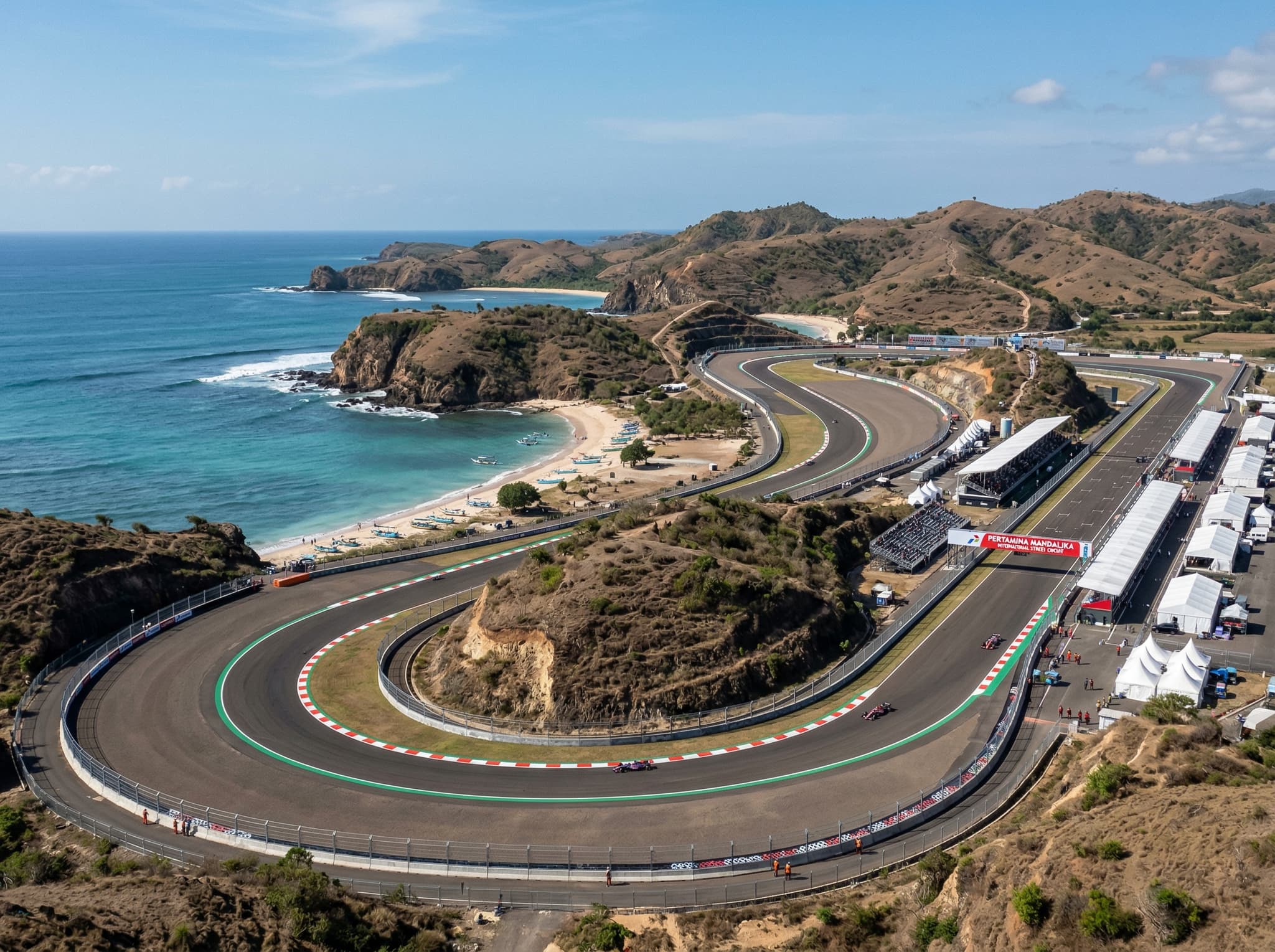
Mandalika is a Special Economic Zone (KEK) covering roughly 1,175 hectares along Lombok's southern coast. It's managed by the Indonesia Tourism Development Corporation (ITDC) — the same entity that developed Nusa Dua in Bali back in the 1970s. The comparison is intentional: the government wants Mandalika to become a second Nusa Dua, a planned tourism enclave that draws international visitors and investment.
The centerpiece so far is the Pertamina Mandalika International Street Circuit, which hosted its first MotoGP race in March 2022. The circuit wraps around the coastal headland near Kuta Lombok, and race weekends bring a significant influx of visitors and infrastructure pressure to an area that's still building out its capacity.
Mandalika Development
Zone Size
~1,175 hectares
Managing Body
ITDC (Indonesia Tourism Development Corporation)
MotoGP Circuit
Pertamina Mandalika International Street Circuit
First MotoGP Race
March 2022
Beyond the circuit, the development includes a handful of international hotel brands — the Pullman Lombok Merujani Mandalika Beach Resort is the most established — along with commercial areas and public beach access points. But large sections of the zone remain under construction or in planning stages. If you arrive expecting a polished resort district, you'll find something more patchwork.
The Beaches
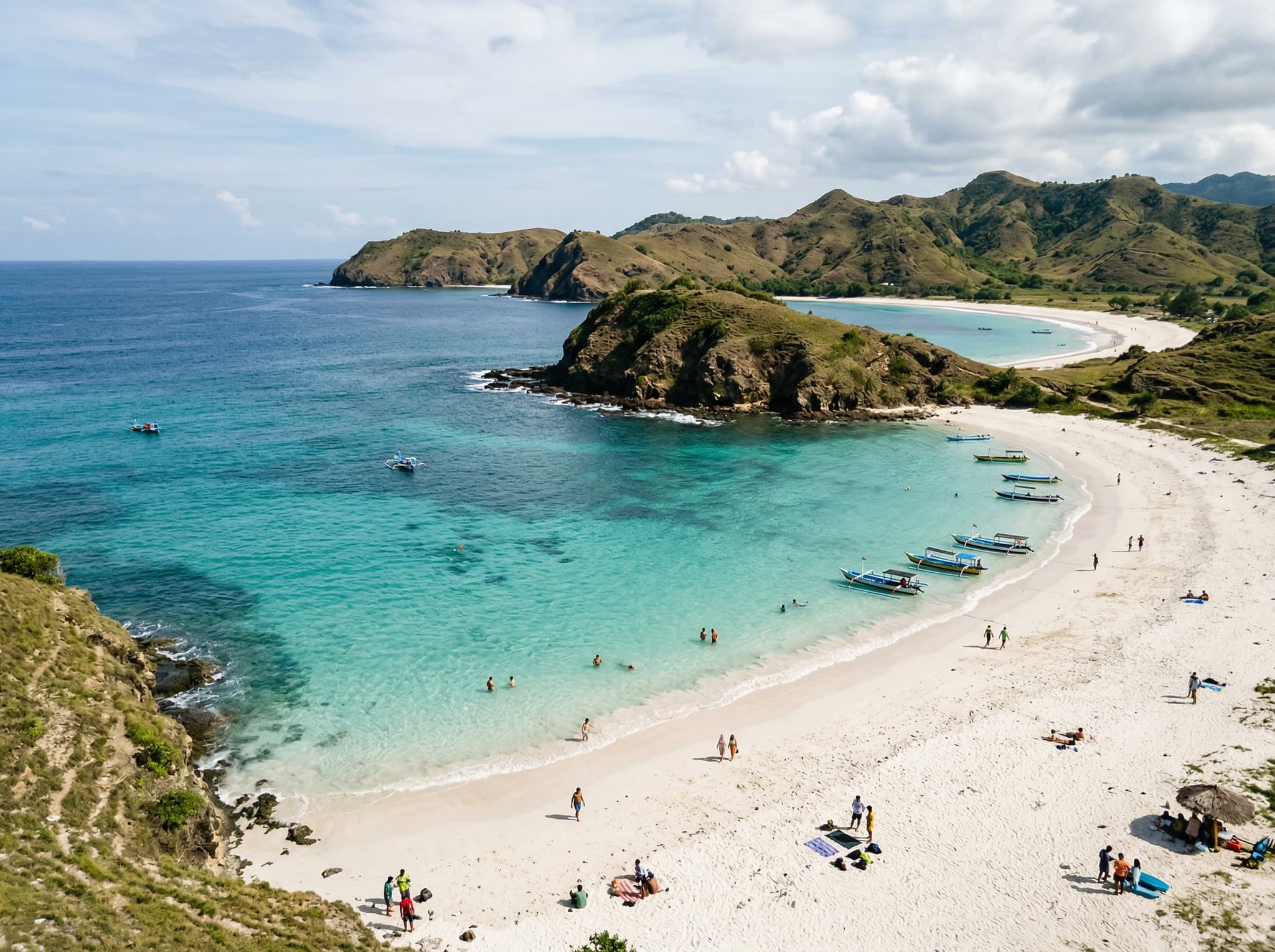
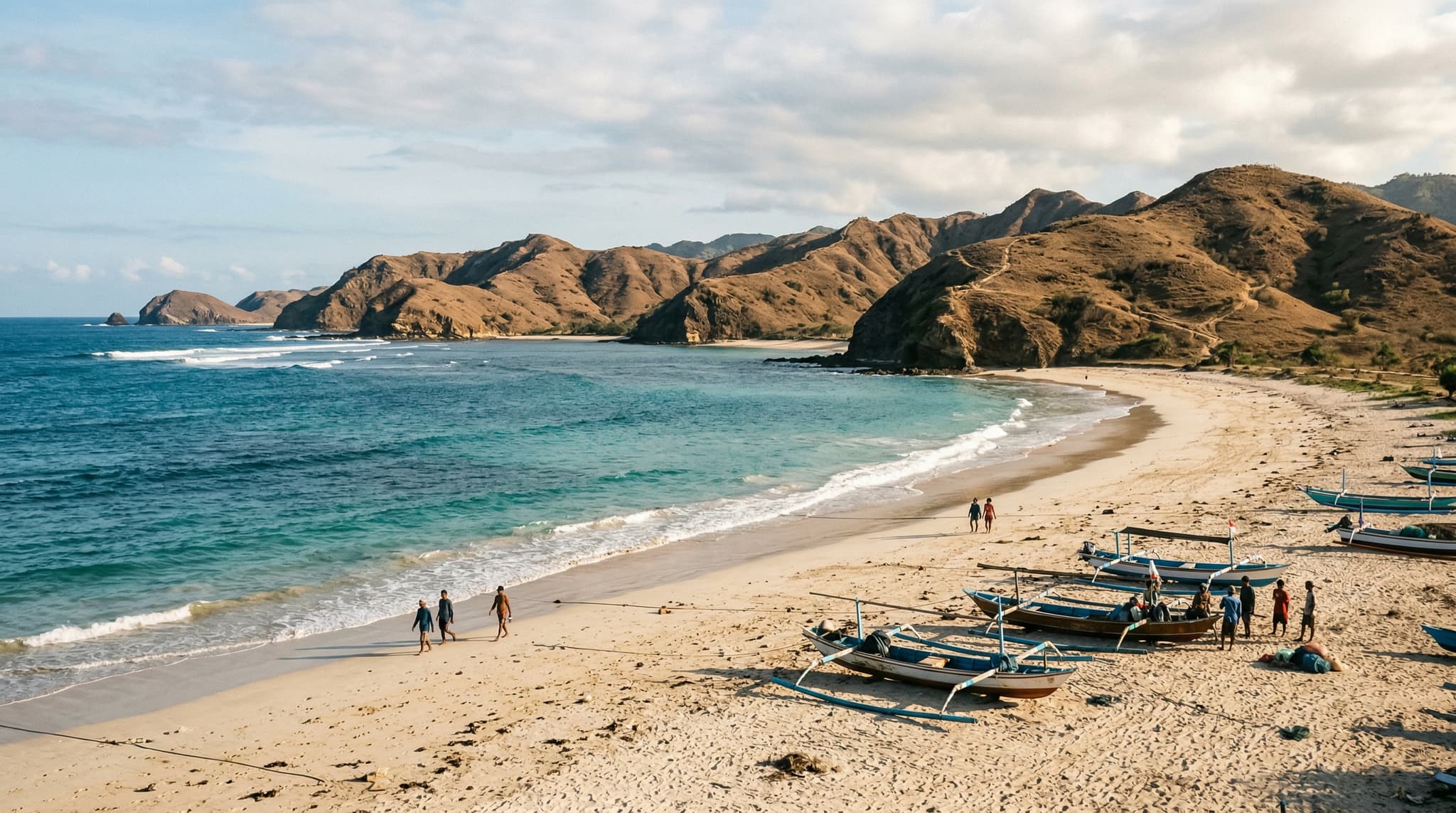
This is where Mandalika delivers regardless of the development's progress. The southern Lombok coastline is dramatic — wide arcs of white and golden sand backed by dry, rolling hills that look nothing like Bali's lush green. The water shifts between turquoise shallows and deep blue, and during dry season the conditions are consistently excellent.
Mandalika Beach (sometimes called Kuta Beach Lombok, not to be confused with Kuta in Bali) is the main stretch fronting the development zone. It's broad, clean, and swimmable in calmer months, though currents can be strong.
Tanjung Aan, just east of the main Mandalika area, is arguably the standout — a double bay with unusually fine, almost grain-like sand and shallow turquoise water. It's the beach that shows up in most promotional photography for good reason.
Seger Beach, closer to the circuit, is smaller and more rugged, with a grassy headland that offers good views along the coast. It holds cultural significance for the local Sasak community — the annual Bau Nyale festival, celebrating the sea worm harvest, takes place here, typically in February or March.
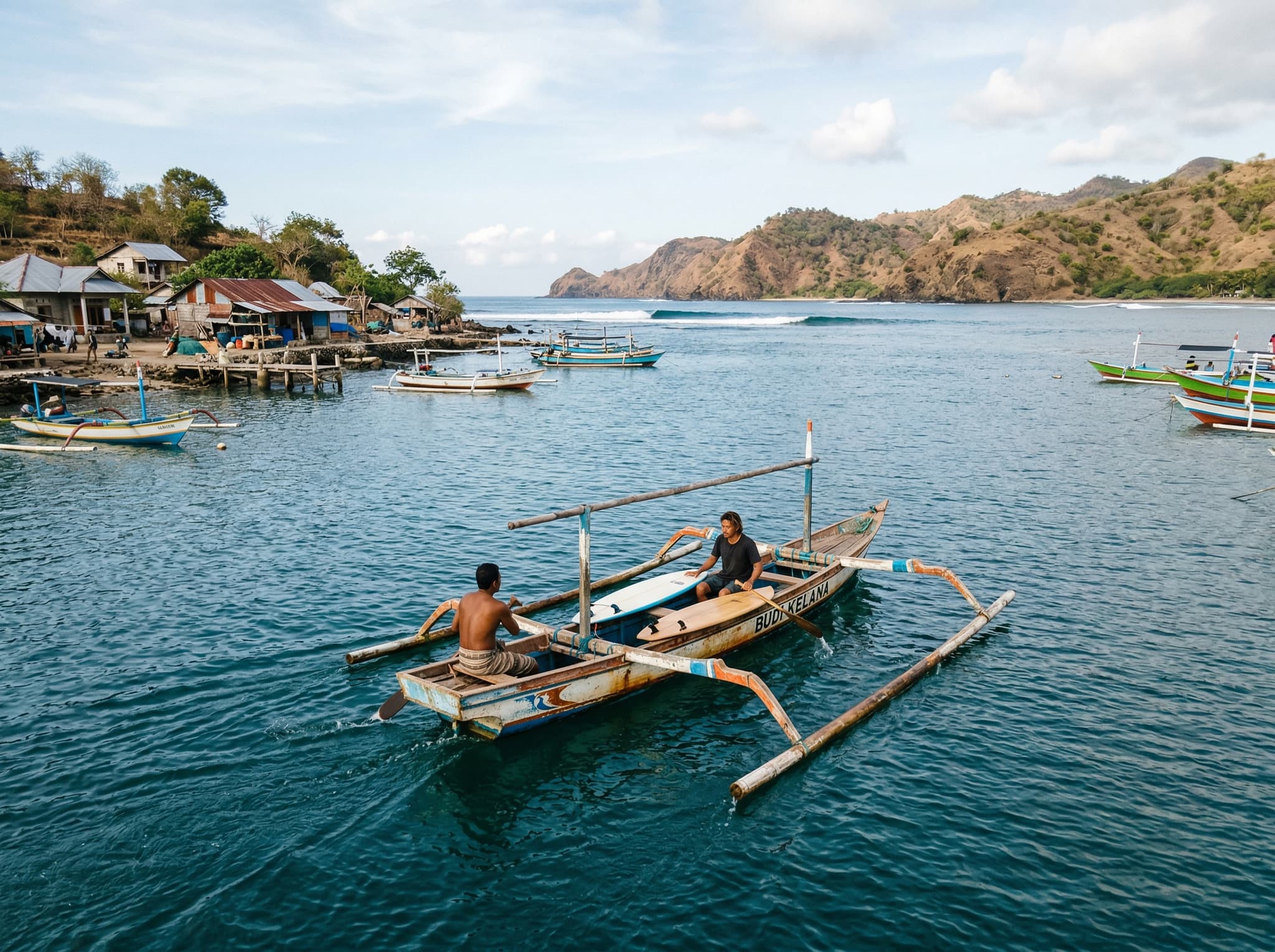
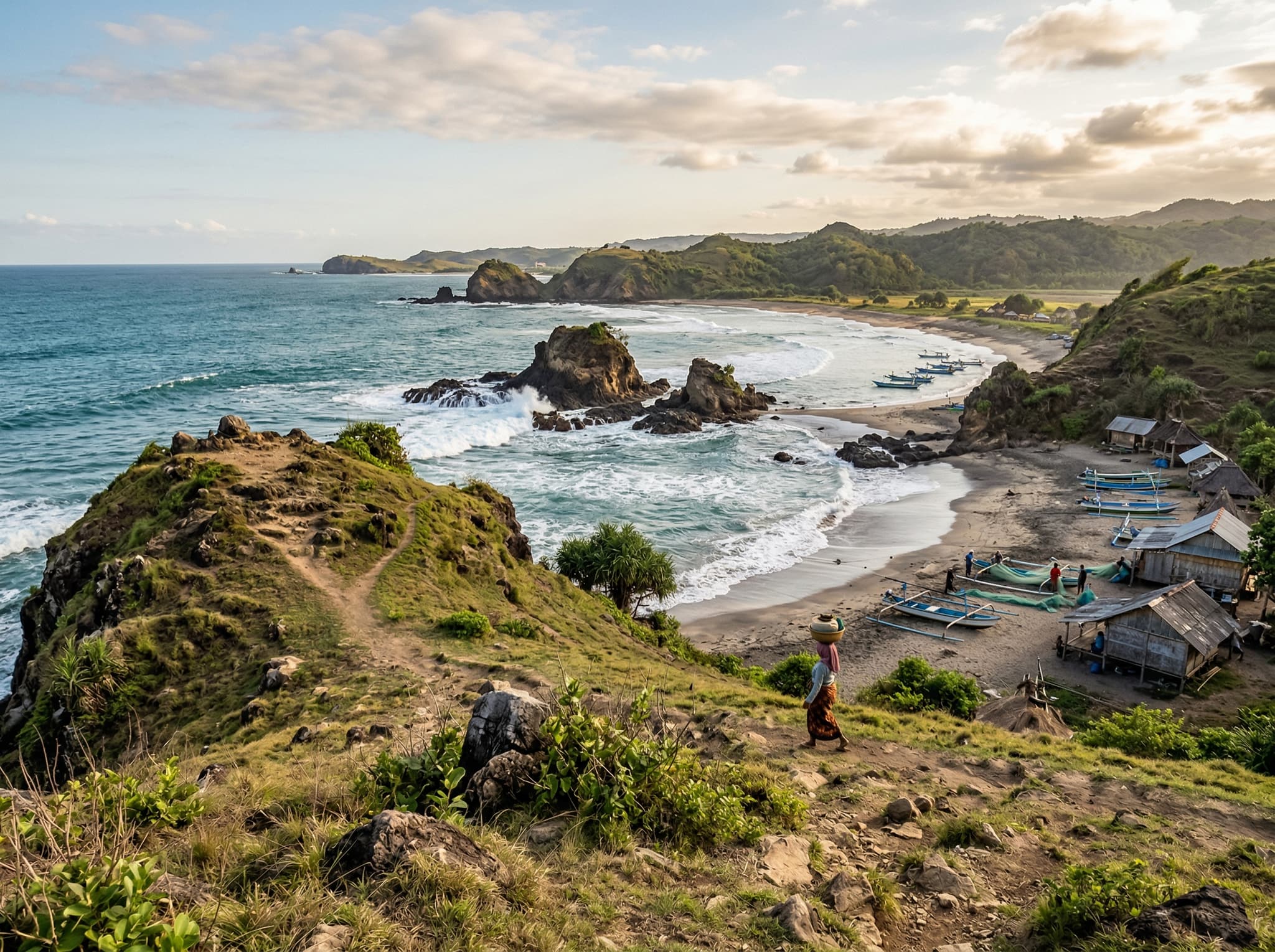
Gerupuk Bay, a few kilometers west, is the area's most important surf zone. Multiple reef breaks across the bay cater to different skill levels, and local boat operators ferry surfers out to the breaks. It's been a draw for the surf community long before Mandalika's development began, and it retains a more low-key, village atmosphere.
The Tension You'll Notice
It's worth being honest about this: Mandalika's development has been controversial. Land disputes between the ITDC and local communities have been documented by Indonesian media and human rights organizations. Some residents in the area were displaced or had land claims contested as the zone expanded. You may see protest graffiti or hear about these issues from locals.
This doesn't mean travelers shouldn't visit — the beaches are public, the local economy benefits from tourism spending, and Kuta Lombok's independent guesthouses and warungs are locally owned. But it's context worth having, especially if you're the kind of traveler who cares about where your money goes.
Staying and Getting Around
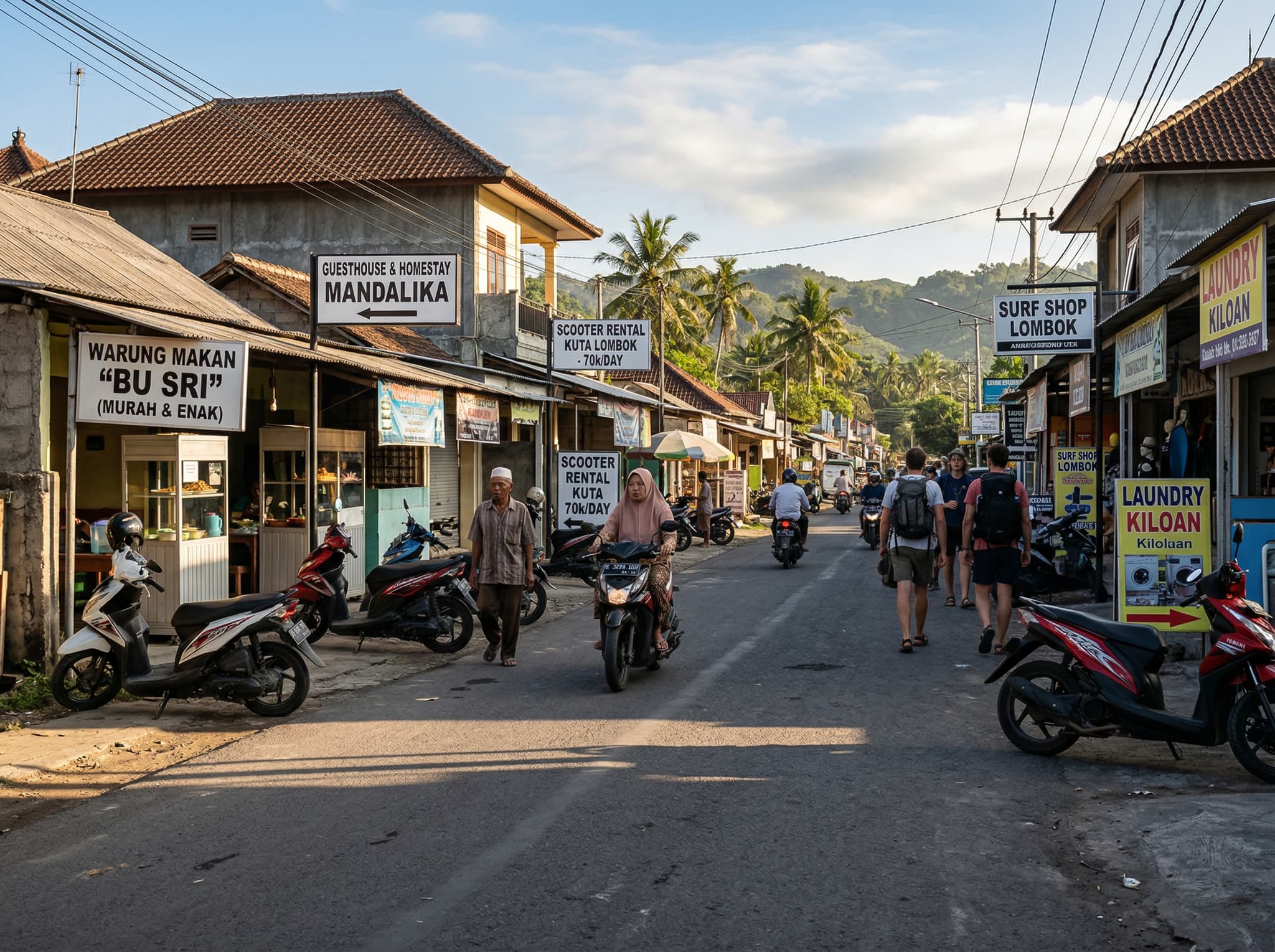
Most independent travelers base themselves in Kuta Lombok town, which sits adjacent to the Mandalika zone and has a wider range of accommodation — from budget guesthouses under $20/night to mid-range boutique hotels. The town has restaurants, rental scooter shops, and a small but functional traveler infrastructure.
Within the Mandalika zone itself, the Pullman resort and a few newer properties cater to a higher price point. The gap between the two areas — resort zone and town — is only a couple of kilometers, easily covered by scooter.
Getting There
From Lombok Airport (LOP)
~25 minutes by car
From Mataram
~1.5 hours by car
From Bali
Fast boat to Bangsal/Teluk Nare (~2.5 hrs), then drive south; or fly to LOP
Local Transport
Scooter rental (IDR 70,000–100,000/day) or private driver
Who Mandalika Is For Right Now
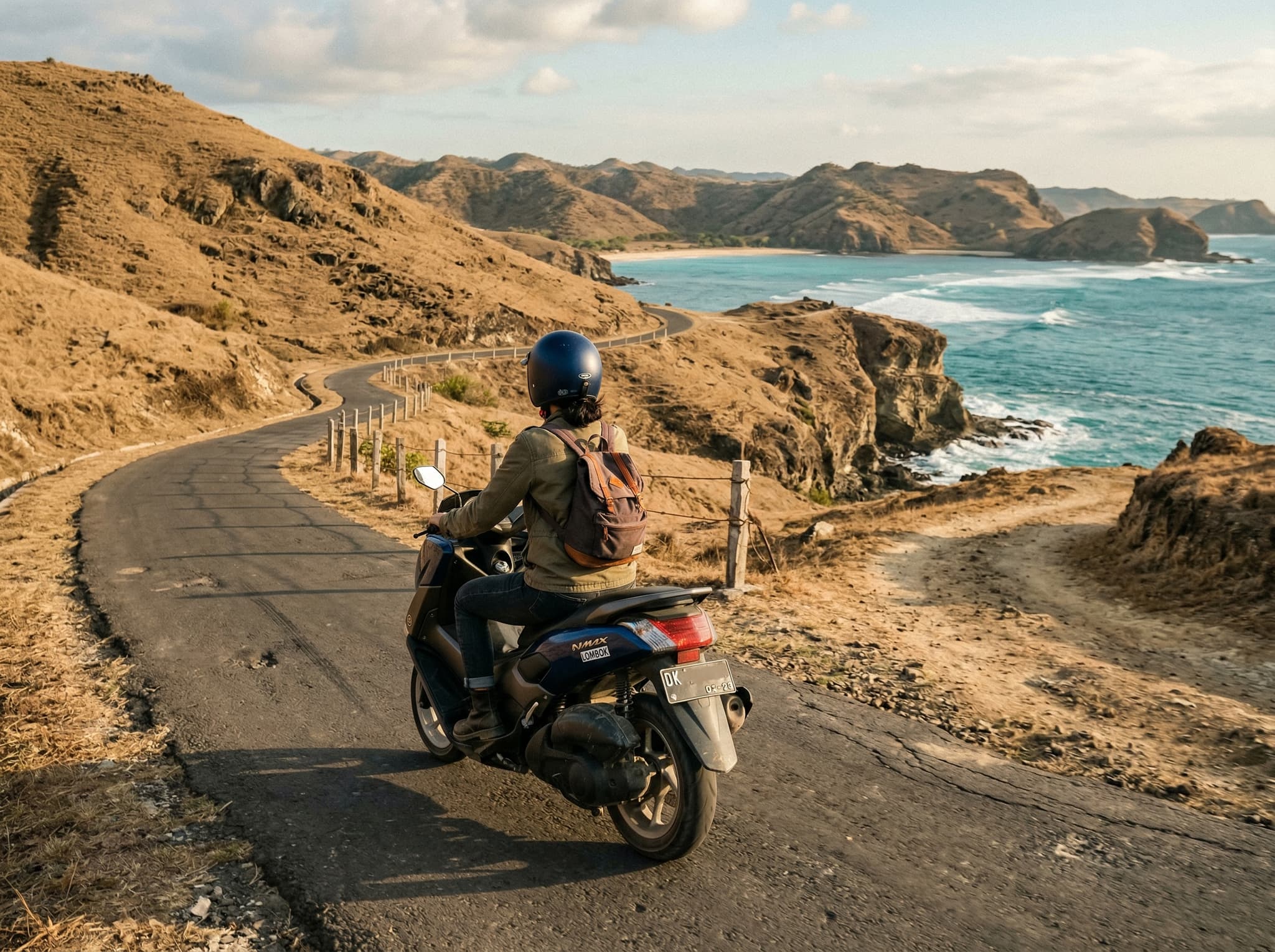
If you're coming to southern Lombok for the beaches, the surf, and the quieter alternative to Bali's south coast — Mandalika delivers. The coastline is world-class, the area is less crowded than comparable spots in Bali, and the slower pace of development means it still feels relatively uncommercialized outside of race weekends.
If you're coming expecting a finished resort destination with polished infrastructure, you'll find it's not there yet. That's not necessarily a bad thing — it depends on what you're looking for.
Southern Lombok also functions well as a stop on a broader eastern Indonesia itinerary. From here, onward travel to Sumbawa, Flores, and Komodo is possible by a combination of local flights and ferries, and the Gili Islands are a few hours north. Mandalika isn't an endpoint — it's a compelling waypoint on one of Indonesia's most rewarding travel corridors.