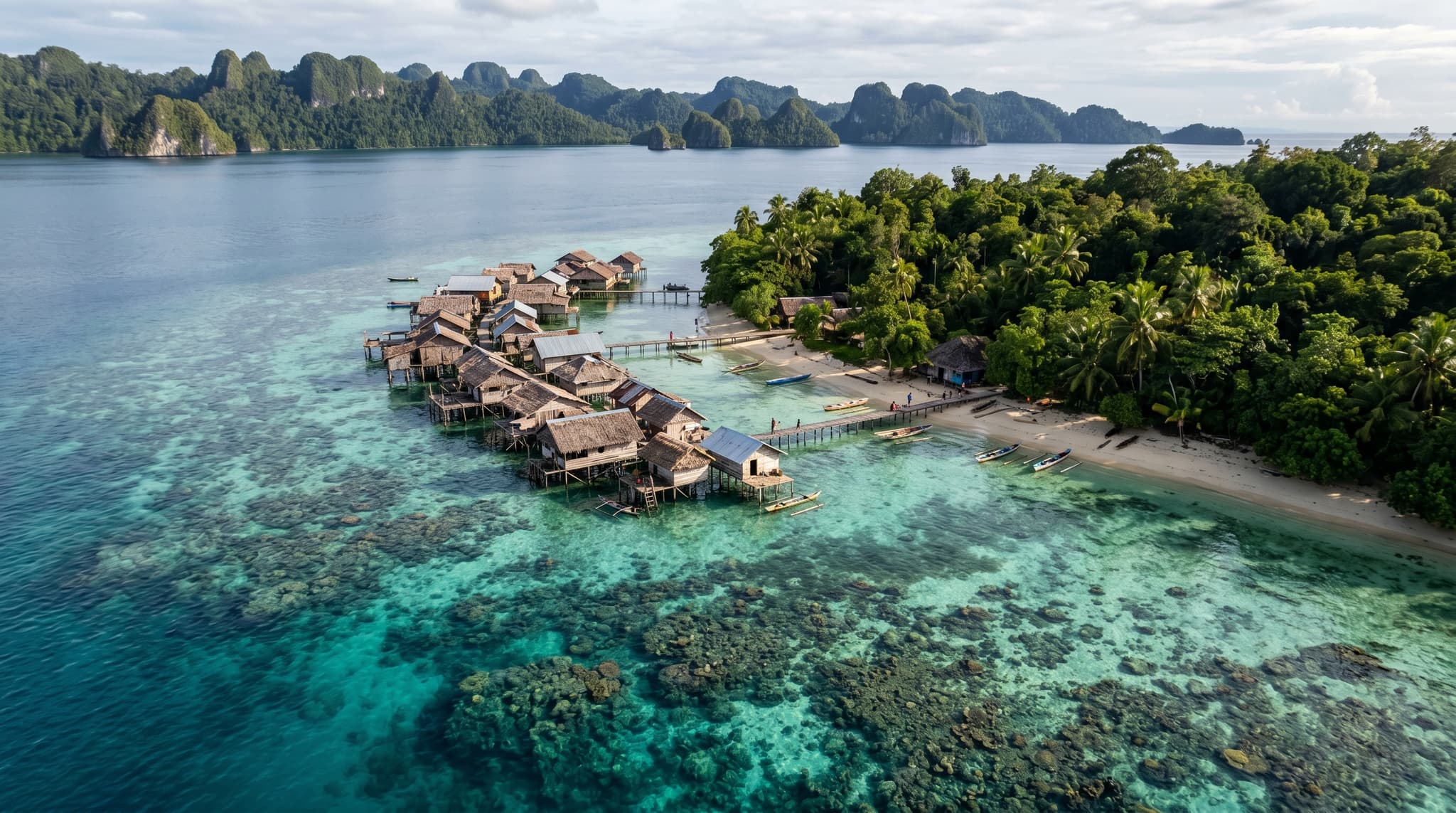
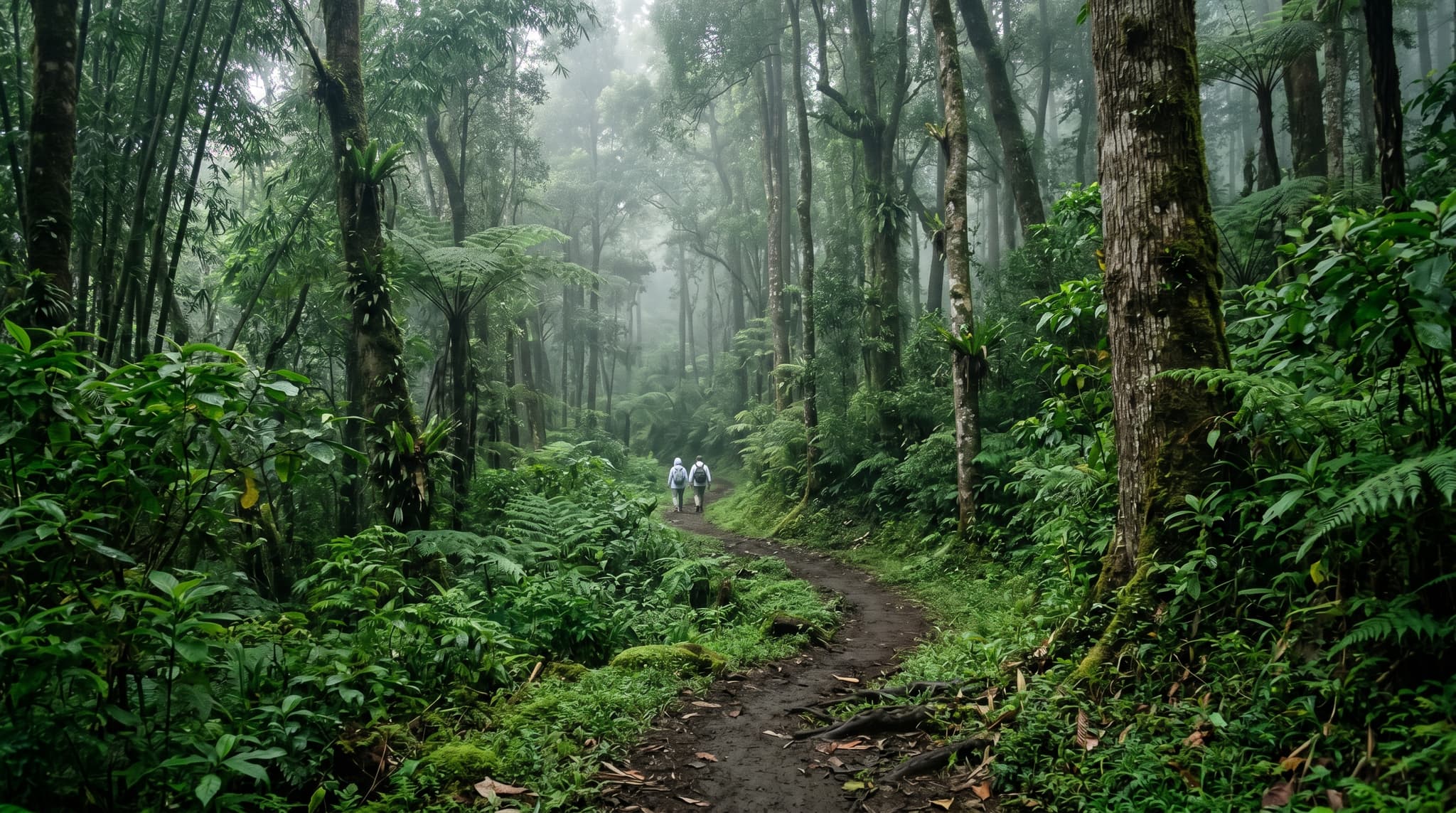
Torean is the least-trafficked trailhead to Rinjani's Segara Anak crater lake. Here's how to plan the trek — logistics, costs, difficulty, and honest trade-offs.
Torean is a village on the northern slope of Mount Rinjani in Lombok, Indonesia, serving as the least-trafficked trailhead to Segara Anak crater lake. If you've been searching for a way to reach Rinjani's iconic lake without the full summit trek, this is the route most people don't know about.
The majority of trekkers start from Senaru or Sembalun — both well-established, well-signposted, and well-touristed. Torean is none of those things, and that's precisely the point. From this small village on Rinjani's northern coast, you get a direct route to the turquoise crater lake at 2,000 meters. No summit required. No three-day commitment. What you do need is a local guide, reasonable fitness, and a willingness to trade infrastructure for solitude.
Here's everything you need to plan the trek from Torean — honestly, including the parts that aren't easy.
Why Torean Instead of Senaru or Sembalun
The standard Rinjani treks from Senaru and Sembalun are designed around the summit. They're longer (two to four days), more expensive, and increasingly crowded during peak season. If your goal is the crater lake — not the 3,726-meter peak — those routes involve a lot of extra elevation and time you don't need.
Torean cuts directly to Segara Anak. The trail is shorter in distance, though not necessarily easier. It's steeper, less maintained, and far quieter. On a typical dry-season day, trekkers on the Torean route report encountering only a handful of other hikers, versus dozens on the Senaru trail.
Torean vs. Other Rinjani Trailheads
Torean to Crater Lake
6–8 hours, no summit required
Senaru to Crater Rim
7–9 hours, summit optional (adds 1 day)
Sembalun to Summit + Lake
2–3 days round trip
Torean Crowd Level
Low — fraction of Senaru traffic
The trade-off is real: less infrastructure, fewer fixed-price packages, and a trail that demands more route-finding awareness. But if your priority is the lake, Torean is the most direct line to it.
Getting to Torean
Torean sits on Rinjani's northern coast, roughly 20 kilometers east of Senaru. Getting there requires some intention — no tourist shuttle drops you at the trailhead.
From Mataram or Senggigi: Hire a private driver or rent a motorbike. The drive takes approximately 2.5–3 hours via the northern coastal road through Bayan. Expect to pay around IDR 400,000–600,000 for a one-way private car from Senggigi. A motorbike rental runs IDR 70,000–100,000 per day, but the road quality deteriorates in the final stretch, and navigation without a local SIM and offline maps is risky.
From Senaru: If you're already in the Rinjani orbit, Torean is about 30–45 minutes east by motorbike along a road that ranges from paved to optimistic. An ojek (motorbike taxi) from Senaru can be arranged for IDR 50,000–100,000, though availability isn't guaranteed — ask your accommodation to help.
From Bangsal (Gili Islands ferry port): Around 2–2.5 hours heading east along the northern coast. This is a viable route if you're coming from the Gilis and want to skip the Mataram detour entirely.
The Trail: What to Actually Expect

Let's be direct about difficulty. The Torean route to Segara Anak is not a casual day hike. It's a legitimate mountain trek with significant elevation gain, steep sections, and stretches where the trail is narrow and uneven.
Start time matters. Plan to begin the ascent by 5:00–6:00 AM. Rinjani's northern flank is prone to afternoon cloud buildup and rain, even during dry season. Starting early gives you the best weather window for the steep upper sections and ensures you reach the crater lake with daylight to spare. The lower forest is also significantly cooler in the early morning — the humid canopy sections become oppressive by midday.
Distance: Roughly 10–12 kilometers one way to the crater lake, depending on the exact trail variant your guide follows.
Elevation: You start around 500 meters and climb to approximately 2,000 meters at the crater lake. That's 1,500 meters of elevation gain — comparable to a hard day in the Alps.
Time: Plan for 6–8 hours ascending, 4–6 hours descending. Most trekkers do this as an overnight trip, camping at the lake and returning the next day. A single-day round trip is technically possible but punishing and not recommended.
Terrain: The lower sections pass through dense, humid forest with root-covered ground and steep gradients. The upper sections open up but get rockier and more exposed. After rain, the trail is reported to become dangerously slippery — particularly on the steeper forest sections where exposed roots and clay soil combine badly. Proper footwear is non-negotiable: trail shoes at minimum, hiking boots preferred.
Fitness and Preparation
Fitness Level Required
Moderate to high — regular hikers
Elevation Gain
~1,500 meters
Recommended Duration
2 days / 1 night
Water Sources on Trail
Limited — carry 3+ liters
Recommended Start Time
5:00–6:00 AM
Guides and Permits
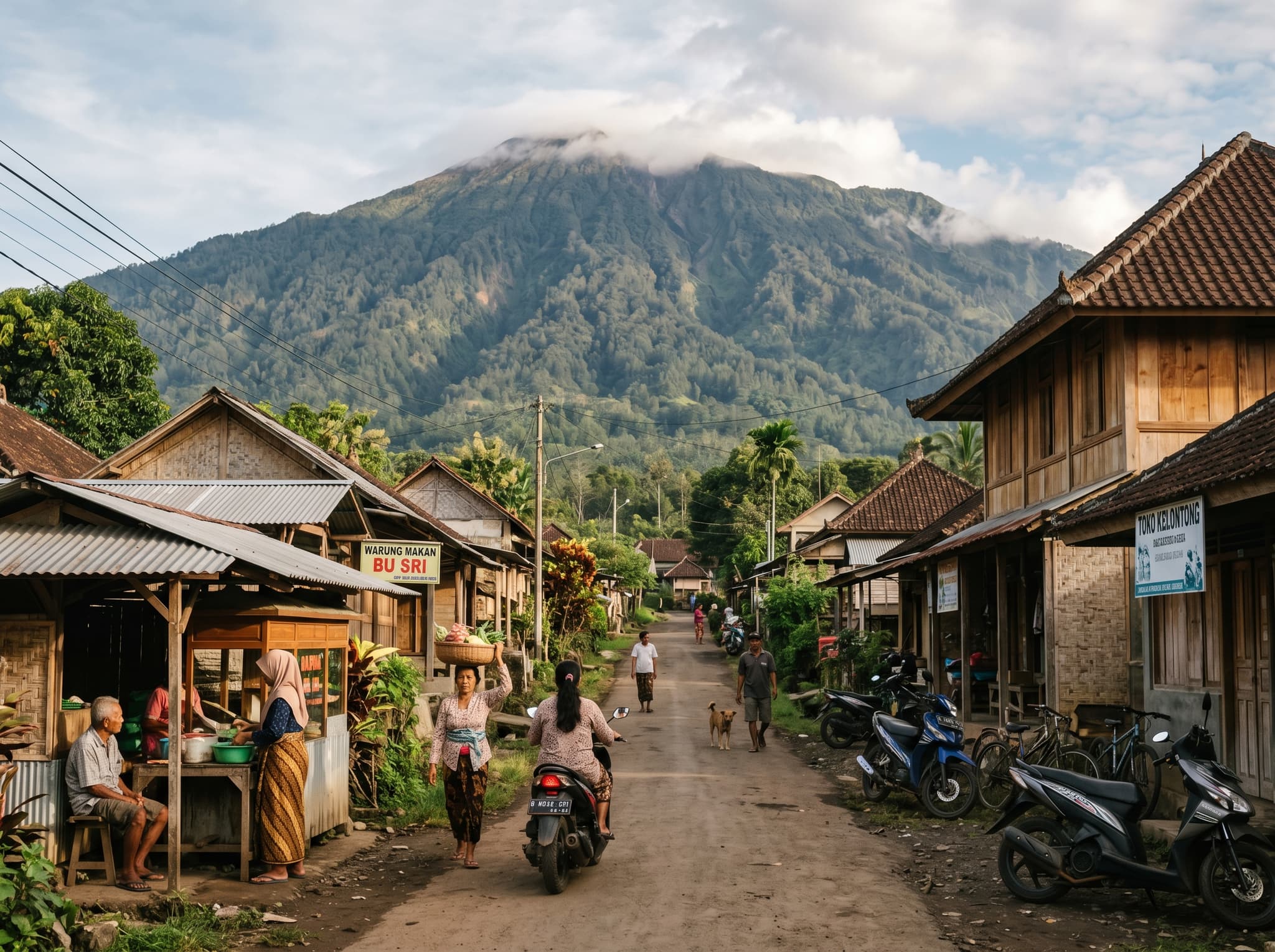
Do You Need a Guide?
Yes. Unequivocally.
Rinjani National Park regulations require trekkers to use registered guides, and this applies to the Torean route. Beyond the legal requirement, the practical case is even stronger here than on the Senaru or Sembalun trails. The Torean path is less worn, less marked, and less forgiving if you take a wrong turn. There are sections where the trail forks without signage.
Guides can be arranged in Torean village. Expect to pay in the range of IDR 500,000–800,000 per day for a guide, with porter services available at additional cost. These prices are less standardized than the fixed packages you'll find at Senaru's organized trekking centers — negotiate clearly and confirm what's included (meals, tent, cooking equipment) before you start walking.
Permits: Where and How
Permit logistics for the Torean route are less documented than for Senaru or Sembalun, where dedicated registration posts handle everything on-site. Senaru and Sembalun each have Rinjani Trekking Centre offices where permits are issued at the trailhead. Torean does not have an equivalent facility.
In practice, most Torean-based guides handle permit arrangements as part of their service — either registering through the national park office in Bayan (the nearest administrative town, roughly 30 minutes west) or through coordination with the Senaru registration system. Confirm the permit process with your guide before departure day, and ask specifically whether the permit will be arranged in advance or at a registration point en route.
What to Bring
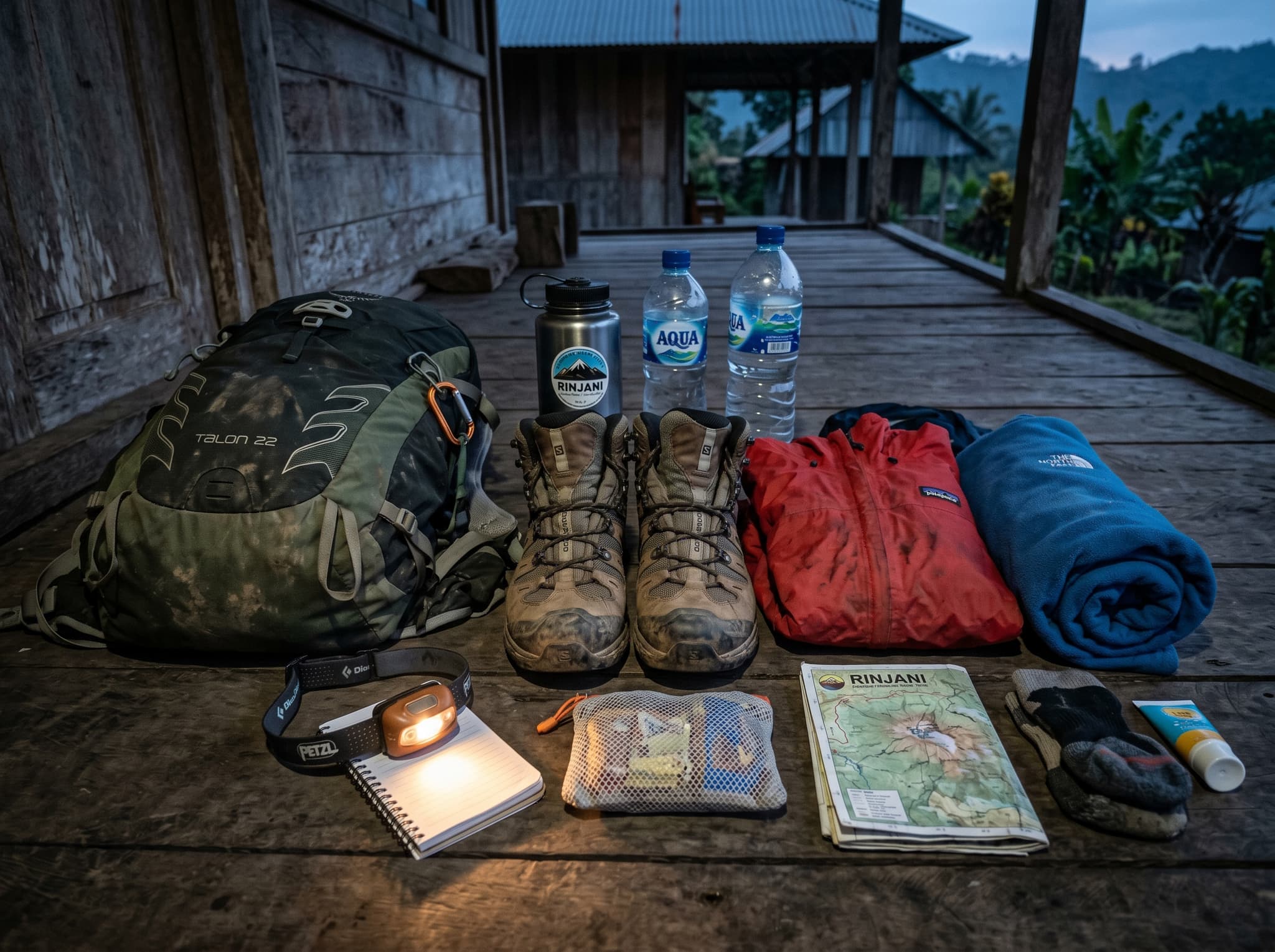
Every item on this list is shaped by the Torean route's specific conditions. This isn't a generic mountain packing list — it's what the trail demands.
-
Water (minimum 3 liters): There are no reliable refill points between the trailhead and the crater lake. The lower forest section is humid and deceptively dehydrating, and the 1,500-meter climb means you'll go through water faster than you expect. If you're trekking in peak dry season, consider carrying 4 liters.
-
Trail shoes or hiking boots: The lower forest section is laced with exposed tree roots and uneven ground — the kind of terrain that punishes flat-soled shoes. Hiking boots with ankle support are ideal for the descent, which is where most injuries happen. At minimum, proper trail runners with aggressive tread.
-
Rain shell: Rinjani's northern flank catches moisture even during dry season. Afternoon showers are common and can roll in fast, particularly above the tree line. A packable rain jacket is essential — not optional, not "just in case."
-
Warm layers: Temperatures at the crater lake drop to 5–10°C at night, even when the coast is 30°C. The contrast catches people off guard. Bring a proper fleece or insulating mid-layer and a hat for the evening.
-
Headlamp: Essential for camping at the lake, and critical insurance if the descent takes longer than planned. If you start late or move slower than expected, you could be navigating the forest section in fading light. Bring spare batteries.
-
Food: Bring your own unless your guide package explicitly includes meals. There are no warungs on the trail, no vendors, nothing. Plan for the full duration — lunch on the ascent, dinner and breakfast at the lake, and lunch on the descent.
-
First aid kit: Basic kit with blister treatment, anti-inflammatories, and any personal medication. The nearest medical facility is back in Bayan, at least 2–3 hours from the crater lake. On this route, self-sufficiency isn't a philosophy — it's a logistical reality.
-
Camping gear: If your guide doesn't provide a tent, confirm arrangements before departure. Spending the night at the crater lake without shelter is a bad idea — temperatures drop sharply after sunset and condensation is heavy. A sleeping bag rated to at least 5°C is recommended.
At the Crater Lake
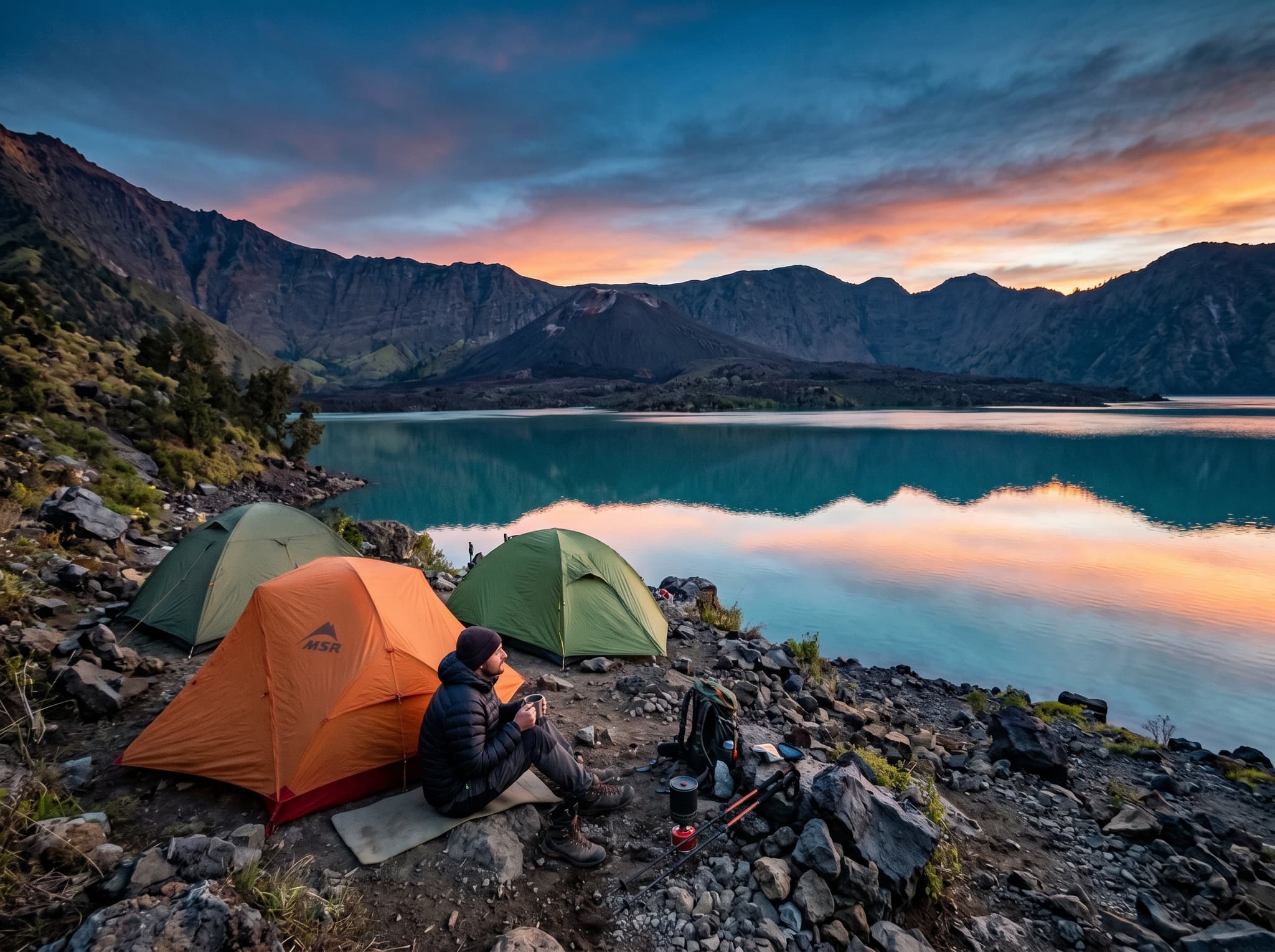
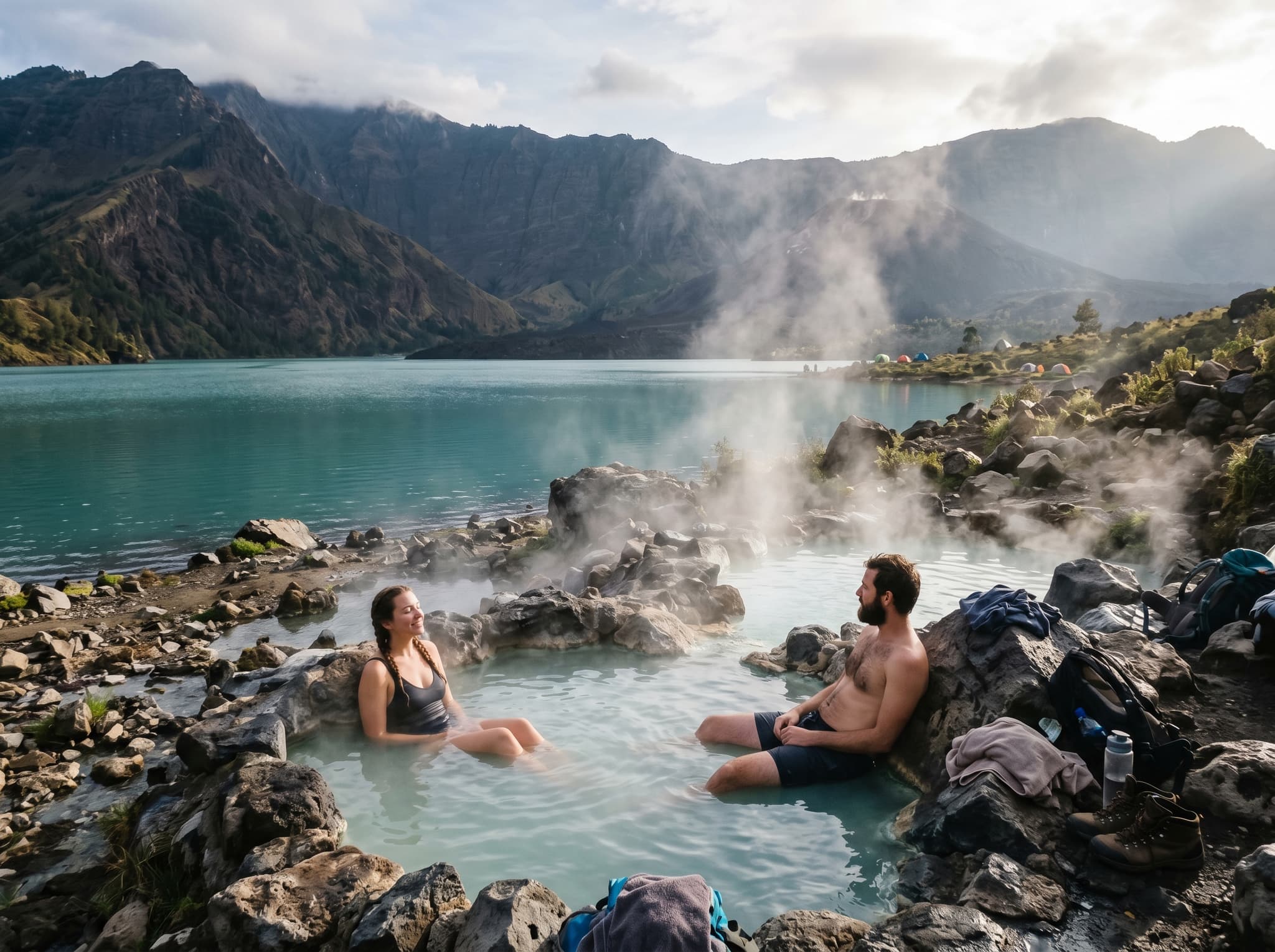
Segara Anak is the reward, and by all accounts, it delivers. The lake sits in Rinjani's caldera at roughly 2,000 meters, ringed by the crater walls, with the volcanic cone of Gunung Barujari rising from the water. Hot springs along the lake's edge are accessible and genuinely warm — trekkers describe them as a legitimate relief after the climb.
You'll likely have the lakeside largely to yourself. Trekkers arriving from Senaru tend to camp on the eastern shore; the Torean approach brings you in from the north, where traffic is minimal.
Spend the night if you can. Trekkers consistently cite the sunset over the caldera rim and the early morning light on the lake as the real payoff for carrying camping gear. Rushing back down the same day means missing the best part of being there.
The Honest Assessment
Torean is the best route to Segara Anak if the crater lake is your primary objective and you want to avoid the Senaru and Sembalun crowds. It's shorter in time, more direct in purpose, and quieter by a significant margin.
It is not the best route if you want a well-maintained trail, easy guide booking, or a forgiving margin for error. The infrastructure gap is real. The difficulty is real. And the remoteness means that if something goes wrong — a twisted ankle, unexpected weather — you're further from help than you'd be on the main routes.
For fit, experienced hikers who value solitude and don't need their hand held, Torean is the obvious choice. For everyone else, Senaru exists for good reason.