The Ardha Candra Amphitheater is Bali's largest open-air performance venue and home to the annual Bali Arts Festival. Here's what to know before you go.
Most visitors to Bali never make it to Denpasar. The capital gets treated as a transit point — the city you drive through on the way from the airport to Ubud or Seminyak. But tucked inside the Taman Budaya Art Centre on Jalan Nusa Indah, the Ardha Candra Amphitheater is one of the most significant cultural venues in all of Indonesia, and the kind of place that reframes what Bali actually is beyond the beach clubs and rice terrace selfies.
What the Amphitheater Actually Is
Ardha Candra — the name translates roughly to "half moon" in Sanskrit — is a large open-air amphitheater that serves as the main performance stage of the Taman Budaya (Bali Arts Centre). The venue can seat around 6,000 spectators in a sweeping semicircular arrangement that faces a broad, elevated stage. The design draws from traditional Balinese architectural principles while operating at a scale that feels genuinely monumental — this isn't a village temple courtyard repurposed for tourists. It was built to be a stage for the island's performing arts at their most ambitious.
The Art Centre complex itself was established in 1973 under the vision of Ida Bagus Mantra, then the governor of Bali, who saw the need for a dedicated institution to preserve and promote Balinese arts as tourism began reshaping the island's economy. The idea was straightforward but significant: give Balinese culture a permanent home where dance, music, and visual arts could be practiced, taught, and performed for Balinese audiences — not just packaged for visitors. The Ardha Candra amphitheater became the physical expression of that ambition.
Venue Details
Capacity
~6,000 seated
Stage Type
Open-air, elevated
Built
1970s as part of Taman Budaya complex
Architecture
Balinese-influenced semicircular design
The Bali Arts Festival
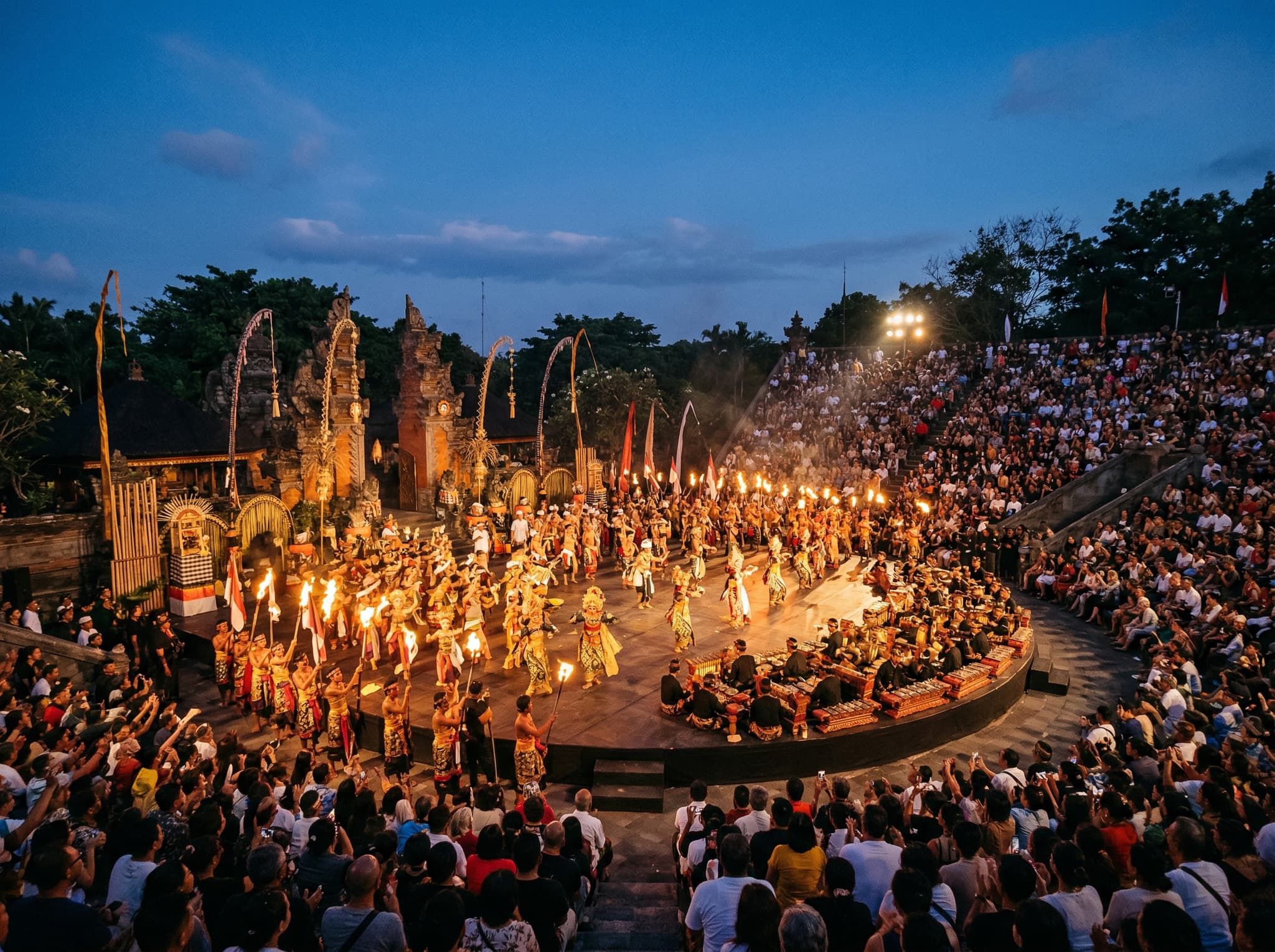
The amphitheater's defining event is the Bali Arts Festival (Pesta Kesenian Bali), held annually from mid-June through mid-July. The festival has run since 1979 and is the island's largest cultural event — a full month of dance performances, gamelan competitions, art exhibitions, theatrical productions, culinary showcases, and craft displays spread across the entire Art Centre complex.
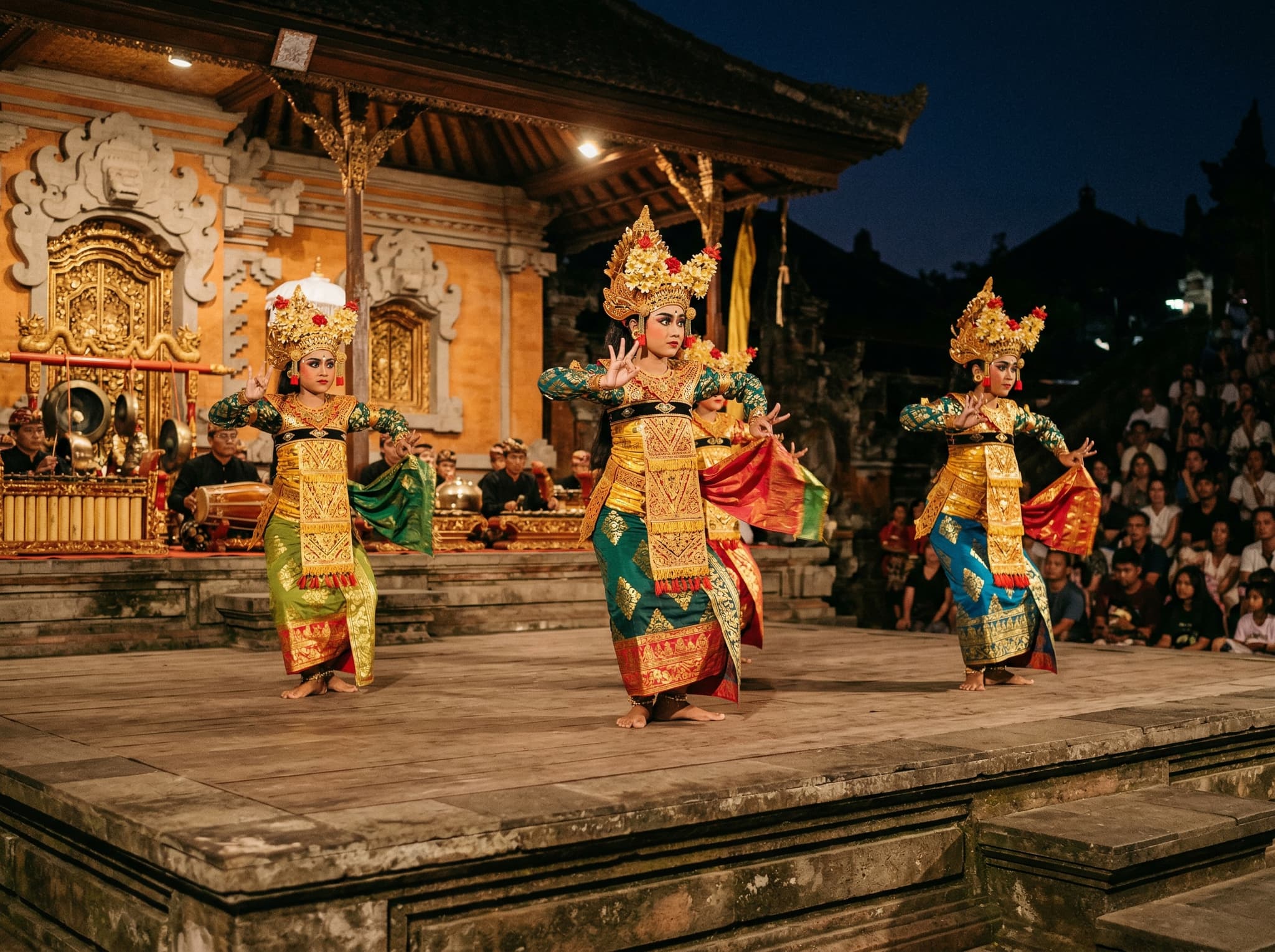
Opening and closing ceremonies take place on the Ardha Candra stage, and these are genuinely spectacular. Hundreds of performers — dancers in full regalia, gamelan orchestras, dramatic fire-lit processions — fill the amphitheater in productions that can involve over a thousand participants. During the festival's run, the stage hosts nightly performances ranging from classical Legong and Barong dances to contemporary Balinese theater and musical acts from across the Indonesian archipelago.
What makes the Arts Festival worth attending isn't just the scale — it's the audience. This is primarily a Balinese event. Families come. Schools bring students. Villages compete against each other in dance and music categories with real pride at stake. The atmosphere is closer to a county fair crossed with a national arts competition than a tourist show. Visitors are welcome, but the event isn't designed around them, which is precisely what makes it feel authentic.
Outside Festival Season
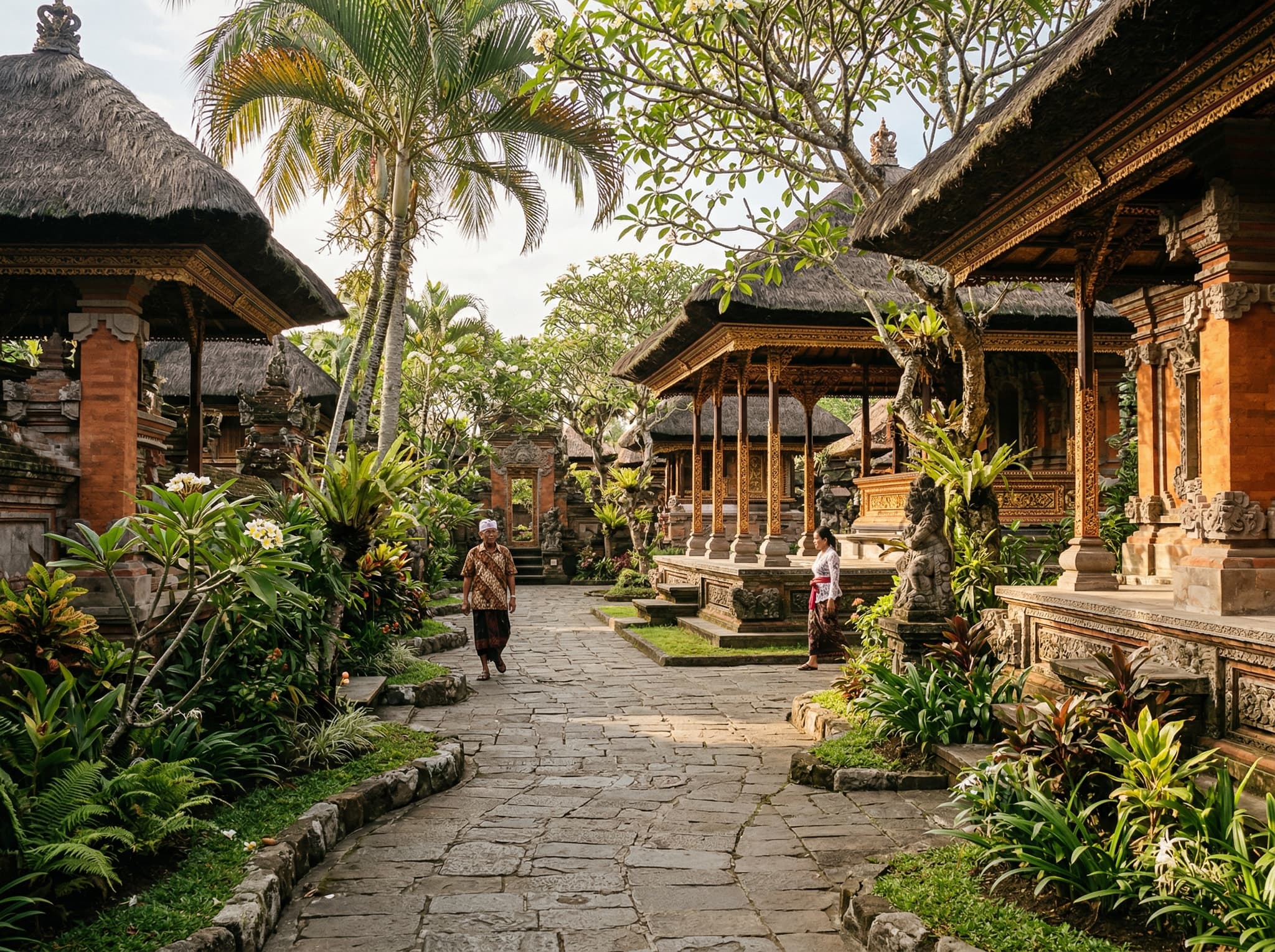
The Ardha Candra doesn't go dark when the Arts Festival ends. Throughout the year, the amphitheater and the broader Art Centre host a rotating schedule of performances, rehearsals, cultural competitions, and special events. Government ceremonies, university arts showcases, and regional dance competitions all use the venue. The schedule is less predictable outside of June and July — there's no single reliable English-language calendar — but stopping by the Art Centre on any given week often turns up something happening.
Even without a performance, the Art Centre grounds are worth a visit. The complex includes a museum with traditional Balinese paintings and textiles, exhibition halls, and smaller performance pavilions. It's quiet on non-event days, which is part of the appeal — a chance to walk through a space designed entirely around Balinese artistic traditions without competing for elbow room.
Getting There and Practical Details
The Art Centre sits in eastern Denpasar, about 30 minutes from Kuta or the airport and roughly 45 minutes from Ubud, depending on traffic (which in Denpasar is always the variable). Most visitors arrive by private driver or ride-hailing app — Grab is widely available and the most practical option.
Getting There
From Airport
~30 min by car
From Ubud
~45–60 min by car
From Seminyak
~35–45 min by car
Best Transport
Grab or private driver
There's no formal dress code for most events, but Balinese audiences tend to dress neatly, and wearing a sarong or modest clothing is appreciated — especially for performances with ceremonial significance. Bring a light layer for evening shows; the open-air design means you're exposed to whatever the weather decides to do, though Bali's dry season aligns conveniently with the Arts Festival.
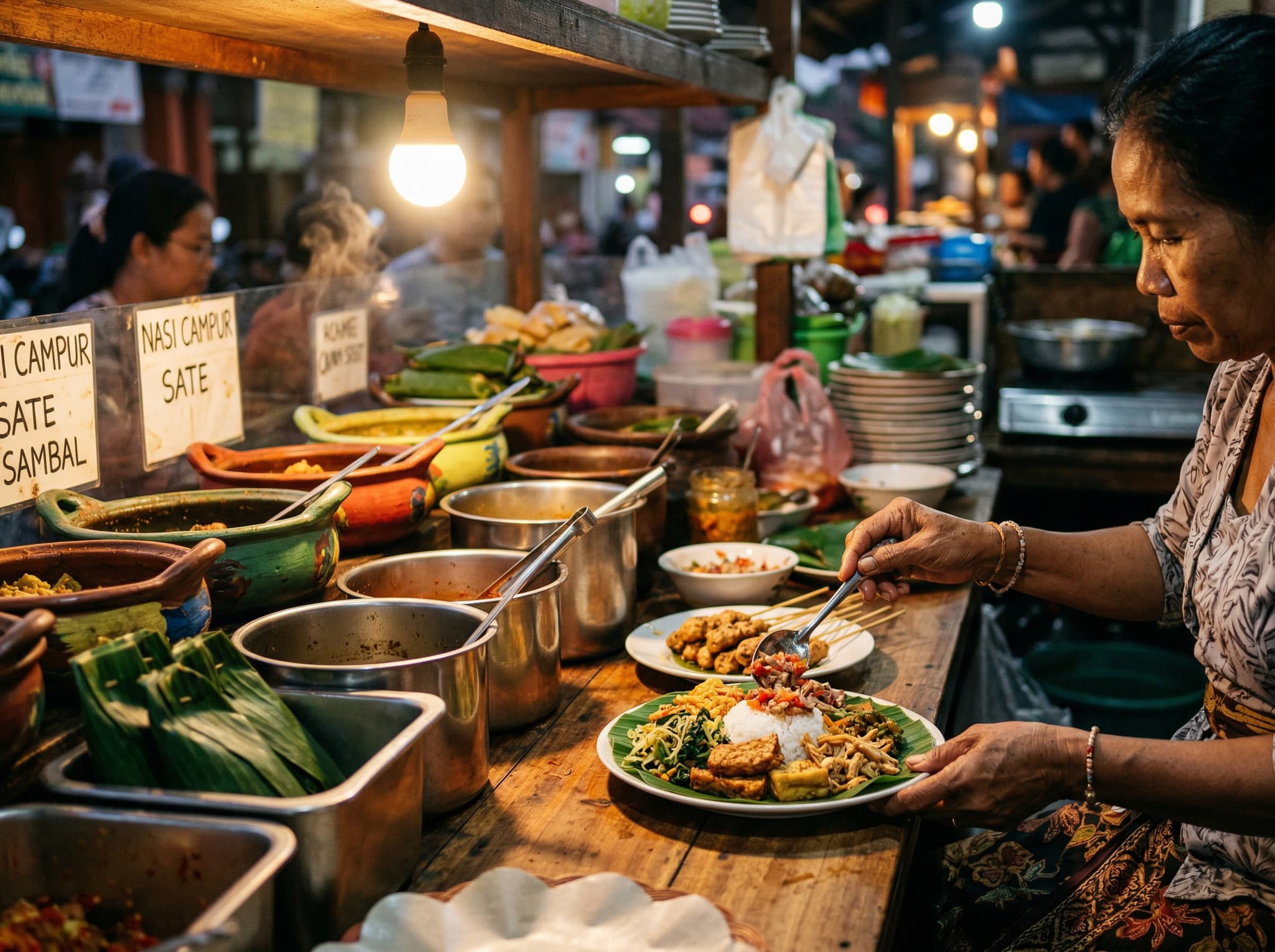
Food vendors set up around the Art Centre during major events, selling local dishes at local prices — this is one of the better places in Bali to eat nasi campur or babi guling without a tourist markup.
Why It Matters
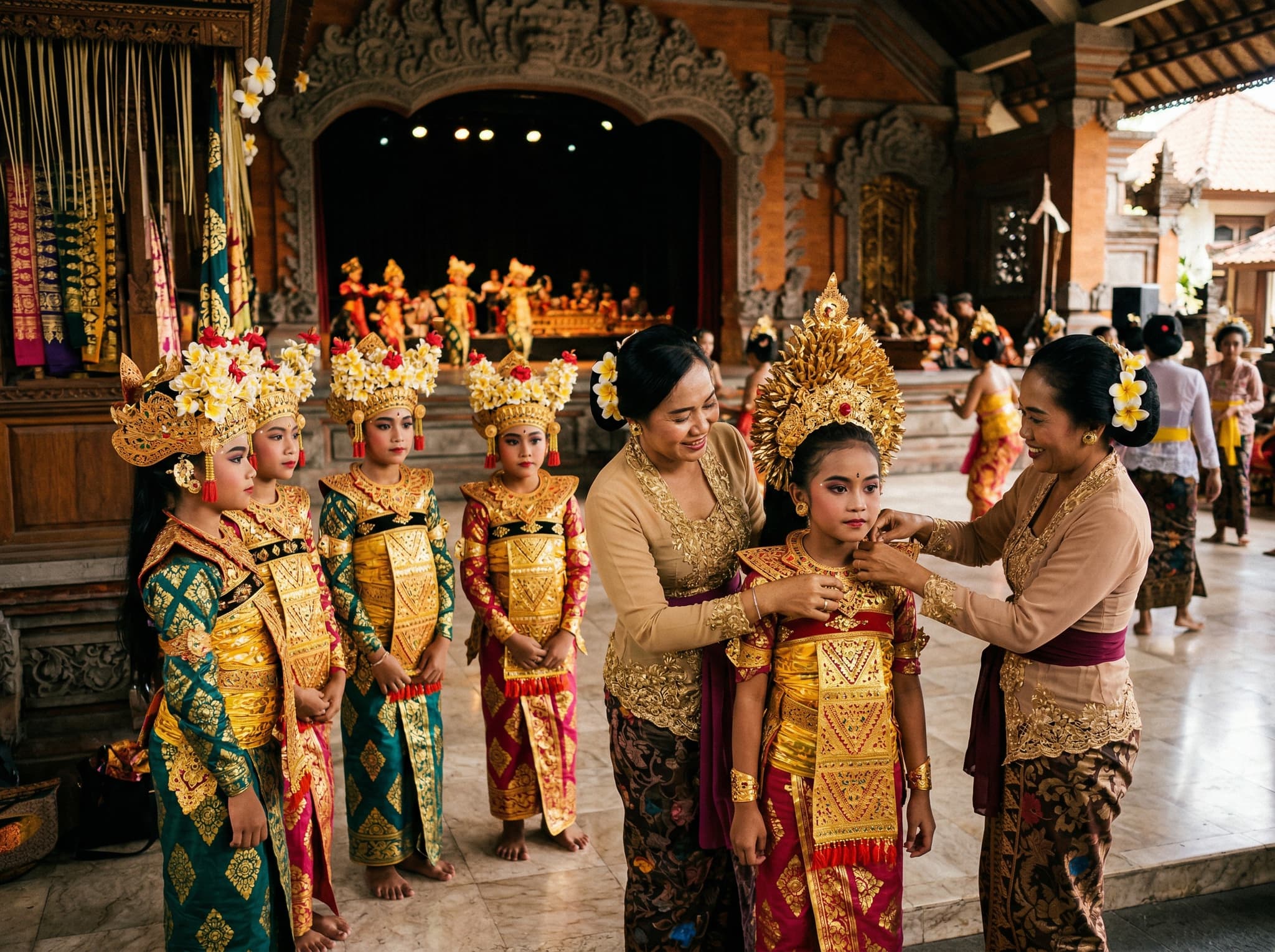
The Ardha Candra Amphitheater represents something increasingly rare in Bali: a major cultural institution that exists primarily for Balinese people. As the island's south coast has transformed into an international tourism economy, spaces dedicated to local artistic practice — rather than tourist consumption — have become more important, not less. The amphitheater is where Bali's performing arts traditions are maintained at their highest level, where young dancers and musicians compete and improve, and where the island's cultural identity gets reinforced on its own terms.
For visitors willing to make the short detour into Denpasar, it's a chance to see Balinese culture presented with a seriousness and scale that no hotel lobby dance performance can match.