Bali's arts center in Denpasar hosts the annual Bali Arts Festival and offers a quieter, more authentic cultural experience year-round.
Most visitors to Bali never set foot in Denpasar. The capital is something you drive through on the way from the airport to the rice terraces — a blur of traffic, shopfronts, and motorbike exhaust. This is a shame, because tucked into the city's eastern side, behind a split gate that most taxi drivers know but few tourists ask about, sits Taman Wedhi Budaya — a sprawling arts complex that has been the center of Balinese performing and visual arts since 1973.
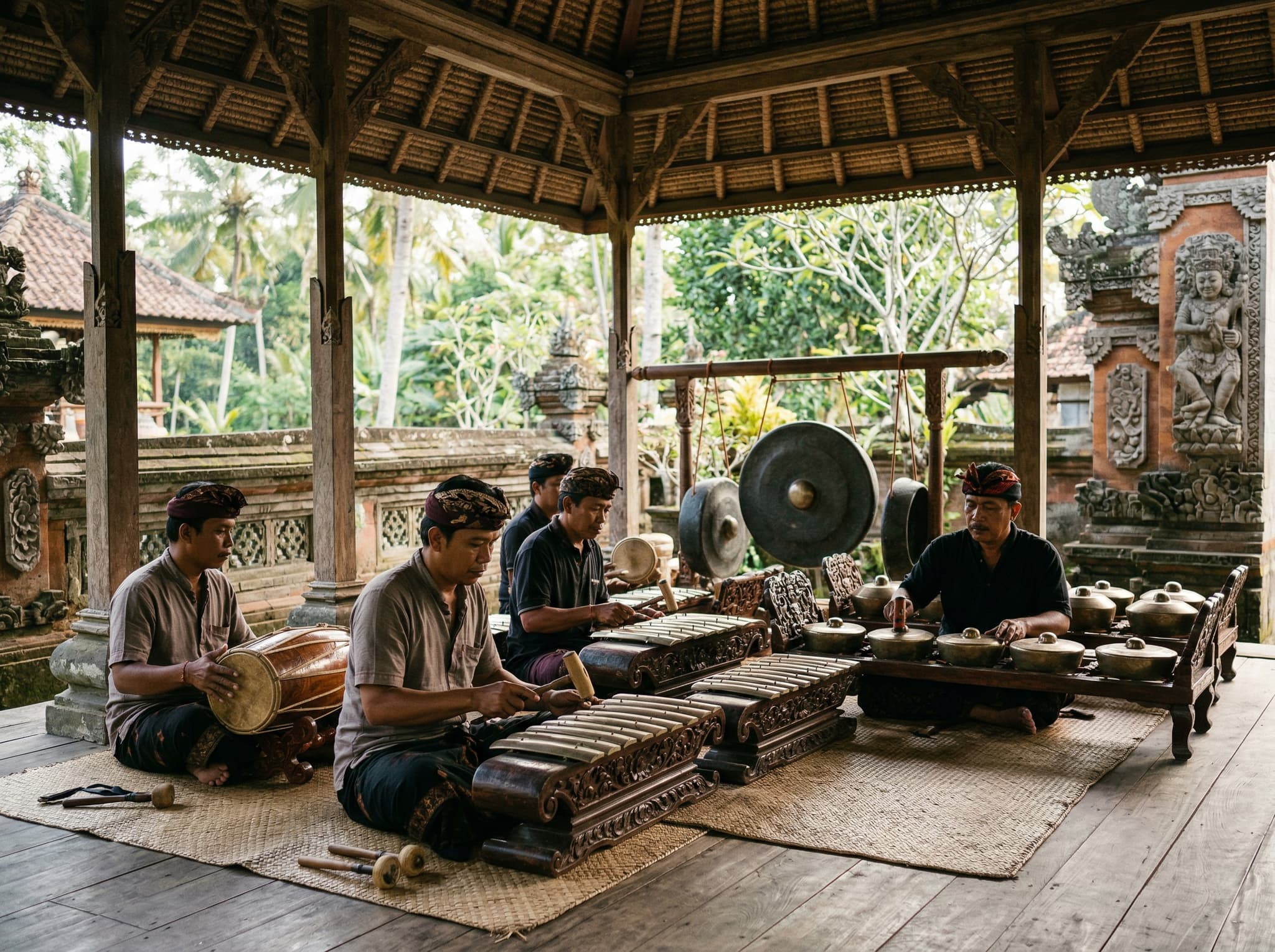
It's not a museum in the conventional sense. It's not a temple. It's something more particular: a living campus where Balinese culture is practiced, debated, and passed on. On any given morning, you might find a gamelan ensemble rehearsing in one pavilion while a painter works on a large-format canvas in the exhibition hall next door. The space was designed to hold all of this at once.
What You'll Find Inside
The complex covers roughly 14 hectares — large enough to feel unhurried even when events are running. The architecture draws from traditional Balinese forms: open-air pavilions, tiered roofs, carved stone gateways. The main structures include an amphitheater ([Ardha Candra](/places/bali/ardha-candra-amphitheater-bali-s-grand-stage-for-culture-and-performance)) that seats around 6,000, a smaller indoor exhibition hall, and several open stages and workshop spaces scattered across the grounds.
Key Spaces
Ardha Candra
Open-air amphitheater, main performances
Exhibition Hall
Rotating visual art and craft displays
Open Pavilions
Rehearsal spaces, workshops, smaller shows
Grounds
Gardens, sculptures, and traditional structures
Outside of festival season, the grounds are quiet. This is part of their appeal. You can walk between the pavilions and actually look at things — the stone carvings along the pathways, the way the open structures let air and light move through. There's a small collection of traditional Balinese art on permanent display, though the quality of what's showing at any given time depends on what's been curated for the current rotation.
The exhibition hall hosts work by Balinese artists — paintings, textiles, woodcarving, and occasionally contemporary pieces. It's not the Neka Art Museum in Ubud, and it doesn't try to be. What it offers instead is context: art shown in the same space where dancers rehearse and musicians tune their instruments. The creative practices aren't separated from each other here.
The Bali Arts Festival
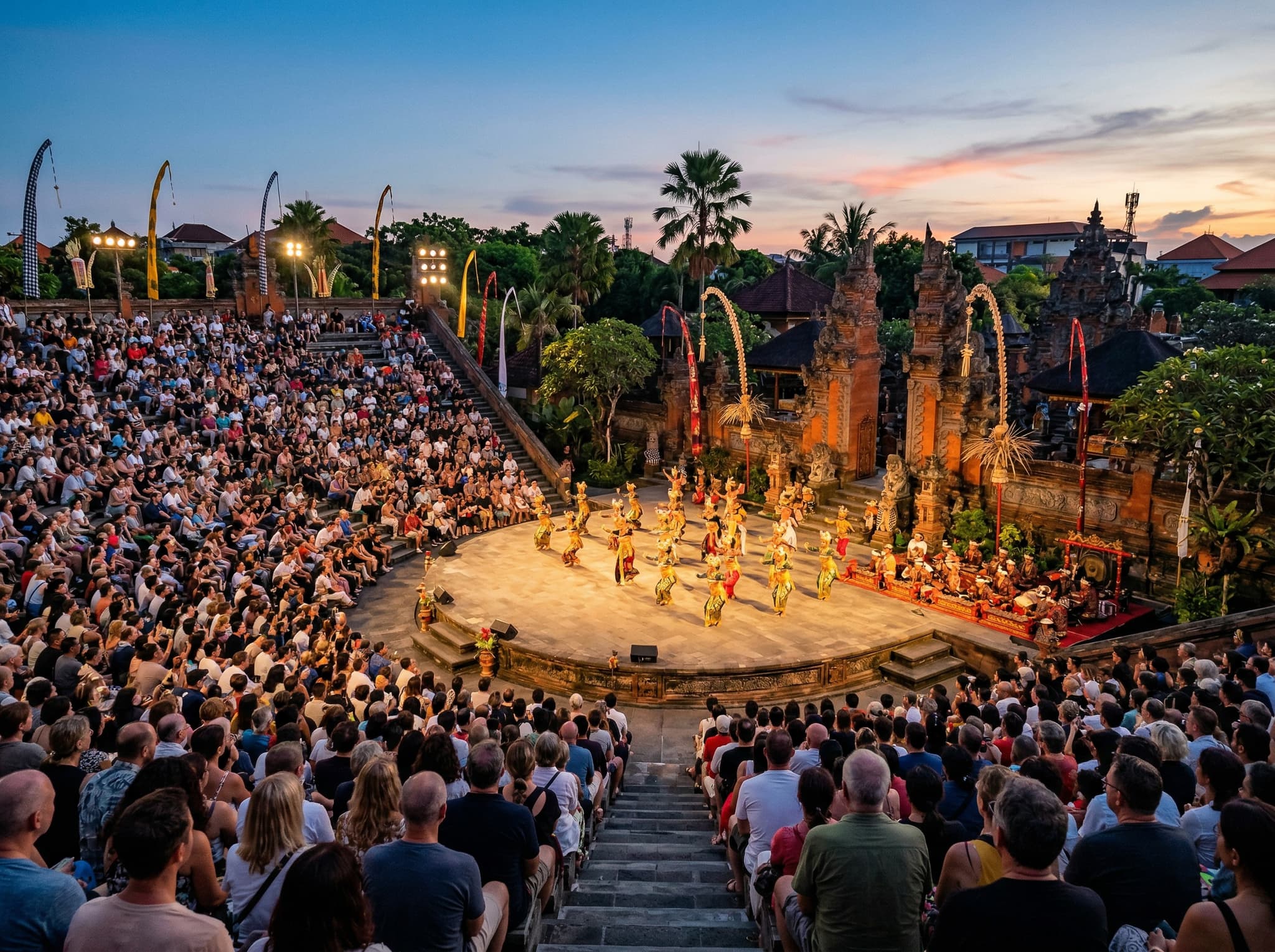
If there's one reason to plan a visit around Taman Wedhi Budaya, it's the annual Bali Arts Festival (Pesta Kesenian Bali), which runs for roughly a month starting in mid-June. The festival has been held here since 1979 and is the single largest showcase of Balinese performing arts on the island.
Bali Arts Festival
When
Mid-June to mid-July (dates shift annually)
Duration
Approximately one month
Performances
Daily, multiple stages
Cost
Many events free; some ticketed (prices vary)
During the festival, the campus transforms. The amphitheater fills for evening performances — Legong, Barong, Kecak, and contemporary dance productions. There are gamelan competitions, shadow puppet shows, food stalls, and craft exhibitions. Regencies from across Bali send their best performers, and the whole thing has a competitive edge that keeps the quality high.
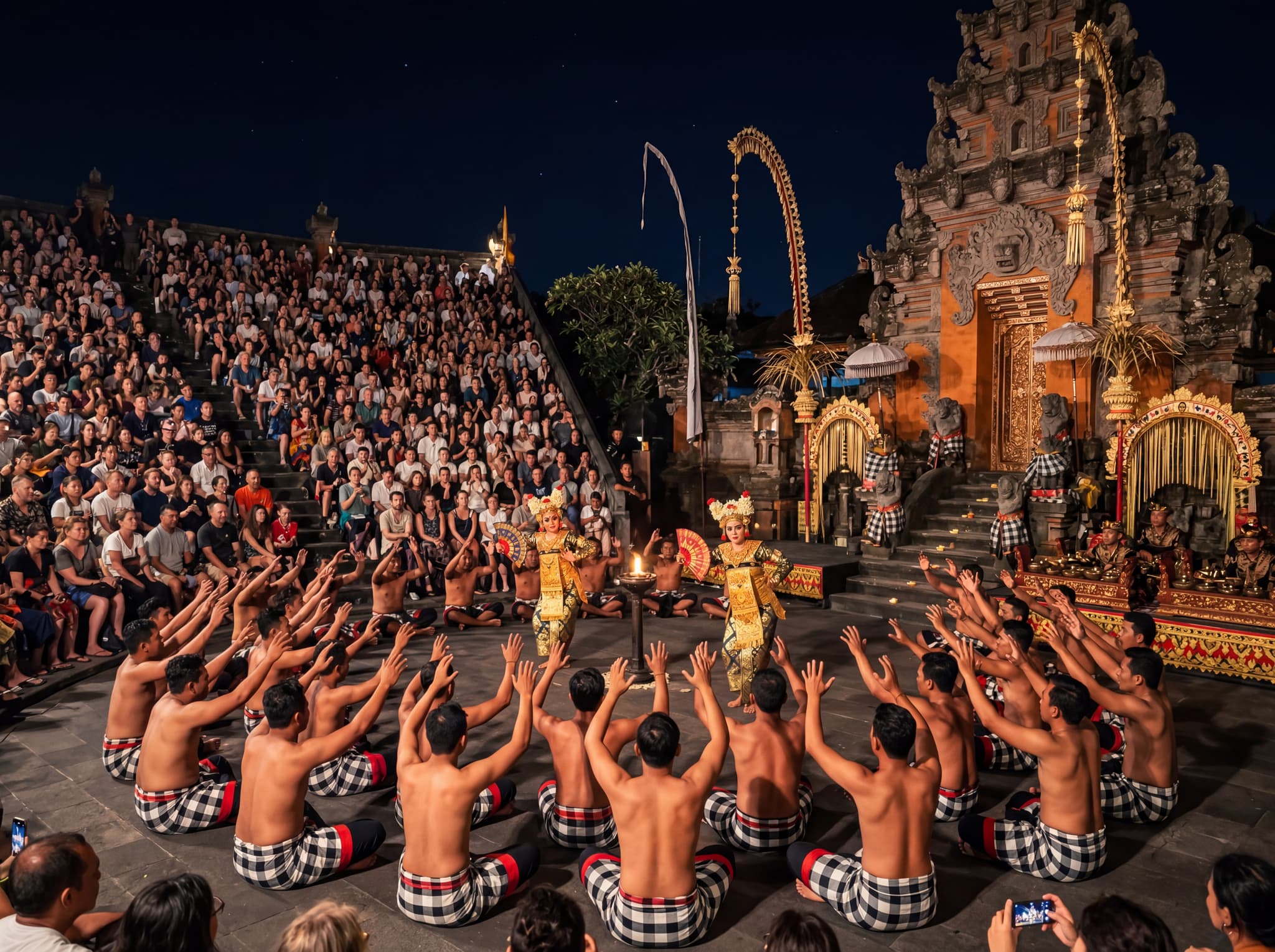
What makes the festival worth attending isn't just the performances themselves — it's the atmosphere of a place built for this purpose, operating at full capacity. The amphitheater at night, with the stage lit against the dark and the sound of the gamelan carrying across the open air, is one of those experiences that doesn't need a superlative. You sit there and you know.
Visiting Outside Festival Season
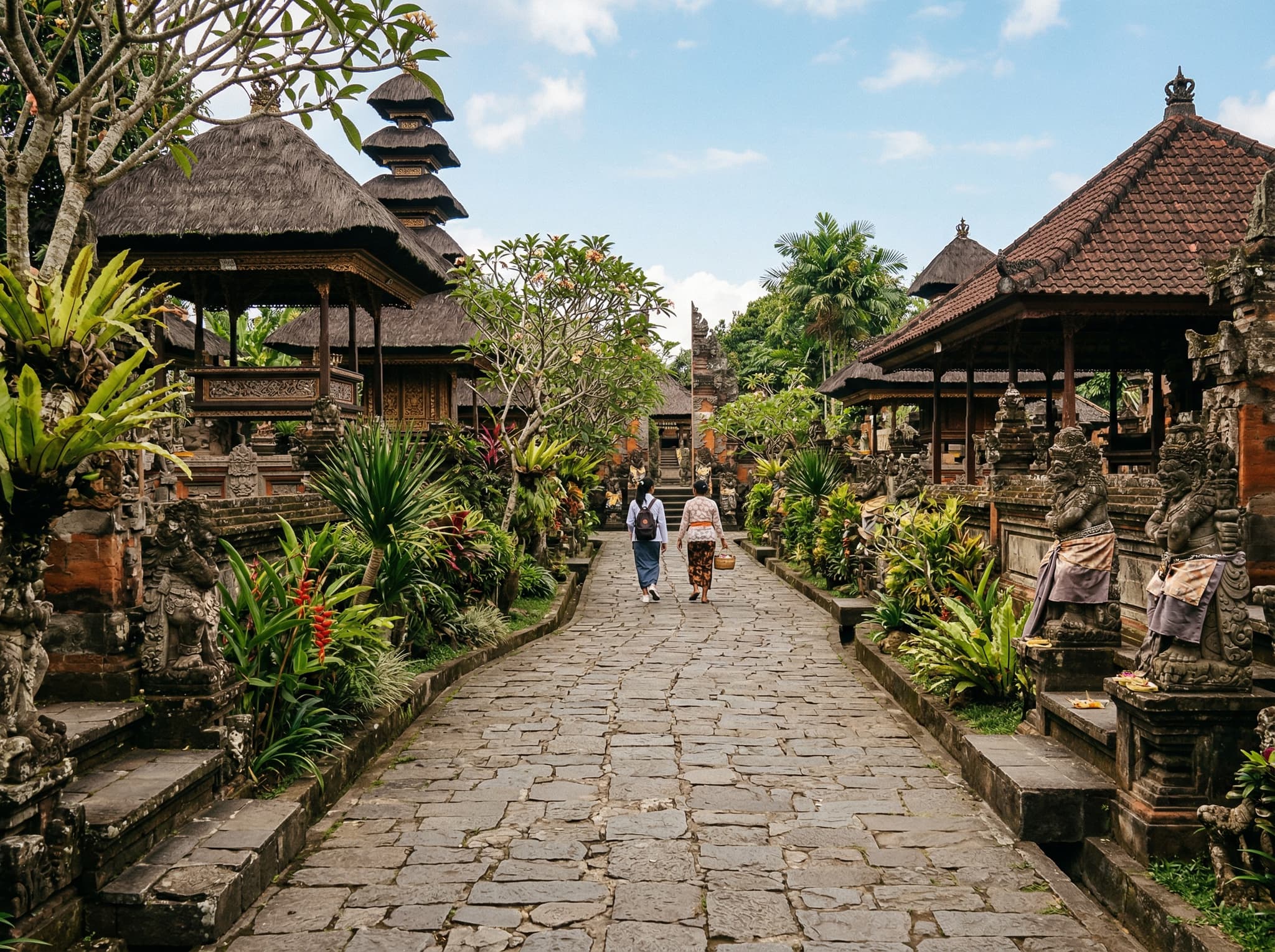
For the other eleven months, Taman Wedhi Budaya is a quieter proposition. This doesn't mean it's empty or not worth visiting — it means you'll need to adjust your expectations. The grounds are open, the permanent collection is accessible, and there are periodic performances and exhibitions throughout the year. But you may arrive on a Tuesday afternoon and find mostly empty pavilions and a few students rehearsing.
That has its own value. If you've spent days in the tourist corridor — Seminyak's boutiques, Ubud's café circuit, Canggu's co-working spaces — Taman Wedhi Budaya offers something different. It's a place built by Balinese people for Balinese culture, and it doesn't perform for visitors. The fact that it sits in Denpasar, a city most travelers skip, is part of the point.
What to Know Before You Go
The complex is a public cultural institution, not a commercial tourist attraction. There's no slick visitor center, no audio guide, no gift shop selling branded tote bags. Signage is minimal. If you visit outside of a specific event, you're largely on your own to explore.
Dress modestly — you're in a cultural space in a Balinese city, not on a beach. Shoulders and knees covered is respectful and appropriate.
There are a few warungs (small local eateries) near the entrance and along Jalan Nusa Indah. During the Arts Festival, food stalls inside the complex serve Balinese dishes at local prices — this is one of the better places in southern Bali to eat well and cheaply.
The Honest Take
Taman Wedhi Budaya isn't for everyone. If you want a polished, curated cultural experience with clear signage and scheduled programming, the Ubud-area museums and nightly dance performances at Ubud Palace are more accessible. But if you're interested in where Balinese arts actually live — where the rehearsals happen, where the competitions are fierce, where the audience is mostly Balinese — this is the place.
It asks a little more of you. You have to get to Denpasar. You have to accept that the grounds might be quiet. But the reward is a version of Bali that most visitors never see, one that has nothing to do with infinity pools or rice terrace photo ops.
That, in my experience, is usually worth the drive.