Kanto Lampo waterfall near Ubud is stunning on camera — but the reality involves queues and crowds. Here's what to expect, what it costs, and when to go.
There's a particular kind of disappointment that belongs to places you've already seen a hundred times before arriving. You've scrolled past them in reels and carousels — water cascading over stacked rock shelves, a figure posed mid-frame with arms outstretched, golden light doing exactly what golden light does. Kanto Lampo waterfall is one of those places. And when you get there, the first thing you notice isn't the water. It's the line.
What You're Actually Walking Into
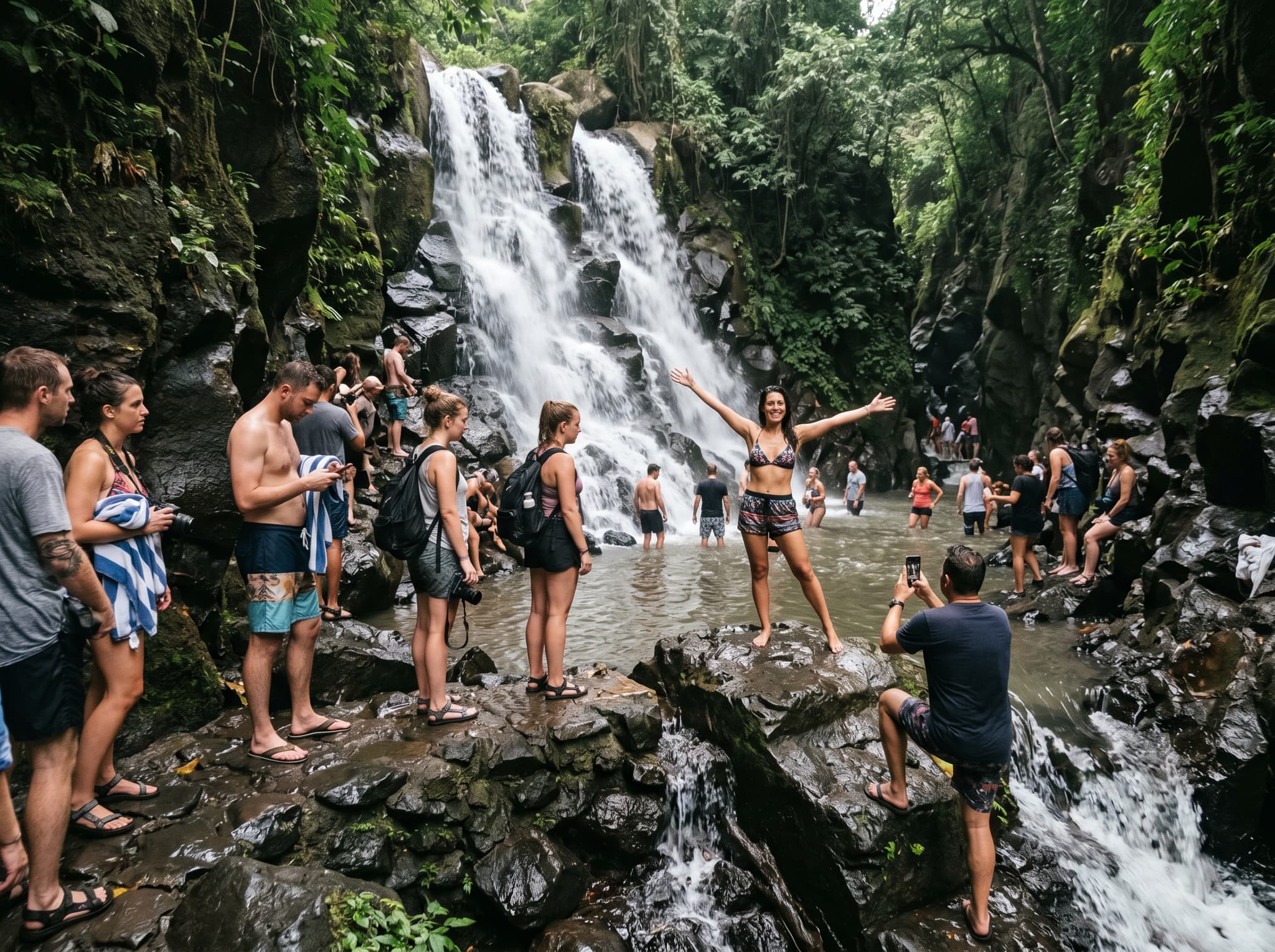
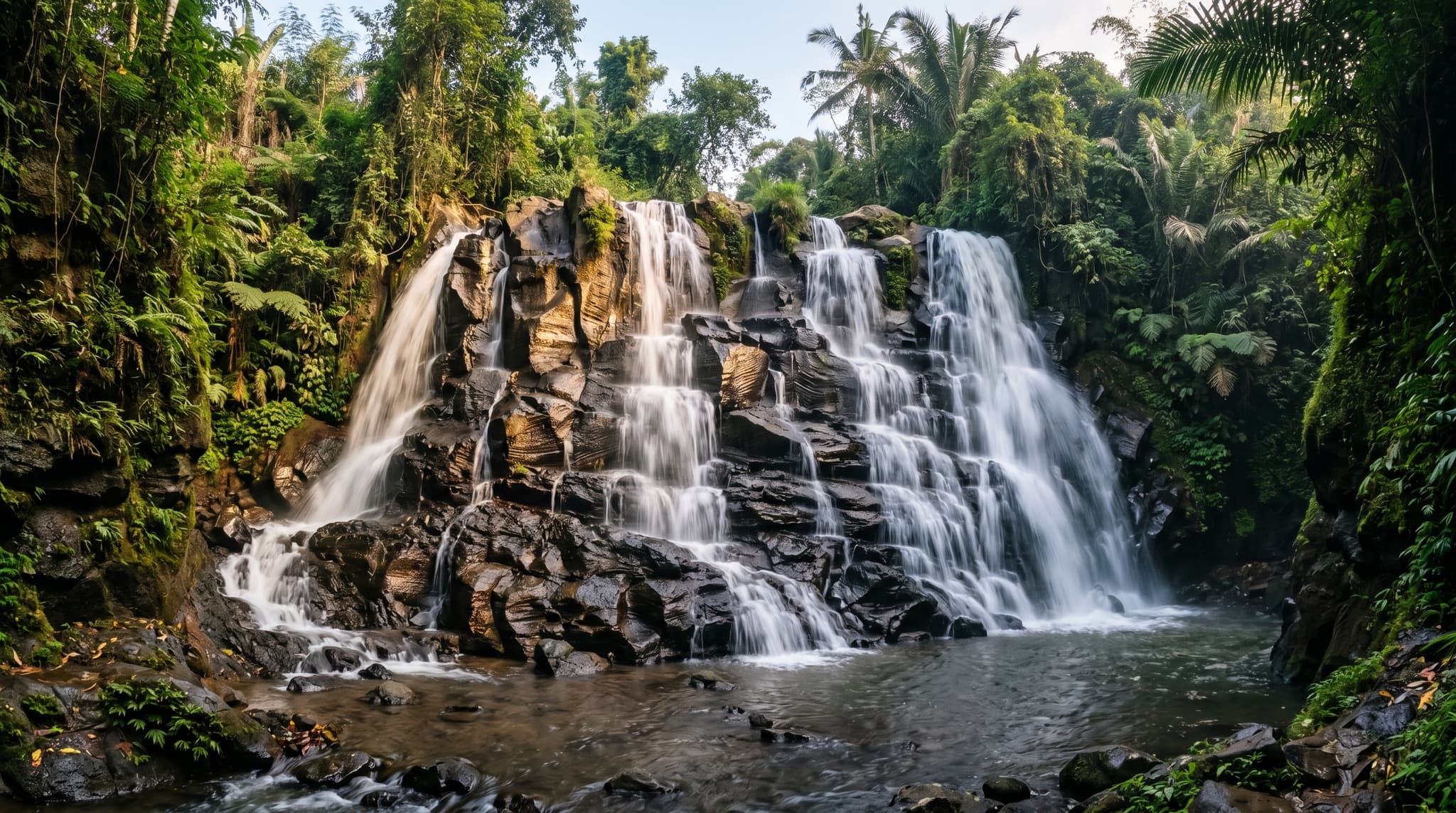
Kanto Lampo sits in Beng village, a short drive southeast of Ubud in the Gianyar Regency. The waterfall itself is genuinely striking — a wide curtain of water fanning across tiered volcanic rock, creating the layered, almost architectural effect that made it an Instagram fixture in the first place. The rock face is dark and textured, the water catches light in clean diagonal sheets, and the pool at the base is shallow enough to wade into without concern. Ankle to knee-deep, mostly. You're not swimming here. You're standing.
And that's the thing. Most visitors come to stand in a specific spot, hold a specific pose, and take a specific photo. During peak hours — roughly 10 AM to 1 PM — the base of the falls operates as an informal queue. Groups wait their turn on the rocks. Someone's boyfriend is always adjusting an angle. The whole scene has the energy of a photo studio with a waterfall backdrop, which is exactly what it is.
Getting There
From Ubud, the drive is 15 to 40 minutes depending on traffic, and Gianyar's narrow roads can turn that range into a real variable. Scooter is the fastest option if you're comfortable with Bali traffic. A private driver for the day runs around IDR 500,000 (roughly $35 USD), which makes sense if you're combining Kanto Lampo with other stops — Tegallalang, Tirta Empul, or Gunung Kawi are all within range.
You can use Grab or Gojek for the ride in, but arrange your return before you're dropped off. Ride-hailing pickups near the site are restricted by local transport operators, and you may find yourself walking to the main road to flag a ride. Ask your driver to wait, or accept the walk.
Transport Costs
Scooter parking
IDR 5,000–10,000
Car parking
~IDR 10,000
Private driver (full day)
~IDR 500,000 / $35 USD
Organized tour from Ubud
From ~$62 USD
The Walk Down and What's On Site
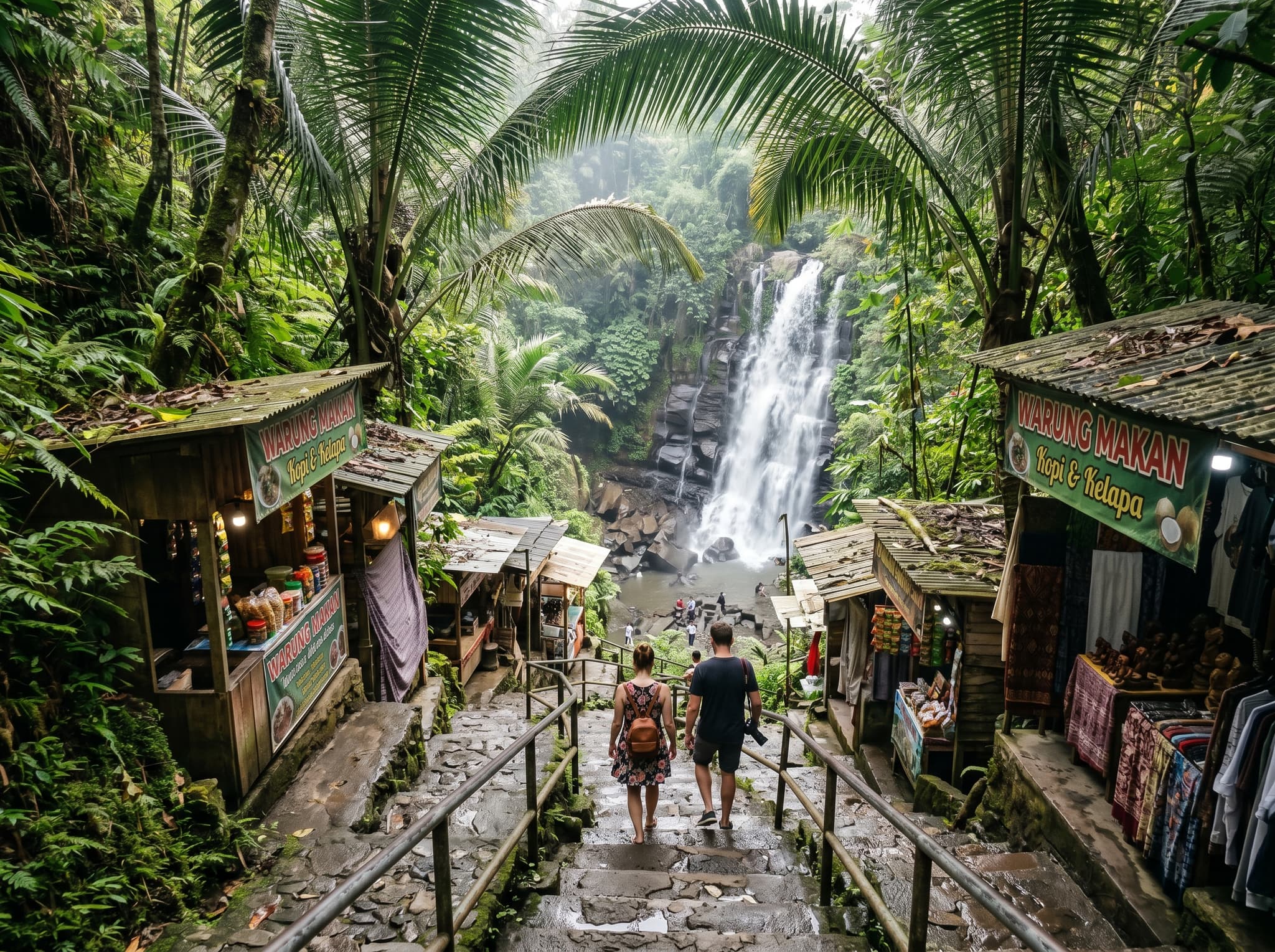
From the parking area, it's a 5 to 10 minute walk down paved stairs through a corridor of warungs selling drinks, snacks, and souvenirs. A small restaurant sits about halfway down. The stairs are manageable but can get slippery in wet conditions — wear shoes with grip, not the sandals you'll see half the visitors regretting.
At the bottom, facilities are minimal but functional. There are lockers (IDR 5,000), toilets (small fee), and a changing area. Everything is cash only — entry, parking, lockers, food. Bring small bills. The warungs on the walk back up are better for a post-swim coconut or fried banana than anything you'll find at the falls themselves.
The Honest Calculation
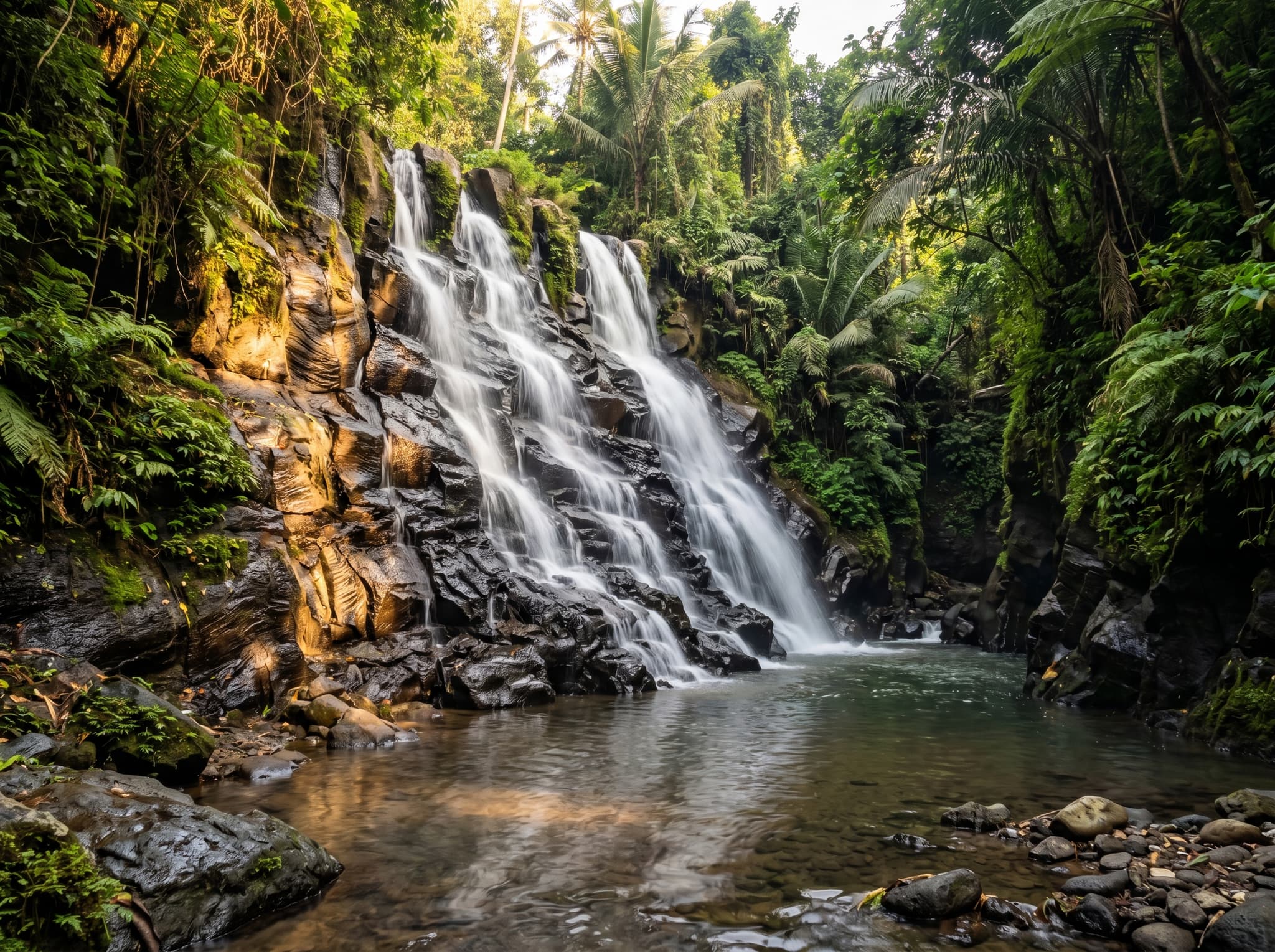
Kanto Lampo is not a bad waterfall. The rock formations are genuinely unusual — that layered, almost corrugated surface creates a visual effect unlike the sheer-drop falls you'll find elsewhere in Bali. At IDR 25,000 entry, it costs less than a mediocre coffee in Ubud. And the walk down through the ravine, with its thick vegetation and the sound of water building as you descend, has its own quiet appeal.
The question is whether the experience matches the image. For most visitors arriving between mid-morning and early afternoon, it won't. The falls are compact — there's one main spot everyone wants to be, and the space doesn't absorb crowds gracefully. What looks like solitary communion with nature in photographs is, in practice, a coordinated rotation of strangers waiting to occupy the same rock for ninety seconds.
Arrive before 9 AM — ideally at opening — and the calculation shifts. Early morning light hits the rock face at a lower angle, the pool is quieter, and you can actually hear the water instead of the chatter. The falls become what they are without the performance: a short, beautiful cascade in a narrow gorge, worth the twenty-minute detour from Ubud if you're already in the area.
Timing Your Visit
Opens
6:30–8:00 AM (varies — confirm locally)
Closes
5:00–5:30 PM
Quietest window
Opening to 9:00 AM
Busiest window
10:00 AM – 1:00 PM
Avoid
Weekends and public holidays
Who This Is For (and Who Should Skip It)
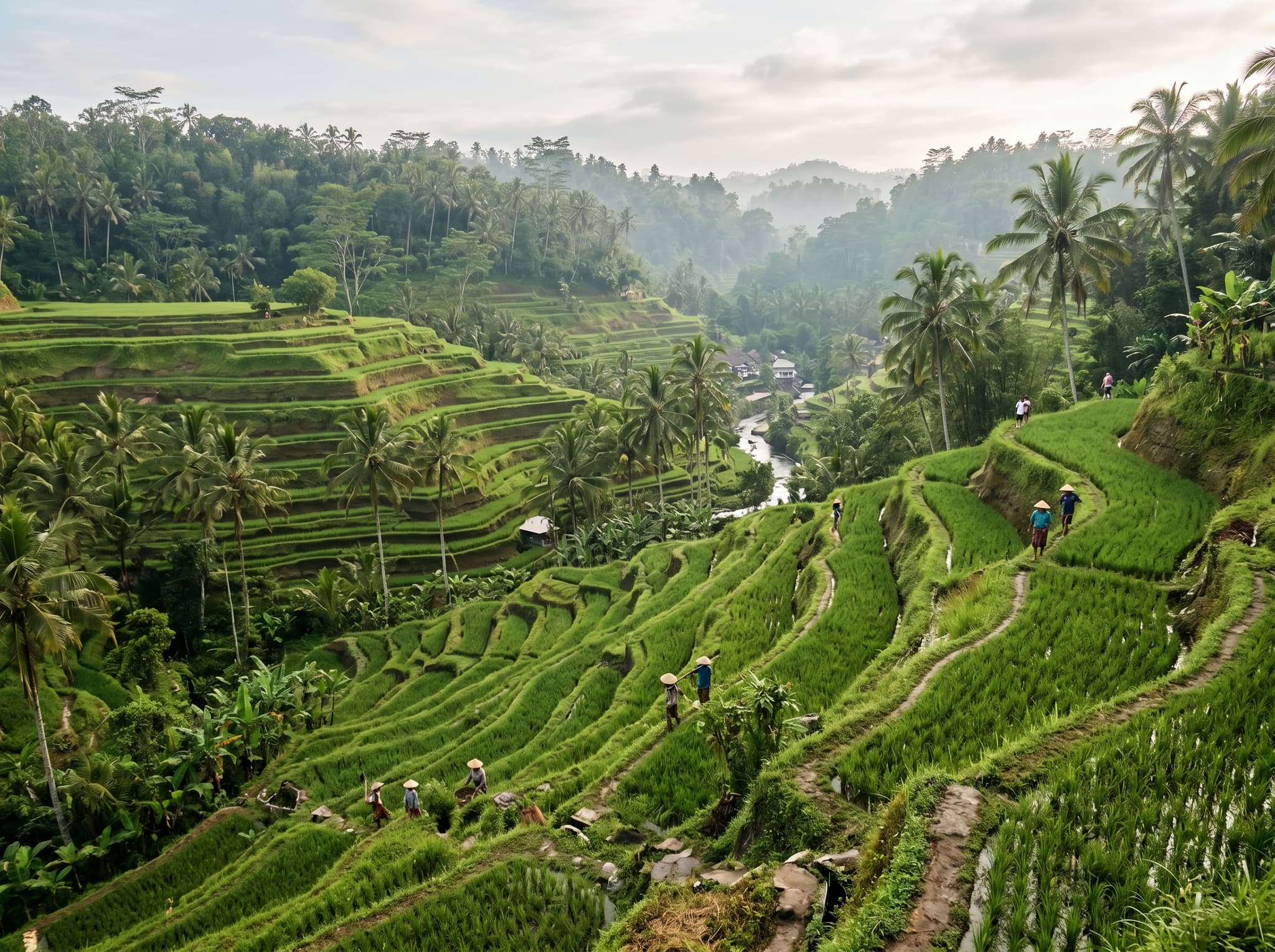
If you're spending a few days around Ubud and want to see a waterfall without committing to the longer drives north toward Sekumpul or Gitgit, Kanto Lampo is the most accessible option. It pairs easily with a morning of temple visits or rice terrace walks. It's a stop, not a destination — and it works best when treated as one.
If you're looking for the kind of waterfall experience where you can sit for an hour and let the place settle into you, this isn't it. The space is too small, the turnover too fast. Bali has waterfalls that reward patience. Kanto Lampo rewards punctuality.