Sekumpul Waterfall in North Bali rewards a steep jungle trek with 80-meter twin cascades and no Instagram swings. Here's how to visit.
The first thing you hear isn't the waterfall. It's the quiet — the particular quiet of a road that runs out of tourists a long time ago, somewhere past Kintamani, past the last coffee plantation offering luwak tastings, past the point where most rental scooter confidence gives out. Then you hear the water, but only faintly, from above, before you can see anything at all.
Sekumpul sits in Bali's north, in Buleleng Regency, about two hours from Ubud and a world away from the southern beach zones. It's frequently called Bali's most beautiful waterfall and one of the top things to do in Bali. I've learned to distrust that kind of claim, but I'll say this: when you finally stand at the base, looking up at twin cascades dropping roughly 80 meters through a wall of green so dense it seems to generate its own light, the phrase feels less like marketing and more like understatement.
Getting There
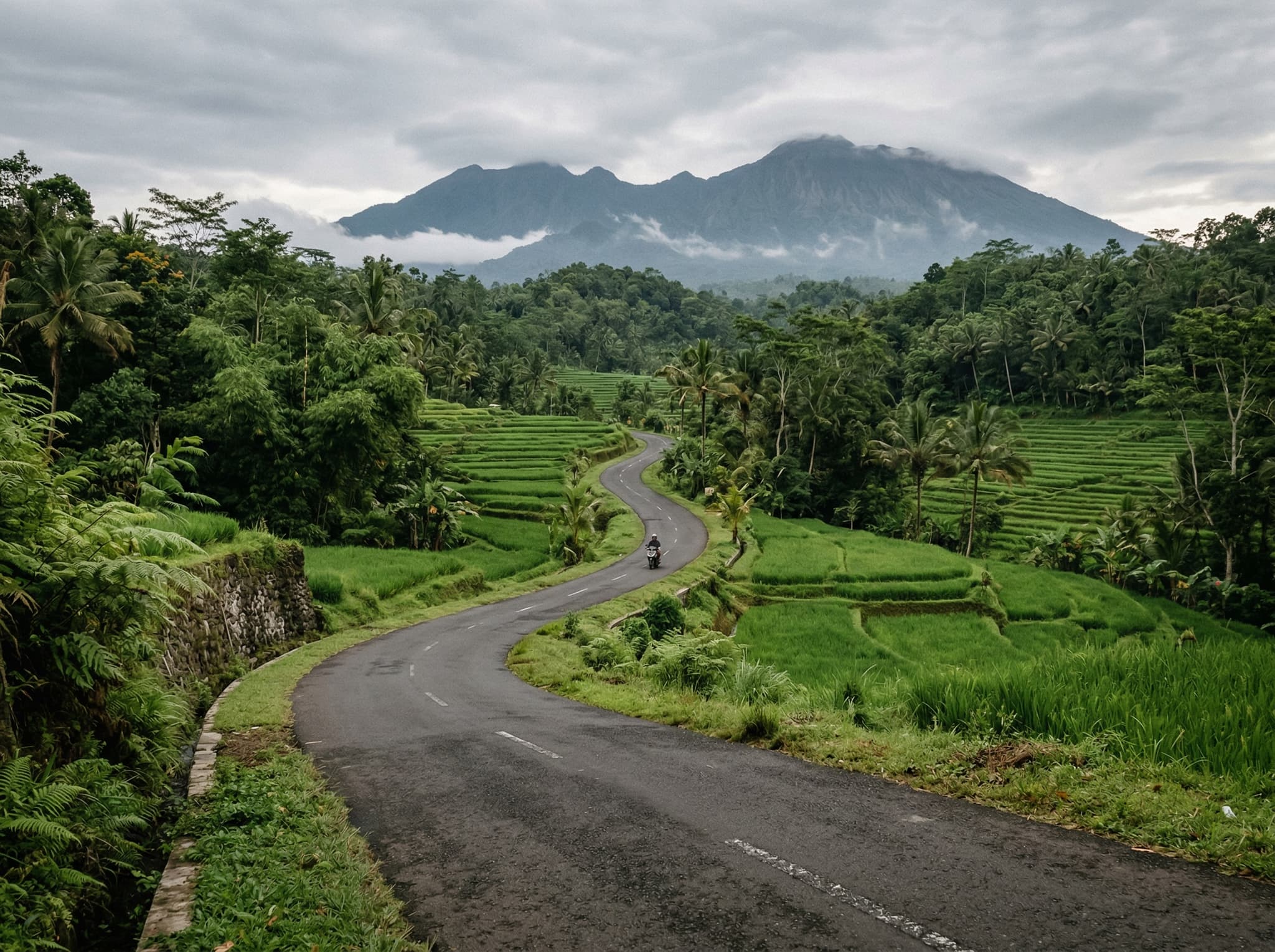
There's no graceful way to arrive. From Ubud, the drive north climbs through rice terraces and into the volcanic highlands before descending toward the coast. The road narrows. Google Maps will try to route you through villages where the lane width suggests a mutual understanding between opposing traffic that you, as a visitor, have not been briefed on.
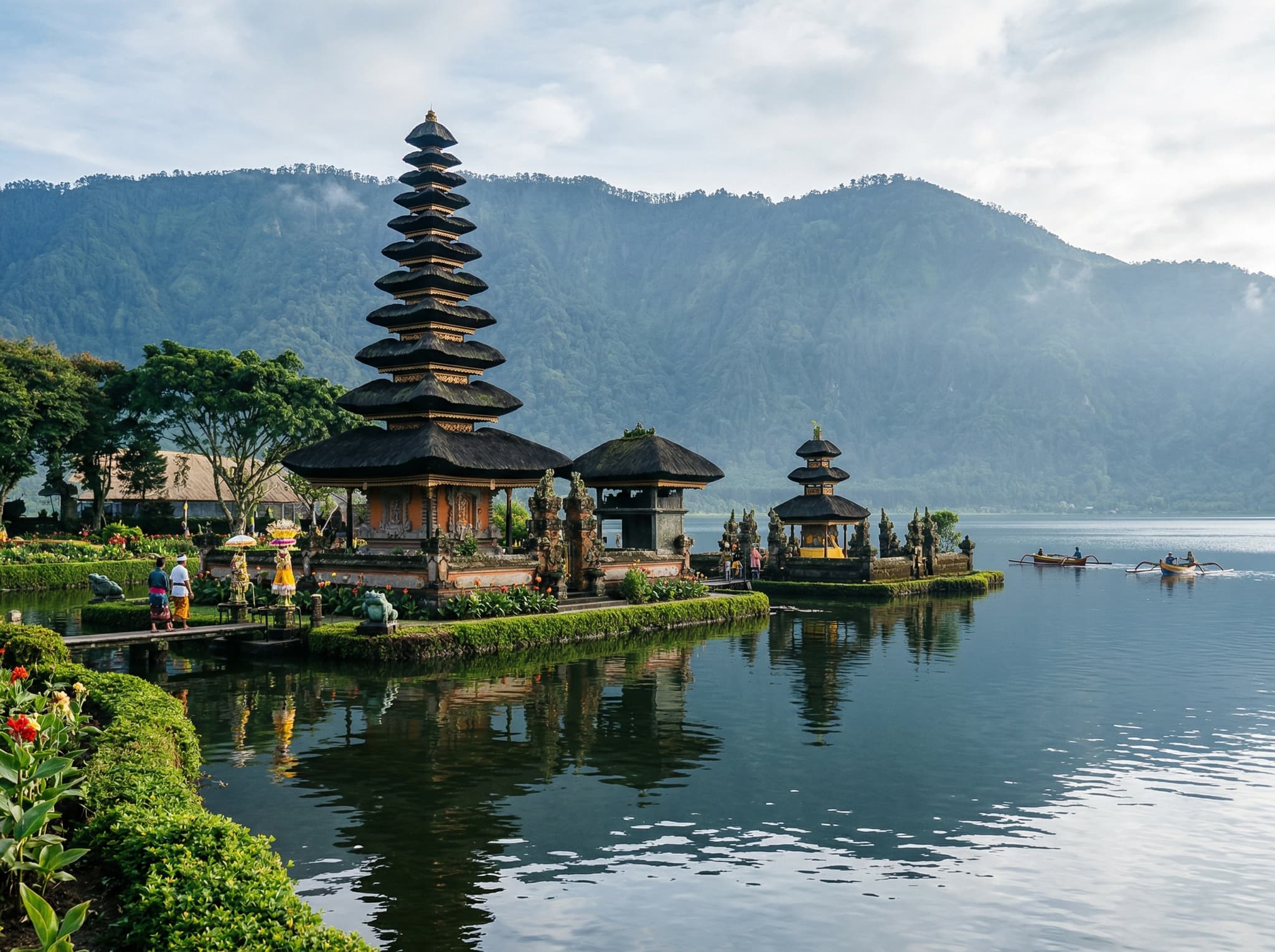
Most people hire a driver for the day. This is the right call. The going rate from Ubud is IDR 500,000–700,000 ($31–44 USD) for a full day, which gives you time to combine Sekumpul with other northern stops — Ulun Danu Beratan temple, the Munduk area, or the Gitgit waterfalls if you want a comparison point.
If you're driving yourself on a scooter, the route is manageable but long. Fill up before Kintamani. There are fewer fuel stops on the north side than you'd expect.
The Trek Down
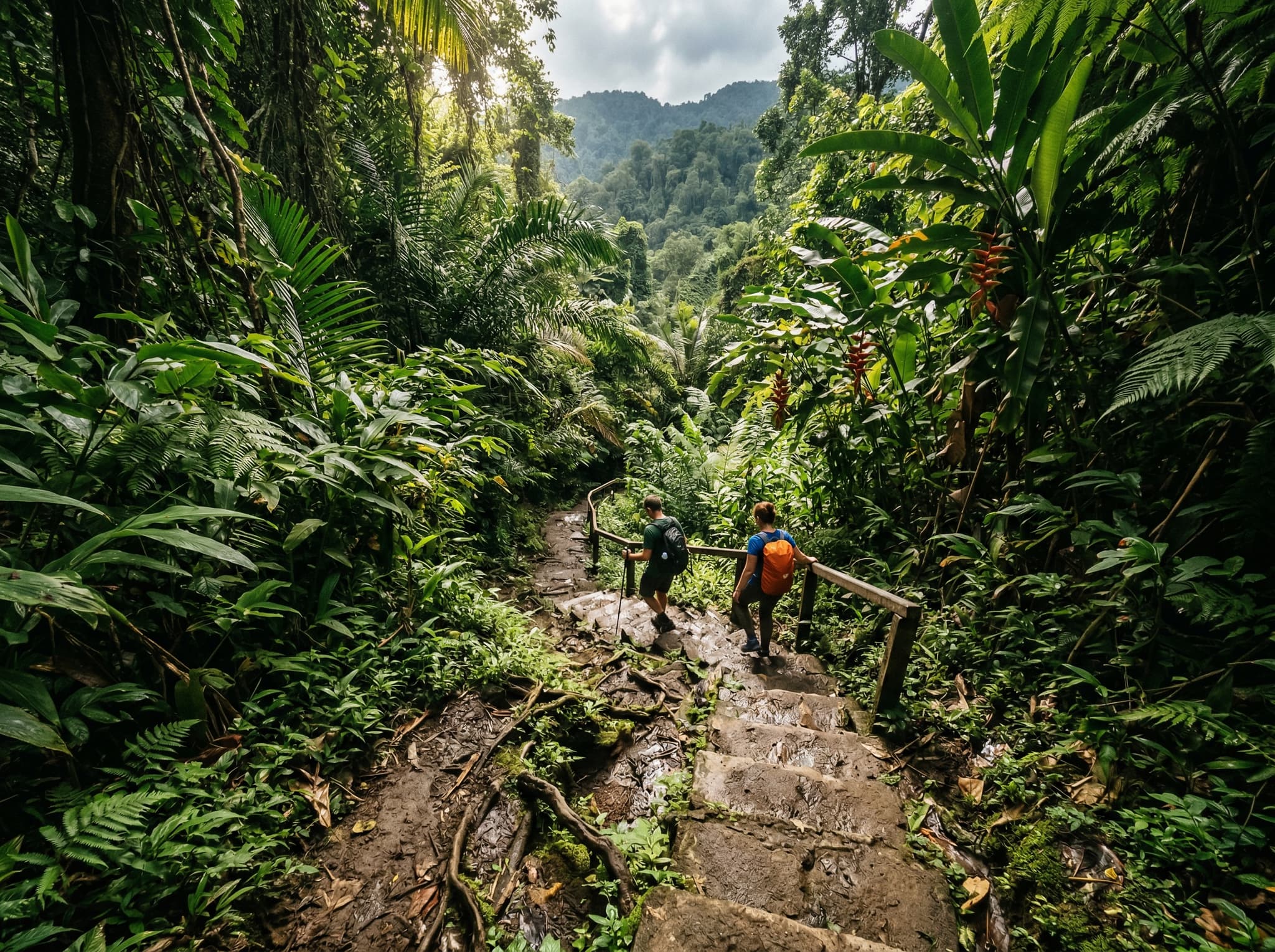
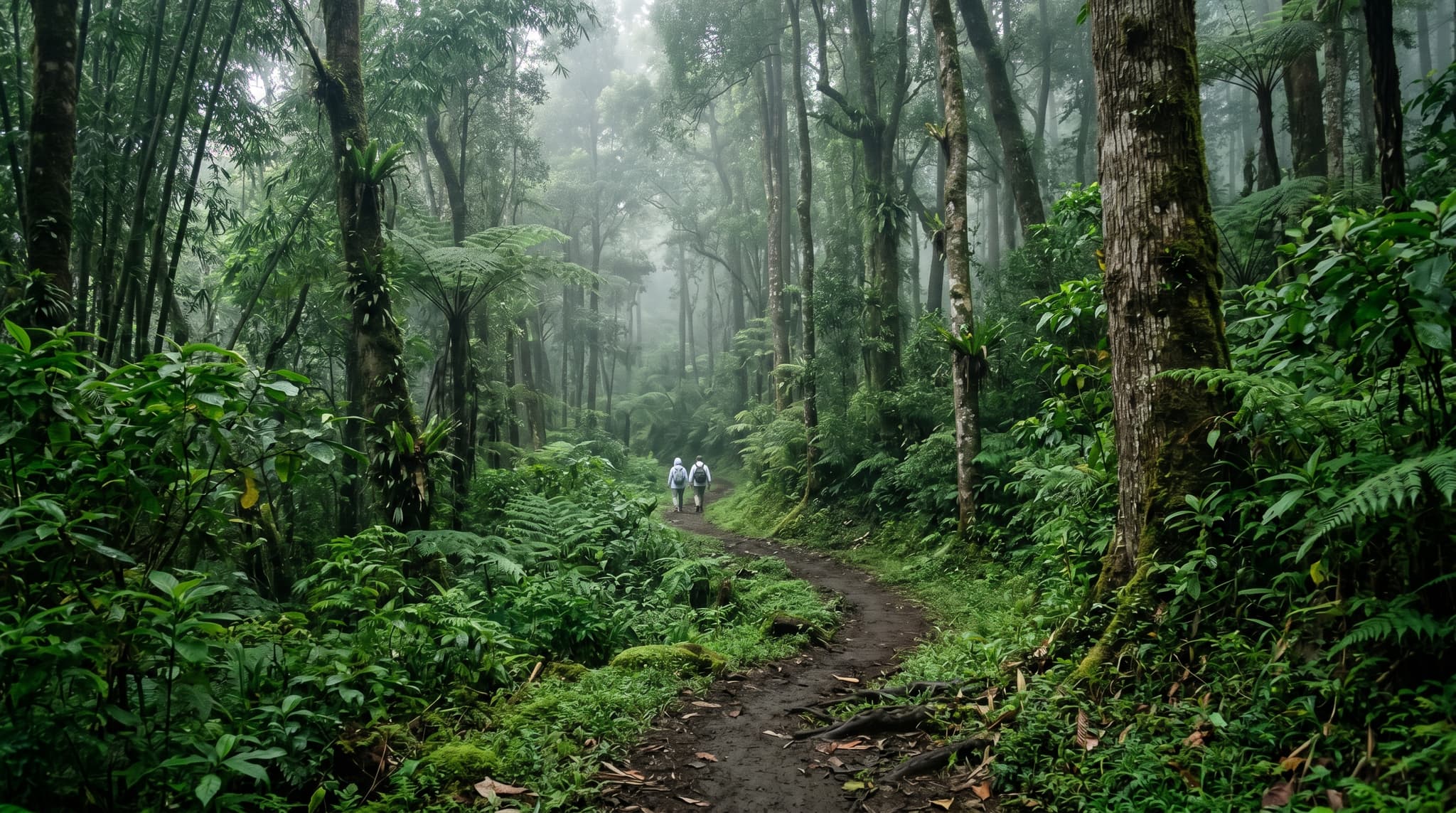
This is where Sekumpul earns its reputation — and filters its visitors. The path descends steeply through a mix of concrete steps, dirt trail, and river crossings. In the dry season, the footing is reasonable. In the wet season, it's a negotiation with mud.
Trek Details
Distance
~1.5 km each way
Elevation Change
~150 meters descent
Difficulty
Moderate to strenuous
Footwear
Closed-toe shoes with grip (no flip-flops)
The descent takes 45 minutes to an hour, depending on your pace and how recently it rained. The return climb takes longer. Expect to sweat. Bring water — at least a liter per person.
Along the way, the trail passes through a small river crossing that's ankle-deep in dry season and can reach knee-height after heavy rains. There's no bridge. You walk through it. This is the point where you'll be glad you didn't wear your good shoes.
Local guides wait near the parking area and at various points along the trail. They'll offer to lead you down for IDR 50,000–100,000 ($3–6 USD). On your first visit, this is worth it — not because the trail is hard to find, but because they know which river crossings are stable after rain and which sections get slippery. They'll also carry your bag if you ask, though you didn't hear that from me.
At the Base
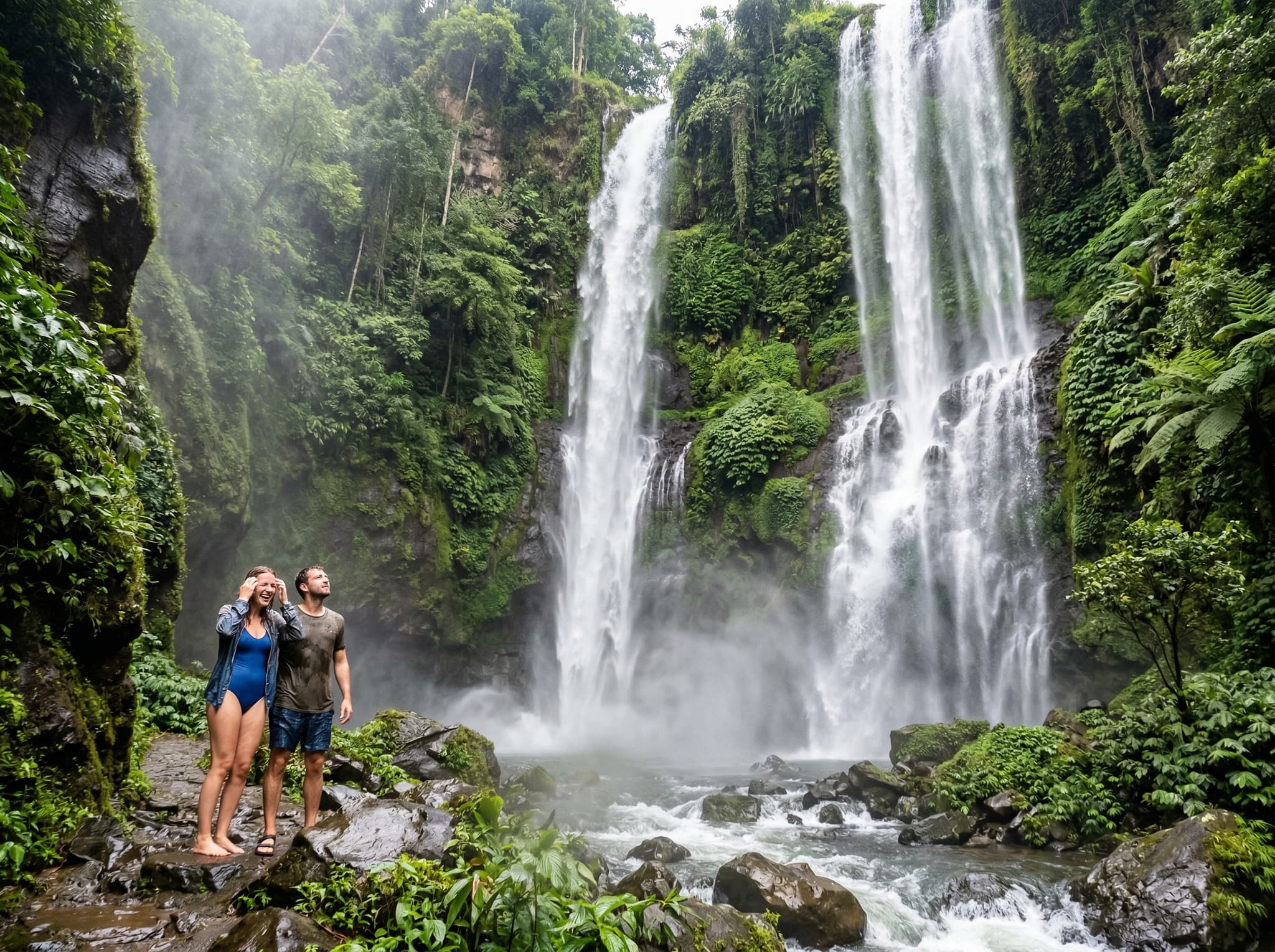
The waterfall is actually a cluster of falls — at least seven streams pour over the cliff face, though two dominant cascades form the centerpiece. The volume depends entirely on the season. Visit in August and you'll see elegant ribbons of white against dark rock. Visit in January and the whole cliff face becomes a roaring curtain of water that throws mist 30 meters out from the base.
Both versions are worth seeing. I've been twice — once in late dry season, once after weeks of rain — and they feel like different places.
The pool at the base is shallow enough to wade in but cold enough to make you reconsider quickly. The mist alone will soak you if you stand close. Bring a dry bag or waterproof pouch for your phone. This isn't a suggestion — it's the kind of advice you'll wish you'd followed.
The space around the falls is relatively undeveloped. There's no café at the bottom, no Instagram swing, no entrance to a second paid attraction. Just rock, water, jungle canopy, and — if you're early enough — near-silence between the crashes of falling water. It's one of the few places in Bali where the natural spectacle hasn't been accessorized.
What to Know Before You Go
Scams and misdirection. In past years, some locals along the road before the official entrance would intercept visitors and charge inflated "guide fees" or redirect them to a different, less impressive viewpoint while claiming the main falls were closed. This has improved, but it still happens. Drive to the official parking area in Sekumpul village. If someone stops you on the road and says the waterfall is closed, keep driving.
Physical fitness. The climb back up is real exercise. If you have knee problems or limited mobility, this isn't the right waterfall — consider Tukad Cepung or Tibumana, which are far more accessible.
Time commitment. Budget three to four hours for the waterfall itself — drive, descent, time at the base, and the climb back up. With the drive from Ubud and back, it's a full day.
What to bring. Water, sunscreen for the drive, a change of clothes or at least a dry shirt, waterproof phone protection, and shoes you don't mind getting wet and muddy.
Cost Summary
Entrance Fee
IDR 20,000 ($1.25)
Parking (car)
IDR 10,000 ($0.65)
Local Guide (optional)
IDR 50,000–100,000 ($3–6)
Driver from Ubud (full day)
IDR 500,000–700,000 ($31–44)
Is It Worth the Effort?
Bali has dozens of waterfalls. Most are beautiful. Many are easy to reach. A few have been engineered into photo opportunities — the falls themselves almost secondary to the platform, the pose, the queue.
Sekumpul asks more of you. The drive is long. The trail is steep and muddy. The climb back will test your enthusiasm for natural beauty. And none of that changes the fact that when you're standing at the base, soaked in mist, looking up at something that has been falling from that height long before anyone thought to charge admission — it's the most honest encounter with landscape that Bali offers.
Some places earn the walk.