Munduk offers Bali's best waterfalls, coffee farms, and mountain air — without the crowds. Here's what it costs, how to get there, and where to stay.
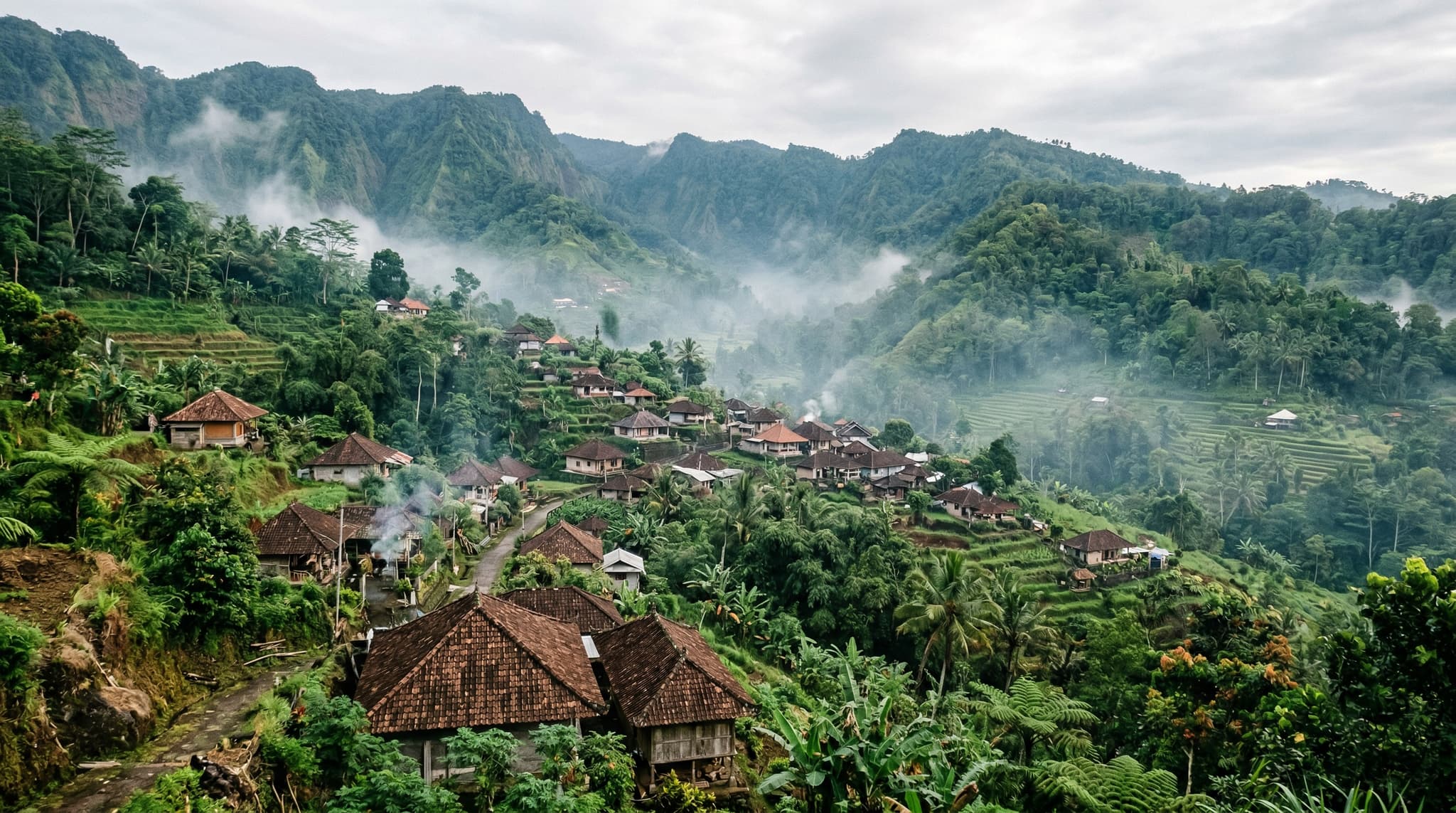
Most visitors to Bali stay south of the volcanic spine — Seminyak, Canggu, Ubud — and never see what's on the other side. Munduk sits at roughly 800 meters elevation in the northern highlands, surrounded by clove plantations, coffee farms, and more waterfalls than you can reasonably visit in a day. The air is noticeably cooler. The traffic is nonexistent. The accommodation costs a fraction of what you'd pay in Ubud for comparable quality.
The trade-off is the drive. Munduk earns its quiet by being genuinely inconvenient to reach as a day trip. That inconvenience is also what keeps it from turning into the next overcrowded Instagram checkpoint. It rewards people who stay the night — and it rewards them generously.
Getting There
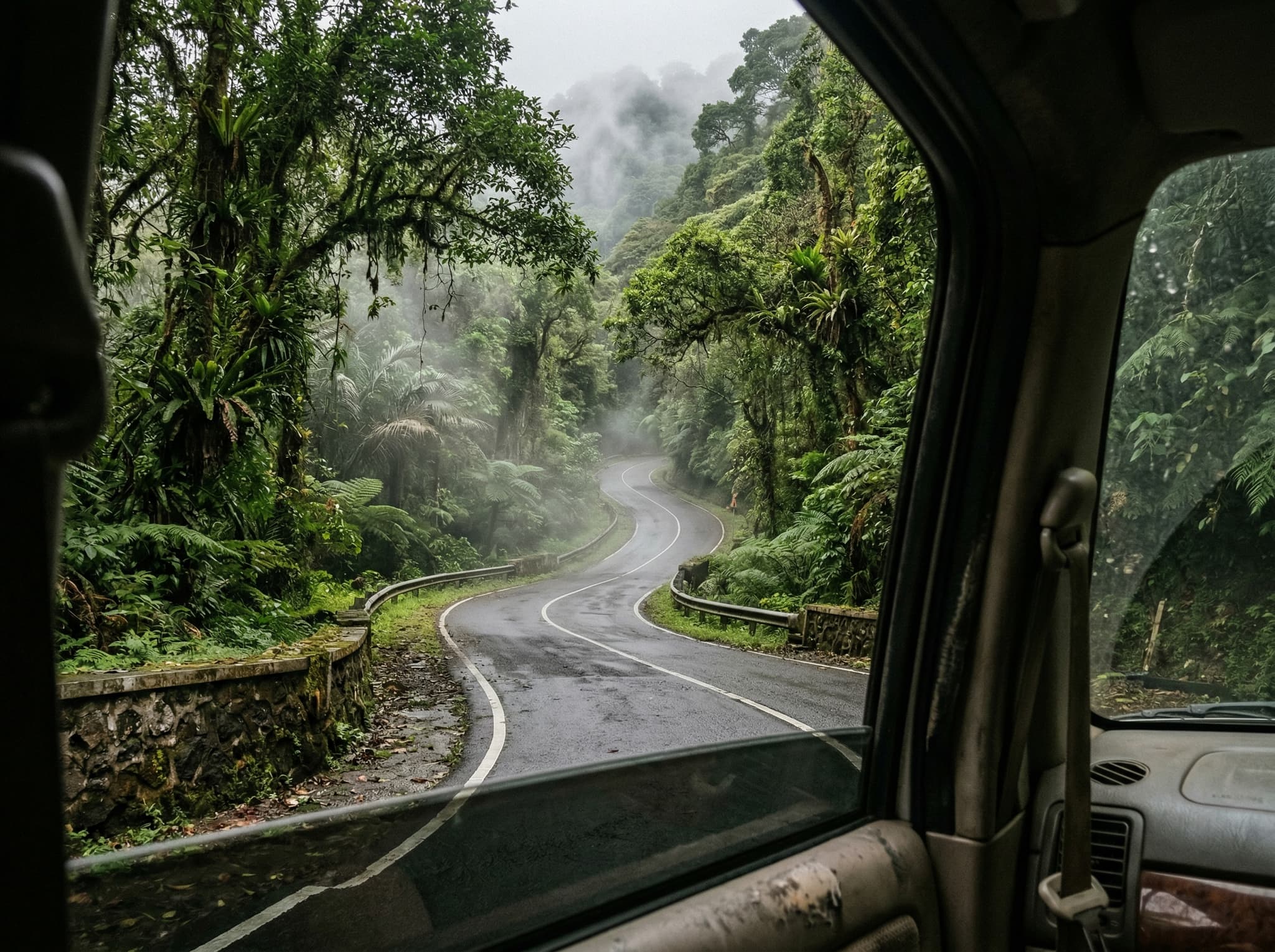
From Ubud, the distance is about 62 km, but Bali's mountain roads don't care about distance. Expect 1–2 hours by private car or taxi, depending on traffic through the Bedugul area.
Transport Options from Ubud
Private car/driver
IDR 600,000–900,000 (~$39–$58), 1–1.5 hours
Taxi
IDR 500,000–900,000 (~$32–$58), 1–2 hours
Perama Tour bus
IDR 220,000 (~$14), ~2 hours, once daily
From south Bali (Seminyak, Kuta), add another 30–60 minutes and budget IDR 800,000–1,200,000 for a private driver. The Perama bus is the budget option, but it runs once daily with limited flexibility. For most travelers, hiring a driver for the day makes more practical sense — they can stop at Bedugul's Candi Kuning Market or Lake Bratan on the way up, which turns the commute into half the experience.
The Waterfalls — And How to Choose
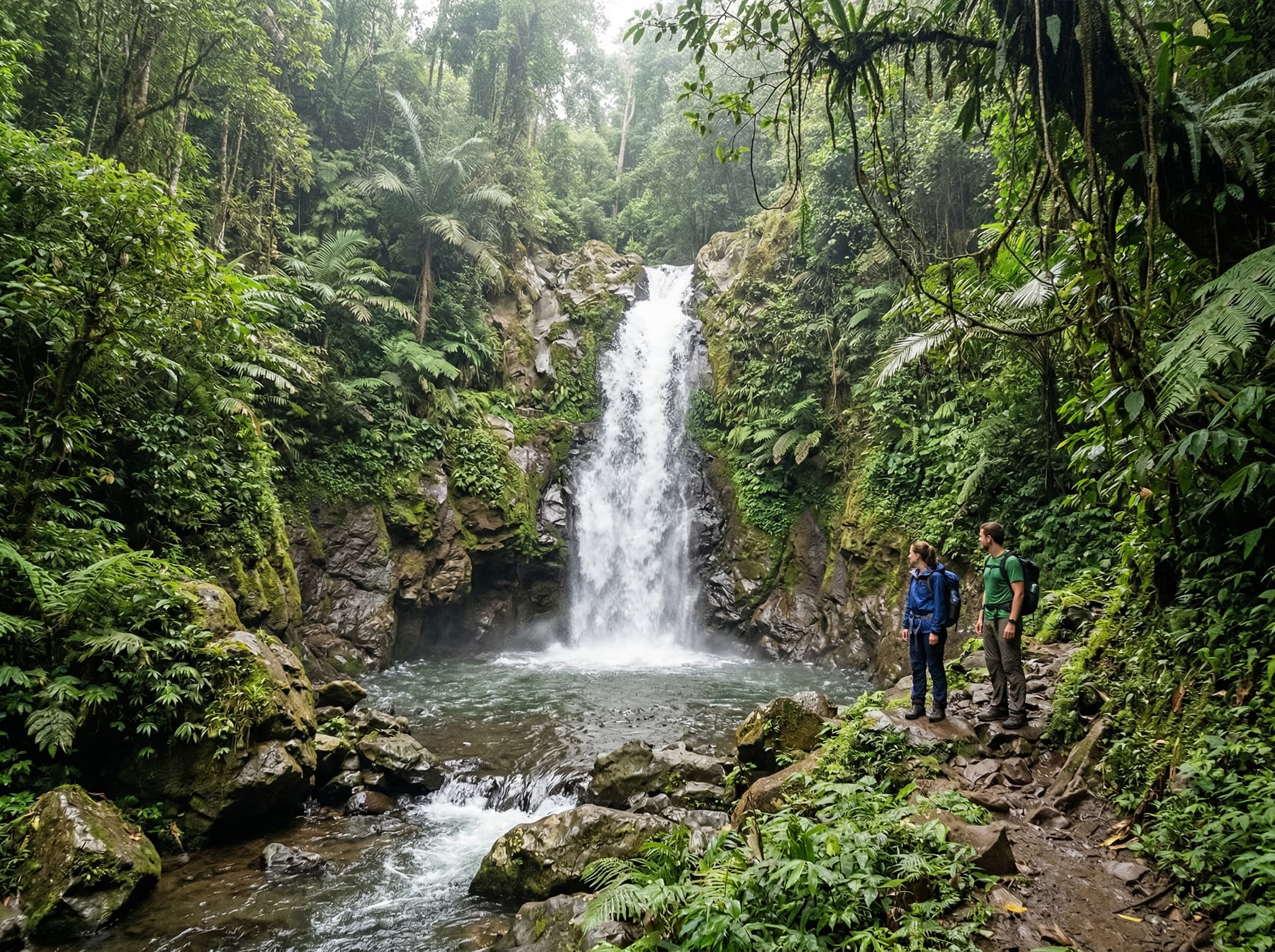
Munduk's main draw is waterfalls, and there are enough to fill two or three days if you're thorough. The practical question isn't whether to see waterfalls — it's which ones, and in what combination.
Munduk Waterfall is the namesake and the easiest to reach. A short walk from the village, IDR 20,000 (~$1.30) entry. It's a single-drop fall surrounded by dense jungle, and it's the one most people see first. Worth it as a starting point, not as the only stop.
Melanting Waterfall sits nearby — IDR 10,000 (~$0.65) entry, with IDR 2,000 parking. Less visited than the main Munduk fall, taller, and often quieter. The two can be combined in a morning.
Red Coral (Labuhan Kebo) Waterfall has been free or informally ticketed historically. Buleleng Regency is introducing official fees of up to IDR 40,000 (~$2.60) as part of a broader formalization effort — this was still in transition as of early 2026, so expect the fee structure to vary when you arrive.
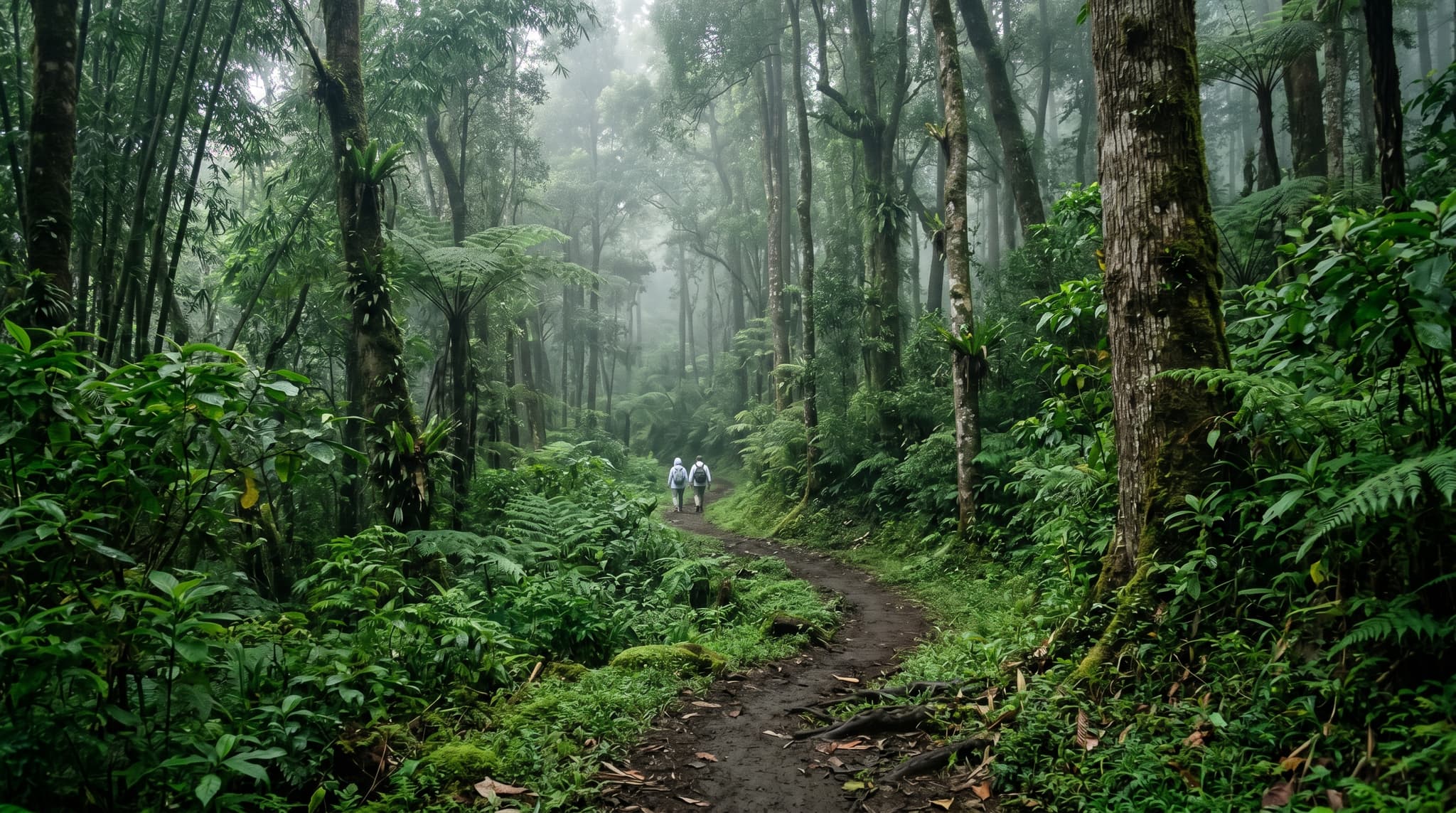
The real highlight for most trekkers is the three-waterfall hike, which starts from the village and covers Munduk, Melanting, and Red Coral in a single loop. Budget 2–3 hours, rated easy to moderate. The combined trekking fee is typically IDR 20,000 for the first waterfall and IDR 10,000 for each additional, or around IDR 30,000 total. Trails can be muddy after rain — sturdy shoes, not sandals.
Nearby Waterfalls Worth the Detour
Banyumala Twin Waterfall
~20 min drive, IDR 30,000–50,000
Sekumpul Waterfall
~45 min drive, IDR 150,000–250,000 with guide
Leke Leke Waterfall
~40 min drive south, IDR 50,000
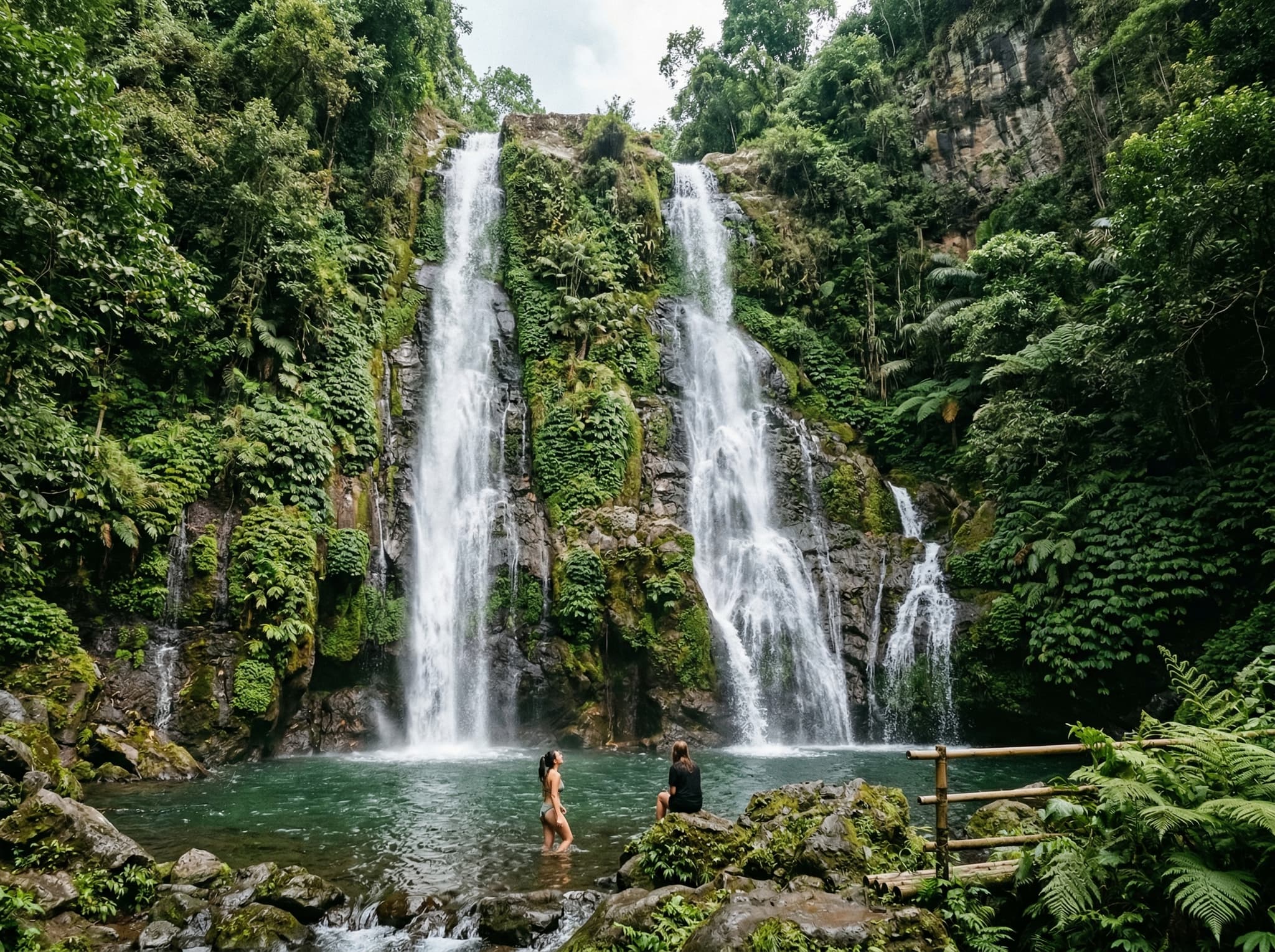
Sekumpul is often called Bali's most beautiful waterfall, and the price reflects it — the IDR 150,000–250,000 ($10–$16) fee typically includes a guided trek down steep terrain to a multi-tiered cascade. It's a half-day commitment from Munduk, but if you're already in the highlands, this is the one that justifies the trip north.
Coffee, Cloves, and Actually Eating Well
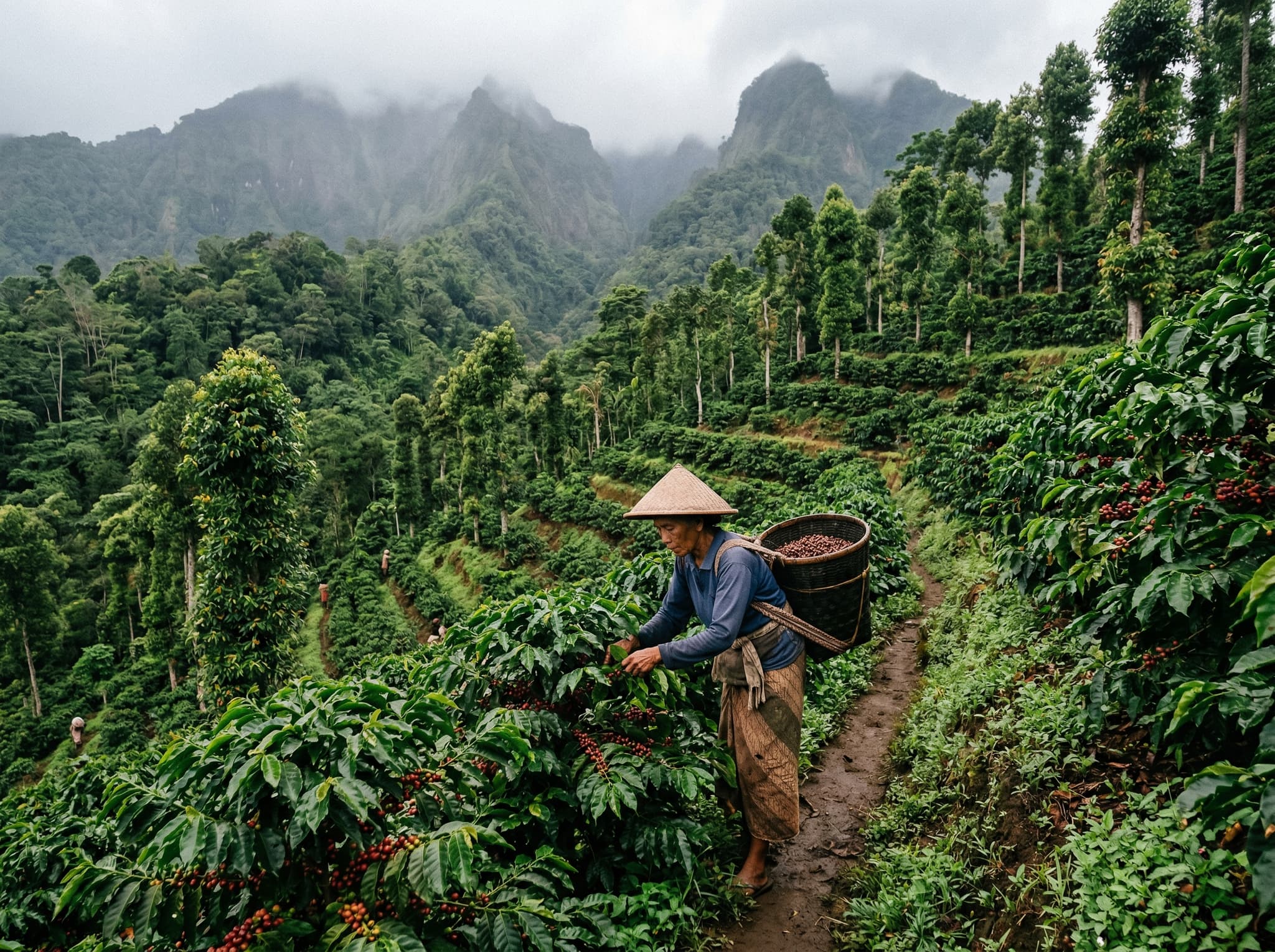
Munduk sits in the heart of Bali's coffee and clove growing region, and this shapes daily life more than tourism does. Several farms along the main road offer tours and tastings — expect to pay IDR 50,000–100,000 for a guided walk through a working plantation that ends with a cupping session of Balinese robusta and arabica. It's not specialty coffee by Melbourne standards, but it's freshly processed and you'll understand the product differently after watching the harvest.
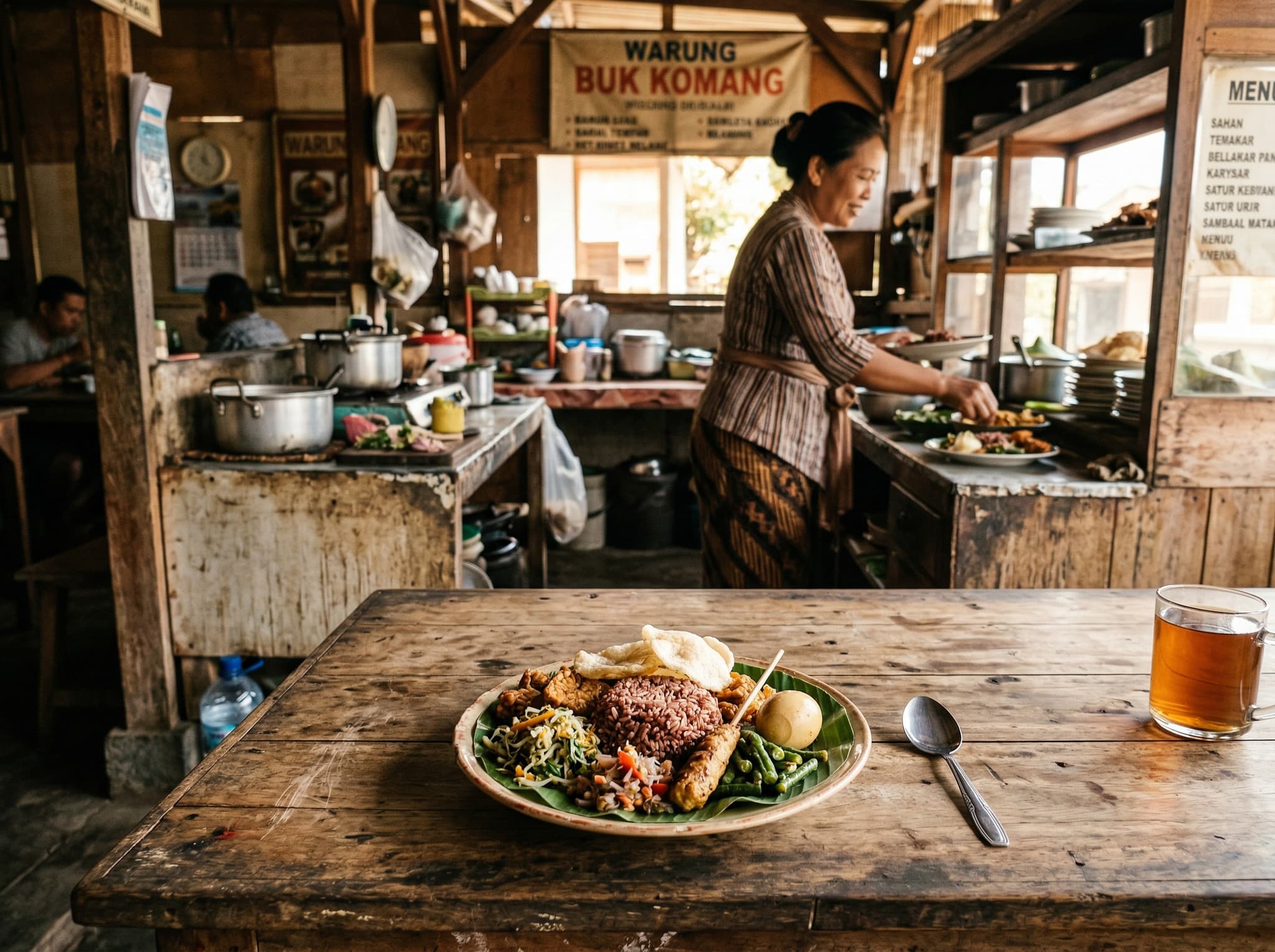
For meals, the village has a handful of warungs serving nasi campur and mie goreng at IDR 25,000–45,000 ($1.60–$2.90) — standard Balinese pricing, well below what you'd pay in Ubud. A few guesthouses also serve solid home-cooked meals for guests. Don't come expecting restaurant variety, but do come expecting honest food at honest prices.
Where to Stay
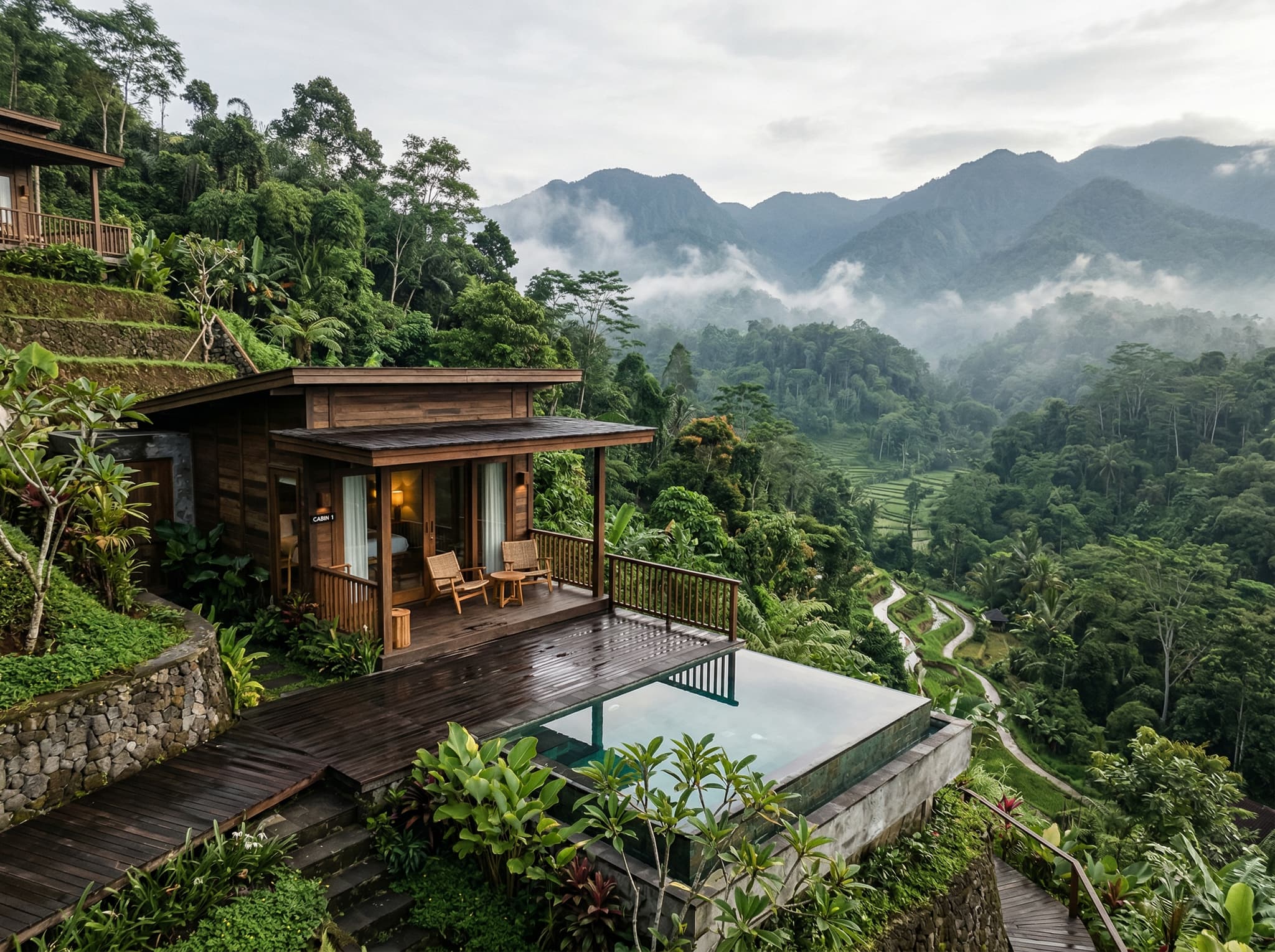
Munduk's accommodation splits cleanly into two tiers, with very little in between.
Accommodation Price Ranges
Budget guesthouses
$5–$20/night (Puri Sunny, Aris Homestay, Nadya Homestay)
Mid-range (Booking.com entry)
From ~$43/night
Premium villas/cabins
$222–$475/night (Munduk Heaven, Munduk Cabins by Desa Hay)
The budget guesthouses are the sweet spot. For $10–$20 per night, you get a clean room, mountain views, and often breakfast included. At the top end, properties like Munduk Cabins by Desa Hay offer design-forward cabins with pools and free shuttles — genuinely beautiful, but at $275–$475 per night, you're paying Ubud luxury prices for a village with no nightlife. That math only works if the silence and the setting are specifically what you came for.
Who Munduk Is For (And Who It Isn't)
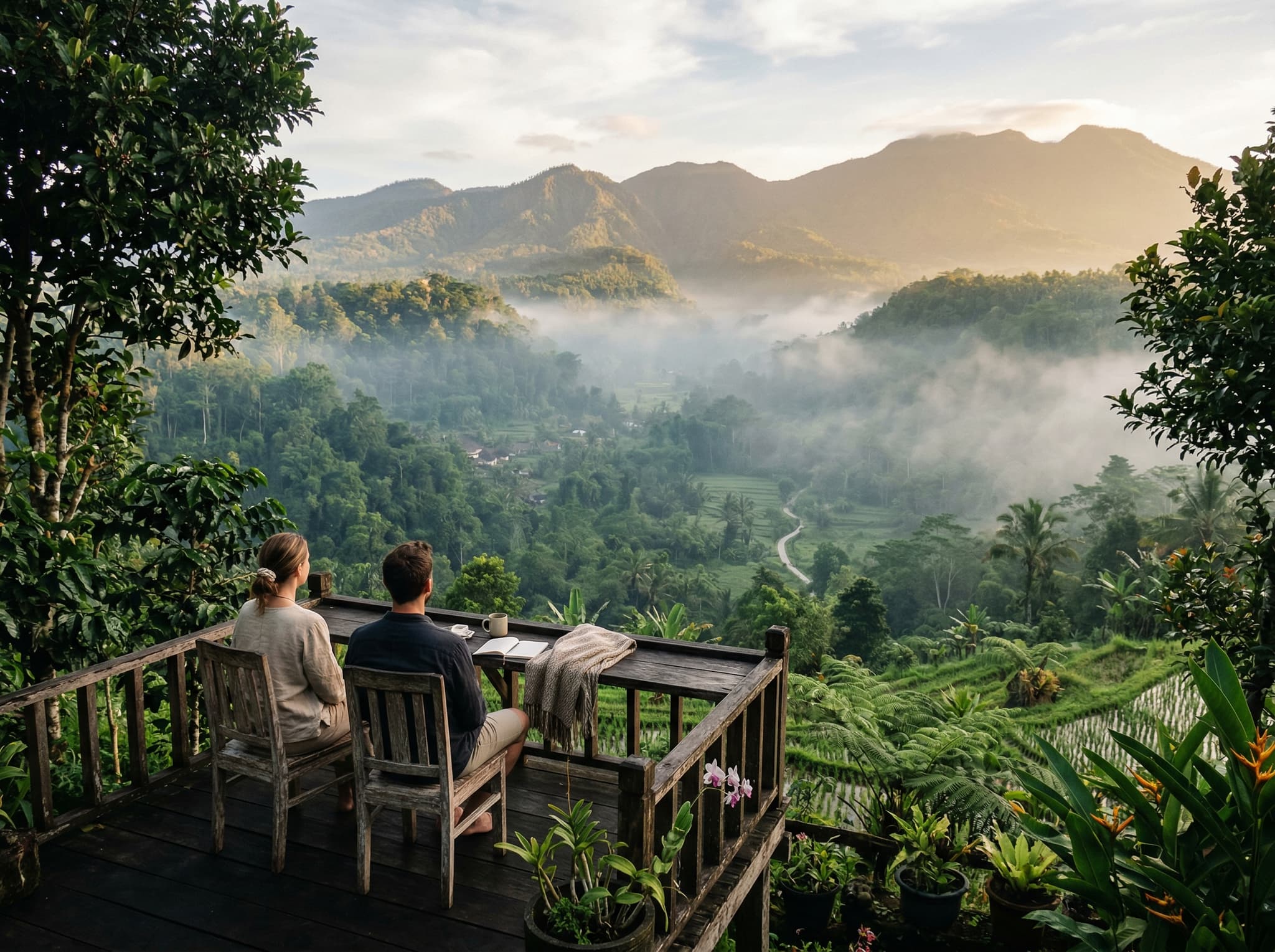
Munduk is for travelers who want Bali's landscape without Bali's crowds. It's ideal for hikers, for couples who'd rather wake up to birdsong than bass music, and for anyone who's spent three days in Canggu and feels the need to decompress from their vacation.
It's not a day trip — or rather, it can be, but you'll spend more time in the car than at the waterfalls, and you'll miss the thing that makes Munduk work, which is the pace. One night minimum. Two is better.