Labuhan Kebo is Munduk's least-visited waterfall, with striking red mineral deposits and real solitude. Here's exactly how to get there and what to expect.
Munduk has waterfalls the way Seminyak has beach clubs — more than you can reasonably hit in a day, and everyone has a favorite. Most visitors tick off the big three: Munduk Waterfall, Melanting, and Golden Valley. They're beautiful, well-signed, and easy to reach. They're also where every other tourist ends up.
Labuhan Kebo — sometimes called Red Coral Waterfall for the striking red-orange mineral deposits that coat its rocks — is the one most people skip. Not because it's not worth it, but because it requires a bit more effort and a lot less hand-holding. That's exactly what makes it worth the trip.
What You're Actually Walking Into
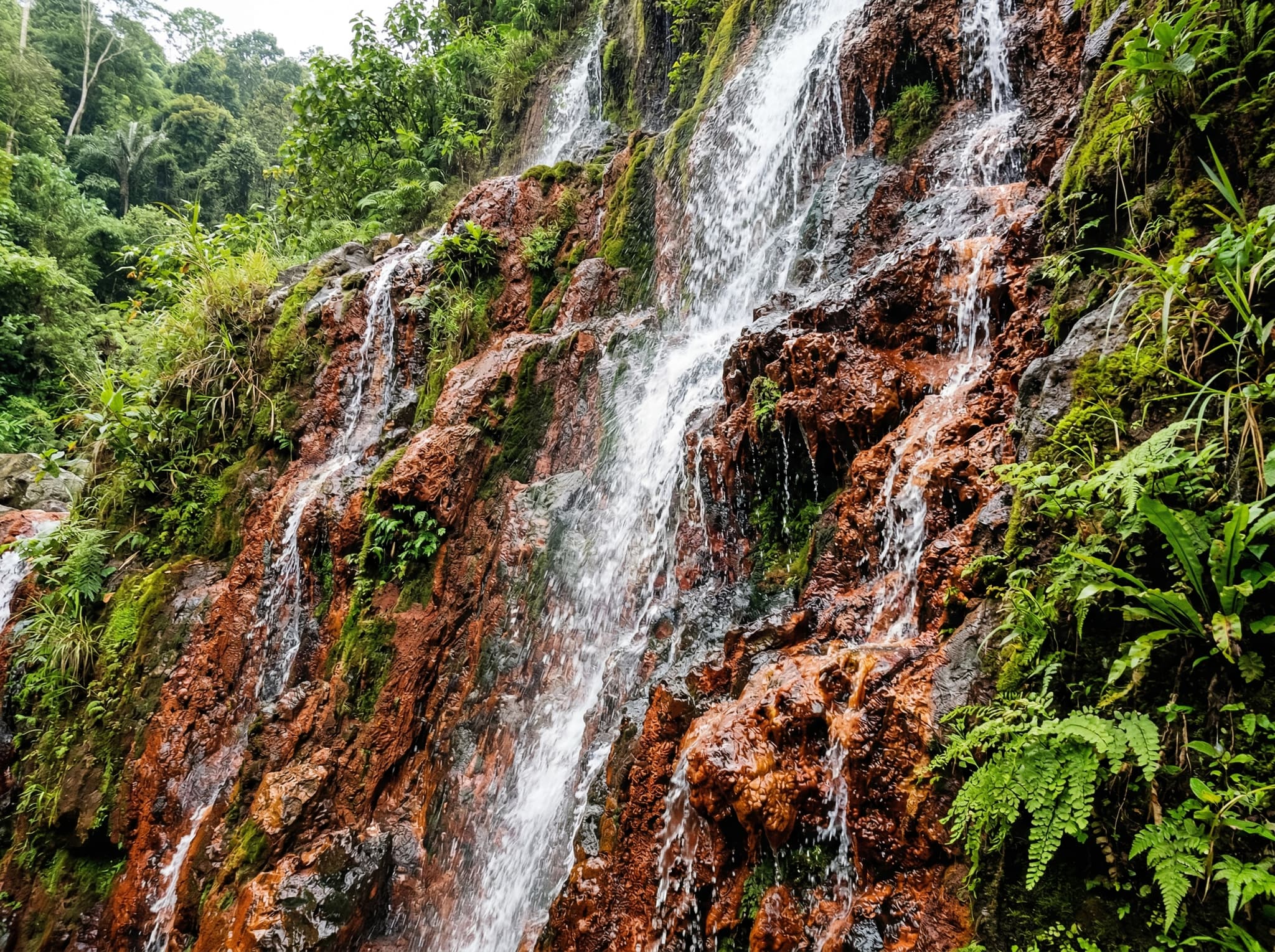
The waterfall sits deep in the jungle south of Munduk village, fed by streams running off the volcanic highlands. What sets Labuhan Kebo apart isn't its height — it's a modest 15–20 meters — but its color. Iron-rich mineral deposits have stained the rock face in shades of rust, orange, and deep red, creating a texture that genuinely looks like coral. In the right light, with green jungle framing everything, it's one of the more visually unusual waterfalls in Bali.
The pool at the base is shallow and cool — swimmable, but not deep enough for diving. The water temperature hovers around 18–20°C, noticeably colder than what you'd expect if you've been sweating through the hike down. It's refreshing in the way that makes you gasp first and enjoy it second.
The Hike: What to Expect

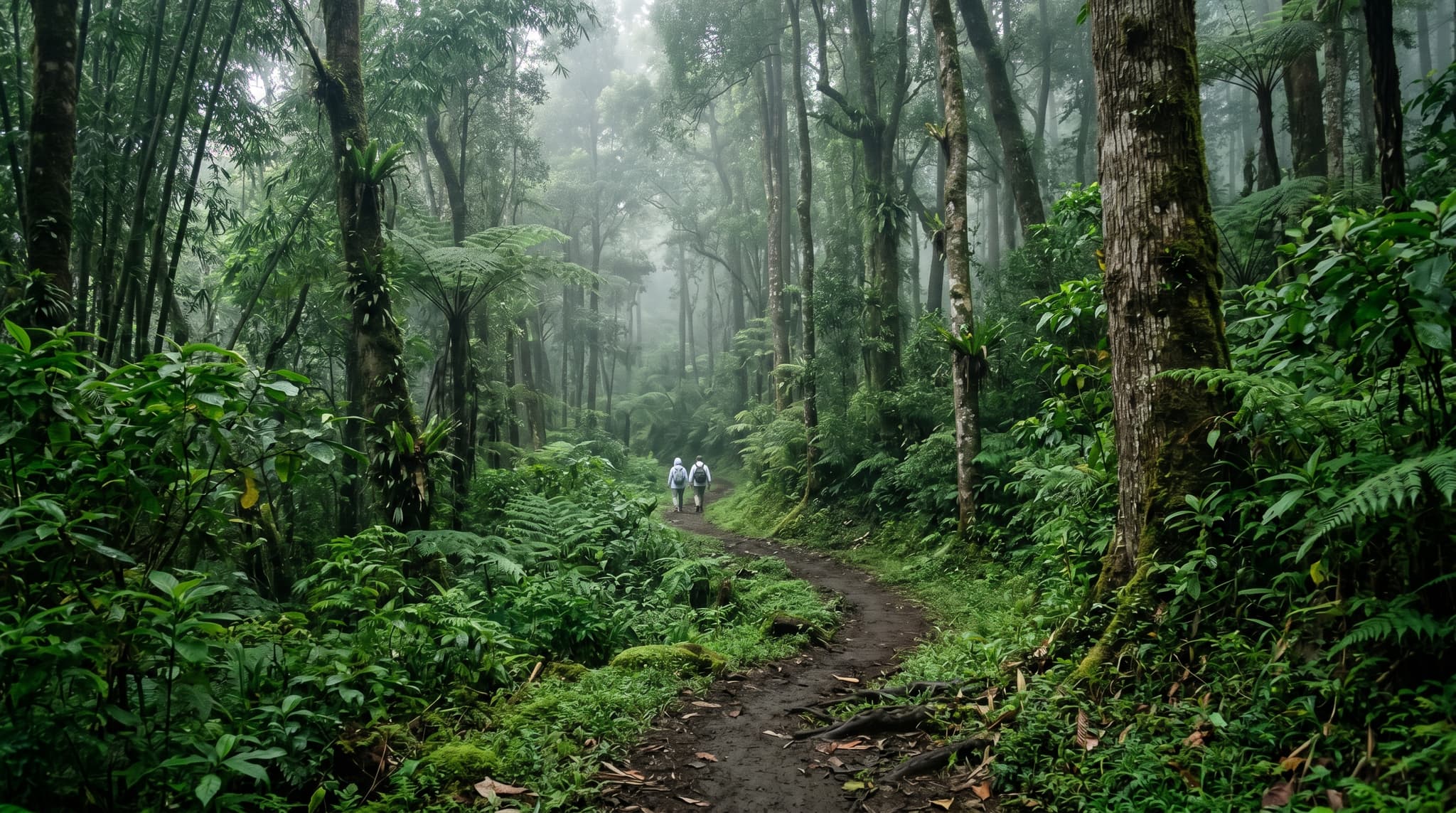
Here's where Labuhan Kebo filters out the casual visitor. The trail from the road to the waterfall takes 30–45 minutes depending on your pace and the conditions. It's not technical, but it's not a boardwalk either.
The path descends steeply through dense jungle on uneven terrain — packed dirt, exposed roots, loose rocks. After rain, sections get genuinely slippery. There are no railings for most of the route and minimal signage. A few makeshift bamboo steps appear in the steepest sections, but they're maintained informally at best.
Trail Details
Distance
~1.5 km one way
Elevation Drop
~200 meters
Difficulty
Moderate
Footwear
Proper hiking shoes or sturdy sandals with grip
The walk down is the easy part. The climb back up is where your fitness level becomes relevant. Budget 45 minutes for the return, and bring water — there's nowhere to buy any along the trail.
Is It Worth the Effort?
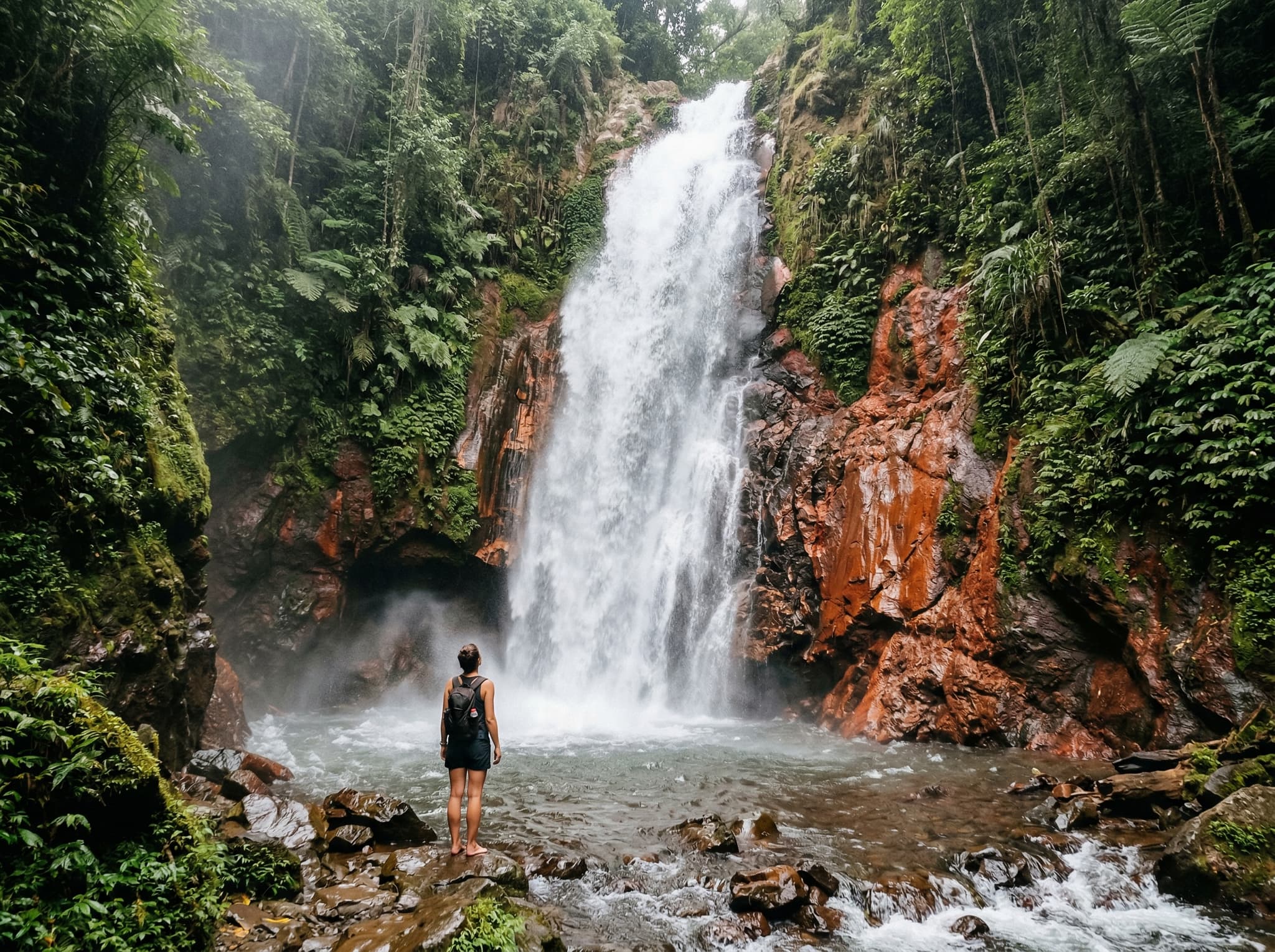
Straightforward answer: yes, if you value having a waterfall largely to yourself and you don't mind earning it.
Labuhan Kebo sees a fraction of the visitors that Munduk's main waterfalls get. On most days, especially weekday mornings, there's a real chance you'll have the place entirely to yourself. That's increasingly rare in Bali — even in the north. If you've been to Tegenungan or Kanto Lampo in Ubud and spent half your time waiting for someone to finish their Instagram shoot, the contrast here is stark.
The tradeoff is infrastructure. There are no cafés at the bottom, no changing rooms, no photo platforms. It's jungle, a waterfall, and whatever you carried in your daypack. For some travelers, that's the whole point. For others expecting a polished experience, recalibrate.
How to Get There
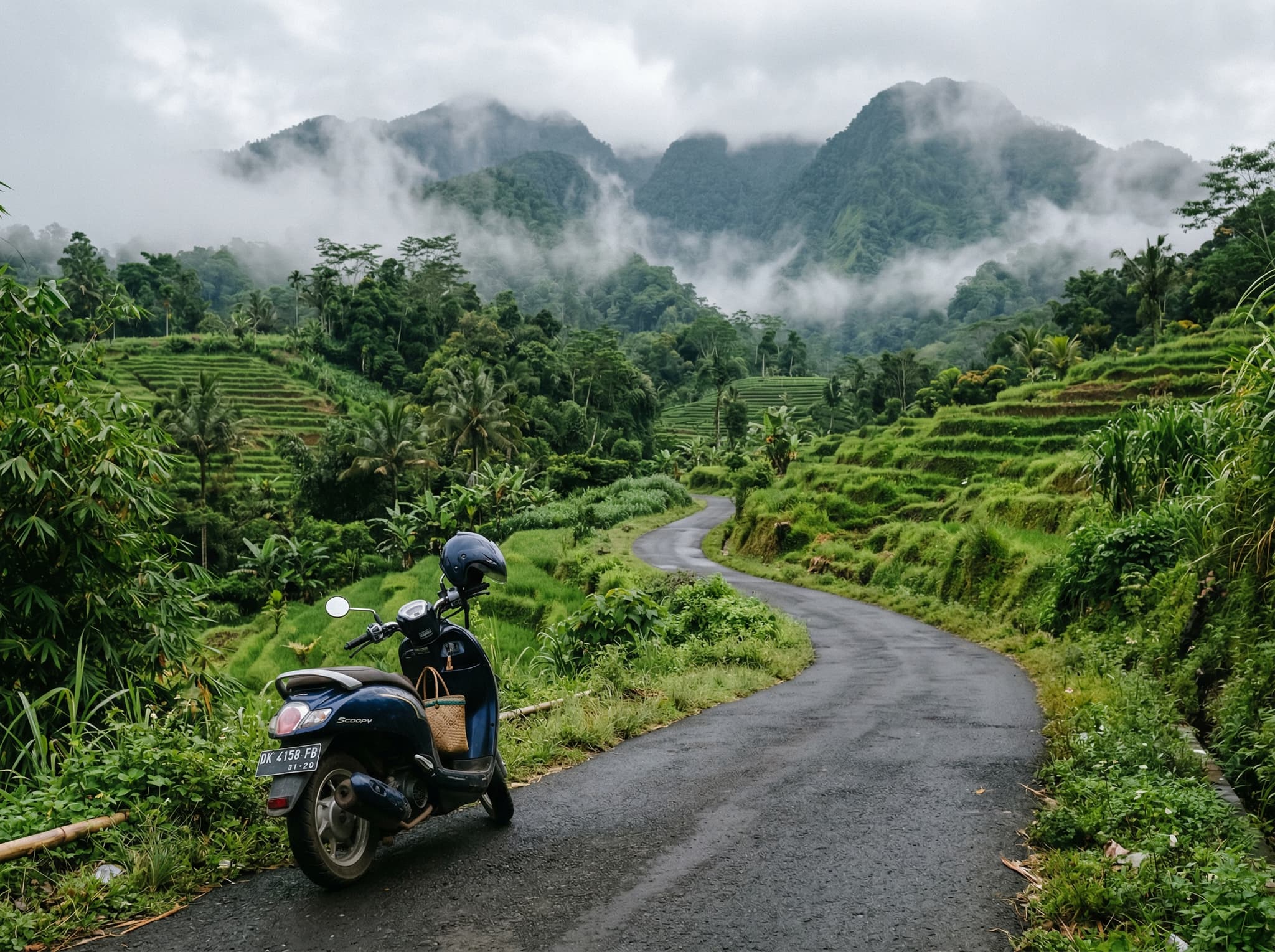
Labuhan Kebo is located roughly 3–4 km south of Munduk village center. Most visitors reach the trailhead by scooter — the road is narrow but paved. If you're staying in Munduk, it's a 10-minute ride.
Getting There
From Munduk village
3–4 km by scooter (10 min)
From Lovina
~25 km, 45–60 min by car
From Ubud
~65 km, 2–2.5 hours by car
Parking
Small lot at trailhead, free or IDR 5,000
A local guide isn't strictly necessary — the trail is followable — but hiring one at the trailhead (IDR 50,000–100,000, roughly $3–6) supports the community and helps if the path is overgrown or you want context on the flora. During wet season, a guide is a smarter call.
Practical Tips
Time your visit for morning. Arrive by 8–9 AM. The light is better, the trail is less humid, and you'll likely have the falls to yourself. By midday, the jungle gets thick with heat and the climb back up becomes significantly less pleasant.
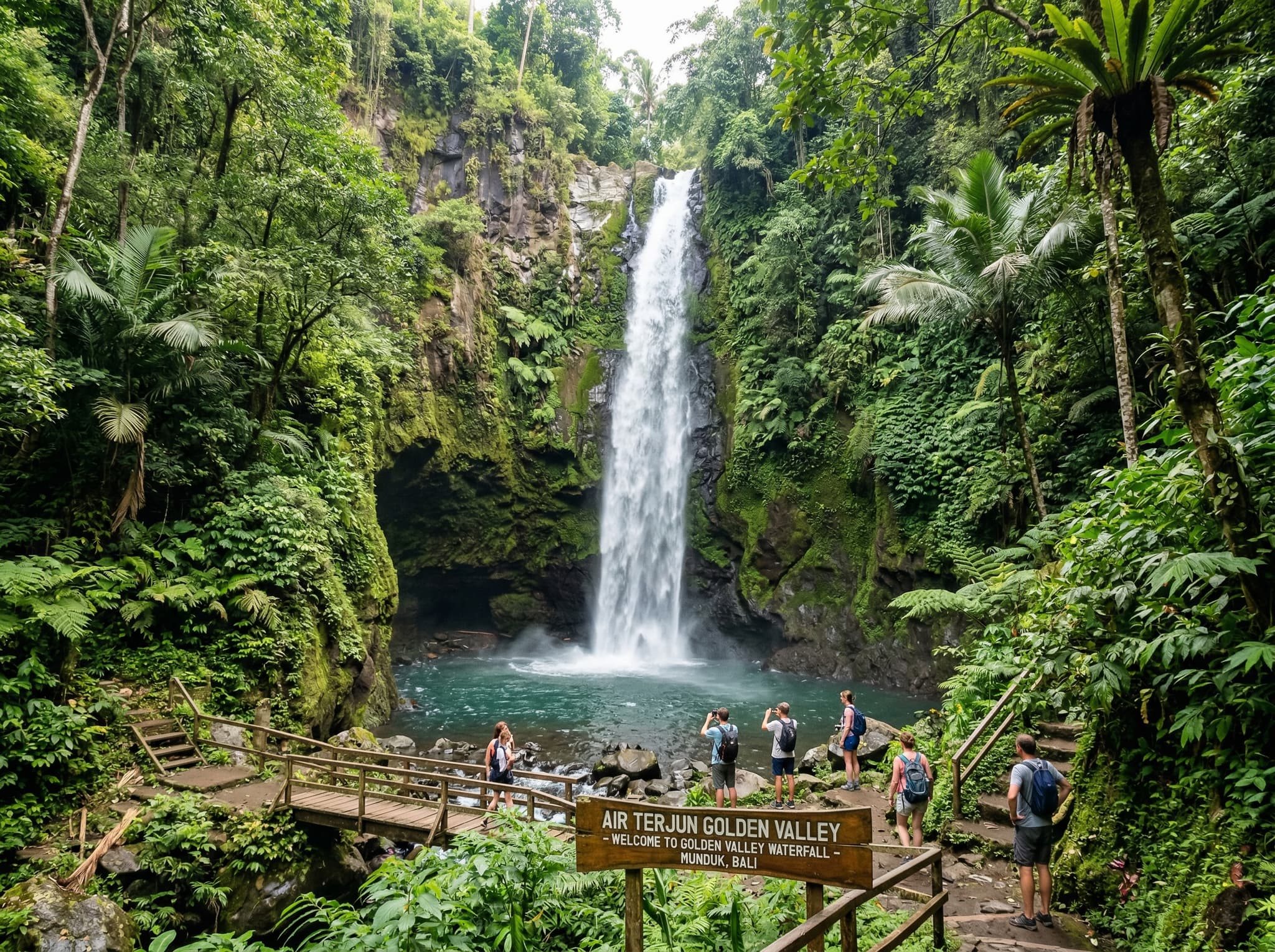
Combine it with other Munduk waterfalls. Most travelers pair Labuhan Kebo with Munduk Waterfall or Golden Valley Waterfall on the same day. All three are within a 15-minute scooter ride of each other. A full morning can cover two comfortably; all three if you move efficiently.
Bring a dry bag or ziplock. The spray near the base will find your phone. The humidity on the trail will find everything else.
Don't skip it for Sekumpul. Sekumpul, about 20 km east, is often called Bali's most beautiful waterfall — and it might be. But it's also become a well-oiled tourism operation with entrance fees pushing IDR 200,000+ when you factor in guide fees and donations. Labuhan Kebo costs a tenth of that and delivers something Sekumpul can't anymore: solitude.
The Bottom Line
Labuhan Kebo won't appear on most Bali highlight reels. It doesn't have the dramatic height of Sekumpul or the easy access of Munduk Waterfall. What it has is a genuinely unusual rock face, a jungle trail that feels like discovery rather than tourism, and the kind of quiet that's becoming Bali's scarcest resource.
If you're already in Munduk — and you should be, it's the best antidote to southern Bali's congestion — Labuhan Kebo is worth the 90-minute round trip. Wear real shoes, bring water, and leave your expectations of infrastructure at the trailhead.