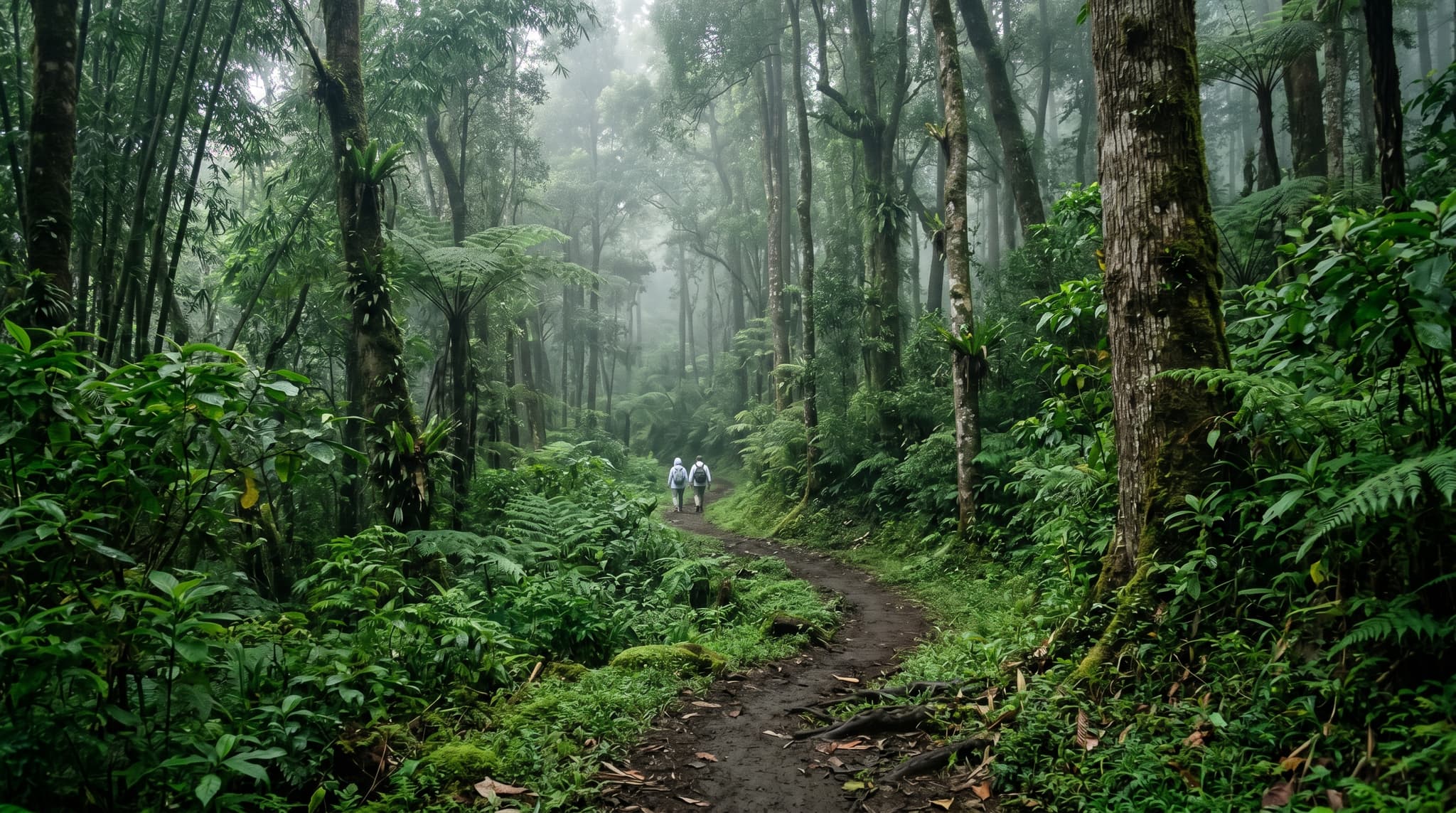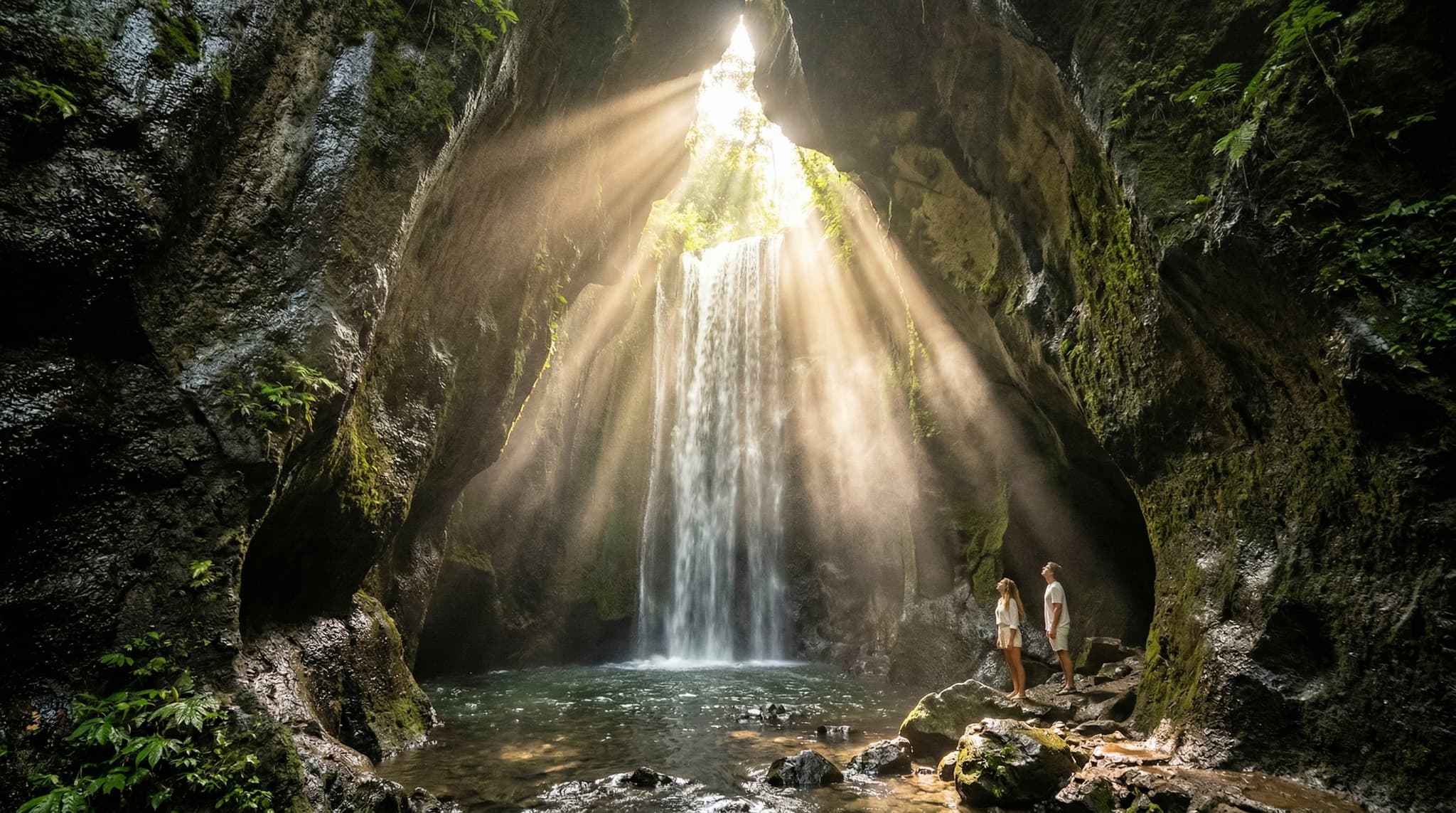
Tukad Cepung Waterfall hides inside a limestone cave near Ubud, where morning light creates dramatic beams through mist. Here's how to time your visit.
Most of Bali's waterfalls pour down jungle cliffs into open pools. Tukad Cepung is different. The water drops through a narrow opening in a limestone cave, and when the morning sun hits the gap at the right angle, it turns the mist into columns of light that look almost theatrical — like someone positioned a spotlight inside the earth. It's one of those places that photographs so well people assume it's been edited. It hasn't. The cave just does that.
The waterfall sits in a gorge near Tembuku village in Bangli Regency, about an hour's drive northeast of Ubud. It's part of the same volcanic landscape that produced Kintamani and Mount Batur — the river that feeds it, the Tukad Cepung, carved this gorge through layers of volcanic rock over thousands of years. The cave itself is essentially an overhang where the gorge walls close in overhead, creating a natural cathedral ceiling with a slot that lets sunlight through.
The Light Rays — And When to See Them
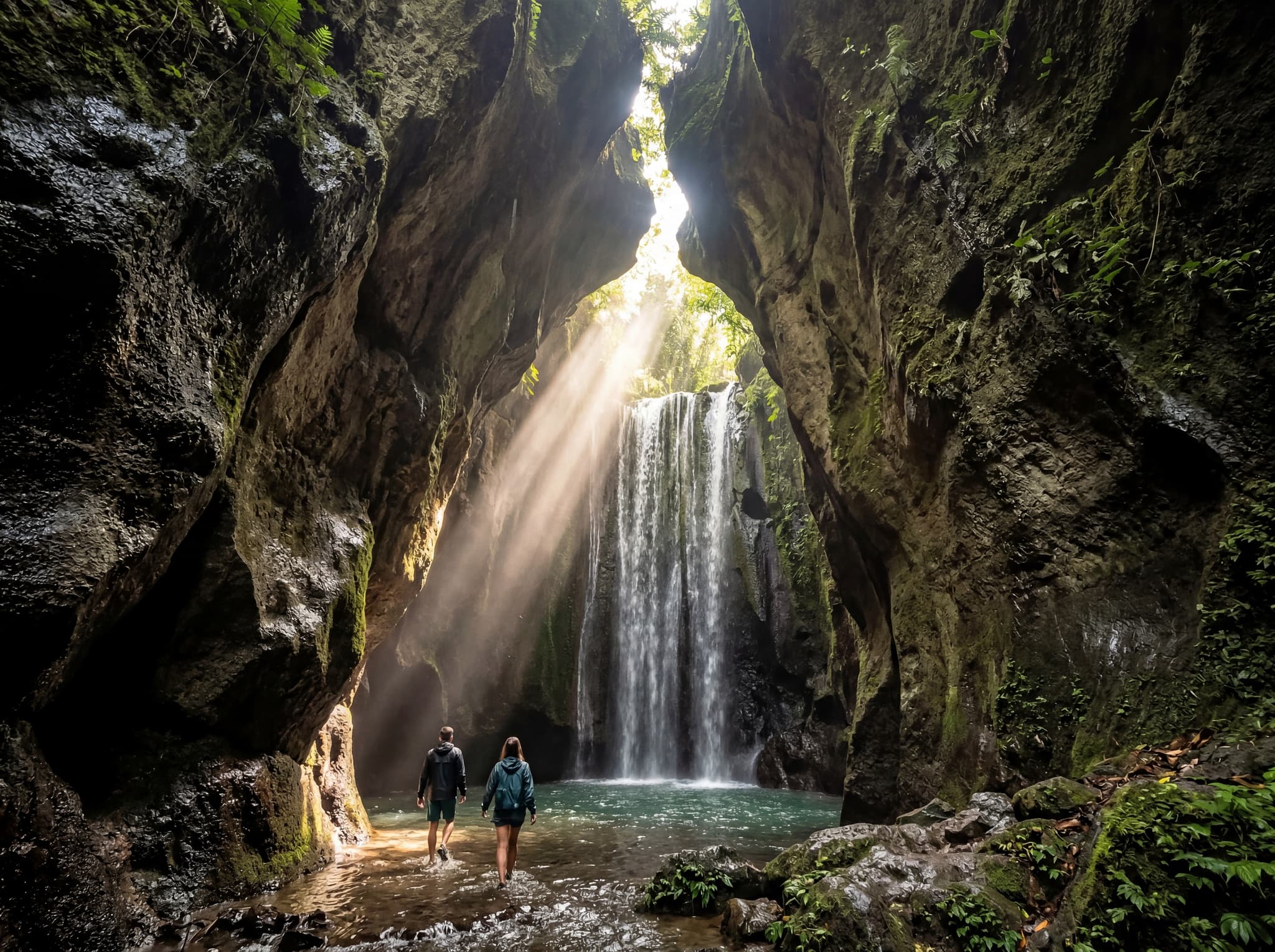
The light beams are the reason most people visit, and they're entirely dependent on conditions. You need direct sunlight hitting the cave opening, which means clear skies and the right time of day.
The window runs roughly from 8:00 AM to 11:00 AM, with the most dramatic beams typically appearing between 8:30 and 9:30 AM — though this shifts slightly with the seasons. Cloud cover kills the effect entirely. An overcast morning means no rays, full stop. There's no workaround.
This creates an obvious tension: the best light happens during the same window when crowds build. By 9:00 AM on weekends, visitors often queue for photos at the base. Weekday mornings give you the best chance at both good light and relative solitude. Arriving right when the site opens and reaching the base by 8:00–8:30 AM is the move.
Late afternoon visits are quieter but you'll miss the light show. The waterfall itself is still striking — the cave setting alone is worth the hike — but the beams are what make this place singular.
The Trail Down
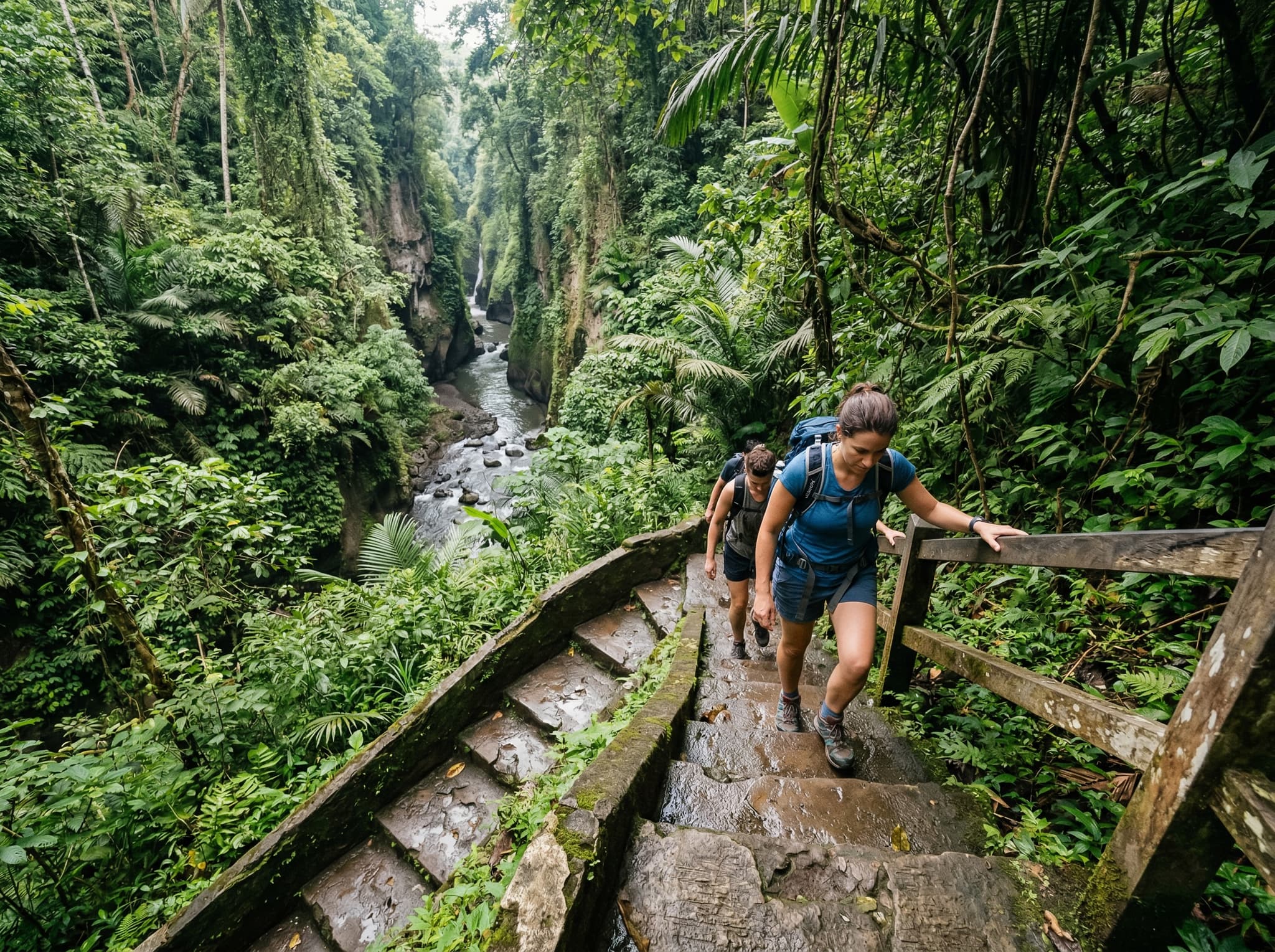
The walk from the parking area to the waterfall base takes 15–20 minutes and involves a steep descent. "Steep" is doing some work here — the trail drops through a gorge via concrete stairs with high steps, transitions to a leveled path alongside the stream, then hits a second staircase down to the riverbed. The final stretch requires picking your way through shallow water around large boulders.
During dry season (April–October), the trail is predictable and manageable for anyone with moderate fitness. After rain, conditions change fast — stone steps become slippery, and river levels can rise quickly. Check the weather forecast before you go, especially during wet season months.
The trail is not suitable for visitors with limited mobility. The high steps and uneven terrain at the base make this a poor choice for anyone with knee issues or difficulty on stairs.
Getting There
Transport from Ubud
Distance
~33 km
Drive time
~1 hour (37 min by direct route, longer in traffic)
Taxi/driver cost
Rp 280,000–340,000 one way [VERIFY]
Scooter rental
Rp 60,000–85,000/day [VERIFY]
The route heads east from Ubud through Tegallalang and Tampaksiring before continuing to Tembuku, where signs direct you to the waterfall. The road is paved the entire way. Parking at the site is typically free.
Most visitors hire a driver for a half-day that combines Tukad Cepung with other stops in the area — Tirta Empul temple and the Tegallalang rice terraces are both on the route. This makes logistical sense and keeps costs reasonable since you're paying for the driver's time either way.
If you're on a scooter, the ride is straightforward but the final stretch involves some narrow village roads. The drive itself passes through some of Bali's best inland scenery — terraced rice paddies, dense jungle valleys, and views of Batur in the distance.
What to Bring
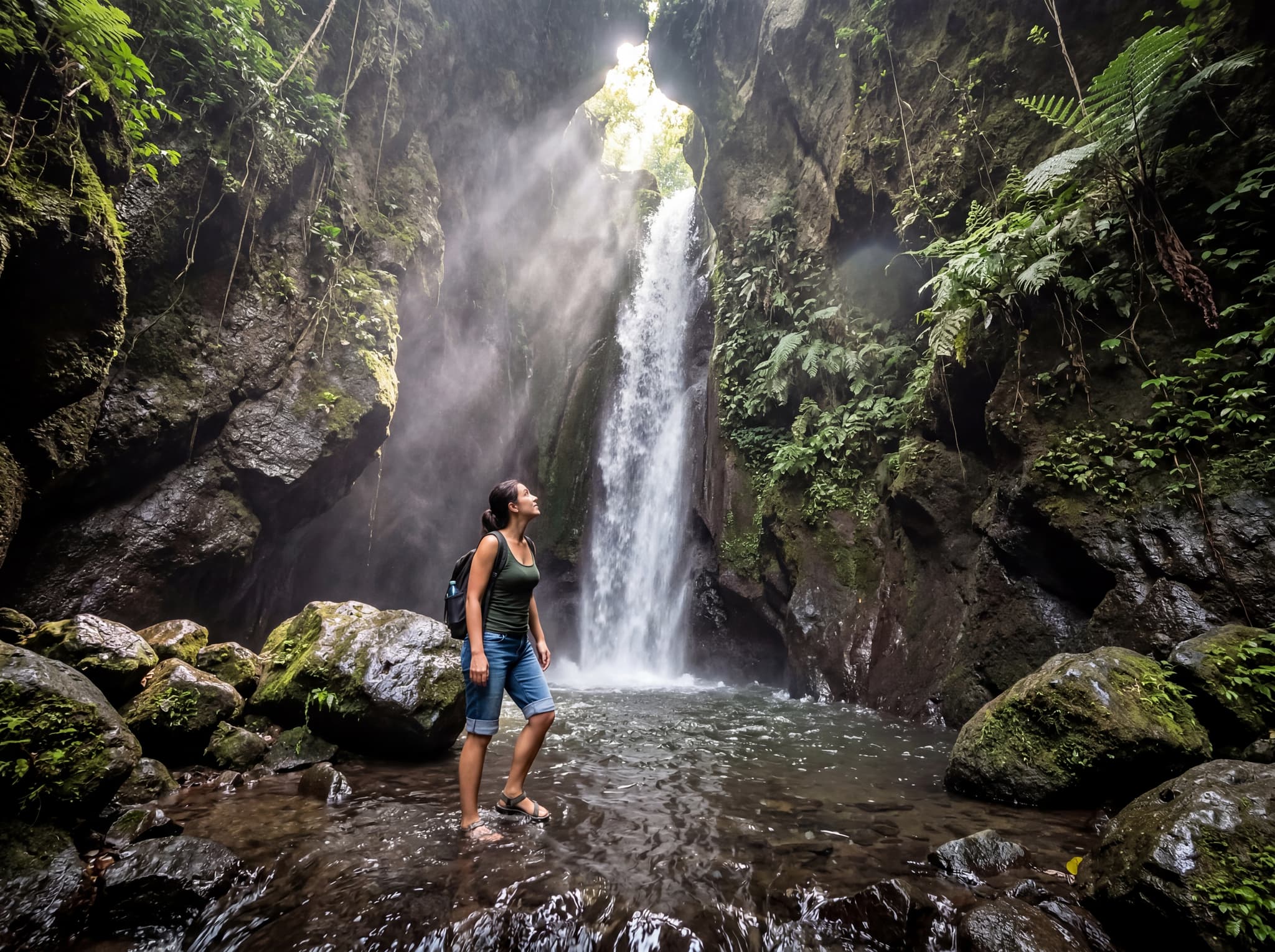
You'll get wet. The mist at the base soaks you, and the riverbed wade guarantees wet legs. Bring a dry bag or waterproof pouch for your phone and camera. A small towel and a change of clothes left in your vehicle will make the ride back considerably more pleasant.
There are changing rooms near the parking area, though visitor reports suggest they're basic and not always well-maintained. No lockers are available — leave valuables in your vehicle or with your driver.
Is It Worth the Trip?
Tukad Cepung is one of the most visually distinctive natural sites in Bali, and the cave setting gives it a quality that's hard to find elsewhere on the island. But the experience depends heavily on timing and weather. A clear weekday morning with light beams streaming through mist is genuinely extraordinary. A cloudy weekend afternoon with a queue on the stairs is a different trip entirely.
If you can be flexible with your schedule and willing to gamble on weather, it's worth the hour from Ubud. Just bring the right shoes.