Tibumana Waterfall is one of the most accessible waterfalls near Ubud — 300 steps, a swimmable pool, and done in 90 minutes. Here's exactly what to expect.
Tibumana Waterfall is one of the most accessible waterfalls near Ubud — and that accessibility, more than the waterfall itself, is the honest reason to visit. It's not the tallest, not the most dramatic, and not the one that'll make your Instagram followers gasp. What it is: a genuinely pleasant 35-meter cascade with a swimmable pool at its base, reached by a short, manageable walk through jungle that doesn't punish your knees or your schedule.
If you're choosing between Bali's dozen-plus waterfall options and your priorities include "I don't want to climb 500 steps back up in 90% humidity," Tibumana belongs at the top of your list.
Getting There

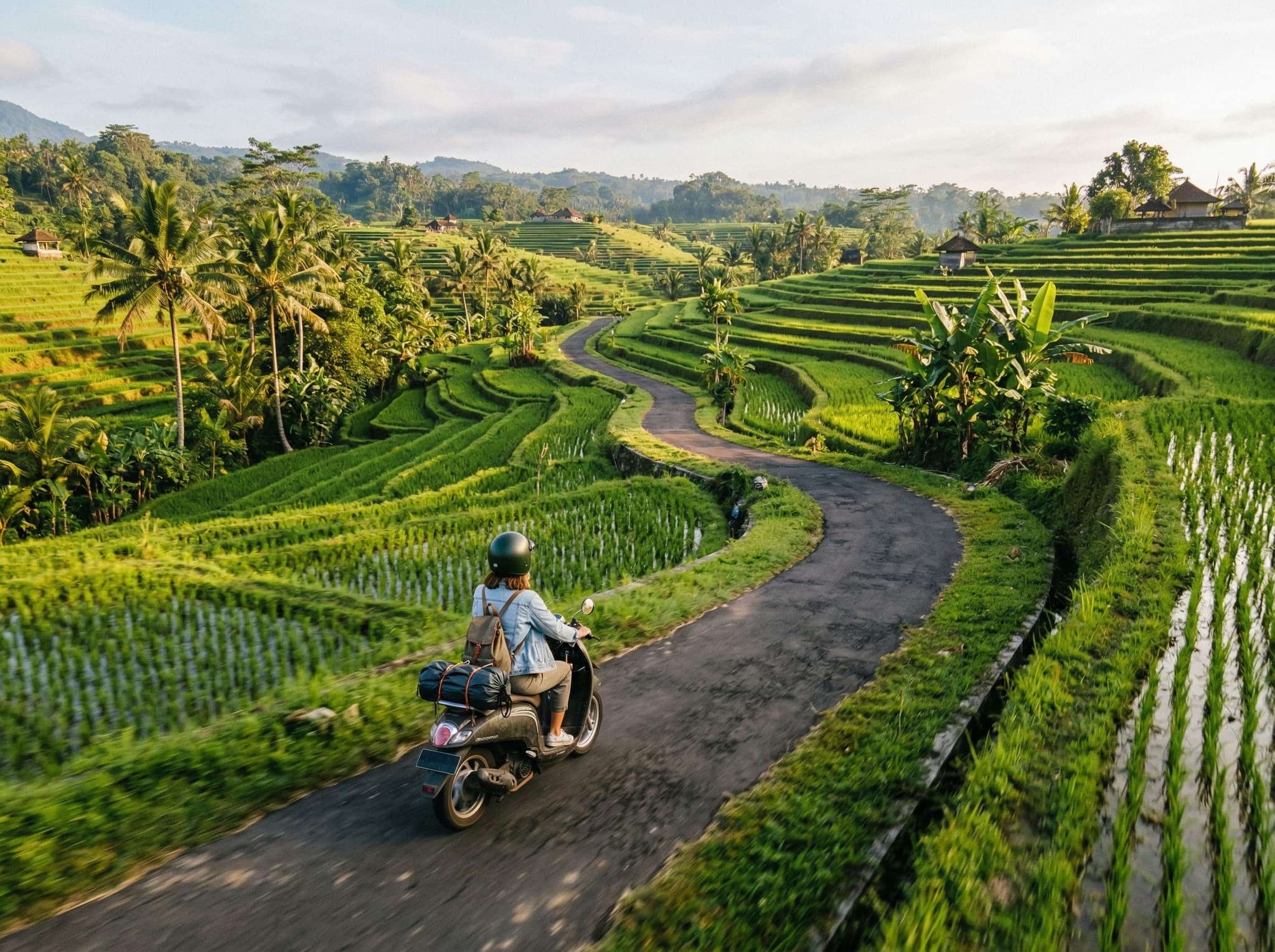
Tibumana sits in Bangli Regency, about 14 kilometers northeast of central Ubud. By scooter, it's a 25–30 minute ride through rice terraces and village roads. By car or private driver, budget 30–40 minutes depending on traffic through Ubud's one-lane pinch points.
Transport Options from Ubud
Scooter rental
IDR 70,000–100,000/day (~$4.50–6.50)
Private driver (half-day)
IDR 350,000–500,000 (~$22–32)
Grab/GoJek
IDR 50,000–80,000 one way (~$3–5)
Parking at site
IDR 5,000 motorbike / IDR 10,000 car
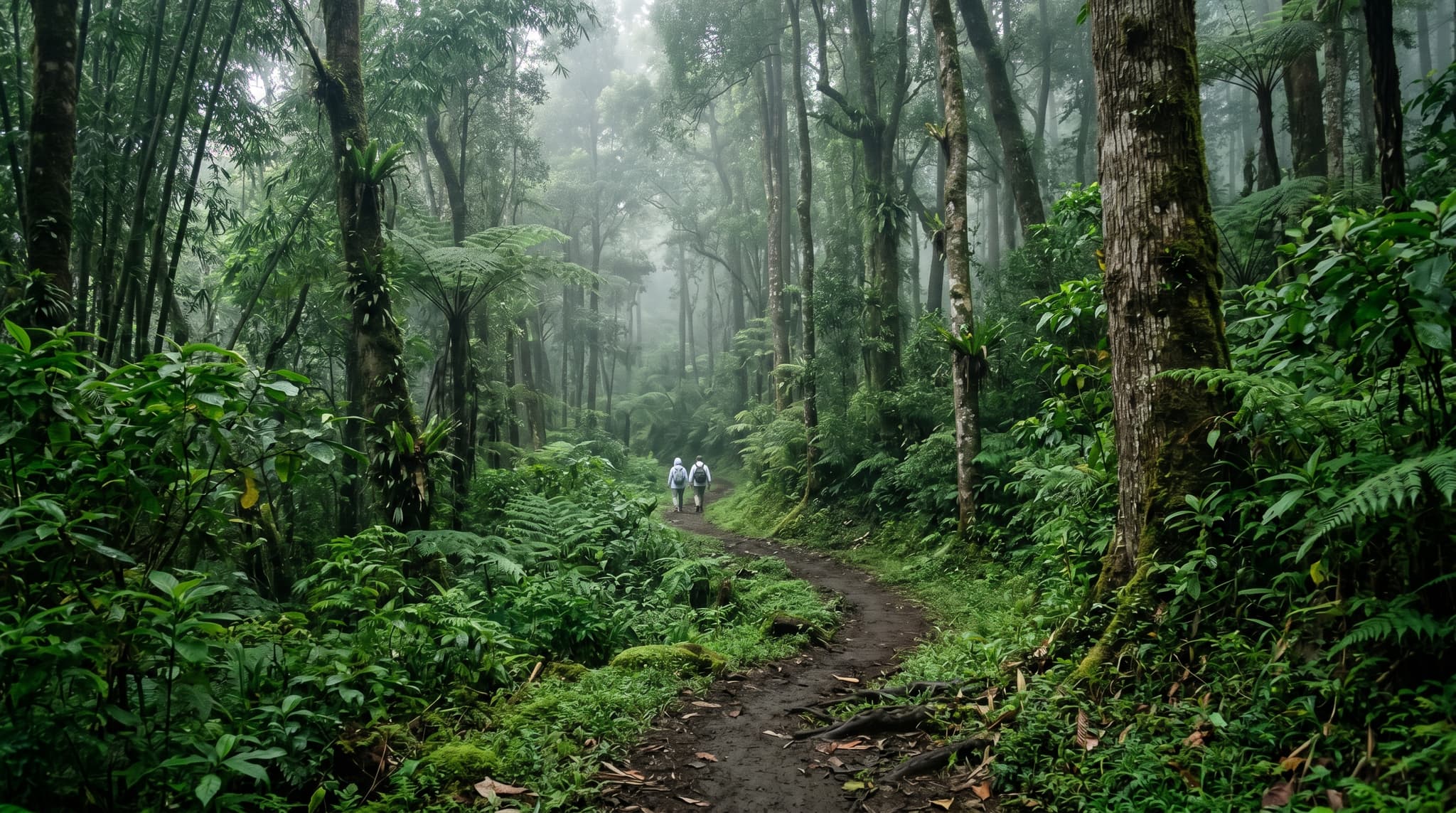
The parking area is right at the entrance — no secondary hike just to reach the trailhead. From the ticket booth, a paved path leads to a staircase descending through dense tropical forest. The total descent is roughly 300 steps. The steps are concrete, mostly even, with a handrail along the steeper sections. After rain, they get slippery — wear shoes with grip, not Havaianas.
The path is significantly easier than what you'll face at Sekumpul (700+ uneven steps), Tukad Cepung (river wading required), or Nungnung (over 500 steep steps that will have you questioning your life choices on the way back up). It's comparable to Tegenungan in difficulty, though Tibumana is quieter and the path is better maintained.
What You'll Actually Find
The waterfall drops roughly 35 meters in a single curtain of water into a natural pool. During dry season (April–October), the flow is thinner but the pool is clearer — good for swimming, and you can see the rocky bottom. During wet season, the volume increases dramatically, the pool gets murkier, and the spray zone expands. Both have their appeal; neither is a bad time to visit.
The pool at the base is shallow enough to stand in at the edges — roughly waist to chest deep depending on the season. There's no strong current pulling you toward the falls. Families swim here regularly. The rocks around the pool are mossy and uneven, so watch your footing getting in and out.
There's a second, smaller cascade just upstream that most visitors miss. Follow the path to the left of the main falls for about two minutes and you'll find it — smaller, quieter, and often empty. Worth the detour if the main pool is crowded.
Visit Planning
Time needed
1–1.5 hours total (including walk)
Crowd peak
10:00 AM–1:00 PM
Best arrival time
8:00–9:00 AM or after 3:00 PM
Changing rooms
Basic facilities near parking
Lockers
None — don't bring valuables
Food/drinks
Small warung near entrance
How It Compares
This is the practical question: with limited days in Bali, which waterfall deserves your time? Here's how Tibumana stacks up against the waterfalls most visitors are deciding between.
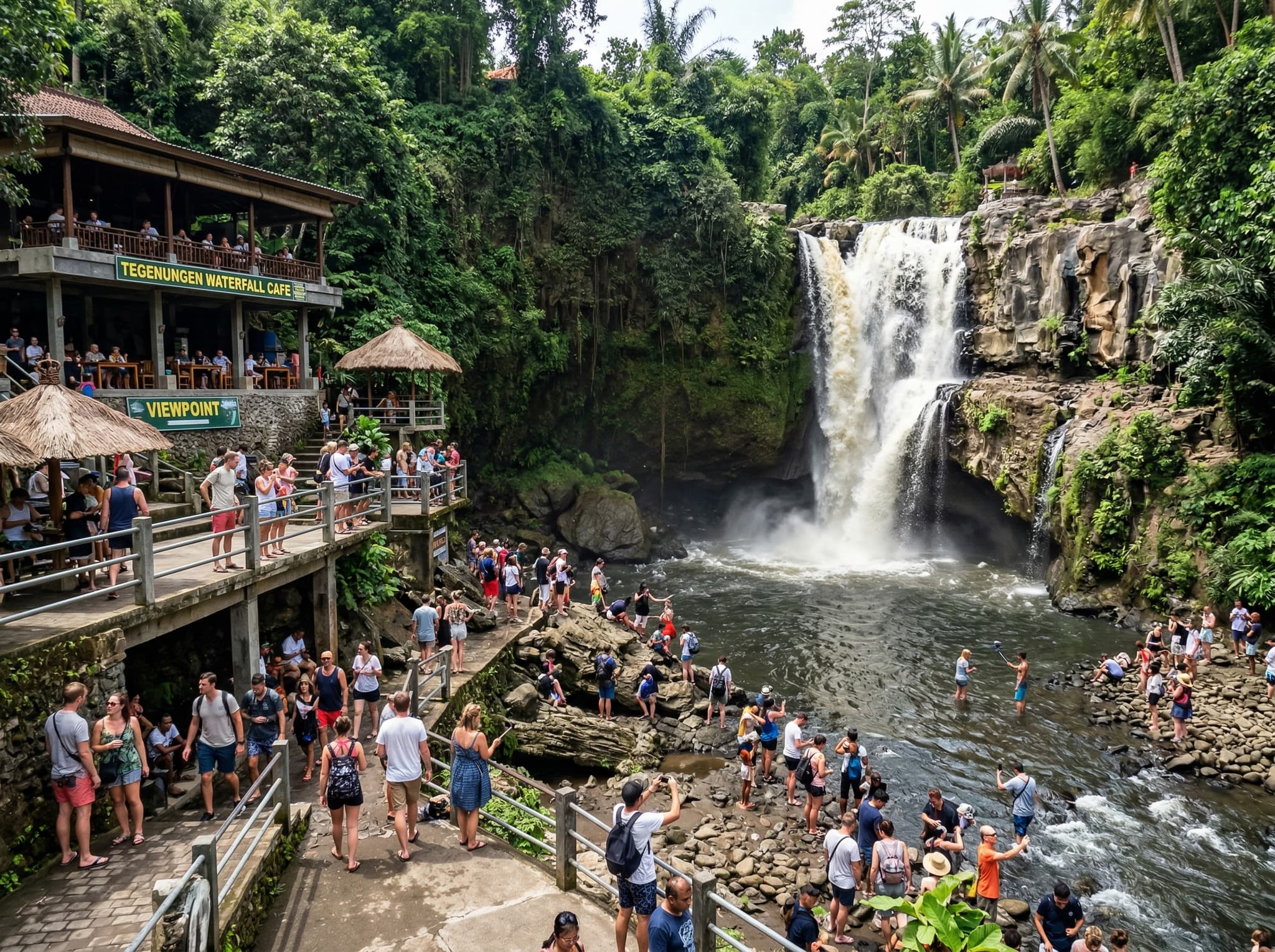
Tibumana vs. Tegenungan: Tegenungan is closer to Ubud (15 minutes) and more developed — cafes, photo platforms, swing attractions. It's also significantly more crowded and more commercial. Tibumana is quieter, more natural-feeling, and roughly the same physical difficulty. If you want the waterfall-plus-brunch experience, go to Tegenungan. If you want to actually swim without dodging selfie sticks, go to Tibumana.
Tibumana vs. Sekumpul: Sekumpul is widely considered Bali's most spectacular waterfall, and that reputation is earned. It's also a 2-hour drive from Ubud, involves 700+ steps, requires a guide (IDR 100,000–200,000), charges a higher entry fee, and will consume most of your day. Tibumana is a fundamentally different proposition — a quick, easy side trip, not an expedition.
Tibumana vs. Kanto Lampo: Kanto Lampo is another easy-access option near Ubud with dramatic terraced rock formations. It's photogenic but the pool is shallow and swimming is limited. If photography matters more than swimming, Kanto Lampo wins. If you want to get in the water, Tibumana.
Tibumana vs. Tukad Cepung: Tukad Cepung's cave setting is genuinely unique — light beams through a canyon ceiling, unlike anything else on the island. But reaching it requires wading through a river (knee-deep in dry season, waist-deep or impassable in wet season), and the "waterfall" is more of a light show than a swimming spot. Different experience entirely.
Combining Tibumana with Other Stops
Tibumana works best as part of a half-day loop rather than a standalone destination. You're in and out in 90 minutes, which leaves time to pair it with nearby attractions on the same route.
Nearby Pairings (within 20 min drive)
Kanto Lampo Waterfall
15 min south — easy second waterfall
Penglipuran Village
20 min northeast — traditional Balinese village, IDR 50,000 entry
Tirta Empul Temple
20 min northwest — holy spring water temple
Tegallalang Rice Terraces
25 min west — iconic terraced landscape
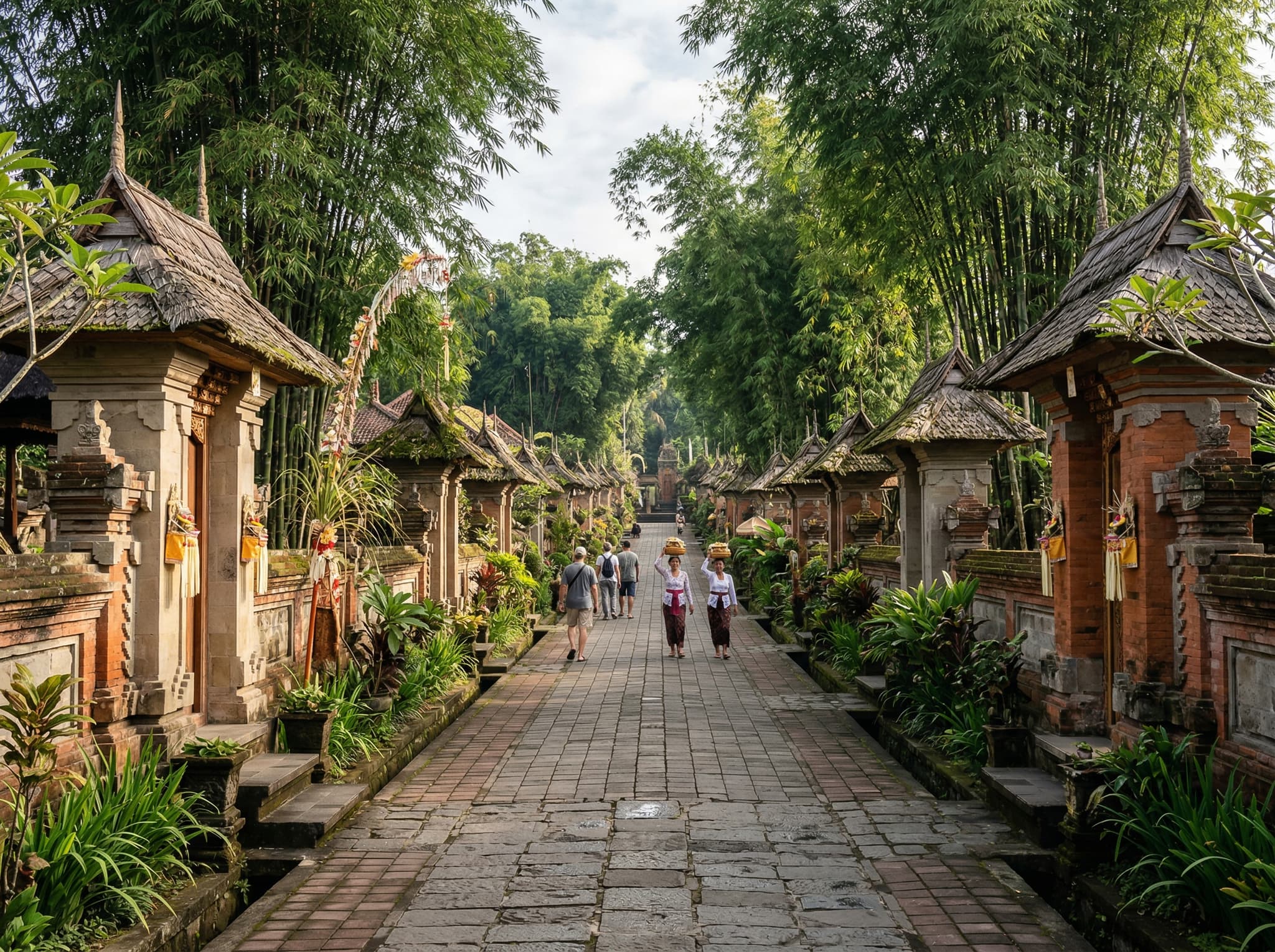
A practical half-day route: Tibumana first thing in the morning (arrive by 8:30 AM), then Penglipuran Village by 10:30, lunch in the area, and back to Ubud by early afternoon. If you're on a scooter, add Kanto Lampo between Tibumana and Ubud on the return — it's nearly on the way.
What to Bring
Keep it simple: water shoes or sandals with grip for the pool, a dry bag or ziplock for your phone, a towel, and sunscreen applied before you arrive (there's nowhere to wash it off before entering the pool, and it matters for the water quality). The warung near the entrance sells water and basic snacks, but don't expect a full meal.
Tibumana Waterfall isn't the waterfall that'll redefine your understanding of nature's power. It's the one where you'll actually enjoy yourself — a short walk, a cool swim, and enough time left in your day to do something else. Sometimes the best travel decision is the uncomplicated one.