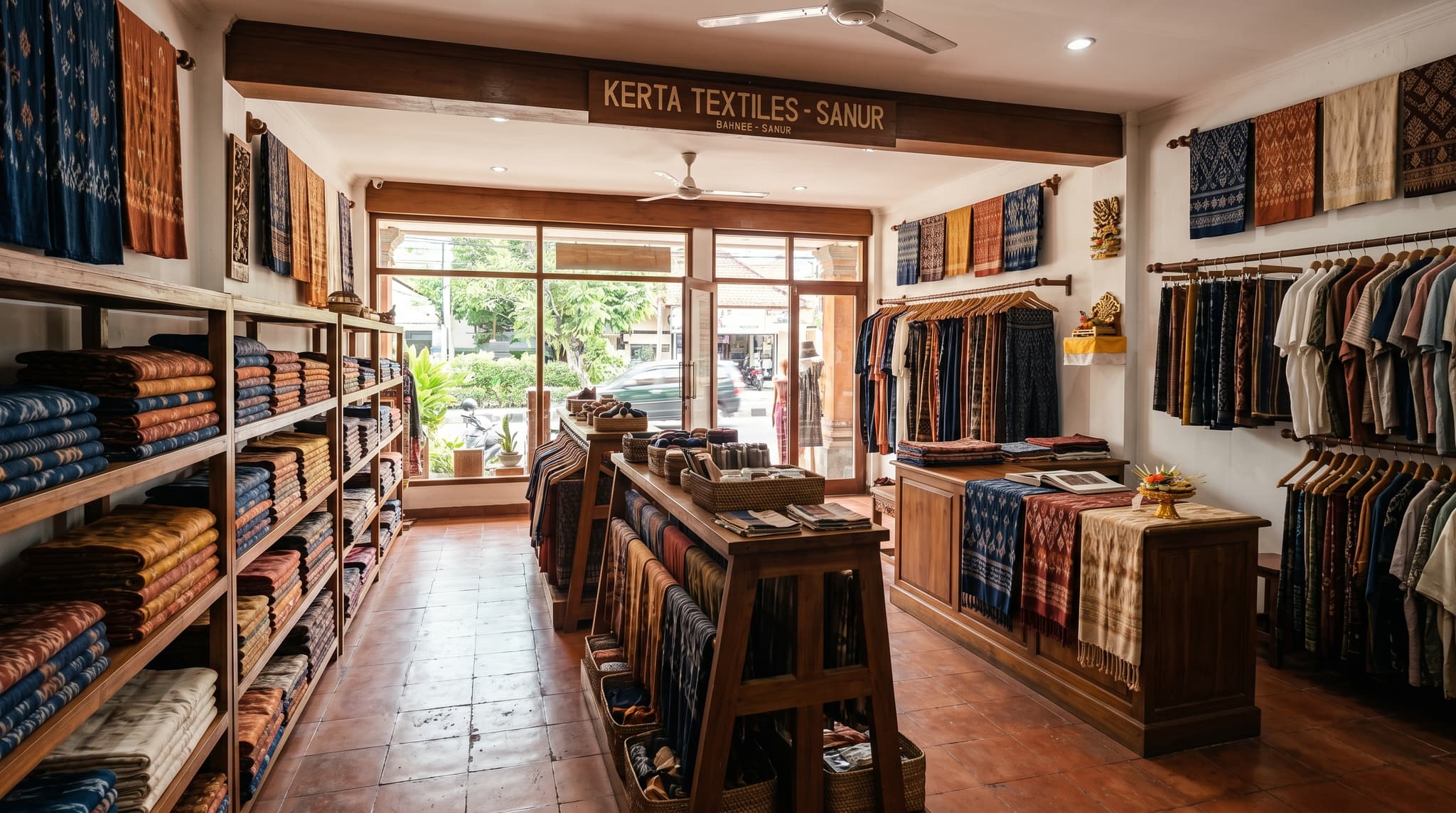
Nogo Bali Ikat Centre in Sanur sells handwoven ikat and endek fabrics with on-site custom tailoring. A guide to what you'll find, what it costs, and how to spot the real thing.
Most textile shops in Bali want to sell you something fast. A sarong from a rack, a scarf folded in plastic, a story about the weaver's village that may or may not be true. Nogo Bali Ikat Centre, on Sanur's main strip along Jalan Danau Tamblingan, operates on a different frequency. It's air-conditioned, unhurried, and stocked with handwoven ikat and endek fabrics that reward the kind of attention most visitors save for temples.
The shop has been a fixture in Sanur for years — long enough that some visitors have been returning for over a decade and report consistent quality. It's not a museum or a weaving demonstration. It's a retail space, and it doesn't pretend otherwise. But what it sells, and how the staff talk about it, makes it one of the more honest places to learn what Balinese textile craft actually looks like up close.
What You'll Find Inside

Nogo specializes in single ikat — the tie-dye weaving technique where threads are bound and dyed before being set on the loom, so the pattern emerges during weaving rather than being printed afterward. The fabrics here are handwoven on traditional looms, primarily cotton, sometimes blended with natural silk, and often colored with natural dyes. The result has a quality that's hard to describe without handling it: soft, with a faint luster that visitors compare to silk, though it's almost entirely cotton.
The inventory runs wider than fabric bolts. Ready-made dresses, shirts, and sarongs hang along the walls. Jewelry and vintage textile pieces fill the display cases. But the draw for most visitors is the custom tailoring — choose a fabric, discuss a cut with the staff, and have a garment sewn on-site.
Product Range
Textiles
Handwoven ikat, endek, batik fabrics
Custom clothing
Shirts, pants, dresses, sarongs, skirts
Other
Jewelry, vintage textile pieces
Pricing model
Fixed prices, occasional discounts
The Custom Tailoring

This is where Nogo earns its repeat visitors. Staff will take measurements, discuss design, and in some cases have a finished garment ready within 20 minutes for simpler pieces — a sarong hemmed to length, a basic shift dress. More complex orders take one to three days. Minor alterations are handled on-site during fitting.
Prices are fixed rather than negotiated, which removes the friction that wears down a lot of textile shopping in Bali. Visitor reviews from 2018 through 2024 consistently describe the pricing as reasonable relative to quality, though not cheap by local standards. A custom shirt or pair of pants runs approximately AUD $40 (roughly IDR 400,000–450,000) depending on fabric and design. [VERIFY current pricing before publication.]
The staff speak good English and are consistently described as helpful without being pushy — a detail worth noting in a shopping district where pressure selling is common. Chilled water is offered when you walk in. The shop is spacious enough to browse without feeling cornered.
How to Tell Real Ikat from Tourist Ikat
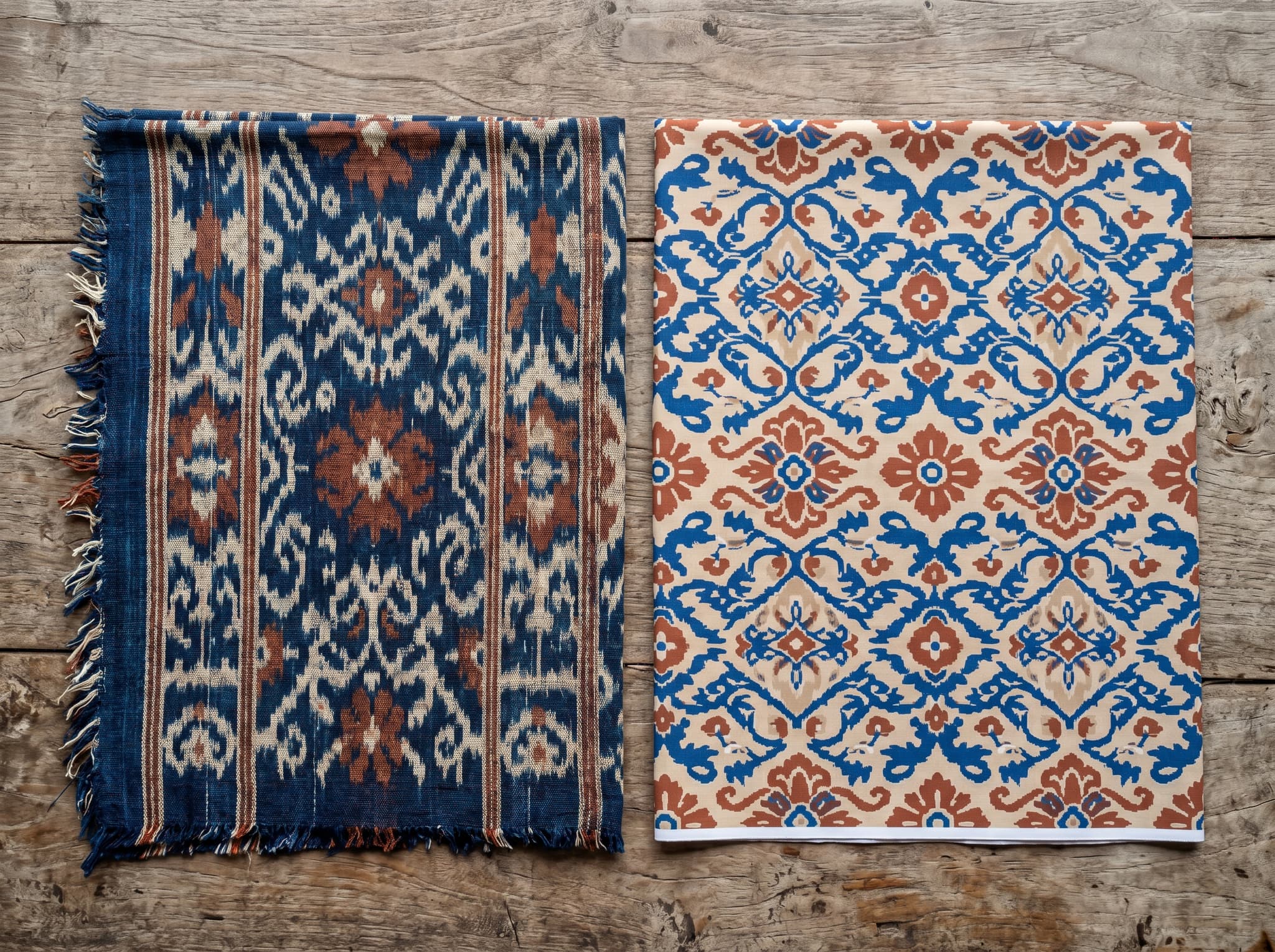
Part of the value of visiting Nogo is developing an eye for the difference. Handwoven ikat has a slightly uneven texture, haphazard edges where the loom's tension varied, and a depth of color that comes from dye penetrating individual threads. The subtle imperfections are the proof of the process.
Tourist-grade "ikat" — the kind sold in market stalls across Bali — is typically screen-printed or machine-woven. The patterns are perfectly uniform, the edges clean, the colors flat. It's cheaper, and it looks it once you know what to compare it against. Handling both side by side, which Nogo's staff are happy to walk you through, is the fastest education available.
Nogo sells single ikat, not double ikat (geringsing). For the rarer double-ikat technique, where both warp and weft threads are pre-dyed, visit Tenganan village in East Bali — one of only three places in the world where the technique survives. Geringsing cloth there ranges from IDR 200,000 to well over IDR 3,000,000.
Getting There
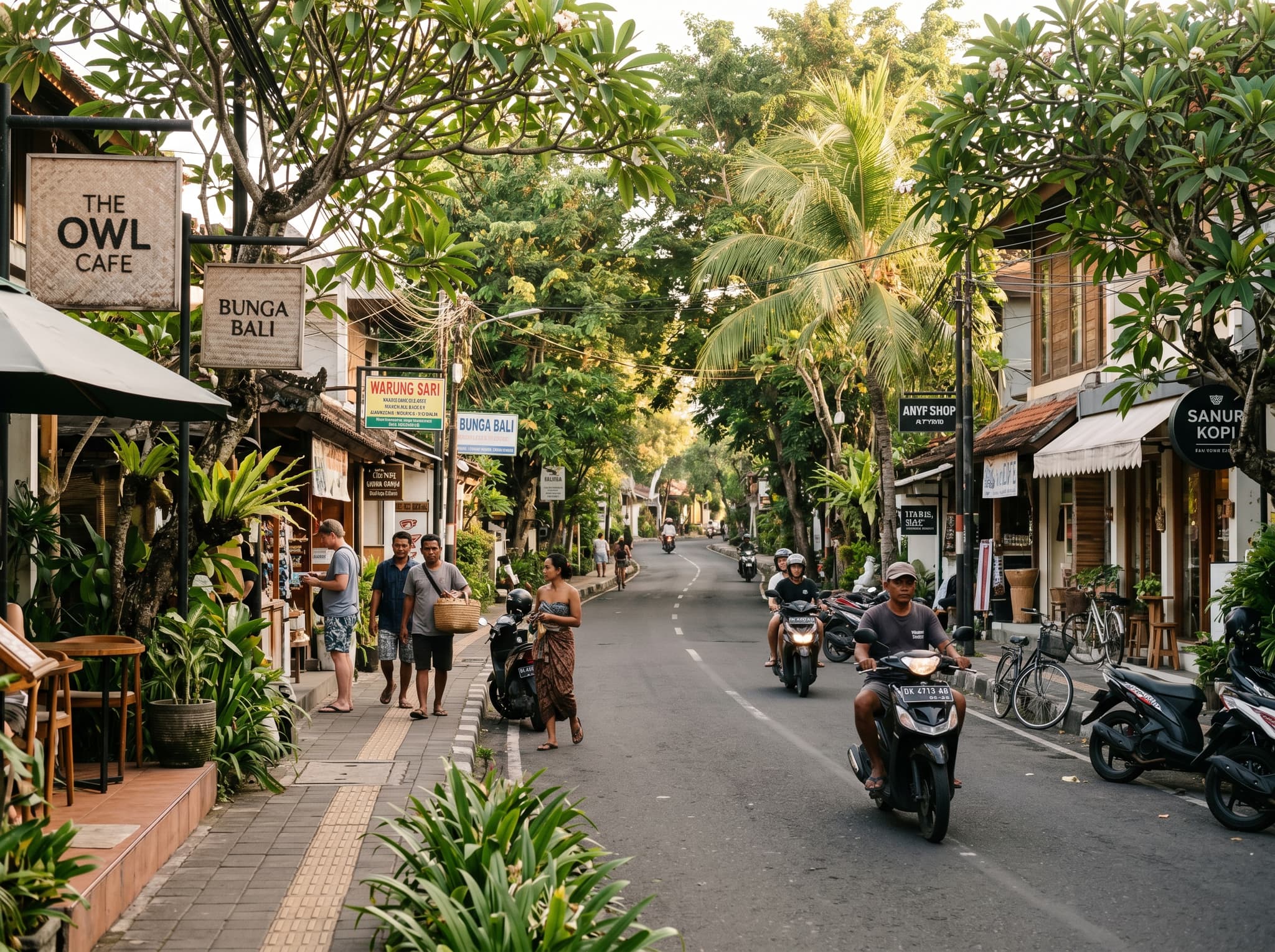
Nogo sits on Jalan Danau Tamblingan, Sanur's primary commercial street — the same road lined with restaurants, cafés, and the beachfront path. It's roughly 20–30 minutes from Ngurah Rai International Airport by car or ride-share, and 10–15 minutes from central Denpasar. Grab and Gojek both service the area reliably. If you're staying in Sanur, it's likely walkable.
Bemos (local minibuses) run along Sanur's main roads, though a ride-share is more direct. Scooter parking is available nearby.
If You Want to See Weaving in Action
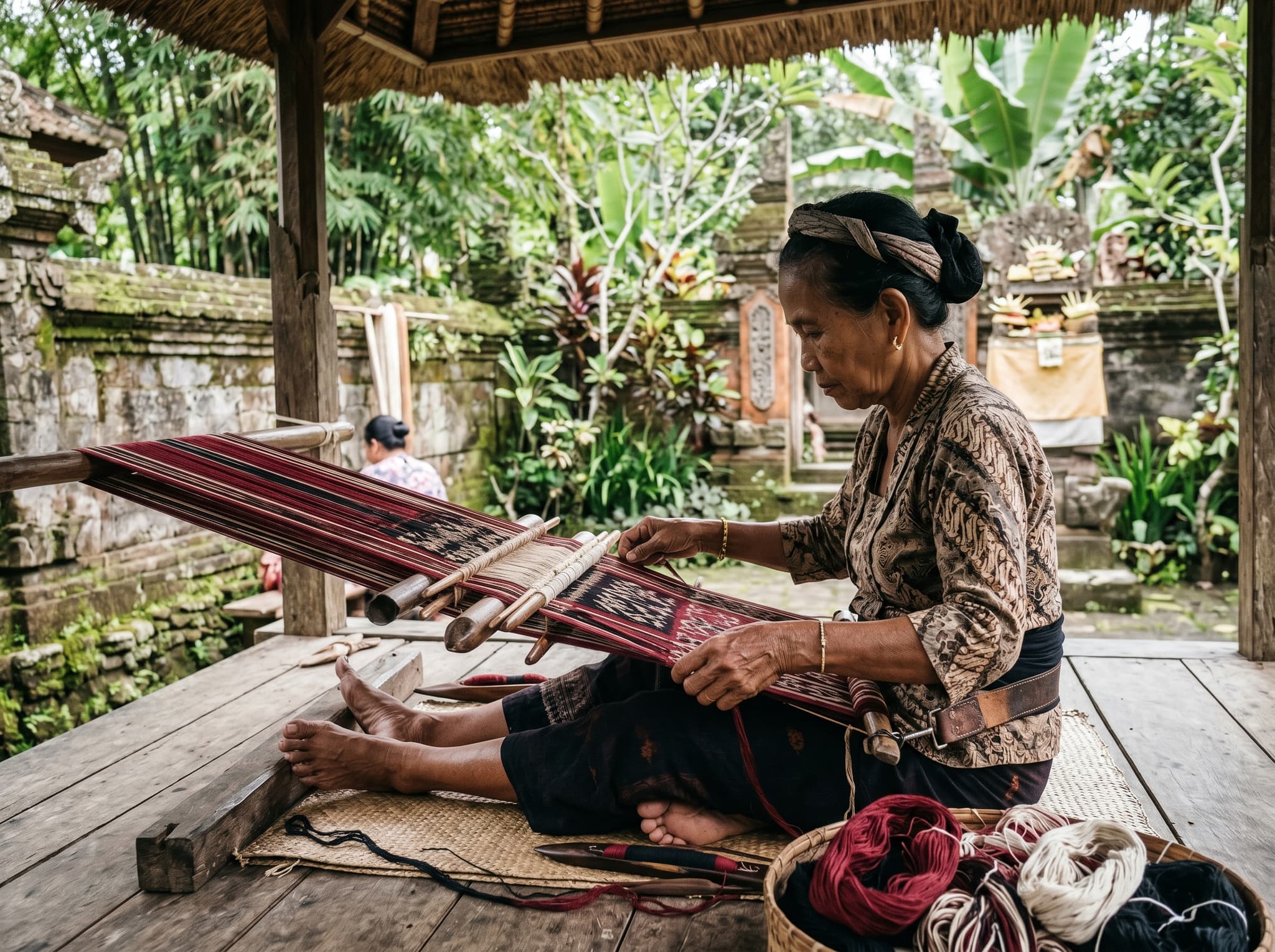
Nogo is a shop, not a workshop — there are no on-site weaving demonstrations. If you want to watch ikat being made, two options stand out. Pejeng Kangin village, about 7 km from Ubud, hosts working weavers and accepts visitors by arrangement. Further east, the Swastika workshop in Sidemen offers a more immersive experience in a village where weaving is still a daily practice rather than a performance.