Sidemen Valley offers the Bali most visitors imagine but rarely find — working rice terraces, traditional weaving, and quiet mornings in Agung's shadow.
The first thing you notice in Sidemen is the quiet. Not silence — roosters still handle the alarm, motorbikes still rattle past — but the absence of the specific noise that defines southern Bali: the hum of tourism infrastructure running at capacity. No construction cranes. No one hawking sunset boat tours. Just the sound of water moving through rice paddies, which is more constant and more varied than you'd expect.
Sidemen Valley runs northeast from the village of the same name, narrowing as it approaches the slopes of Mount Agung. The road through it is single-lane in places, flanked by terraced fields that drop away steeply on either side. It is, by most honest measures, what people imagine when they book a trip to Bali — and what they rarely find when they arrive in Canggu or Seminyak.
That gap between expectation and reality is exactly why Sidemen matters right now.
What Sidemen Actually Is
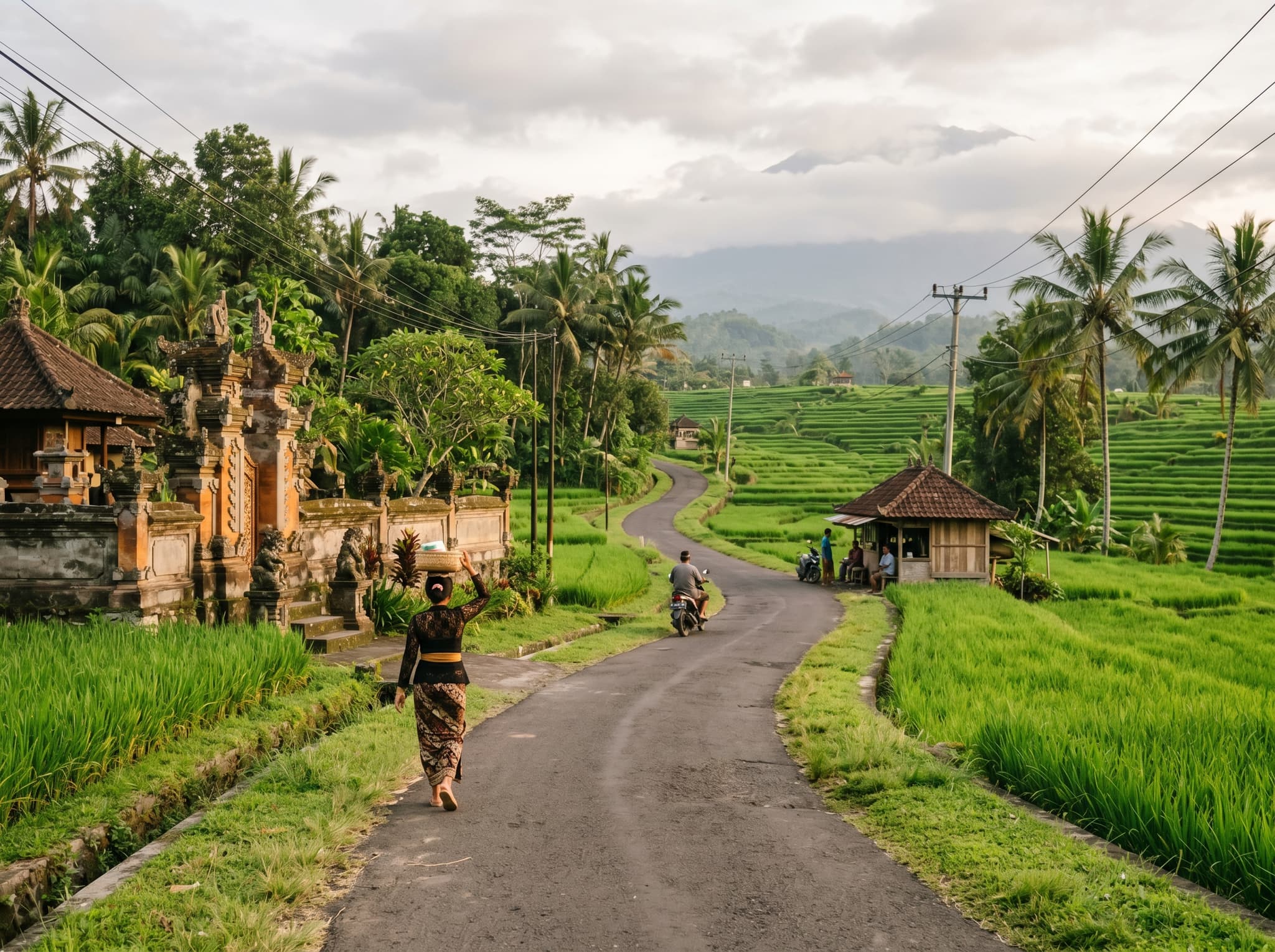
Sidemen is a village and a valley, not a town. There's no center in the way Ubud has a center. The main road — Jalan Sidemen — runs roughly north from the Klungkung-Karangasem highway, and most accommodation, warungs, and points of interest are strung along it or down narrow lanes branching off.
The valley's economy is still rooted in rice farming and traditional endek weaving (ikat-style cloth made on backstrap looms). Tourism is present but hasn't restructured daily life yet. Warungs serve food at local prices. Ceremonies happen without tourist management. The rice terraces are working agricultural land, not curated viewpoints with entrance fees and Instagram frames.
Getting to Sidemen
From Ubud
1.5–2 hours by car or motorbike via Klungkung
From Ngurah Rai Airport
2–2.5 hours depending on traffic
From Amed
About 1.5 hours via the coast road
Transport
Hire a driver (IDR 500,000–700,000/day) or rent a scooter — no ride-hail coverage
There is no Grab or Gojek service in Sidemen. This is worth knowing before you arrive. If you don't ride a motorbike, arrange transport through your accommodation or hire a local driver for the day. The roads are manageable but narrow, and during rain the steeper lanes get slick.
The Rice Terraces
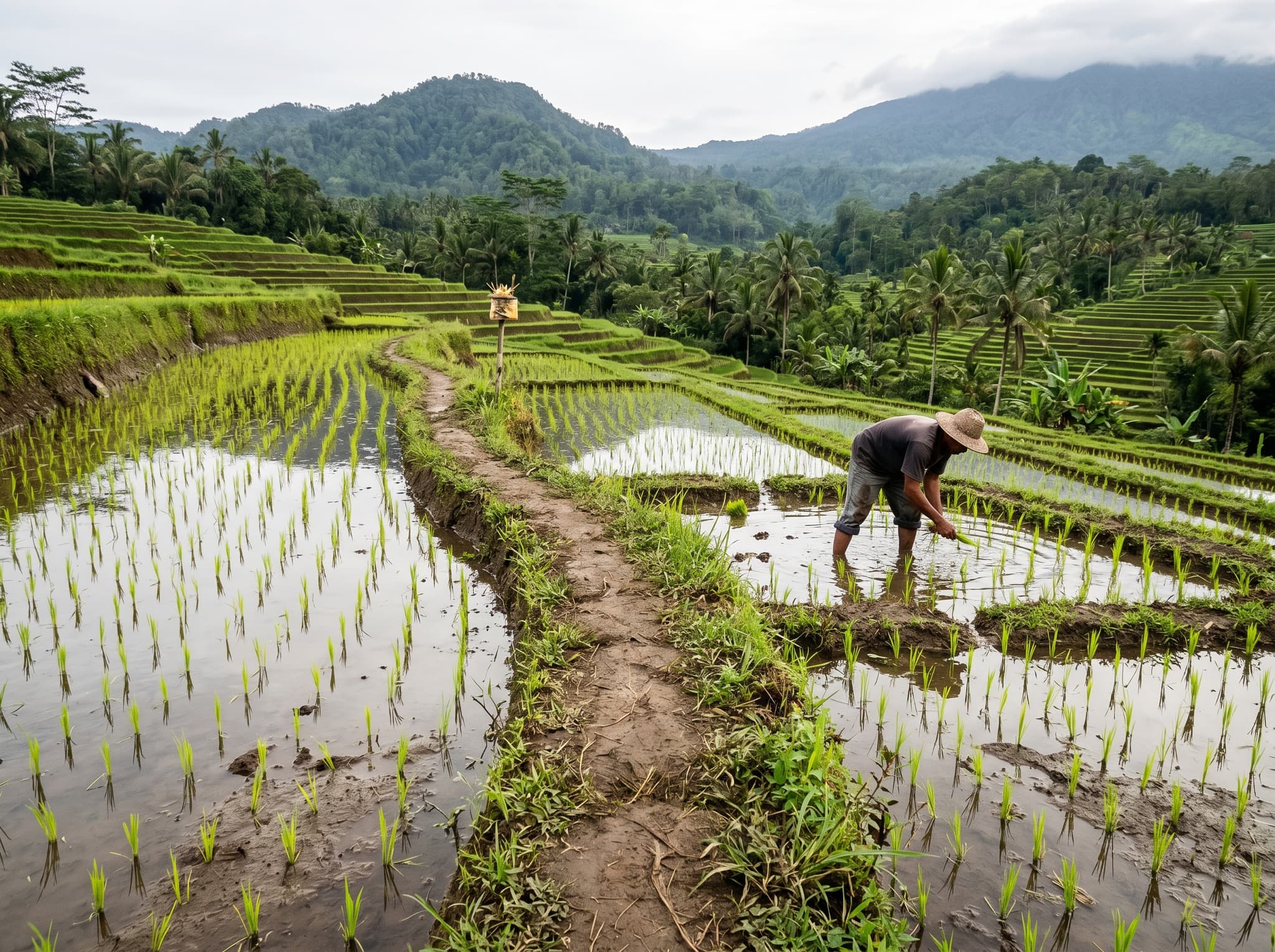
Sidemen's terraces are often compared to Tegallalang, the famous tiered paddies north of Ubud. The comparison is technically fair — both are subak-irrigated rice landscapes — but experientially they're different places. Tegallalang charges entrance fees, funnels visitors along a fixed path, and is backed by a wall of souvenir shops. Sidemen's terraces are scattered across the valley, most of them accessible by walking paths that start from the road or from guesthouses.
No single terrace is "the" viewpoint. The best approach is to walk. Several accommodation options sit directly above or within the paddies, and morning walks along the raised irrigation channels — before the heat builds — are the simplest way to experience the landscape.
Where to Stay
Sidemen's accommodation ranges from basic homestays at IDR 150,000–250,000 per night ($10–$16) to mid-range guesthouses and a handful of higher-end properties with pools and valley views in the IDR 800,000–2,000,000 range ($50–$130).
Accommodation Tiers
Budget
IDR 150,000–300,000/night — homestays, basic rooms, shared facilities
Mid-Range
IDR 400,000–800,000/night — private rooms, hot water, terrace views
Upper
IDR 1,000,000–2,500,000/night — villas with pools, breakfast included, rice field frontage
The best value in Sidemen is at the mid-range tier. Several family-run guesthouses offer clean rooms with unobstructed terrace views for under $40 a night — the kind of setting that would cost three times as much in Ubud.
What to Do
Sidemen doesn't have a long list of attractions. That's the point.
Walk the terraces. Early morning or late afternoon. No guide needed for the shorter loops; for longer treks toward Agung's foothills, a local guide (IDR 150,000–300,000 for a half-day) is worthwhile for navigation and context.
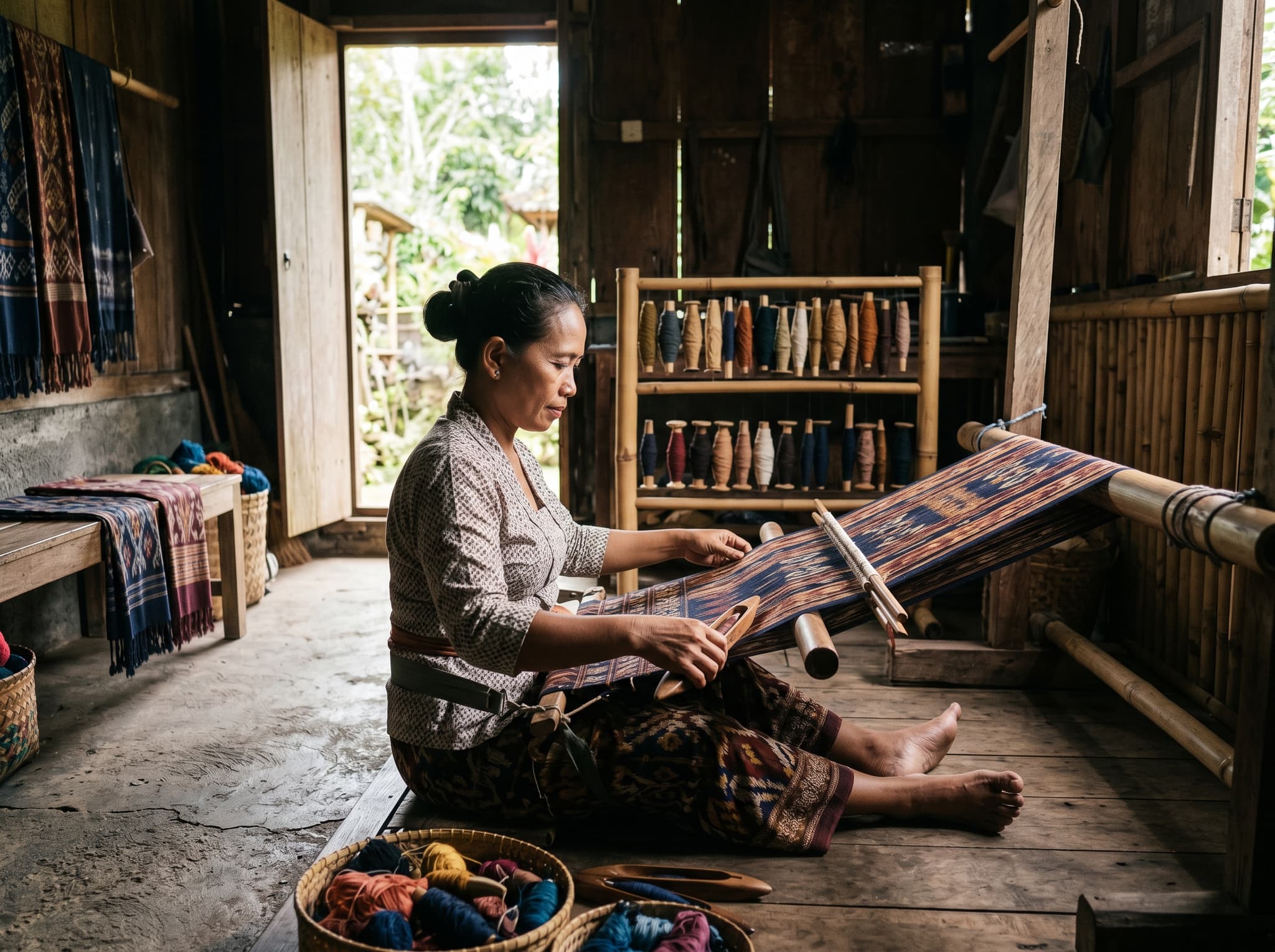
Visit a weaving house. Sidemen is one of the last active centers of endek production in Bali. Several family workshops along the main road welcome visitors. You can watch the process and buy directly — a hand-woven scarf runs IDR 100,000–300,000, depending on complexity.
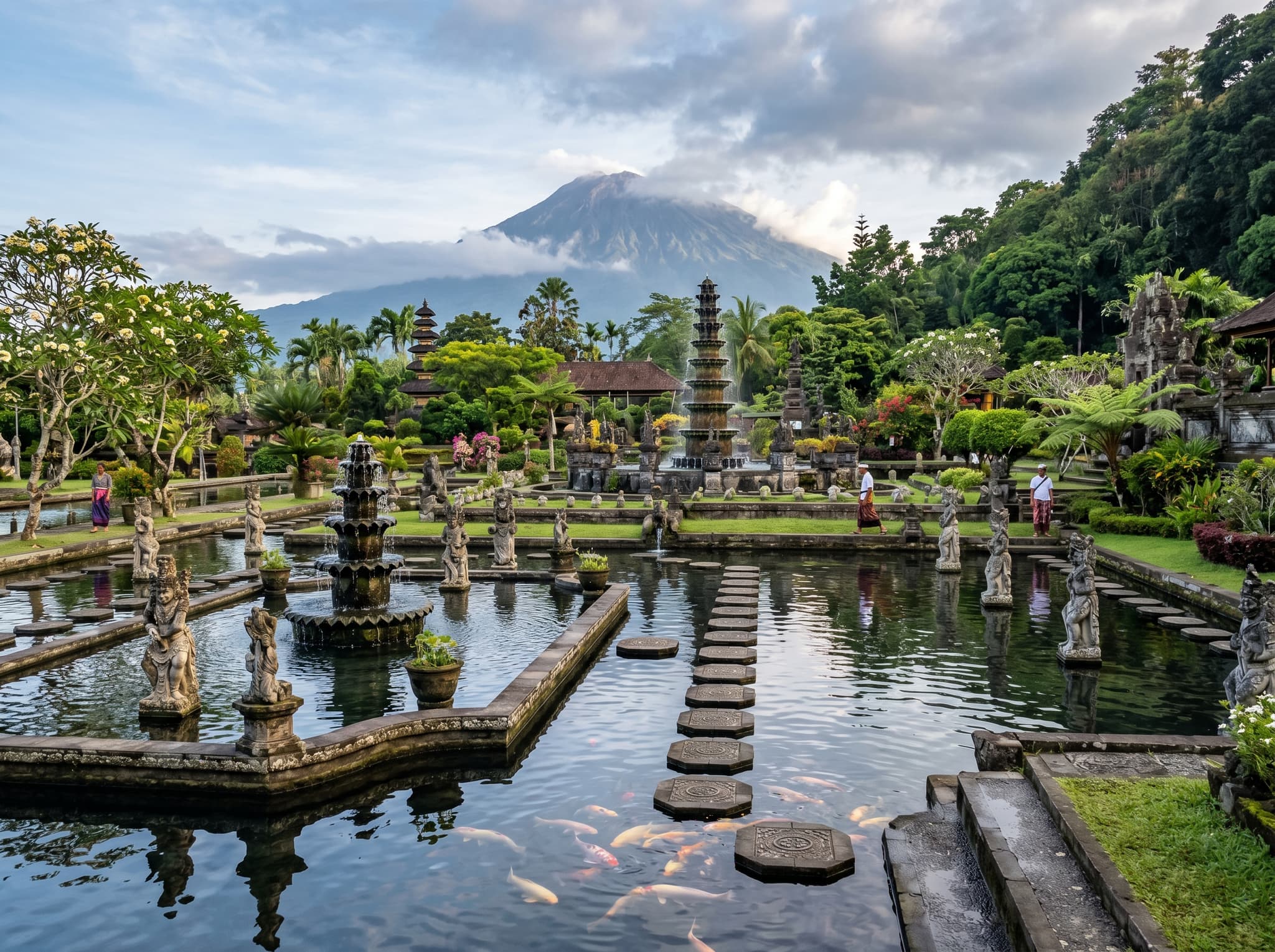
Drive to Tirta Gangga. The royal water palace is about 30 minutes north and makes a reasonable half-day trip. Entry is IDR 50,000 for foreign visitors. The spring-fed pools are genuinely beautiful, and the ornamental gardens are well maintained.
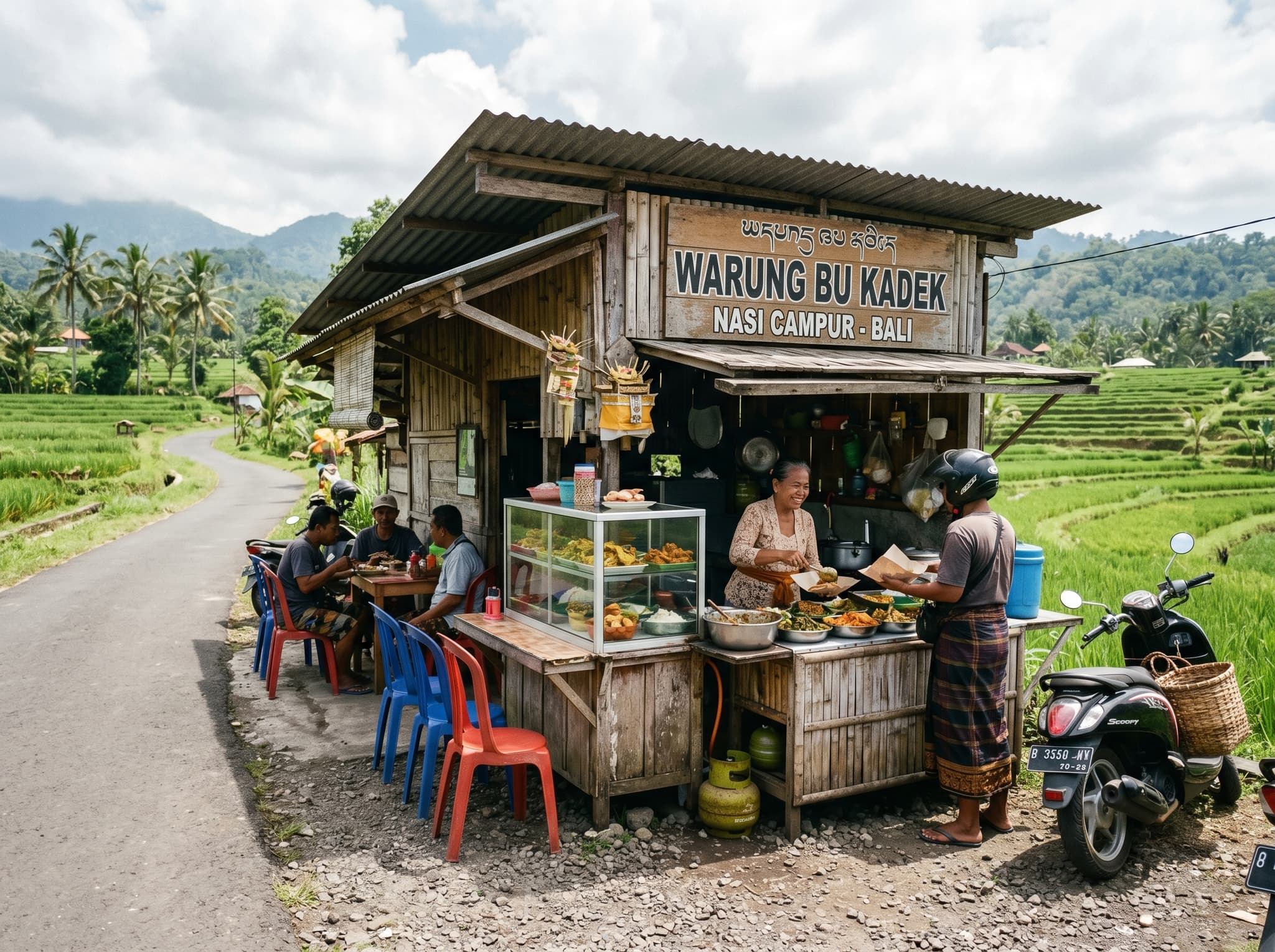
Eat simply. Warungs along Jalan Sidemen serve nasi campur, mie goreng, and fresh juices at IDR 20,000–40,000 per dish. Warung Makan Sidemen and a few others near the main junction are reliable. A couple of newer cafés cater to visitors with espresso and Western breakfast options, but the warung food is better and costs a fraction.
The Honest Caveat
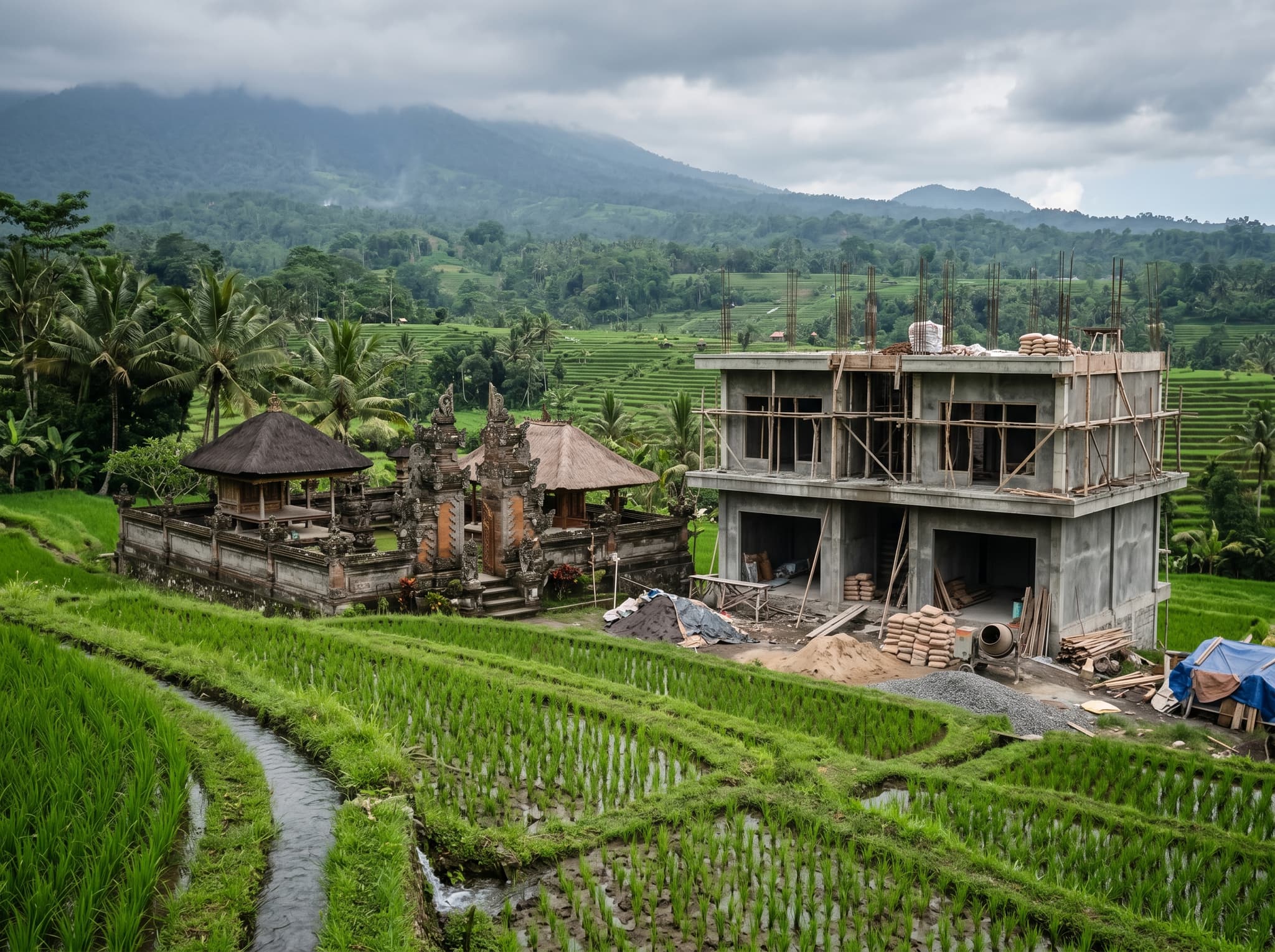
Sidemen is changing. New guesthouses and villas are under construction along the main road. A few digital nomad–oriented cafés have opened. The trajectory is visible to anyone who watched Canggu or Ubud ten years ago.
This doesn't mean Sidemen is "ruined" or that visiting contributes to some inevitable decline — that framing is too simple and too convenient. But it does mean the valley you visit in 2025 will be quieter than the one someone visits in 2028. Whether that matters to you is a personal question. What's here now is a working agricultural valley where tourism exists at a scale the community still controls. That's increasingly rare in Bali, and it's worth experiencing with the awareness that rarity implies.