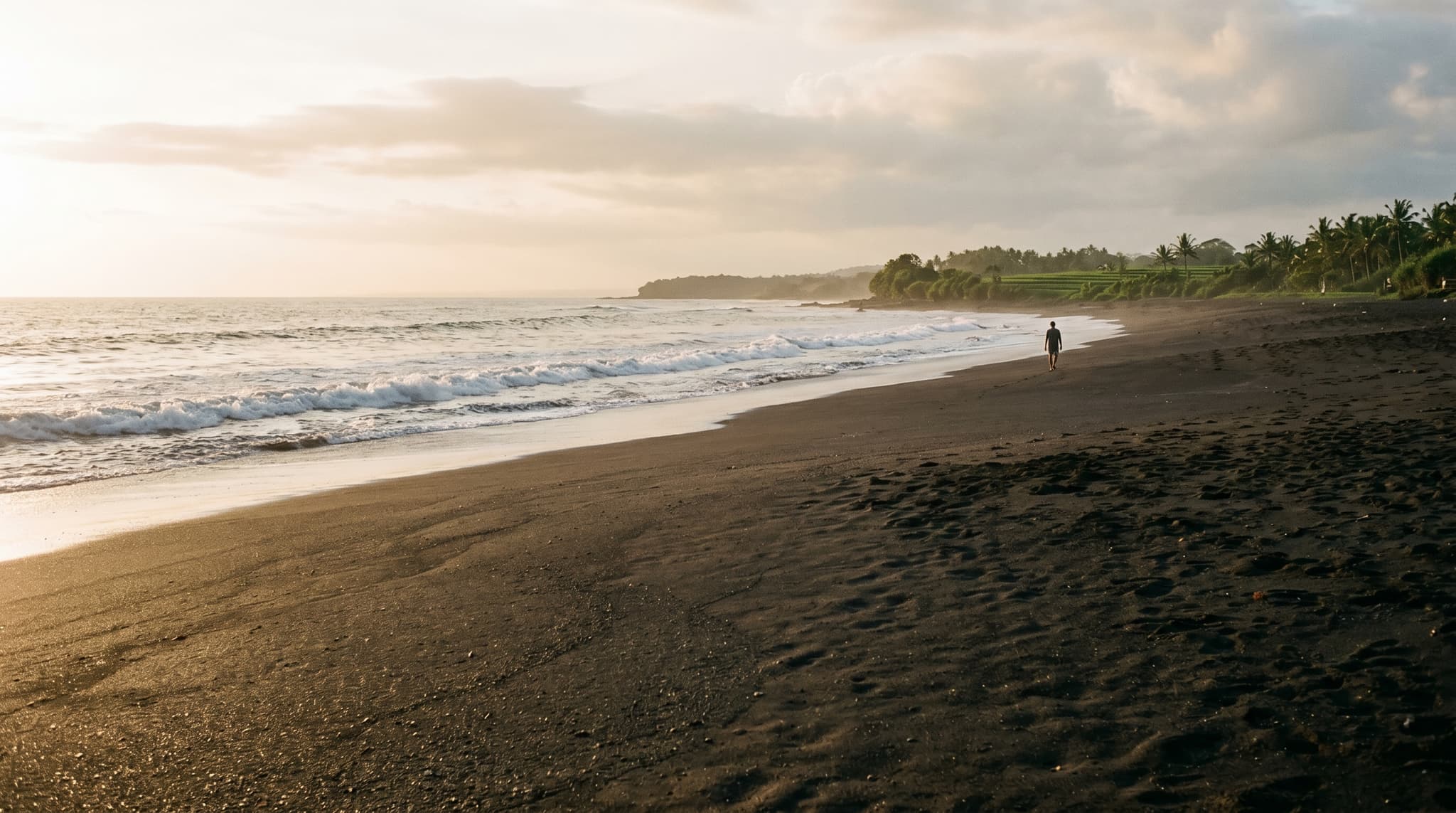
Seseh Beach sits between Canggu's sprawl and Tanah Lot's temples — a black sand coast backed by rice fields where Bali still moves at village pace.
The first thing you notice in Seseh is what's missing. No beach clubs stacking sunbeds to the tideline. No scooter traffic bottlenecked behind a smoothie bowl café. No one trying to sell you a sunset.
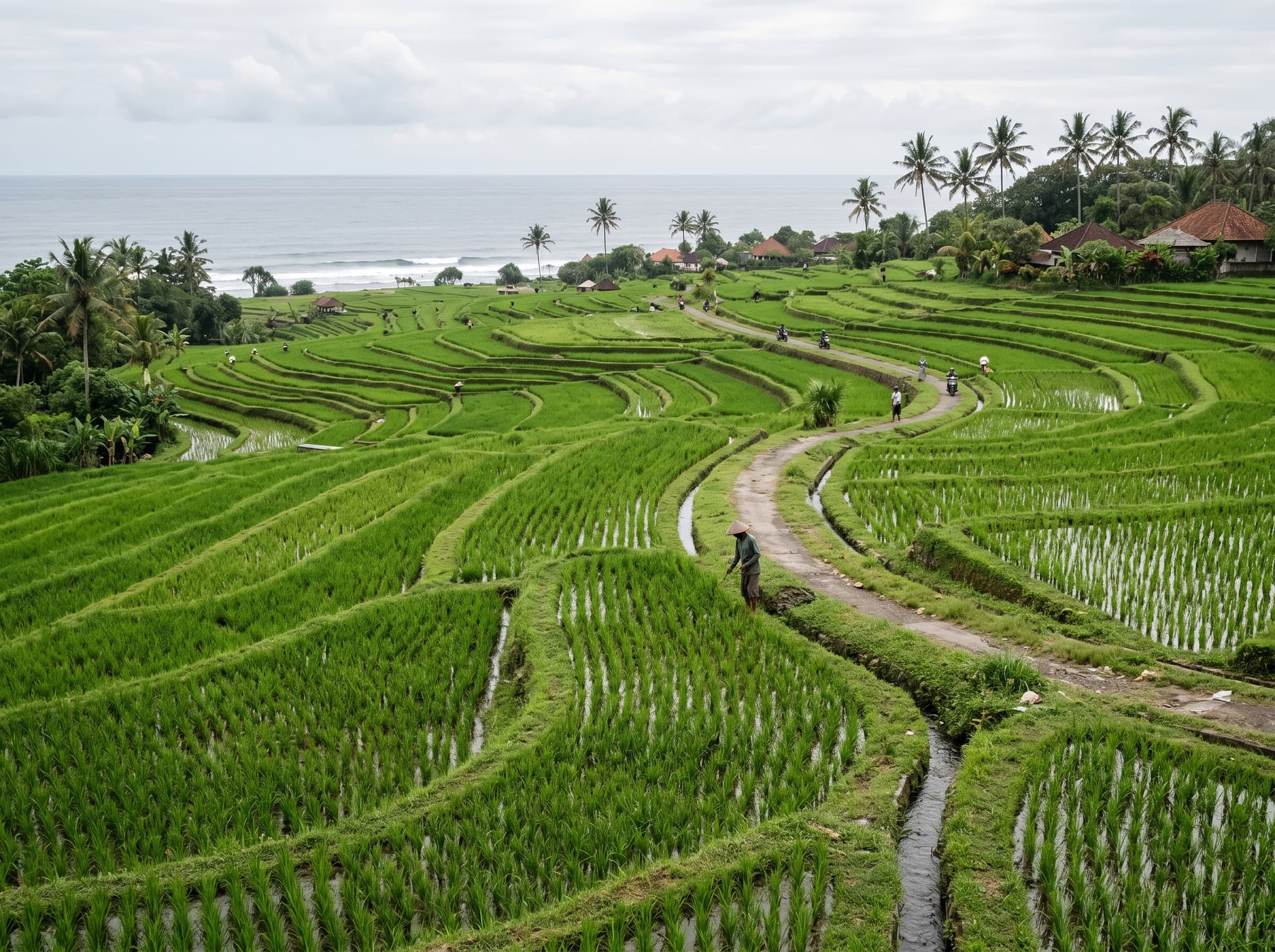
What you get instead: a long corridor of dark volcanic sand, a small sea temple at the southern end, and rice paddies that run almost to the shore. Seseh is a working village on Bali's southwest coast, wedged between the expanding sprawl of Canggu to the south and the temple headlands of Tanah Lot to the northwest. It has been "about to be discovered" for years. The villas keep coming. The village, for now, holds its shape.
What Seseh Feels Like
Seseh is not a destination in the way Seminyak or Uluwatu are destinations. There's no main strip, no cluster of restaurants competing for the same corner. The village is organized around its rice terraces and a single road that eventually delivers you to the coast. Small warungs serve nasi campur at plastic tables. Dogs sleep in the shade of compound walls. The tempo is set by the irrigation schedule, not by brunch reservations.
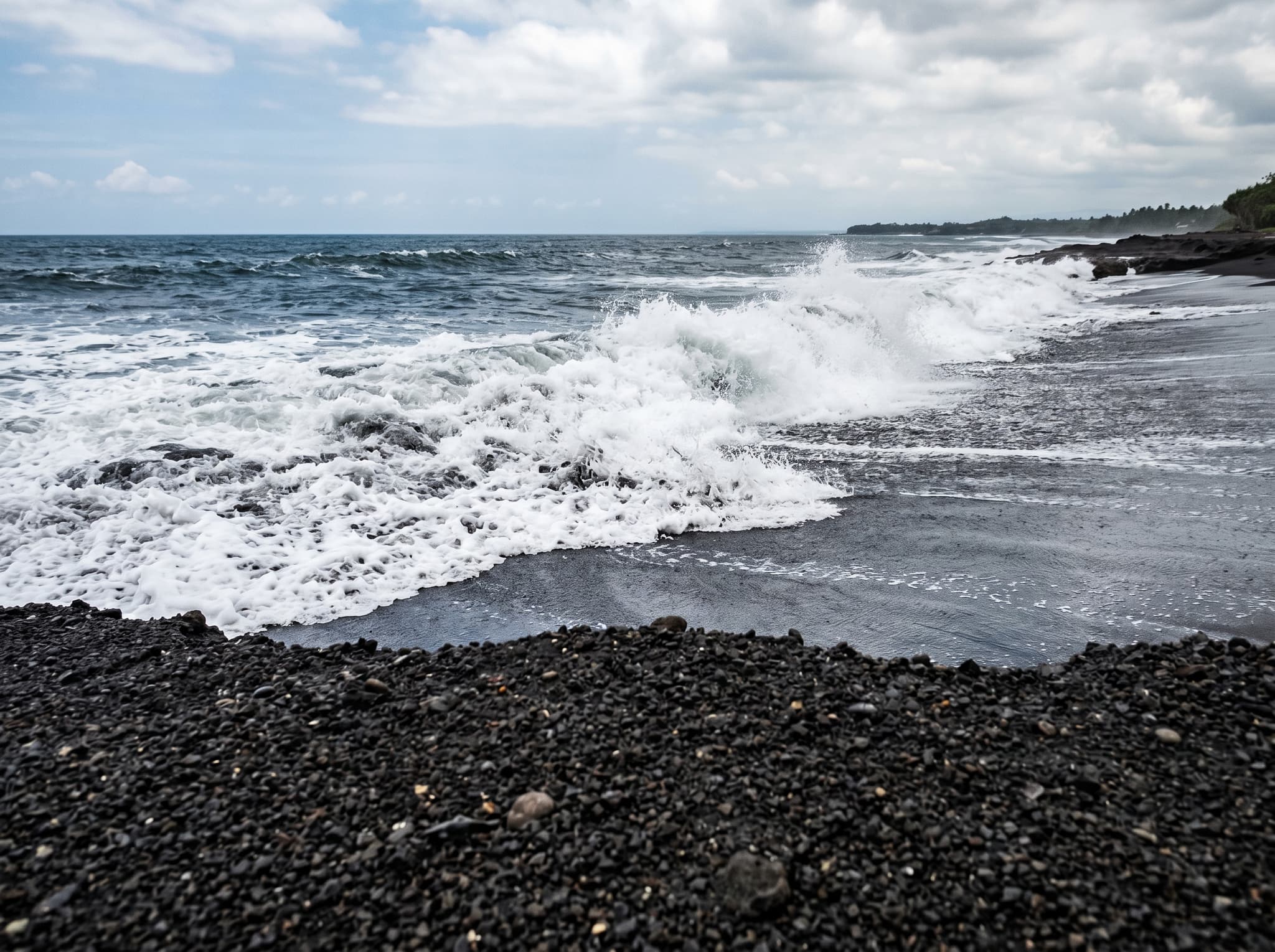
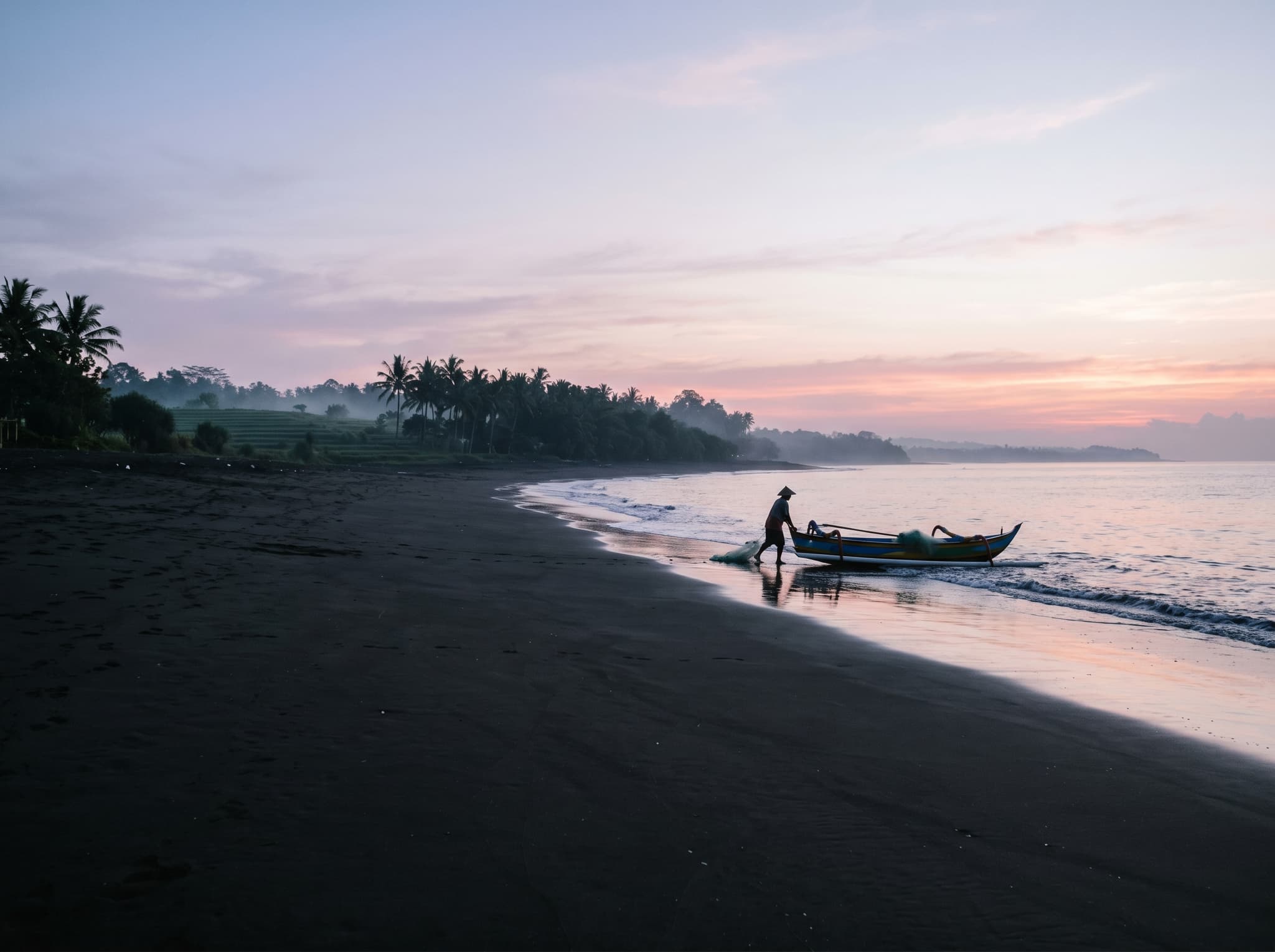
The beach itself is wide and dark — proper Balinese black sand, coarse underfoot and hot by midday. Waves break hard here, and the current can be strong. This is not a swimming beach for casual visitors. Surfers use it, particularly the break toward the northern end, but even they tend to know the water. If you want to get in the ocean, go at low tide, stay close to shore, and watch what the locals do.
What makes the beach worth visiting is the atmosphere at either end of the day. Mornings are quiet — a few fishermen, maybe a jogger from one of the nearby villas. Late afternoon is when Seseh opens up: the light goes gold and low across the rice fields behind you, the sand cools, and the temple silhouette at the water's edge turns into the kind of scene that stops you mid-step. It doesn't need a filter. It barely needs a camera.
The Temple at the Shore
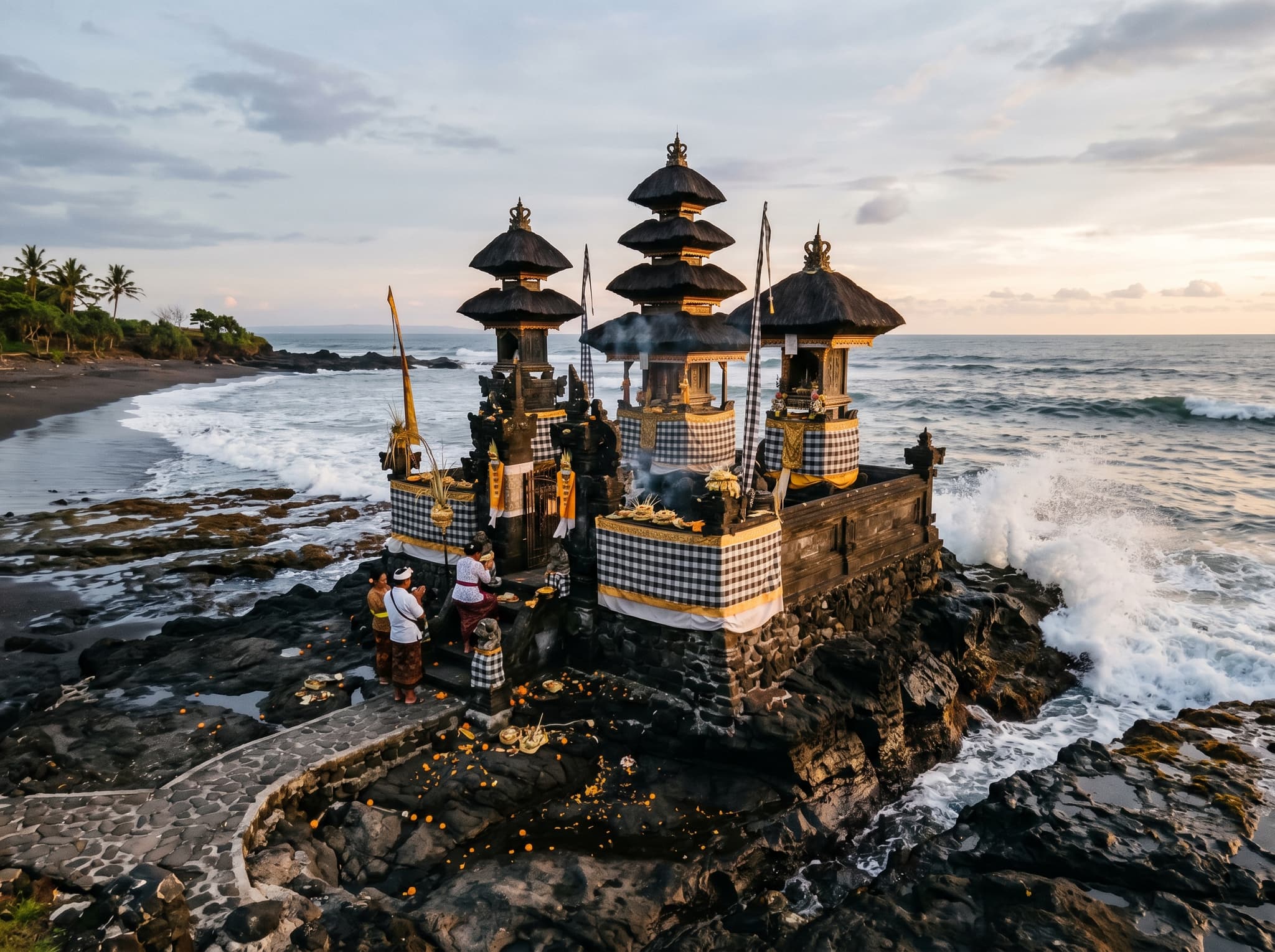
Pura Batulumbang sits at the southern end of Seseh Beach, a small sea temple perched on volcanic rock where the sand meets the reef shelf. It's not Tanah Lot — there are no ticket counters, no souvenir stalls, no crowd pressed against a railing. Most days you'll have it nearly to yourself. The temple is active, used by the local community, and occasionally dressed in ceremony cloth and marigold offerings. Don't climb on the rocks around it during ceremonies, and dress respectfully if you walk close.
Pura Batulumbang
Location
Southern end of Seseh Beach
Access
Free, open daily
Note
Active temple — dress modestly, don't enter during ceremonies unless invited
Where Seseh Sits in Bali's Geography
Understanding Seseh means understanding what's on either side of it.
To the south, Canggu has completed its transformation from surf village to full-service expatriate town — coworking spaces, pilates studios, traffic. To the northwest, Tanah Lot draws tour buses for its famous offshore temple, particularly at sunset. Seseh sits between these two gravitational pulls without being absorbed by either. The rice fields that separate it from Canggu's northern edge are the buffer, and for now, they're still green.
The villa development is real, though. High-walled compounds have been going up along the rice field roads for years — private rentals, many listed on Airbnb, most designed for the kind of traveler who wants Bali's beauty without Bali's crowds. This is changing the economics of the village in ways that are familiar across the island. Land prices rise. Some families sell paddies. The warungs stay, but the clientele shifts.
It's not ruined. It's not untouched either. Seseh is in the middle of that transition, and being honest about that is more useful than pretending you've found a secret.
Where to Eat
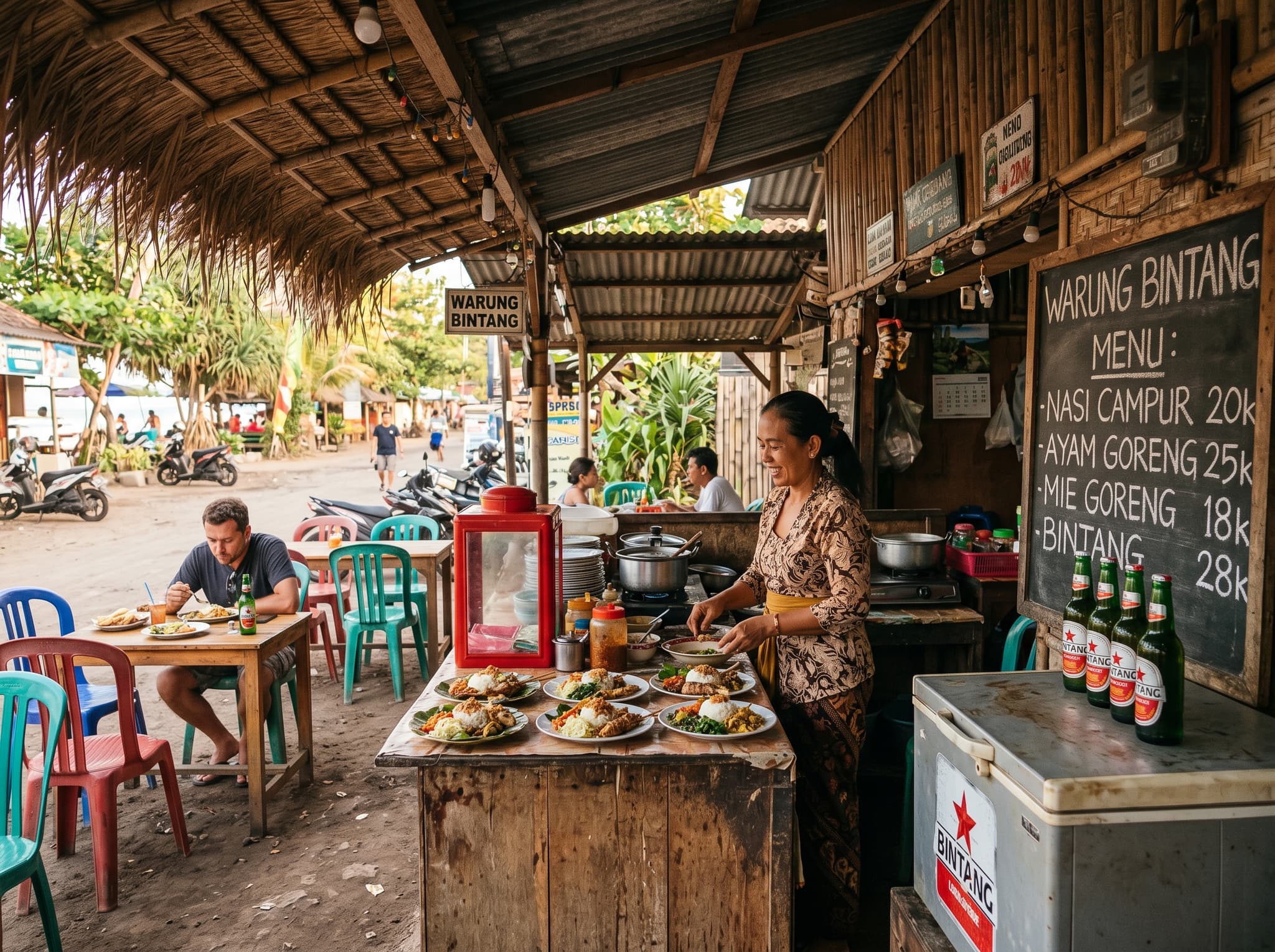
Seseh doesn't have a restaurant scene. What it has are a handful of warungs and a few cafés that have opened to serve the villa crowd.
- Warung Pantai Seseh — right near the beach access, simple Indonesian food, cold Bintang, prices that haven't adjusted for tourism yet.
- Seseh Beach House — a step up in price and presentation, good for a longer meal with ocean views. Not cheap by local standards but reasonable for what you get.
For anything more — specialty coffee, international food, a proper wine list — Canggu is a 10-minute scooter ride south.
Where to Stay
Most visitors to Seseh stay in private villas. The area has a high concentration of well-designed rental properties, many with pools and rice field views, bookable through Airbnb or villa agencies. Expect to pay anywhere from IDR 800,000 to IDR 4,000,000+ per night ($50–$250+) depending on size and season. There are no major hotels or hostels in the village itself.
Getting There and Getting Around
Seseh is roughly 35 minutes from Seminyak by scooter, longer by car depending on Canggu traffic. There's no public transport to speak of. You'll need a scooter rental (IDR 70,000–100,000/day) or a private driver. Ride-hailing apps work but pickups can be slow — drivers aren't always nearby.
The village is small enough to walk once you're there, but the beach, the rice fields, and the nearest cafés are spread out enough that a scooter makes the day easier.
Who Seseh Is For
Seseh works best for travelers who don't need a full itinerary. If you want a quiet base to sleep well, eat simply, walk the beach at odd hours, and use as a launchpad for Tanah Lot or the Canggu surf breaks, it delivers. It's a place for people who've already done the busy version of Bali and want something with a little more silence in it.
It won't stay this quiet. The construction cranes visible from the rice fields make that clear enough. But today — this season, this year — Seseh still has the thing that most of Bali's south coast has spent: room to breathe.