Taman Narmada is an 18th-century Balinese Hindu water palace in western Lombok — a layered stop between Senggigi and the island's interior worth an hour of your time.
Narmada Park — known locally as Taman Narmada — is an 18th-century royal water palace in western Lombok, built during a period when Balinese kings controlled much of the island. It sits about ten kilometers east of Mataram, right along the main road that connects the capital to the interior. If you're driving between Senggigi and points south or east, you'll pass within a few hundred meters of the entrance. Most people do exactly that — pass it. Which is a shame, because what's behind the walls is one of the more quietly layered places on the island.
What You're Looking At

Taman Narmada was built in 1727 by Anak Agung Ngurah Karangasem, a Balinese king of the Karangasem dynasty that ruled Lombok for roughly two centuries. The palace was designed as a symbolic replica of Mount Rinjani and Segara Anak, the crater lake near its summit. The king, aging and no longer able to make the pilgrimage to Rinjani for the annual Pujawali ceremony, built this place so the rituals could continue at a lower elevation.
That context matters. Without it, Narmada reads as a pleasant park with some old pools. With it, you start to see the intention in the layout — the tiered gardens stepping upward like the flanks of a volcano, the central pool standing in for the sacred lake, the temple positioned where offerings could be made without the three-day climb. It's devotion engineered into landscape architecture.
The complex is built across several levels. The lowest tier holds a large public bathing pool — rectangular, fed by a natural spring that has run continuously since the palace was constructed. Above it, smaller ornamental pools and fountains are connected by stone channels. The upper levels contain the Pura Kalasa temple, still an active Hindu place of worship, and what remains of the royal quarters.
The Gardens and the Spring
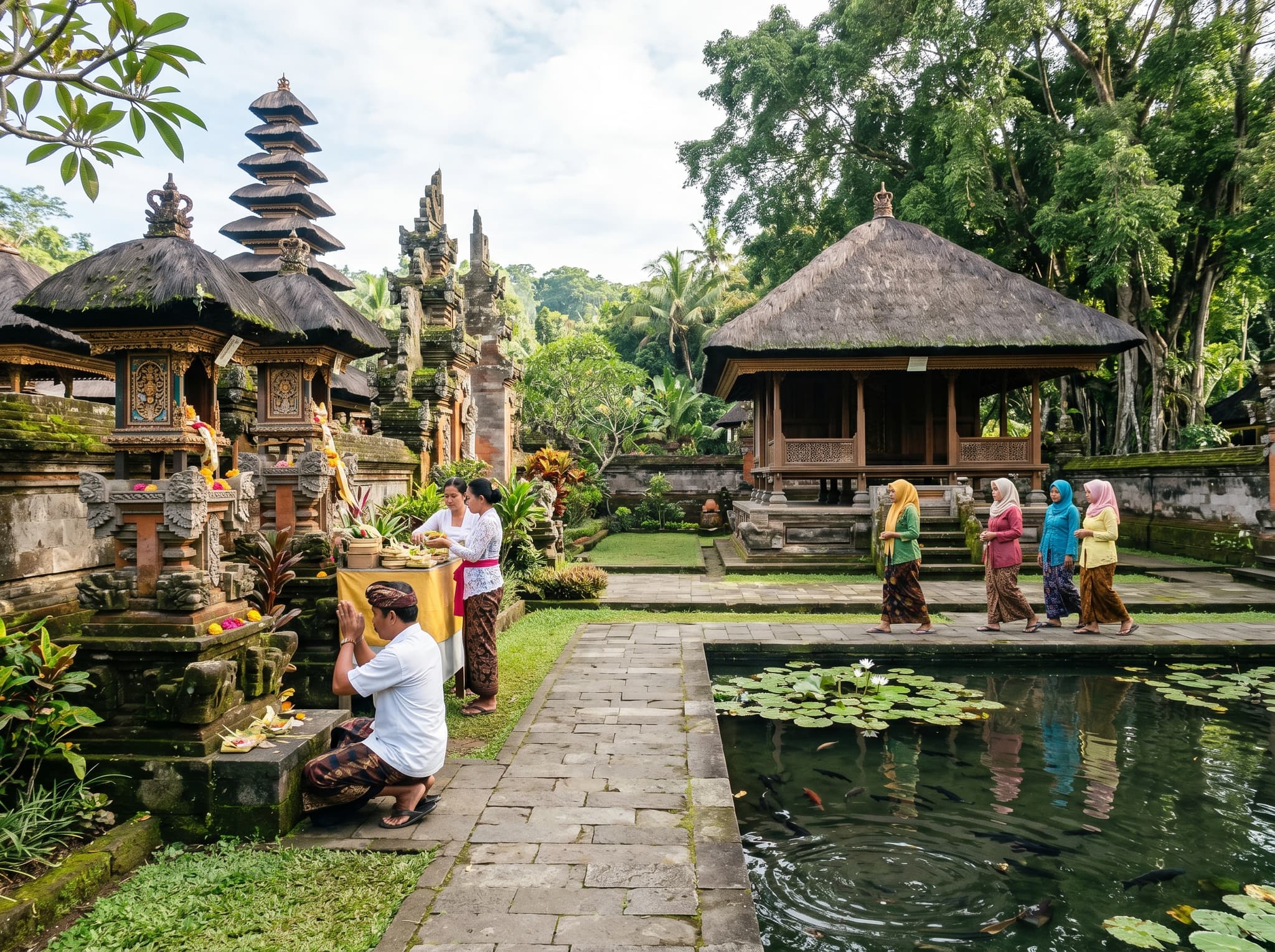
The grounds are more park than ruin. Large trees — banyan, frangipani, and several species I couldn't name — shade the walkways and create a canopy that drops the temperature noticeably once you're inside. The gardens aren't manicured in the way you'd see at a European estate; they're dense, slightly overgrown in places, and better for it. Moss covers the older stonework. Roots have worked their way into walls over centuries.
The spring is the anchor. Water moves through the complex via channels and spouts, some original, some restored. On weekdays, you might have the upper terraces largely to yourself. On weekends and holidays, local families come to swim in the lower pool, and the atmosphere shifts — kids shouting, vendors selling snacks near the entrance, the whole place functioning as what it partly is: a public park for the surrounding community.
What to Expect
Layout
Multi-tiered gardens, pools, and temple across several levels
Crowds
Quiet on weekdays; busy with local families on weekends and holidays
Condition
Partially restored — some original stonework, some reconstruction
Photography
Permitted throughout, but ask before photographing worshippers at the temple
Balinese Hindu Culture on a Sasak Island
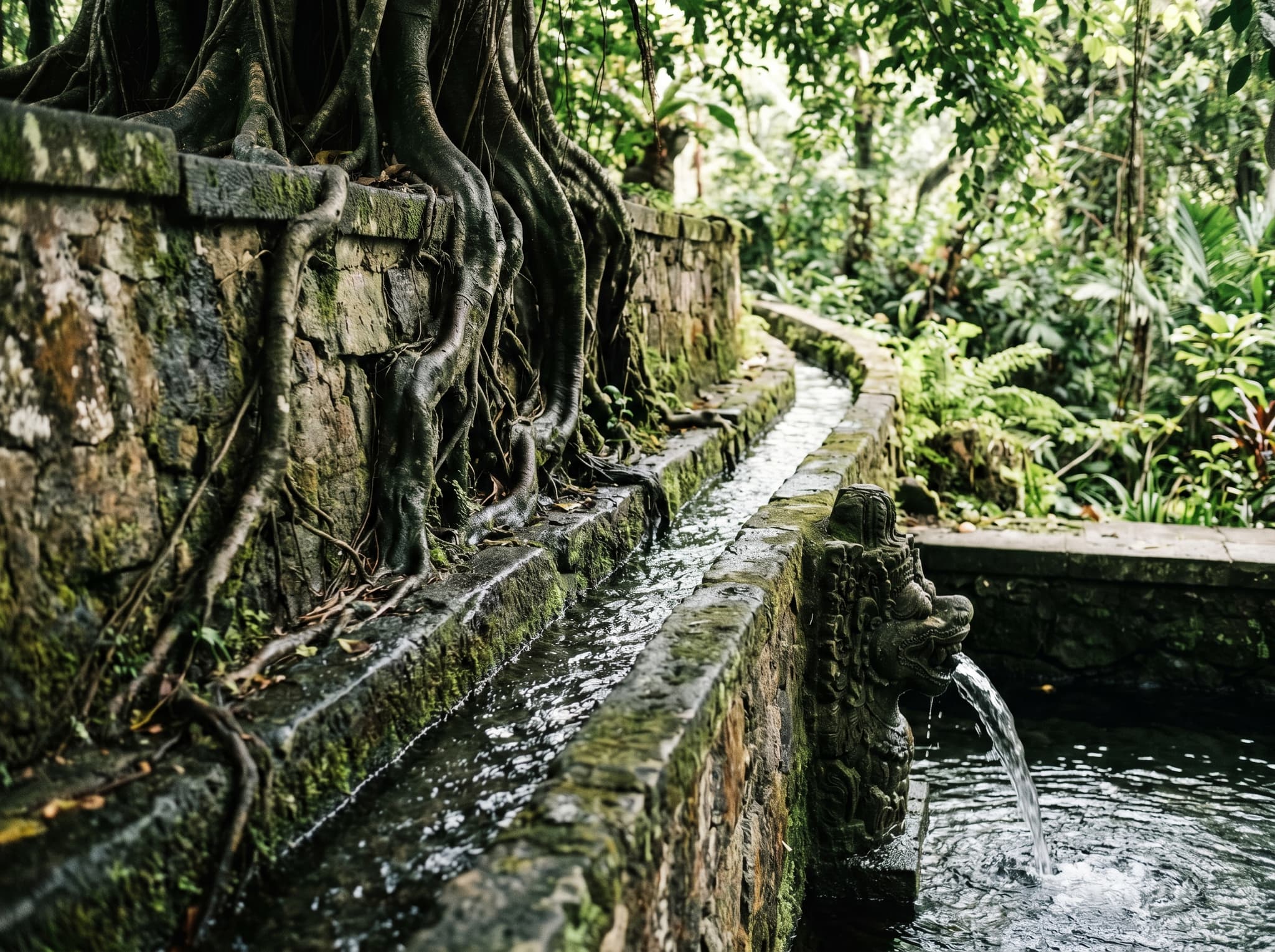
This is the part that makes Narmada more than a nice garden. Lombok's population is predominantly Sasak and overwhelmingly Muslim. The Balinese Hindu presence on the island is a minority one, concentrated mainly in the west. But it's deeply rooted — not a recent arrival, not a tourist-facing performance. The Karangasem dynasty ruled here for generations, and their architectural and religious footprint remains.
Taman Narmada is one of the clearest physical expressions of that history. Walking through it, you're inside a Balinese Hindu sacred landscape on an island where the call to prayer carries from the mosque down the road. The temple receives offerings. The spring water is considered holy. And the families swimming in the lower pool on a Saturday afternoon are mostly Sasak Muslims cooling off in the heat.
Nobody seems to find this remarkable, which is itself the most remarkable thing about it. The coexistence is quiet, lived-in, unremarkable to the people who live it. For a visitor, it's worth sitting with for a few minutes — on one of the stone benches under the trees, watching the water move through channels that a king built three hundred years ago because he could no longer climb a mountain.
Getting There and Practical Details
Narmada is an easy stop rather than a destination you'd build a day around. From Mataram, it's roughly 10 kilometers east — about 20 to 30 minutes by car or scooter depending on traffic. From Senggigi, expect 30 to 45 minutes. The park is visible from the main road, and signage is clear.
Getting There
From Mataram
Approximately 10 km east, 20–30 minutes by car
From Senggigi
Approximately 30–45 minutes by car or scooter
Transport
Scooter, private driver, or local bemo (public minibus)
Parking
Available near the entrance
Most visitors spend between one and two hours. That's enough to walk the full complex, sit by the pools, visit the temple, and circle the gardens. If you're passing through on the way to Tetebatu, Kuta Lombok, or the Rinjani trailhead, it's a natural break in the drive — especially if you left Senggigi in the morning and want to stretch your legs before the road climbs into the interior.
There are a few food stalls and small warungs near the entrance. Don't expect much variety, but you can get a cold drink and basic Indonesian food — nasi goreng, mie goreng, the usual roster.
Is It Worth the Stop?
Narmada Park won't compete with Rinjani for drama or with Kuta's beaches for beauty. It's a quieter thing — a place where history, faith, and daily life overlap without any of them announcing themselves. The architecture is handsome but not grand. The gardens are lovely but not spectacular. The pools are old and spring-fed and still in use.
What makes it worth your time is the accumulation of all of that. A water palace built as a proxy for a sacred mountain. A Hindu temple on a Muslim island where both communities share the same spring water. A king's devotion outlasting his dynasty by centuries. You don't need a full day. You need an hour, some shade, and the willingness to look at what's actually there.