Pergasingan Hill offers panoramic Rinjani views without the multi-day trek. Here's what the sunrise hike from Sembalun actually involves — trail, timing, and gear.
Pergasingan Hill sits above the Sembalun Valley in East Lombok, a roughly one-hour climb that rewards early risers with a view most people associate with multi-day Rinjani treks: the volcano's full profile rising above terraced rice fields, morning cloud rolling through the valley below. It's not Rinjani. That's the point. You get the panorama without the two-day commitment, the altitude sickness, or the permit logistics.
But "easy alternative" is relative. The trail is steep, loose in places, and demands more than flip-flops and good intentions. Here's what you need to know before you go.
Getting to Sembalun

The trailhead is in Sembalun Lawang village. From most places travelers stay in Lombok, that means a long drive before the hike even begins.
Drive Times to Sembalun Lawang
From Senggigi/Mataram
~2 hours (100–120 km)
From Lombok Airport (BIL)
~3 hours
Road conditions
Paved but winding, rural sections
If you're doing a sunrise hike, you'll need to leave your hotel between 1:00 and 3:00 AM depending on where you're staying. Most guided day trips pick up from Senggigi or Mataram hotels around 3:00–4:00 AM and arrive at the trailhead by 5:00–5:30 AM. That math is tight — sunrise hits around 5:30–6:00 AM depending on the month, and the ascent takes 1–1.5 hours at a steady pace.
The alternative that makes the timing far more comfortable: stay in Sembalun the night before. A few guesthouses and homestays in the village put you within minutes of the trailhead. You can wake at 3:30 or 4:00 AM, walk to the start, and climb without rushing. If the sunrise matters to you — and it should, it's the reason people come — this is the better approach.
The Trail Itself

The hike starts from a signed trailhead off a dirt road past a small bridge in Sembalun. Look for the PERGASINGAN sign. A ticket hut near the trailhead collects the entrance fee.
Trail Details
Distance
5.5–7 km round trip
Elevation gain
~650 meters (2,100 ft)
Ascent time
1–1.5 hours (fit hikers); up to 2.5 hours at a slower pace
Difficulty
Moderate to hard — steep initial section
Facilities on trail
None
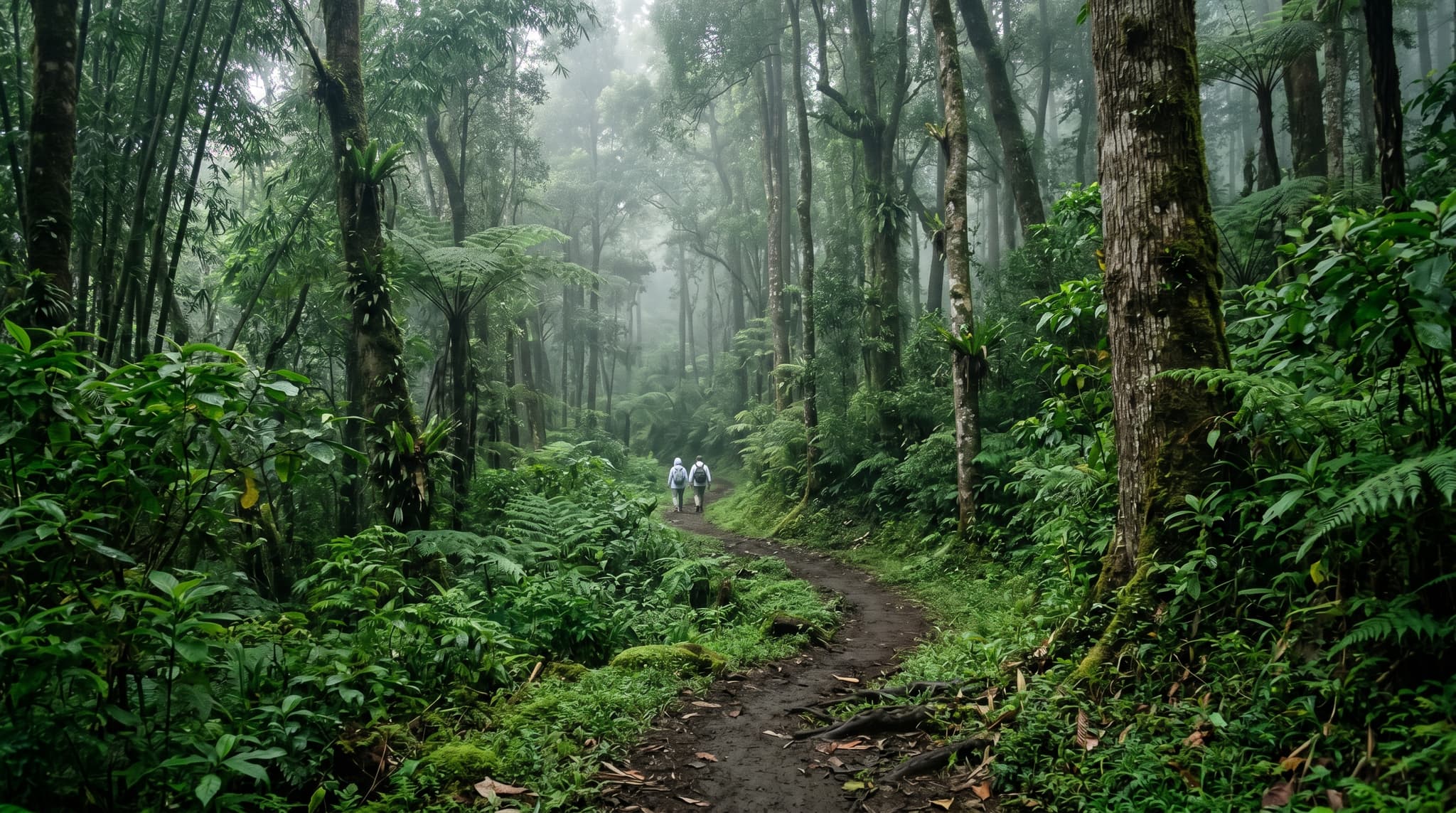
The first section is the hardest part. About 90 stone steps lead into a steep, rocky incline where the angle reaches 60–70 degrees in places. This isn't a paved staircase — it's loose rock, packed dirt, and boulders. In the dark, with only a headlamp cutting a narrow cone ahead of you, it requires hands. Three points of contact on the steepest bits. If you're doing the sunrise hike, this opening stretch is entirely in darkness, which makes it feel more exposed than it is.
After that initial scramble — maybe 20–30 minutes of genuine effort — the trail levels out. You push through low bushes and scrub along a ridge, the gradient easing into something closer to a walk. The final approach to the summit plateau is gentle by comparison. By the time you reach the top, you've earned the view, but your legs aren't destroyed.
The descent is where people get into trouble. The same steep, rocky section that was hard going up is harder coming down — loose gravel, gravity working against your knees, and if it rained recently, genuinely slippery surfaces. Budget 1–1.5 hours for the way down and take it slow.
What You See from the Top

The summit is a broad, grassy plateau — enough room for dozens of people to spread out without crowding. On a clear morning, Mount Rinjani dominates the northeast, its crater rim catching the first light. Below, the Sembalun Valley stretches out in patchwork greens — rice paddies, tobacco fields, small clusters of village rooftops. Clouds often sit in the valley at dawn, filling the low ground like water in a basin, with ridgelines breaking through.
The views hold until mid-morning. By 10:00 or 11:00 AM, clouds typically build and the valley disappears. This is why the sunrise timing matters — not just for the golden light, but because the clarity doesn't last.
When to Go

Dry season — April through October — is the clear window. The trail is dusty and exposed to direct sun, but the footing is reliable and the skies cooperate more often than not.
November through March, the wet season turns the steep sections muddy and slippery. Combined with the pre-dawn darkness of a sunrise hike, this creates real risk. It's not impossible — early November before the heavy rains arrive can still work — but the trail wasn't built for wet conditions, and there are no railings or ropes on the steep parts.
Do You Need a Guide?

The trail is marked and straightforward — a single path up, the same path down. Experienced hikers comfortable navigating steep terrain in the dark can do this independently. You don't need a guide the way you need one for Rinjani.
That said, a local guide is worth considering if you're hiking before dawn for the first time in unfamiliar terrain, or if you want someone who knows exactly where to position for the best sunrise views. Guides from Sembalun-based operators like Rinjani Dawn Adventures typically provide headlamps and trekking poles, which saves you packing them. Organized day trips from Senggigi or Mataram — including transport and guide — run from around 300,000 IDR per person for basic packages, though prices vary by operator and group size.
What to Bring

There are no facilities on the trail — no water, no food vendors, no toilet. Pack accordingly.
Packing Essentials
Head torch
Essential for sunrise hikes — phone lights aren't enough
Footwear
Grippy hiking shoes or trail runners (not sandals)
Trekking pole
Helpful for descent, especially on loose rock
Water
At least 1.5 liters
Light jacket
Summit is cool and breezy before sunrise
Snacks
Energy bars, fruit — you'll want something at the top
The Bigger Picture

Pergasingan Hill occupies a useful middle ground in Lombok's hiking landscape. It's harder than a casual morning walk — that opening scramble is no joke — but it doesn't require the fitness, gear, or time commitment of a Rinjani trek. For travelers spending a few days in Lombok who want to see the volcanic landscape up close without dedicating two or three days to it, this is the hike.
The total day, including the drive from western Lombok, runs about 10 hours. It's a long one. But the moment you're sitting on that plateau, coffee thermos in hand, watching Rinjani catch the first light while the valley below fills with cloud — the early alarm makes sense.