Saifana Organic Farm offers guided tours through highland organic fields in Lombok's Sembalun Valley. Here's what the tour covers, what it costs, and whether it's worth the drive.
Most people who make it to Sembalun Valley are there for one reason: Mount Rinjani. They arrive the night before a trek, sleep in a homestay, and leave at dawn without seeing much of the valley itself. Saifana Organic Farm is one of the better arguments for spending an extra half-day in Sembalun before or after the mountain — or skipping the volcano entirely if a multi-day trek isn't your thing.
The farm operates as a working organic agriculture site in Lombok's highland interior, growing vegetables, fruits, herbs, and coffee at an elevation where the climate behaves nothing like the coast. If you've spent a week in the heat of Kuta Lombok or Senggigi, the temperature difference alone is worth the drive. But the real draw is the tour itself — a structured walk through the operation that covers what grows here, why it grows here, and how highland farming in Lombok actually works.
What the Farm Grows

Saifana sits in one of the most fertile pockets of Lombok. The Sembalun Valley's volcanic soil — courtesy of Rinjani — combined with the altitude creates growing conditions that support crops you won't find at lower elevations on the island.
The farm cultivates a rotating mix that typically includes:
- Vegetables: tomatoes, lettuce, cabbage, carrots, spring onions, chili peppers
- Fruits: strawberries (the highland star), avocados, passionfruit
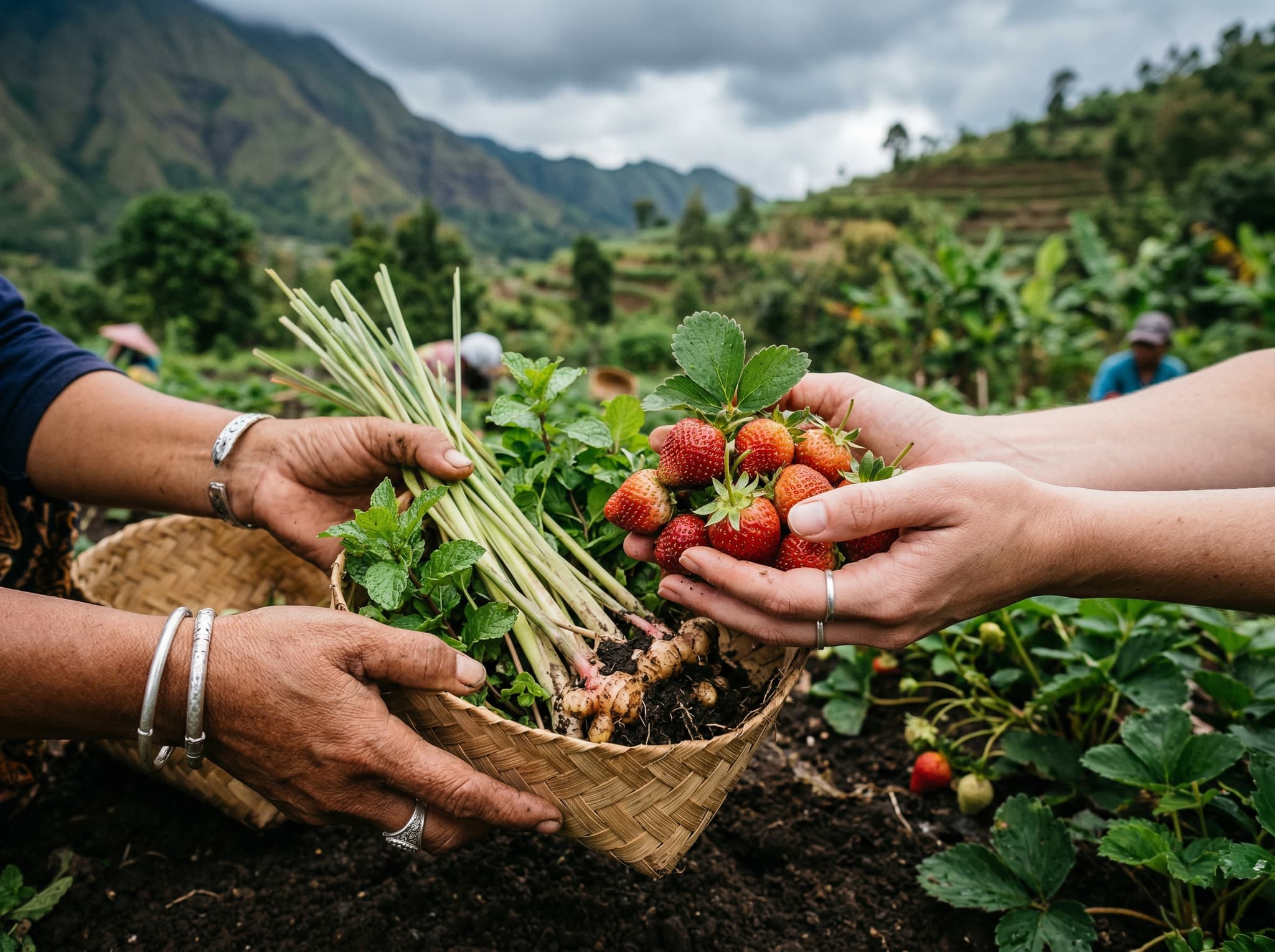
- Herbs and spices: lemongrass, turmeric, ginger
- Coffee: small-scale Robusta and Arabica plots
Everything is grown without synthetic pesticides or chemical fertilizers — the "organic" in the name isn't marketing. The farm uses composting systems and natural pest management that the tour walks you through in detail. Whether you care deeply about organic certification or not, seeing the composting operation and understanding why it matters at this altitude is genuinely interesting. The soil here is the whole story.
What the Tour Covers

The visitor experience at Saifana is a guided walk, not a self-directed wander. A staff member or the farmer takes you through the property section by section, explaining what's planted, what's in season, and how the organic systems work. This isn't a theme park version of farming — it's a working operation that happens to welcome visitors.
The tour typically follows this sequence:
The growing fields — You walk through the vegetable and fruit plots, see what's currently in the ground, and get context on crop rotation and seasonal cycles. The guides explain what gets sent to local markets versus what stays on-site.
Composting and soil management — This is where the tour gets specific. The farm's composting system turns agricultural waste into fertilizer, and the guide walks through the process in practical terms. If you've ever wondered what "organic farming" actually means beyond the label, this section answers it.
Coffee processing — Saifana grows coffee on a small scale, and the tour includes an overview of how the cherries are picked, dried, and processed. It's not a full coffee plantation experience — Lombok's highland coffee operations are modest compared to, say, the Kintamani region in Bali — but it's a useful primer.
Tasting and harvesting — Depending on what's ripe, visitors can pick strawberries or sample produce directly. Some tours end with a simple meal or snack prepared from the farm's harvest.
Tour Logistics
Duration
1.5–2 hours
Group Size
Small groups; larger groups by arrangement
Language
Bahasa Indonesia; basic English
Booking
Walk-ins possible; calling ahead recommended
The whole thing runs about 90 minutes to two hours. It's not rushed, but it doesn't drag either. You'll learn something, you'll eat something, and you'll leave with a better understanding of why Sembalun Valley matters beyond being a trailhead.
Is It Worth the Detour?

Here's the honest assessment. If you're already in Sembalun — staying the night before a Rinjani trek or exploring the valley — Saifana is an easy add to your day. The tour is well-structured, the setting is beautiful in an understated way (terraced fields, mountain backdrop, cool air), and you'll get more out of it than you'd expect from a small farm visit.
If you're coming specifically from Kuta Lombok or Senggigi just for the farm, that's a different calculation. The drive from Kuta Lombok takes roughly 2–2.5 hours each way on winding roads. From Senggigi, it's closer to 2.5–3 hours. That's a serious day trip for a two-hour farm tour.
The move is to combine it. Saifana works best as part of a Sembalun Valley day — pair it with the Sembalun rice terraces, the viewpoints along the valley road, and lunch in the village. That turns a long drive into a full day with multiple stops, and the farm becomes the anchor rather than the sole destination.
Getting There

Saifana Organic Farm is located in the Sembalun area of East Lombok, within the broader Sembalun Valley.
Transport Options
From Kuta Lombok
2–2.5 hours by car/scooter
From Senggigi
2.5–3 hours by car
From Mataram
~2 hours by car
From Sembalun Village
5–10 minutes
There's no public transport that gets you conveniently to the farm. Your options are renting a scooter (experienced riders only — the mountain roads are steep and winding), hiring a private driver for the day, or joining an organized Sembalun Valley tour that includes the farm as a stop.
A private driver from Kuta Lombok for a full day in the Sembalun area typically costs IDR 500,000–700,000 ($31–44 USD), which is reasonable when split between two or more people and covers multiple stops.
Who This Is For
Saifana Organic Farm isn't trying to compete with Bali's Instagram-ready agritourism spots. There's no infinity pool, no smoothie bowl station, no swing hanging over a rice terrace. It's a working farm in the highlands that opens its doors to visitors and explains what it does. That's the appeal.
It's a good fit if you're interested in sustainable agriculture, want to understand Lombok's highland food systems, or simply want something to do in Sembalun that doesn't involve climbing 3,726 meters. It's also a solid choice for families — the strawberry picking keeps kids engaged, and the tour is short enough to hold attention.
It's not a destination that justifies a trip to Lombok on its own. But as a piece of a Sembalun Valley itinerary, it earns its spot.