Sorong: The Gateway City Nobody Wants to Stay In (and Why You Might Reconsider)
Flights to Sorong are the only way into Raja Ampat. Here's how to book them, where to stay overnight, and why this transit city deserves a second look.
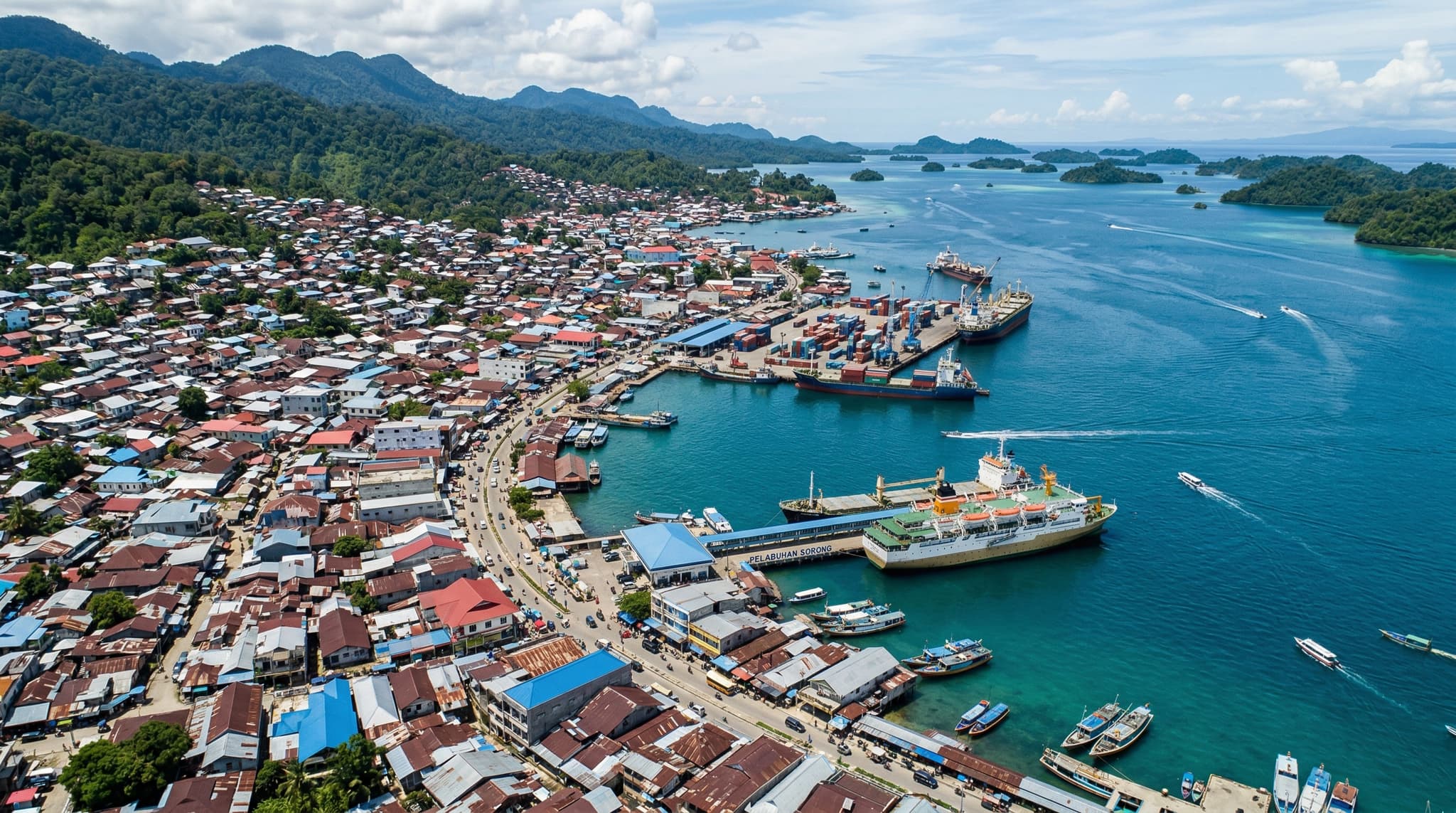
Let's be honest about how most people encounter Sorong. You land at Domine Eduard Osok Airport, take a car to the port or a nearby hotel, sleep, catch the morning ferry to Waisai, and never think about the city again. Sorong is a layover. A logistical necessity. The thing standing between you and the most biodiverse marine ecosystem on the planet.
I'm not going to pretend Sorong is a hidden gem that rivals the places it connects you to. It's not. But I am going to make the case that writing it off entirely is a mistake — and that understanding this city properly will make your trip to Raja Ampat smoother, cheaper, and a little more interesting.
Getting to Sorong: Flights That Actually Exist
Flights to Sorong are the only practical way in for most travelers. There's no international airport here — every route connects through a domestic Indonesian hub.
Main Flight Routes to Sorong
Jakarta (CGK → SOQ)
~4.5 hours, multiple daily flights
Makassar (UPG → SOQ)
~2.5 hours, several daily
Manado (MDC → SOQ)
~2 hours, limited schedule
Ambon (AMQ → SOQ)
~1.5 hours, a few per week
Jakarta is the most common origin for international travelers, with Garuda Indonesia, Batik Air, and Lion Air all operating the route. Expect to pay $150–$350 round trip depending on how far ahead you book and whether you're flying during peak Raja Ampat season (October–December). Book at least 3–4 weeks out — last-minute fares on this route spike hard because demand is concentrated and supply is limited.
Makassar is the better hub if you're coming from Bali or anywhere in eastern Indonesia. Shorter flight, often cheaper, and the Makassar airport is manageable. If you're piecing together a multi-stop Indonesia itinerary, routing through Makassar instead of backtracking to Jakarta can save you both money and a full travel day.
One thing to plan for: flights to Sorong tend to arrive in the afternoon or evening. The main ferry to Waisai departs at 09:00, which means an overnight in Sorong is almost always unavoidable. Don't fight this. Build it into your itinerary from the start.
Where to Stay (One Night, Done Right)
You need a bed near the port. That's the primary criterion. Here's how I'd break down the options:
Sorong Accommodation at a Glance
Budget
150,000–300,000 IDR ($10–$20) — basic guesthouses near port
Mid-Range
400,000–700,000 IDR ($25–$45) — Swiss-Belhotel, Hotel & Resort Mariat
Port Proximity
Swiss-Belhotel is ~10 min drive to ferry terminal
Swiss-Belhotel Sorong is the default recommendation for a reason — it's clean, air-conditioned, has reliable Wi-Fi, and the staff are used to dealing with bleary-eyed divers asking about ferry schedules at 5 AM. It's not exciting. It is exactly what you need.
If you're watching your budget, guesthouses closer to the port run 150,000–250,000 IDR per night. Quality varies. Ask to see the room first if you're walking in. The ones along Jalan Bastiong tend to be the most convenient for an early port departure.
The Ferry Situation
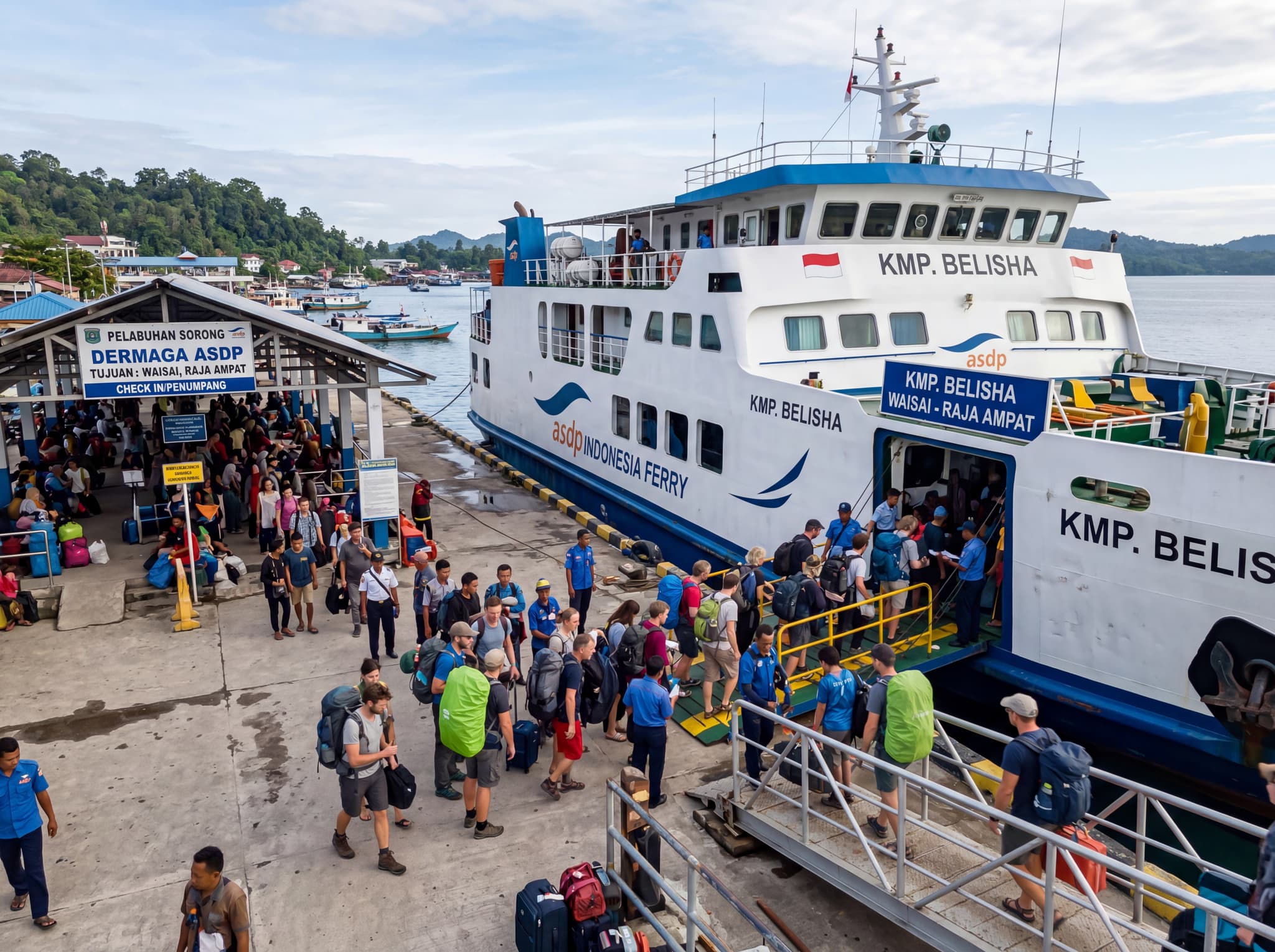
The public ferry from Sorong to Waisai (the entry point to Raja Ampat) is operated by ASDP and departs daily at 09:00 from Sorong's main port. The crossing takes approximately 2–2.5 hours.
Ferry Details
Economy Class
~130,000 IDR ($8) [VERIFY — prices shift seasonally]
VIP Class
~225,000 IDR ($14) [VERIFY]
Departure
09:00 daily from Sorong port
Duration
2–2.5 hours to Waisai
Arrive at the port by 07:30 at the latest. Tickets are purchased at the terminal. There's no reliable online booking system for this route — it's a walk-up-and-buy situation. The terminal has basic food stalls, but bring water and snacks for the crossing.
Why You Might Actually Want a Full Day Here
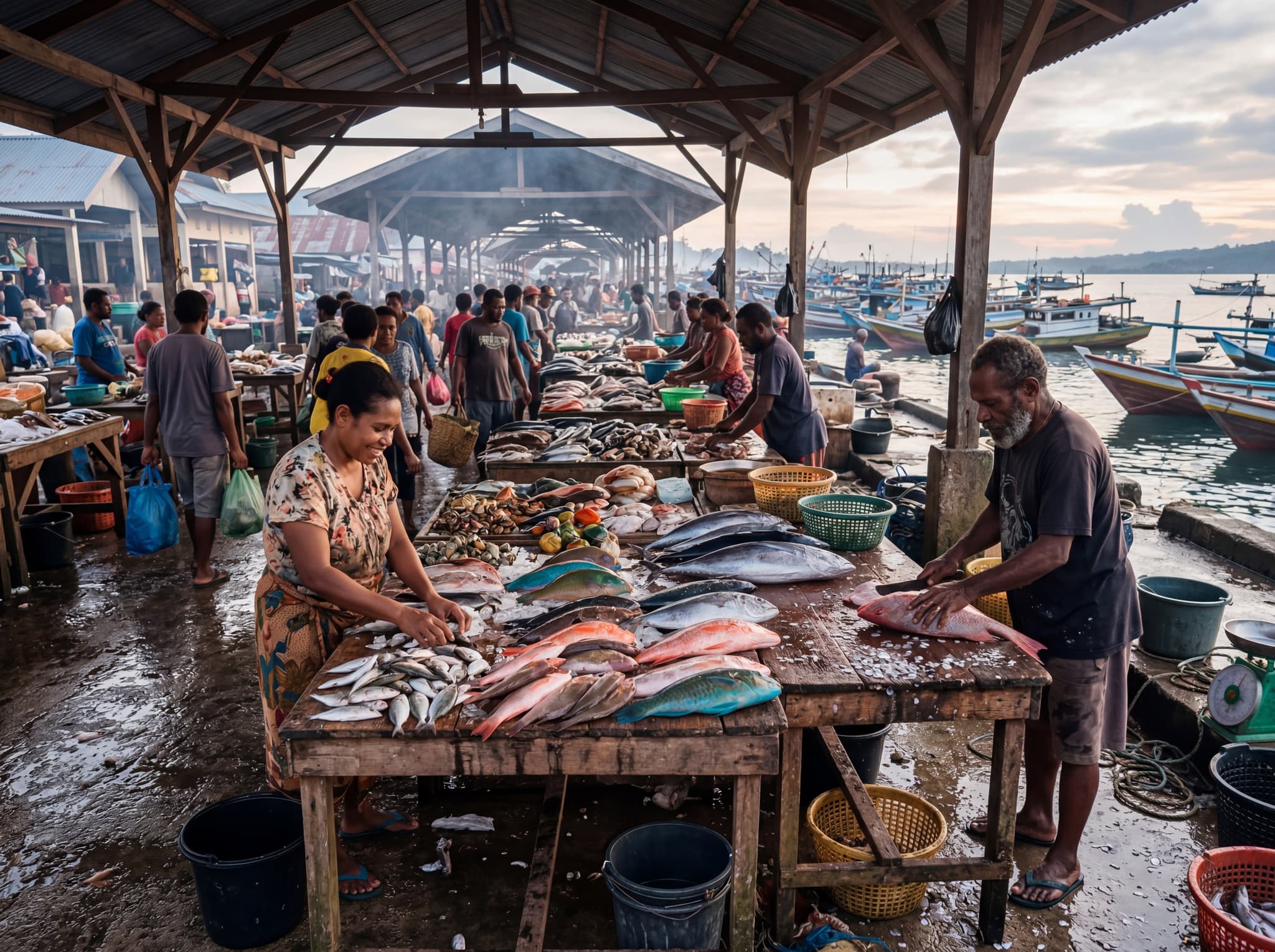
Here's where I push back on the "Sorong is just a transit point" narrative. Not because Sorong is secretly magnificent, but because it offers something useful: context.
The Sorong fish market is one of the most vivid introductions to what makes Raja Ampat's waters extraordinary. The variety of species laid out on tables at dawn — reef fish, pelagics, shellfish you've never seen — gives you a tangible preview of the biodiversity you're about to dive or snorkel through. Go early, before 7 AM.
The surrounding coastline has a few accessible spots for snorkeling that are genuinely decent, particularly around the small islands visible from the port area. Local operators can arrange half-day boat trips for 300,000–500,000 IDR per person. It's not Raja Ampat-level, but if your ferry got cancelled and you're stuck for a day, this beats sitting in a hotel room.
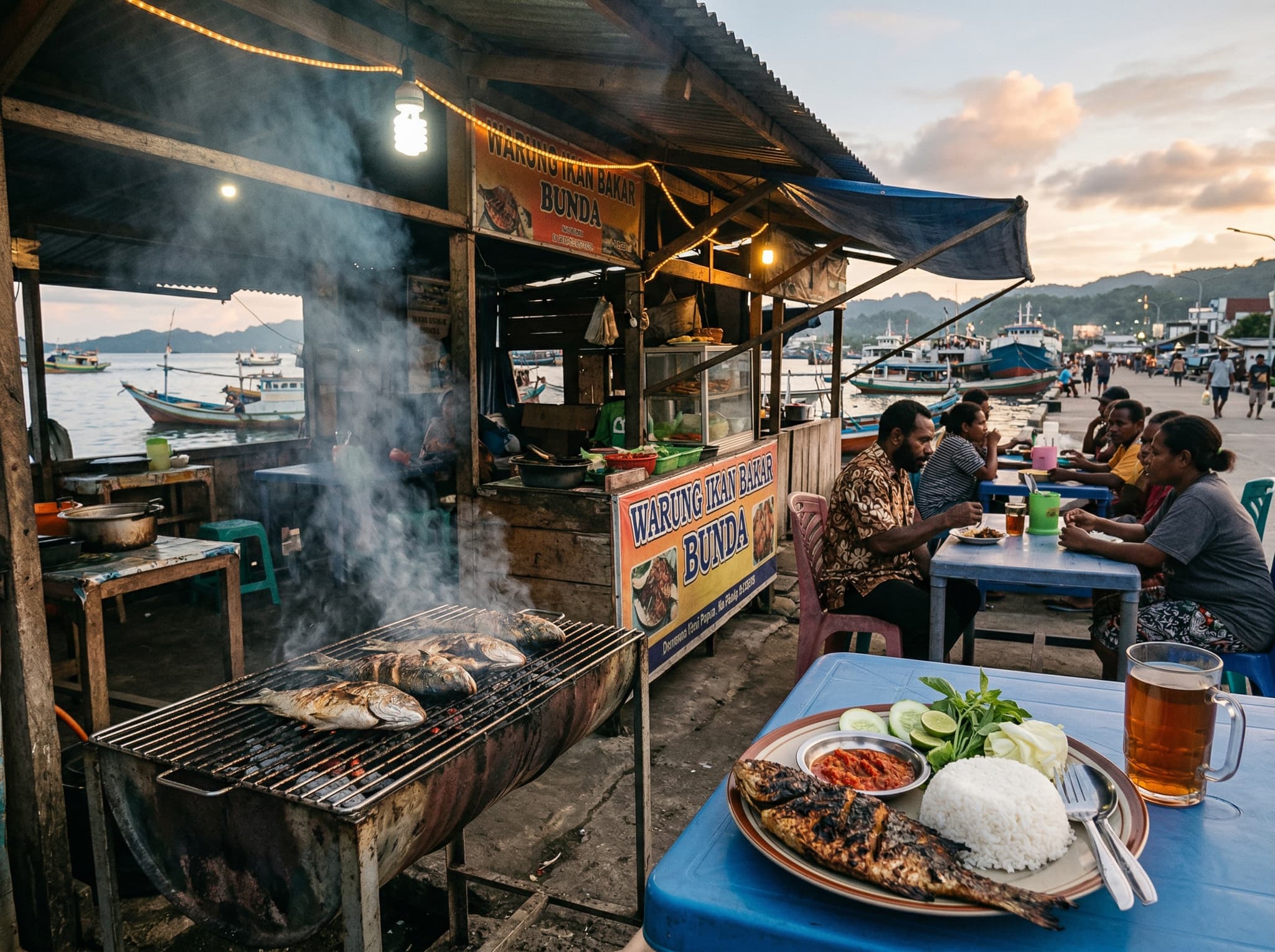
The food is worth your attention. Papuan cuisine doesn't get coverage in most travel media, and Sorong is one of the easier places to try it. Look for ikan bakar (grilled fish) at the warung stalls along the waterfront — fresh catch, charcoal-grilled, served with sambal and rice for 25,000–40,000 IDR ($1.60–$2.50). It's some of the best-value seafood in Indonesia, which is saying something in a country where good cheap seafood is basically a national sport.
The Honest Assessment
Sorong is not a destination. It's a city that exists in the shadow of one of the world's most spectacular natural attractions, and it knows it. The infrastructure is developing, the streets are functional rather than charming, and the tourism economy is almost entirely pass-through.
But pass-through doesn't have to mean eyes-closed. If you approach Sorong as the opening chapter of your Raja Ampat trip rather than an obstacle to it, you'll eat well, orient yourself to the region, and start the journey with a little more understanding of where you actually are — the western edge of New Guinea, one of the most culturally and ecologically rich islands on Earth.
Build in the overnight. Maybe build in a morning. You're already there.