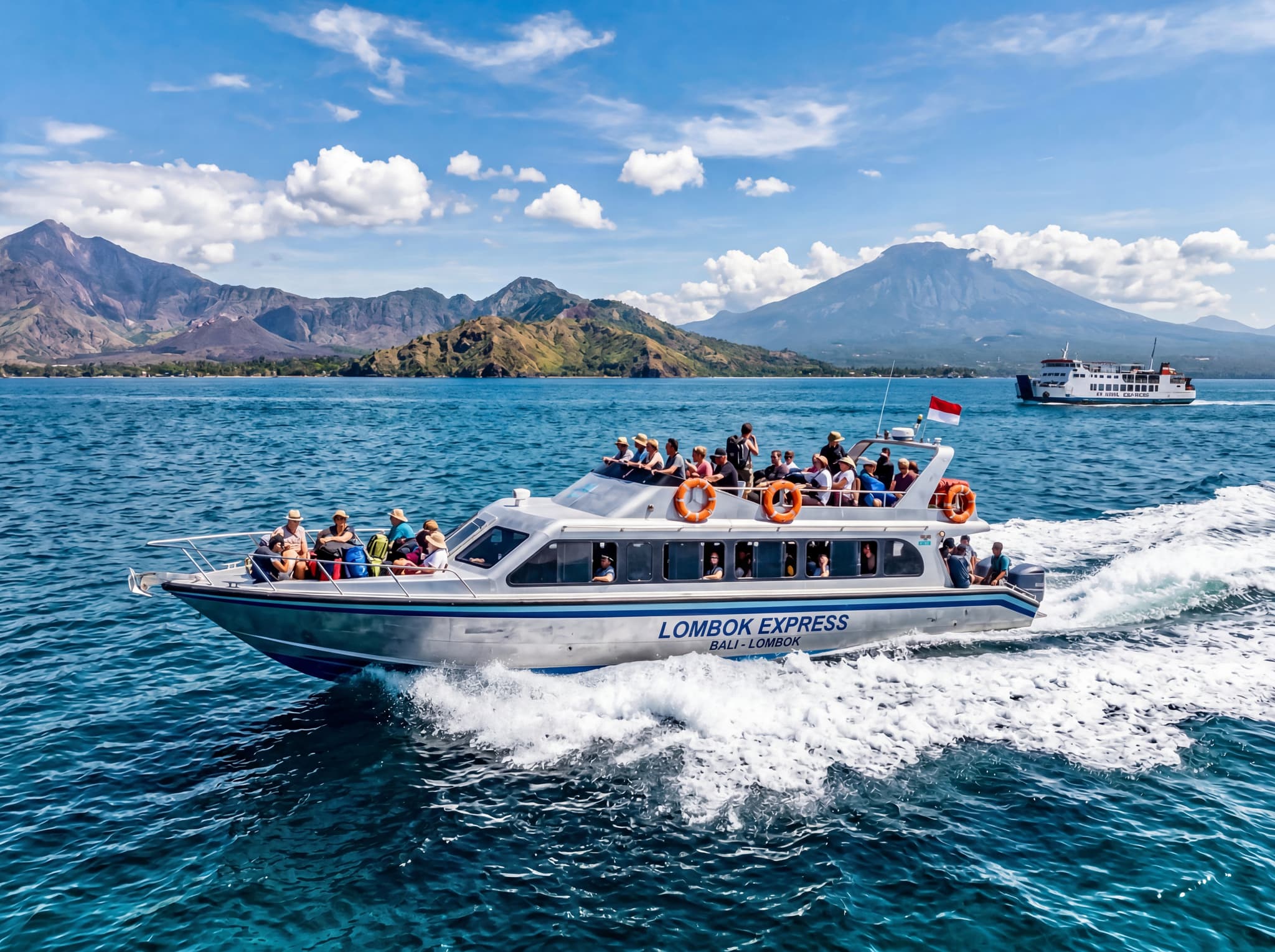
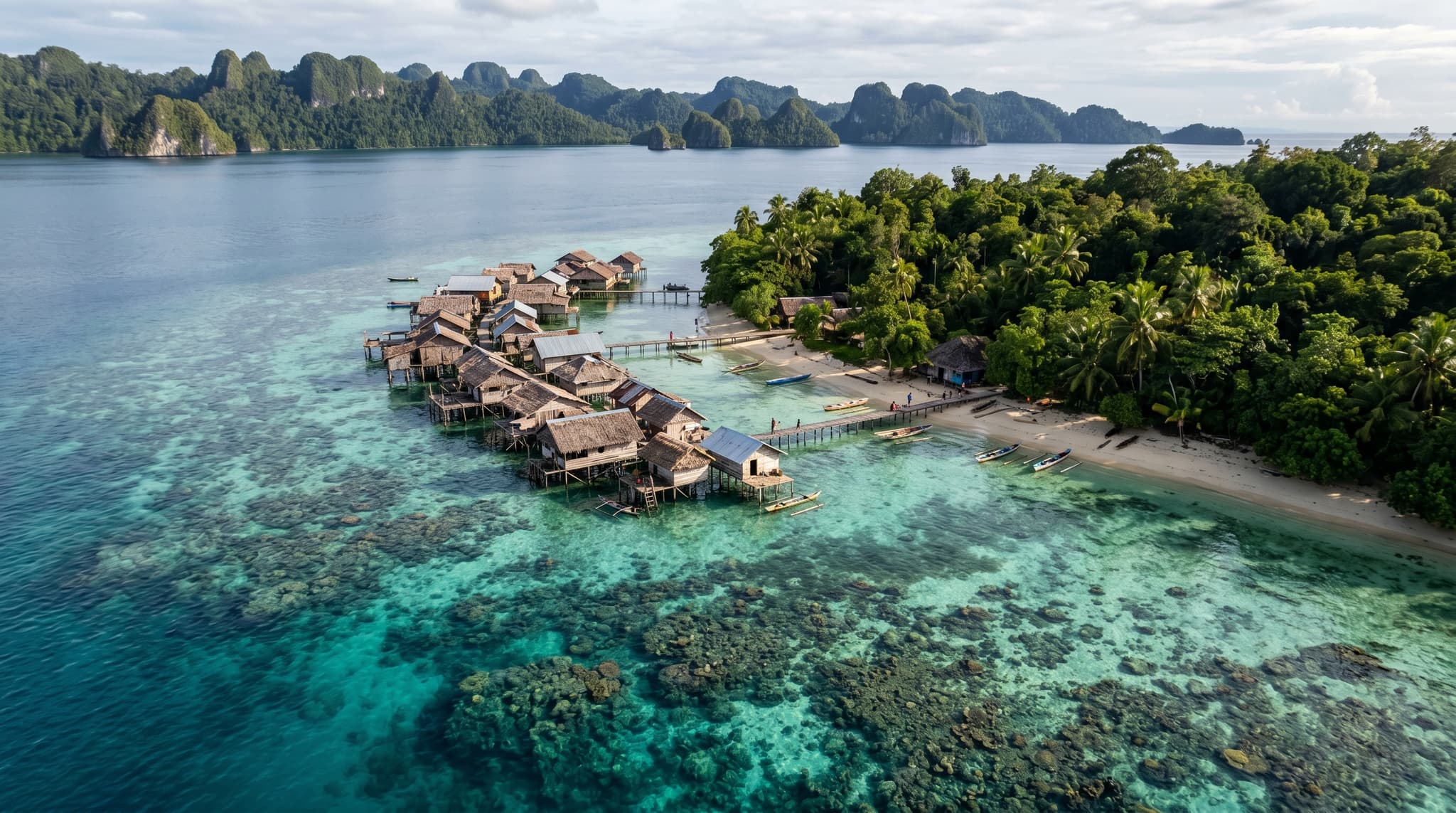
Raja Ampat is one of the most biodiologically diverse marine environments on the planet, with no shortage of things to do once you arrive. Getting there is a multi-step logistics puzzle. These two facts are equally true, and most guides online do a fine job with the first one while botching the second — publishing ferry prices from 2022, schedules that haven't been accurate in years, and padding the article with liveaboard content you didn't ask for.
This is the current, verified version. No inspiration, no dive itineraries. Just the operational playbook for getting your body from wherever you are now to the Raja Ampat archipelago — a chain of more than 1,500 islands spread across one of the most remote corners of Indonesia. If you've already decided to go (and you should — it's extraordinary), this is how you actually do it.
The Route at a Glance
Every journey to Raja Ampat follows the same sequence. No exceptions, no shortcuts:
- Fly to Sorong (SOQ) — the only commercial airport serving the region
- Get from the airport to the harbor — 8km, 10–20 minutes
- Take the ferry to Waisai — the main port town on Waigeo island, ~2 hours
- Connect to your final island — via resort transfer or chartered speedboat
That's it. The complexity isn't in the route — it's in the timing. You're connecting a domestic flight with a ferry schedule, and if those don't align, you're sleeping in Sorong. More on that later.
One thing to know upfront: Sorong's Domine Eduard Osq Airport was designated an international airport on August 17, 2025. As of late 2025, no international flights actually operate there. Every route is domestic. So regardless of where you're flying from in the world, you're connecting through a major Indonesian hub first.
Waisai is the entry point, not the final destination for most travelers. From Waisai, you'll disperse to homestays, dive resorts, or remote island clusters. But Waisai is the funnel — everything passes through it.
Getting to Sorong from Jakarta, Bali, and Makassar

Every journey to Raja Ampat funnels through Sorong. This is non-negotiable. There is no other way in by air.
From Jakarta (CGK) — The Default Route
Jakarta's Soekarno-Hatta International Airport is where most international travelers connect. Garuda Indonesia operates direct flights — the GA683 departs around 08:15 and gets you to Sorong after approximately 5 hours of flight time. This is the routing I'd recommend for most people, not because it's cheap (it isn't), but because the morning departure means you land in Sorong with time to catch the 14:00 ferry.
From Makassar (UPG) — The Smarter Connection
Makassar's Sultan Hasanuddin Airport is underrated as a connection point. The flight to Sorong is shorter than from Jakarta, fares are sometimes cheaper, and if you're coming from eastern Indonesia or connecting from Bali, it can save you a backtrack to Jakarta. Check this route before defaulting to CGK — it's caught me off guard more than once with better pricing.
From Bali (DPS) — No Direct Flights
There are no direct flights from Bali to Sorong. You'll connect through Jakarta, Makassar, or Surabaya. Fares from Surabaya (SUB) run approximately IDR 4.5 million (~$290 USD), though this fluctuates with season and booking lead time.
From Within Papua
If you're already in eastern Indonesia, Sriwijaya Air serves the Jayapura–Sorong route (SJ912, departing ~07:45) and the Nabire–Sorong route (SJ904, departing ~07:40). Wings Air covers smaller Papuan routes from Babo, Biak, Fakfak, and Kaimana. These are relevant for a small subset of travelers, but if that's you, the connections exist.
Flight Routes to Sorong (SOQ)
Jakarta (CGK)
~5 hours, Garuda Indonesia direct
Makassar (UPG)
Shorter flight, sometimes cheaper
Surabaya (SUB)
~IDR 4.5 million ($290)
Bali (DPS)
No direct flights — connect via CGK, UPG, or SUB
Jayapura (DJJ)
Sriwijaya Air SJ912, ~07:45
Booking Window
Schedules available ~9 months ahead
One important note on pricing: Flights to Sorong spike during peak season (October–April). Book as early as possible — schedules open roughly 9 months ahead, and the difference between booking early and booking late can be significant. I've seen Jakarta–Sorong fares double between off-peak and peak bookings on the same route.
Sorong Airport to the Harbor: The 8km Connection
You've landed at Domine Eduard Osok Airport. Now you need to get to Pelabuhan Rakyat — the public harbor where ferries to Waisai depart. It's roughly 8km, which translates to 10–20 minutes by road depending on traffic and your chosen transport.
Airport to Harbor Transport Options
Bemo (shared minibus)
IDR 6,000 (~$0.40)
Ojek (motorbike taxi)
IDR 30,000 (~$2)
Grab (ride-hail)
~IDR 42,000 (~$2.70) — last confirmed Oct 2023
Taxi
IDR 100,000 (~$6.50)
Distance
~8km, 10–20 minutes
My honest recommendation: if you're carrying dive gear, a large backpack, or anything more than a daypack, skip the bemo and the ojek. The savings aren't worth wrestling luggage onto a motorbike in Sorong heat and humidity. Take a Grab or a taxi. The price difference between the cheapest and most expensive option here is about $6. This is not where you optimize your budget.
If you miss the ferry: You won't be stranded. Sorong has hotels near the port in the IDR 200,000–500,000 range (~$13–32). It's not a destination city — you're not going to have a transformative evening there — but you'll have a bed, air conditioning, and a fresh start in the morning.
Sorong to Waisai by Ferry — Schedules, Costs, and How to Buy Tickets
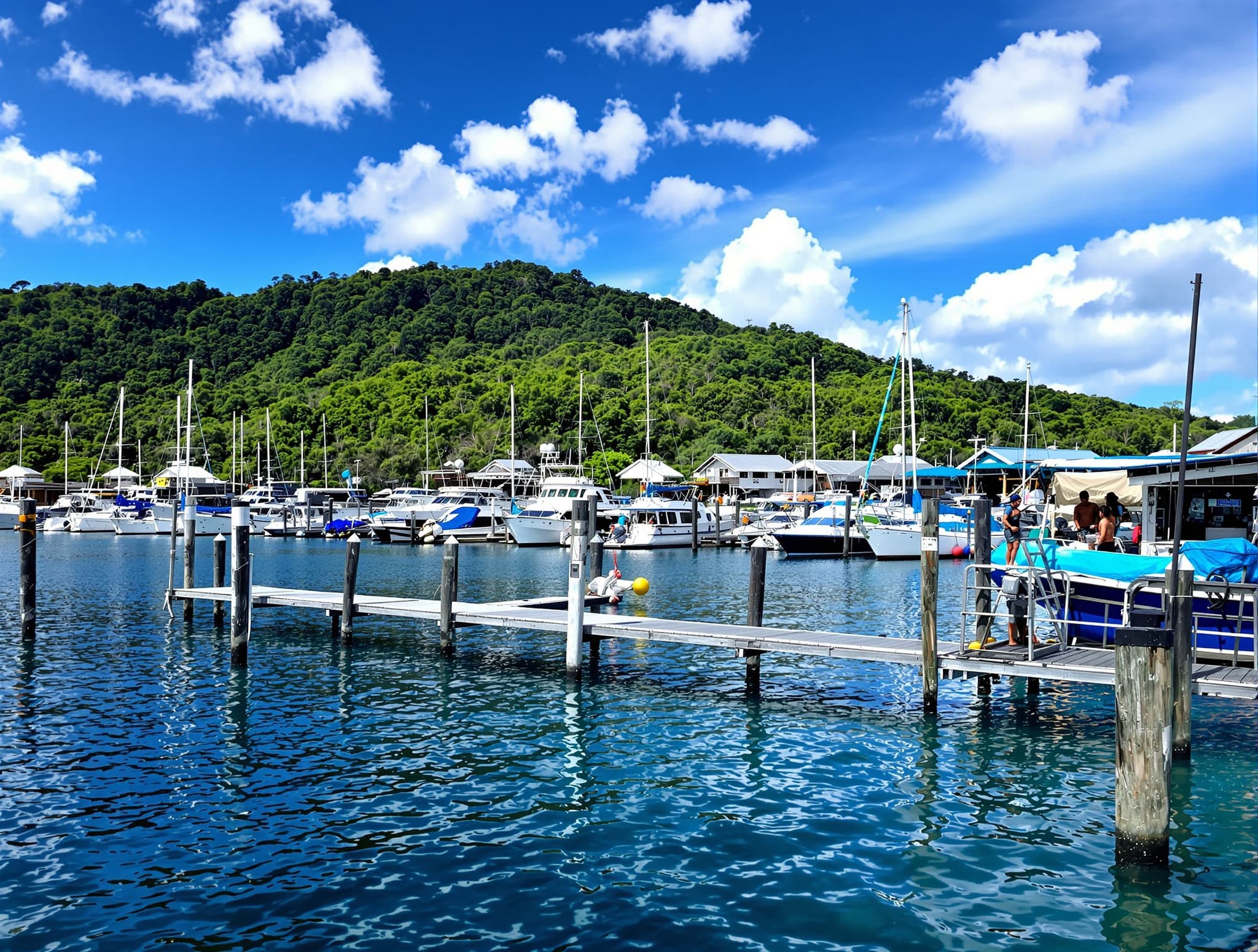


This is the section most of you came for. The ferry from Sorong to Waisai is the main artery connecting the mainland to the Raja Ampat archipelago, and getting the details right here is the difference between a smooth arrival and a wasted day.
The Schedule
The ferry departs from Pelabuhan Rakyat in Sorong. Schedules vary by day of the week:
Ferry Schedule: Sorong → Waisai
Sunday, Wednesday, Friday
09:00 and 14:00 departures
Monday, Tuesday, Thursday, Saturday
14:00 departure only
The return schedule (Waisai → Sorong) mirrors the same pattern. If you're planning your departure from Raja Ampat, the same days and times apply in reverse.
Critical caveat: These schedules were confirmed as of January 26, 2026. They are indicative. Ferry schedules in eastern Indonesia change without notice, without apology, and without updating any website. Always verify before showing up. The operator contact is Rahma at +62 812 4058 6804 — a WhatsApp message a day or two before your travel date is worth the 30 seconds it takes to send.
The Ticket
Tickets are purchased in-person only at the port ticket counter. There is no online booking system. No advance reservation. You show up, you buy, you board.
Payment is flexible — cash, cards, and QRIS digital wallets are all accepted. But I'd have cash as a fallback because this is Indonesia and payment terminals have bad days.
Arrive 30–60 minutes before departure to buy your ticket and board. The ferry isn't a flight — there's no security theater — but you want time to find the counter, buy the ticket, and get settled.
The Classes
Ferry Ticket Prices
Economy Class
IDR 137,000 (~$9 USD)
VIP Class
IDR 262,000 (~$17 USD)
Duration
~2 hours
Economy is basic — think bench seating, open-air deck access, and a crowd. It's perfectly fine for two hours. VIP gets you air conditioning, padded seats, and fewer people. For the $8 difference, I'd take VIP every time. Two hours in air conditioning after a morning flight and a taxi ride through Sorong heat is worth $8 by any calculation I can run.
When the Ferry Doesn't Run: Cancellations, Weather, and Plan B
This is the section that most guides skip entirely, and it's the one you'll actually need if things go sideways.
Ferries cancel. For weather — especially during the June–August rough seas period — and for mechanical issues. This is not rare. It's not a catastrophe either, but you need to know your options before it happens.
If the 14:00 departure is cancelled, here's what you do:
-
Wait for the next scheduled departure. If it's a Sunday, Wednesday, or Friday, there may have been a morning sailing you missed, but the next day will have a 14:00 at minimum. Check the schedule and plan accordingly.
-
Overnight in Sorong. This is the most common and most sensible response. Hotels near the port run IDR 200,000–500,000. Get some rest, try again tomorrow.
-
Charter a private speedboat. The speedboat harbor is approximately 200m west of the ferry wharf. You can hire a boat to take you directly to Waisai or even to your resort. This is the expensive option — pricing varies wildly based on distance, conditions, and your negotiating skills. Expect to pay IDR 3–5 million or more for a private charter. Negotiate firmly, agree on the price before boarding, and make sure the boat looks seaworthy. This is your emergency valve, not your default plan.
-
Contact your resort. If you have a resort booking, call them immediately. Many resorts can arrange emergency transfers or adjust your arrival date without penalty when ferry cancellations are the cause. They deal with this regularly — you're not the first guest whose ferry didn't run.
Fast Boat vs. Public Ferry: Which One Makes Sense
This is a trade-off decision, so let me lay it out like one.
| Public Ferry | Private Fast Boat | |
|---|---|---|
| Cost | IDR 137,000–262,000 (~$9–17) | IDR 1,000,000+ per person (~$65+) |
| Duration | ~2 hours | ~1–1.5 hours |
| Schedule | Fixed (see above) | On demand |
| Comfort | Basic (economy) to decent (VIP) | Generally more comfortable |
| Availability | Daily | Operators: Jalan Jalan Raja Ampat, Sorong Tours |
Some premium resorts offer complimentary weekly transfers by fast boat. Check with your accommodation before paying for a private transfer — you might already have one included.
My recommendation: take the public ferry unless (a) you missed the schedule, (b) your resort includes a transfer, or (c) money genuinely isn't a factor. The ferry is fine. VIP class is comfortable enough. The 30–60 minutes you save on a fast boat isn't worth 5–7x the price for most travelers.
For completeness: Pelni long-haul ferries connect Ambon and Ternate to Sorong (20+ hours, $16–21 USD). This is only relevant if you're already deep in eastern Indonesia with extreme time flexibility. For 99% of readers, ignore this option entirely.
Raja Ampat Entry Permit and Conservation Fee
Two separate fees are required for access to the Raja Ampat Marine Protected Area:
- Entry permit — mandatory for all visitors
- Conservation fee — mandatory, separate from the entry permit
International visitors pay the full rate; domestic Indonesian travelers pay reduced rates. Both fees can be paid upon arrival in Waisai, or at authorized points including Sorong airport and visitor centers. Bring your passport — you'll need it for the permit.
Pay these fees cheerfully. The conservation fee funds environmental protection and community programs across the marine park. The reason Raja Ampat's reefs are in the condition they're in — while reefs elsewhere in Southeast Asia are bleaching and degrading — is partly because this money goes directly to protection. It's one of the best-value conservation contributions you'll ever make as a traveler.
Getting Around Between the Islands
Once you're in Waisai, you're at the gateway to the archipelago — not at your final destination. Here's how onward transport works.
Resort transfers are the simplest option. Most resorts and homestays include transfers from Waisai as part of their package. Always confirm what's included before booking. Some pick you up directly from the ferry dock; others arrange a specific transfer time.
Chartered speedboats connect island clusters — Waigeo to Misola, for example. Expect to pay IDR 1–5 million per group per day, depending on distance, sea conditions, and your negotiation. Transfer times between island clusters range from 1–4 hours per hop.
Local ferries connect some islands on irregular schedules. Don't rely on them for tight timelines. Misola-specific ferries operate on entirely separate schedules from the main Sorong–Waisai service — confirm directly with operators or your accommodation.
Practical Tips: Timing, Money, Insurance, and What to Pack for the Journey
Timing Your Connection
The ideal sequence: land in Sorong on a morning flight (before noon), take a Grab or taxi to Pelabuhan Rakyat, buy a ticket, board the 14:00 ferry. If you're traveling on a Sunday, Wednesday, or Friday, you also have the 09:00 departure as an option — but that requires an extremely early flight or an overnight in Sorong the night before.
Cash Is Still King
ATMs exist in Sorong and Waisai. They are unreliable. Withdraw enough cash in Jakarta or Sorong before heading to the islands. Once you're on a remote island, your options for accessing money drop to approximately zero. Budget generously — you'd rather bring too much than negotiate a speedboat charter with an empty wallet.
Insurance Is Not Optional
Connectivity
Get a Telkomsel SIM in Sorong — it has the best coverage in the Raja Ampat region. "Best" is relative. Signal drops to zero on many islands, and even in Waisai it's inconsistent. Download offline maps, save your accommodation's contact details, and mentally prepare for periods of disconnection. Some people consider this a feature, not a bug.
Visas
Indonesia offers visa-on-arrival for many nationalities, but eligibility and terms change. Check your country's current status with the Indonesian immigration authority before booking. This is a logistics guide, not a visa guide — but it would be irresponsible not to flag it.
What to Pack for the Journey
If you're bringing dive gear, the ferry handles it fine — but label everything clearly. Speedboats have limited storage space, so pack accordingly if you're chartering onward transport. A dry bag for electronics is non-negotiable on any small boat in these waters.
Weather Windows
November–April is peak season: calm seas, best diving visibility, most reliable ferry schedules. May–October brings rougher seas, more ferry disruptions, and some dive operators shut down entirely. Plan your trip around this reality, not around flight deals.
Practical Essentials
Best Season
November–April (calm seas)
Rough Season
May–October (ferry disruptions)
Best SIM Card
Telkomsel (widest coverage)
ATMs
Available in Sorong & Waisai — unreliable
Insurance
Medical evacuation coverage essential
Data Currency
Prices/schedules confirmed January 2026
The Bottom Line
On paper, getting to Raja Ampat looks complicated. In practice, it's a domestic flight and a two-hour boat ride. The planning is the hard part — matching flight times to ferry schedules, knowing what to do when the ferry cancels, having cash and insurance sorted before you leave the mainland.
Here's the sequence one more time: fly to Sorong, get to the port, take the ferry to Waisai, connect to your island. That's four steps. Each one is straightforward if you know the specifics, and now you do.
The slight logistical friction is part of what keeps Raja Ampat the way it is. There's no direct flight from Bali, no high-speed catamaran, no seamless resort transfer chain from your international arrival gate. You have to want it enough to plan it. And when you step off that ferry in Waisai and look out at water so clear it barely looks real, you'll understand why every transfer, every schedule check, every buffer day was worth it.
You're heading to one of the most extraordinary marine ecosystems on Earth. The journey just makes sure you've earned it.