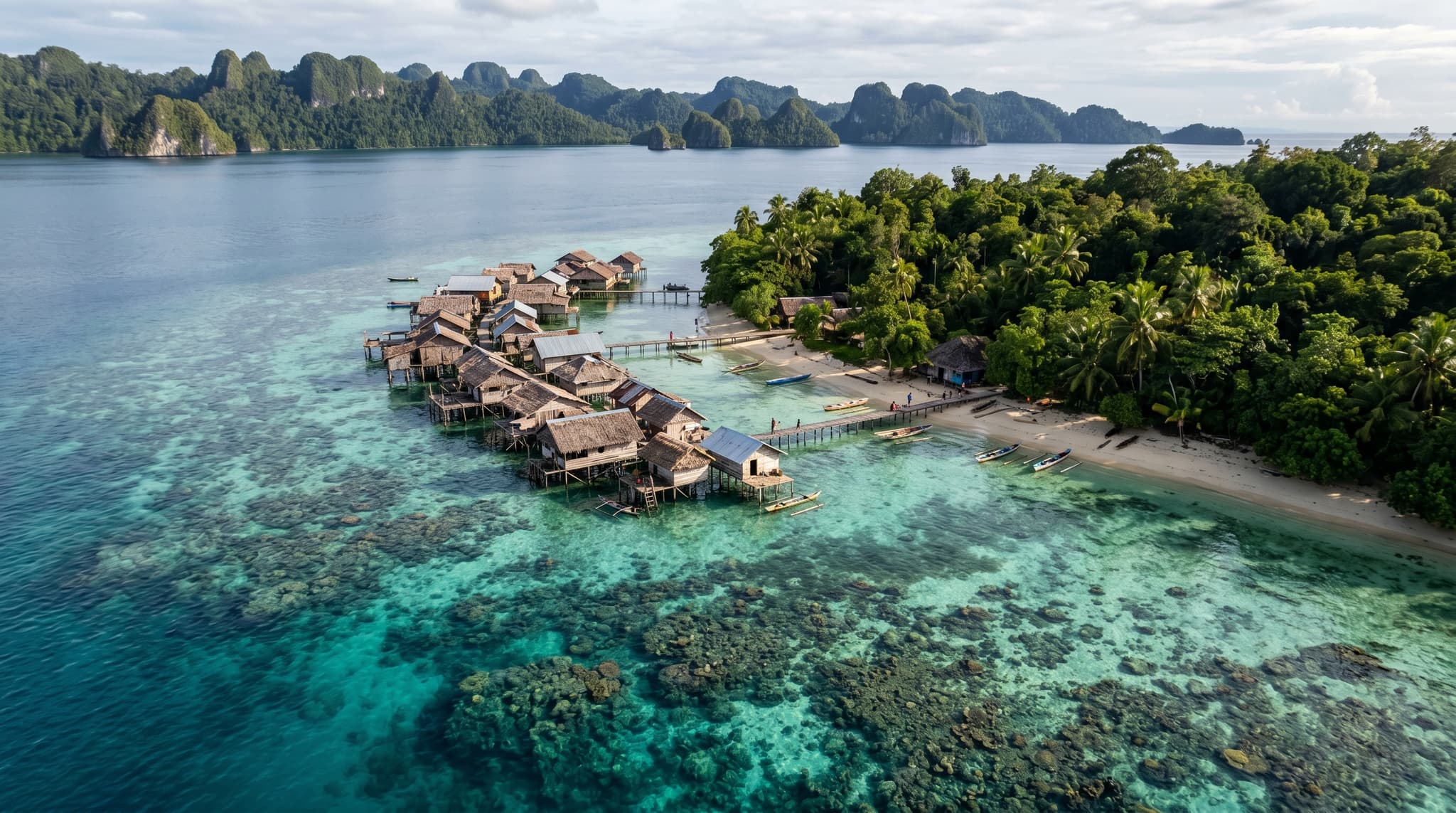
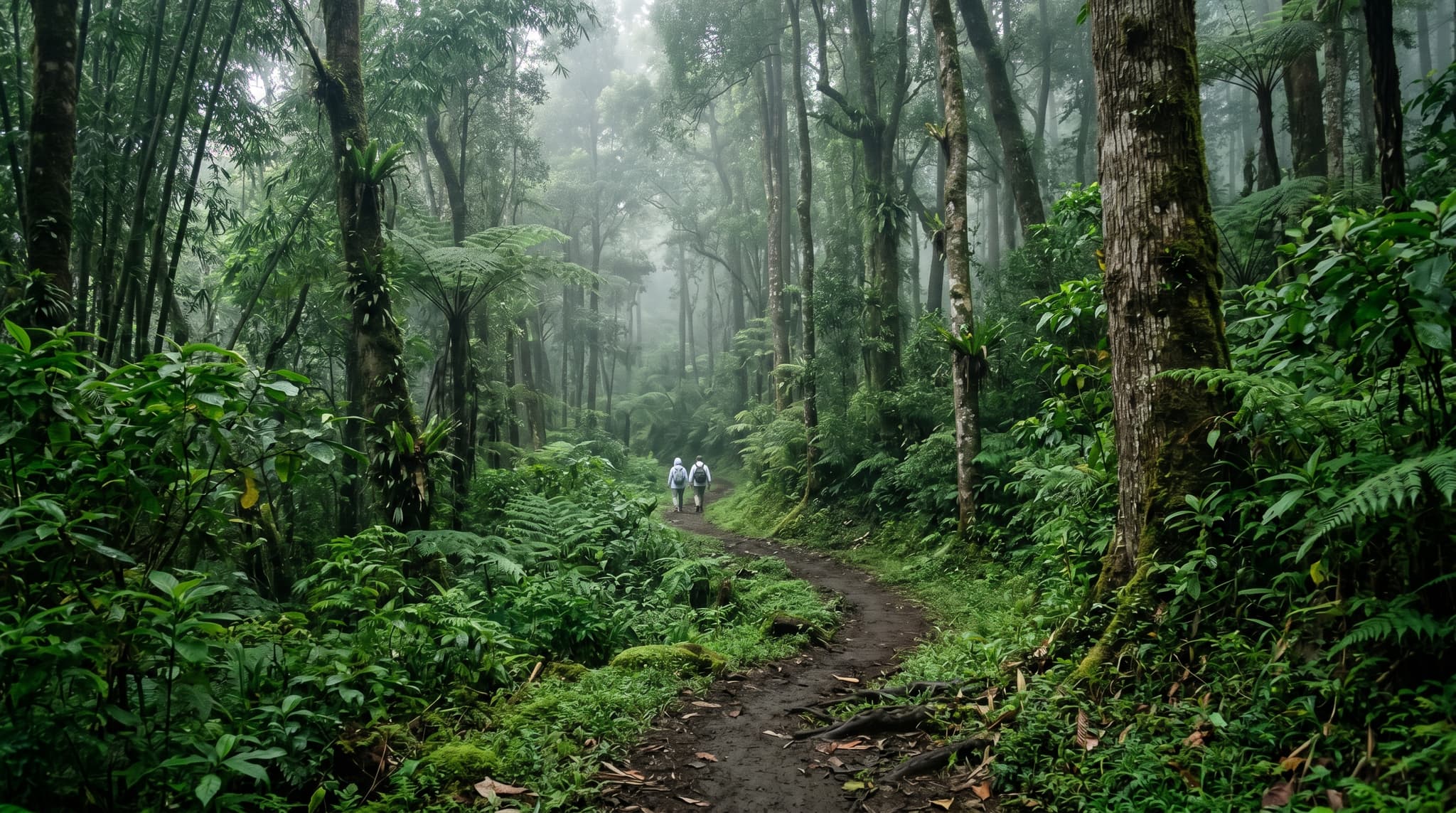
Waigeo Island is Raja Ampat's largest island, home to endemic birds of paradise, world-class diving, and community-run homestays along karst-fringed coasts.
Waigeo is the largest island in the Raja Ampat archipelago and the one most visitors see first — the express ferry from Sorong docks at Waisai, the administrative capital perched on its southern shore. But most travelers treat Waisai as a transit point, hopping onto speedboats bound for smaller islands without realizing that Waigeo itself holds some of the archipelago's most compelling experiences. Saltwater crocodiles patrol the mangrove channels of Mayalibit Bay. Wilson's Bird of Paradise — found nowhere else on Earth — displays its iridescent plumage in the highland forests. And the karst passages off the western coast offer snorkeling over reefs that routinely stun even experienced divers.
This is not a resort island. Infrastructure is minimal, villages are small, and getting around requires coordination. That's precisely the point.
Getting to Waigeo
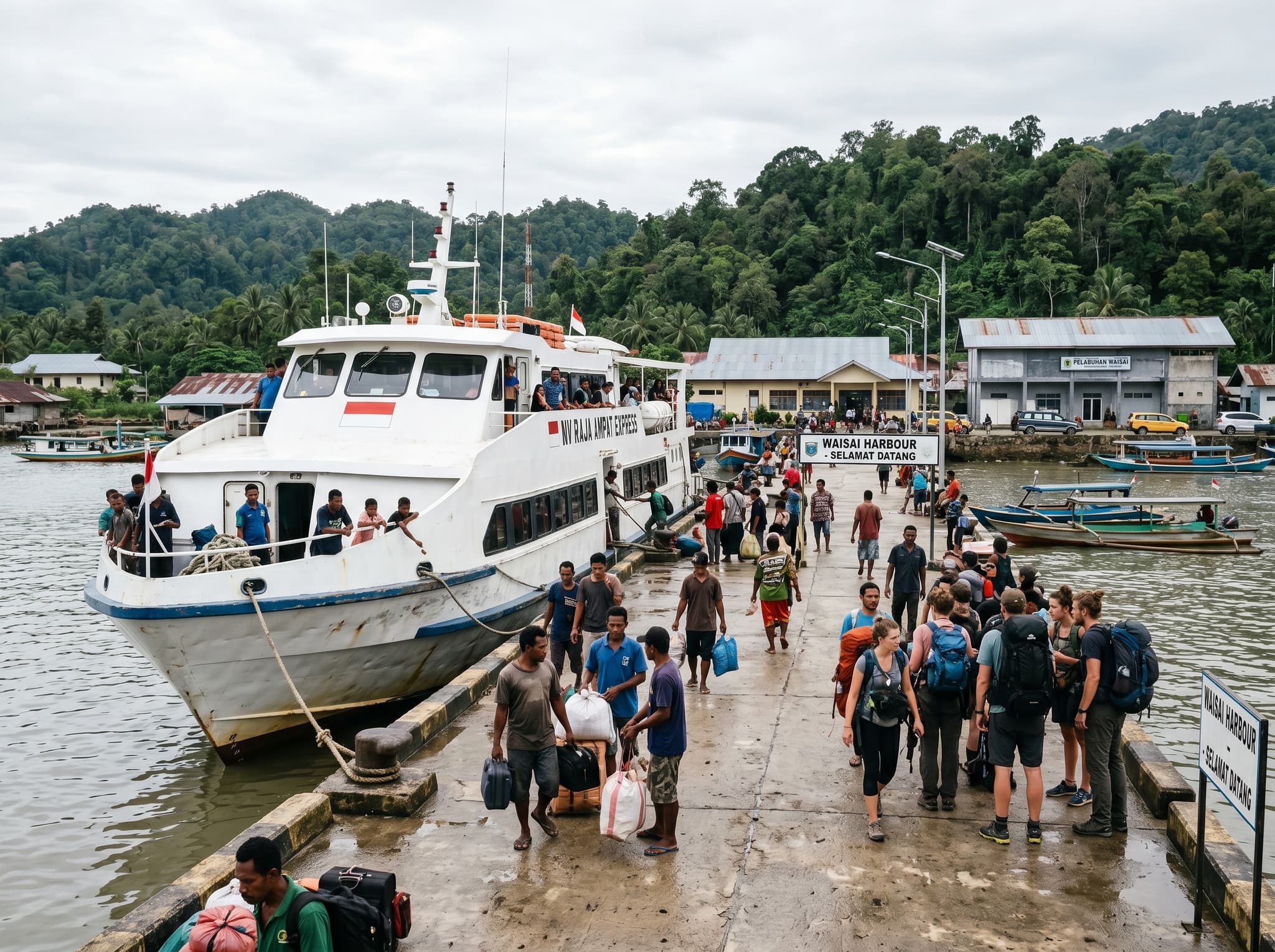
All routes to Waigeo pass through Sorong, the gateway city on mainland West Papua. From Sorong's Pelabuhan Rakyat (Public Harbour), the express ferry to Waisai runs daily — one departure at 14:00 on Monday, Tuesday, Thursday, and Saturday, with an additional 09:00 departure on Wednesday, Friday, and Sunday. Marina Express Bahari is one operator to check for current schedules, though local verification is always wise.
Ferry Details: Sorong to Waisai
Economy class
IDR 137,000 (~$8.50)
VIP class
IDR 262,000 (~$16)
Duration
Approximately 2 hours
Tickets
Port ticket office only — no online booking
Payment
Cash, cards, and QRIS accepted
Sorong Airport is about 10 minutes from the harbour by taxi (fixed fare IDR 100,000). Private speedboats also operate from a separate harbour roughly 200 metres west of the ferry wharf, taking 1–2 hours and offering the option of going directly to accommodations rather than via Waisai.
What to See and Do
Kabui Bay and Passage
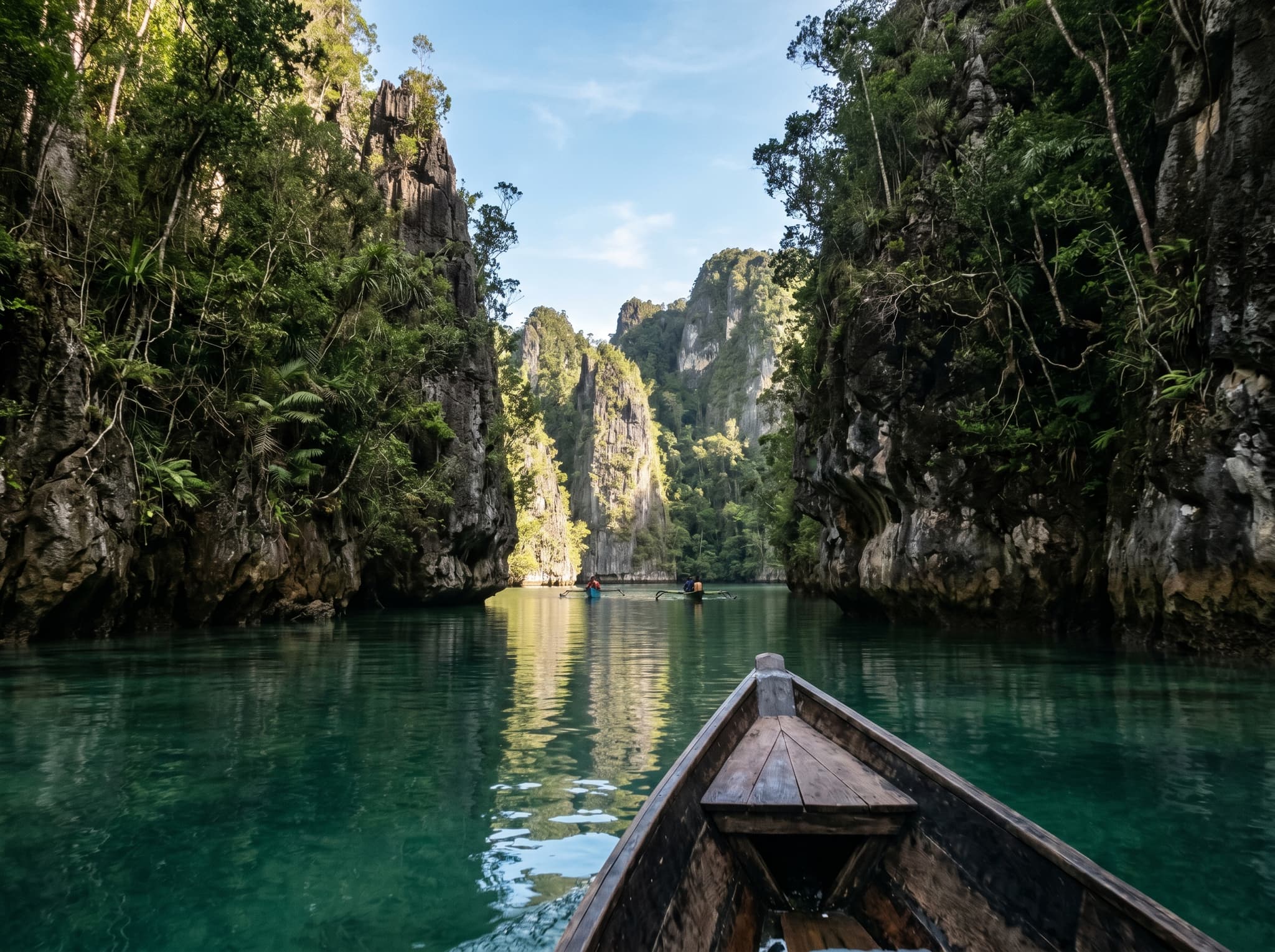
The narrow strait between Waigeo and Gam Island is one of Raja Ampat's signature landscapes — towering karst formations rising from turquoise water, with snorkeling and diving sites scattered through the passage. A nearby peak can be climbed for panoramic views over the labyrinth of rock islands below. Most homestays on Waigeo's western coast can arrange boat trips here.
Mayalibit Bay
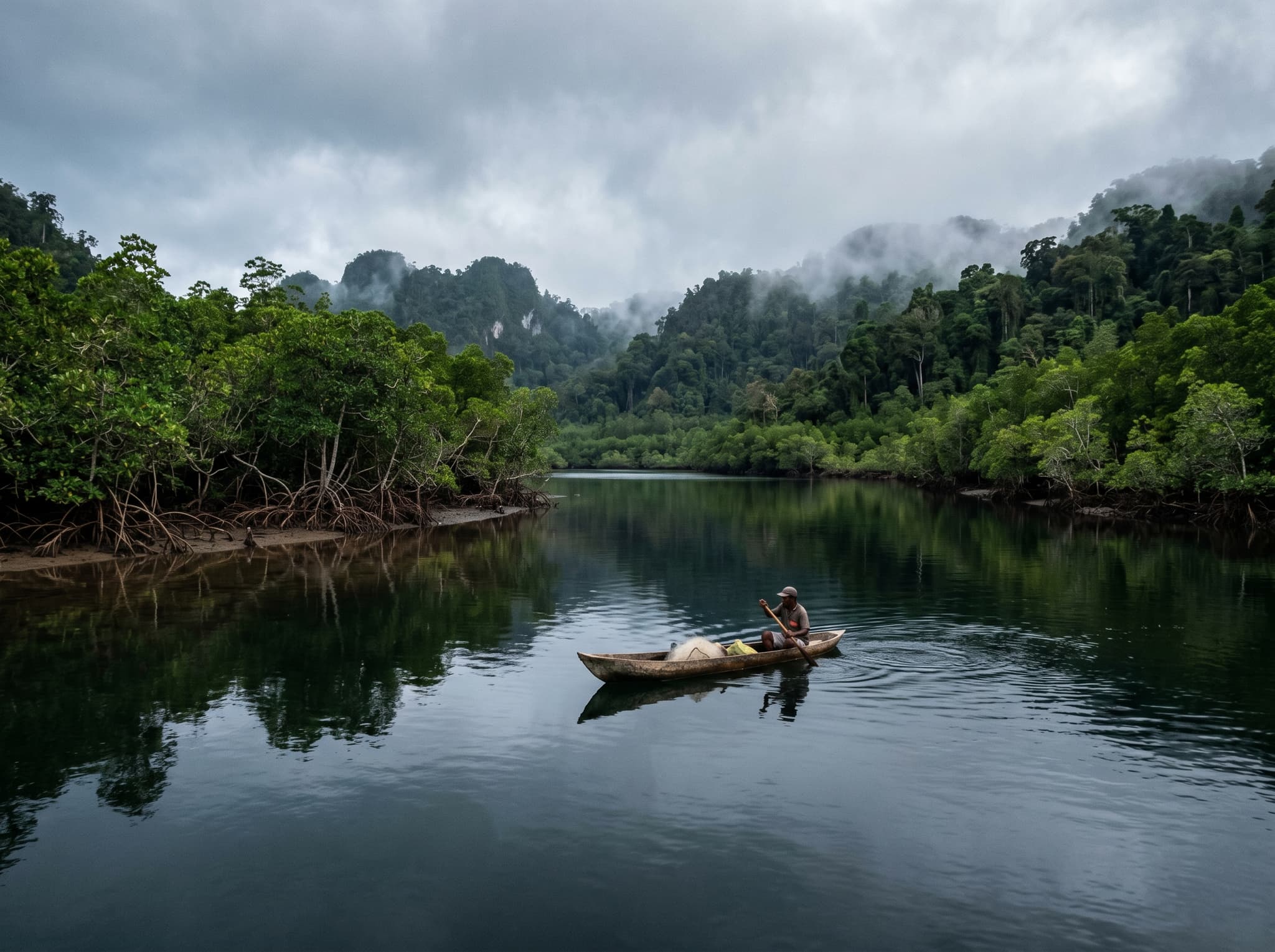
This enormous inland bay — one of the largest in the Pacific — cuts deep into Waigeo's interior. The nutrient-rich waters attract white dolphins and support dense mangrove ecosystems. The surrounding jungle is prime habitat for both Wilson's Bird of Paradise and the Red Bird of Paradise. Warsambim Village, reachable in 30–45 minutes from Waisai by taxi or scooter, sits on the bay's edge and serves as the gateway to the Blue River and Waigeo's inland waterfalls.
Birdwatching at Saporkren and Saukorem
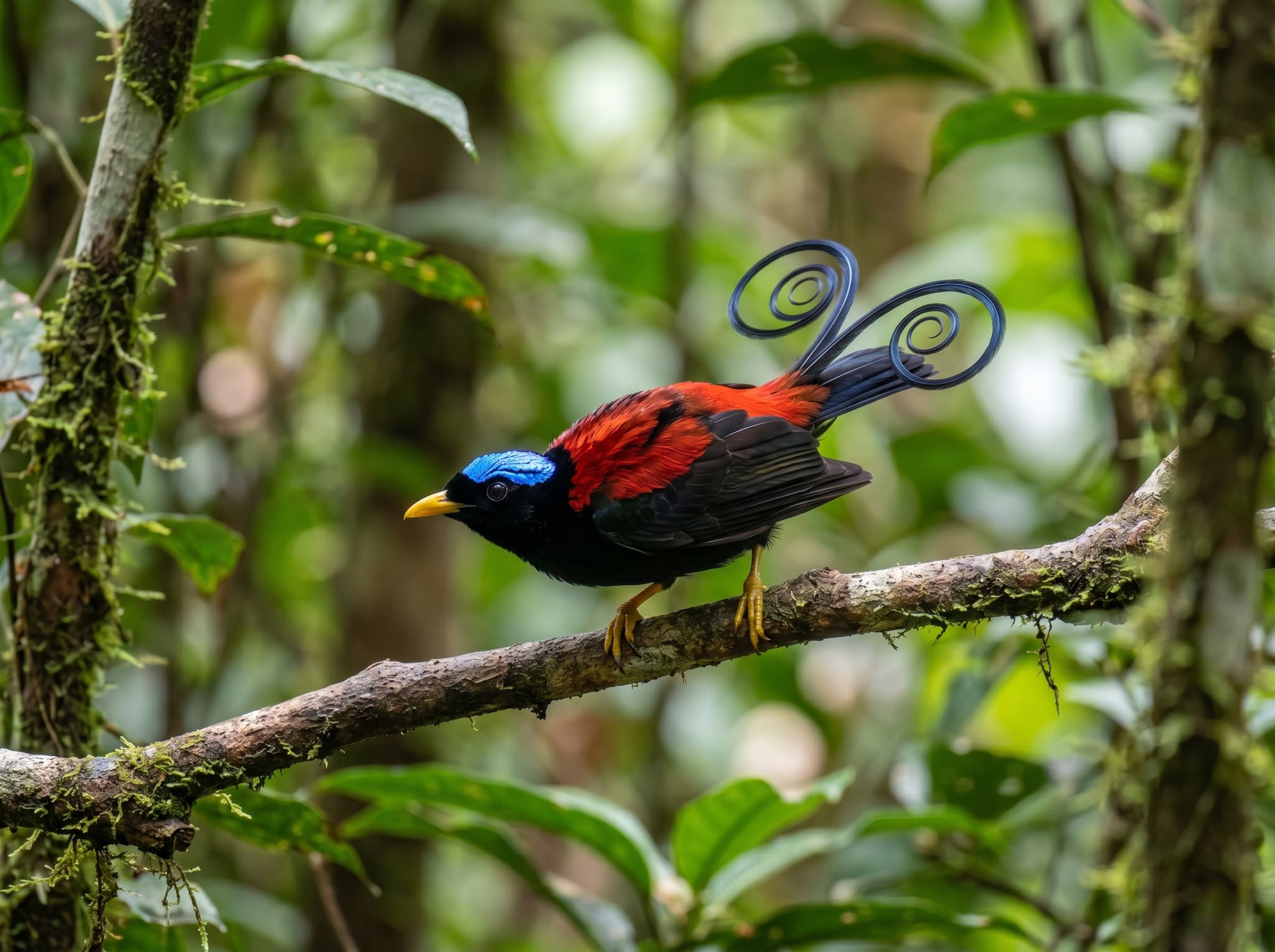
Serious birders come to Waigeo specifically for the birds of paradise. At Saporkren Village, guided walks begin as early as 4:30 AM to catch the males mid-display. Saukorem Village, located between Waiwo and Kabui Bay, is another prime birdwatching spot for endemic species. Birdwatching peaks during the wet season (May–September), with early mornings at Sawinggrai and Yenwaupnor villages also recommended.
Waiwo Beach
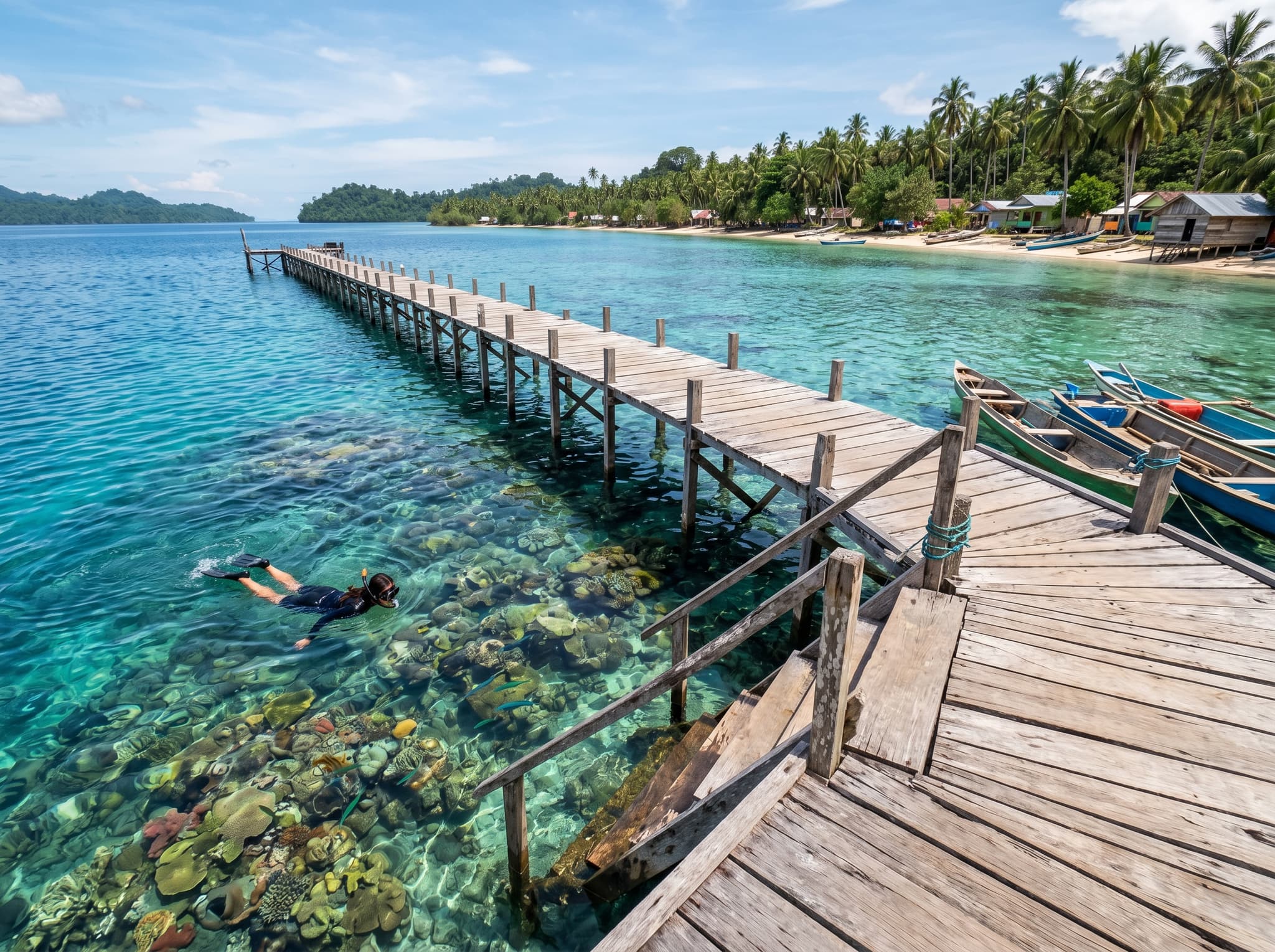
A short ojek ride west of Waisai (IDR 50,000), Waiwo Beach has a long jetty with reliable snorkeling — the resident fish are accustomed to visitors. It works well as a day trip for those staying in Waisai or as an overnight stop at the small local resort.
Diving and Snorkeling
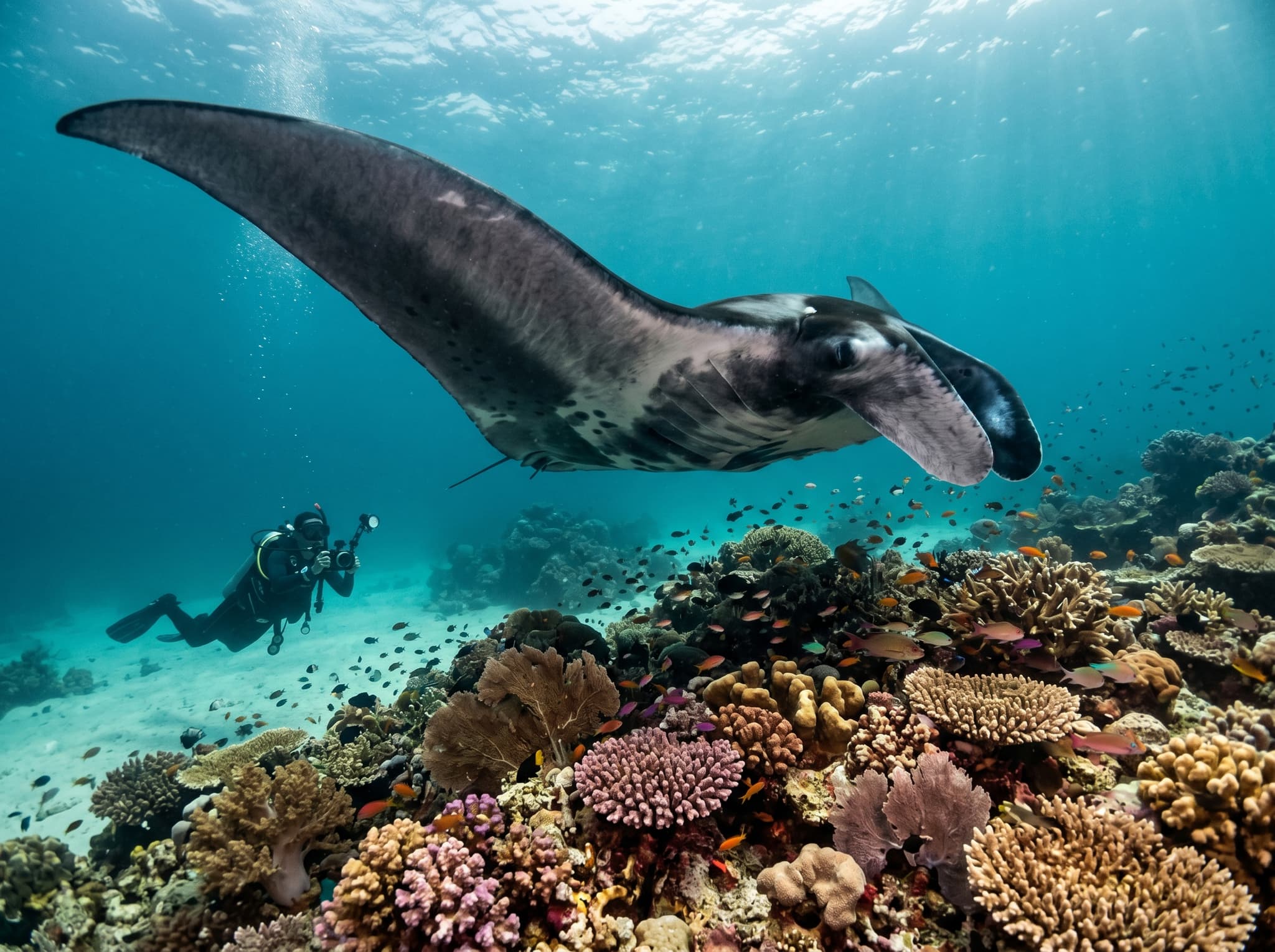
Waigeo's position along the Dampier Strait gives it access to some of Raja Ampat's most celebrated dive sites. Manta Sandy and Blue Magic are premier manta ray encounters, with peak sightings from November to March. Expect healthy coral, reef sharks, turtles, nudibranchs, and pygmy seahorses. Dive visibility during dry season reaches 20–30 metres. Operators like Kalawai Adventure and Raja Ampat Explorer offer guided access to more remote sites.
Where to Stay
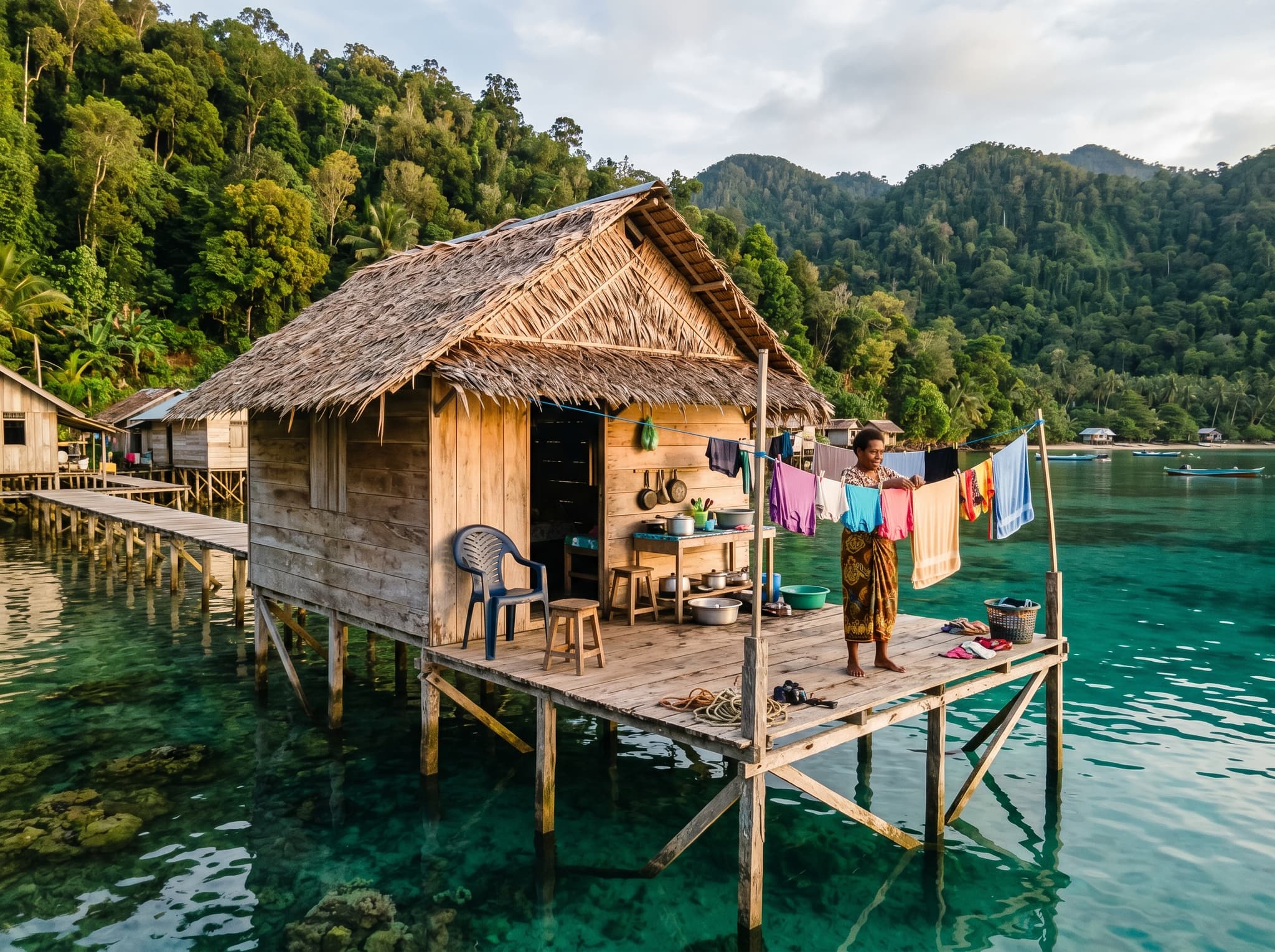
Waigeo's accommodation is overwhelmingly homestay-based — simple beachfront bungalows run by local families, almost always including three meals daily. This is part of a deliberate community tourism model that keeps revenue local.
Accommodation Snapshot
Homestay rates
From IDR 500,000/person/night (meals included)
Mid-range average
~USD 60–72/night
Low season average
~USD 18/night (Sep–Nov)
Transfer to remote homestays
IDR 700,000+ from Waisai
Warimpurem Homestay offers solid value with rates from IDR 500,000 per person including meals. PapuArts Alternative Stay, rated highly among Waigeo properties, features private bungalows with beach access. Alvano Homestay, 45 minutes from Waisai, has overwater cabins and organizes trips to the Blue River and jungle waterfalls. For something more structured, Raja Ampat Eco Lodge in South Waigeo sits between rainforest and reef with just two family bungalows.
West Waigeo's beaches tend to have calm, shallow lagoons with house reefs — meaning snorkeling directly from your doorstep is standard rather than exceptional.
When to Visit

Seasonal Overview
Dry season
October–April (best diving, 5–10 rain days/month)
Wet season
May–September (stronger winds, 20–40% discounts)
Peak mantas
November–March
Peak birdwatching
May–September (wet season mornings)
Water temperature
27–30°C year-round
Raja Ampat has no true off-season — diving and snorkeling operate year-round, and Waigeo's northern position in the archipelago offers relatively stable conditions even when southern islands get rough seas. Wet season mornings often clear despite afternoon rain, so planning activities early in the day remains effective.