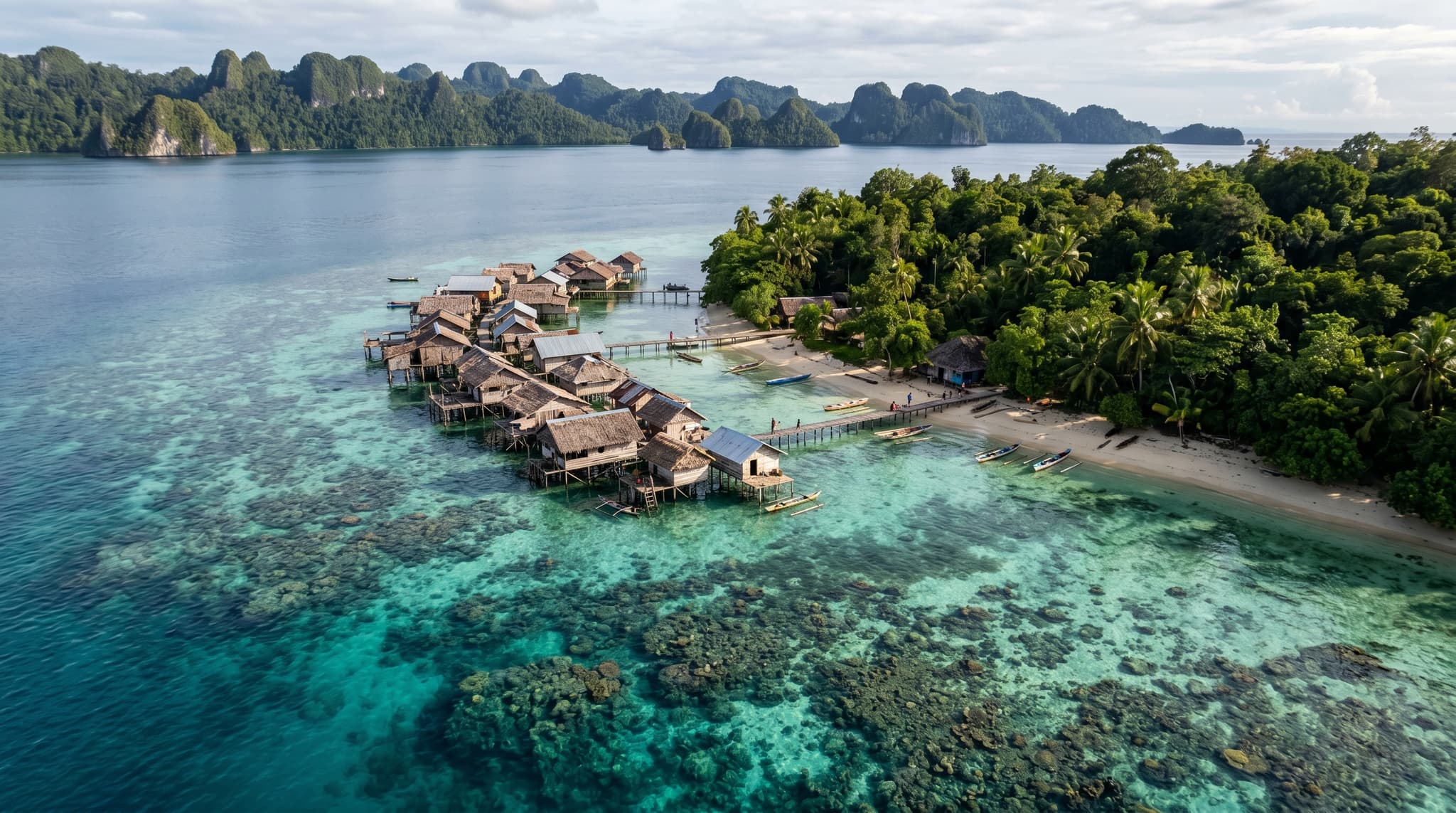
Blue Magic is a seamount in Raja Ampat's Dampier Strait famous for manta rays, reef sharks, and big pelagic encounters. Here's what divers need to know.
Blue Magic is a seamount in the Dampier Strait — a submerged pinnacle that rises from around 35 meters to roughly 7 meters below the surface. That's the dry description. The practical one is this: it's the dive site in Raja Ampat most likely to make you forget you're underwater, because everything large and fast in the Coral Triangle seems to pass through here on a schedule only the ocean understands.
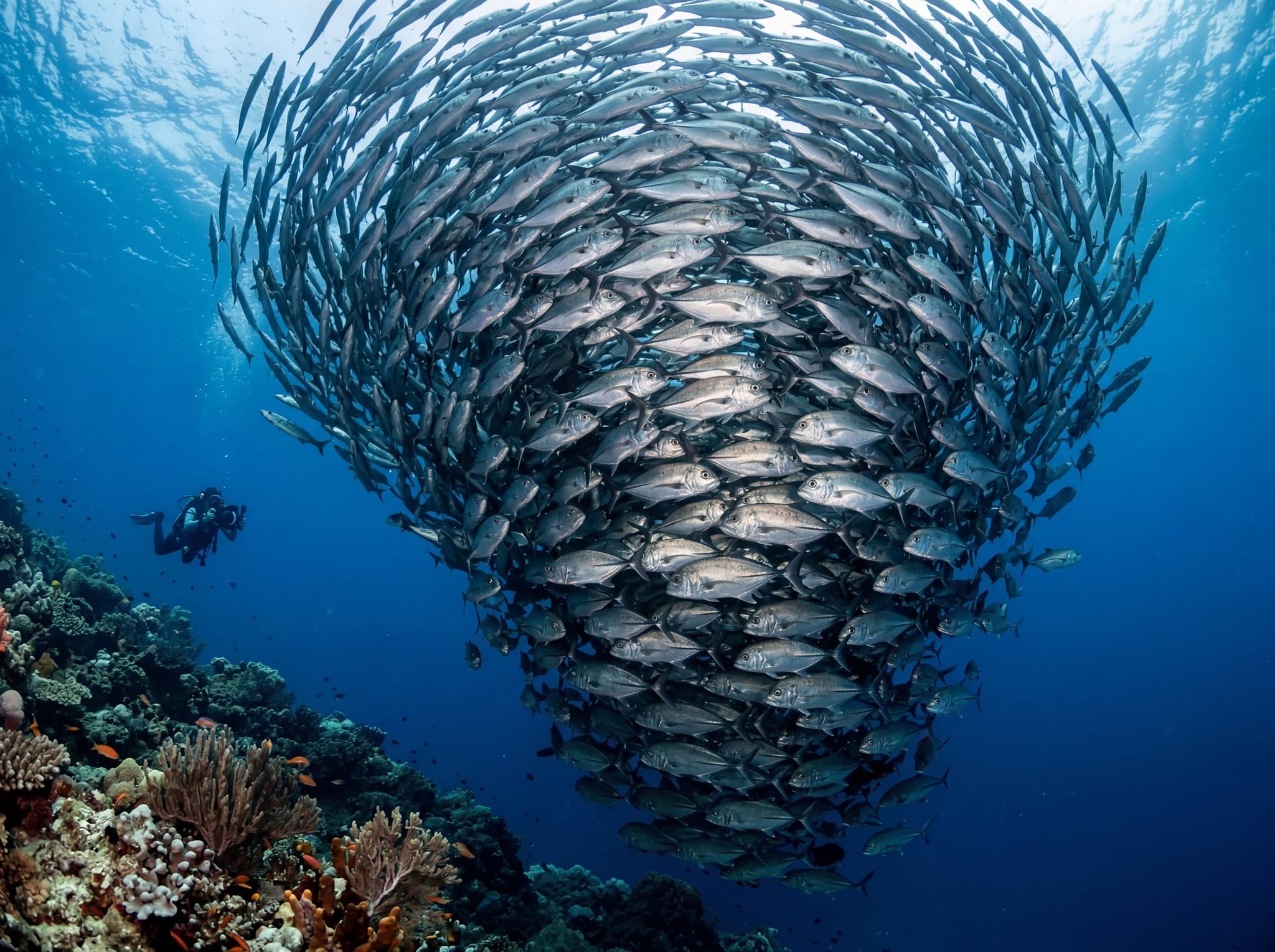
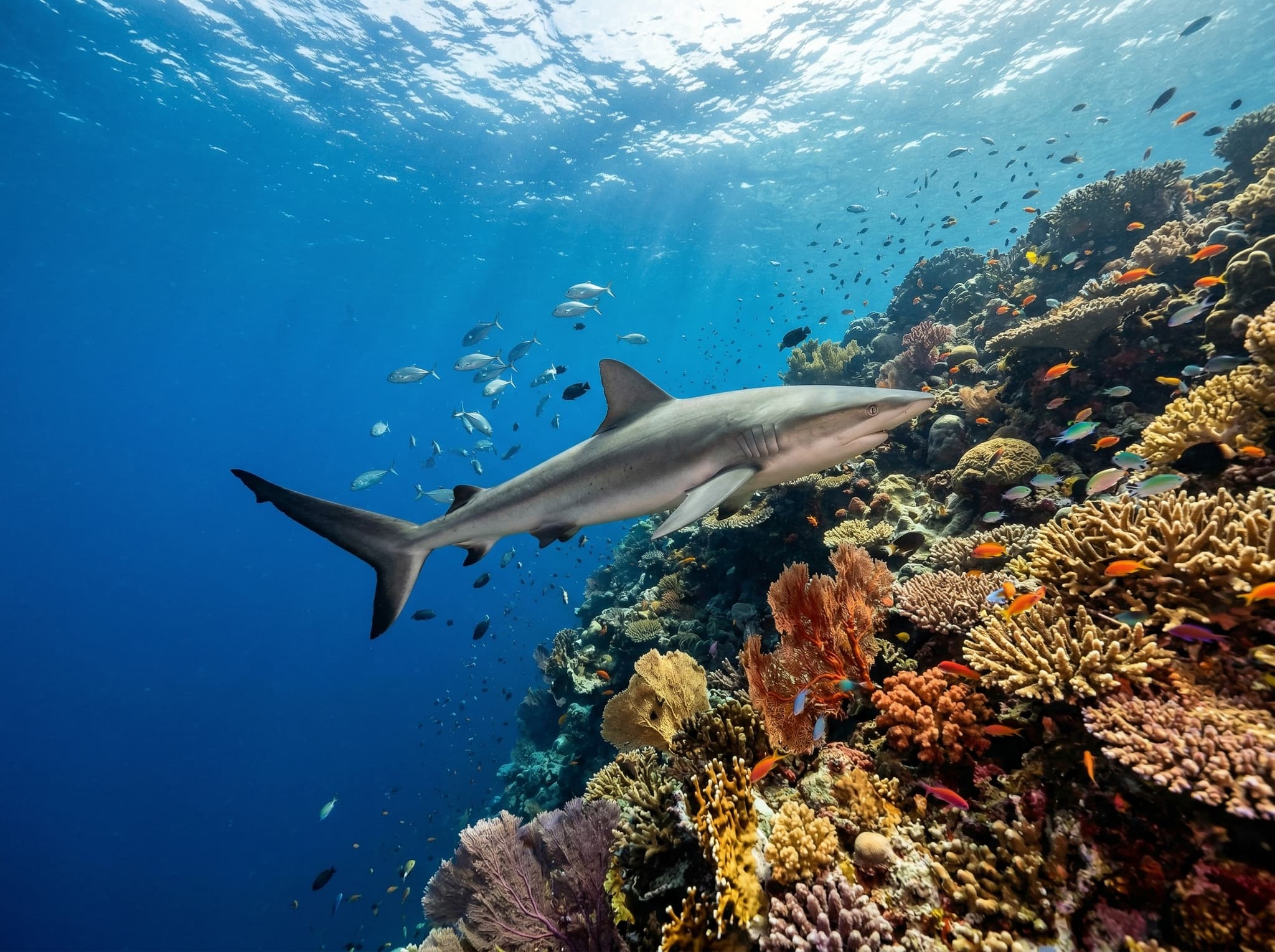
Manta rays, grey reef sharks, schools of barracuda thick enough to block out the blue, giant trevally hunting in coordinated packs, and the occasional wobbegong shark resting on a ledge like it's been waiting for you specifically. Blue Magic delivers pelagic encounters with a consistency that most dive sites in Southeast Asia can only promise on a good day.
Here's what you need to know before you go.
Why Divers Prioritize This Site
Raja Ampat has hundreds of documented dive sites. Experienced divers and dive operators consistently rank Blue Magic among the top three in the region, alongside Cape Kri and Manta Sandy. The difference is what Blue Magic specializes in: big stuff, open water, and adrenaline.
Cape Kri holds the world record for fish species counted on a single dive (374, set by Dr. Gerald Allen in 2012). Manta Sandy is the place for predictable, close-range manta encounters at cleaning stations. Blue Magic sits between those two experiences — it gives you the biodiversity of a healthy reef system plus the pelagic action of an open-ocean site, because the seamount acts as a magnet for currents carrying nutrients and, consequently, everything that feeds on them.
Blue Magic vs. Other Top Raja Ampat Sites
Blue Magic
Pelagics, mantas, sharks, strong currents — advanced
Cape Kri
Record biodiversity, reef fish, moderate currents — all levels
Manta Sandy
Manta cleaning station, sandy bottom — all levels
The trade-off is difficulty. Blue Magic is not a beginner dive.
What to Expect Underwater
The pinnacle itself is relatively small — you can circumnavigate it in a single dive. The top sits at around 7 meters, which makes safety stops convenient, but the interesting action happens deeper and in the blue water off the mount's edges.
Divers typically descend along the reef slope to 20–30 meters, then work their way around the pinnacle while scanning the open water. Currents here range from mild to genuinely aggressive, and they can shift direction mid-dive. This is the Dampier Strait — one of the most current-swept channels in Raja Ampat — and Blue Magic sits right in the flow.
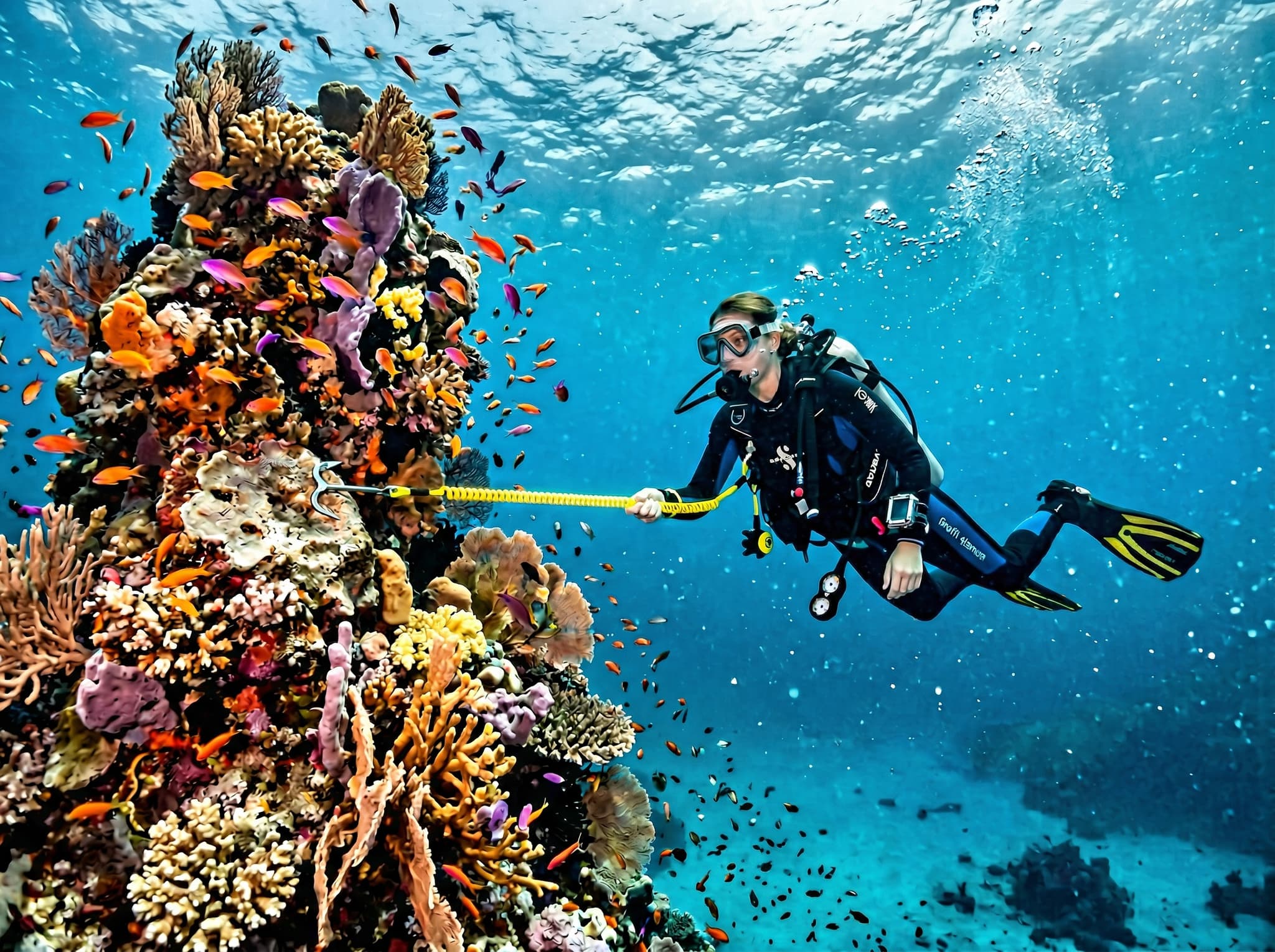
On a strong-current day, you'll hook in at the top of the pinnacle (bring a reef hook — this isn't optional) and watch the show come to you. Mantas glide past at arm's length. Grey reef sharks patrol the edges in groups of five or ten. Schools of bigeye trevally swirl into formations that look choreographed.
On a calm day, you'll have more freedom to explore the reef itself, which is covered in soft corals, sea fans, and the occasional nudibranch for the macro crowd. But let's be honest — nobody comes to Blue Magic for nudibranchs.
Currents at Blue Magic can be unpredictable and strong. Most operators require Advanced Open Water certification or equivalent, plus logged experience in current diving. If your last dive was a resort pool in Bali, this is not where you start. Build up to it with easier Dampier Strait sites first.
When to Dive Blue Magic
Raja Ampat's dive season runs roughly October through April, with peak conditions — calmer seas, best visibility — typically from November through March. Visibility at Blue Magic can reach 20–30 meters during peak season, though plankton blooms (which attract the mantas) can reduce it to 10–15 meters. That's not a complaint — those plankton-rich days often produce the best wildlife encounters.
Water temperatures stay warm year-round, but thermoclines are common on the seamount. You can drop from 29°C at the surface to 24°C at depth in a matter of seconds. A 3mm wetsuit is standard; bring a 5mm if you run cold or plan multiple dives per day.
Getting There and Logistics

Blue Magic is accessed by boat from dive resorts and liveaboards operating in the Dampier Strait area. Most operators based around Kri Island, Mansuar, or Arborek include Blue Magic in their standard rotation.
Logistics Snapshot
Nearest Hub
Sorong (domestic flights from Jakarta, Makassar)
Transfer
2–4 hour boat from [Sorong](/places/raja-ampat/sorong-the-gateway-city-nobody-wants-to-stay-in-and-why-you-might-reconsider) to Dampier Strait area
Raja Ampat Marine Park Tag
1,000,000 IDR (~$62) [VERIFY — fees change; confirm before booking]
Typical Dive Package
3 dives/day, $250–$450+ for multi-day packages [VERIFY]
You'll need to fly into Sorong, then take a ferry or resort transfer to the Dampier Strait area. There are no shortcuts — Raja Ampat is remote by design, and that remoteness is exactly what keeps the reefs in the condition they're in.
The Raja Ampat Marine Park entry tag funds conservation efforts including patrol boats, community-based monitoring, and anti-poaching enforcement across the marine protected area. Purchase it in Sorong or Waisai before heading to the dive sites — some operators arrange this, but confirm in advance.
Responsible Diving at Blue Magic
Blue Magic's seamount is healthy because it sits within one of the world's largest marine protected areas. That protection isn't abstract — it's the reason you'll see reef sharks here in numbers that have vanished from most of Southeast Asia.
Practical rules: maintain buoyancy control (the reef is fragile and the currents will push you into it if you're not careful), don't chase mantas, and use reef hooks only on bare rock — never on living coral. If your operator doesn't brief you on these basics, that tells you something about the operator.
Is Blue Magic Worth the Effort?
Yes. Unambiguously. The logistics of reaching Raja Ampat are real — multiple flights, boat transfers, a marine park fee, and dive costs that add up. But Blue Magic is one of those rare sites where the underwater experience consistently matches the reputation. It's not overhyped. It's not a "you had to be there on the right day" situation. The seamount delivers.
For a full picture of what the region offers, see our guide to the best things to do in Raja Ampat. If you're an experienced diver building a Raja Ampat itinerary, Blue Magic belongs on it. If you're planning your first trip to the region and you have the certification and current experience to handle it, make sure your operator includes it.
Some dive sites are famous because someone wrote about them well. Blue Magic is famous because the ocean does the work.