Waisai: The Gateway Town to Raja Ampat That Deserves More Than a Layover
Waisai is Raja Ampat's main hub — here's how to handle ferries, permits, fees, and what to do in town before heading to the islands.
Waisai is where the logistics of reaching Raja Ampat become real. It's the capital of the Raja Ampat regency, the main settlement on Waigeo Island, and the place where nearly every traveler passes through — usually in a rush to get on a boat to somewhere else. That's a mistake, or at least an incomplete plan. Waisai itself has beaches worth a stop, forest trails with birds of paradise, and it's the only place in the archipelago where you can reliably withdraw cash, buy supplies, and sort out permits without relying on a satellite phone and good luck.
Here's what you actually need to know.
Getting to Waisai
Every journey to Waisai starts in Sorong. You fly into Sorong Airport (SOQ) — there are daily connections from Jakarta, Makassar, and Manado — then take a taxi to Sorong Harbor. That taxi ride is about 15 minutes and costs around IDR 100,000 per car, cash only.
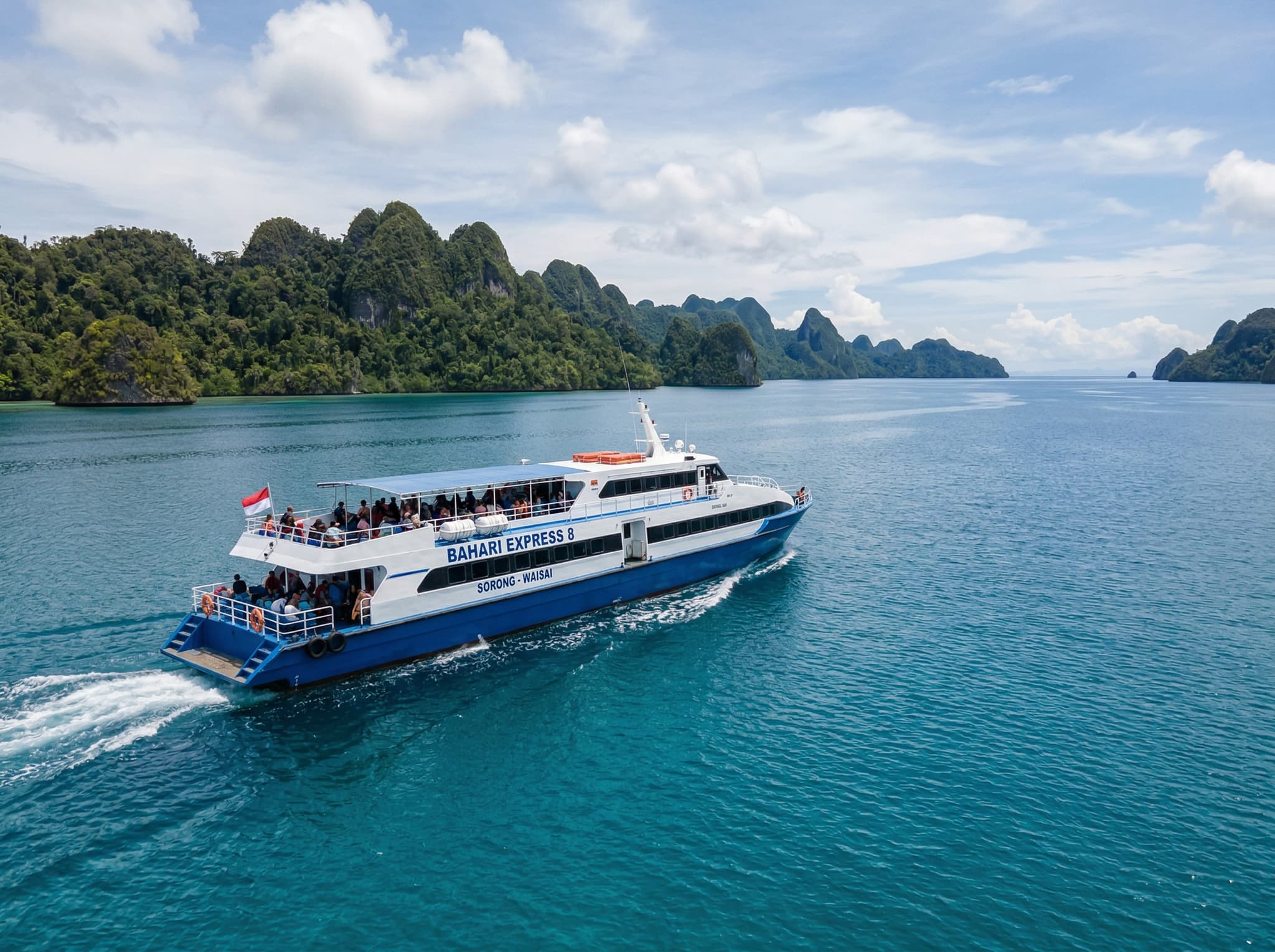
From Sorong Harbor, the Bahari Express ferry runs to Waisai. The crossing takes approximately two hours.
Bahari Express Ferry Schedule (Sorong → Waisai)
Sunday
9:00 AM & 2:00 PM
Monday
2:00 PM only
Tuesday
2:00 PM only
Wednesday
9:00 AM & 2:00 PM
Thursday
2:00 PM only
Friday
9:00 AM & 2:00 PM
Saturday
2:00 PM only
Economy Ticket
IDR 137,000 (~$9)
VIP Ticket
IDR 262,000 (~$17)
Tickets are purchased at the harbor ticket counter — look for the window marked LOKET. Cash in IDR only. There is no online booking. Morning ferries don't run on national holidays.
Slower ferries (Getsemani, Fajar Mulia) also serve the route but take around three hours with irregular schedules. Take the Bahari Express unless it's sold out.
The practical math: If your flight lands in Sorong before 7:30 AM on a day with a 9:00 AM departure, you can make the morning ferry. Otherwise, plan for the 2:00 PM. Many travelers overnight in Sorong — it's not exciting, but it removes the stress.
Permits and Fees
You'll pay two fees at the Raja Ampat Visitor Center near Waisai harbor, and you need both before doing anything — homestays, diving, island visits.
Raja Ampat Entry Fees
Entry Permit
IDR 1,000,000 (~$65) per adult, one-time per trip
Conservation Fee
IDR 500,000 (~$32) per adult, valid one year
Children Under 10
Free
Payment
Cash at Visitor Center; digital pre-payment may be available via karang.travel
You'll receive a physical wristband or card as proof of payment. Don't lose it — homestays and dive operators will ask to see it. The conservation fee is valid for a full year from the date of payment, so if you're returning within 12 months, you only pay the entry permit again.
Expect lines at the Visitor Center during peak season (October–April). Arriving on a morning ferry gives you more time to sort this out before the afternoon rush.
Where to Stay in Waisai
Most travelers treat Waisai as a one-night stop — either the night before catching a boat to a remote homestay, or the night before the return ferry to Sorong. For that purpose, budget guesthouses near the harbor work fine.
Rara Guest House ($22–$23/night) and Penginapan Novalin ($22/night) are the reliable budget options. Basic rooms, functional, close to the port. Rifalda Cottages is another budget pick near the harbor. For full-board homestays in the Waisai area, expect around $24 per person per night including three meals — genuine value compared to what you'd pay on the more remote islands.
If you're joining a liveaboard dive trip, several harbor-area accommodations cater specifically to pre-departure overnights.
For something more upscale, Waiwo Dive Resort and Meridian Adventure Marina Club & Resort are nearby options, though pricing jumps significantly — average rates in high season run $101–$122/night across Waisai's mid-range and upper properties.
What to Do In and Around Waisai
This is where people underestimate the town.
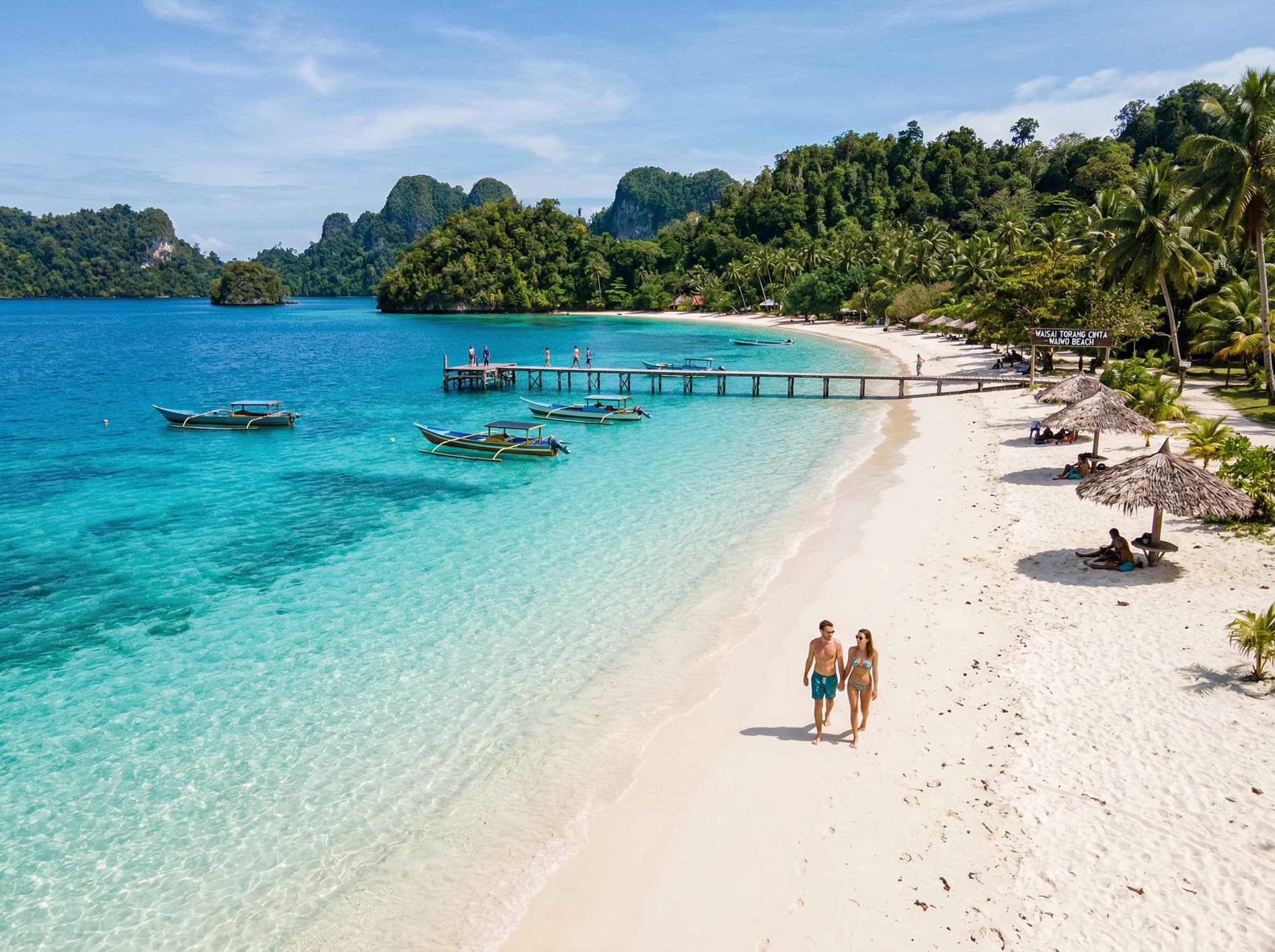
Waiwo Beach (Waisai Torang Cinta) is a short walk or drive from the center. Translucent water, good swimming, and genuinely beautiful — it made President Joko Widodo's Instagram, which tells you something about the visual payoff. Pantai Saleo is another beach worth the visit for a quieter afternoon.
Warkesi Forest Park is where you go for birds of paradise. Early mornings are essential — dawn departures around 4:30 AM with a local guide (approximately IDR 150,000, ~$9) give you the best chance of spotting Wilson's or red birds of paradise on Waigeo. This is not a guaranteed sighting, but the forest itself is worth the early alarm.

For day trips by boat, the options escalate quickly:
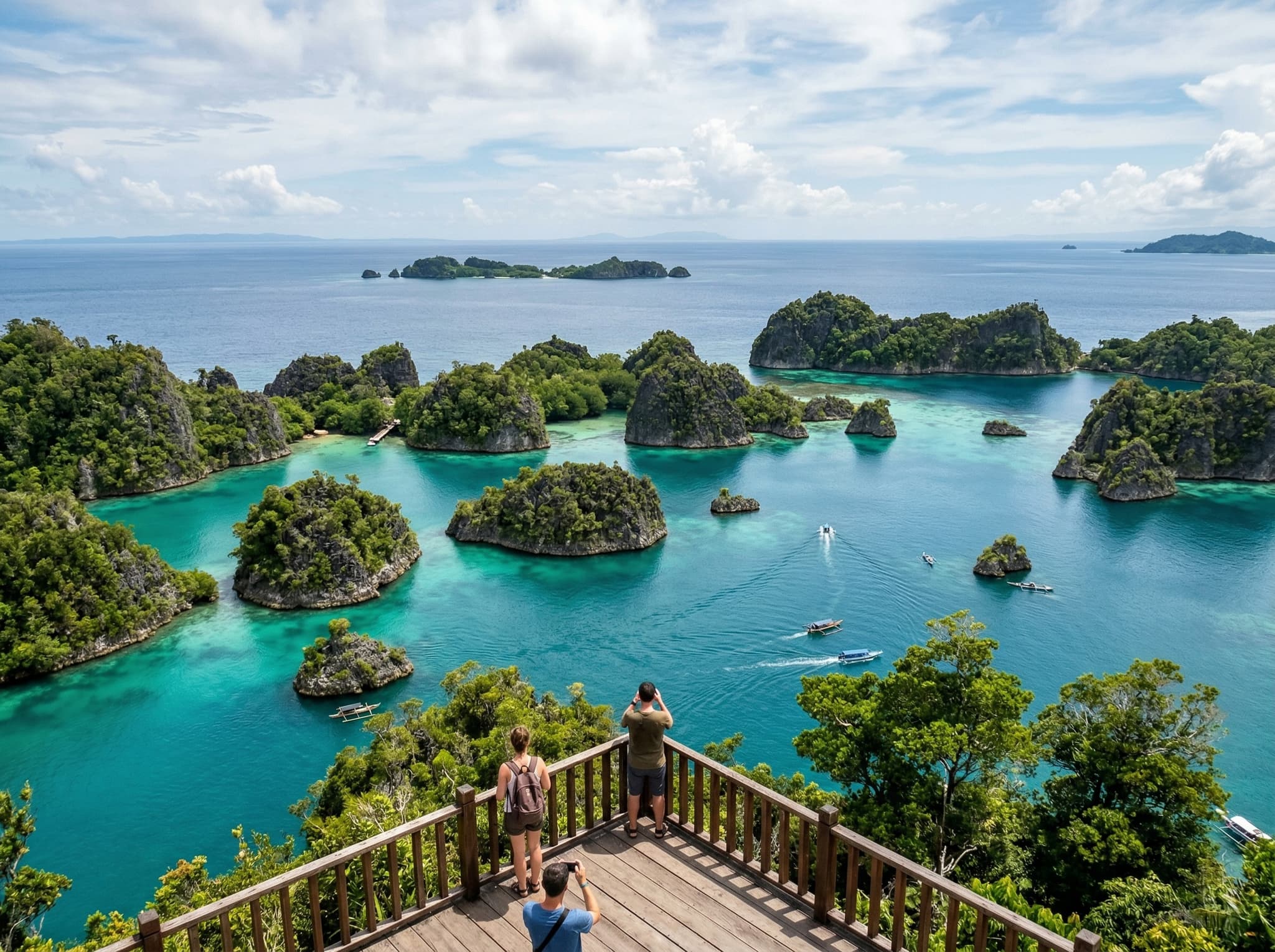
- Pianemo Island — chartered boat from Waisai, hike to a viewing deck over scattered karst islets, cliff jumping, turquoise lagoons. This is the postcard shot of Raja Ampat.
- Arborek Village — small village with homestays, snorkeling, and jetty jumps. Good for cultural immersion without a multi-day commitment.
- Friwen Wall — excellent snorkeling and diving at vibrant reefs, with nearby Kabui Bay and Pulau Gam accessible on the same charter.
- Wayag Archipelago — the dramatic karst formations you've seen in every Raja Ampat photograph. Multi-hour boat trip north. Permits required — confirm with your operator before departure.
The Honest Take
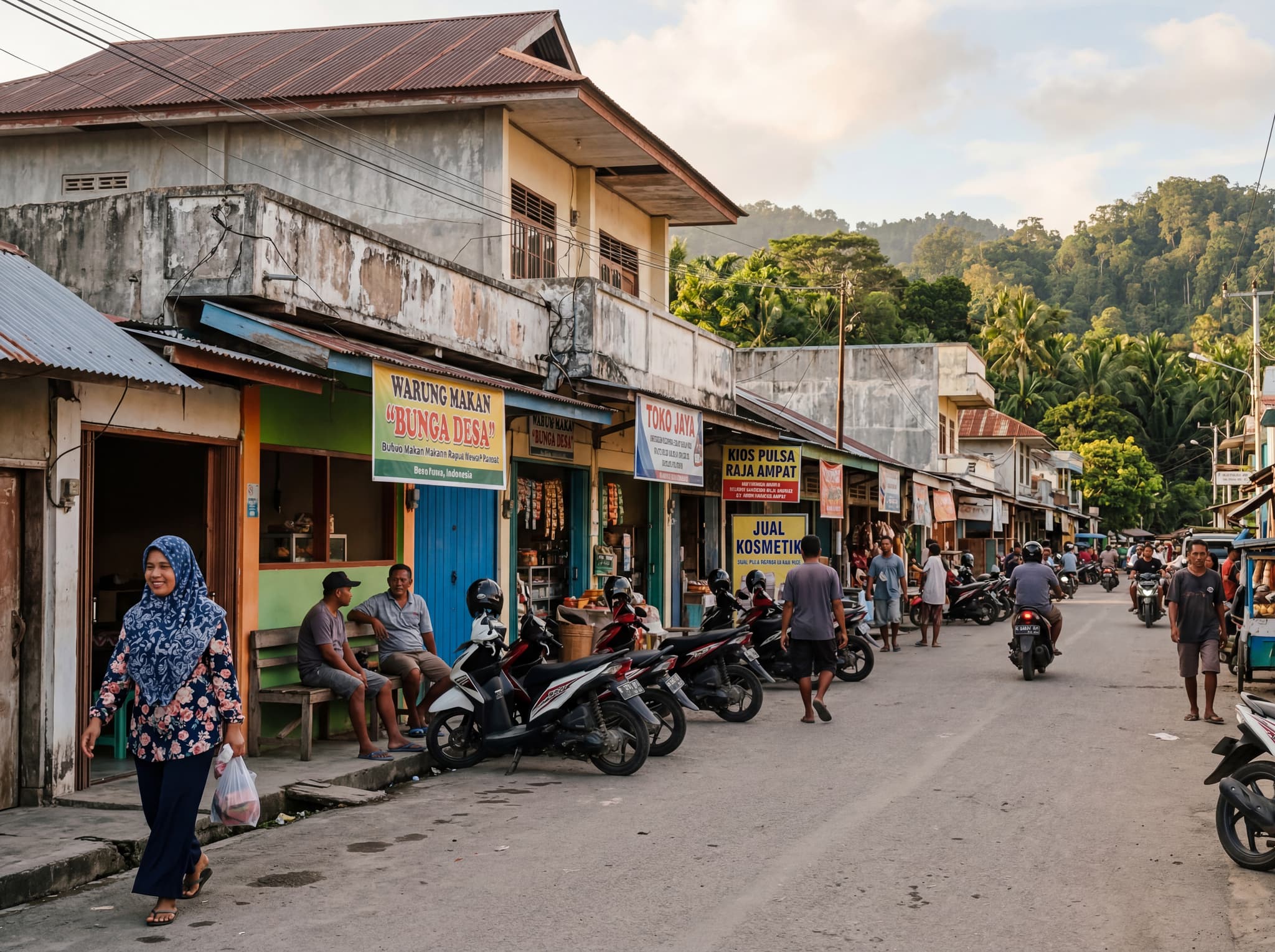
Waisai is not a destination in the way that Pianemo or Wayag are destinations. It's a small town with limited restaurants (try sate ulat sagu — sago worm satay — if you're feeling adventurous), a handful of ATMs that sometimes work, and the kind of infrastructure that reminds you this is one of the most remote archipelagos on Earth.
But it's also the place where everything gets organized. Pay your fees here. Withdraw cash here — you won't find ATMs on remote islands. Stock up on supplies, confirm your boat transfers, and use the Homestay Information Center to sort logistics you couldn't arrange online.
Give Waisai at least one full day beyond your transit needs. The beaches and birdwatching alone justify it, and you'll arrive at your island homestay with permits paid, cash in hand, and none of the scrambling that catches unprepared travelers off guard.