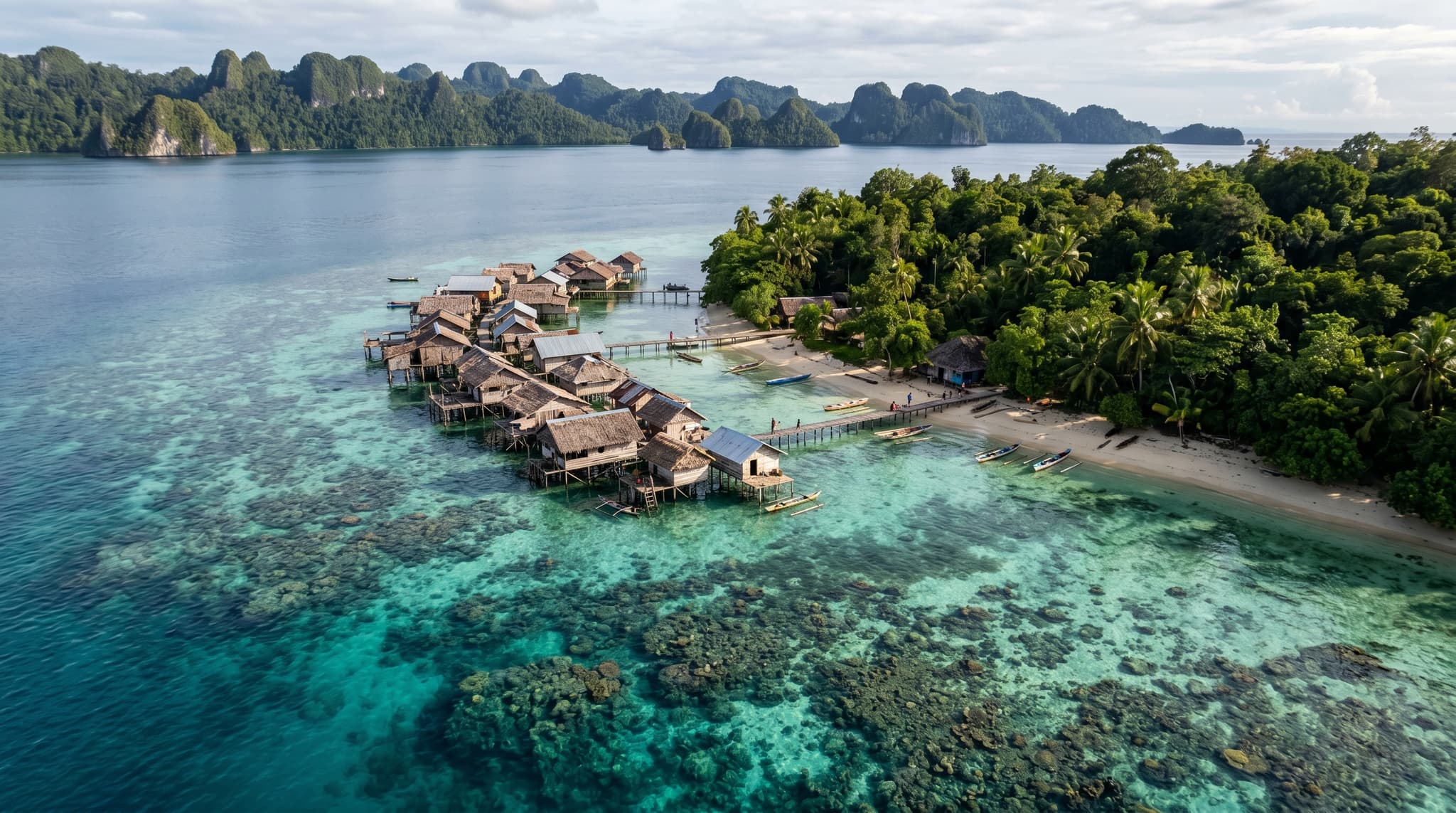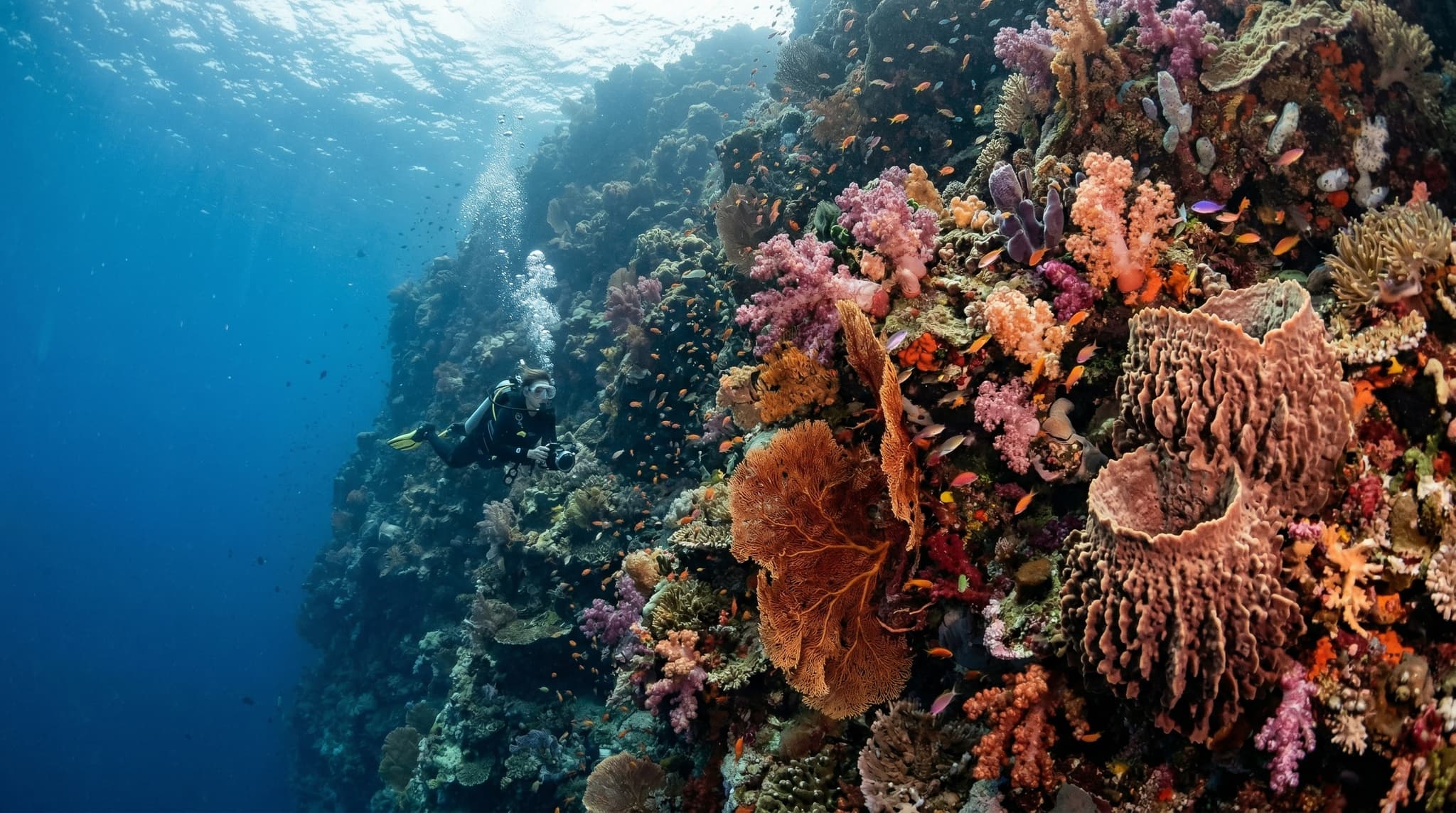
Friwen Wall is a world-class coral wall dive in Raja Ampat's Dampier Strait — accessible to Open Water divers and packed with soft corals, sea fans, and macro life.
Everyone planning a Raja Ampat dive trip fixates on the same handful of names: Cape Kri, Manta Sandy, Blue Magic. They deserve the attention. But the site that experienced divers and local guides consistently rank among their personal favorites rarely makes the shortlist for first-timers. That's Friwen Wall — a sheer coral wall off the tiny island of Friwen in the Dampier Strait, and one of the most visually dense dives in a region already famous for visual density.
Here's what you need to know before you go, and why it deserves a spot on your dive plan.
What Makes Friwen Wall Different
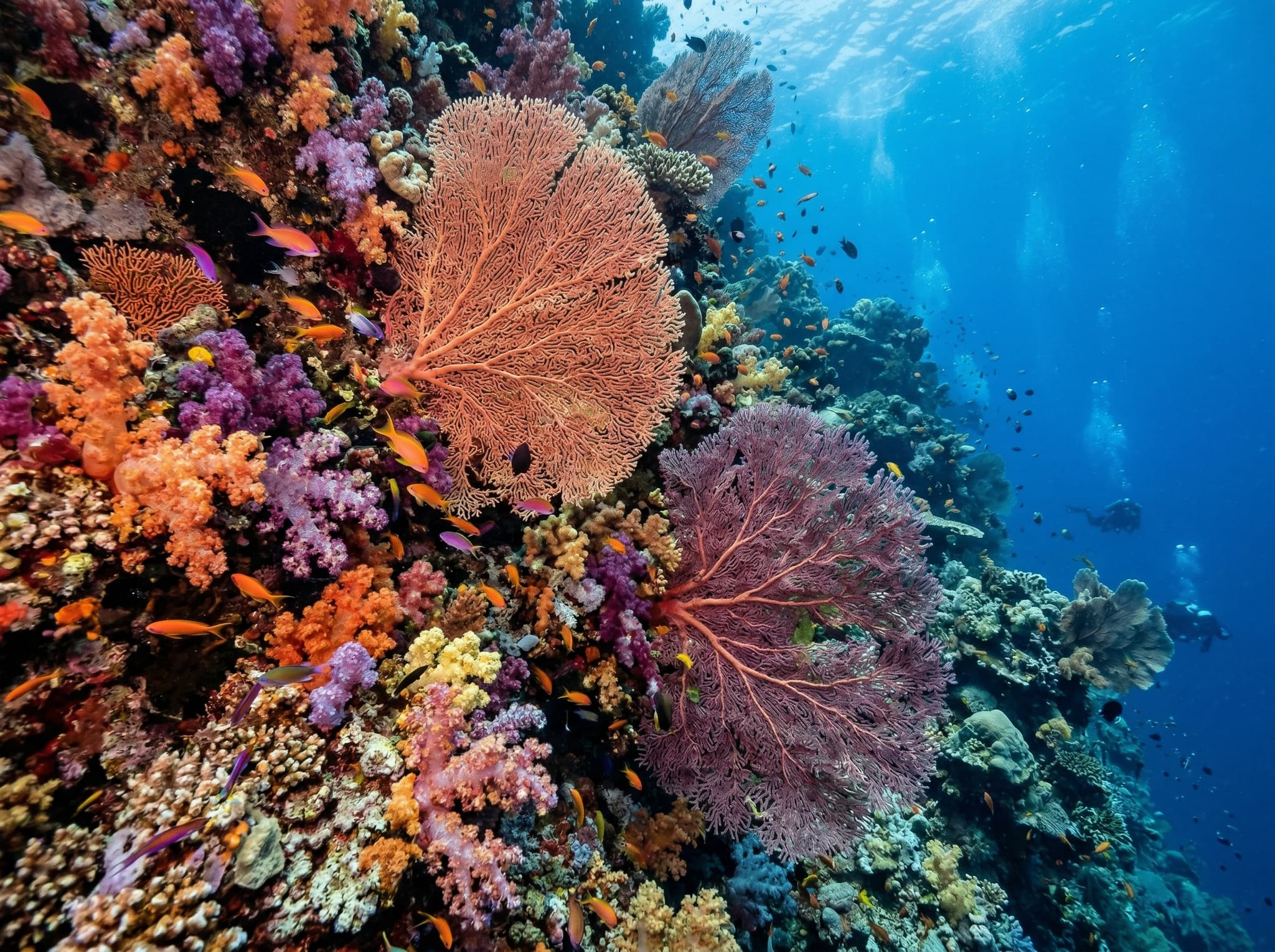
Most marquee Raja Ampat sites are current-driven affairs. You drift, you hold on, you hope the mantas show up. Friwen Wall is a different kind of dive entirely. It's a vertical wall that drops from around 3 meters below the surface to well past 30 meters, and it's covered — genuinely covered — in soft corals, sea fans, and tunicates in colors that look oversaturated until you realize your camera is actually struggling to capture what your eyes are seeing.
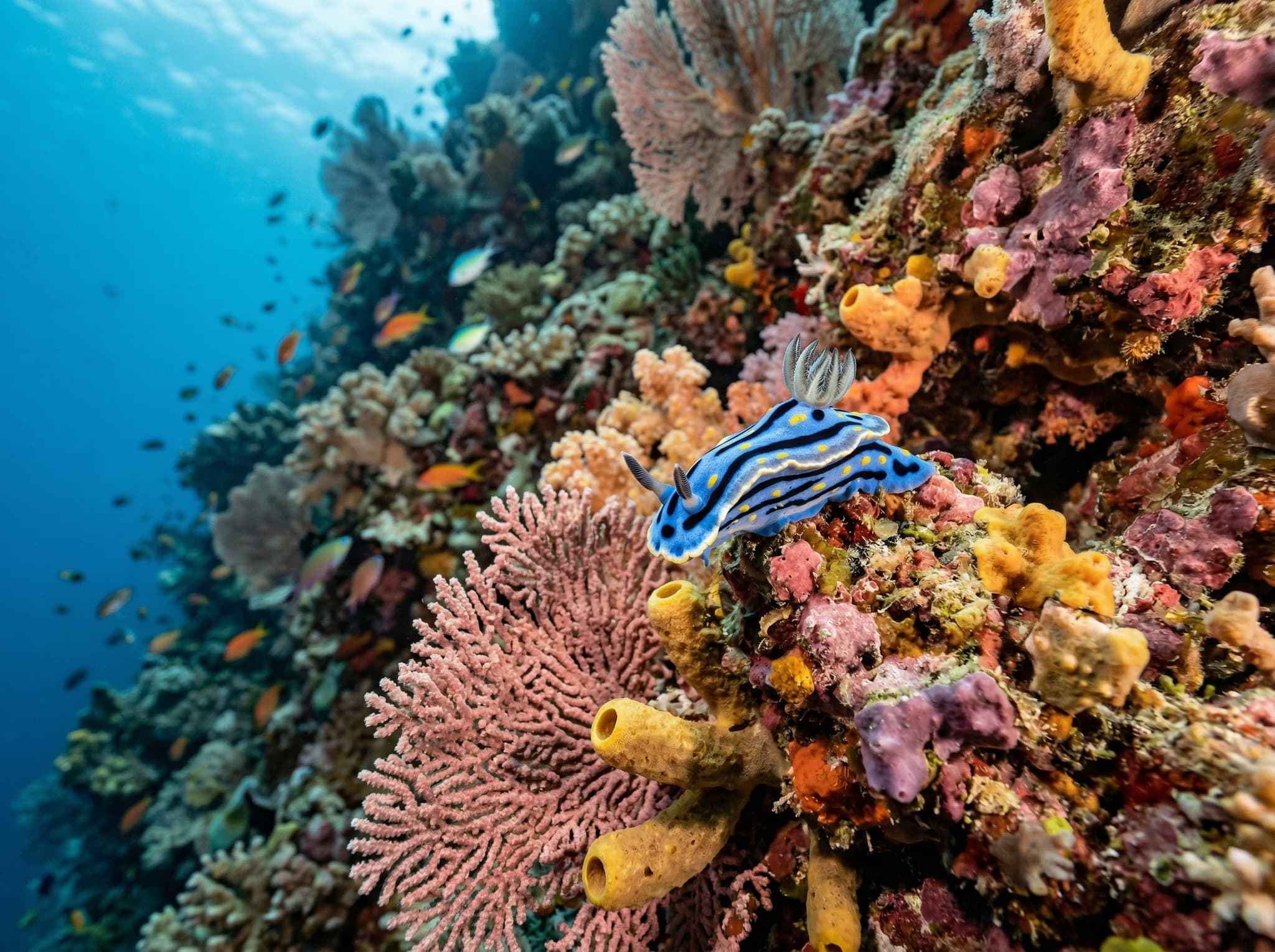
The wall faces the Dampier Strait, which means nutrient-rich currents feed it constantly. The result is an ecosystem stacked on itself: gorgonian fans the size of dining tables, barrel sponges you could sit inside, and enough nudibranchs to keep a macro photographer busy for a week. Schools of fusiliers and anthias cloud the wall in moving curtains of orange and purple.
What sets it apart from other wall dives in the region is accessibility. Currents here are typically mild to moderate, making it suitable for divers across experience levels. You don't need advanced certification or a high comfort level with drift diving. You need a decent buoyancy control — the wall is fragile and close — but the dive itself is forgiving.
The Dive Profile
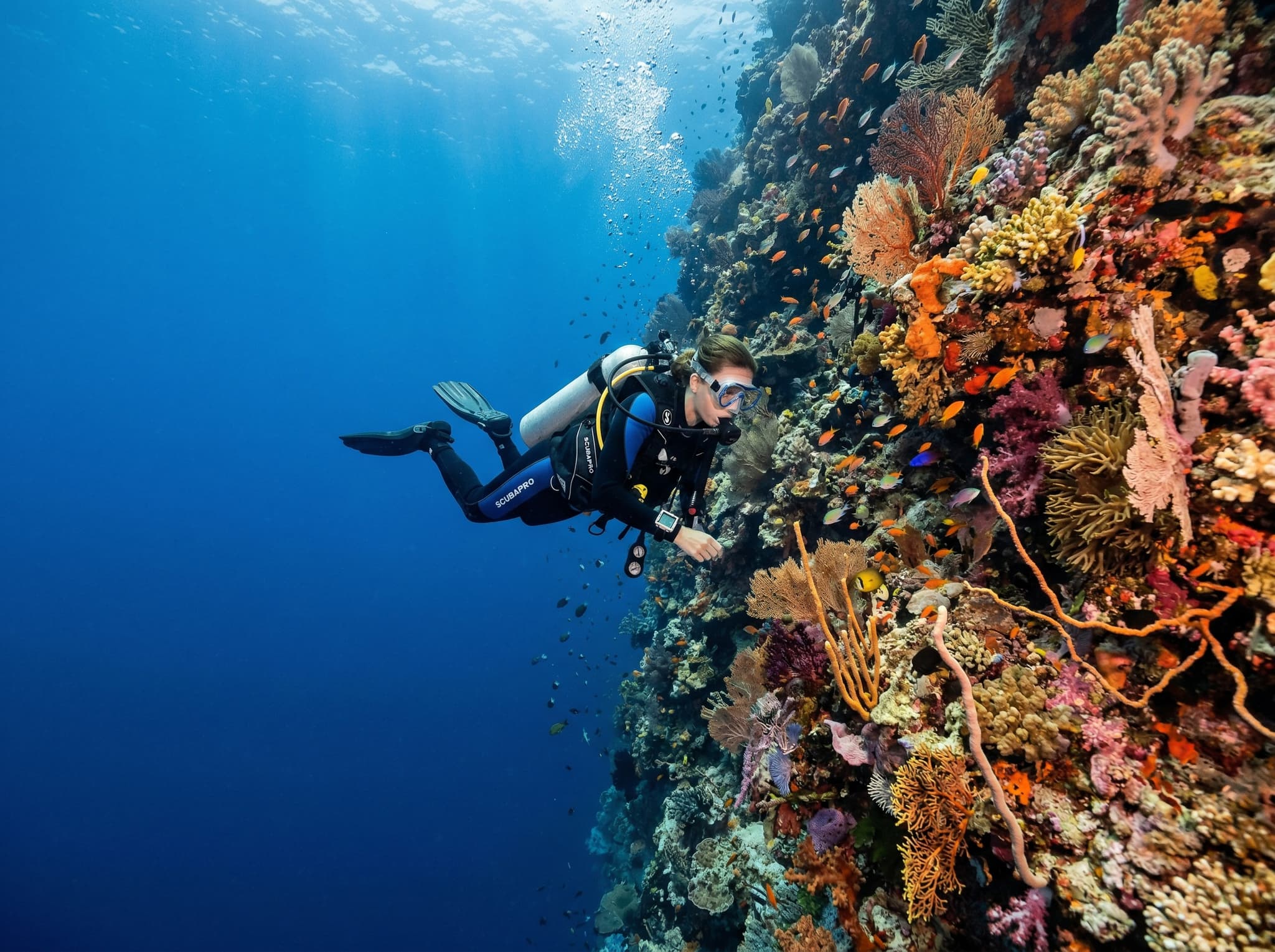
You'll enter the water near the northern tip of Friwen Island and descend along the wall. Most guided dives follow the wall southward, keeping it on your right shoulder, with depth ranging from 5 to 25 meters for the main attraction. You can go deeper — the wall continues past 40 meters — but the best coral coverage and marine life concentration sits in the 10–20 meter range.
Dive Profile
Max Depth
25–40m (wall continues deeper)
Sweet Spot
10–20m for best coral and marine life
Current
Mild to moderate, typically manageable
Visibility
15–25m depending on season
Certification
Open Water sufficient; good buoyancy essential
A typical dive runs 45 to 70 minutes depending on your air consumption and your guide's plan. The safety stop is easy — the wall's upper section at 5 meters is itself worth spending time on, with hard coral gardens and resident anemonefish that have clearly never met a diver they didn't ignore.
Wide-angle lenses are the obvious choice for the fans and wall panoramas, but bring a macro setup if you can. The wall's crevices hide pygmy seahorses, flatworms, and a rotating cast of crustaceans that reward patience.
Getting There
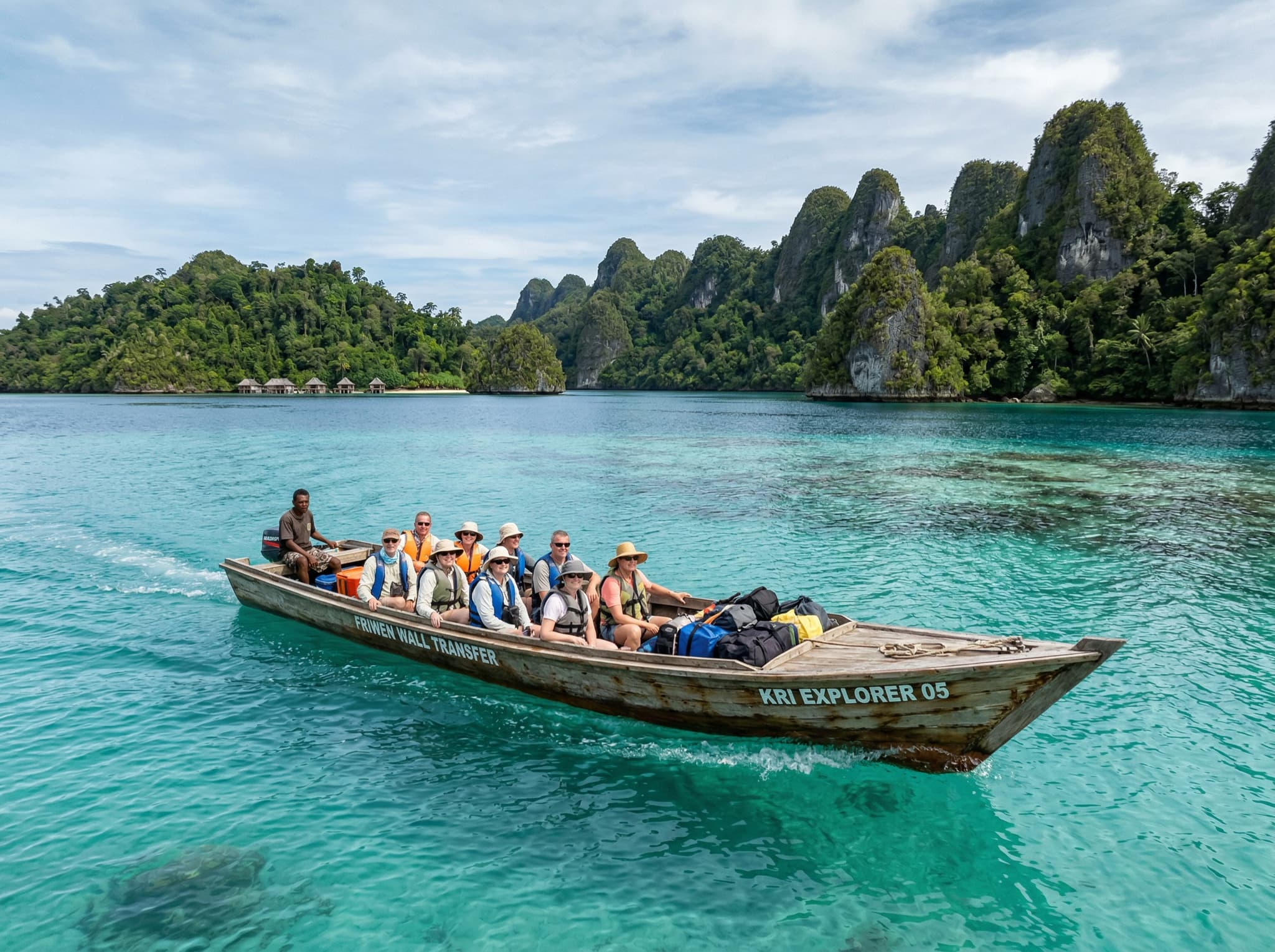
Friwen Island sits in the Dampier Strait, roughly 30 minutes by speedboat from most homestays and dive resorts on Kri Island, and about 45 minutes from Waisai. If you're staying at a resort that includes diving — which most Raja Ampat accommodations do — Friwen Wall is almost certainly on their regular site rotation. You shouldn't need to make a special request, but it doesn't hurt to confirm it's on the itinerary when you book.
For those arriving from outside Raja Ampat: you'll fly into Sorong (DEO), then take a ferry to Waisai — roughly 2 hours on the express ferry. From Waisai, your resort or homestay will typically arrange boat transfers. Budget at least a full travel day from Sorong to your accommodation.
Getting to Friwen Wall
From Kri Island
~30 min by speedboat
From Waisai
~45 min by speedboat
From Sorong
2-hour ferry to Waisai + boat transfer
Raja Ampat Marine Park Entry
1,000,000 IDR (~$62) [VERIFY: check current rate]
Conservation Context
Friwen Wall sits within the Raja Ampat Marine Protected Area, one of the most significant marine conservation zones in the Coral Triangle. The entry permit fee you pay — currently listed at 1,000,000 IDR for international visitors — directly funds patrol boats, ranger salaries, and community-based conservation programs. It's not a tourist tax. It's the funding mechanism that keeps sites like Friwen Wall alive.
Practically, this means a few things for divers: no gloves (to discourage touching coral), no anchoring on the reef (boats use moorings), and a genuine expectation that you maintain neutral buoyancy along the wall. The soft corals here took decades to grow. A careless fin kick undoes years of growth in a second. Guides take this seriously, and so should you.
Is It Worth Prioritizing?
If you have three days of diving in Raja Ampat, you'll likely hit 8–10 sites. Friwen Wall should be one of them. It won't give you the manta encounters of Manta Sandy or the fish-count spectacle of Cape Kri. What it gives you is a wall dive of genuinely world-class quality — the kind where you surface and immediately want to go back down because you know you missed half of what was there.
For photographers, it's arguably the best single site in the Dampier Strait. For newer divers, it's one of the most rewarding sites you can access without advanced skills. For everyone else, it's a reminder that Raja Ampat's reputation isn't built on a few headline sites — it's built on the fact that even the "secondary" dives here would be the best dive in most other countries.