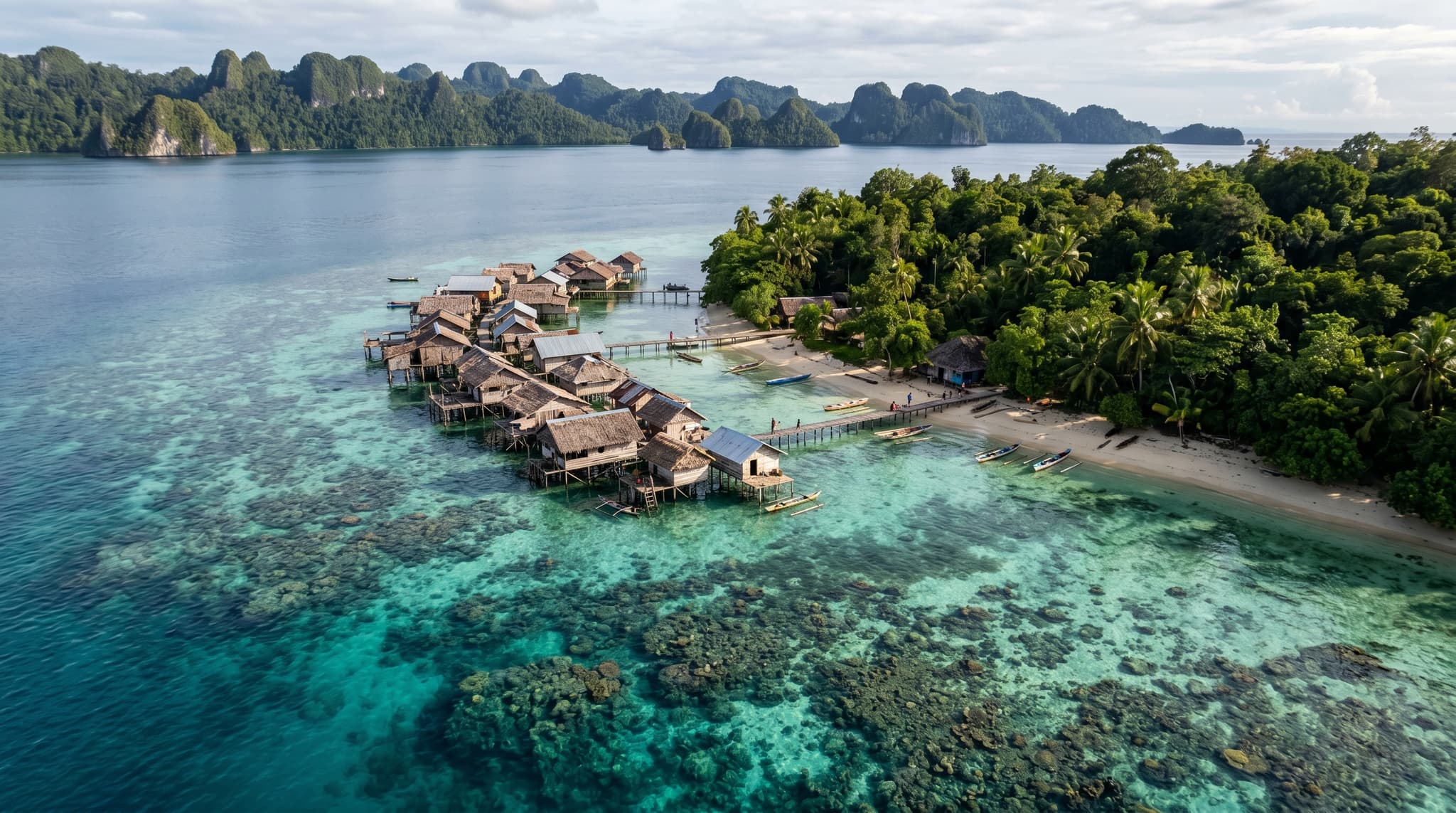
The Dampier Strait channels world-record marine biodiversity between two Raja Ampat islands. Here's what to dive, where to stay, and what it costs.
If you've seen those impossible underwater photos from Raja Ampat — the ones with manta rays gliding through clouds of fish so dense they block the sun — there's a good chance they were taken in the Dampier Strait. This roughly 15-kilometer channel between Waigeo and Batanta islands is where the Pacific Ocean funnels nutrient-rich currents through a narrow gap, creating what marine biologists consistently rank among the most biodiverse underwater ecosystems on the planet.
Here's the thing: most people who search for Raja Ampat diving will end up in the Dampier Strait whether they plan to or not. It's the most accessible corridor in the archipelago, home to the highest concentration of homestays, and where the majority of dive operators run their daily trips. That's not a knock against it — it's the most popular area because it genuinely delivers. It anchors the list of the best things to do in Raja Ampat for a reason.
But there's a difference between showing up and showing up prepared. Let me break down what makes this strait worth the considerable effort of getting here, and what you actually need to know before you go.
Why the Dampier Strait Matters
The strait functions as a massive underwater highway. Tidal currents push water between the Pacific and the Halmahera Sea, dragging plankton and nutrients through a relatively narrow channel. The result: an absurd concentration of marine life. We're talking 75% of all known coral species on earth within the broader Raja Ampat marine area, with the Dampier Strait sitting at the epicenter of that density.
This isn't marketing copy. A single dive site here — Cape Kri — holds the world record for the most fish species counted on a single dive: 374. That number was recorded by marine biologist Dr. Gerald Allen in 2012, and it hasn't been topped anywhere on the planet since.
Key Dive Sites in the Dampier Strait
Cape Kri
World record fish count. Strong currents, best for experienced divers. Schools of barracuda, trevally, reef sharks.
Manta Sandy
Shallow cleaning station (10–15m depth). Reef mantas year-round, best October–April. Suitable for all levels.
Sardine Reef
Exactly what it sounds like. Enormous baitball formations, surrounded by predators. Moderate current.
Blue Magic
Submerged seamount. Manta rays, wobbegong sharks, schooling fish. Can have strong currents — intermediate and up.
Chicken Reef
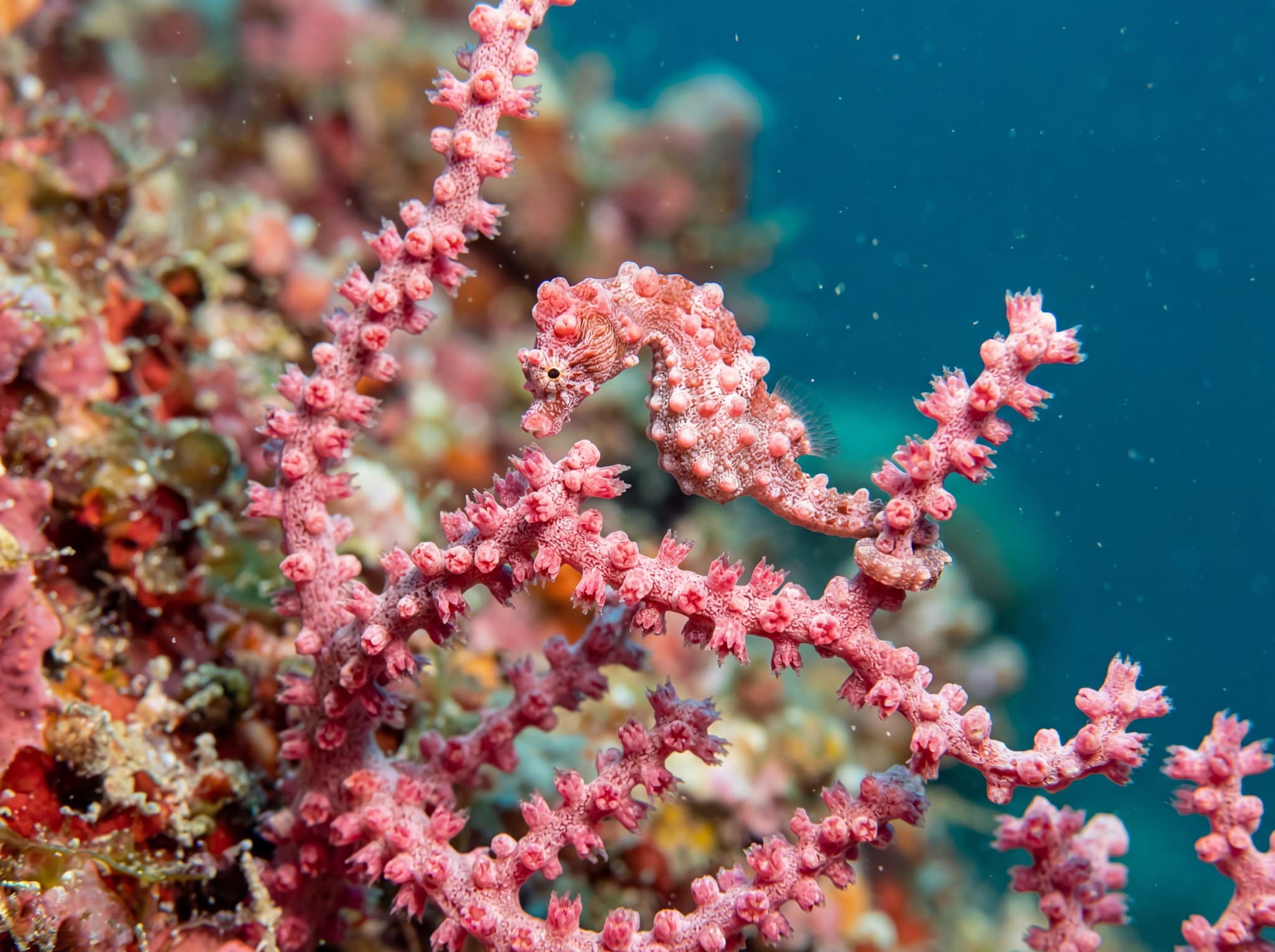
Gentler site near Arborek. Excellent macro diving — pygmy seahorses, nudibranchs. Good for beginners and photographers.
Where to Base Yourself
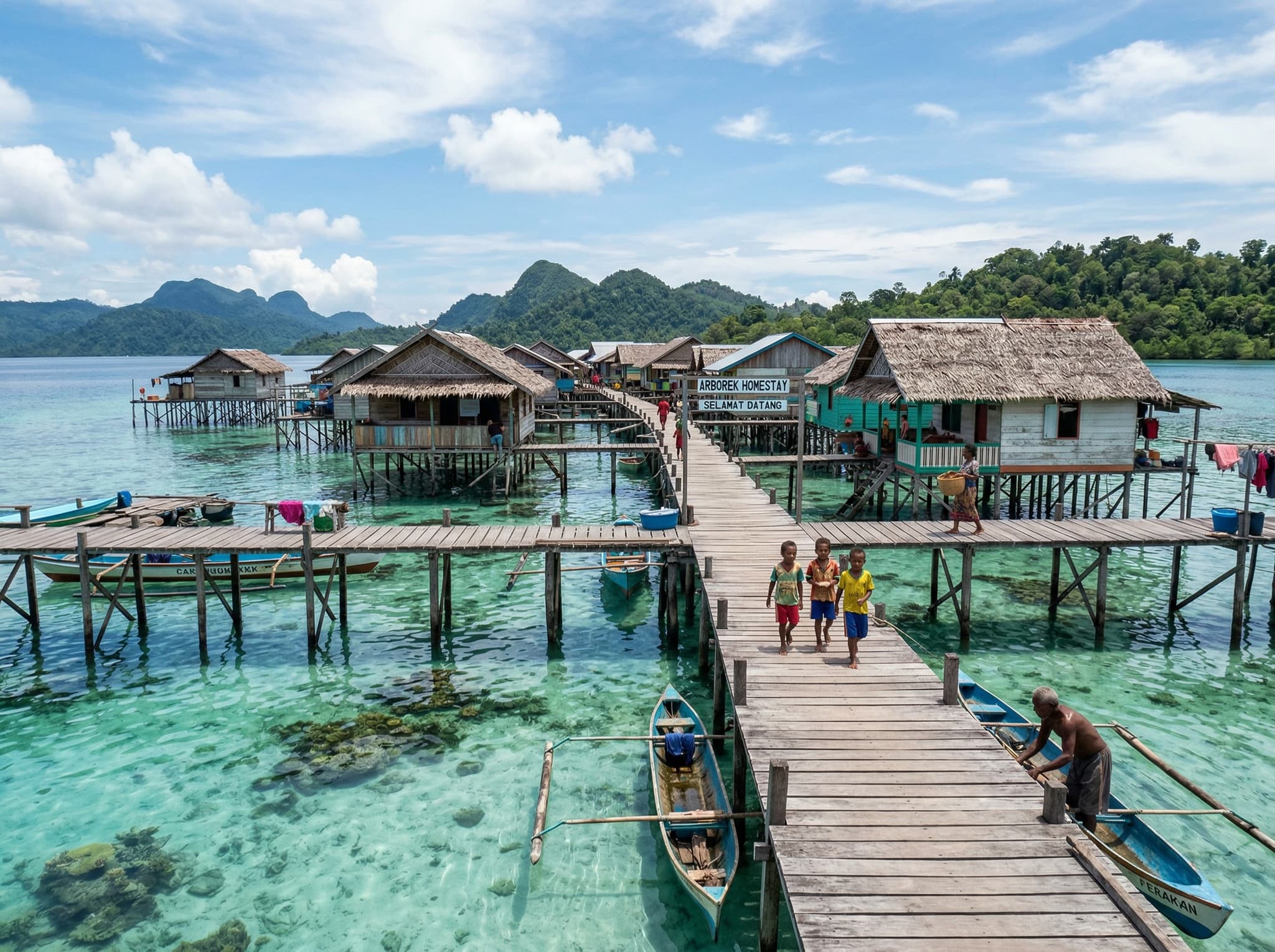
Three islands dominate the homestay scene in the Dampier Strait: Kri, Mansuar, and Arborek. Each has a slightly different character.
Kri Island is the most established. It has the highest concentration of homestays (around 15–20 at last count), the closest access to Cape Kri and Sardine Reef, and the most reliable dive operator presence. Expect to pay IDR 500,000–1,200,000 ($30–$75) per person per night for a homestay with three meals included. The more expensive end gets you a private overwater bungalow with a better mattress — still basic by any hotel standard, but you're not here for thread count.
Mansuar is larger, quieter, and where you'll find a handful of mid-range eco-resorts alongside budget homestays. If you want slightly more comfort without the resort price tag, Mansuar is the sweet spot.
Arborek is the smallest and most village-oriented. It's a genuine community — kids playing on the dock, women weaving traditional crafts. The snorkeling directly off the jetty is absurdly good. Arborek works well if you're mixing diving with cultural experience, or if you're traveling with a non-diver who needs something to do.
Getting to the Dampier Strait
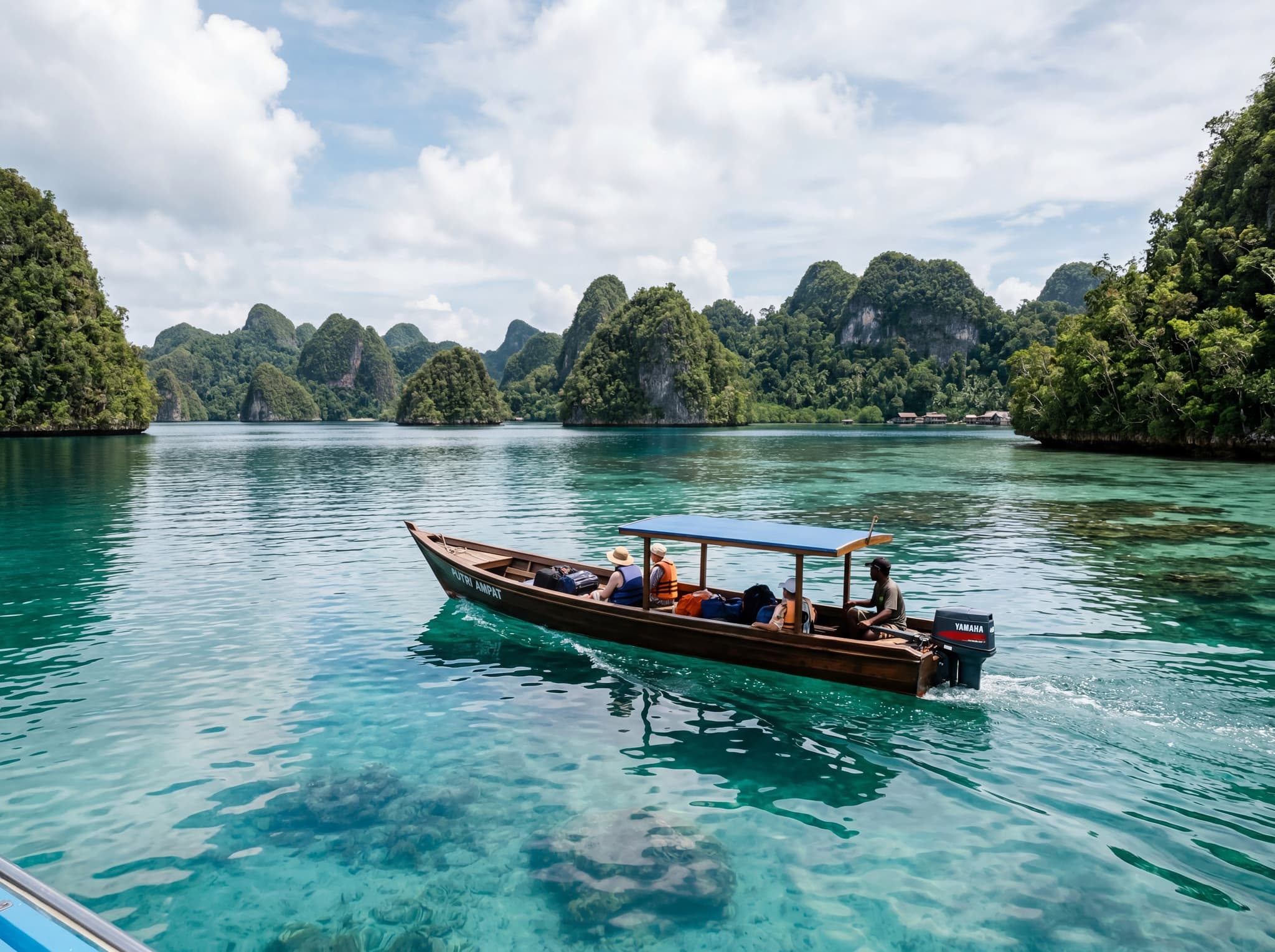
You'll fly into Sorong (SOQ), the gateway city in West Papua. Our full guide on how to get to Raja Ampat covers every step from booking flights to clearing the marine park permit. From Sorong, take the public ferry to Waisai on Waigeo island — it departs twice daily (morning and afternoon), takes about 2 hours, and costs IDR 130,000 ($8) for economy class. Express ferries run the same route in about 90 minutes for roughly double the price.
From Waisai, your homestay arranges a speedboat transfer to your island. This typically runs IDR 500,000–1,000,000 ($30–$60) per boat depending on distance, and takes 30–60 minutes. Most homestays include this in their package or split the cost among arriving guests.
Before boarding the ferry in Waisai, you'll need to purchase the Raja Ampat Marine Park entry permit: IDR 1,000,000 ($60) for foreign visitors. This is valid for one year and funds conservation efforts. It's not optional, and it's worth every rupiah — this permit system is a major reason the reefs here are still in the condition they are.
When to Go
October through April offers the calmest seas and best visibility (typically 15–30 meters). Manta ray sightings at Manta Sandy and Blue Magic peak during this window. June through September brings stronger winds and choppier crossings, though diving still operates — just with more site restrictions on exposed locations.
The Dampier Strait is diveable year-round. The question is really about comfort on the surface, not quality below it.
The Honest Take
The Dampier Strait is not a hidden gem. It's the most-visited part of Raja Ampat, and during peak season (December–January, Easter), popular homestays on Kri book out weeks in advance. You'll share dive sites with other boats.
But "crowded" in Raja Ampat means four boats at a dive site instead of one. Compare that to Komodo or the Gili Islands, and it's still remarkably uncrowded. The marine life doesn't care about your fellow divers — there's simply too much of it to be diminished by a few extra bubbles.
If you're making the trip to Raja Ampat — and it is a trip, not a quick detour — the Dampier Strait should be your first stop, not an afterthought. The logistics are the simplest in the archipelago, the dive sites are world-class by any measure, and the homestay infrastructure means you don't need a $500-a-night resort to access it.
Just bring reef-safe sunscreen, a good torch for night dives, and realistic expectations about Wi-Fi. You'll get a signal on Kri. You'll wish you hadn't checked your email.