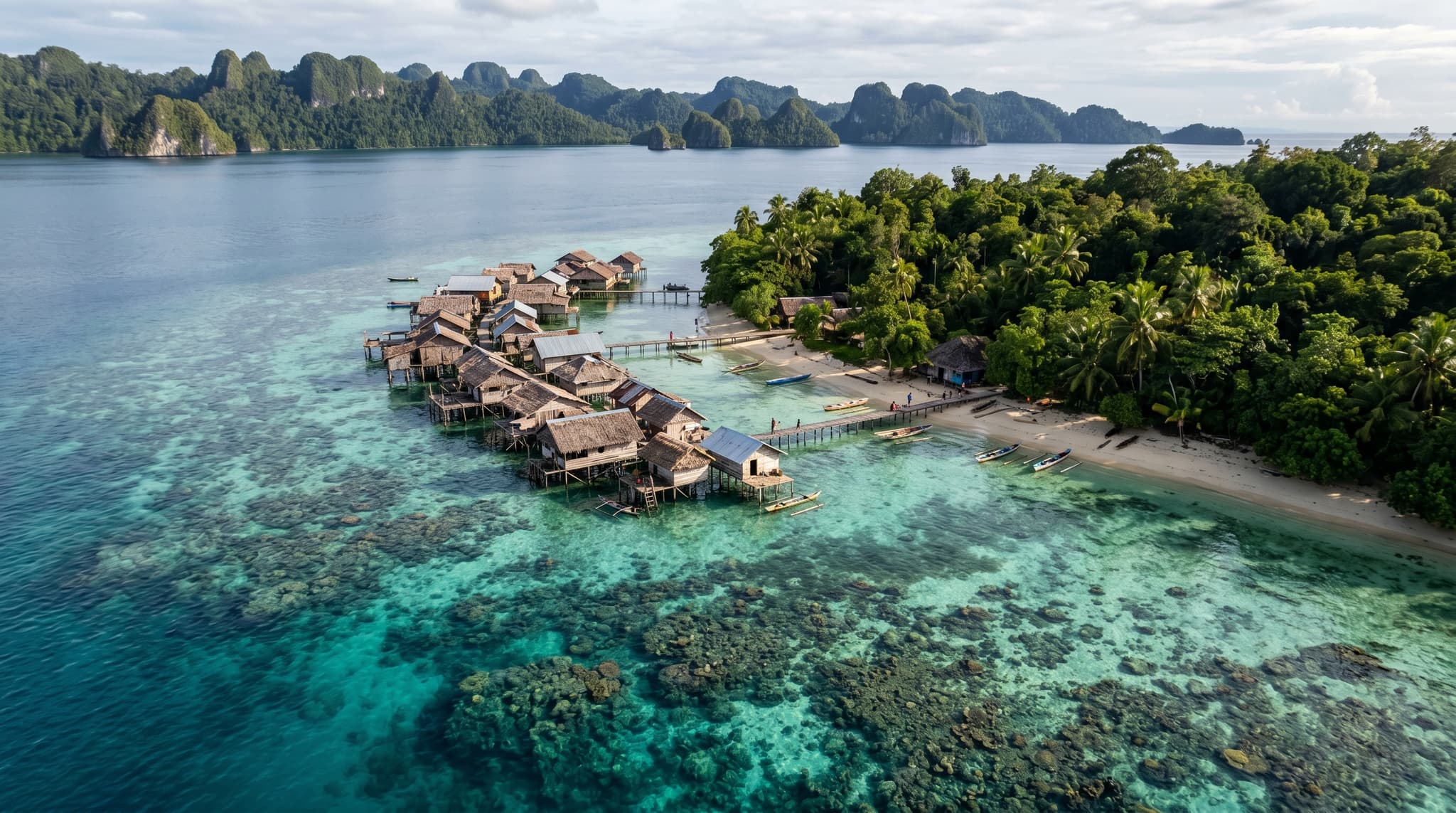
Raja Ampat offers far more than world-class diving. Here's what the islands actually look like when you get beyond the reef — on foot, by kayak, and from the top of a karst viewpoint — plus what it costs and how to plan around the seasons.
What to Expect in Raja Ampat
Raja Ampat is remote, expensive to reach, and logistically demanding. None of that is a reason not to go. But it shapes everything about how you plan a trip here, and it's worth being honest about that upfront.
The archipelago spans four major islands — Waigeo, Batanta, Salawati, and Misool — plus hundreds of smaller ones scattered across a marine area roughly the size of Belgium. There is no central hub you walk out of each morning. Almost every activity requires a boat transfer, and most require local coordination: a guide, a boatman, advance notice to a village. This is not Bali. The infrastructure is minimal by design, and that's part of what keeps the reefs and forests intact.
Plan for a minimum of five to seven days to justify the effort and cost of getting here. Ten or more if you're diving seriously. Anything less and you'll spend half your trip in transit.
Seasonally, the split matters more here than in most destinations. October through April brings calm seas, strong underwater visibility, and the best conditions for diving, snorkeling, and island hopping. May through September is wetter and rougher on the water, but the forests are lush, the waterfalls are full, and the Birds of Paradise are at their most active — a genuinely compelling reason to visit outside peak season. April sits in between: seas are still mostly calm, but early rains are possible. Monitor conditions and stay flexible.
One more thing. Most activities here require boats, and boats require fuel, and fuel is expensive to get to a place this remote. Budget accordingly, and don't expect the pricing logic of mainland Southeast Asia.
Diving: Liveaboard vs. Resort
This is what most people come for, and the reputation is earned. Raja Ampat sits at the heart of the Coral Triangle — the marine biodiversity here is among the highest recorded anywhere on Earth. Cape Kri holds the world record for fish species counted on a single dive. That's not marketing copy; it's a peer-reviewed data point.
The key sites read like a greatest-hits list: Cape Kri for sheer species density, Blue Magic for manta rays and pelagics on a seamount, Manta Ridge for reliable cleaning-station encounters, Melissa's Garden for what might be the most pristine coral garden you'll ever see, and Sardine Reef for the kind of baitball encounters that make underwater photographers forget to breathe.
All scuba diving in Raja Ampat requires guided tours — strong currents, significant depth, remoteness, and marine protection rules make this non-negotiable. The real decision is how you structure your diving: liveaboard or resort.
Liveaboard vs. Resort Diving
Liveaboard Duration
7–10 days typical
Liveaboard Dives
3–4 per day, 18–25 total
Liveaboard Coverage
Multiple regions — Dampier Strait to Misool
Budget Liveaboard
~IDR 42,000,000/person (10 nights, 25+ dives, max 8 guests)
Premium Liveaboard
$7,480–$10,065 USD (11 nights, all-inclusive)
Resort Dives
2–3 guided boat dives/day + unlimited house reef
Resort Coverage
Primarily Dampier Strait — Kri and Gam island bases
Resort Pace
More relaxed; easier to combine with non-diving activities
Liveaboard is the choice if maximizing dive sites is the priority. You'll cover far more geography — from the Dampier Strait down to Misool's remote southern reefs — and the daily rhythm is built around getting you underwater as often as possible. Budget options run around IDR 42,000,000 per person for 10 nights and 25-plus dives (excluding marine park fees and equipment rental). Premium operators charge $7,480–$10,065 USD for 11 nights, all-inclusive with fees. The gap is real, but so is the difference in comfort, food, and group size.
Resort-based diving works better for travelers who want a more relaxed pace, who are combining diving with non-diving activities, or who prefer macro photography and house reef exploration over covering maximum geography. Most resorts in the Dampier Strait offer two to three guided boat dives daily, plus unlimited access to their house reef — typically unguided, accessible anytime, and often remarkable in its own right. Turtles and reef sharks spotted from the pier is not an exaggeration at places on Kri Island and Gam Island.
One practical note: some liveaboards and resorts include marine park permits in their packages. Confirm with your operator before arrival so you're not paying twice or scrambling at the harbor.
Snorkeling
 in Raja Ampat — the striking turquoise freshwater feature on Waigeo island, illustrating the article's description of it as a snorkeling and scenic destination distinct from the marine reef sites](/_next/image?url=https%3A%2F%2Fimages.unsplash.com%2Fphoto-1666959085854-1a01225b04fb%3Fcrop%3Dentropy%26cs%3Dtinysrgb%26fit%3Dmax%26fm%3Djpg%26ixid%3DM3w4Njc2MzJ8MHwxfHNlYXJjaHwyfHxLYWxpJTIwQmlydSUyMHR1cnF1b2lzZSUyMHJpdmVyJTIwUmFqYSUyMEFtcGF0fGVufDB8MHx8fDE3NzQ4Mjk3ODF8MA%26ixlib%3Drb-4.1.0%26q%3D80%26w%3D1080&w=2048&q=75)

Snorkeling deserves its own section because a significant number of Raja Ampat visitors are not divers — and the snorkeling here is not a consolation prize. The reefs start shallow. In many places, the most spectacular coral is within two to three metres of the surface.
The standout sites: Piaynemo combines a famous karst viewpoint with excellent snorkeling directly below — you climb the stairs, take the photo, descend, and slip into water where the reef is absurdly healthy. Kali Biru (Blue River) is a striking turquoise freshwater feature that doubles as a scenic snorkeling spot. House reefs at homestays and resorts across the Dampier Strait are often extraordinary — some of the best snorkeling I've done anywhere has been within 30 metres of a wooden pier.
Then there's the Arborek Village jetty. Manta rays regularly pass through here, close enough to the surface that snorkelers get encounters that divers elsewhere would pay hundreds of dollars to chase. It's not guaranteed — nothing with wildlife is — but the frequency is remarkable.
Snorkeling Essentials
Best Conditions
October–April (calm seas, peak visibility)
Year-Round Option
Sheltered areas remain viable in wet season
Gear
Widely available for rent; some homestays and resorts include it
Certification
None required — open to all swimmers
Top Sites
Piaynemo, Arborek jetty, Kali Biru, house reefs
Best conditions are October through April, but sheltered areas remain viable year-round. No certification needed. If you can swim comfortably in open water, you can see Raja Ampat's underwater world.
Island Hopping and Viewpoints


The images that define Raja Ampat in most people's minds — mushroom-shaped karst islands rising from impossibly turquoise water — come from the viewpoints. Getting to them is half the experience.
Wayag Islands is the iconic panorama: a steep climb up bare rock to a viewpoint where the karst archipelago unfolds below you in every direction. The climb is short but exposed and genuinely steep in places — wear proper shoes, not flip-flops. The boat trip to Wayag is long and only feasible in calm seas, which effectively limits it to dry season. Worth the effort. This is one of those views that doesn't need a filter or a superlative — you just stand there.
Piaynemo offers a similar karst panorama with easier access. The wooden staircase to the viewpoint is well-maintained, the boat ride from most Dampier Strait bases is shorter, and the snorkeling below is excellent. If you can only do one viewpoint, this is the practical choice. If you can do both, do both — they're different enough to justify it.
Beyond the headline viewpoints, there's Puncak Dafalen (locally called Love Lagoon) and Puncak Harfat — additional karst viewpoints that see fewer visitors and offer their own angles on the landscape.
For island hopping at sea level: the Fam Islands offer beaches and tidal pools where you can spot corals, small rays, octopuses, and starfish in knee-deep water. Mushroom Island is exactly what it sounds like — an undercut limestone formation worth a slow boat pass and a few photos. Friwen Island combines good snorkeling with kayaking access. Pasir Timbul is a sandbar that emerges at low tide — good for a few hours of wading, swimming, and the kind of photos that make people back home quietly reconsider their life choices.
Misool, in the south, is more remote and typically accessed via liveaboard or a dedicated multi-day transfer. The limestone formations are dramatic, the lagoons are hidden, and the diving is world-class. It's a destination within a destination — plan accordingly.
Island Hopping Costs
Speedboat Open Tour
From IDR 8,000,000/person (4 days/3 nights, min. 4 participants)
Includes
Bungalow accommodation, three meals daily, snorkeling gear, Sorong transfers, island activities
Private Boat Charter
Varies widely — arrange through your accommodation or operator
Village Visits
Arborek is the most-visited village in Raja Ampat, accessible from most homestays and resorts in the Dampier Strait. It's known for traditional hat-weaving — the women of the village produce intricate woven hats that have become one of the region's most recognizable crafts — and for the jetty snorkeling mentioned above. The welcome is warm. Children will likely greet you. Someone will probably offer to show you the weaving process.
I want to be straightforward about the dynamic here. These visits are genuine economic lifelines for communities that have limited alternative income sources. The tourism revenue matters. The welcome is real. But the context is also commercial — you are a visitor being received in a way that has been shaped by years of tourism. Both things are true simultaneously, and acknowledging that doesn't diminish either one.
Sawinggrai is smaller and quieter than Arborek, and it's the starting point for Red Bird of Paradise viewing in the nearby forest. The village itself is less oriented toward tourist reception, which some travelers prefer.
Trekking and Birdwatching
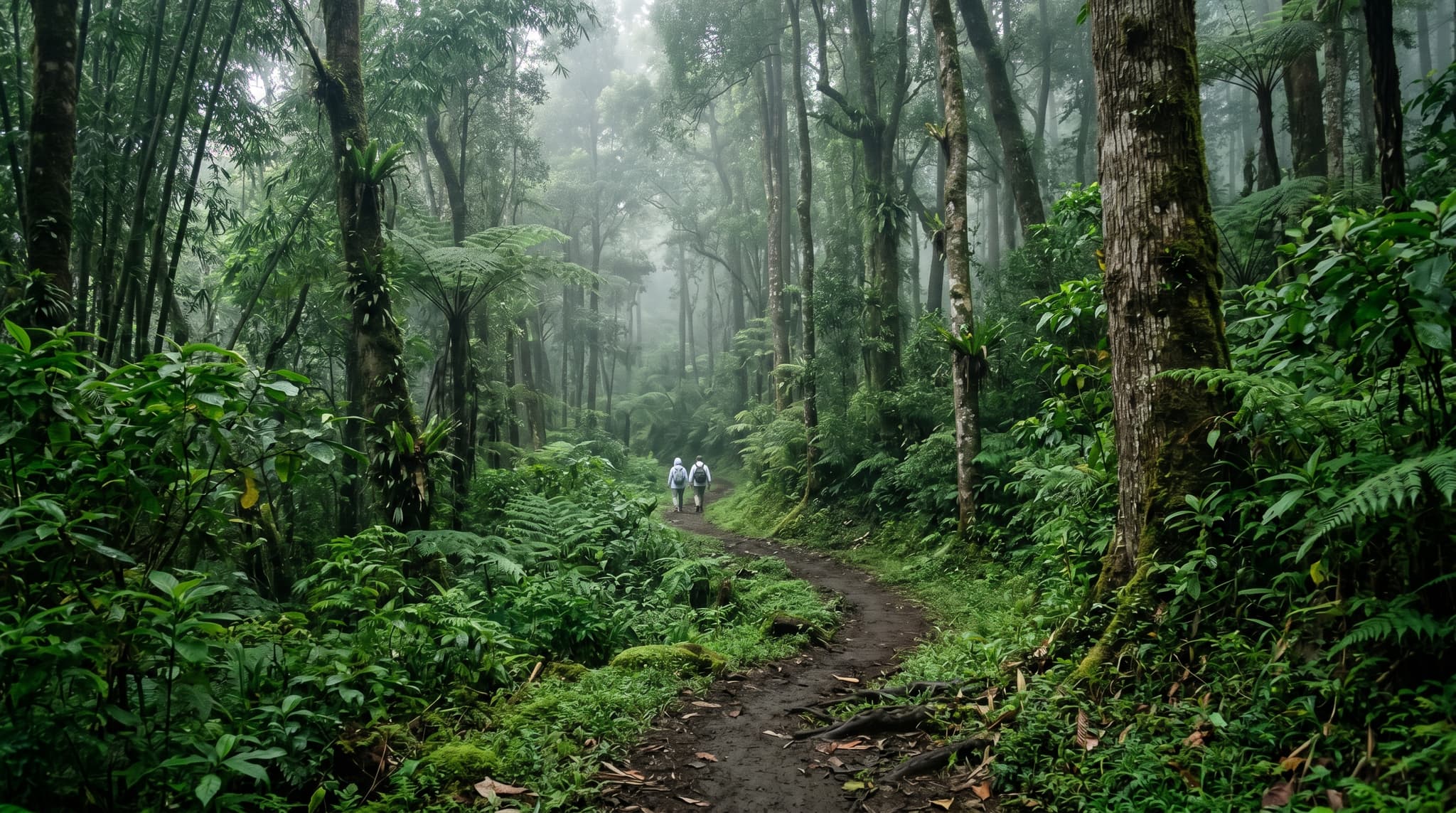
Raja Ampat's interior is dense, humid, and steep. These are not manicured trails. Expect mud, roots, inclines that require hands, and the kind of heat that makes you reconsider your fitness self-assessment. The reward is proportional.
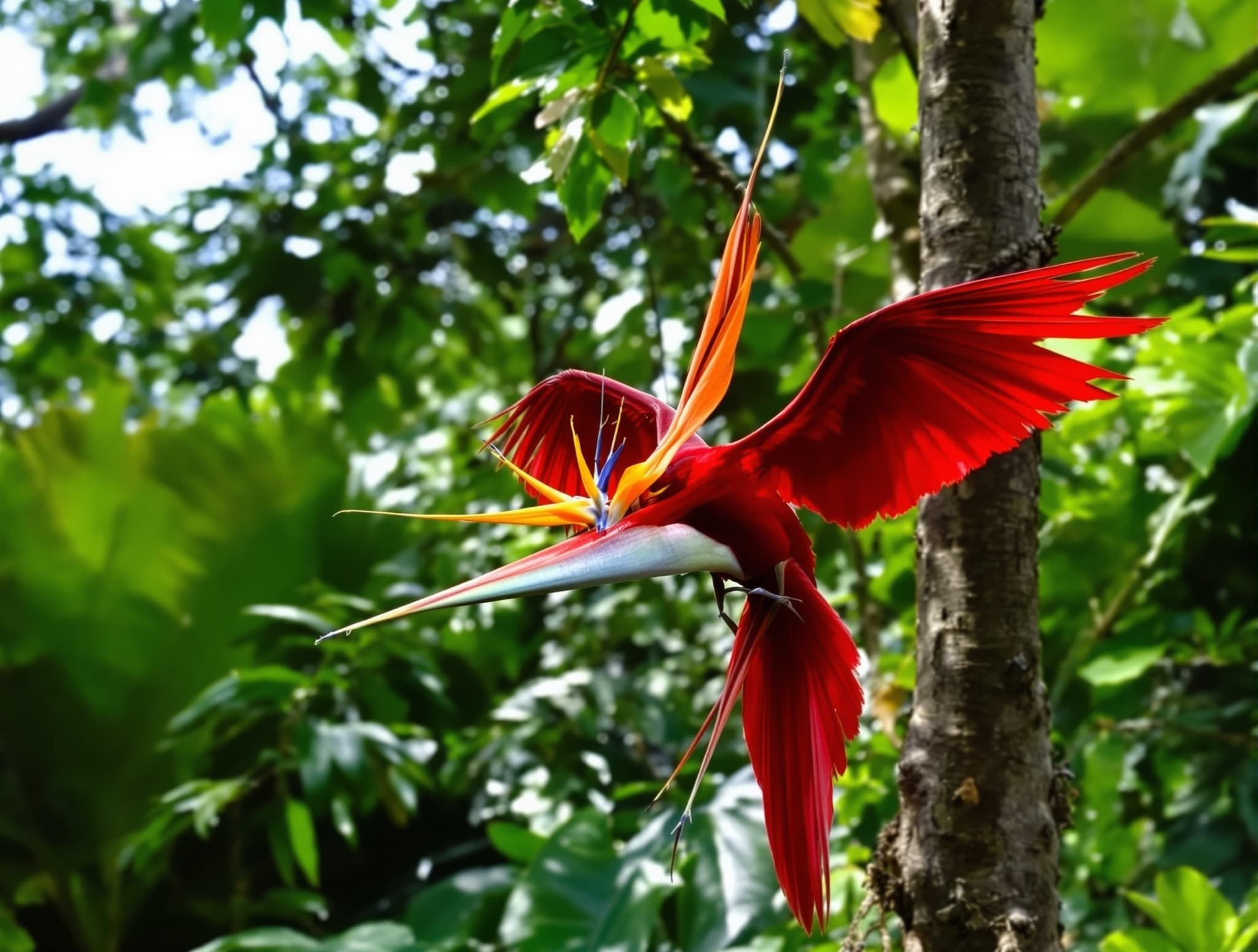
Waigeo, the largest island, offers wilderness trekking through primary forest with panoramic viewpoints overlooking the archipelago. It's also prime habitat for the Red Bird of Paradise — one of the most visually extraordinary birds on Earth, with long crimson tail plumes displayed during elaborate courtship dances.
Gam Island has steep interior mountains, mangrove forests hiding archer fish (which shoot jets of water to knock insects off branches — worth seeing even if you're not a dedicated birder), and its own Red Bird of Paradise population.
Batanta is the island for waterfalls. Batanta Waterfalls involves a jungle hike to a swimming hole in a forest setting — best during wet season when water flow is strongest. Batanta also offers Birds of Paradise tours.
Birdwatching Season
Best Months
May–August (wet season)
Key Species
Red Bird of Paradise, Wilson's Bird of Paradise
Viewing Islands
Waigeo, Gam, Batanta
Guides
Essential — for safety, navigation, and spotting
The birdwatching calendar is the strongest argument for a wet-season visit. May through August, when the Birds of Paradise are most active in their courtship displays, coincides with rougher seas that limit water-based activities — but the forest comes alive. If your primary interest is terrestrial wildlife and you're comfortable with rain and flexibility, this is your window.
Local guides are not optional for jungle treks. Safety, navigation, and the ability to actually spot wildlife you'd otherwise walk past — all three require someone who knows these forests.
Kayaking and Beach Days
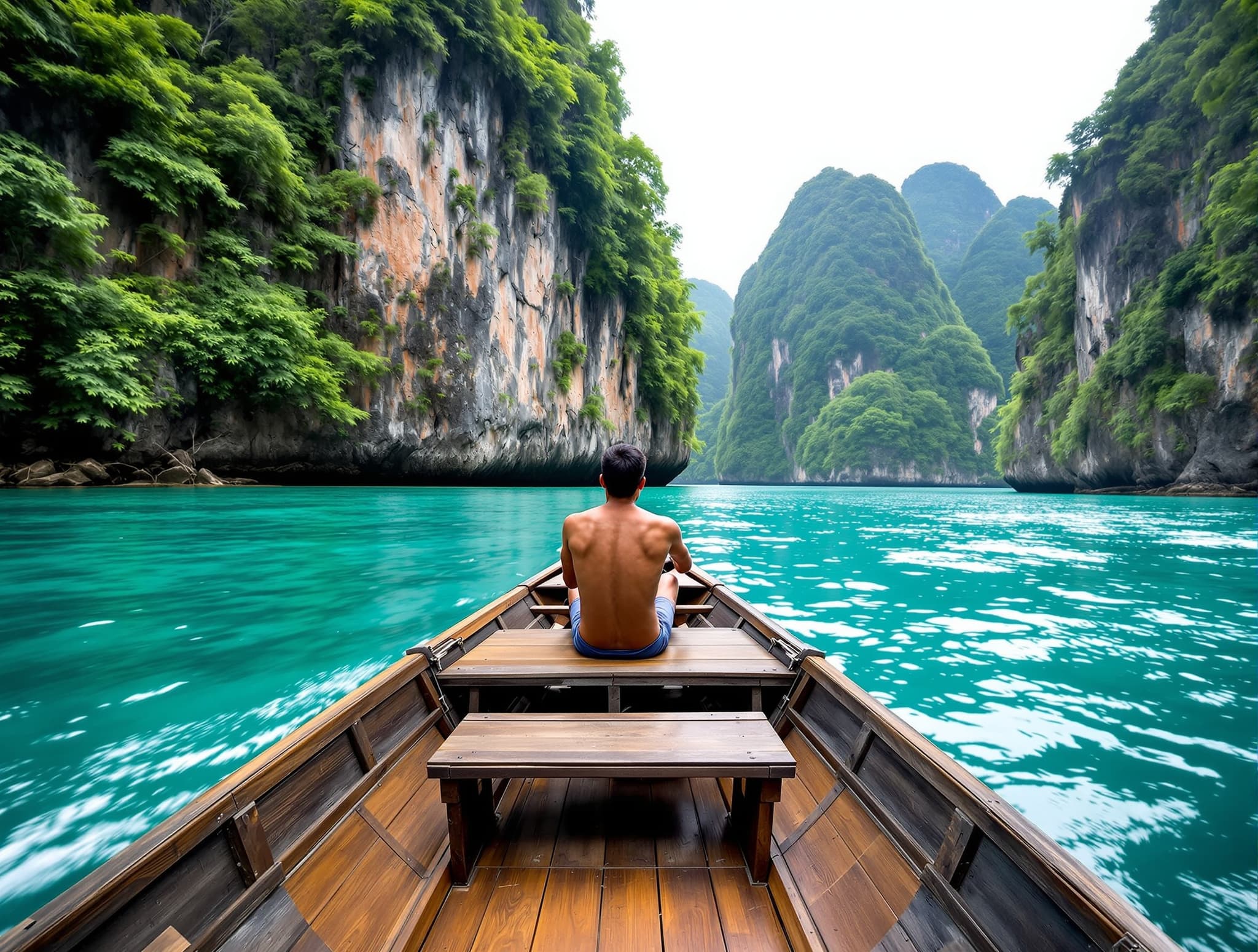
Sea kayaking through Raja Ampat is one of the quieter pleasures available here — and one of the best ways to experience the landscape at human speed. Paddling through narrow channels between karst islands, through mangrove corridors, into hidden lagoons where the water goes from deep blue to pale green in the space of a few strokes.
Kayaking is available on Batanta and Friwen, and through operators like Stay Raja Ampat and Meridian Adventures. Some outfitters offer multi-day kayaking safaris that include beach camping — an option for travelers who want something beyond the resort-homestay framework and are comfortable with minimal infrastructure.
The activity works year-round: sheltered areas remain paddleable during wet season, and dry season opens up more exposed routes that combine well with snorkeling stops.
For dedicated beach time, Pasir Timbul (the low-tide sandbar) and Pantai Saleo are the most commonly cited destinations. But honestly, beaches in Raja Ampat are less about any single named stretch of sand and more about the dozens of unnamed coves you'll pass on boat transfers — ask your boatman to stop if one catches your eye. They usually will.
Getting There and Permits
Every route to Raja Ampat goes through Sorong — specifically, Domine Eduard Osok Airport. Flights connect from Jakarta, Makassar, and Manado (sometimes with a stop in Ambon). From Sorong, you take a public ferry to Waisai, the administrative capital on Waigeo, which takes roughly two hours. Alternatively, many resorts and operators arrange speedboat transfers directly from Sorong — expect around $55 per person from some operators, more for remote destinations.
Permits
All visitors to Raja Ampat must purchase an entry permit and a conservation/marine park fee. This is non-negotiable — the fees fund marine protection, and your receipt (kartu kunjungan) must be carried at all times. Rangers check it at dive sites and island checkpoints, and fines apply if you can't produce it.
Permits can be purchased at Sorong Airport, Waisai Harbor, or through select homestays and resorts that handle payment on-site. Cash in IDR is preferred — some locations accept cards, but don't rely on it. Children may be exempt or discounted; verify on arrival.
Getting There
Gateway
Sorong (Domine Eduard Osok Airport)
Flights From
Jakarta, Makassar, Manado
Ferry to Waisai
~2 hours from Sorong
Resort Transfers
Speedboat from Sorong, ~$55/person (varies by operator)
ATMs
Limited — bring sufficient cash in IDR
Permits
Required for all visitors; purchased at Sorong Airport, Waisai Harbor, or through operators
Practical Planning Notes
Book early for dry season. Liveaboards, resorts, and even popular homestays fill months in advance for October through April. Three to six months ahead is reasonable for peak season.
Bring enough cash. ATMs are scarce and unreliable. Sorong is your last reliable opportunity to withdraw. Budget for permits, any activities not included in your package, tips for guides and boatmen, and a buffer for the unexpected.
Build in flexibility, especially during wet season. Boat trips cancel when seas are rough. Viewpoint hikes get rescheduled. The itinerary you planned on paper will shift — and that's fine, as long as you've left room for it.
Verify everything with your operator before travel. Permit fees, transfer logistics, what's included in your package, current weather conditions. Rules and prices change, and the information available online — including this article — may not reflect the most current situation. A direct conversation with your resort, homestay, or liveaboard operator is the most reliable source.
When to Go: Matching Your Trip to the Season
The season question in Raja Ampat isn't just about weather — it's about what kind of trip you want.
Seasonal Activity Match
Diving & Snorkeling
October–April (calm seas, visibility up to 30m)
Island Hopping & Viewpoints
October–April (Wayag requires calm seas)
Birdwatching
May–August (Birds of Paradise most active)
Waterfalls & Trekking
May–September (full water flow, lush forests)
Kayaking
Year-round (sheltered areas in wet season)
Beach & Relaxation
October–April (more sun, calmer conditions)
Transition Month
April — seas still mostly calm, early rains possible
October through April is when most visitors come, and for good reason. Calm seas open up the full range of water-based activities — diving, snorkeling, island hopping, the boat trip to Wayag. Underwater visibility peaks around October at roughly 30 metres. This is also peak season, meaning higher demand, higher prices, and the need to book well in advance.
May through September is quieter, potentially cheaper, and offers its own rewards. The forests are at their greenest. Waterfalls on Batanta are at full flow. The Birds of Paradise are displaying. If your interests lean terrestrial — or if you're a diver comfortable with reduced visibility and rougher transits — wet season is a legitimate choice, not a compromise.
The honest recommendation: most first-time visitors should aim for dry season, when the full range of Raja Ampat's experiences is accessible. But if you've been before, or if birdwatching and jungle trekking are what draw you, the wet season is underrated and under-visited.
Frequently Asked Questions
Raja Ampat's permit fees, transfer costs, and operator offerings change. Verify all practical details — especially permit costs and package inclusions — directly with your accommodation or tour operator before booking. The information in this article reflects conditions at the time of writing and may not be current when you travel.