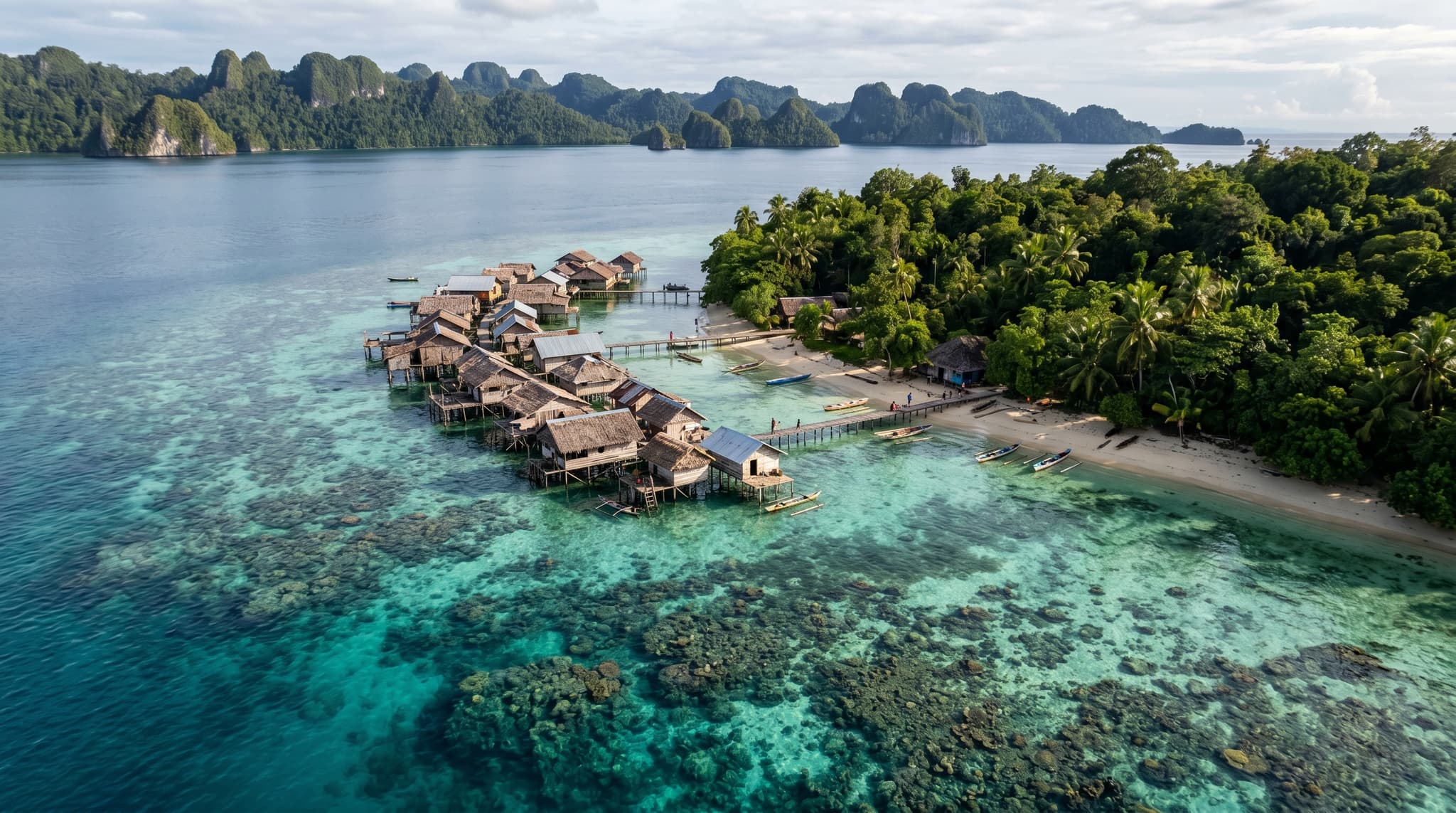
Mushroom Island in Raja Ampat's Wayag lagoon is stunning but remote. Here's what it takes to get there, what to expect, and whether it's worth the effort.
You've probably already seen Mushroom Island. Not in person — on Instagram, on Pinterest, on the cover of every third article about Raja Ampat. It's that limestone karst formation rising from turquoise water, undercut at the base so it looks like a giant stone mushroom balanced on a narrow stem. The image is so ubiquitous it almost feels like a rendering. It's not. It's real, it's in one of the most remote corners of Indonesia, and getting there is significantly more complicated than double-tapping a photo suggests.
Let me be direct about what Mushroom Island actually is, what it takes to reach it, and whether the effort justifies the payoff.
What You're Actually Looking At
Mushroom Island isn't a single island — it's a karst formation within the Wayag island group, a cluster of limestone pinnacles in the far north of Raja Ampat. The "mushroom" shape comes from centuries of tidal erosion eating away at the base of the rock while the top remains intact. The result is a top-heavy pillar that looks structurally impossible.
The Wayag area contains dozens of these karst islands, many with the same undercut profile. But one formation in particular — wider cap, narrower stem, sitting in shallow water that shifts between electric blue and deep green depending on the light — became the signature shot. That's the one people mean when they say "Mushroom Island."
Wayag Area at a Glance
Distance from Waisai
~150 km by boat
Travel Time
3–5 hours one way depending on vessel
Snorkeling
Excellent — reef sharks, coral gardens
Viewpoint Hike
~20 minutes, steep, no railing
The surrounding lagoon is shallow, warm, and absurdly clear. Blacktip reef sharks patrol the shallows. The coral coverage is dense. It's a genuinely extraordinary marine environment, not just a photo opportunity — though it's absolutely that too.
Getting There: The Logistics Nobody Glosses Over
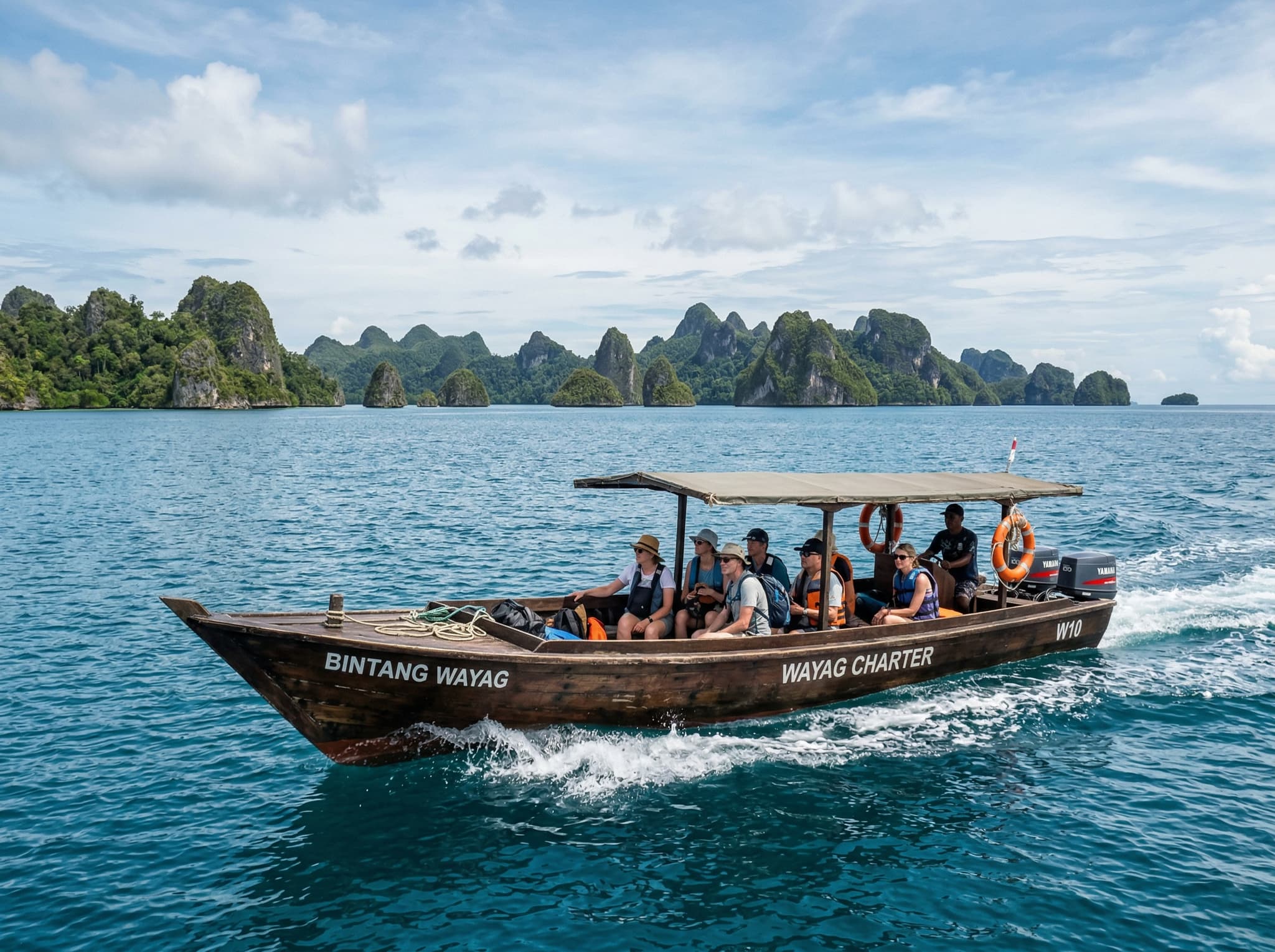
Here's where the Instagram fantasy meets Indonesian geography. Mushroom Island sits in the Wayag lagoon, roughly 150 kilometers north of Waisai, Raja Ampat's main town. There's no ferry service. No scheduled boat. You either charter a vessel, join a liveaboard dive trip that includes Wayag, or book through a homestay or resort that arranges excursions.
Boat charter from Waisai is the most common independent option. A speedboat runs approximately 3,000,000–5,000,000 IDR ($190–$315) for a day trip, depending on boat size, fuel costs, and negotiation. [VERIFY: prices fluctuate significantly with fuel costs — confirm with Waisai-based operators for current rates.] The ride takes three to five hours each way, and sea conditions matter enormously. In rough weather, the trip is genuinely unpleasant or simply not possible.
Liveaboard dive trips that cover the northern Raja Ampat route typically include a Wayag stop. These range from $2,000 to $5,000+ for multi-day itineraries. If you're already planning a diving trip, this is the most comfortable way to see the area.
Resort-organized excursions from places in the Dampier Strait area sometimes offer Wayag day trips, but the distance makes them long, tiring days. Ask specifically about transit time before booking.
The Wayag Viewpoint: Worth the Scramble
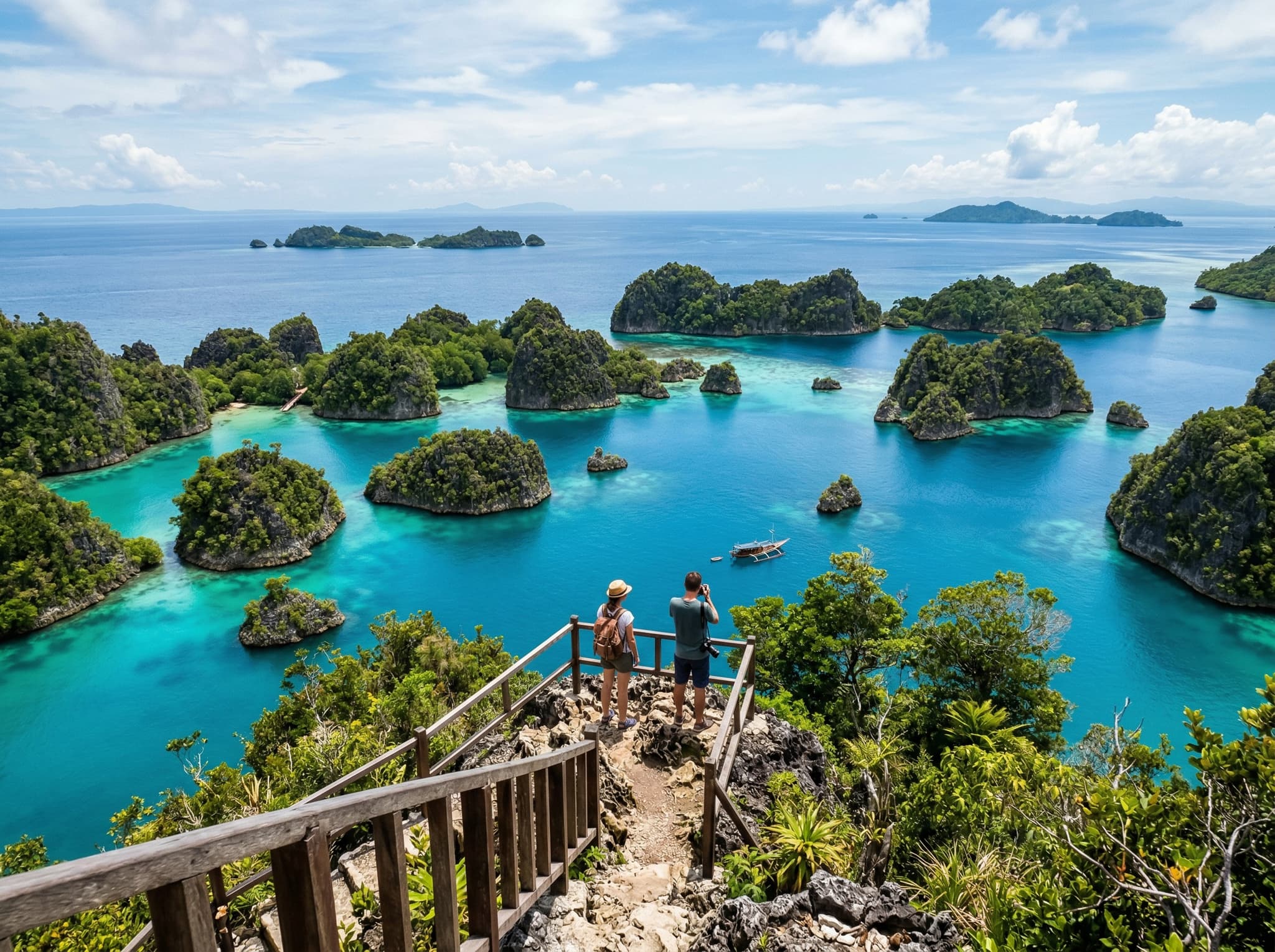
Most visitors combine Mushroom Island with the Wayag viewpoint hike, and you should too. It's a steep 15–20 minute climb up a karst ridge — no formal trail, some rope sections, slippery when wet — that delivers one of the most photographed panoramas in Southeast Asia. From the top, the entire lagoon spreads below you: dozens of green karst islands dotting impossibly blue water.
Wear proper shoes. Not flip-flops, not sandals — actual shoes with grip. The limestone is sharp and the path is unforgiving. Bring water. There's no shade at the top.
The view is genuinely one of those moments where the reality matches the hype. I don't say that often.
Snorkeling in the Lagoon
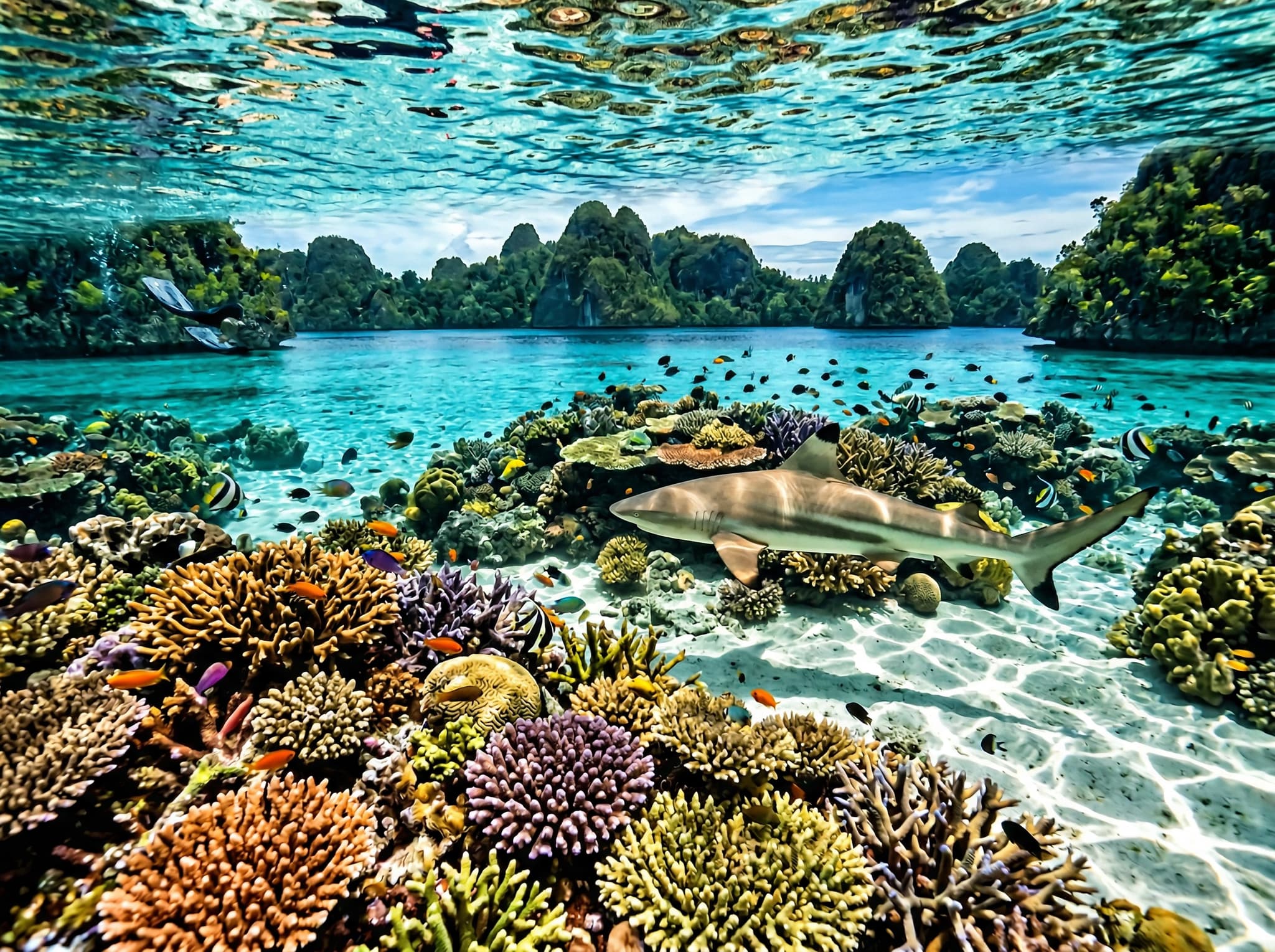
The snorkeling around the Wayag karst formations is excellent and often overlooked by visitors focused on the viewpoint and the photo. The shallow lagoon hosts blacktip reef sharks, sea turtles, and healthy hard coral. The water is warm enough that you don't need a wetsuit, and visibility regularly exceeds 15 meters.
Your boat captain will know the best spots on any given day. Trust their judgment — they read these waters better than any guidebook can.
Conservation Context
Wayag falls within the Raja Ampat Marine Protected Area, one of the most important marine conservation zones in the Coral Triangle. Visitors are required to purchase a Raja Ampat environmental service tag, which funds local conservation and community programs. [VERIFY: as of early 2024, the tag costs 1,000,000 IDR (~$62) for international visitors. Confirm current pricing through the Raja Ampat government tourism office.]
Don't touch the coral. Don't chase the sharks. Don't stand on the reef in shallow areas. These aren't suggestions — they're the baseline for visiting a place this ecologically significant.
Is It Worth the Effort?
Yes — with caveats. If you're already in Raja Ampat for diving or island exploration, Wayag and Mushroom Island deserve a full day. The combination of the viewpoint, the snorkeling, and the sheer visual impact of the karst lagoon is unlike anything else in the region.
If you're considering a trip to Raja Ampat solely for this one photo, recalibrate. The journey to Wayag is long, weather-dependent, and expensive relative to a single stop. Raja Ampat's real value is the cumulative experience — the diving at Misool, the mantas at Manta Sandy, the homestay culture, the feeling of being genuinely remote. Mushroom Island is the highlight reel, but the full season is better.