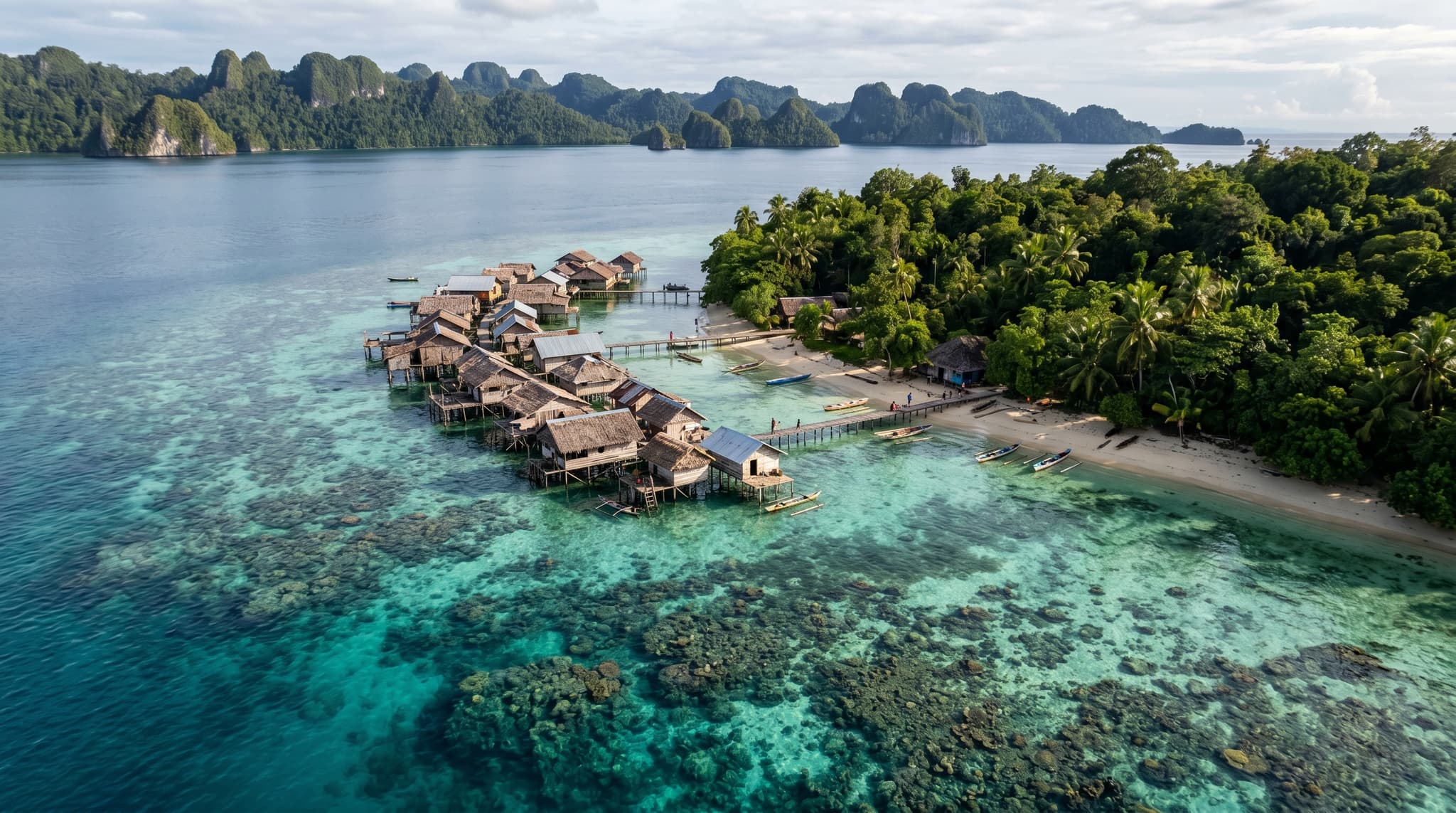
Manta Ridge in Raja Ampat delivers close manta ray encounters at a cleaning station in the Dampier Strait. Here's when to go, what to expect, and how to dive it right.
There are a handful of places on earth where manta rays show up reliably, and fewer still where the encounters feel genuinely wild rather than staged by bait or boat traffic. Manta Ridge in Raja Ampat is one of them. The site consistently ranks among the top manta encounters in Indonesia — and given that Indonesia spans over 17,000 islands with world-class diving scattered across them, that's not a small claim.
The site is a submerged ridge running along the southern edge of Arborek Island in the Dampier Strait. Mantas use it as a cleaning station, where small wrasses and cleaner fish pick parasites off their bodies. The result: rays that aren't passing through. They're circling, hovering, returning. Divers who position themselves correctly on the ridge can watch mantas glide overhead at arm's length for minutes at a time.
What Makes Manta Ridge Different

Raja Ampat has several manta sites — Manta Sandy, on the sandy bottom near Arborek's western side, is the other well-known one. The two are often compared, and the comparison is worth making clearly.
Manta Ridge vs. Manta Sandy
Terrain
Ridge: rocky reef slope / Sandy: flat sand bottom
Depth
Ridge: 12–22m / Sandy: 10–18m
Manta Behavior
Ridge: cleaning station passes / Sandy: feeding and cruising
Current
Ridge: moderate to strong / Sandy: usually mild
Best For
Ridge: close encounters / Sandy: relaxed observation
Manta Sandy is the gentler dive — easier current, shallower bottom, good for less experienced divers or photographers who want to settle on the sand and wait. Manta Ridge demands a bit more. The current along the Dampier Strait can pick up, and positioning matters. You want to stay low on the ridge, slightly below the cleaning station, and let the mantas come to you. Chase them and they leave. Stay still and they'll circle back.
For divers with reasonable buoyancy control and some current experience, Manta Ridge delivers the more dramatic encounters. The mantas come closer, the reef itself is more visually interesting, and the overall experience feels less like watching wildlife TV and more like being inside it.
When to Dive Manta Ridge

Manta activity at the ridge peaks during Raja Ampat's main diving season, roughly October through April. This aligns with the calmer seas and better visibility across the region. November through January tends to be the sweet spot — operators in the area report the highest frequency of manta sightings during these months.
That said, mantas are wild animals, not a scheduled performance. Some days the ridge is empty. Some days in the off-season a dozen rays show up. The Dampier Strait's nutrient-rich currents draw plankton year-round, which keeps mantas in the general area even outside peak months. But if you're building a trip specifically around manta encounters, plan for the October–April window and give yourself multiple dive days. One dive at Manta Ridge is a gamble. Three dives across a week is a strategy.
Getting There and Logistics
Manta Ridge is accessed from the Arborek and Kri Island area of the Dampier Strait — the most popular diving zone in Raja Ampat. Most liveaboards and dive resorts in the region include Manta Ridge in their standard itineraries.
If you're based at a homestay or resort on Kri, Arborek, or nearby Gam Island, the boat ride to Manta Ridge is typically 10–25 minutes. It's a short hop, which means operators can be flexible about timing based on current and conditions.
Logistics
Nearest Hub
Waisai (1–2 hours by boat)
Getting to Waisai
Ferry from Sorong (~2 hours) or speedboat (~1 hour)
Raja Ampat Marine Park Tag
1,000,000 IDR (~$62) [VERIFY — fees change; confirm before booking]
Certification Required
Open Water minimum; Advanced recommended
You'll need a valid Raja Ampat Marine Park entry tag, purchased either online or at the Waisai port office. This tag funds conservation efforts across the marine protected area, including patrol boats, reef monitoring, and community programs. It's not optional and it's not a tourist tax — the marine park system is one of the reasons Raja Ampat's reefs remain in the condition they're in.
Responsible Diving at the Cleaning Station
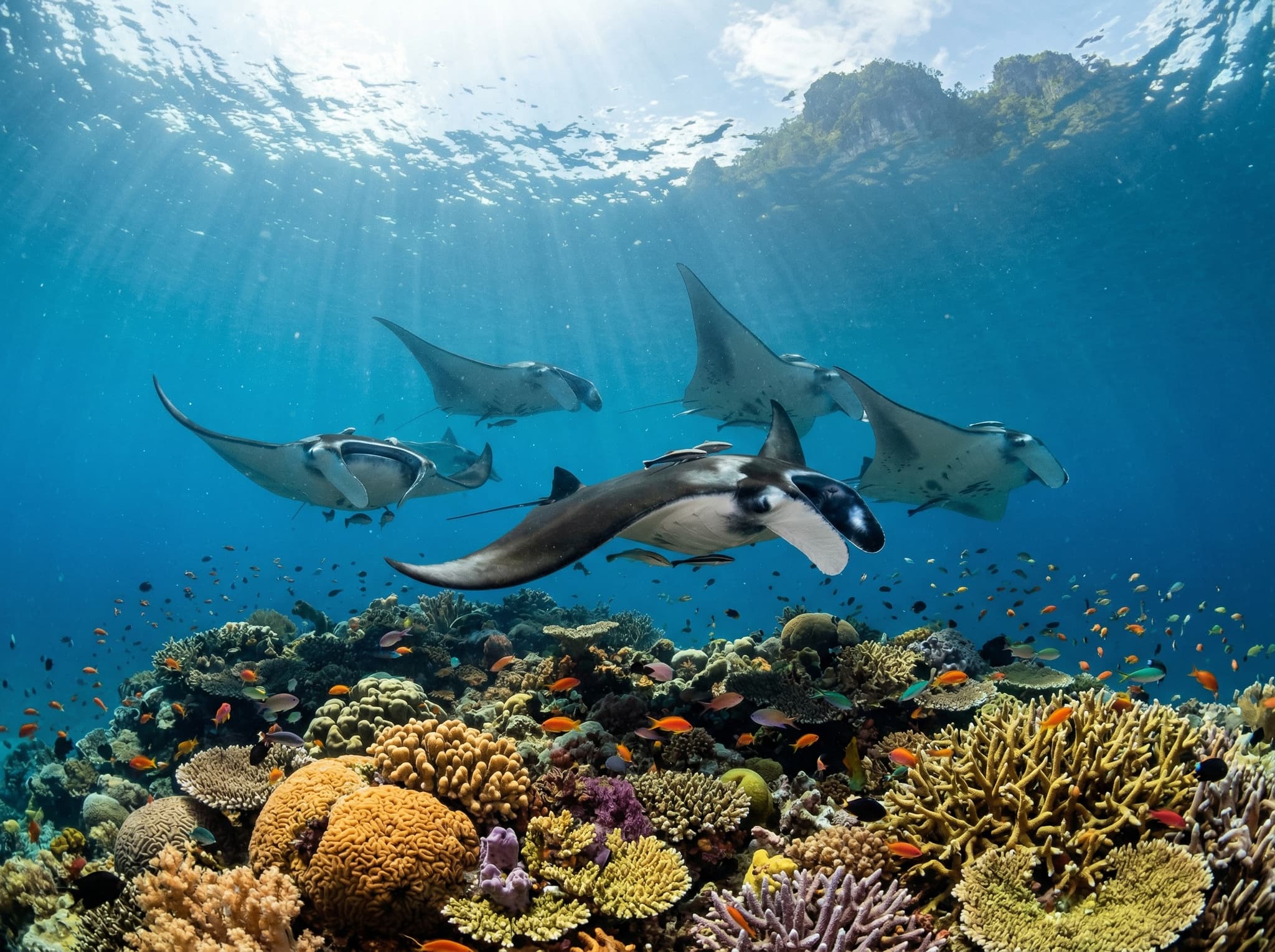
Cleaning stations are ecologically sensitive. Mantas return to them repeatedly — sometimes for years — but only if the site remains undisturbed. A few rules that responsible operators enforce and that you should follow regardless:
- Stay at least 3 meters from any manta. They may come closer to you. That's their choice, not yours.
- Don't position yourself directly above the cleaning station. You'll block the mantas' approach path and they'll simply leave.
- No touching. This should be obvious. It isn't always.
- Minimize flash photography. Strobes pointed directly at a manta's face can disrupt cleaning behavior. Ambient light or diffused strobes are the way to go.
Raja Ampat's marine park regulations prohibit extractive activities and mandate sustainable tourism practices within the protected area. The manta population here benefits from protections against fishing and harassment that don't exist in many other Indonesian dive regions. That's worth respecting — and worth funding through your marine park tag.
The Bottom Line
Manta Ridge is the best manta dive site in Raja Ampat for divers who want close, dynamic encounters and can handle moderate current. It's not the only manta site in the area, and it's not the easiest, but it delivers the kind of experience that justifies the logistics of getting to one of the most remote dive regions in Southeast Asia.
Build your trip around multiple dives here across several days. Go in the morning. Stay low on the ridge. And be patient — the mantas have been using this cleaning station far longer than any of us have been visiting it.