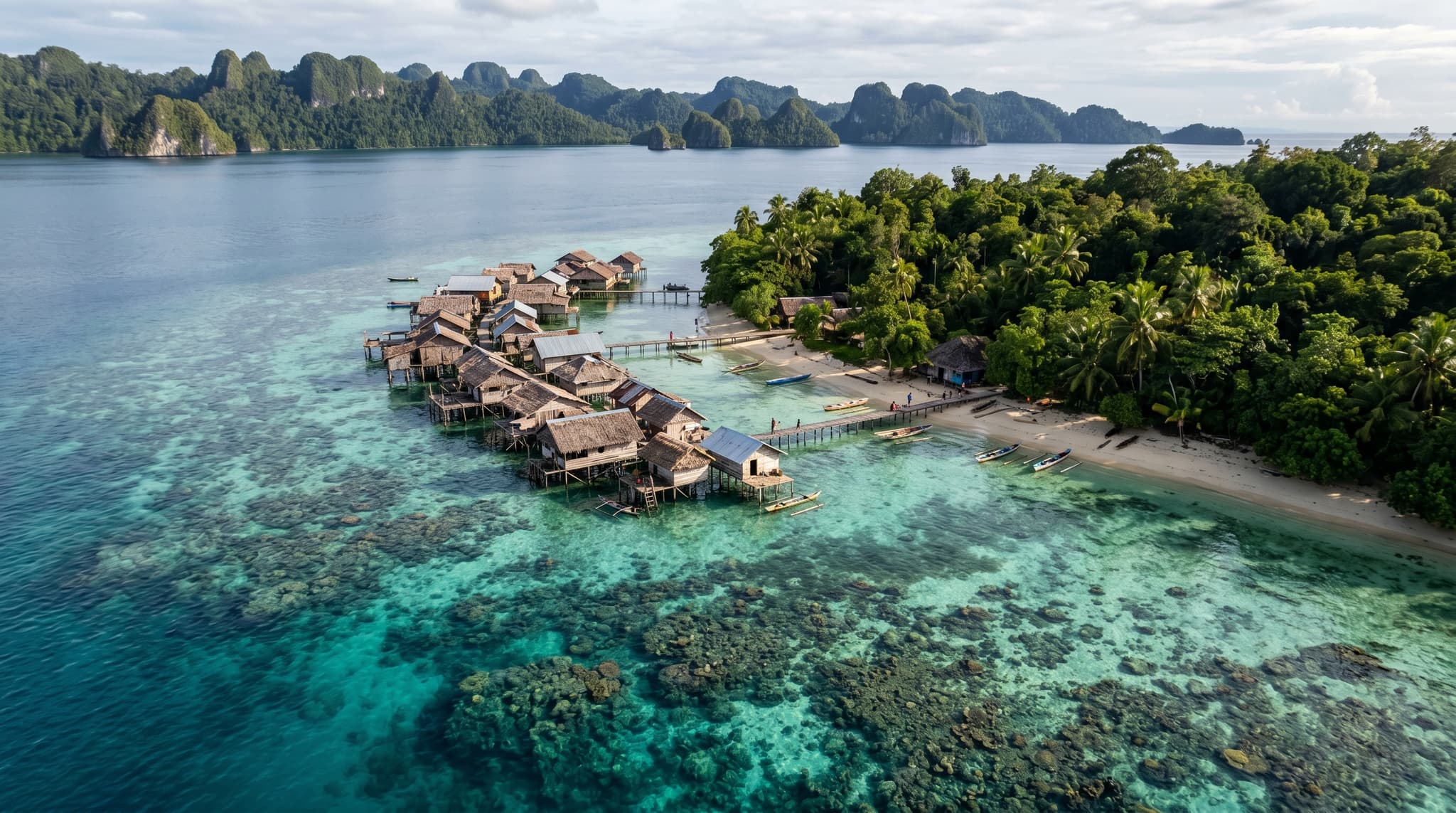
Gam Island offers Raja Ampat's richest reefs, manta encounters, and simple homestay life — here's how to get there, where to stay, and what's underwater.
Gam Island doesn't announce itself. There's no pier with a welcome sign, no cluster of dive shops competing for attention. You arrive by speedboat from Waisai, the engine cutting out in shallow water the color of weak tea — tannins from the mangroves — and someone from the homestay wades out to help with your bag. That's the arrival. That's the whole ceremony.
It's one of the four major islands in Raja Ampat's archipelago, sitting just south of Waigeo and forming half of the narrow channel known as The Passage. Most visitors come for what's underwater, and fairly so — the reefs around Gam are among the most biodiverse on the planet. But the island itself has a particular stillness that rewards anyone willing to sit with it for a few days.
Getting to Gam Island

The journey starts in Sorong, the gateway city for all of Raja Ampat. From Domine Eduard Osok Airport, a fixed-price taxi (IDR 100,000 / ~USD 6) takes 10–15 minutes to reach Pelabuhan Rakyat, the public ferry harbor.
Ferry: Sorong to Waisai
Operator
Marina Express Bahari (or similar)
Duration
Approximately 2 hours
Economy Class
IDR 137,000 / ~USD 9 [VERIFY]
VIP Class
IDR 262,000 / ~USD 17 [VERIFY]
Payment
Cash, cards, QRIS — no advance booking
Ferry departures vary by day: Monday, Tuesday, Thursday, and Saturday typically have a single 14:00 sailing; Wednesday, Friday, and Sunday add a 09:00 departure. These schedules shift — confirm locally before showing up at the port.
From Waisai, a local speedboat covers the 30–60 minutes to Gam. Many homestays include transfers timed to ferry arrivals, so confirm this when you book. Independent speedboat charters run IDR 500,000–1,500,000 round-trip per group (~USD 30–100), depending on distance and negotiation.
Where to Stay
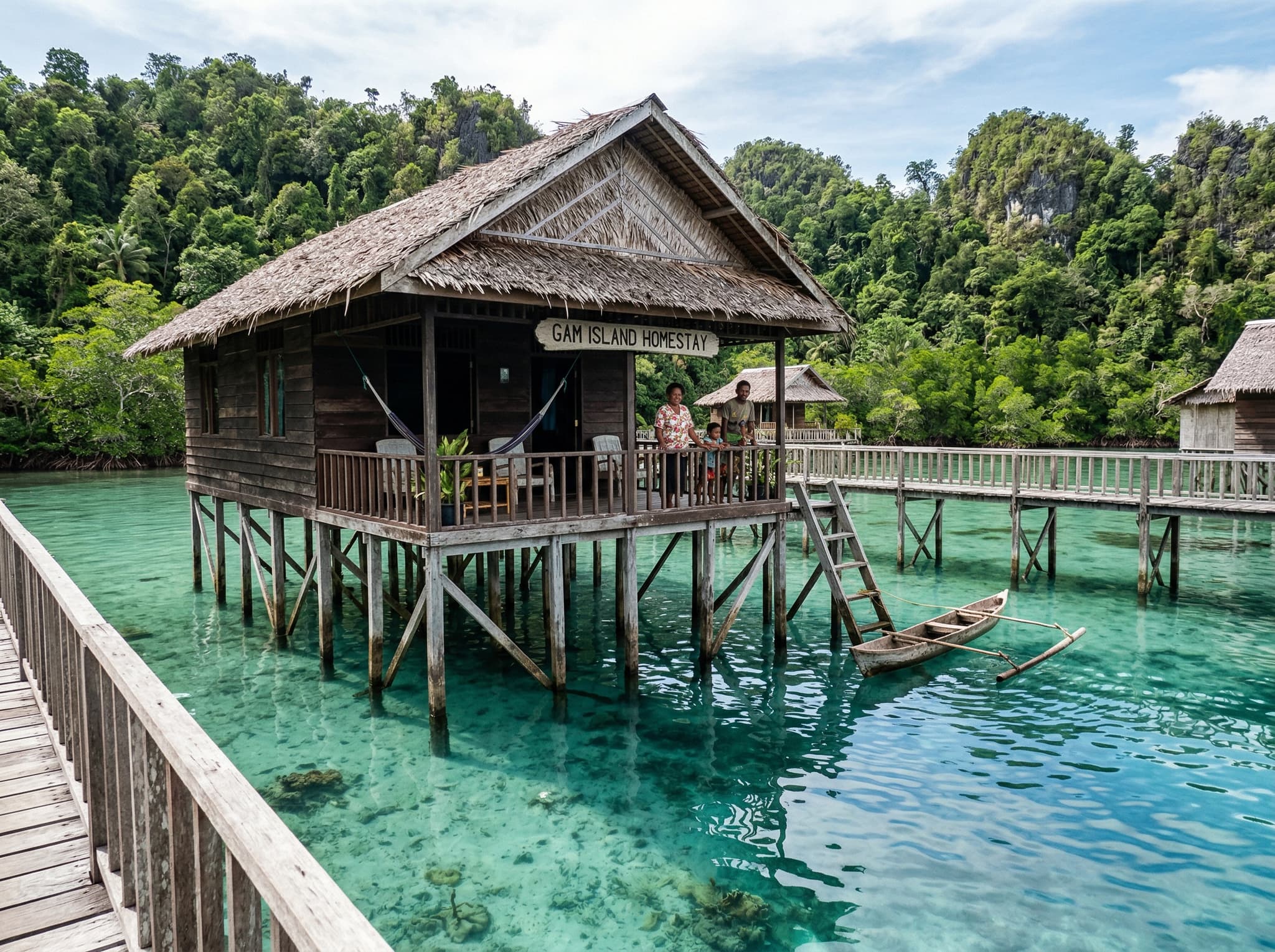
Gam's accommodation is almost entirely homestays — wooden bungalows built over the water or along the beach, run by local families. Full board (three meals plus drinks) is standard and often the only option, which makes sense on an island with no restaurants.
Expect to pay IDR 350,000–600,000 per night (~USD 25–57) depending on the homestay and season. High season (March–May) pushes prices toward the upper end.
Raja Ampat Diva Homestay offers VIP bungalows with ensuite bathrooms — a relative luxury here. Yenbainus Homestay, near Beser Bay, consistently earns high marks for its house reef and kayaks. Yenanas Paradise, located near the former Batu Lima site (now called Taporbam), is about 30 minutes from Waisai with good snorkeling access.
Shared bathrooms with western toilets and dip-mandi (bucket showers) are the norm. Electricity is typically generator-powered and limited to evening hours. Bring a headlamp and the right expectations.
What's Underwater
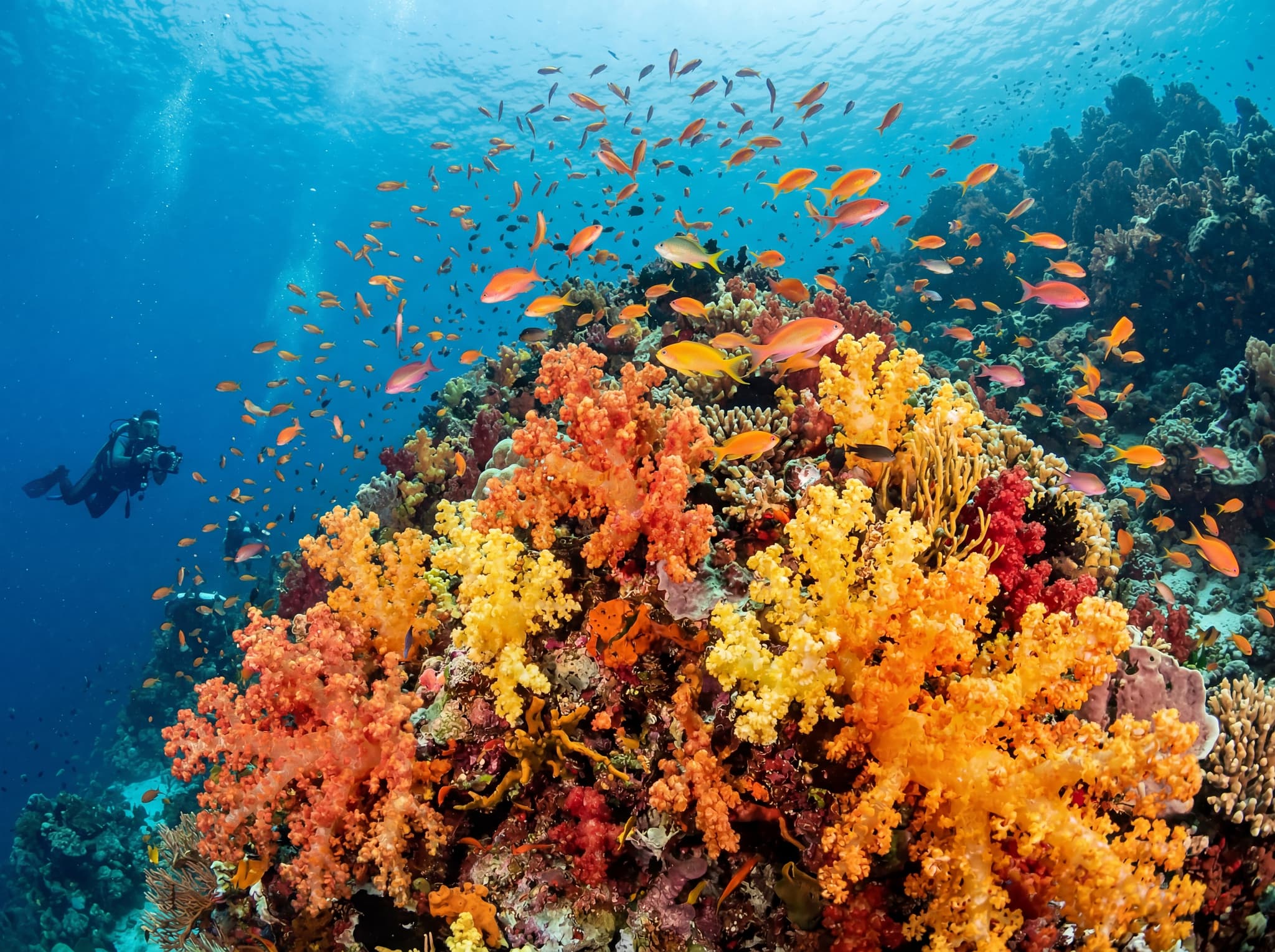
This is the reason Gam exists in the travel imagination. The reefs begin in water shallow enough to stand in — healthy hard corals at 3–5 feet — and drop away into walls exceeding 120 feet.
Citrus Ridge, at Gam's western tip, is named for its orange and yellow soft corals. Schooling barracuda, lionfish, turtles, and pygmy seahorses populate the bommies. It's accessible to both snorkelers and divers, which is uncommon for sites this rich.
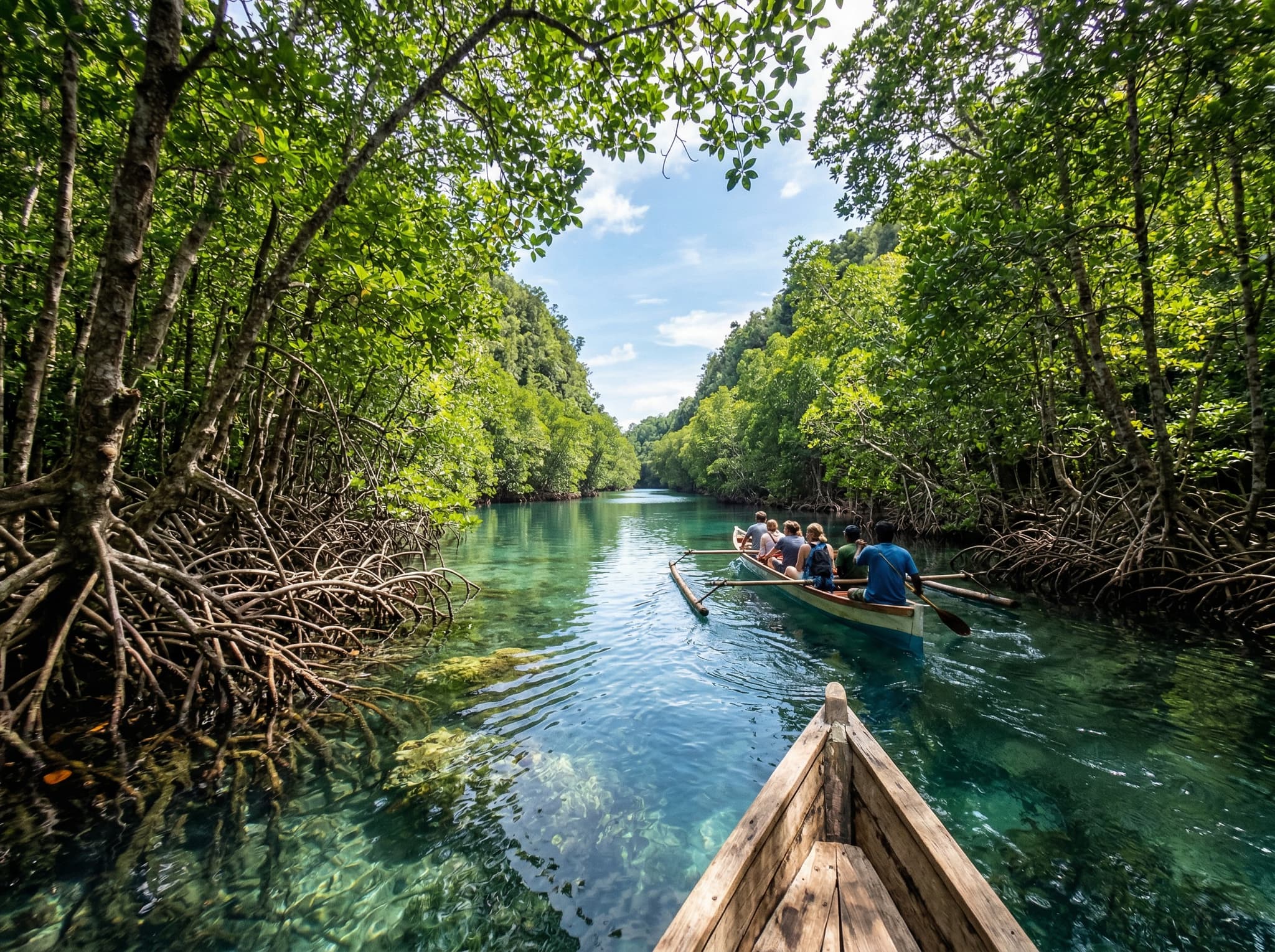
The Passage — the narrow channel between Gam and Waigeo — is unlike any other dive or snorkel site in the region. The mangrove-lined waterway harbors wobbegong sharks and an ecosystem shaped by the mixing of fresh and salt water. Day trips typically depart around 08:00, include lunch and a village visit, and return by 16:00.
Blue Water Mangroves, near the villages of Sawinggrai or Korbekwan, is where the strange things live: dense nudibranch populations, juvenile reef fish, and epaulette walking sharks that can be observed up close along the roots. The mangroves transition into vibrant coral reefs and drop-offs — two ecosystems in a single dive.
Yeben Shallows, off Gam's west coast, functions as a manta ray cleaning station. Snorkelers float at the surface while mantas cycle through below, attended by small cleaner fish. The coral here is secondary to the spectacle.
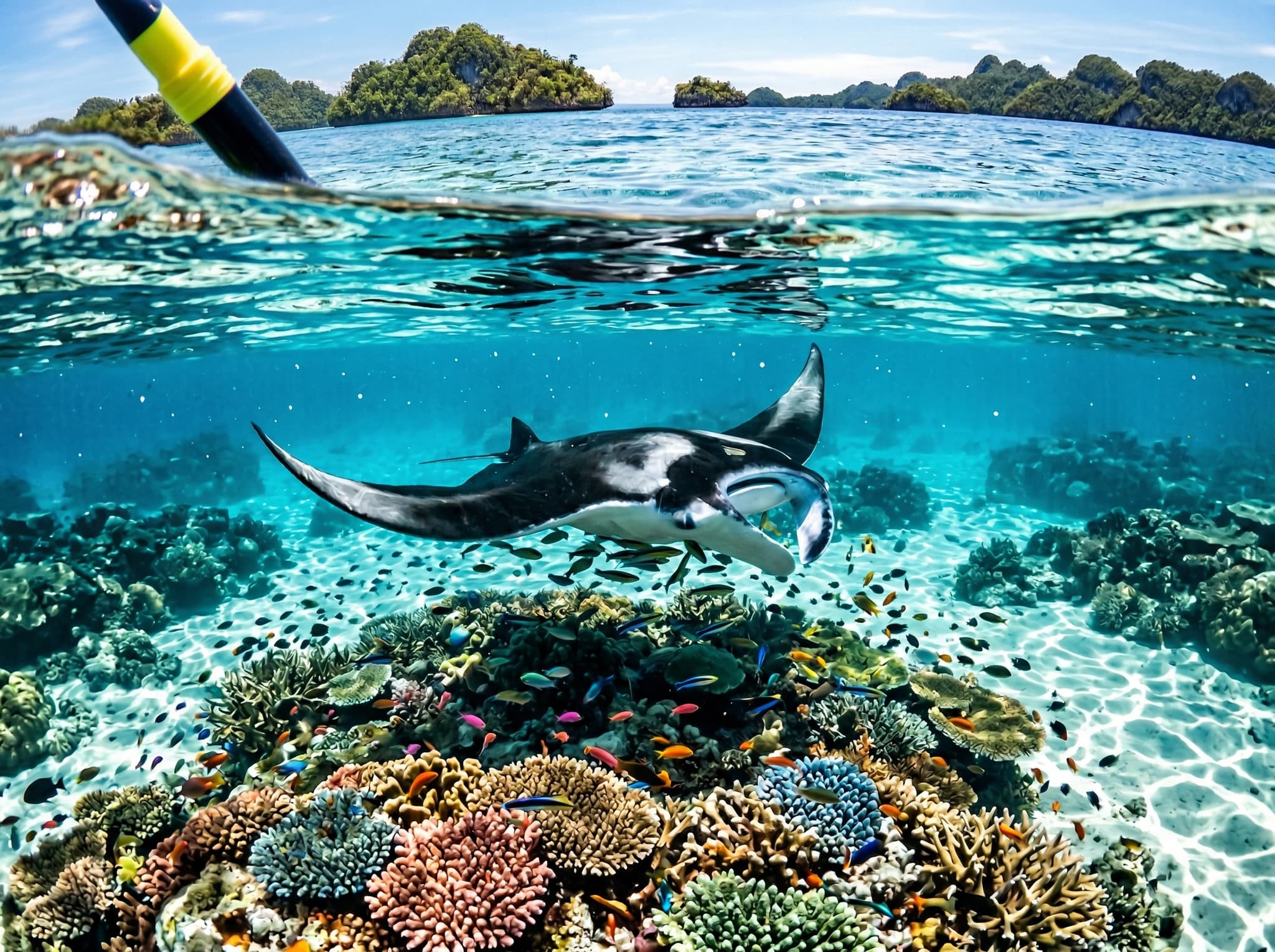
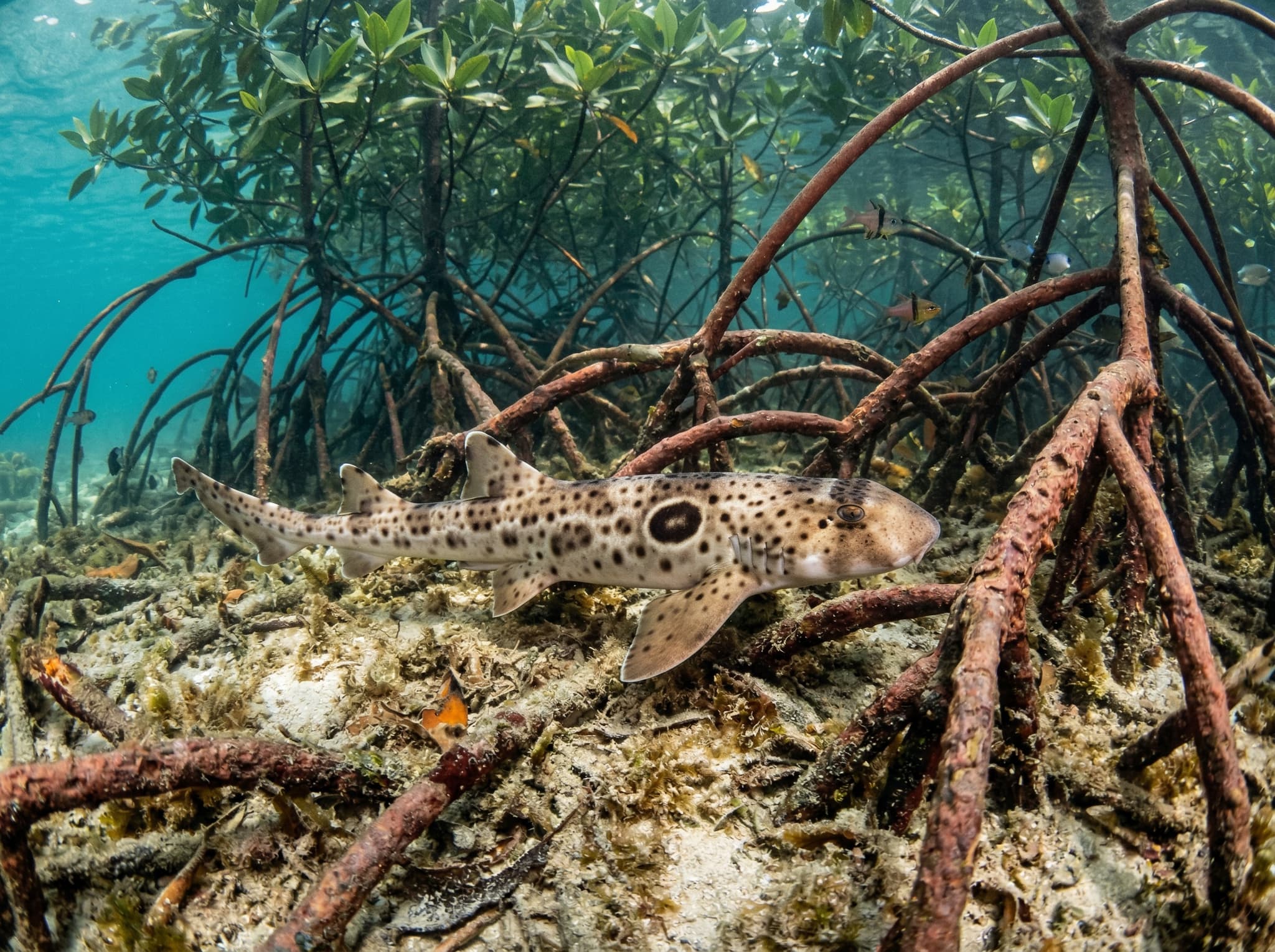
Nearby sites reachable from Gam-based homestays include Sawandarek (minimal current, good for beginners), Gam Channel, 5 Rocks, and Cape Kri — the last of which holds a record for the highest fish species count recorded on a single dive, according to Conservation International surveys.
Entry Fees and Conservation
Two mandatory fees apply to all Raja Ampat visitors, regardless of which island you visit.
Raja Ampat Entry Fees (International Visitors)
Marine Park Entry Permit
IDR 700,000 / ~USD 45 — valid 12 months [VERIFY]
Visitor Entry Ticket
IDR 300,000 / ~USD 19 [VERIFY]
Total
~IDR 1,000,000 / ~USD 65
Children Under 12
Exempt from both fees
Purchase
Online (kkprajaampat.com / sipari-rajaampat.id) or in Waisai
These fees fund marine conservation and community programs across the Raja Ampat Marine Protected Area — one of the largest in Southeast Asia. There is no additional fee specific to Gam Island.
When to Go
October through April is the dry season: calm seas, 20–30 meter diving visibility, and manta ray presence at cleaning stations like Yeben Shallows. Rainfall still occurs — brief tropical showers, 5–10 per month — but seas remain navigable.
May through September brings stronger winds, choppier water, and reduced visibility (10–20 meters). Mid-June to mid-September is the roughest period, when small boat transfers to Gam become unreliable. Liveaboards often leave the area entirely during these months.
April and October offer a useful middle ground: decent weather, fewer visitors, and lower homestay rates.
Water temperature holds steady at 27–30°C year-round. A 3mm wetsuit is enough for most divers; snorkelers rarely need anything.
Gam Island won't appear on any list of the most beautiful places in Raja Ampat — that distinction goes to the more photogenic karst lagoons of Wayag or Pianemo. But beauty and richness aren't the same thing. The reefs here are among the most alive on earth, the homestays are run by people who've lived above these waters for generations, and the silence at night, broken only by the sound of water against stilts, is the kind that recalibrates something in you. It doesn't need to be more than that.