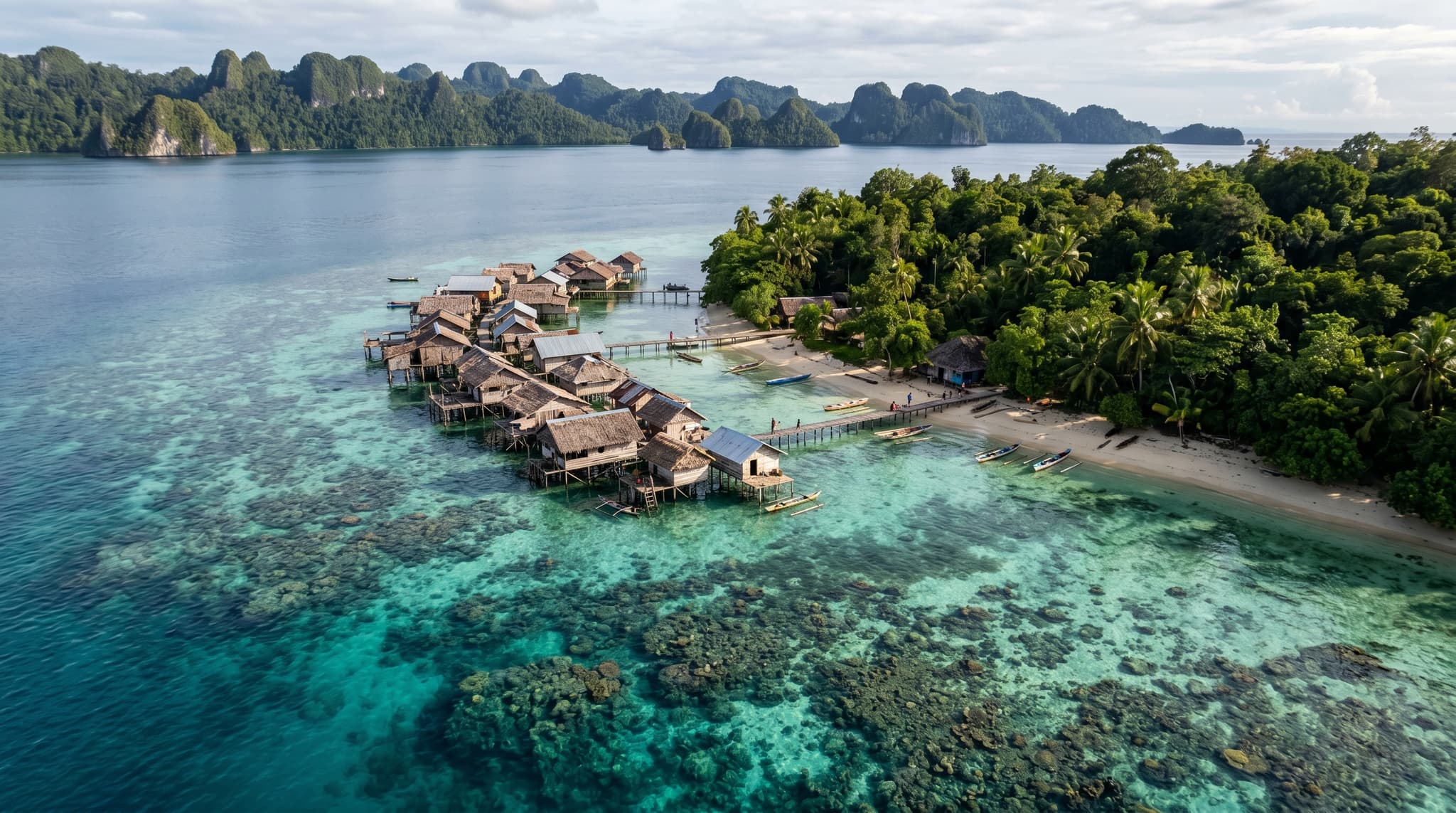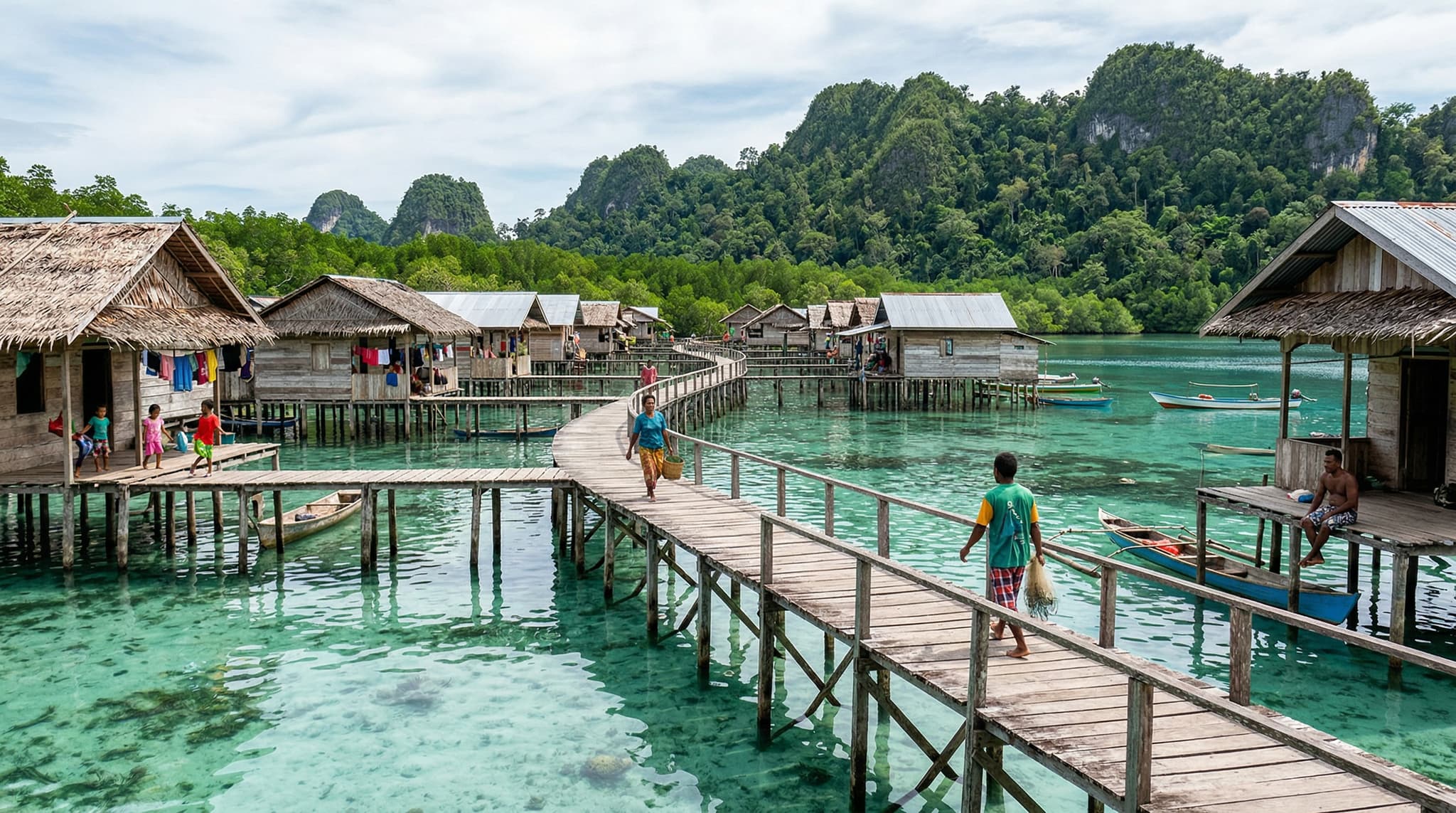
A small Papuan village on Gam Island where red birds-of-paradise display at dawn and reef fish drift beneath the boardwalk — Raja Ampat beyond the dive.
Most visitors come to Raja Ampat for what's underwater. That's fair — the reefs here are among the most biodiverse on the planet, and the diving justifies the long journey. But Sawinggrai Village, on the northwest coast of Gam Island, makes a quiet case for what happens when you step onto land and stay a while.
This is a small Papuan settlement of roughly 100 residents. Wooden houses on stilts line a narrow boardwalk over shallow turquoise water. Children swim underneath the walkways. Canoes rest against the mangrove roots. The village is often described as a "birdwatching stop," which is accurate but incomplete. Sawinggrai is one of the few places in Raja Ampat where you can observe red bird-of-paradise (Paradisaea rubra) in the wild — but it's also a living community navigating the complicated reality of being a destination.
Getting There
Sawinggrai sits on Gam Island, across the Dampier Strait from Waisai, Raja Ampat's administrative capital. Most visitors arrive by chartered speedboat or as part of a liveaboard or homestay-arranged day trip.
Transport Details
From Waisai
~45 minutes by speedboat (varies with sea conditions)
From Sorong
Ferry to Waisai (~2 hours), then boat to Sawinggrai
Boat Charter
Typically arranged through your homestay or dive operator; prices vary by group size and fuel costs — confirm directly before booking
There is no public ferry to Sawinggrai. If you're staying at a homestay on Gam Island or nearby Kri Island, the village is usually a short boat ride away and many hosts include it in a day itinerary. If you're coming independently from Waisai, you'll need to arrange a boat — your accommodation can almost always help coordinate this.
The Red Bird-of-Paradise
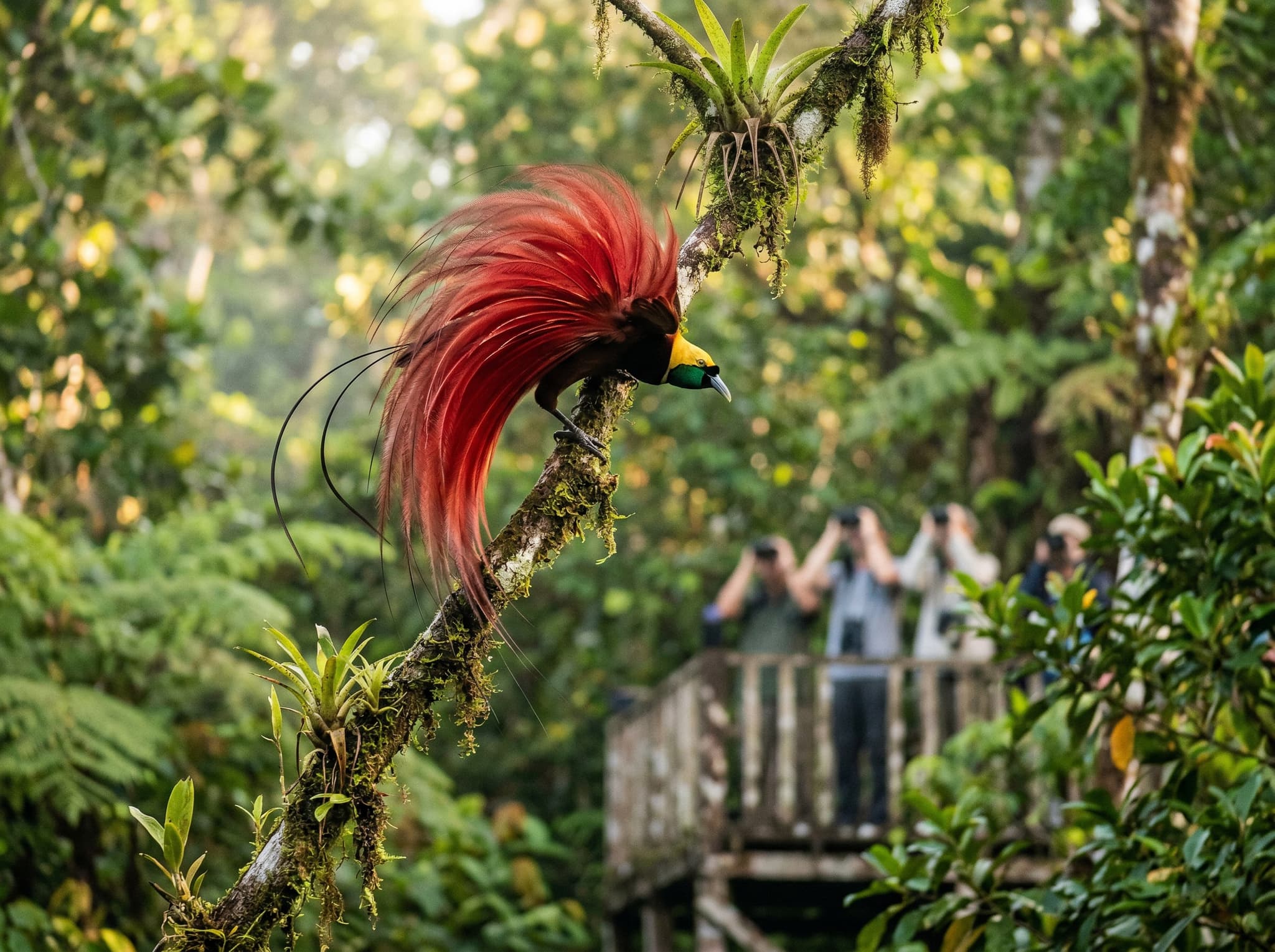
The primary draw for most visitors is the red bird-of-paradise, endemic to a handful of islands in this region. Sawinggrai's forest trail leads to a reliable viewing spot where the birds perform their courtship display in the canopy — a ritual of hanging upside down, fanning crimson plumes, and calling in sharp, repetitive bursts.
Birdwatching here requires an early start. Guides from the village lead visitors into the forest before dawn, typically departing around 5:30 AM. The walk takes about 20–30 minutes along a rooted jungle trail that can be slippery after rain. Sturdy shoes matter more than binoculars, though both help.

The guides are local residents, and the guiding fees go directly to them. This is one of the more tangible examples of community-based tourism in Raja Ampat — the birds have economic value alive and visible, which has contributed to their protection in this area. It's a model that works when visitor numbers stay manageable, and so far, Sawinggrai has avoided the overcrowding that strains other wildlife-viewing sites in Indonesia.
The Village Itself
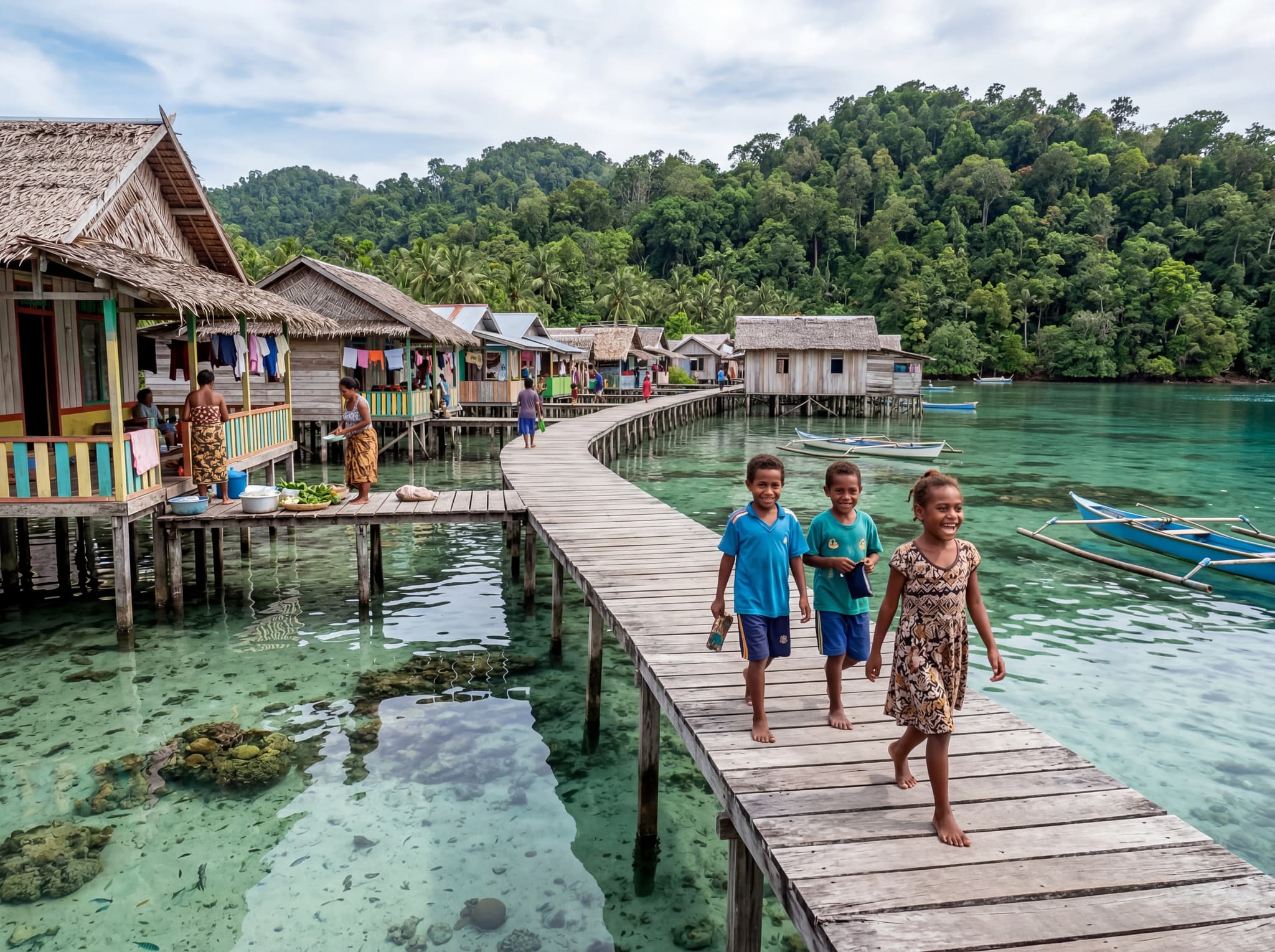
After the birdwatching walk, most visitors spend time in the village. The boardwalk is the main artery — a wooden path connecting homes, a small church, and a few spots where villagers sell handmade crafts: woven bags, carved wooden figures, simple jewelry. The prices are modest and the transactions are unhurried.
The water beneath and around the village is remarkably clear. Snorkeling directly off the boardwalk reveals healthy coral and reef fish in shallow water — no boat needed. It's not the dramatic wall diving Raja Ampat is famous for, but there's something disarming about floating over a reef while someone's laundry dries on a line ten meters away. The ordinary and the extraordinary share the same frame.
In the Village
Snorkeling
Directly off the boardwalk; bring your own gear or borrow from your homestay
Crafts
Small selection of handmade items sold by villagers
Facilities
Very basic; no ATMs, no restaurants, limited phone signal
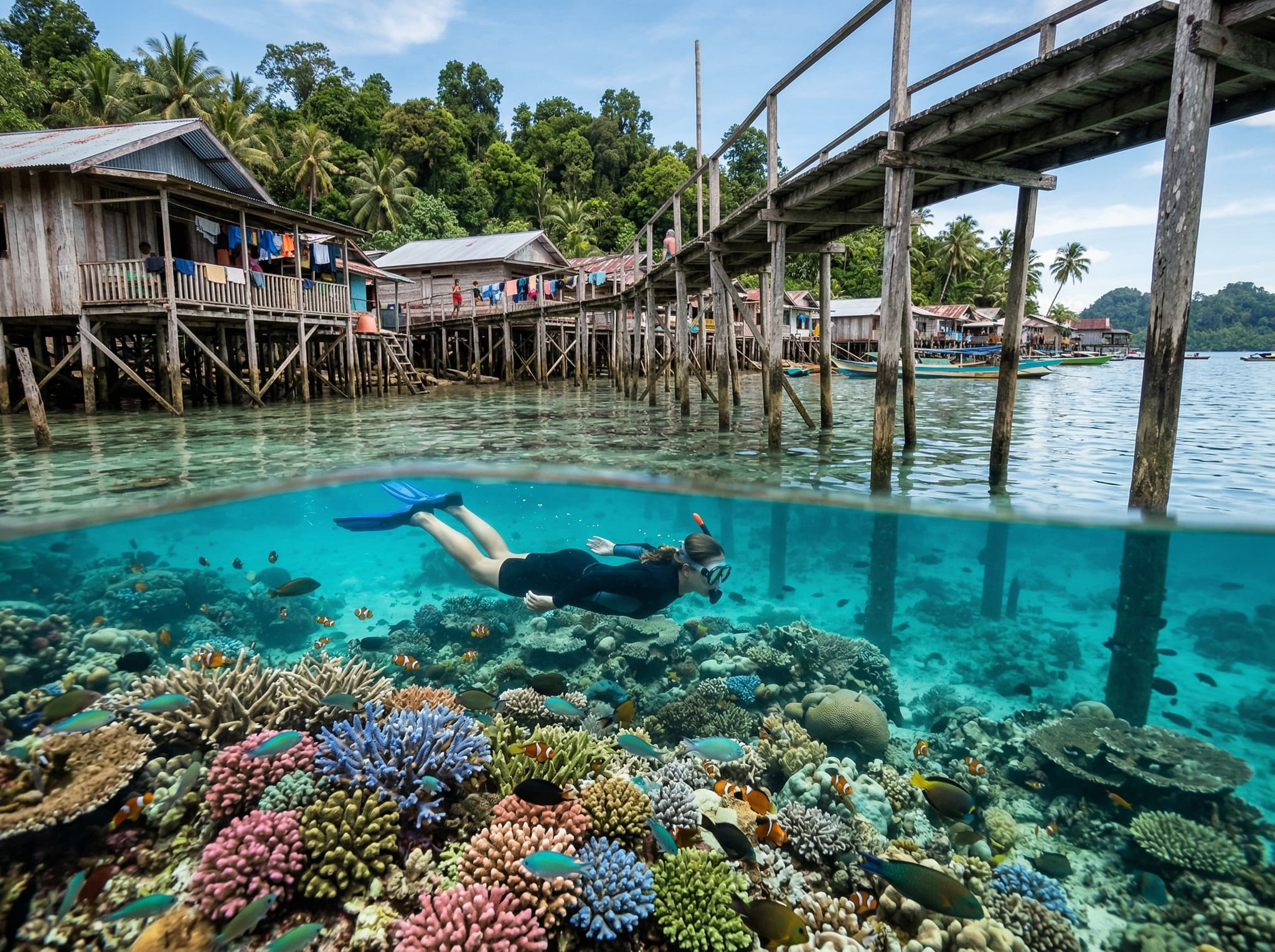
Sawinggrai doesn't have tourist infrastructure in any conventional sense. There are no cafés, no guesthouses within the village itself (though nearby homestays on Gam and Kri are plentiful), and no reliable electricity beyond solar panels. Bring water, sunscreen, and cash in small denominations.
Community Tourism and What It Means Here
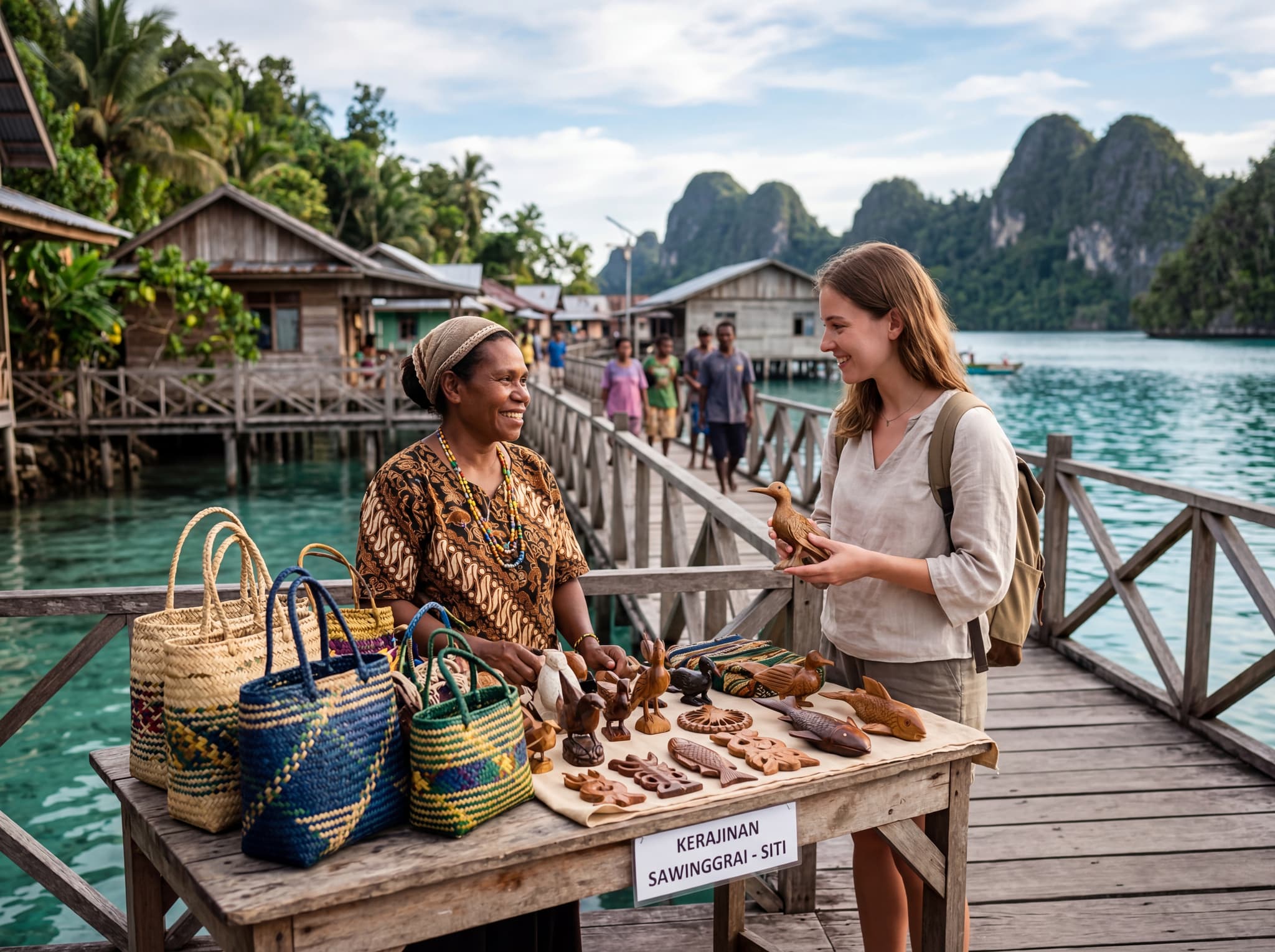
Raja Ampat's marine park tag system — which every visitor must purchase — funds conservation across the region. But the village-level economy works differently. Guiding fees, craft sales, and occasional homestay income are the direct channels through which tourism reaches Sawinggrai's residents. According to Conservation International, which has worked in Raja Ampat for over two decades, community-based tourism models like Sawinggrai's are considered among the more effective approaches to linking reef and forest conservation with local livelihoods.
This doesn't make the arrangement frictionless. Tourism brings boats, noise, and the subtle pressure to perform hospitality on someone else's schedule. Sawinggrai manages this better than many places — partly because of its size, partly because access is naturally limited by geography and weather. But it's worth arriving with awareness that you're visiting someone's home, not a nature exhibit.
Who This Is For
Sawinggrai is best suited for travelers already in Raja Ampat who want to understand the region beyond its reefs. It pairs well with a snorkeling or diving day around Gam and Kri — many homestays combine Sawinggrai with stops at Friwen Wall or the Kri mangroves.
If you're a birder, this is essential. If you're not, it's still worth the morning. There's a particular quality to standing in a forest at dawn, watching a bird do something extravagant for no audience but its own kind, in a place most of the world will never see. That's not a superlative. It's just what happens here.