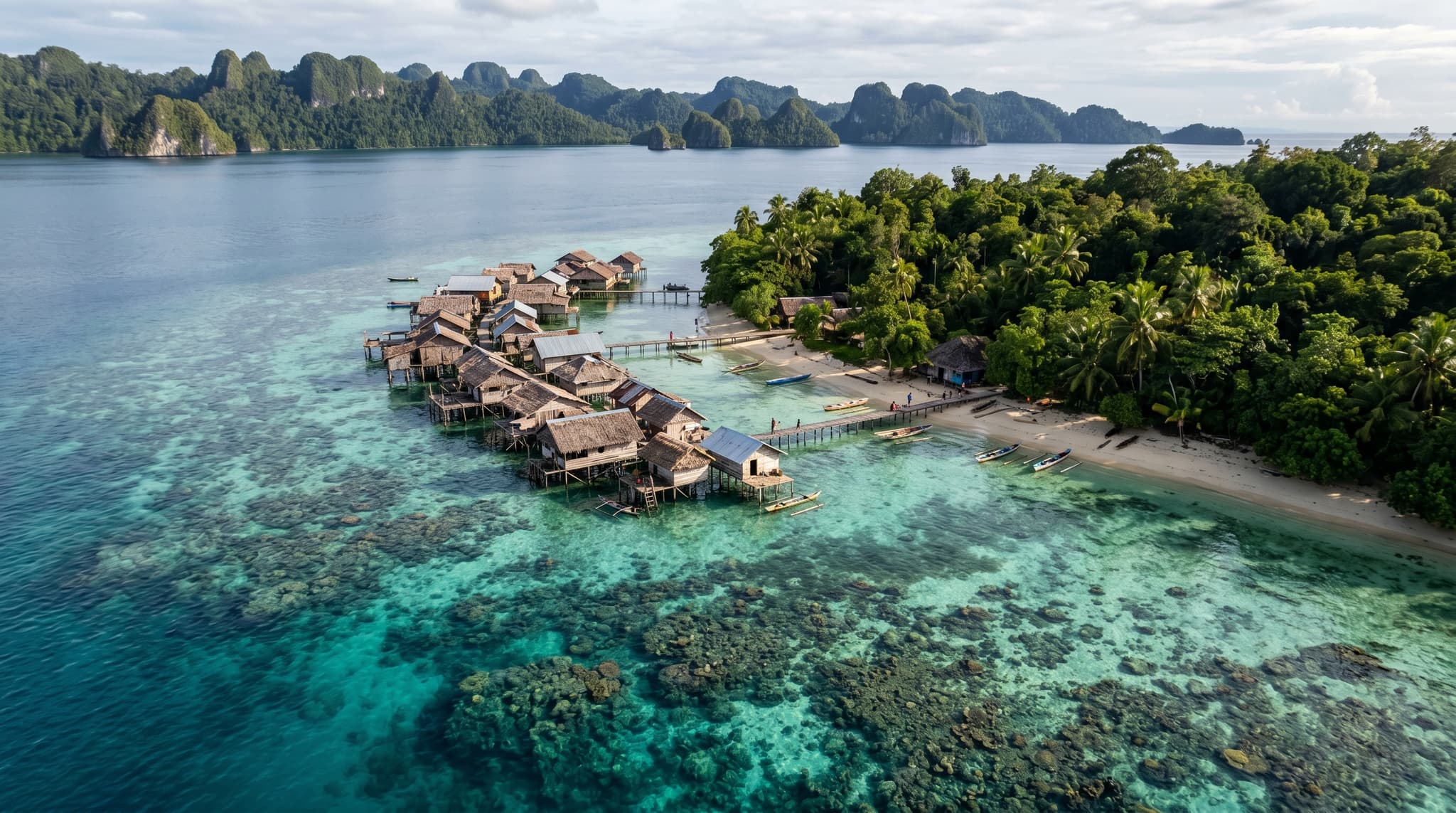
Arborek Village offers world-class snorkeling, Papuan handicrafts, and community-run homestays on a tiny island in Raja Ampat's Dampier Strait.
Arborek Village sits on a tiny island in the Dampier Strait — maybe 500 meters across at its widest — and it punches so far above its weight that it has become one of the most visited communities in all of Raja Ampat. There's a good reason for that, and it's not just the manta rays circling offshore. Arborek is one of the rare places where world-class snorkeling, genuine cultural exchange, and community-led tourism converge in a space small enough to walk in ten minutes.
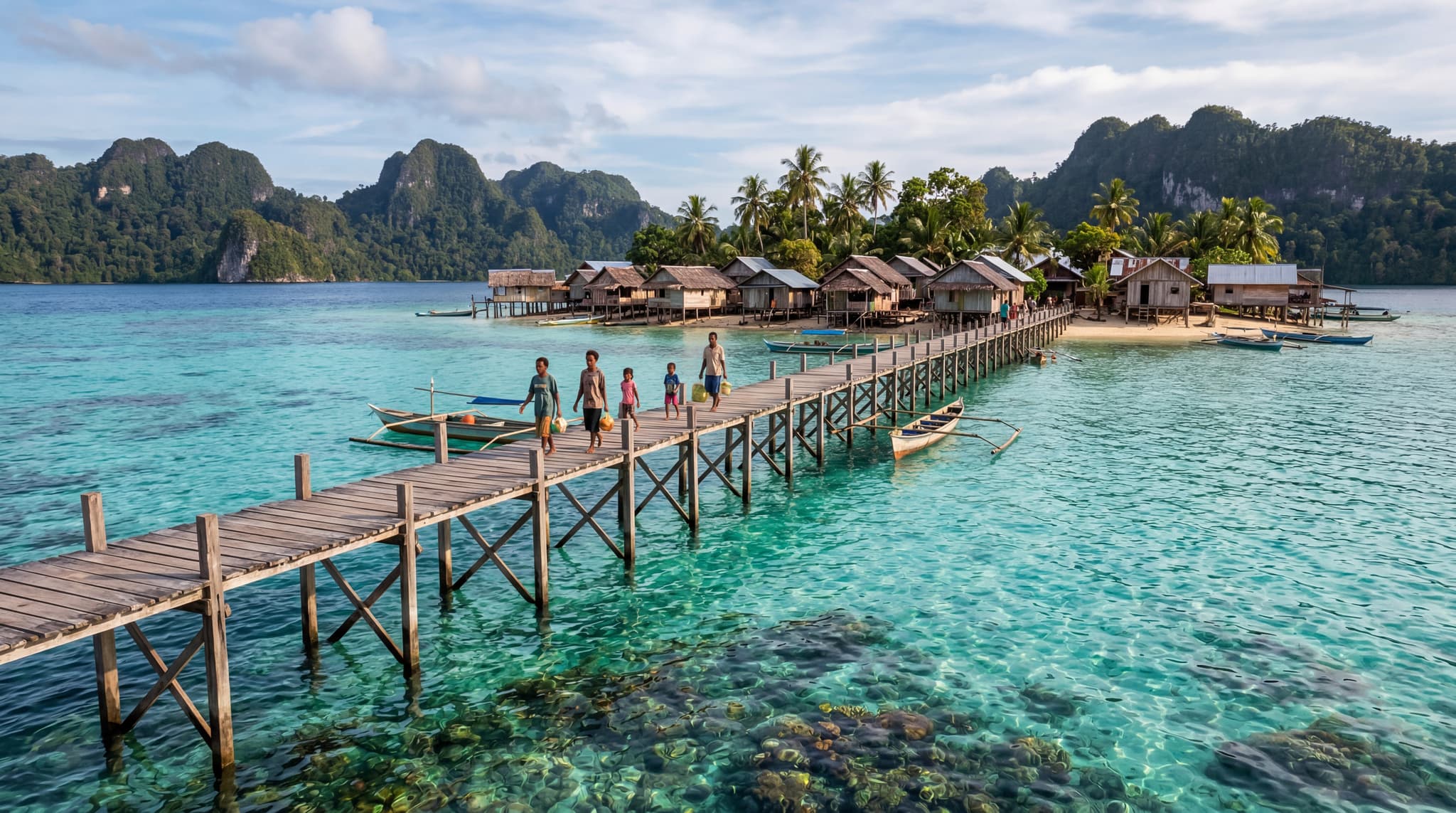
It's also one of the most rewarding things to do in Raja Ampat for non-divers and divers alike. The island is home to roughly 200 people. There are no cars, no ATMs, no restaurants in any conventional sense. What there is: a wooden jetty that extends over turquoise water so clear it looks computer-generated, a handful of homestays run by local families, and a house reef that marine biologists have called one of the most biodiverse shallow-water ecosystems in the region.
Getting There
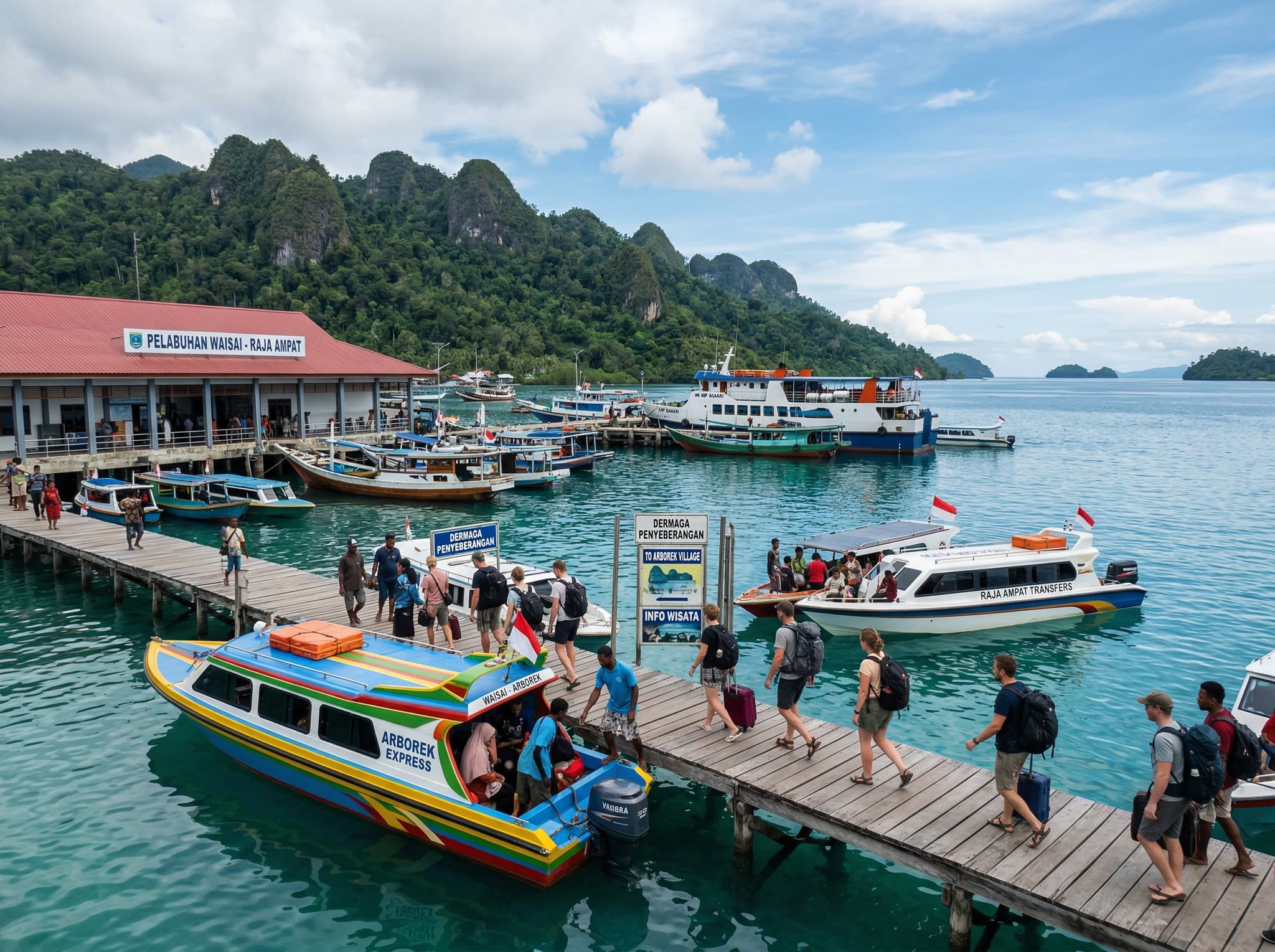
Most visitors reach Arborek by speedboat from Waisai, the administrative capital of Raja Ampat on Waigeo island. The ride takes roughly 45 minutes to an hour depending on sea conditions and the type of boat. If you're coming from Sorong — the mainland gateway city in West Papua — you'll first take the ferry to Waisai (about two hours), then arrange onward transport. Our guide on how to get to Raja Ampat covers the full logistics from flights to ferry schedules.
Homestay owners on Arborek can typically arrange pickup from Waisai, and this is often the simplest option. Expect to pay around IDR 1,500,000–2,500,000 for a private speedboat charter one-way, though costs drop significantly when shared with other travelers. Many liveaboard dive trips through the Dampier Strait also stop at Arborek as part of their itinerary.
The House Reef
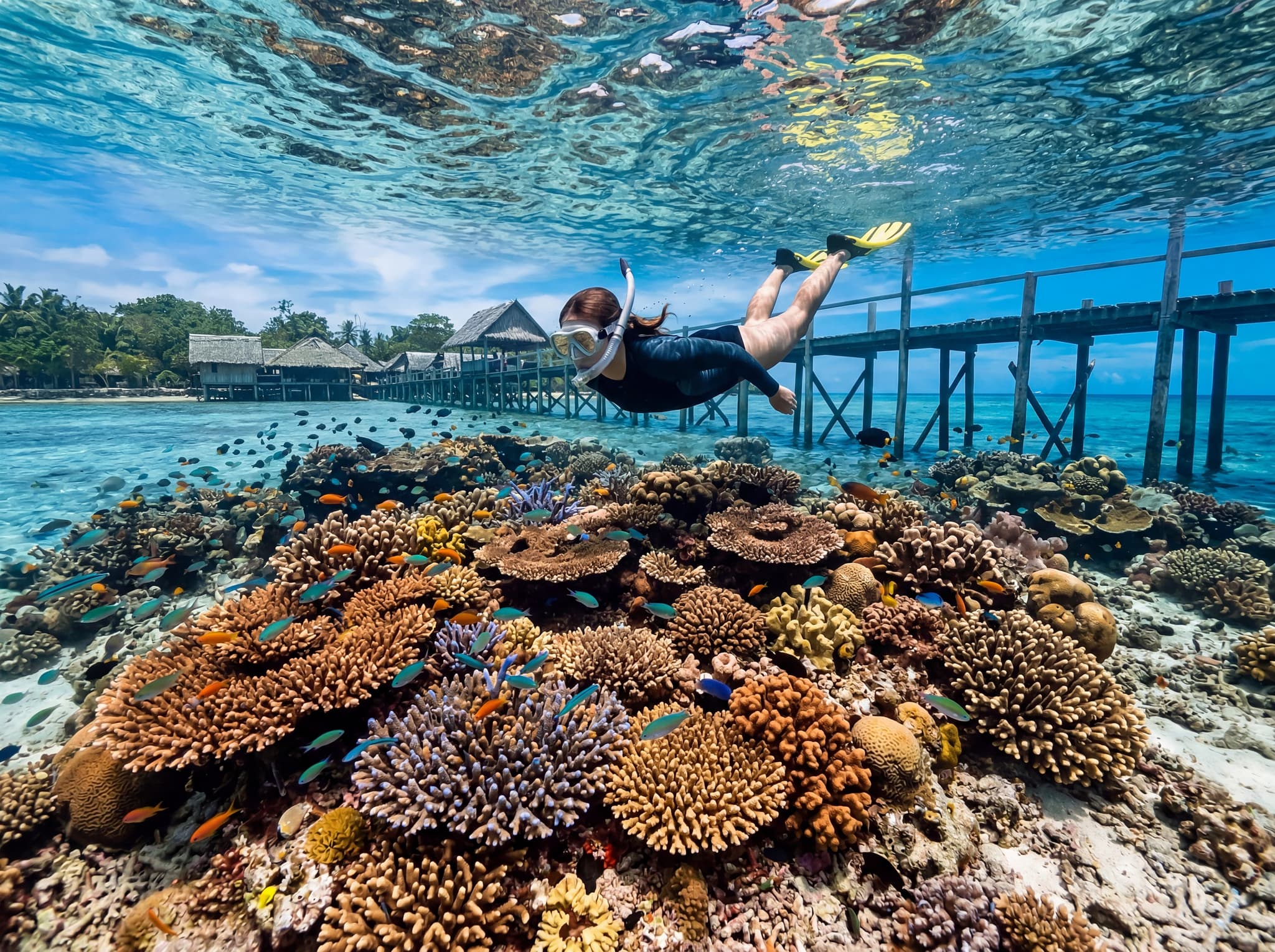
Let's be direct: the snorkeling off Arborek's jetty is some of the best you'll find anywhere without a boat. You walk to the end of the wooden pier, step into the water, and within seconds you're hovering over hard coral gardens dense with life — reef sharks, giant trevally, schools of fusiliers so thick they momentarily block the light, and the occasional wobbegong shark lying motionless on the bottom like a shag carpet with teeth.
The reef starts shallow — knee-deep in places at low tide — and drops off gradually. You don't need to be a strong swimmer. You don't need fins, though they help. The visibility on a good day runs 15 to 25 meters.
Snorkeling at Arborek
Depth Range
1–12 meters from shore
Key Species
Reef sharks, wobbegong sharks, giant trevally, mantis shrimp, nudibranchs
Gear Rental
Basic masks/snorkels available at homestays (~IDR 50,000/day)
Best Time of Day
Morning, before afternoon winds pick up
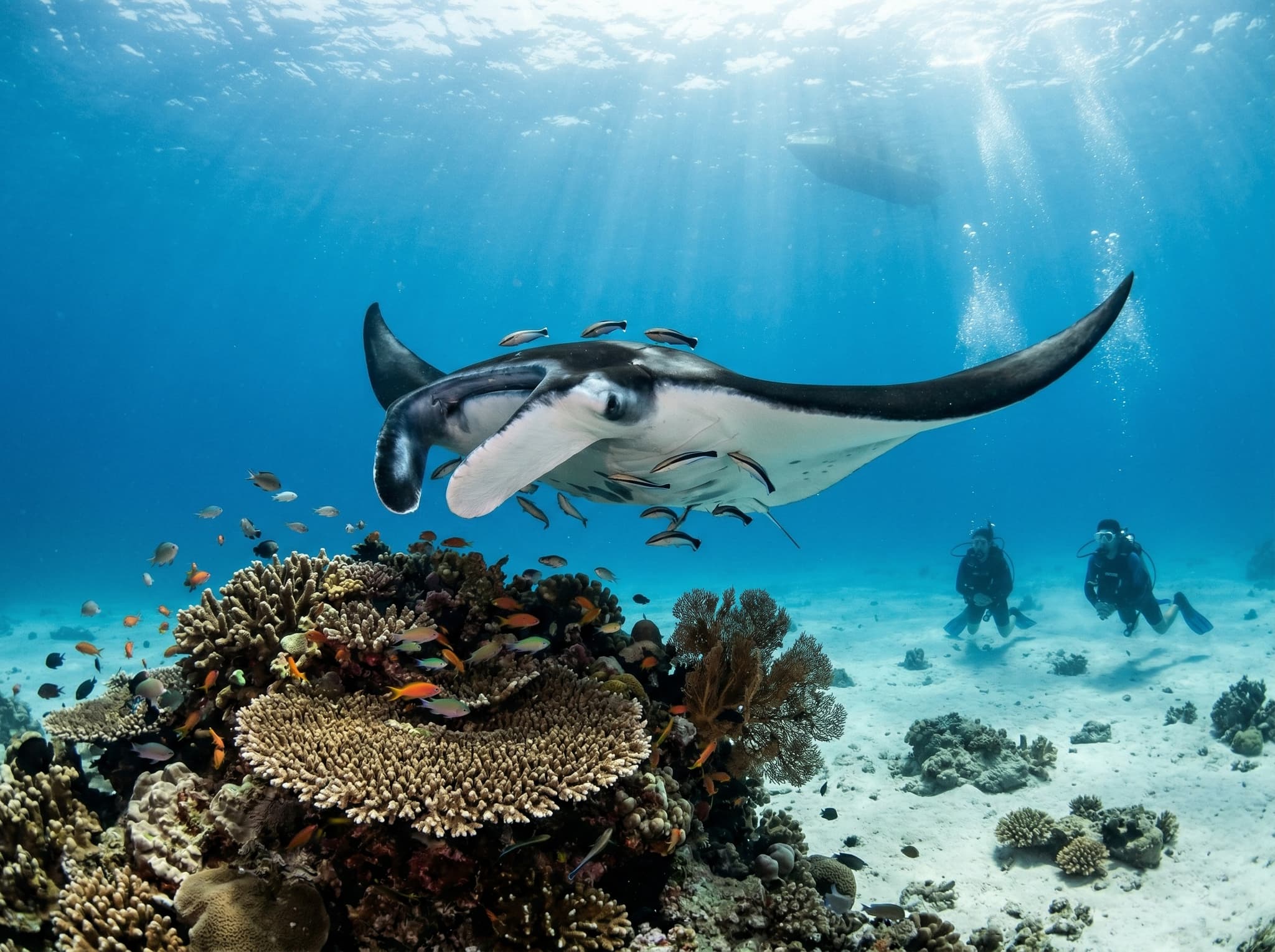
For divers, the bigger draw is the manta ray cleaning station at nearby Manta Sandy, a short boat ride from the island. Between October and April — when plankton blooms peak in the Dampier Strait — reef mantas gather here reliably. Your homestay can arrange dive or snorkel trips to the site, usually for IDR 300,000–500,000 per person depending on group size.
The Village Itself
Arborek has become something of a model for community-based tourism in Papua. The village is notably clean — a point of pride for residents, who organized a waste management system years before many larger Indonesian islands did. Paths are swept. Coral rubble walkways connect the wooden houses. There's a quiet self-respect to the place that's immediately noticeable.
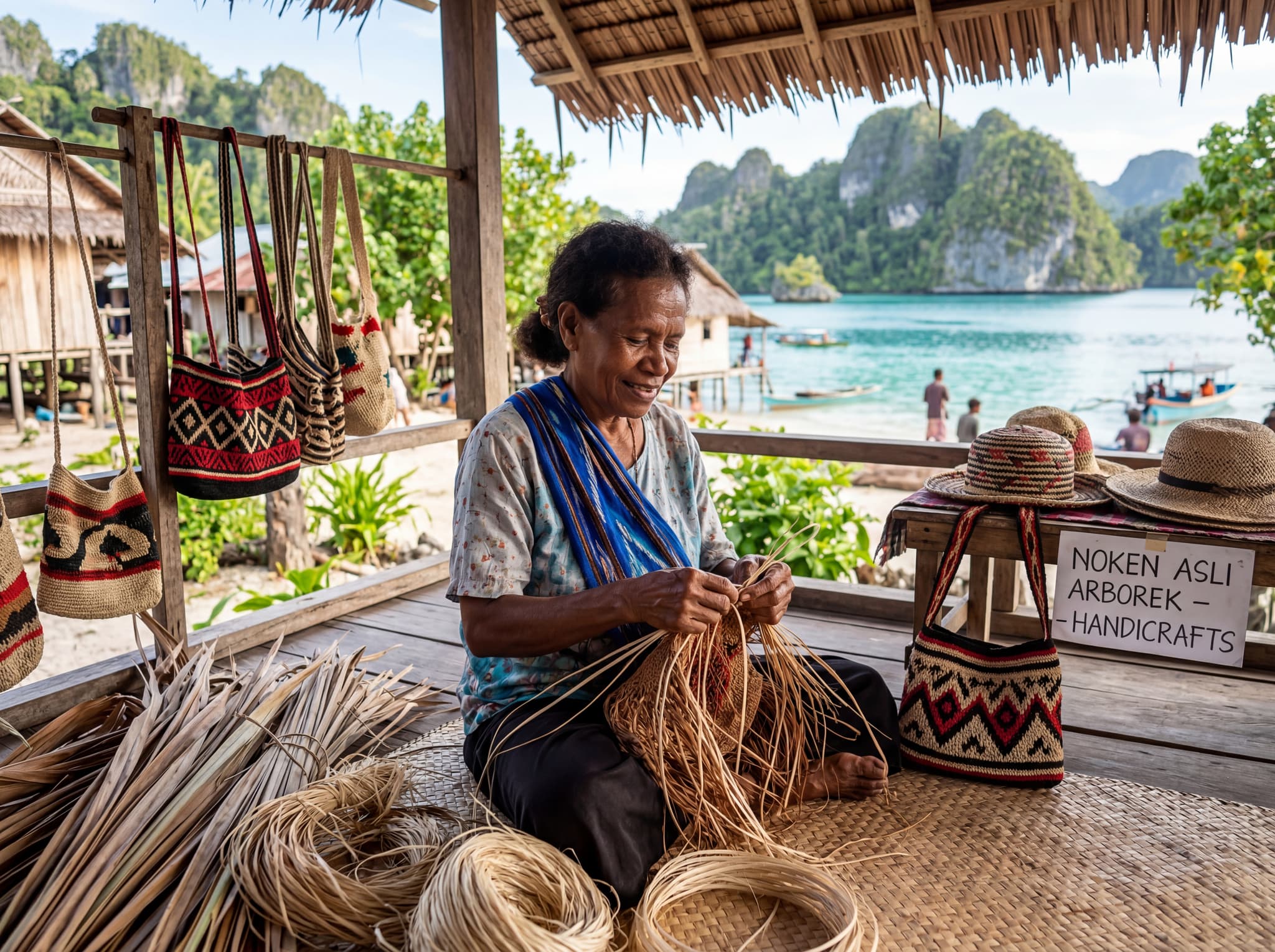
The community is known throughout Raja Ampat for its handicrafts, particularly woven hats, bags, and decorative items made from natural fibers. Women in the village produce these by hand, and buying directly from the makers is both the cheapest and most ethical way to take something home. Prices are modest — a woven hat might run IDR 50,000–150,000 — and the quality is genuinely good.
Villagers occasionally perform traditional dances for visiting groups, particularly when liveaboard boats stop at the jetty. Opinions vary on whether this feels authentic or performative — honestly, it depends on the day and the group. What's consistently genuine is the everyday hospitality: shared meals of fresh fish and papeda (a sago-starch staple of Papuan cuisine), kids practicing their English with visitors, fishermen happy to explain what they caught that morning.
Staying Overnight
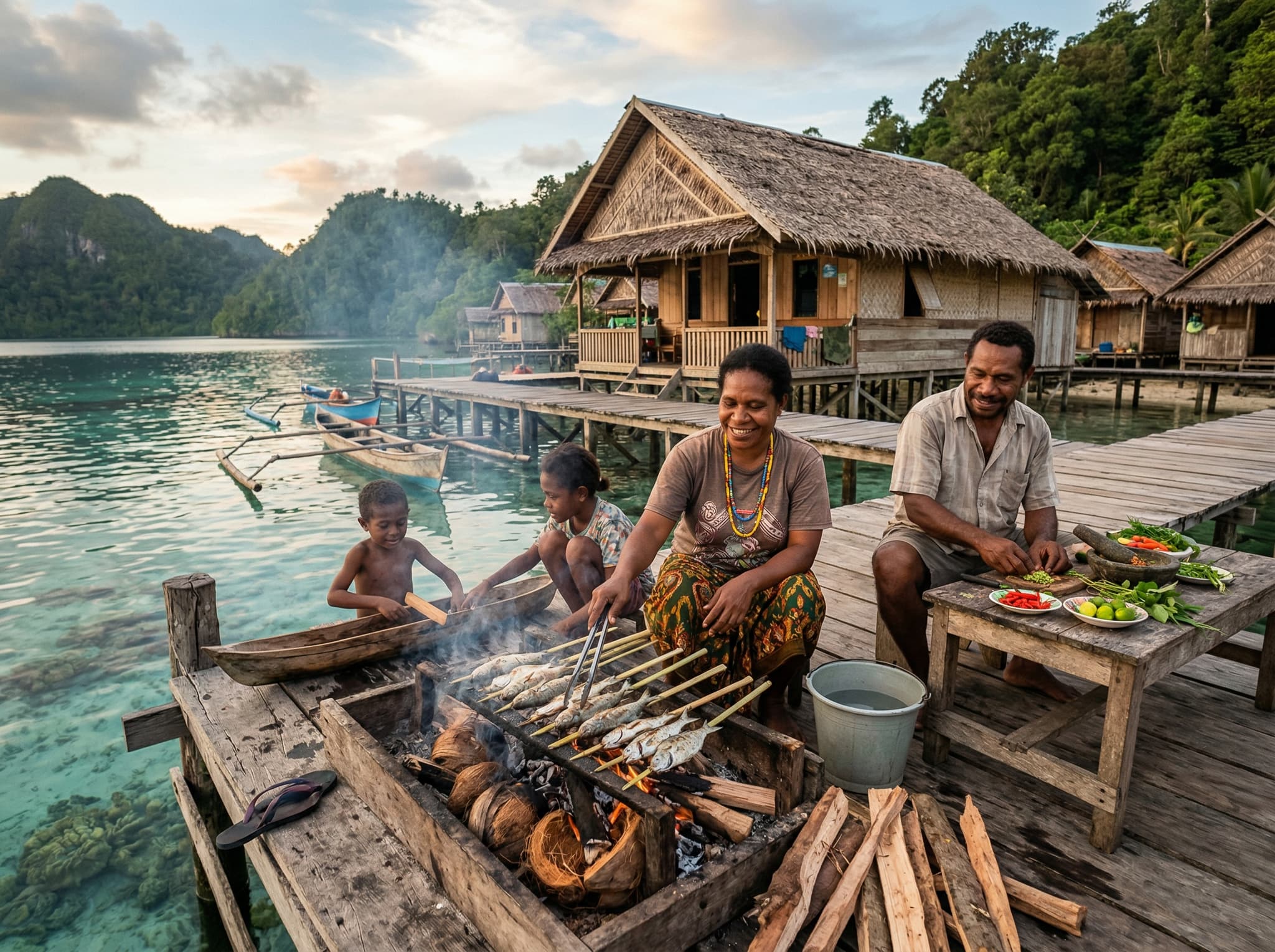
There are several homestays on Arborek, all basic by any international standard and perfectly comfortable by Raja Ampat standards. Expect a simple room, a mattress with mosquito net, a shared mandi (Indonesian-style bathroom), and three meals a day cooked by your host family. The food is simple — rice, fish, vegetables, fruit — and reliably good.
Homestay Essentials
Price Range
IDR 350,000–500,000/night (3 meals included)
Electricity
Generator-powered, typically evenings only
Wi-Fi
Limited or nonexistent — plan accordingly
Payment
Cash only (IDR) — withdraw in Sorong or Waisai

Staying overnight matters. Day-trippers from liveaboards get the reef and a quick walk through the village. Overnight guests get the sunset from the jetty with no one else around, the bioluminescence in the water after dark, and the morning hours when the reef is calmest and the light is best. Arborek is small enough that one night is sufficient, but two nights lets you snorkel without rushing and take a boat trip to Manta Sandy or other nearby sites.
What to Know Before You Go
Arborek is remote. There's no clinic on the island — the nearest medical facilities are in Waisai. Bring any medications you need, reef-safe sunscreen, and enough cash for your entire stay. Mobile signal is intermittent at best.
The island's tourism success has brought challenges too. On days when multiple liveaboards anchor simultaneously, the jetty and reef can feel crowded in a way that jars against the setting. If you're staying on the island, simply wait — the boats leave, and the reef is yours again.
This is a real community, not a tourism set piece. Dress modestly when walking through the village. Ask before photographing people. And understand that your homestay fee goes directly to a local family — it's one of the most tangible ways tourism revenue reaches Papuan communities without intermediaries.