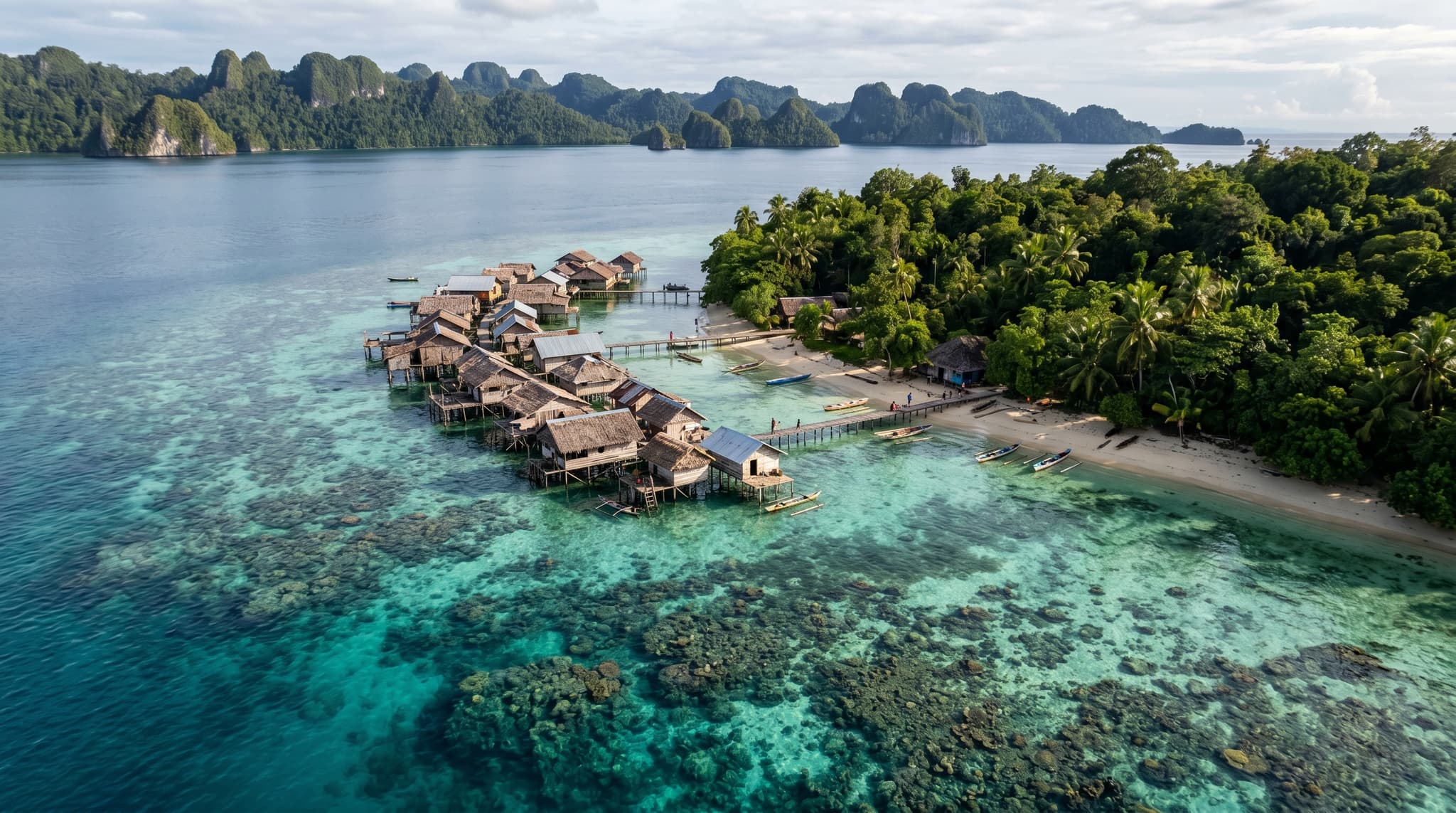
The Fam Islands offer ancient karst formations, world-class snorkeling, and the Pianemo viewpoint — all within Raja Ampat's protected marine area.
Somewhere between the islands of Batanta and Waigeo, the sea floor rises into a scatter of ancient limestone towers — some barely breaking the surface, others climbing sixty meters into jungle canopy. These are the Fam Islands, a cluster of karst formations in western Raja Ampat that look like someone dropped a mountain range into a lagoon and let a few million years of erosion do the sculpting.
The formations started as coral reefs. Over geological time, tectonic uplift pushed them above the waterline, and rain and waves carved them into the mushroom-shaped pillars and sheer walls you see today. Below the surface, those same walls continue — vertical drops covered in soft corals, sea fans, and the kind of reef density that made Raja Ampat famous.
The Fam Islands sit within a designated Marine Protected Area, which means limited tourism, mandatory permits, and the kind of underwater visibility that rewards the effort of getting there.
What You'll Find
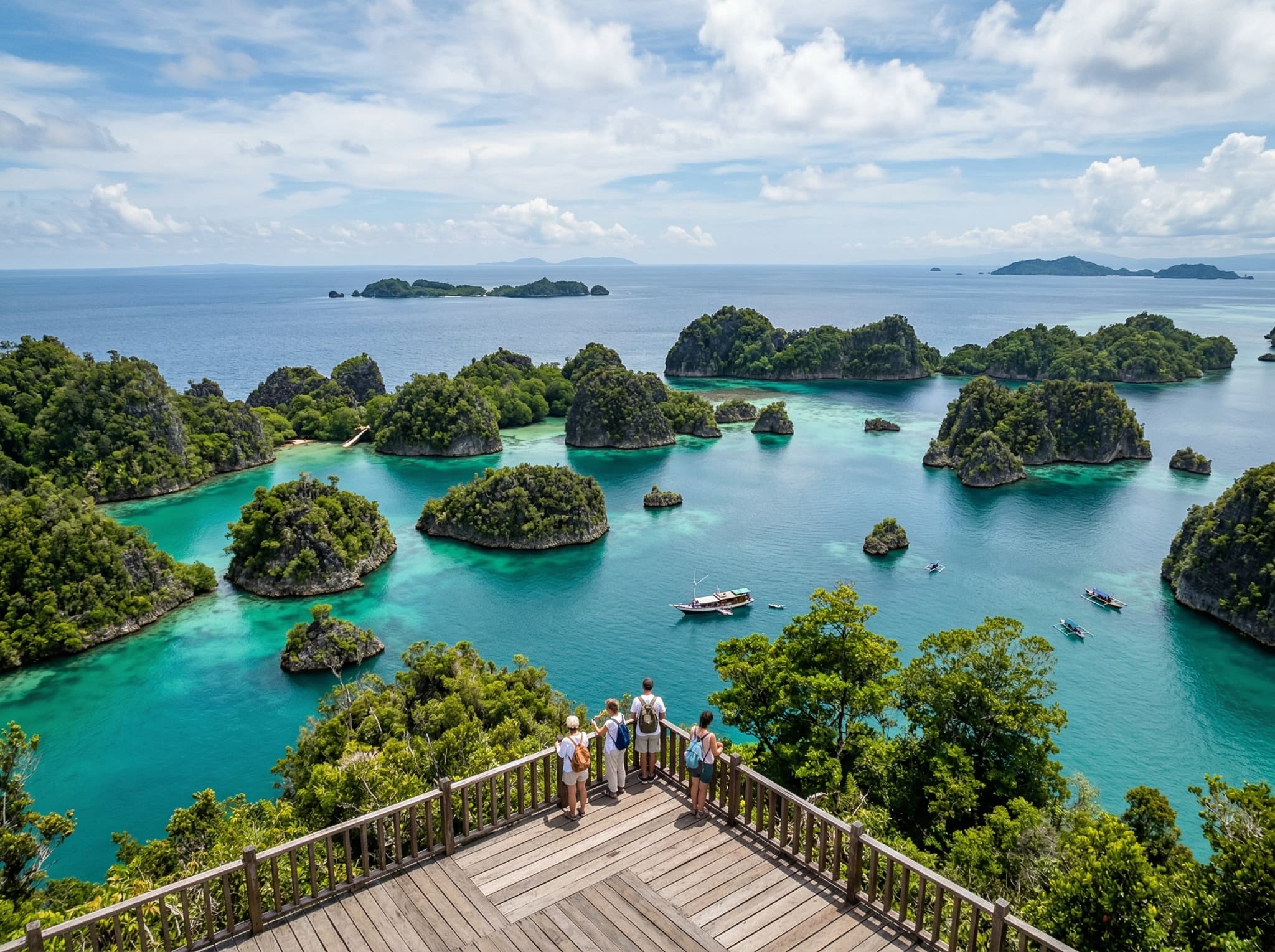
The headline attraction is Pianemo, a hilltop viewpoint at roughly 60 meters elevation that offers a panoramic sweep of emerald water threading between jungle-topped karst islets. It's frequently compared to Wayag — Raja Ampat's most photographed spot — and the comparison holds. The difference is that Pianemo tends to be slightly more accessible and less crowded, though "crowded" is a relative term in a place this remote.
Beyond the viewpoint, Pulau Pam anchors the island group with small white-sand beaches and turquoise lagoons. The limestone cliffs and pillars at water level can be explored by kayak or stand-up paddleboard — threading between formations that rise straight out of the sea.
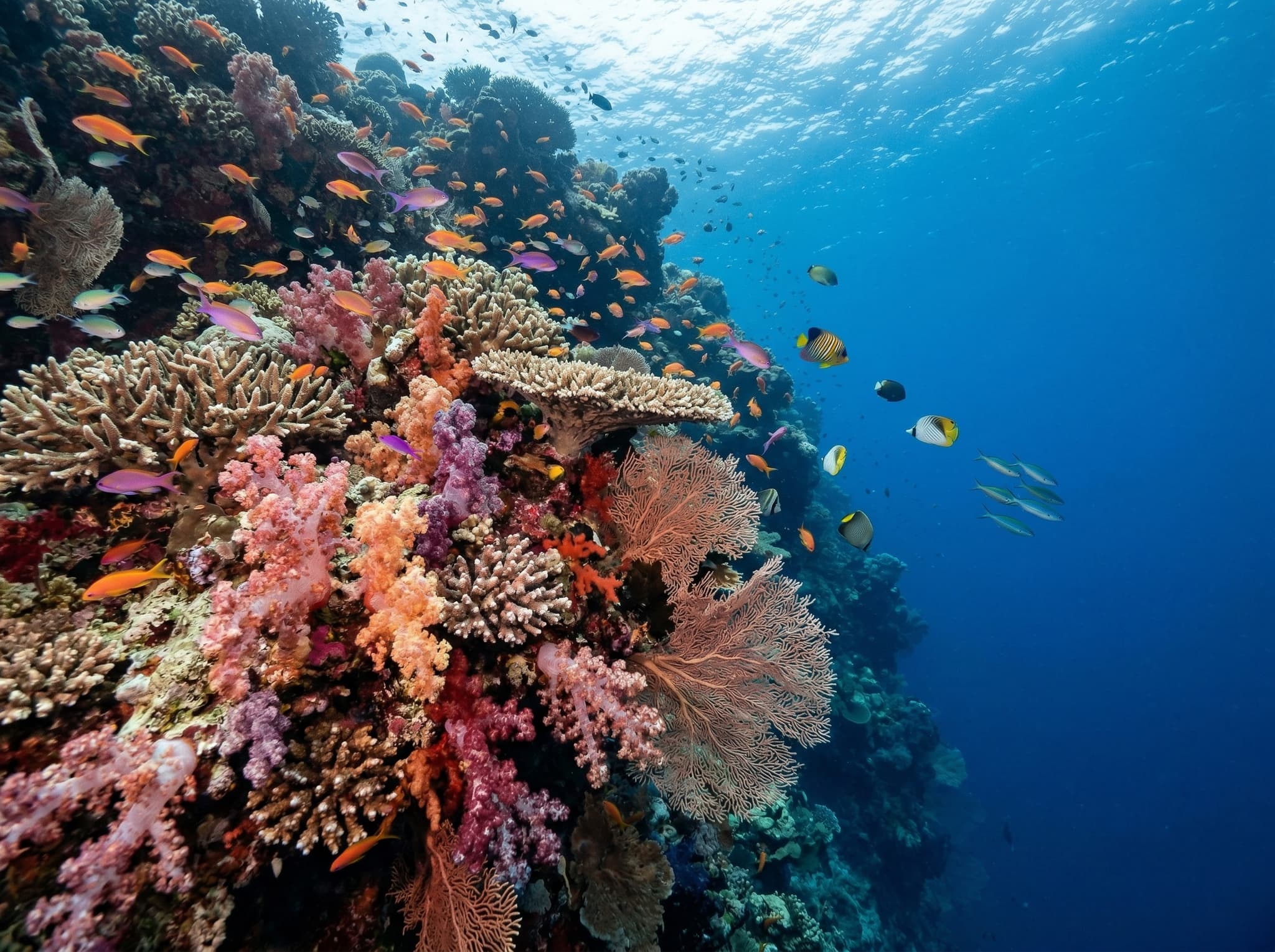

Underwater, the karst topography translates into walls and pinnacles draped in coral. Named snorkeling sites include Fam Slope and Anita's Garden, both accessible directly from the karst formations. During dry season, visibility regularly exceeds 30 meters. November through March brings peak marine life density — schooling jacks, reef sharks, turtles, and manta rays at cleaning stations nearby.
Getting There
There is no quick way to reach the Fam Islands, and that's part of what keeps them protected. Every route starts in Sorong, the gateway city for Raja Ampat.
Via Arefi (most direct to Fam): A car ferry runs from Sorong's Pelabuhan Rakyat to Arefi, taking approximately 4.5 hours. From Arefi, a local boat transfer continues to Pam, near the Fam Islands. Total journey time is roughly 8 hours covering 138 km. The ferry runs once weekly.
Via Waisai (more frequent, less direct): The Sorong–Waisai ferry takes 2 hours and runs more frequently — Wednesday, Friday, and Sunday at 09:00 and 14:00; Monday, Tuesday, Thursday, and Saturday at 14:00. From Waisai, you'll need an additional boat transfer to reach Fam, which adds time and cost.
Charter speedboat: Available from Sorong's speedboat harbor, about 200 meters west of the ferry wharf. Faster but significantly more expensive and weather-dependent — rough seas between June and August can make this unreliable.
Transport Details
Sorong Airport to Harbor
~10 min taxi, IDR 100,000 fixed fare
Ferry Booking
ferizy.com or asdp.id
Waisai Ferry Contact
+62 812-4058-6804
Port Payment
Cash, cards, QRIS accepted
Permits and Fees
Every visitor to the Fam Islands — whether diving, snorkeling, or just visiting the Pianemo viewpoint — must purchase two separate permits.
Raja Ampat Entry Fees (2025)
Marine Park Permit (International)
IDR 700,000 — valid 12 months
Visitor Entry Ticket (International)
IDR 300,000 — per visit
Total (International)
IDR 1,000,000 (~$62)
Total (Indonesian Citizens)
IDR 725,000
Children Under 12
Exempt from both fees
The Marine Park Permit funds patrols, reef protection, and conservation across Raja Ampat's marine areas. The Visitor Entry Ticket covers infrastructure — docks, waste management, and tourist site maintenance. Both are mandatory regardless of activity. Purchase them online through sipari-rajaampat.id before arrival.
Where to Stay

The Fam Islands have no resorts. Accommodation means homestays — locally run, rustic, and part of the experience. Expect shared facilities, simple rice-based meals, and beach access.
Fam Wall Homestay sits on a tiny island near Pianemo with over-water bungalows — one private, one family-sized. No ensuite bathrooms.
Rufas Homestay occupies its own island with a private beach and coral lagoon. Four shared bungalow rooms and three private beach bungalows, all without ensuite.
Aibaf Pam Dive Homestay is the most equipped option, with four VIP bungalows that include ensuite bathrooms and an on-site dive center.
Book through StayRajaAmpat.com rather than major hotel platforms — it's the most reliable aggregator for Raja Ampat homestays.
For those with budget flexibility, liveaboards pass through the Fam Islands on 7–10 day Raja Ampat itineraries. Operators like Scuba Republic run phinisi-style vessels with capacity for 12–14 guests, all meals and dives included.
When to Visit
October through April delivers the best conditions — calm seas, visibility exceeding 30 meters, and peak marine life. November to March is prime time for manta rays and large schools of fish. April and early October offer a sweet spot: good conditions with fewer visitors.
May through September brings occasional rain, stronger winds, and reduced visibility from mainland runoff. June to August can produce rough seas that limit small boat travel between islands.