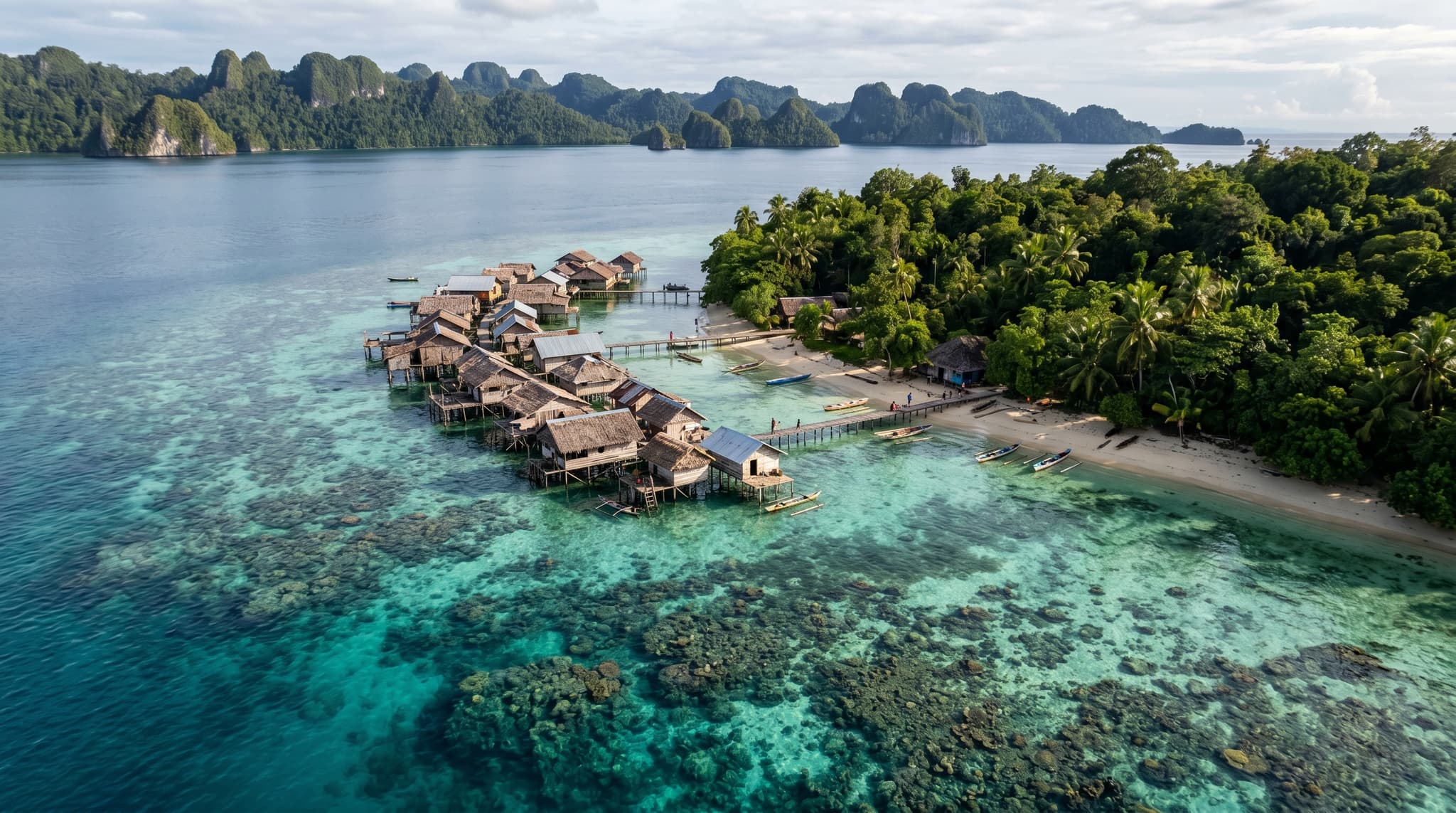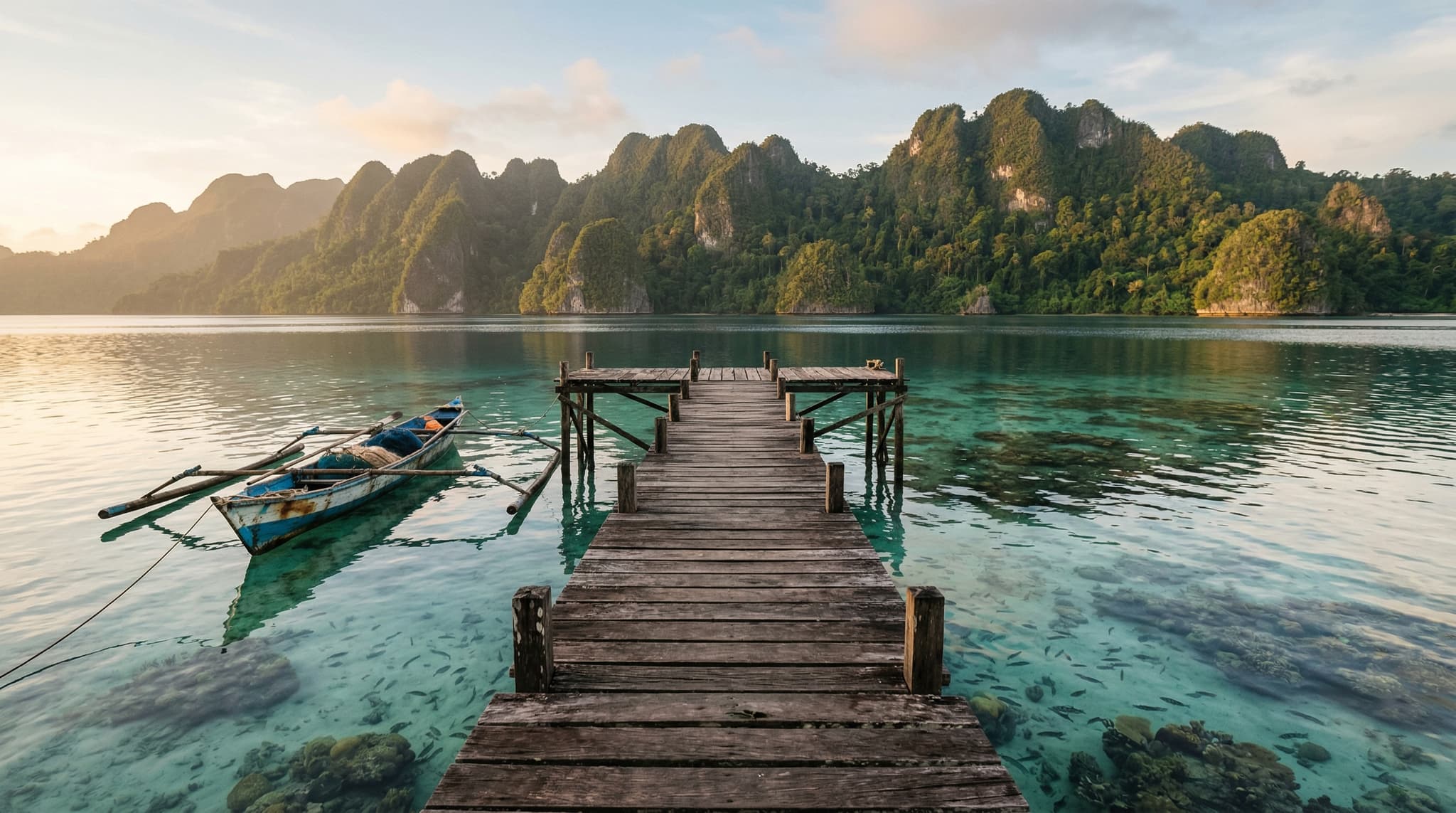
Saukorem Village is a small fishing community in Raja Ampat's Fam Islands known for sea turtle conservation, reef snorkeling off the jetty, and forest birdlife.
Most travelers who reach Raja Ampat head for the dive sites around the Dampier Strait or the iconic karst lagoons of Piaynemo. Saukorem Village, a small community on Pulau Pam in the Fam Islands, sits outside that circuit. There is no resort. There is no dive shop. What there is: a handful of wooden houses along sandy paths, a jetty where angelfish and Napoleon wrasse drift through the shallows, and a community that has built its identity around protecting the sea turtles that nest on its shores.
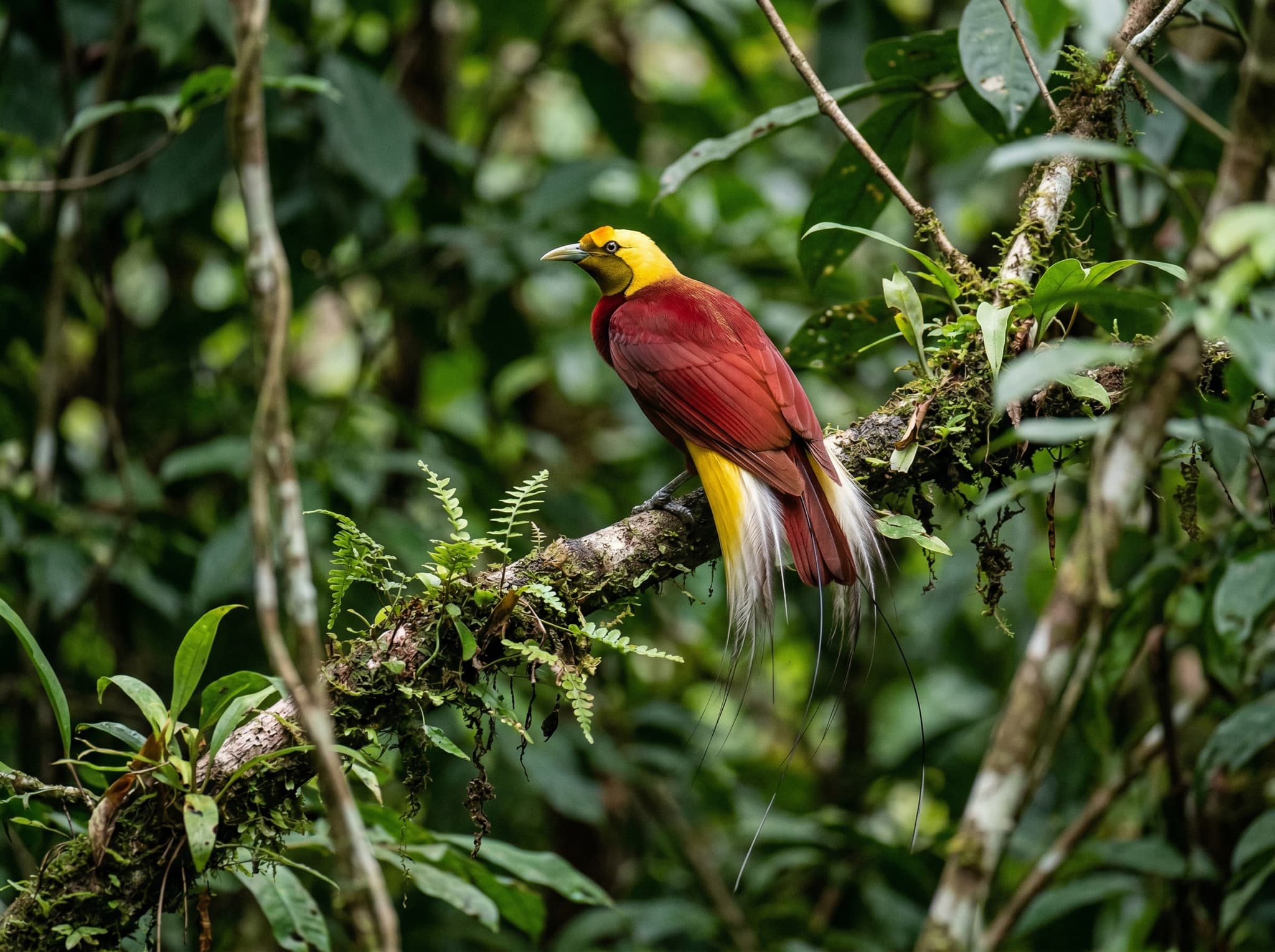
The draw here is above the waterline as much as below it. The Fam Islands sit between the waters of Waiwo and Kabui Bay, where forested limestone ridges rise sharply from turquoise straits. In the mornings, the birdlife is conspicuous — Raja Ampat's forests support Wilson's bird-of-paradise and red bird-of-paradise, among others, and the canopy around the Fam Islands is alive with calls well before the heat sets in. Birdwatching guides operate elsewhere in Raja Ampat for IDR 100,000–200,000 per person [VERIFY]; arranging a local guide through your homestay host is the most reliable option near Saukorem.
What the Village Feels Like
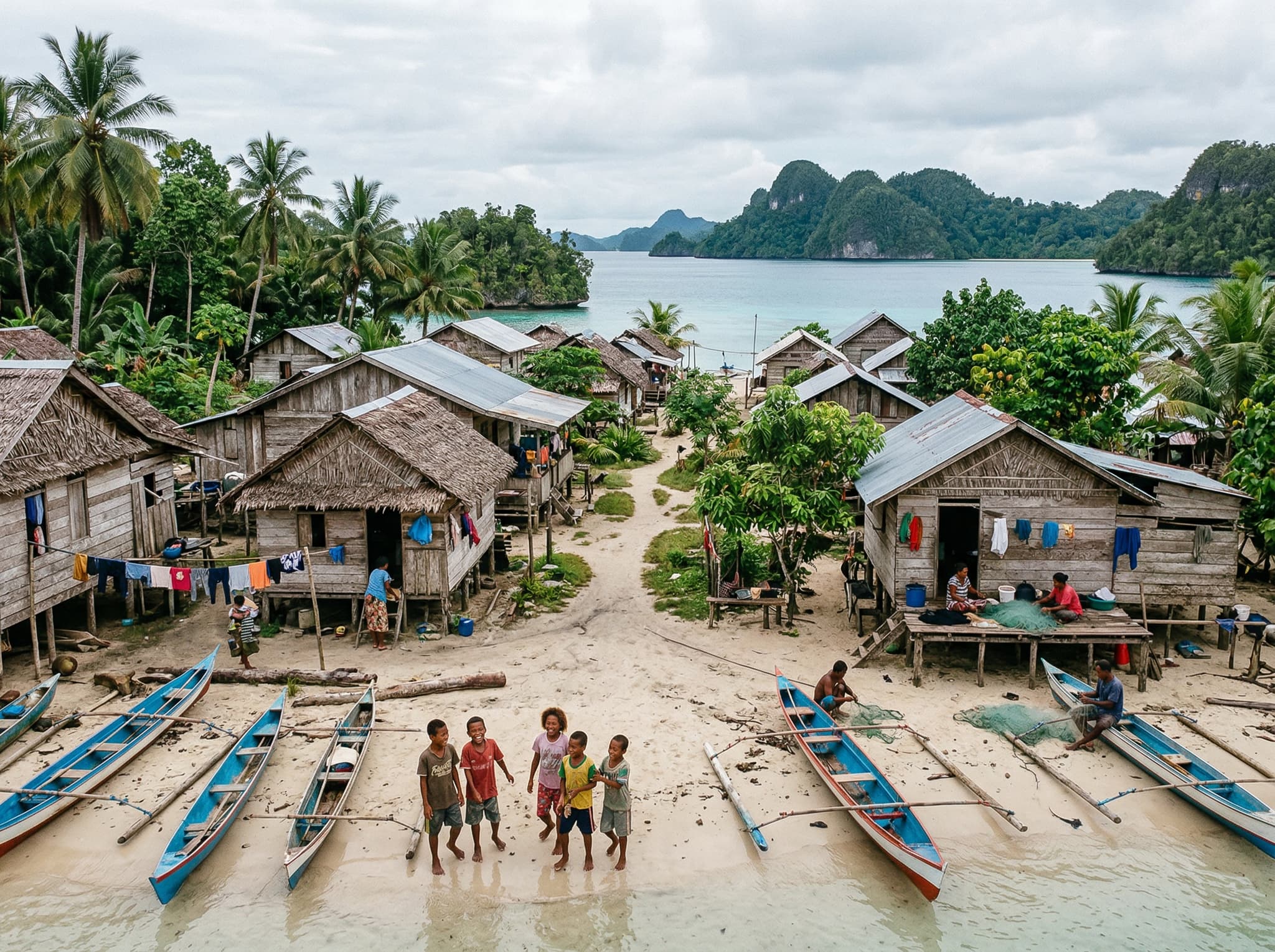
Saukorem is a place of maybe a few dozen homes, most built from wood and raised slightly off the ground. Children's voices carry from the waterline. The paths between houses are sand, not concrete. There's a particular quiet here that has less to do with silence — roosters, boats, the wind through palm fronds — and more to do with pace. Nobody is selling anything. The economy runs on fishing and craft-making, and visitors are a minor, occasional fact of village life rather than its engine.
Dress modestly: shoulders and knees covered. A sarong works. This applies across all Raja Ampat villages, not just here.
Sea Turtles and Snorkeling
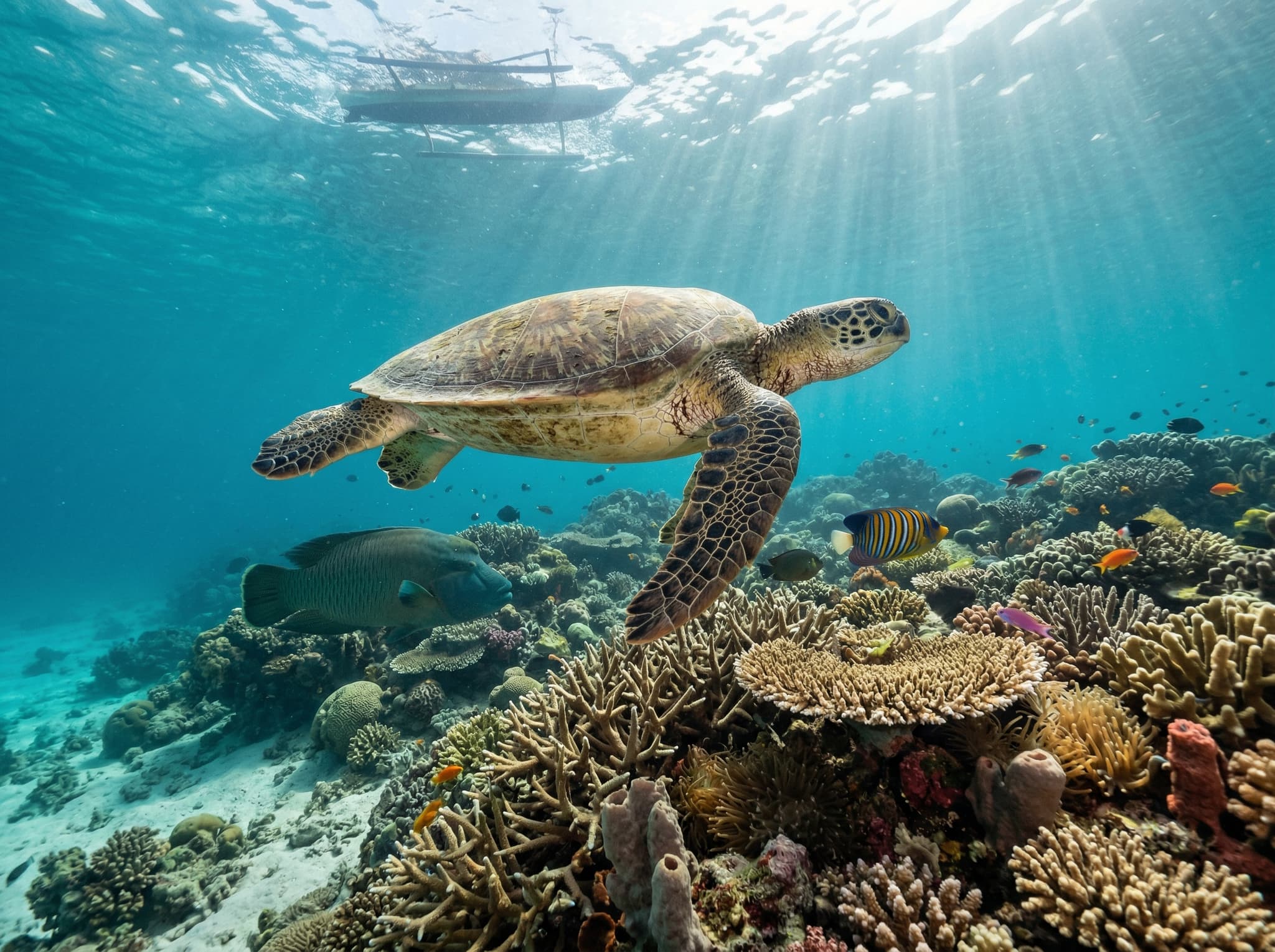
The village's most distinctive feature is its turtle conservation effort. Residents protect nesting sites along the beach, and during nesting season, hatchlings make their way to the water under the watch of the community. Species and specific nesting months should be confirmed locally — documentation is thin, and presenting unverified dates here would not serve anyone planning a trip.
Snorkeling is excellent directly off the jetty. The reef is shallow and accessible without a boat. Angelfish, Napoleon wrasse, and hard corals are present in the shallows. Bring your own gear — there is nowhere to rent it.
Getting There

The journey to Saukorem requires commitment. There is no shortcut.
Route: Major City → Saukorem
Fly to Sorong (SOQ)
3–4 hrs from Jakarta; 3 hrs from Bali
Sorong Airport → Harbor
Taxi IDR 100,000 (~$6.50); ojek IDR 30,000 (~$2)
Ferry: Sorong → Waisai
~2 hrs; IDR 200,000–300,000 (~$13–20) [VERIFY]
Speedboat: Waisai → Saukorem
30–60 min; IDR 500,000+ (~$32+) [VERIFY]
Ferry departures from Sorong: 09:00 and 14:00 on Sunday, Wednesday, and Friday. 14:00 only on Monday, Tuesday, Thursday, and Saturday. These schedules are subject to weather disruption — confirm locally before planning tight connections. Economy and VIP (air-conditioned, with toilet) classes are available; tickets are purchased at the terminal.
Speedboat transfers from Waisai to Saukorem are arranged directly with your homestay host at the Waisai boat harbor. No advance booking system exists. Show up, find your host or their representative, and go.
Where to Stay
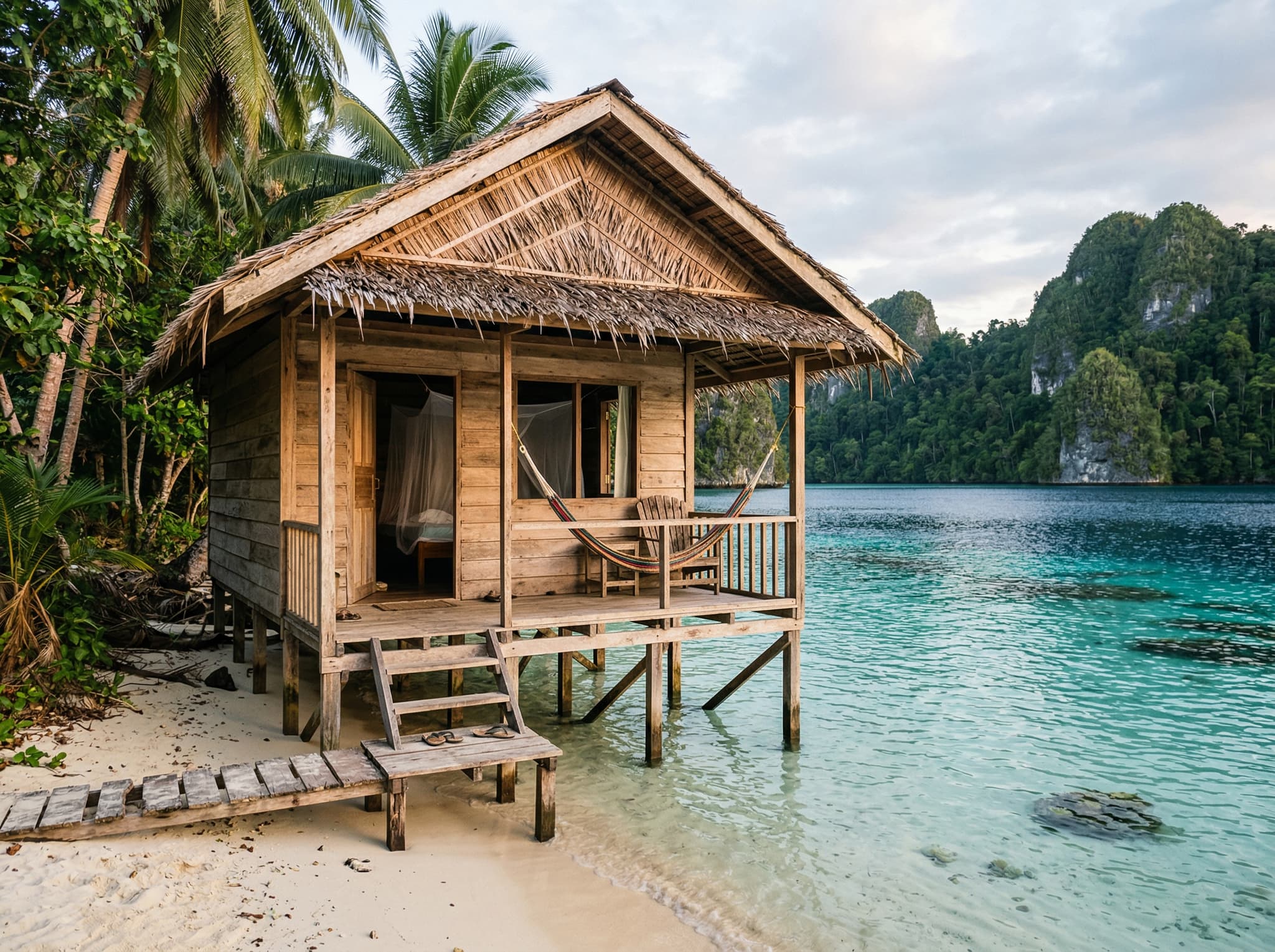
Saukorem itself has no homestays. Accommodation is at nearby properties on Pulau Pam in the Fam Islands area:
Nearby Homestays
Saukabu Homestay
VIP bungalows (ensuite) and shared rooms; child discounts available
Sunrise Homestay
4 private bungalows, shared bathrooms, bucket showers; breakfast included
Saubaryam Homestay
3 VIP bungalows on white sand beach; ensuite; sleeps up to 4
Book through stayrajaampat.com. Expect basic but clean facilities — raised beds, mosquito nets, verandas facing the water. Full board and vegetarian or halal meals are available on request at most properties.
Permits and Money
Required Permits
Marine Park Entry Permit
IDR 700,000 (~$45) international; IDR 425,000 domestic. Valid 12 months.
Visitor Entry Ticket
IDR 300,000 per entry (2026 sources) [VERIFY] — conflicting reports exist; check sipari-rajaampat.id
Children under 12
Exempt from marine park fee
Purchase both permits in Sorong before boarding the ferry. You'll receive a waterproof tag (TLPJL card) as proof of payment for the marine park fee. Keep it accessible — you may be asked to show it.
There is one ATM in Waisai. No credit cards are accepted anywhere in the area. Withdraw enough Rupiah in Sorong to cover your entire stay, including boat charters, homestay fees, and tips.
Worth the Effort?
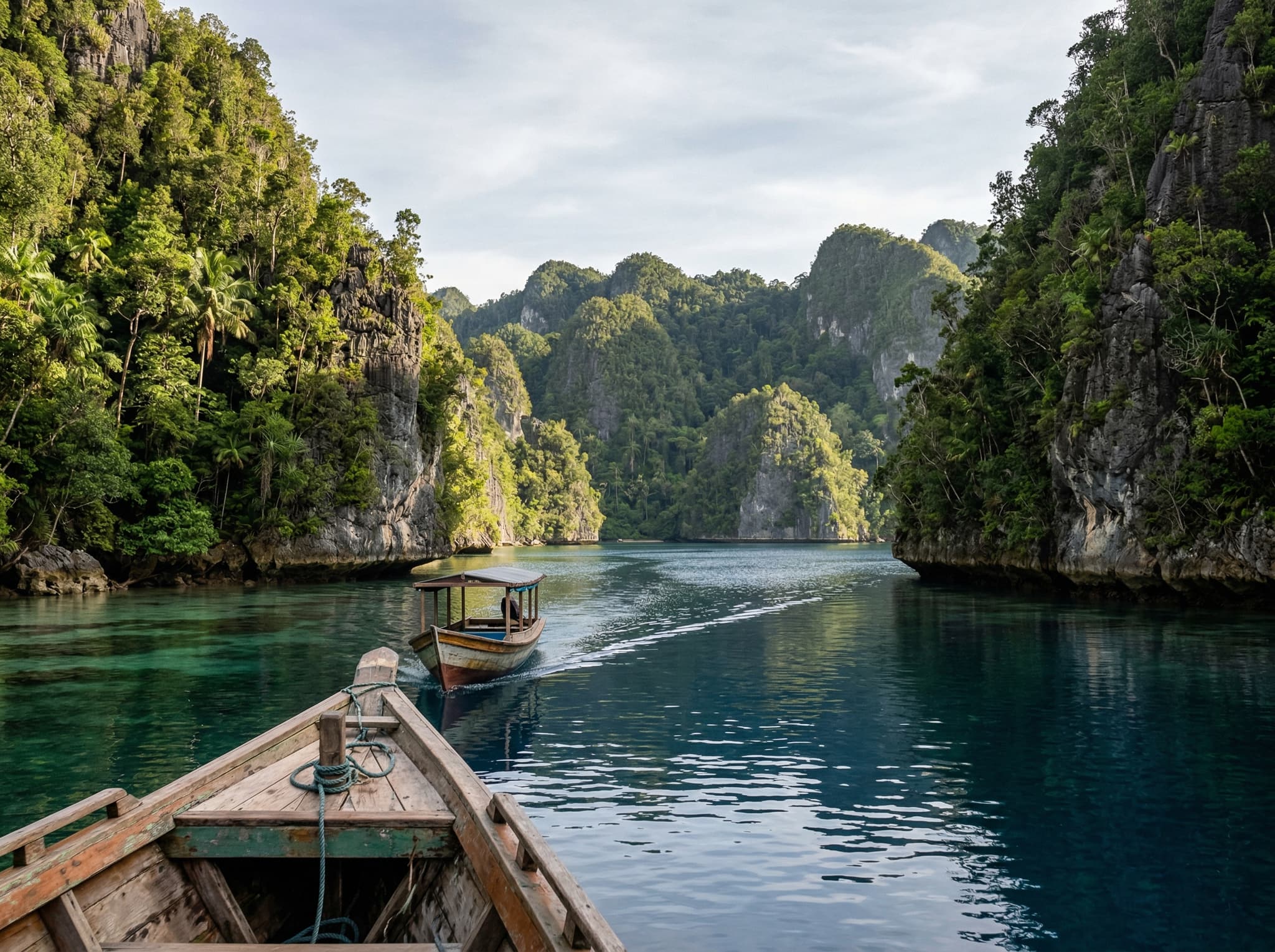
Saukorem is not a destination in the conventional sense. It is a stop — sometimes brief, sometimes a half-day — on a boat route through the Fam Islands. What makes it worth the detour is the specificity of the place: a community that decided the turtles mattered and built something around that decision. The reef off the jetty. The birds in the canopy at dawn. The water between the limestone islands, shifting from green to blue depending on the hour and the depth.
It won't change your life. But it might be the quietest morning of your trip.