Sardine Reef packs Raja Ampat's best fish action into one current-swept seamount. Here's what to expect, when to go, and how to get there.
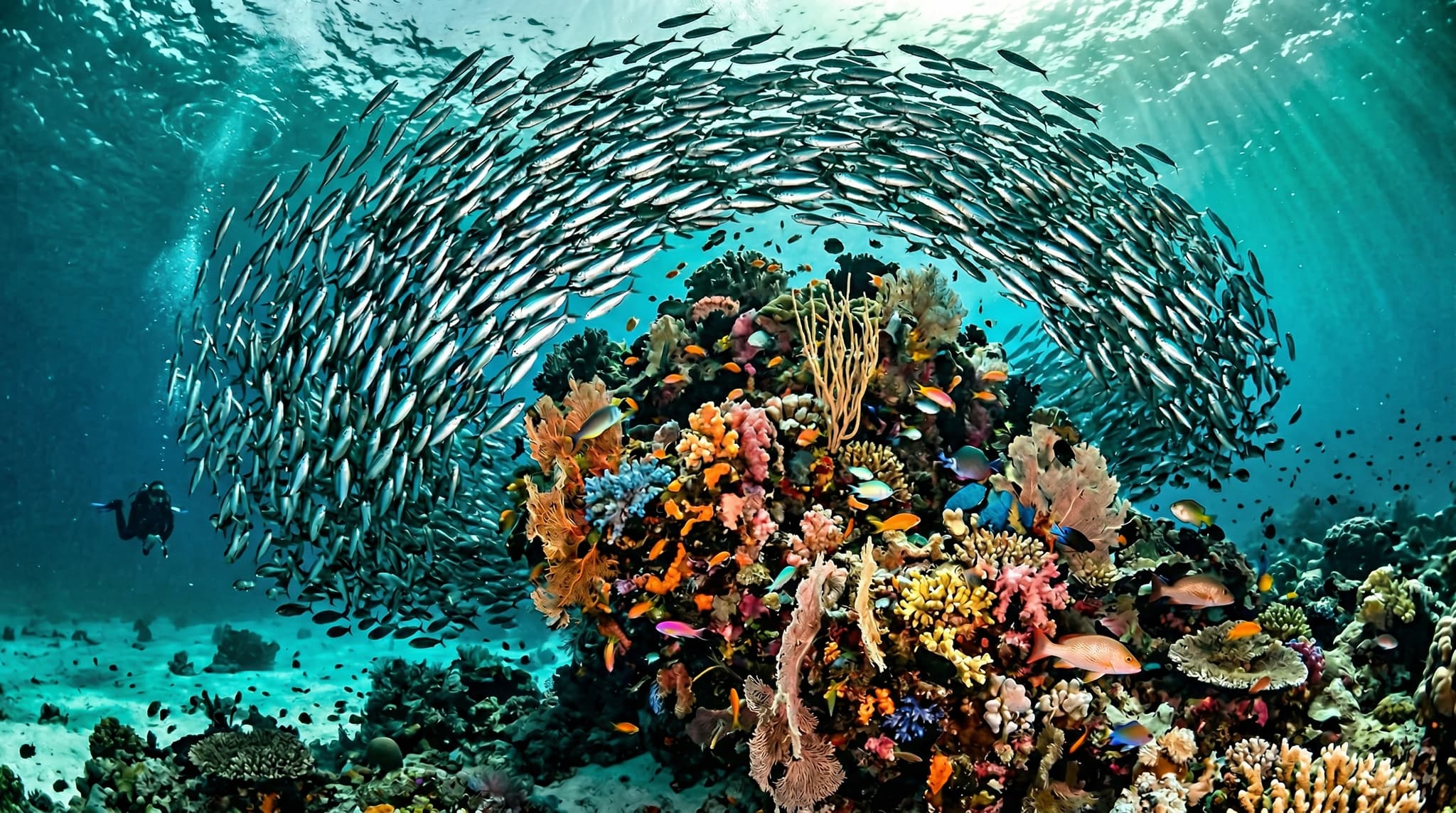
There's a moment at Sardine Reef — documented by enough divers and dive guides that I'm comfortable calling it the site's signature — where you descend to around 15 meters and the schooling fish are so dense they block the light. Fusiliers, sardines, and damsels packed so tightly they move like a single organism, with barracuda and giant trevallies slicing through the edges picking off stragglers. It's one of the most reliably spectacular fish aggregations in Raja Ampat, which means it's one of the most spectacular anywhere on Earth.
Sardine Reef is an oval-shaped underwater seamount sitting east of Kri Island in the Dampier Strait. The top crests at about 5 meters, the walls drop to 30 meters and beyond, and the whole structure acts like a magnet for nutrient-rich currents that converge from multiple directions. Those currents are the reason the site is so alive — and the reason it's not for everyone.
What You'll Actually See
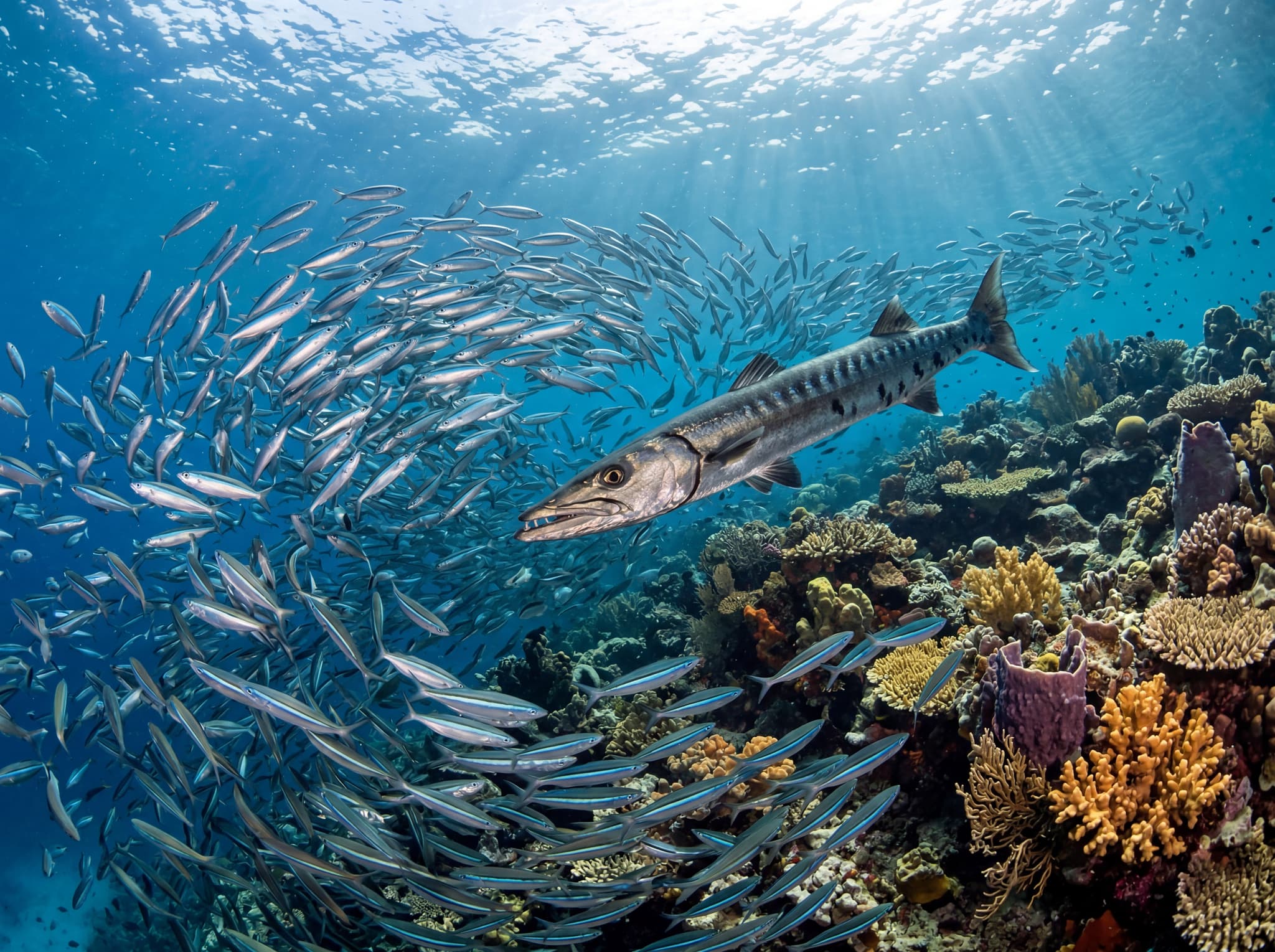
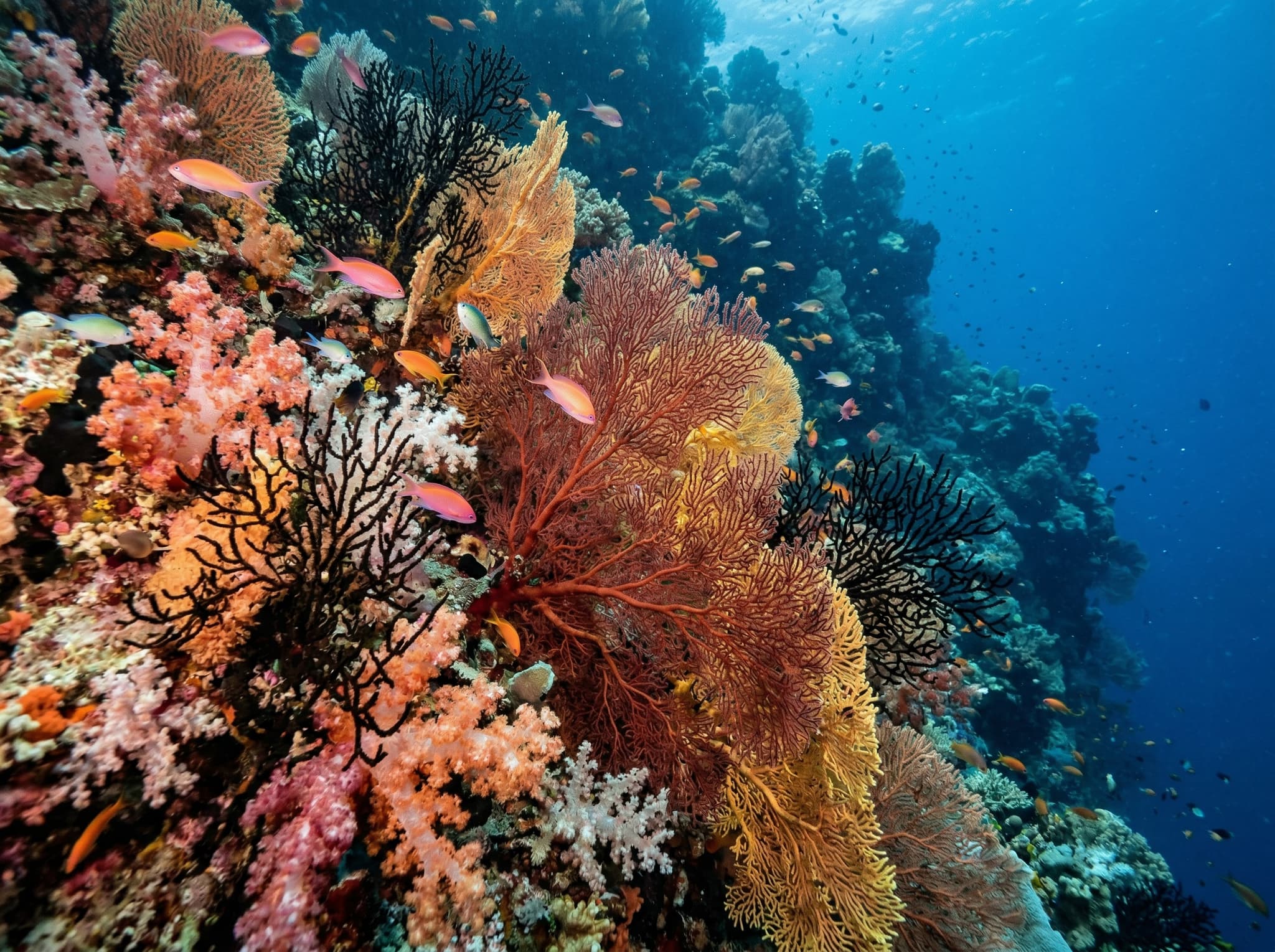
The reef structure itself is covered in soft corals, gorgonian fans, and black coral bushes. That's the backdrop. The main event is the fish.
Schooling species dominate: fusiliers in shimmering walls, sardines in tight baitballs, surgeonfish, snappers, and damsels. Closer to the coral, you'll find butterflyfish, bannerfish, angelfish, anthias, sweetlips, and Titan triggerfish. The predators are what give the site its drama — barracuda forming tornados, Spanish mackerel on patrol, jacks and giant trevallies hunting the edges of the schools.
Sharks are regular visitors. Blacktip reef sharks, whitetip reef sharks, and grey reef sharks cruise the site. Tasselled wobbegongs — Raja Ampat's camouflage specialists — lie flat against the seabed waiting for something careless to swim past. Bumphead parrotfish make appearances too, usually in groups heavy enough to hear before you see them.
For context: Raja Ampat hosts over 1,500 fish species across its marine park. Sardine Reef concentrates an outsized share of that biodiversity into one oval-shaped hill. The density is the point.
The Currents: What You Need to Know
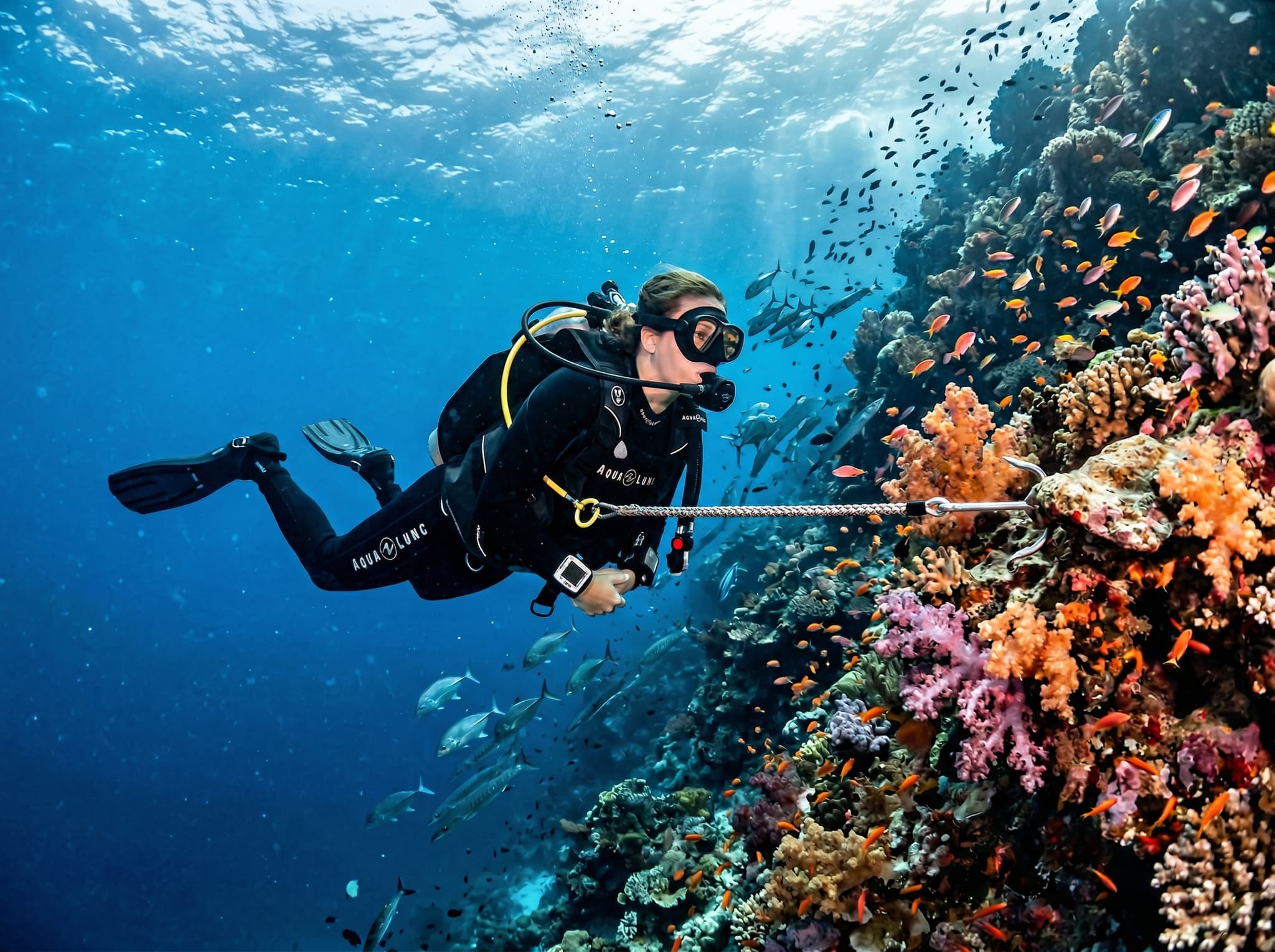
This is not a beginner site. Multiple currents converge around the seamount's topography, and conditions can shift mid-dive. Dive operators in the area classify Sardine Reef alongside Cape Kri and Manta Ridge as current-heavy.
Diver Requirements
Certification
Advanced Open Water or equivalent
Key Skill
Strong buoyancy control
Gear
Reef hook recommended
Entry
Negative entries standard
The currents are what make the site work — they deliver the plankton that feeds the sardines that attract the barracuda that draw the sharks. Without the current, it's a pretty coral mound. With it, it's a food chain performing live in front of you. But if your buoyancy control isn't solid, you'll spend the dive fighting the water instead of watching the show.
If you're newly certified or uncomfortable in current, Manta Sandy is a more forgiving alternative in the same region.
When to Dive Sardine Reef
October through April is peak season. Within that window, February through April is considered optimal — visibility regularly exceeds 30 meters, seas are calm, water temperature sits around 28°C, and marine activity peaks.
January and February deliver 20–30 meter visibility with water temps of 28–30°C, but sites get busier. November and December offer high visibility with building manta activity and fewer boats.
Seasonal Breakdown
Oct
Dry season starts; visibility 30m+; calm
Nov–Dec
High vis; moderate currents; mantas increasing
Jan–Feb
20–30m vis; 28–30°C; peak crowds
Mar–Apr
Best overall: 30m+ vis, warm, calm, fewer boats
May–Sep
Wet season: 15–25m vis; stronger currents; fewer crowds
The wet season (May–September) isn't a write-off. Visibility drops to 15–25 meters and currents strengthen, but the stronger flow can actually improve drift dives and marine life activity. Fewer boats, too. If you're an experienced diver comfortable with variable conditions, the off-season has real appeal.
How to Get There
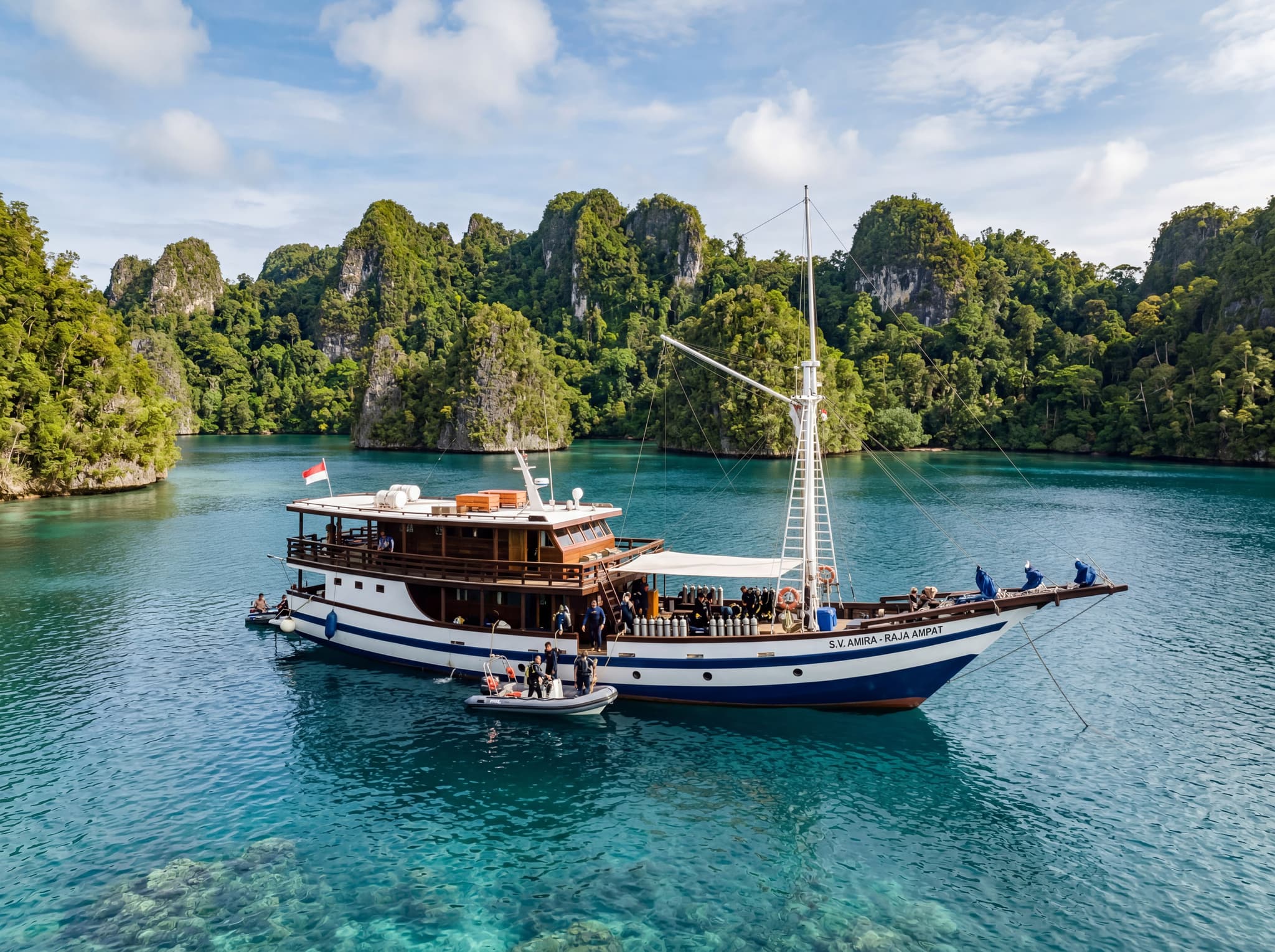
Sardine Reef is a boat dive, full stop. The site sits about 10–15 minutes by boat from Kri Island, but the primary access method is liveaboard — not day trips from shore-based resorts.
Liveaboards depart from Sorong (the main hub, reached via Sorong Airport) or Waisai. Most itineraries have you arriving in Sorong by midday for transfers, with a check dive at a nearby site before sailing toward the Dampier Strait.
Liveaboard Itinerary Options
Central Raja Ampat (6–7 nights)
Sardine Reef + Cape Kri, Blue Magic, Arborek, Mioskon
Dampier + Misool (9–10 nights)
Sardine Reef + Manta Ridge, Magic Mountain
Full Raja Ampat (11–14 nights)
North, central, and south coverage
Budget liveaboards start around $116–$374/day [VERIFY: prices sourced pre-2024]. Premium vessels run $500–$600/night [VERIFY]. These prices typically exclude the Raja Ampat marine park entry permit, gear rental, transfers, and alcohol. Expect 3–4 dives per day on active itinerary days, with fewer dives on embarkation and disembarkation days.
Conservation Context
Raja Ampat's marine park permit system funds conservation efforts across the region. Early 2025 saw a coral bleaching event in nearby areas when water temperatures exceeded 30°C — over 600 coral nubbins died at affected nursery sites. By late January 2025, temperatures had recovered to 28.6–28.9°C, and some corals were reported regaining color. No site-specific bleaching has been confirmed at Sardine Reef itself, but the proximity warrants attention.
As a diver, the practical implications: maintain neutral buoyancy, don't touch the reef, use reef hooks on hard substrate only, and respect the marine park guidelines your operator should brief you on. The permit fee funds the infrastructure that keeps these sites protected from overfishing and unregulated development. It's one of the better conservation models in Southeast Asian diving.
The Bottom Line
Sardine Reef delivers what its name promises — dense, chaotic, thrilling fish life on a current-swept seamount in the heart of Raja Ampat's richest diving corridor. It's not the region's most famous site (Cape Kri holds that title), and it's not the easiest dive. But for intermediate-to-advanced divers who want to see what a healthy reef ecosystem looks like when everything is firing — predators, prey, corals, currents — this is one of the Dampier Strait's essential stops.