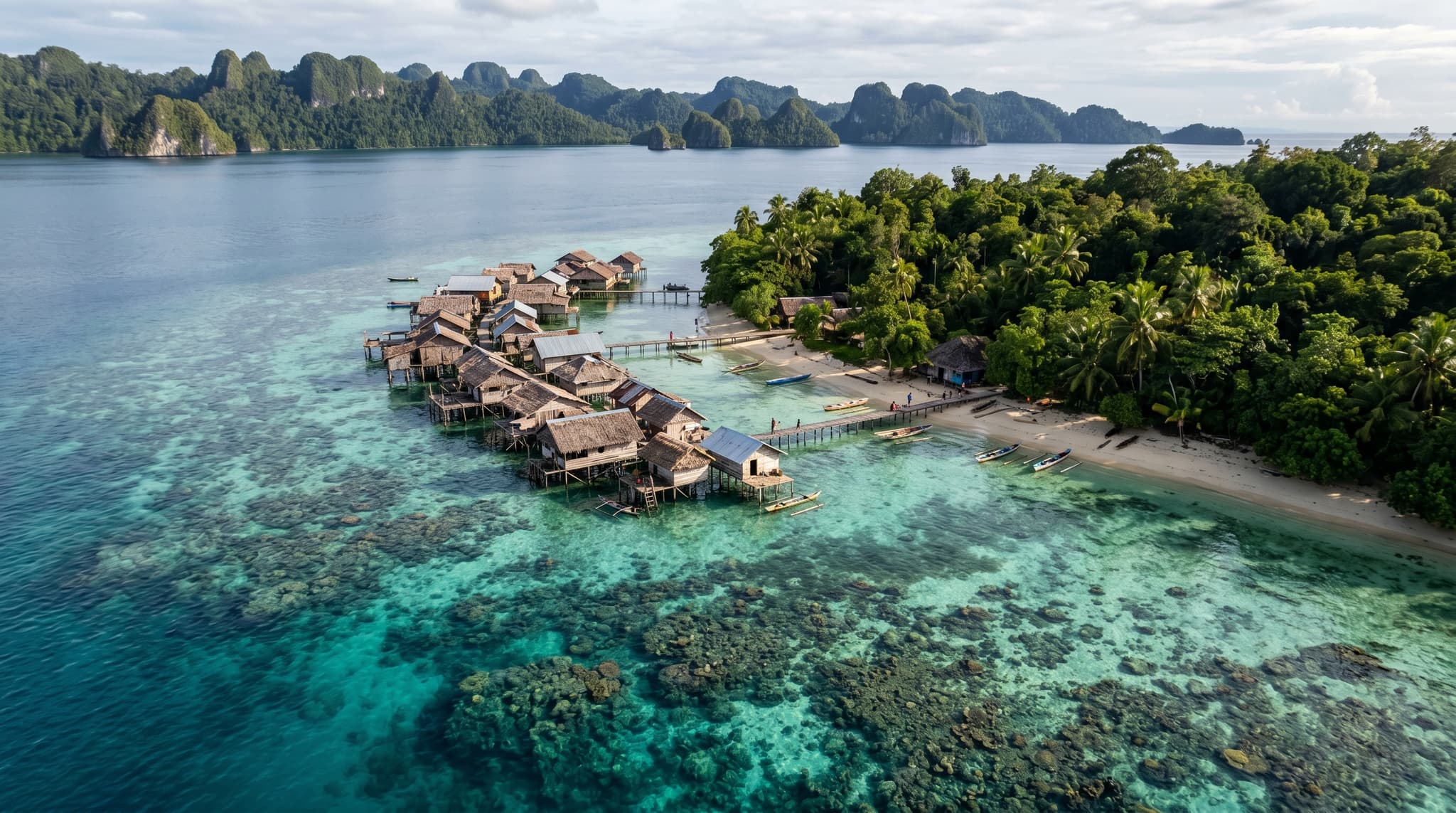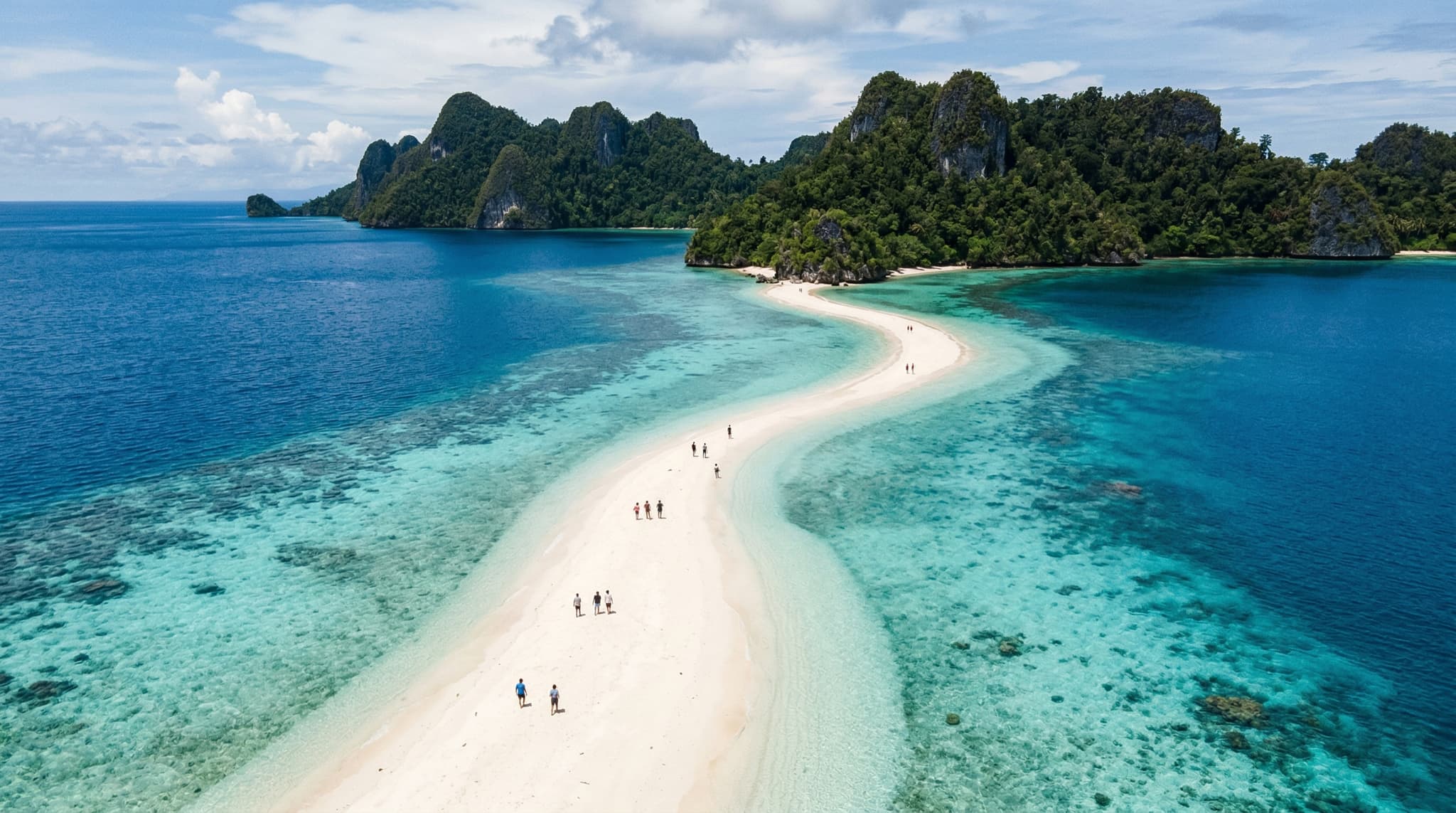
Pasir Timbul is a tidal sandbar in Raja Ampat's Dampier Strait that emerges at low tide — here's how to visit and what to expect.

There's something almost absurd about standing in the middle of the ocean on dry sand. No island in sight that you walked from, no dock, no jetty — just a white tongue of sand that surfaced an hour ago and will vanish again before lunch. That's Pasir Timbul, and it's one of those places that makes Raja Ampat feel less like a real destination and more like something a nature documentary invented.
The name translates simply from Indonesian: pasir means sand, timbul means to appear or emerge. A sandbar that appears. It's descriptively accurate in the way that undersells everything. What actually happens is this: as the tide drops in the strait between Mansuar and Kri Islands — two of the most visited islands in Raja Ampat's central cluster — a ridge of fine white sand gradually breaks the surface of water so clear it barely looks like water at all. At peak low tide, you get a sandbar roughly 100 meters long, narrow enough to feel precarious, surrounded on all sides by reef and open sea.
How Pasir Timbul Works
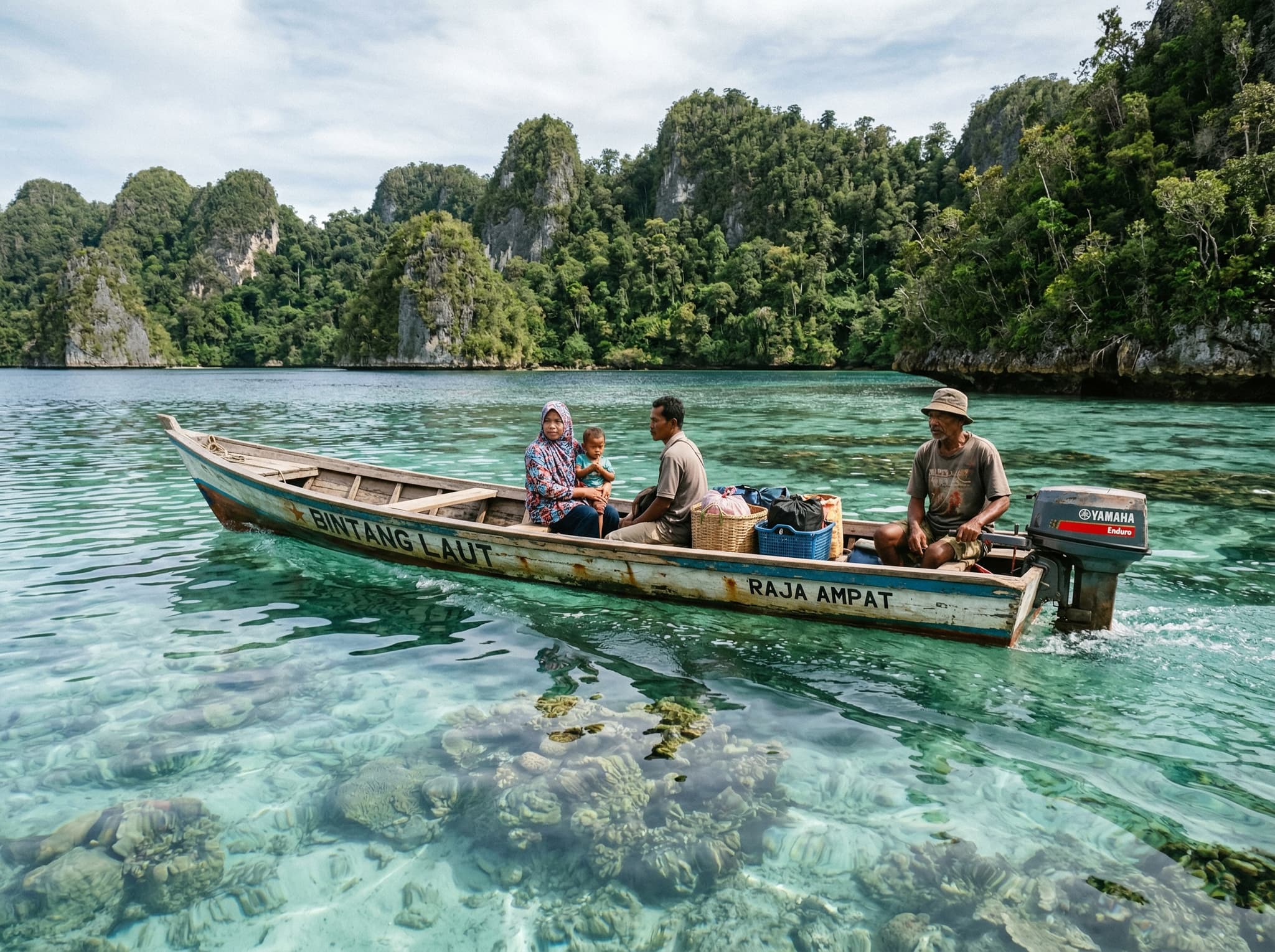
This isn't a beach. It's a tidal phenomenon — a shallow sand ridge that sits just below the surface at high tide and emerges only when the water drops low enough. The window varies daily with the tidal cycle, but you're generally looking at a usable period of one to three hours around low tide.
Most visitors reach Pasir Timbul as part of a day trip by longboat (ketinting) from one of the homestays on Kri, Mansuar, or the surrounding islands. The sandbar sits in the Dampier Strait, one of the most biodiverse marine corridors on Earth, which means the boat ride there is itself worth the trip — you're crossing water that holds more coral species per hectare than anywhere else scientists have measured.
Getting There
Typical departure
Homestays on Kri, Mansuar, or Arborek
Boat time
10–30 minutes depending on origin
Boat type
Traditional longboat (ketinting) with outboard motor
Usually combined with
Manta Sandy, Sawandarek Jetty, reef snorkeling stops
What You Actually Do There
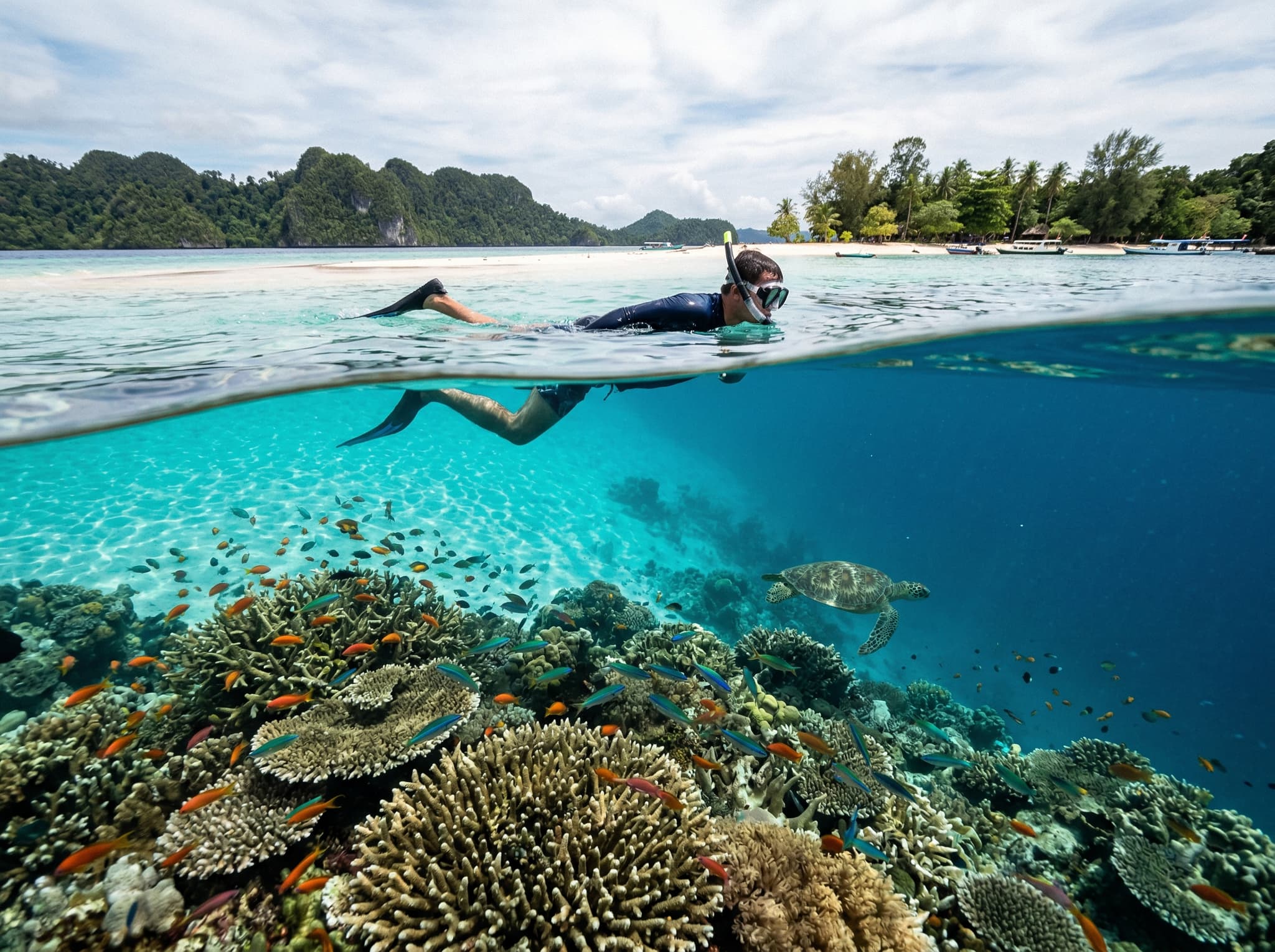
Honestly? You stand on it. You wade around it. You snorkel off its edges. And you take in the visual absurdity of being on a strip of sand in the middle of the sea with karst islands rising on the horizon in every direction.
The snorkeling immediately around Pasir Timbul is good but not Raja Ampat's best — the sand ridge itself means the substrate is sandy rather than reef-covered right at the bar. But move ten or fifteen meters off the edge and you're over coral gardens that host blacktip reef sharks, sea turtles, giant clams, and the kind of fish density that makes you wonder if someone stocked the ocean for your benefit. The water clarity in this part of the Dampier Strait is frequently in the 15–25 meter visibility range, which means you can see reef structure from the surface that would require a dive elsewhere.
The sandbar has become one of Raja Ampat's most photographed spots — the contrast of white sand, turquoise shallows, and deep blue surrounding water is genuinely striking, and it photographs well even on a phone. This means it can get crowded by Raja Ampat standards, which is to say you might share it with 15 or 20 other people during peak season. By any other destination's measure, that's empty.
The Bigger Picture: Why a Sandbar Matters
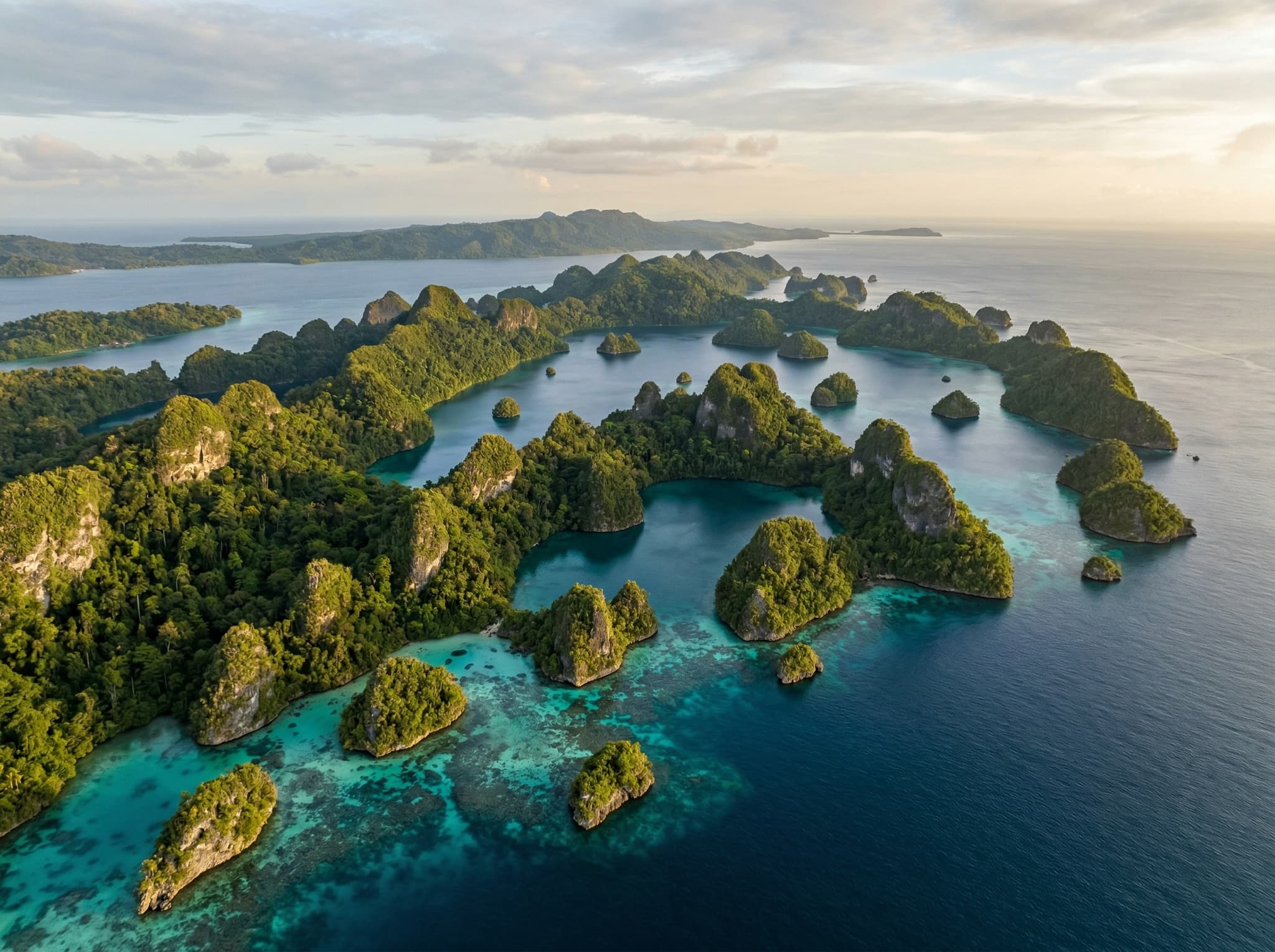
Pasir Timbul is a small thing — a sandbar you visit for an hour. But it's useful for understanding what makes Raja Ampat different from other island destinations in Southeast Asia.
Raja Ampat's tourism model is built around marine conservation. The entry permit system — managed jointly by the local government and conservation organizations — funnels fees directly into marine protection and community development. The waters around Pasir Timbul fall within the Raja Ampat Marine Protected Area, one of the largest in Indonesia, covering roughly 20,000 square kilometers. The reef health you see when you slip off the edge of the sandbar is not accidental. It's the result of no-take zones, shark and manta fishing bans enacted in 2012, and a homestay-based tourism economy that gives local Papuan communities a financial stake in keeping the reefs alive.
This is why a sandbar in the Dampier Strait is worth writing about. Not because standing on sand in the ocean is inherently meaningful — it's a novelty, and an enjoyable one — but because the ecosystem surrounding it is among the most intact tropical marine environments left on the planet, and the system protecting it is one of the more successful conservation models in Southeast Asia.
Practical Considerations
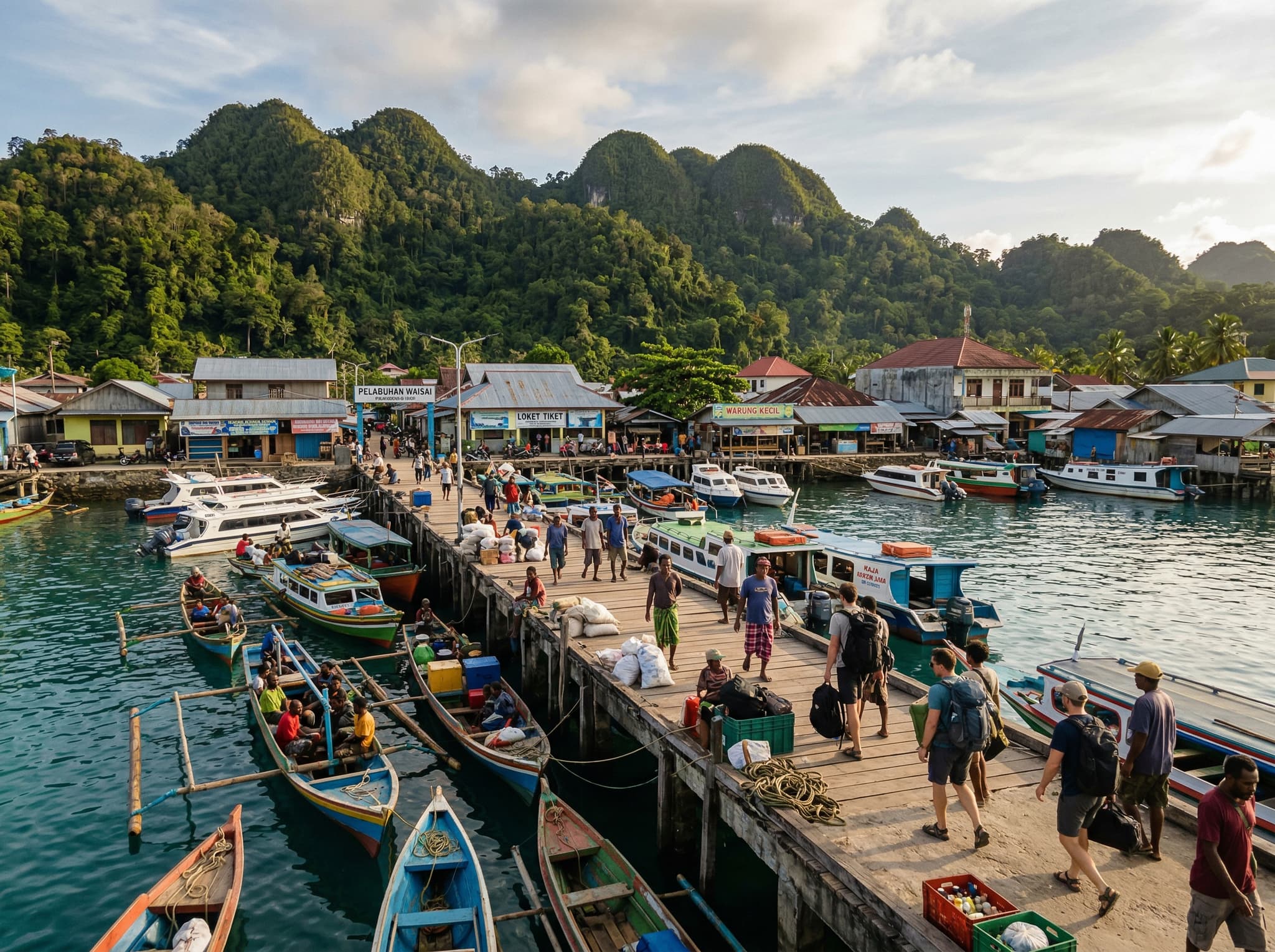
Bring reef-safe sunscreen and wear a rash guard — there is zero shade on an exposed sandbar in equatorial sun. Water shoes help on the walk out if the sand is uneven, though most of the bar is smooth enough for bare feet. Bring your own snorkel gear if you have it; homestays provide basic sets but quality varies widely.
There are no facilities at Pasir Timbul — no vendors, no toilets, no structures of any kind. It's sand and sea. Bring water.
The sandbar is not accessible during rough sea conditions, which are more common from June through September when southeasterly winds pick up in the strait. Most homestays adjust their itineraries accordingly, but it's worth confirming Pasir Timbul is feasible before booking a trip specifically around it.