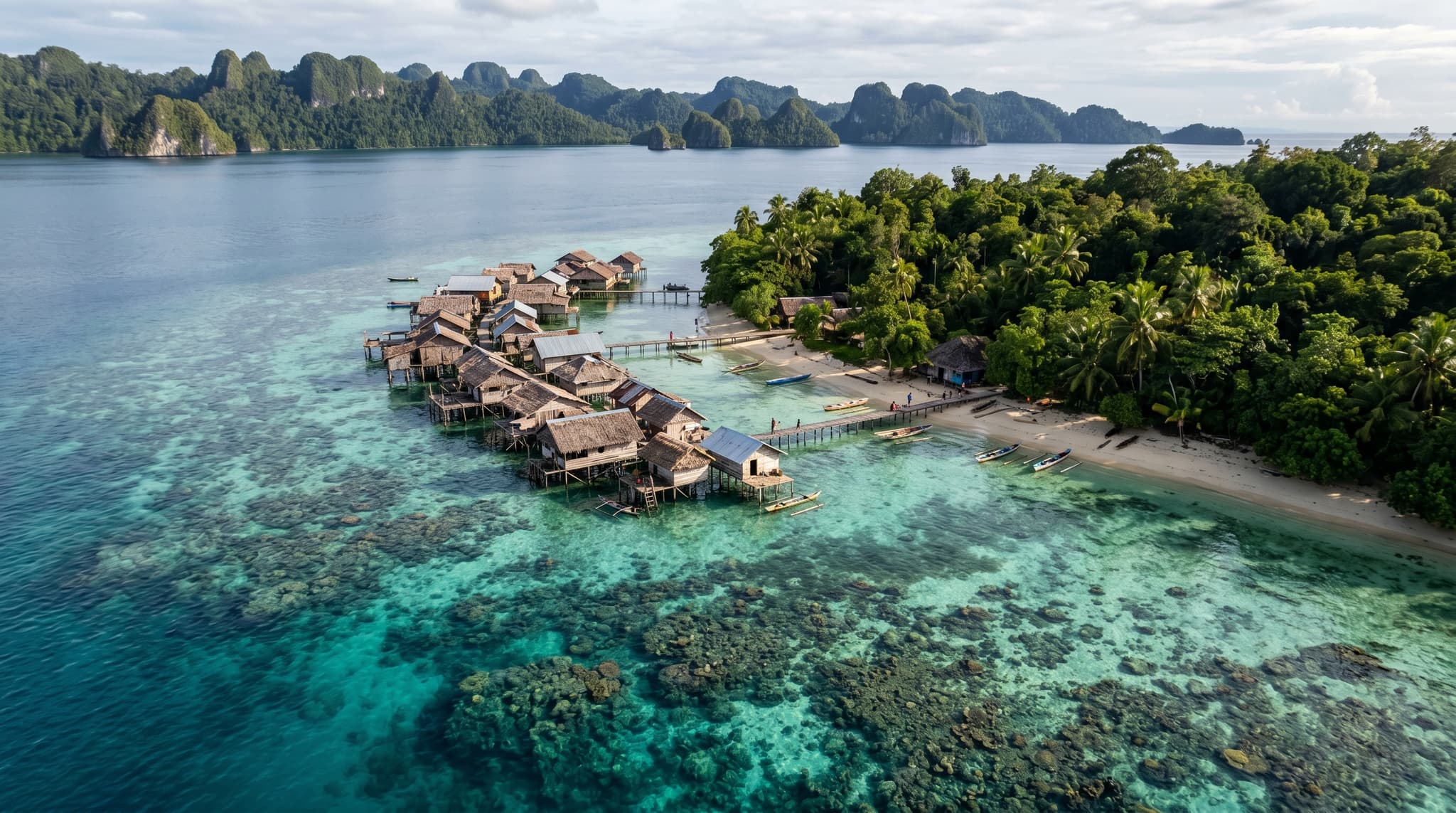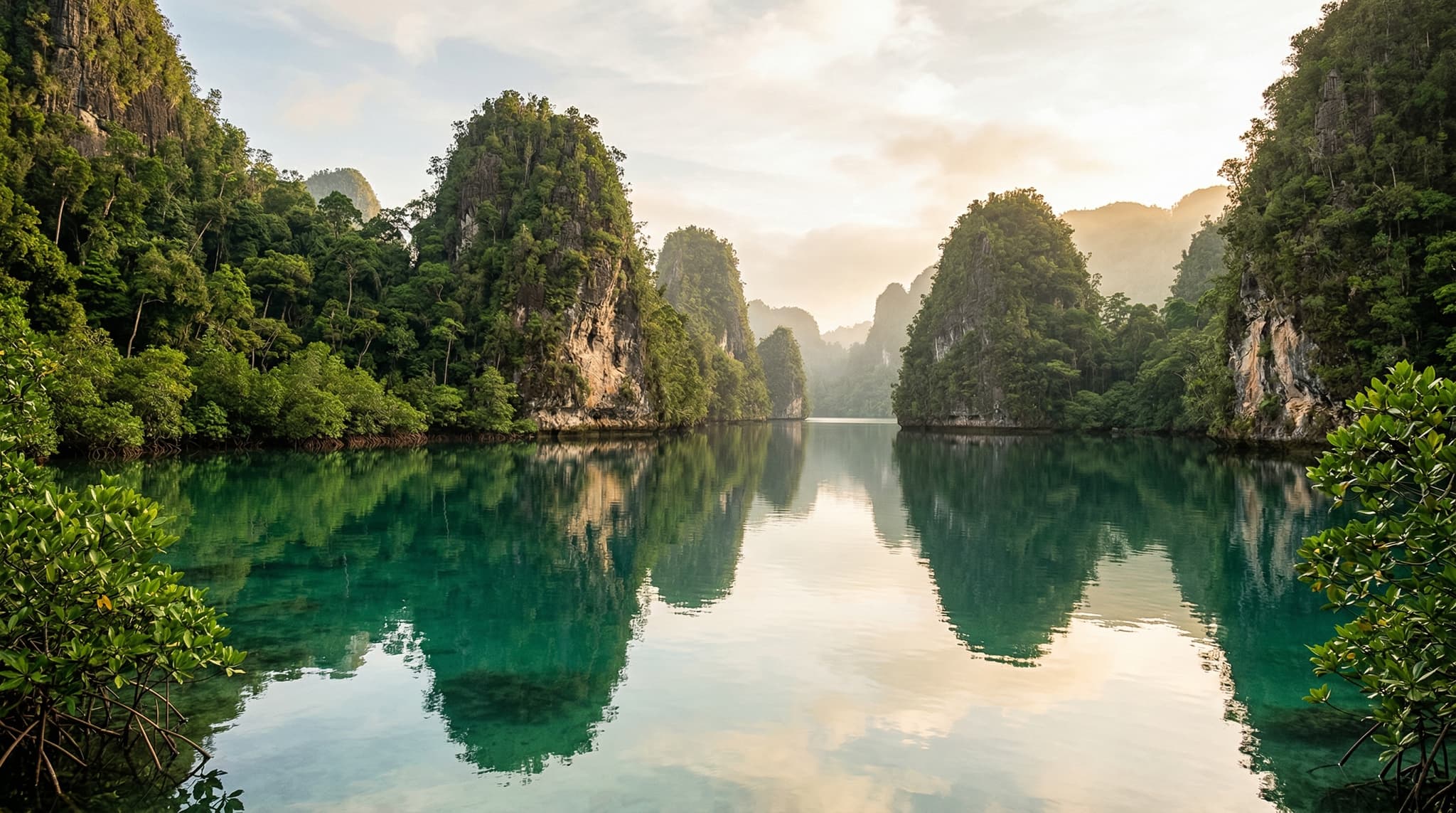
Kabui Bay connects Raja Ampat's iconic karst formations, The Passage, and prime snorkeling into one charter route between Gam and Waigeo islands.
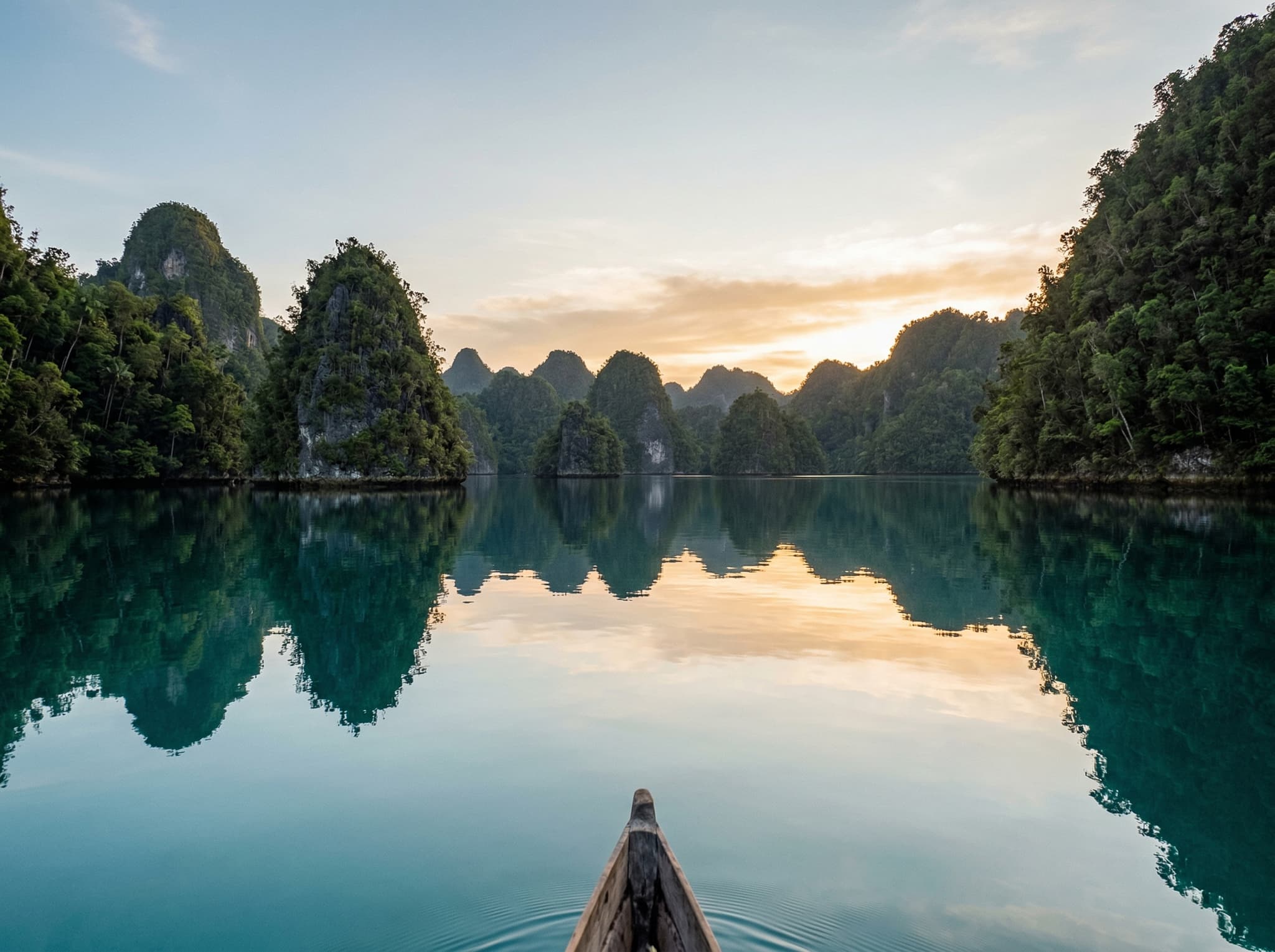
Most visitors to Raja Ampat arrive chasing its underwater reputation — the staggering coral counts, the manta cleaning stations, the claim to the highest marine biodiversity on Earth. Kabui Bay delivers on all of that, but what catches visitors off guard is what's above the waterline: a labyrinth of limestone karst islets draped in rainforest, rising from water so still it doubles them. The bay sits between Gam and Waigeo islands, and navigating it by boat feels less like ocean travel and more like drifting through a flooded canyon system that forgot to tell anyone it exists.
This is also the bay that connects some of Raja Ampat's most recognizable landmarks — Batu Pensil, Face Rock, and The Passage — into a single route. If you're building a charter day or liveaboard itinerary through central Raja Ampat, Kabui Bay isn't a detour. It's the connective tissue.
What You're Looking At
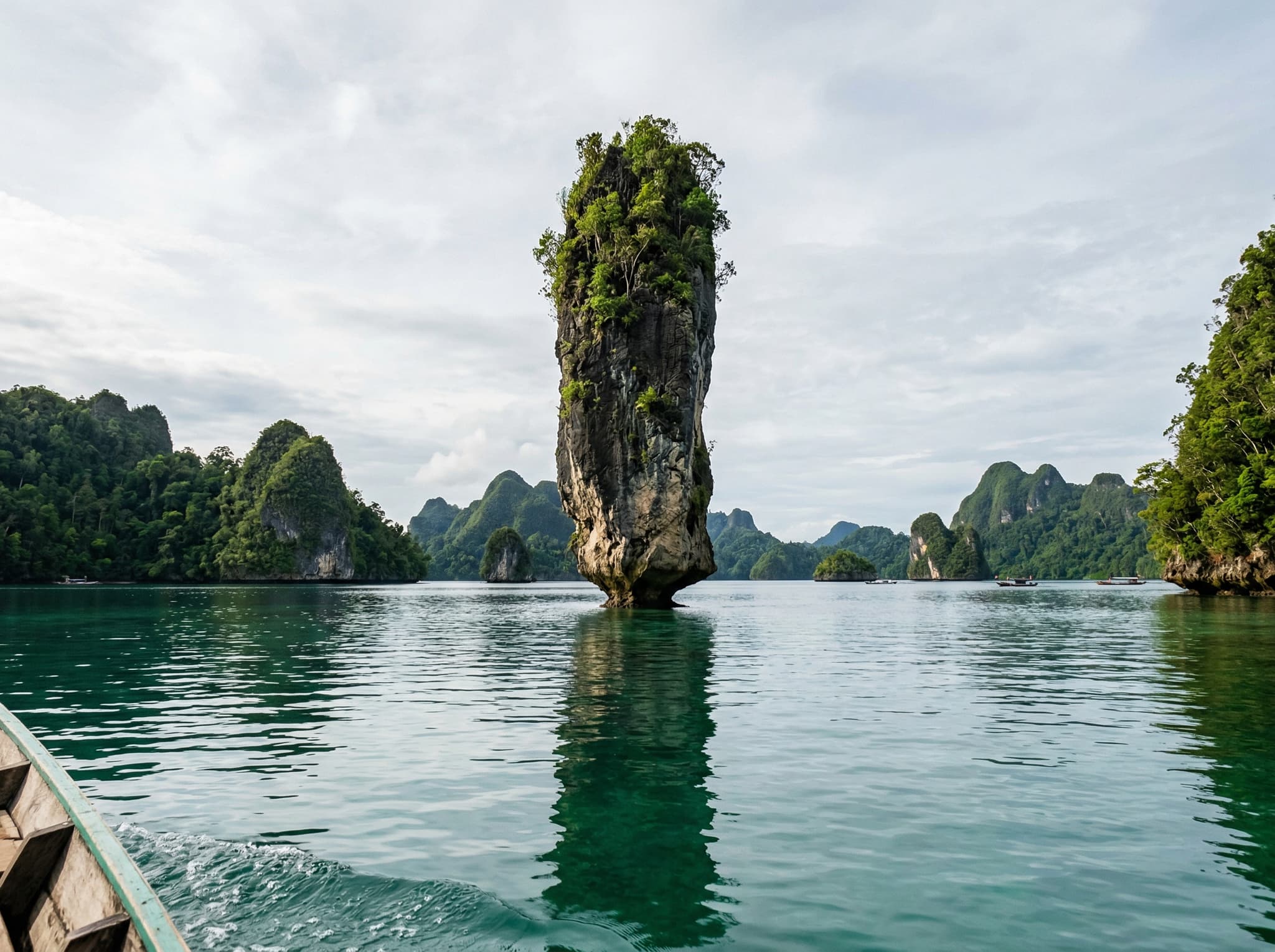
The karst formations that define Kabui Bay are ancient limestone — the same geological family that produces Ha Long Bay in Vietnam and Phang Nga Bay in Thailand, shaped by millennia of dissolution and tectonic uplift into sheer-sided towers and mushroom-shaped islets. Here, they're smaller in scale but wilder in feel, thickly forested to the waterline and fringed with mangroves that blur the boundary between land and sea.
Two formations have become unofficial landmarks. Batu Pensil (Pencil Rock) is a narrow limestone pillar balanced improbably on a thin base, looking exactly like its name suggests. Face Rock is a cliff face whose erosion patterns form what appears to be a human profile. Both sit near the bay's entrance and function as visual markers that you've arrived in Kabui Bay proper.
The Passage
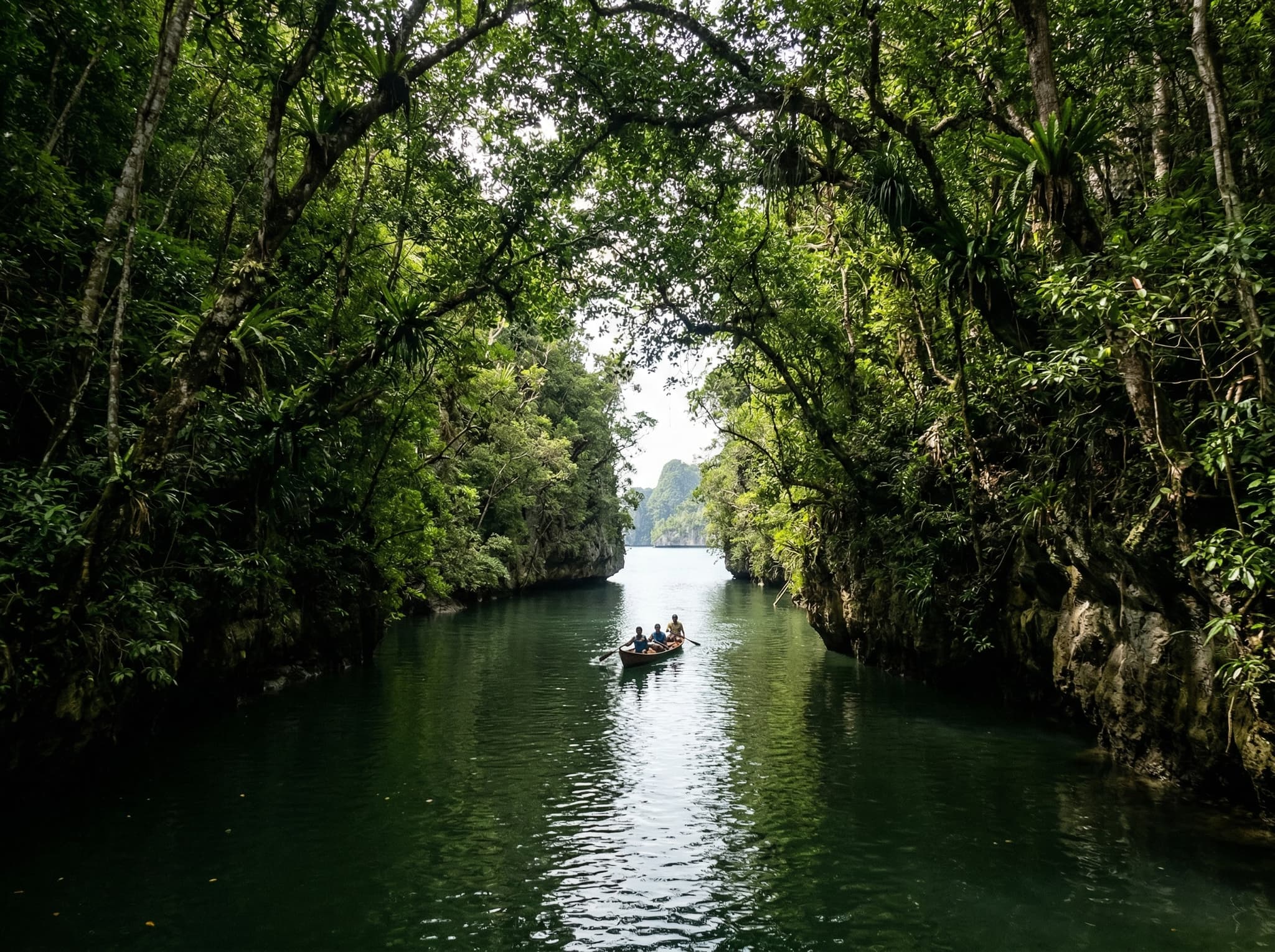
The headline feature is The Passage — a fjord-like channel between Gam and Waigeo that narrows to roughly 25 metres wide and 5 metres deep. Overhanging jungle closes in from both sides, and the water moves through it like a slow river. It's disorienting in the best way: you're technically at sea, but the canopy above and the mangrove roots below make it feel like an inland waterway.
The Passage doubles as a dive and snorkel site. The mangrove-fringed shallows are home to archer fish — the species famous for spitting jets of water to knock insects off branches — along with juvenile blacktip reef sharks. Deeper sections hold vibrant soft corals, turtles, and pygmy seahorses. Visibility during peak season (November through March) can reach 25–30 metres.
Snorkeling and Kayaking
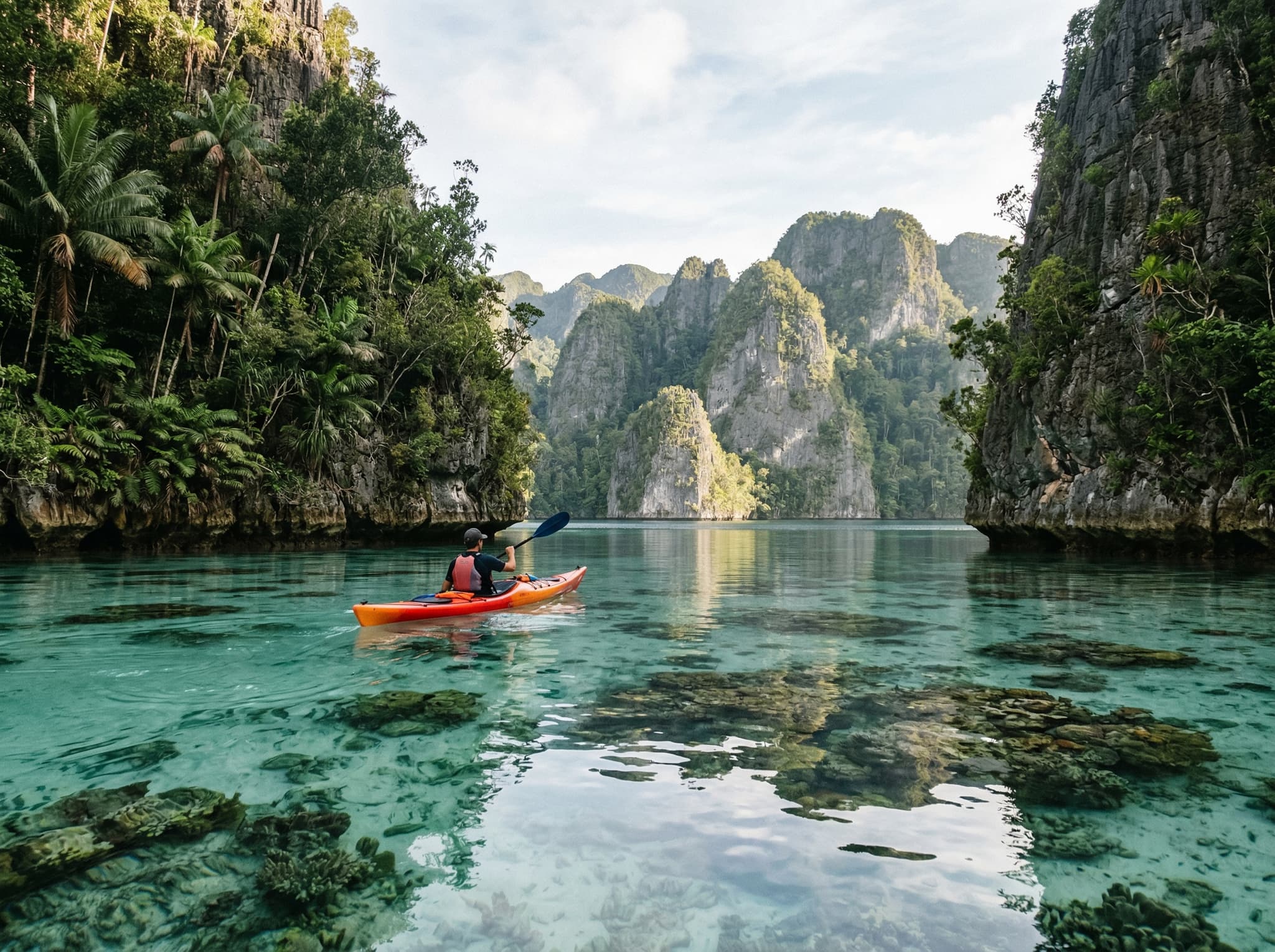
Beyond The Passage, Kabui Bay's southern shoreline along Waigeo offers accessible snorkeling directly from the beach or via wooden jetties. The reefs here are shallow — dense hard corals in the shallows, soft corals slightly deeper — and the species list reads like a marine biology textbook: parrotfish, butterflyfish, triggerfish, surgeonfish, coral breams, and the occasional pufferfish (admire from a distance).
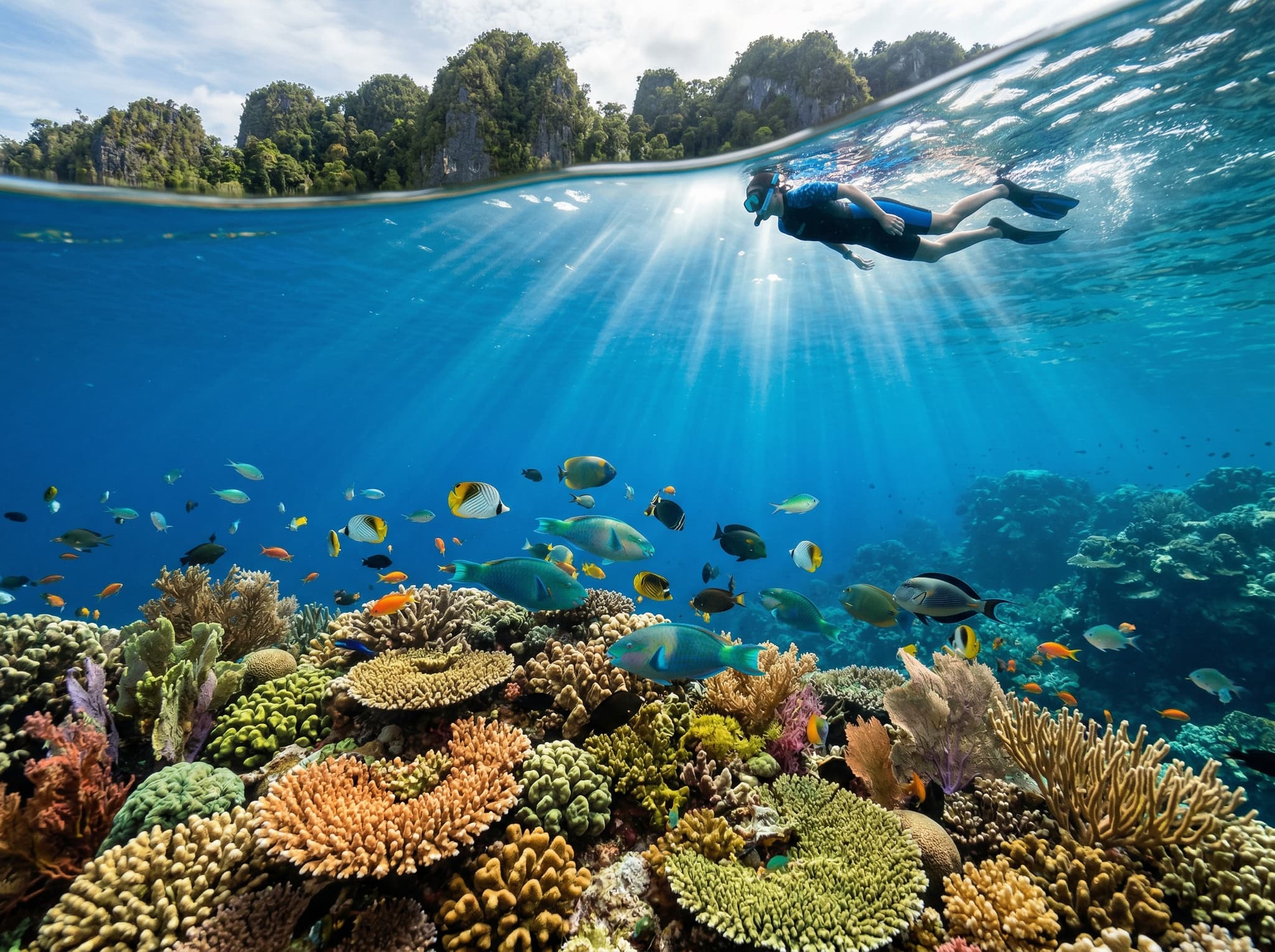
Kabui Bay is also one of Raja Ampat's premier sea kayaking spots. The calm, sheltered water between karst islets makes it navigable for intermediate paddlers, and the scale feels right — intimate enough to explore mangrove inlets, expansive enough to spend a full morning without retracing your route.
Kabui Bay Activities
Snorkeling
Shallow reefs along Waigeo's southern shore
Sea Kayaking
Sheltered water between karst islets
Diving
The Passage — soft corals, turtles, pygmy seahorses
Sightseeing
Batu Pensil, Face Rock, karst formations
Village Visits
Wawiyai and Bouton accessible by boat
Nearby Villages
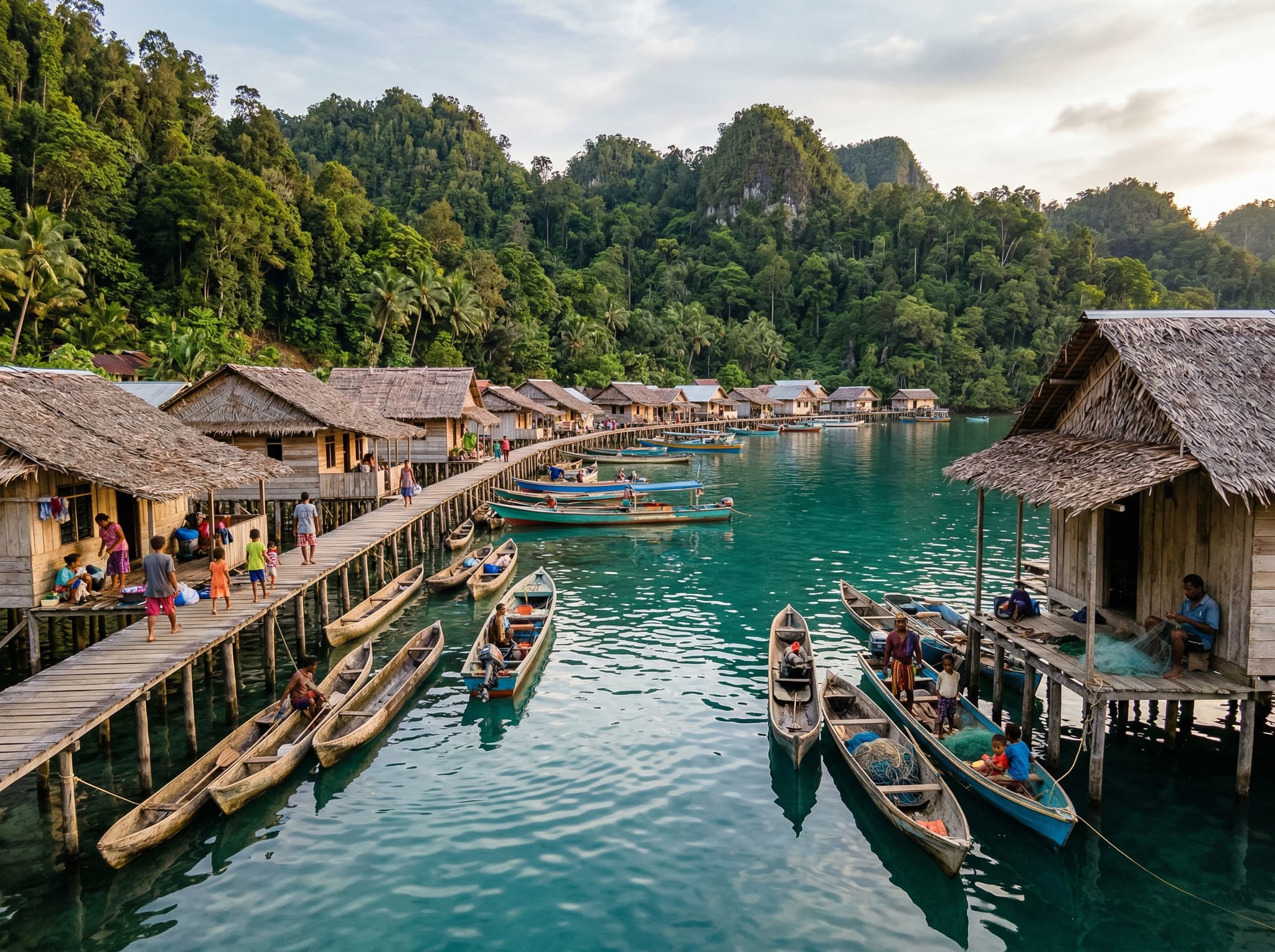
The village of Wawiyai, on Waigeo's shore, is associated with Raja Ampat's founding mythology and contains ancient burial sites. Bouton, also accessible from the bay, offers a quieter window into daily life in the islands. Both are working communities, not tourist attractions — visit respectfully and with a local guide who has an existing relationship with residents. For more village experiences across the archipelago, see things to do in Raja Ampat.
Getting There
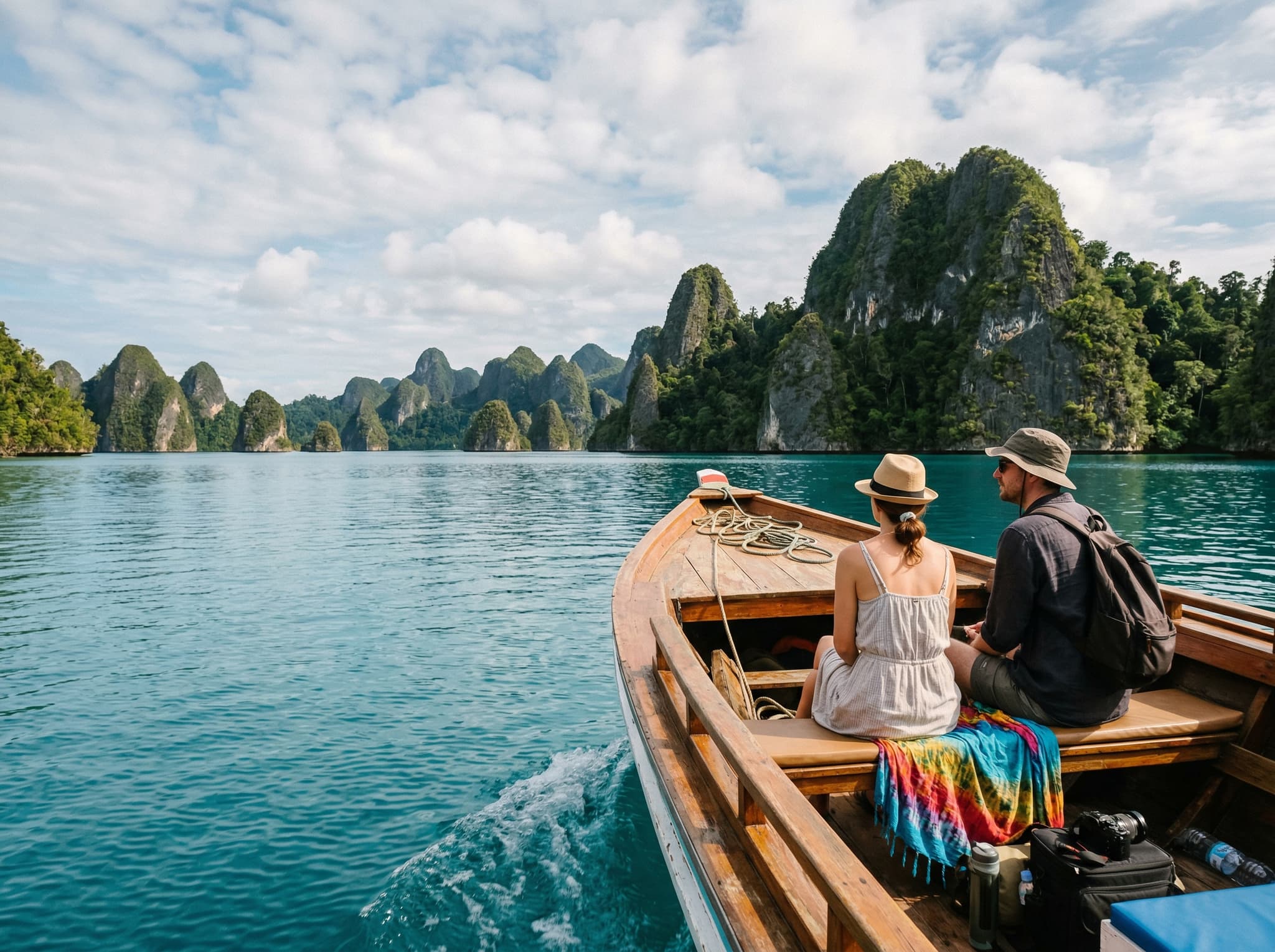
Kabui Bay is accessed by boat from Waisai, the main town on Waigeo Island. To reach Waisai, fly into Sorong (flights from Jakarta, Makassar, and other major Indonesian cities), then take either the public ferry (approximately 2 hours, around IDR 110,000) or a private speedboat (1.5–3 hours, IDR 3.5–12 million depending on vessel and group size).
From Waisai, most visitors reach Kabui Bay via day-trip speedboat charters, which typically depart around 9 AM and combine The Passage, the karst formations, snorkeling, and sometimes a village stop into a single route. Kabui Bay and Friwen Wall — one of Raja Ampat's most accessible coral walls — are commonly combined on the same day charter from Waisai, since both sit along the central route between Waigeo and Gam. Liveaboard itineraries through central Raja Ampat almost universally include Kabui Bay as a half-day or full-day stop.
Getting to Kabui Bay
Gateway
Sorong Airport (SOQ)
Sorong → Waisai Ferry
~2 hours, IDR 110,000
Sorong → Waisai Speedboat
1.5–3 hours, IDR 3.5–12 million
Waisai → Kabui Bay
Day-trip speedboat charter
When to Go
October through April brings calmer seas and the best underwater visibility — this is when most visitors come, and for good reason. For a full seasonal breakdown, see the best time to visit Raja Ampat. November to March is peak season: manta rays are most active at cleaning stations, fish schools are densest, and visibility can exceed 25 metres. Raja Ampat is equatorial, so rain is possible in any month, but seas during this window are generally flat enough for comfortable boat travel and snorkeling.
May through September brings the southeast monsoon — technically the drier season on land, but rougher seas and stronger winds make boat travel less predictable and reduce underwater visibility. The tradeoff: fewer boats in the bay and lower prices on charters and accommodation. Humidity hovers near 100% year-round regardless of season, and daytime temperatures sit between 28–32°C. Pack accordingly.
Kabui Bay rewards the visitor who looks up as much as down — the karst skyline reflected in glass-flat water is as much the point as the reef beneath it.