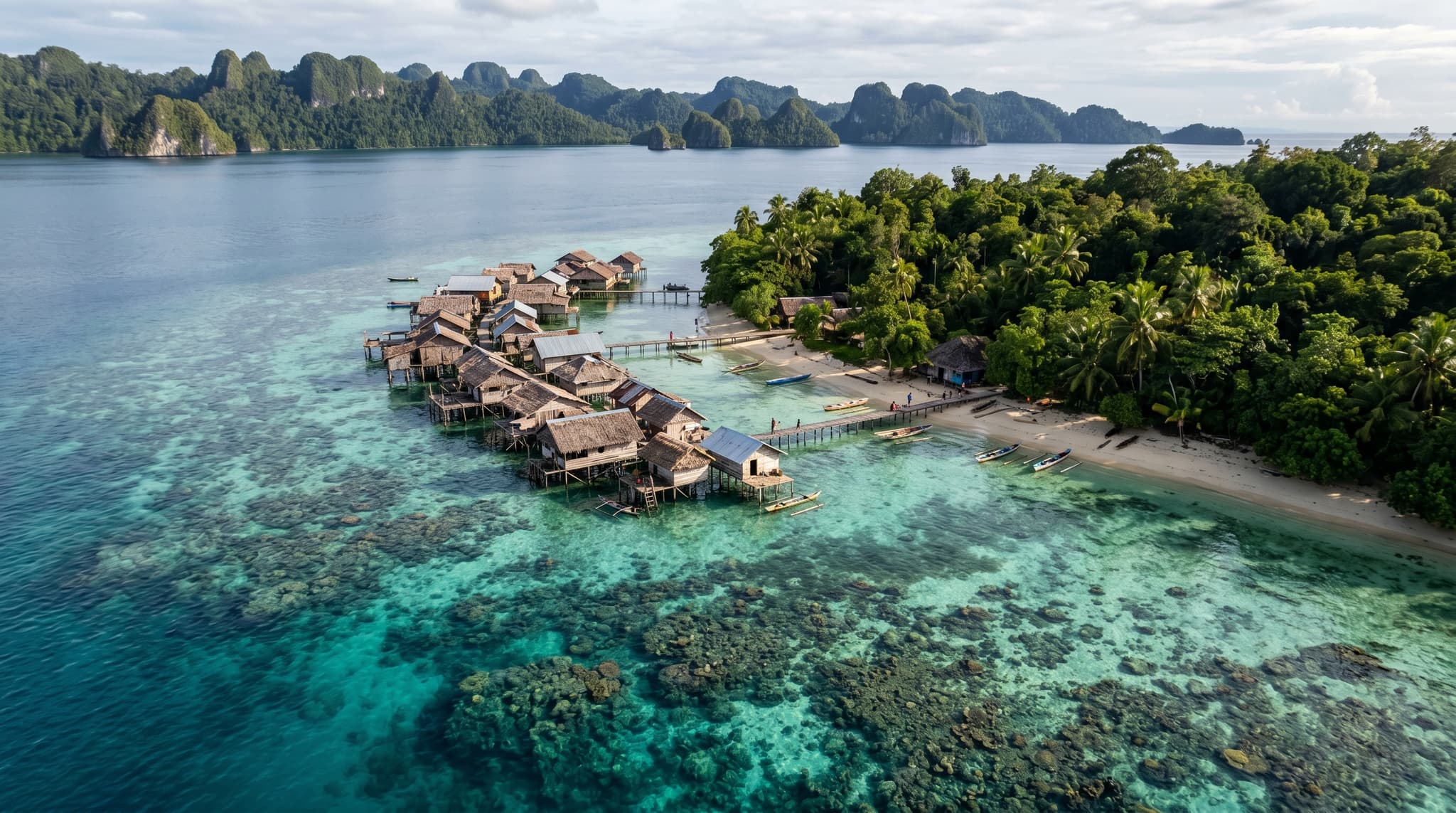
Four distinct waterfalls hidden in North Bali's highland jungle near Wanagiri village — how to visit, what to expect, and why it's worth the drive.
Most visitors chasing waterfalls in Bali end up at the same handful — Tegenungan near Ubud, Sekumpul in the northeast, maybe Gitgit along the main road to Singaraja. Banyu Wana Amertha rarely makes the shortlist, which is precisely what makes it worth the drive. Tucked into the forested hills above Wanagiri village in Buleleng Regency, this is not a single waterfall but a complex of four distinct falls spread along jungle trails — a rare setup that rewards the kind of traveler willing to trade convenience for something more immersive.
The name itself hints at what you'll find. "Banyu" means water in Balinese, "Wana" means forest, and "Amertha" derives from the Sanskrit amṛta — the elixir of immortality from Hindu mythology. Water of the immortal forest. It's a poetic name, but it's also accurate: the falls sit inside a patch of dense tropical forest that feels genuinely untouched, a sharp contrast to the increasingly developed waterfall sites in central and southern Bali.
The Four Falls

What sets Banyu Wana Amertha apart from most Bali waterfall experiences is the variety. Four separate cascades are accessible from a single trail network, each with a different character.
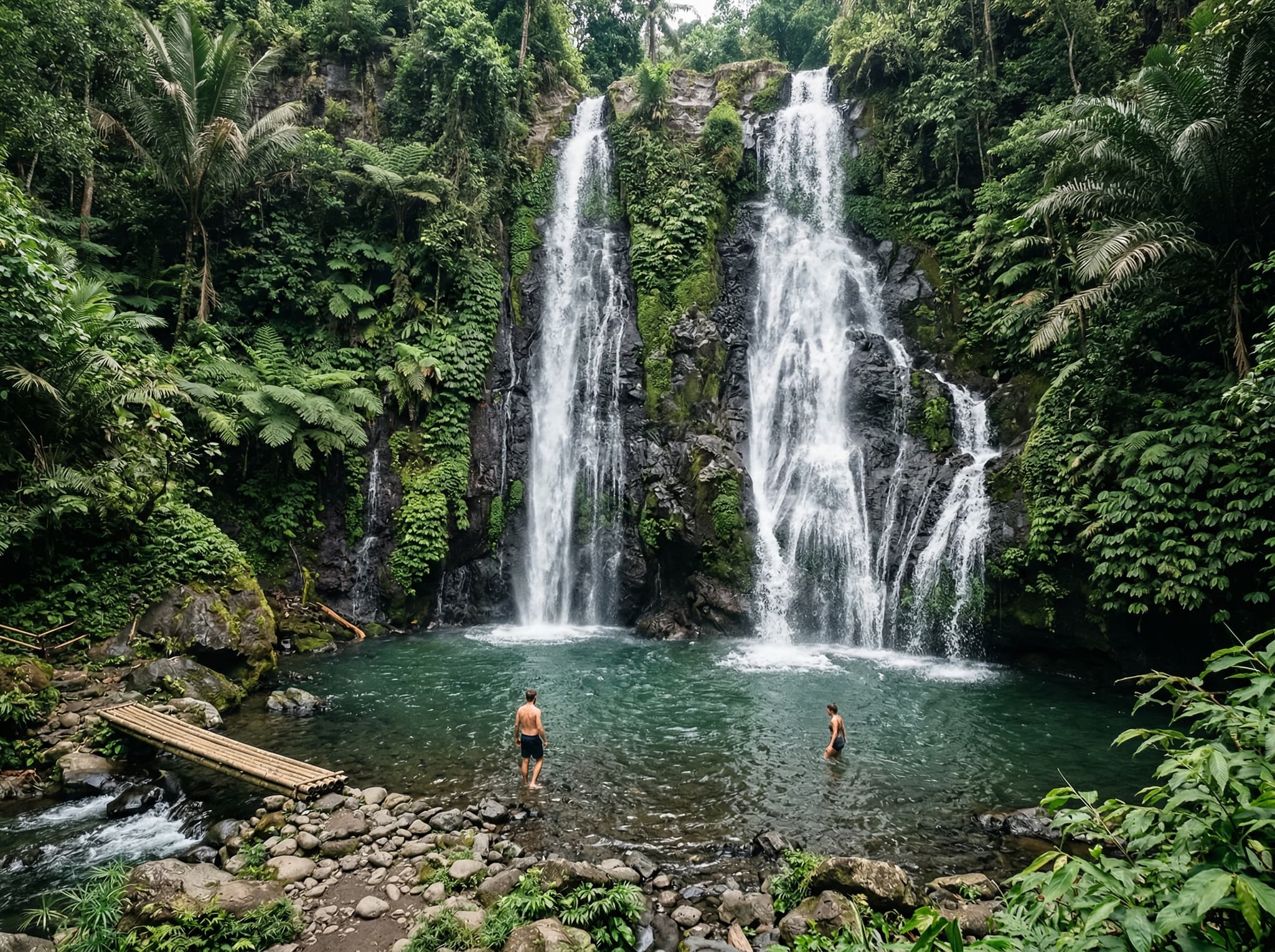
Banyu Wana Amertha Main Fall is the largest and the one most visitors see first. It drops roughly 40 meters into a wide pool surrounded by moss-covered rocks and towering trees. The volume is impressive during the wet season (roughly December through April), when the cascade widens and the spray fills the gorge.
Pemutaran Fall (sometimes called the Twin Falls) splits into two parallel streams that pour over a stepped rock face. It's the most photogenic of the four and tends to draw the most visitors — though "most visitors" here still means you might share it with a handful of people rather than a crowd.
Banyu Amadea Fall is smaller and more secluded, requiring a short additional walk along a muddier trail. It has a narrower stream and a more intimate pool, making it the quietest spot in the complex.

The fourth cascade — sometimes referred to locally as the hidden fall — is the least visited and the hardest to reach. The trail is steeper and less maintained. During dry months, the water flow can slow to a trickle, making the hike less rewarding. But during peak rainy season, it's a legitimate discovery.
Getting There
Banyu Wana Amertha is located near Wanagiri village, about 65 kilometers north of Ubud and roughly 75 kilometers from the Seminyak/Canggu area. The drive takes around two to two and a half hours from southern Bali, depending on traffic through the central highlands.
Driving Distances
From Ubud
~65 km / 1.5–2 hours
From Seminyak
~75 km / 2–2.5 hours
From Lovina
~25 km / 45 minutes
From Munduk
~15 km / 30 minutes
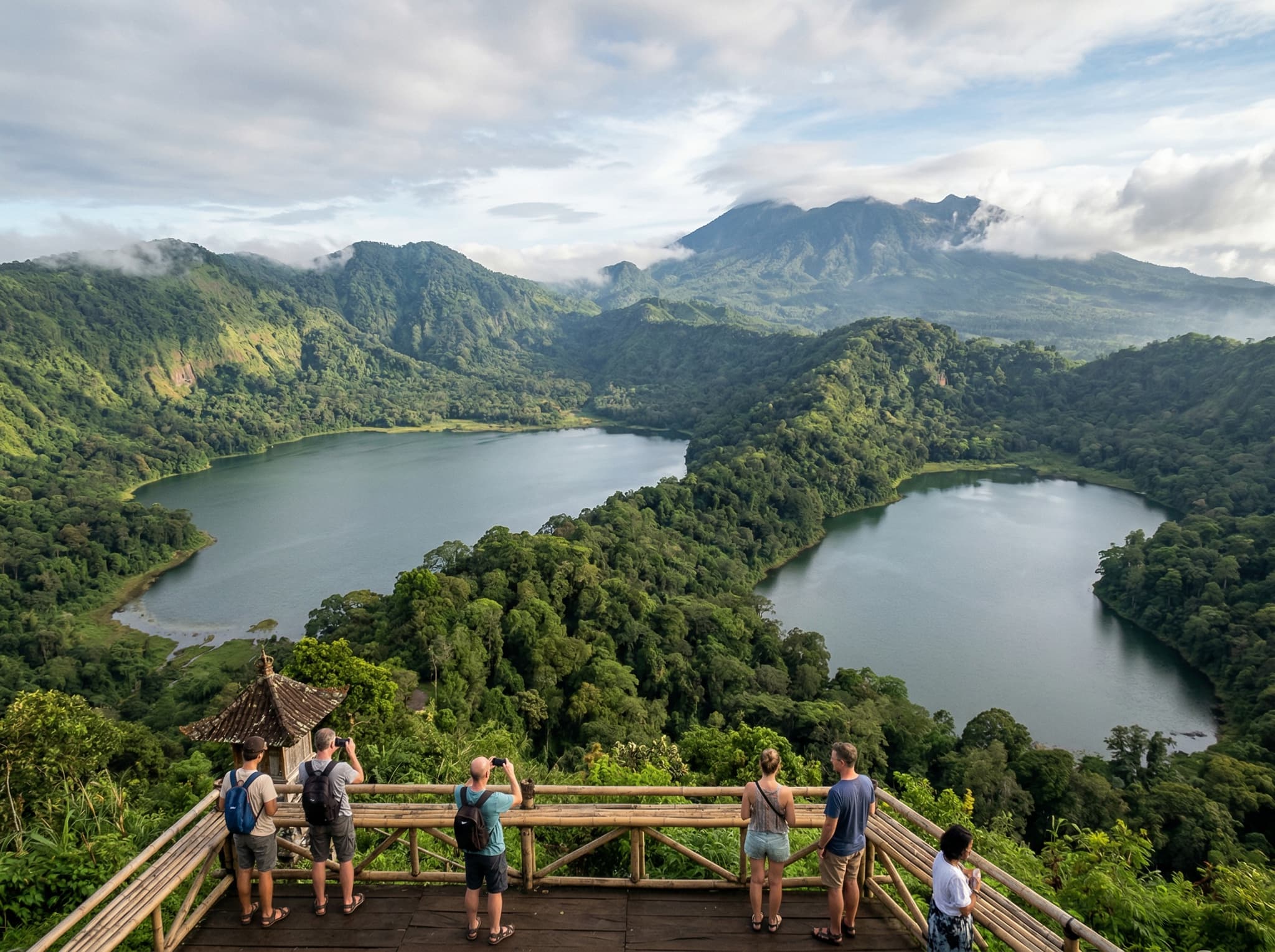
The most practical approach is to hire a driver for the day or rent a motorbike if you're comfortable on Bali's mountain roads. The route passes through the Lake Bratan area — Bedugul, Tamblingan, and Buyan — which makes it easy to combine with other northern Bali stops. Many travelers pair Banyu Wana Amertha with the Wanagiri Hidden Hills viewpoint (the famous Instagram swing spot overlooking Twin Lakes) since they're in the same village.
There is no reliable public transport to the falls. Ride-hailing apps like Grab can get you to the general area from Munduk or Lovina, but return trips are harder to arrange — drivers are scarce in this part of the highlands.
What to Expect on the Trail
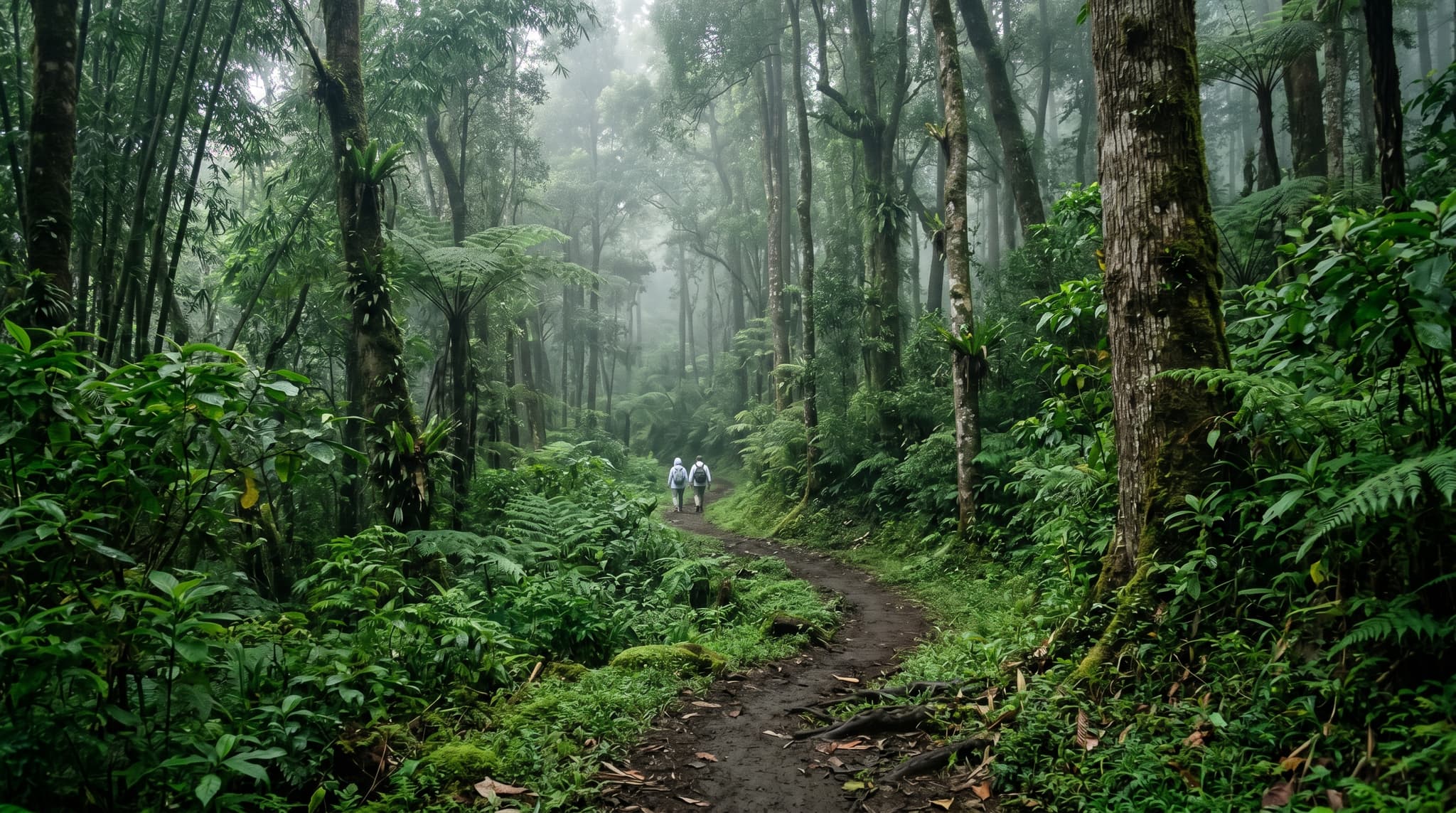
The walk from the parking area to the main fall takes about 15–20 minutes along a descending trail. The path is a mix of concrete steps, packed earth, and tree roots. It's not a technical hike, but it's not flat either — the return climb is the part that catches people off guard, especially in humidity.
There are no food stalls or warungs inside the waterfall complex itself, though a small parking area at the entrance sometimes has vendors selling drinks and snacks. Bring water. The combination of humidity, hiking, and altitude means you'll go through it faster than expected.
When to Visit
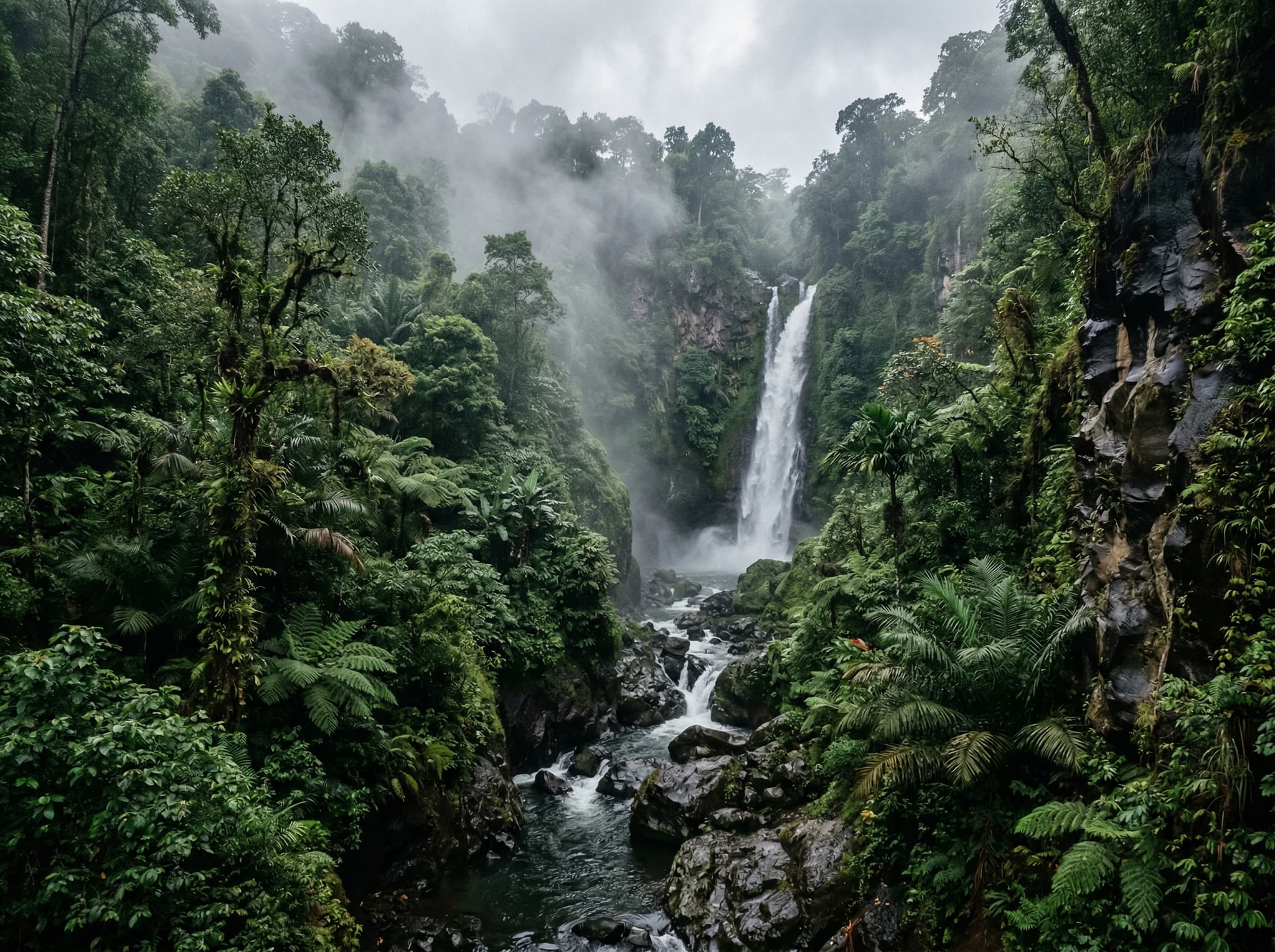
The wet season (December–April) delivers the most dramatic water flow across all four falls. This is when the forest canopy is at its densest and the gorge fills with mist. The trade-off is muddier trails and occasional heavy rain — mornings tend to be clearer.
The dry season (May–November) makes for easier hiking but noticeably reduced water flow, especially at the smaller falls. The fourth cascade may barely be running. Most travelers find the sweet spot is the shoulder months — April or early May, when trails are drying out but the falls still carry wet-season volume.
Arriving early matters. By 10 a.m., tour groups from southern Bali start arriving. Getting to the parking area by 8–8:30 a.m. means you'll likely have the first fall nearly to yourself.
Combining with Northern Bali
Banyu Wana Amertha works best as part of a broader northern Bali itinerary rather than a standalone trip from the south. The drive is long enough that doing it for a single waterfall — even a complex of four — feels like a lot of windshield time.
Practical combinations include the Twin Lakes viewpoint at Wanagiri, the Ulun Danu Beratan temple on Lake Bratan, the Munduk waterfall trails, or the Banyumala Twin Waterfall (another undervisited cascade about 20 minutes away). Travelers staying in Munduk or Lovina are particularly well-positioned — the falls are a short morning trip from either base.
Nearby Stops
Wanagiri Hidden Hills
Same village, 5-minute drive
Banyumala Twin Waterfall
~20 minutes by car
Ulun Danu Beratan
~30 minutes south
Munduk village
~30 minutes west
The Bigger Picture
Bali's waterfall scene has a crowding problem. The most famous falls — Tegenungan, Kanto Lampo, Tibumana — now operate with Instagram-queue energy, where visitors wait in line for their turn at a photo spot. Banyu Wana Amertha hasn't reached that point, partly because of its location in the less-touristed north and partly because there's no single iconic shot driving social media traffic.
That could change. Northern Bali is developing steadily, and the Wanagiri area is already on the tourist map thanks to the swing viewpoints. For now, though, Banyu Wana Amertha remains the kind of place where the forest is louder than the crowd — four waterfalls in a single stretch of highland jungle, each one a little wilder than the last.