Getting from Bali to Gili Air takes a couple of hours by fast boat — here's how to make the crossing and what to expect on the quietest Gili island.
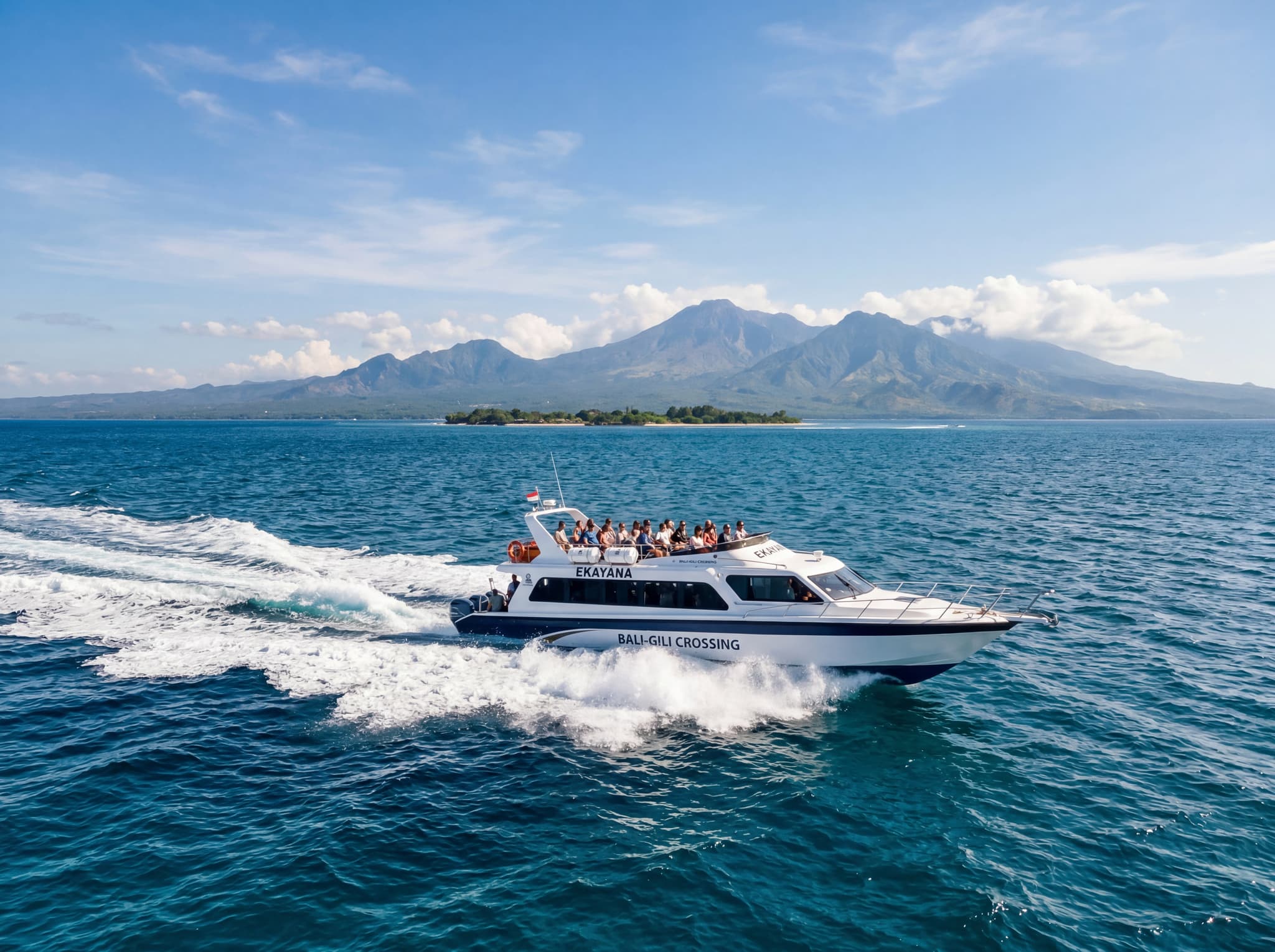
There's a moment, about twenty minutes after the fast boat leaves Padang Bai, when Bali's volcanic ridgeline starts to flatten against the horizon. The sea opens up. The engine noise becomes a kind of white noise. And then, depending on the swell, you either doze off or grip the seat rail and reconsider your breakfast.
Getting from Bali to Gili Air is not complicated, but it's not nothing either. The crossing is the price of entry — a couple of hours of open water between the busy island you're leaving and the quiet one you're heading toward. That gap matters. It's what keeps Gili Air from becoming another Seminyak.
Getting There: The Crossing from Bali
Most travelers reach Gili Air by fast boat, departing from one of several harbors along Bali's east or southeast coast. The main departure points are Padang Bai, Serangan, and Sanur.
Departure Points from Bali
Padang Bai
~1.5 hours to Gili Air; most frequent departures
Serangan (South Bali)
~2–2.5 hours; convenient from Kuta/Seminyak area
Sanur
~2–2.5 hours; some operators run seasonal routes
Multiple boat operators run the route daily, typically with morning departures between 8:00 and 10:00 AM. The main names — Bluewater Express, Eka Jaya, Gili Getaway — are generally reliable, though conditions in the Lombok Strait can make any crossing rough between December and March.
A few things worth knowing: most fast boat tickets include a hotel pickup from common tourist areas in south Bali, but the drive to the harbor can add 1–2 hours depending on traffic. Factor that into your morning. Boats stop at Gili Trawangan first, then Gili Air — or the reverse, depending on the operator. Confirm the stop order when you book.
The alternative route goes through Lombok: fly to Lombok International Airport, then take a car to Bangsal Harbor (about 2 hours) and a public boat to Gili Air (15–20 minutes, around IDR 15,000). It's slower overall but avoids the open-water crossing entirely, which matters if you're prone to seasickness or traveling with someone who is.
What Gili Air Actually Feels Like
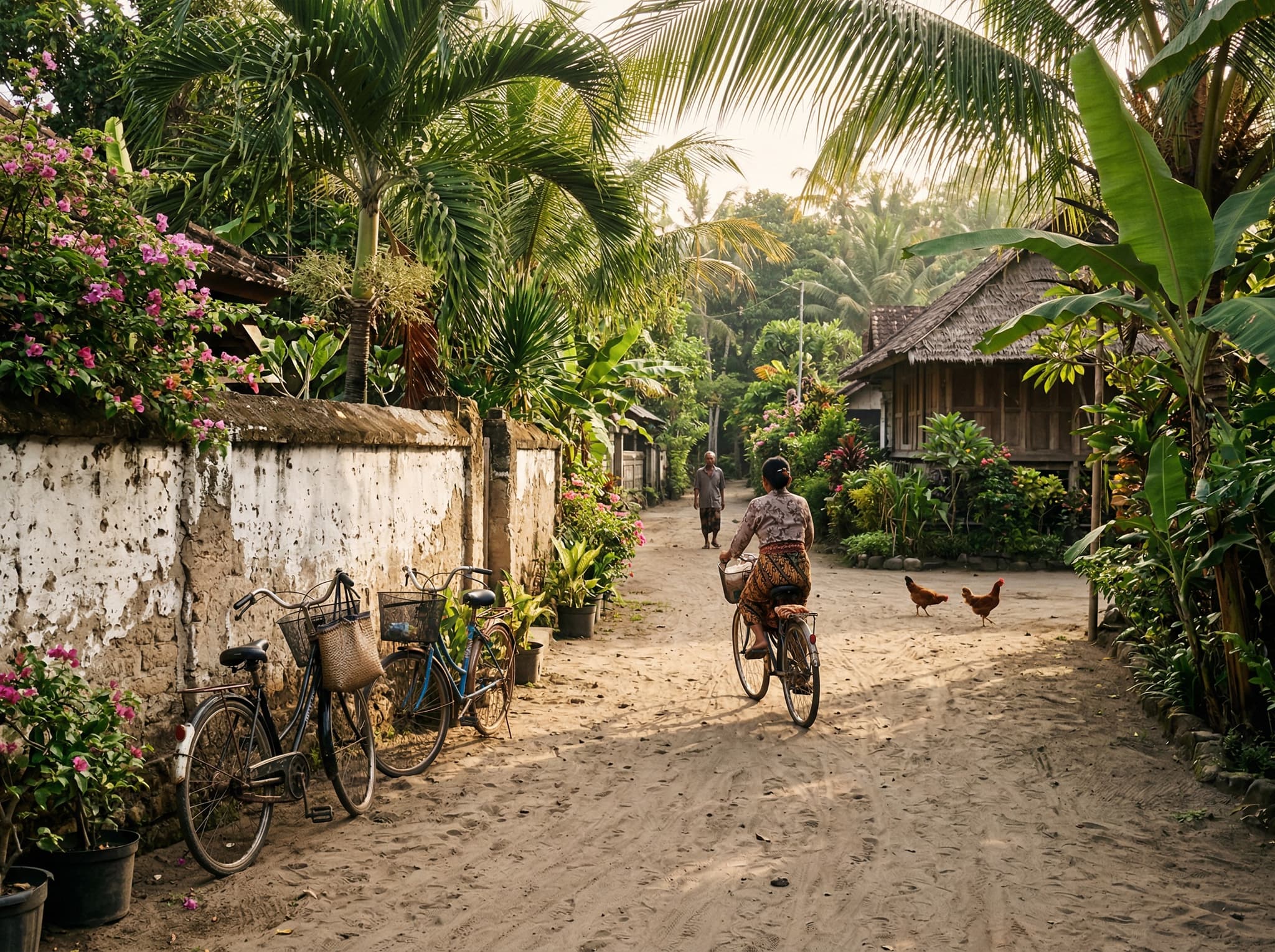
Gili Air is small enough to walk around in about ninety minutes. There are no cars, no motorbikes, no ATMs that work reliably. The west coast faces the sunset and holds most of the restaurants and dive shops. The east side is quieter — local homes, a few guesthouses, chickens.
The island sits between its two neighbors in both geography and personality. Gili Trawangan, to the northwest, is the party island — louder, more built-up, full of bars that pulse until early morning. Gili Meno, in the middle, is almost aggressively quiet, with fewer places to eat and a pace that can feel isolating after a few days. Gili Air splits the difference. There's enough here — good food, a handful of beach bars, yoga classes, dive operators — without the feeling that the island is straining under the weight of what's been built on it.
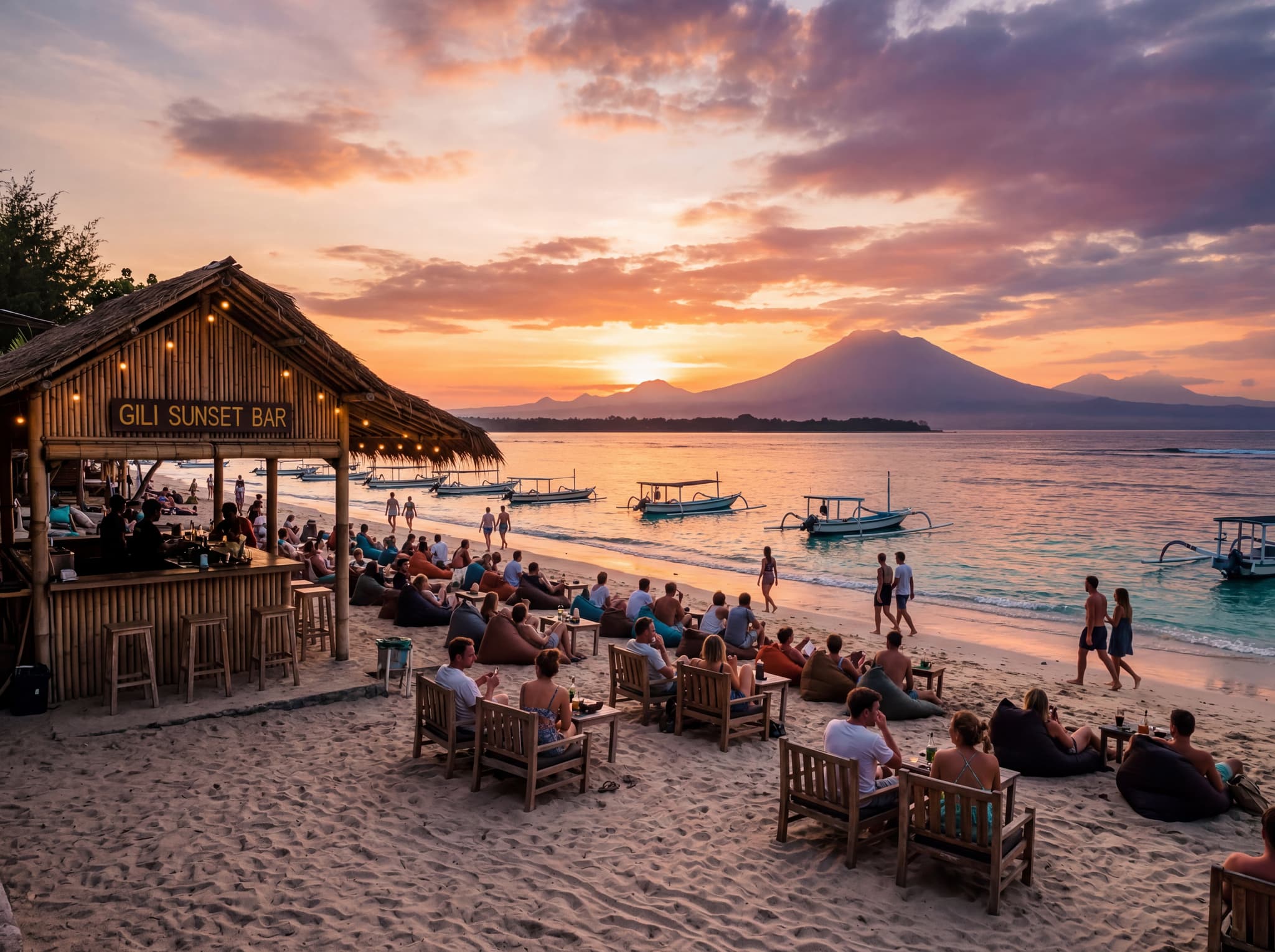
Mornings are the best hours. The light is soft and the water along the east coast is glass-flat. By afternoon the west side fills with people watching the sun drop behind Bali's silhouette, which on clear days floats on the horizon like a postcard you'd never actually send because it would look exaggerated.
What to Do (and What Not to Rush)
Gili Air's appeal is less about a checklist and more about a rhythm. But there are specific things worth your time.
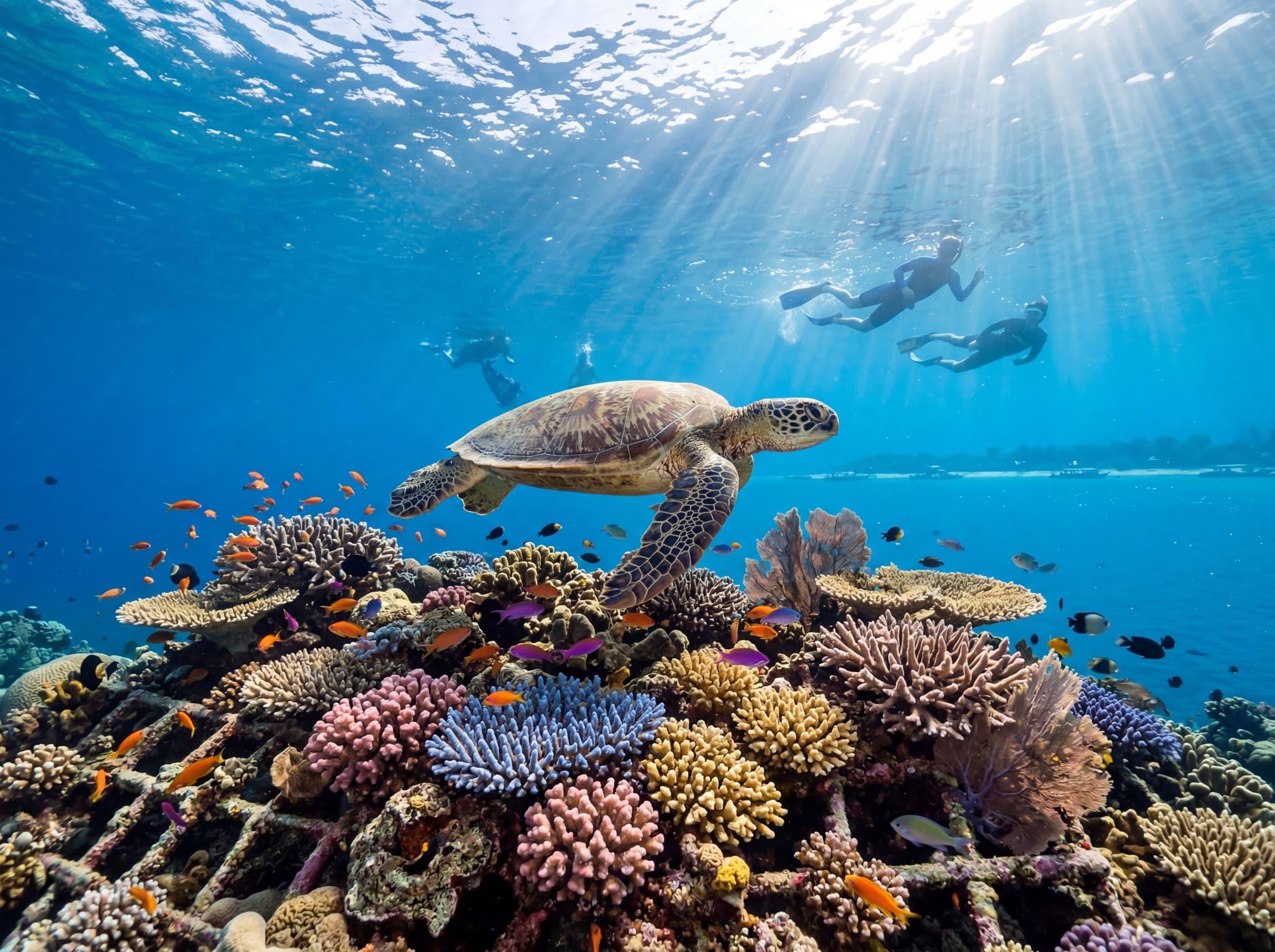
Snorkeling and diving are the main draw. The coral around the Gilis has been recovering after years of damage from anchoring and bleaching, and some sites — particularly off the north and east coasts — show real life again. Turtles are common. Visibility is best from April through October. A two-dive fun dive package typically runs $60–$80; a PADI Open Water course runs $350–$450.
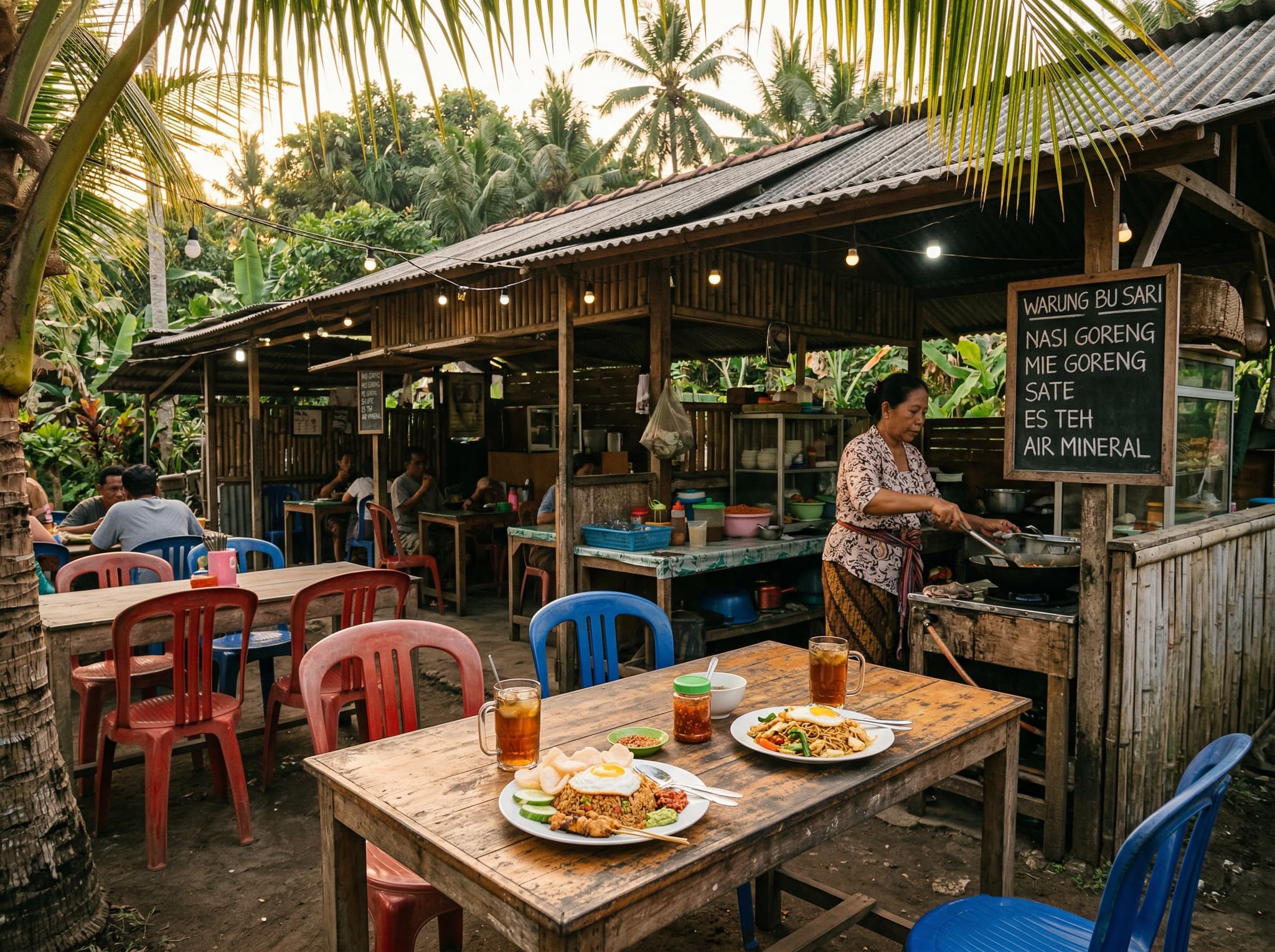
The food scene is better than you'd expect for an island this size. A cluster of restaurants along the west coast serves Indonesian staples alongside the inevitable smoothie bowls and wood-fired pizzas. Look for the warungs slightly inland — the nasi goreng is cheaper and often better than what's served beachfront. A local meal runs IDR 30,000–50,000 ($2–$3). A beachfront dinner for two with drinks will be closer to IDR 300,000–500,000 ($19–$32).
Cycling the island takes about an hour and gives you a sense of scale. The path is sandy in places — this is not a paved loop — but it's flat and the views shift enough to hold your attention.
Yoga and massage are everywhere. Prices are reasonable. Quality varies. Ask other travelers for current recommendations rather than relying on reviews that may be a season or two old.
Where to Stay
Accommodation ranges from basic bamboo bungalows to a handful of boutique properties with pools. The west coast is where most visitors stay — walkable to restaurants and sunset views. The east and south coasts are quieter and cheaper.
Accommodation Budget Guide
Budget bungalow
IDR 200,000–400,000/night (~$13–$25)
Mid-range with pool
IDR 600,000–1,200,000/night (~$38–$75)
Boutique / high-end
IDR 1,500,000+/night (~$95+)
Book ahead during July–August and the Christmas–New Year window. Outside those peaks, you can often find better rates by showing up and negotiating in person — though this is becoming less true each year as online booking takes hold.
When to Go
Dry season — May through October — delivers the best conditions: calm seas, reliable visibility for diving, and less humidity. The crossing from Bali is also significantly more comfortable during these months.
Wet season (November–March) brings rougher seas and occasional boat cancellations. The island is quieter and cheaper, and rain tends to come in short bursts rather than all-day downpours. But the crossing risk is real — build flexibility into your schedule if you're traveling during this period.
The Honest Version
Gili Air is changing. Each year brings more construction, more visitors, more of the infrastructure that makes a place convenient and simultaneously less like the place people came looking for. The waste management challenges common to small Indonesian islands are visible here — plastic on the beach, limited freshwater, generators running at night.
None of that erases what the island does well. The water is still clear. The pace is still slow. The absence of engines still makes a difference you feel in your shoulders after a day or two. Going from Bali to Gili Air remains one of the more worthwhile short crossings in Southeast Asia — not because the island is untouched, but because it's still itself.