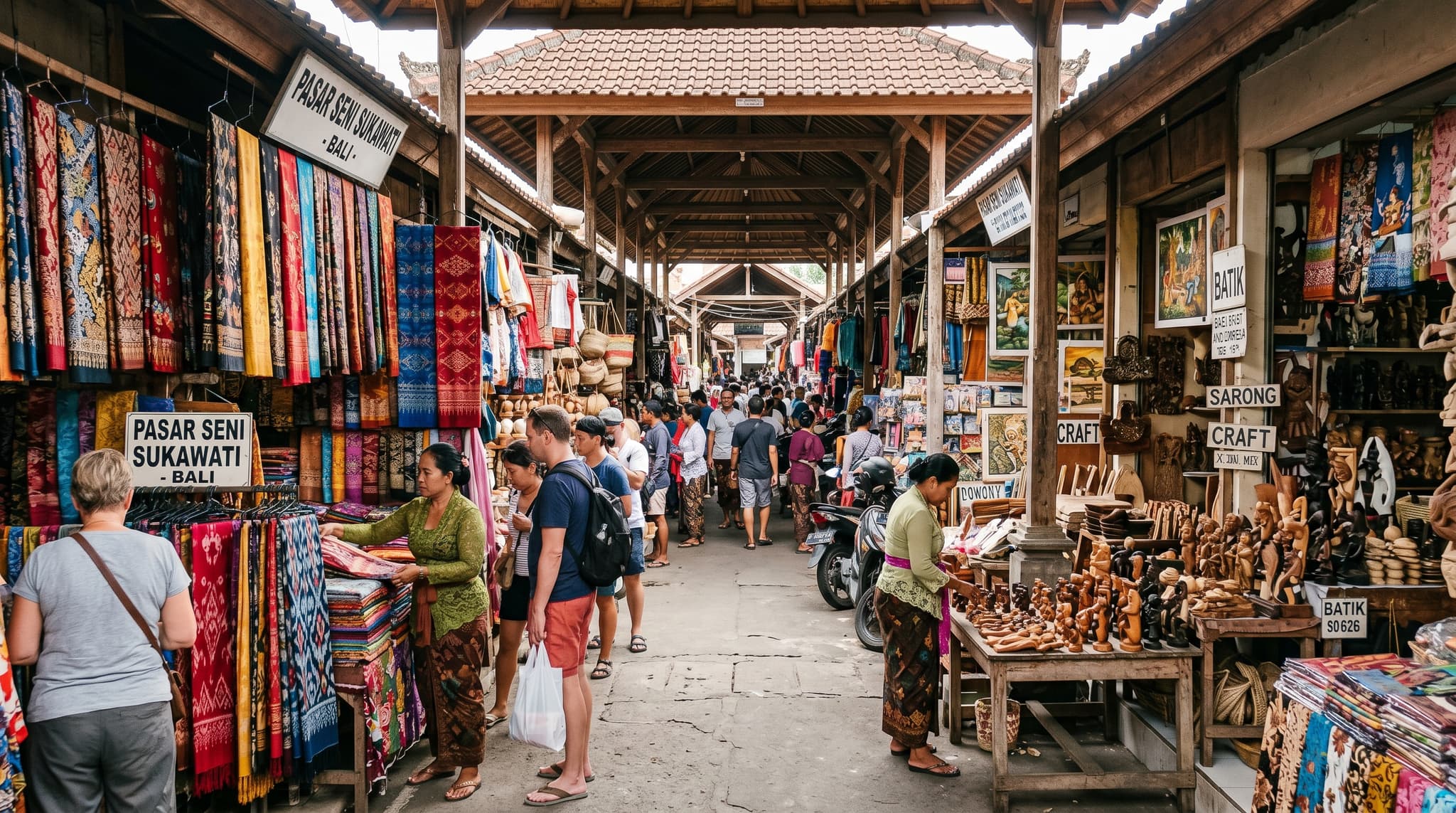
Sukawati Art Market is Bali's largest traditional craft market — less crowded than Ubud, better for textiles and paintings. Here's what to expect and how to shop.
Sukawati Art Market sits along the main road through Gianyar Regency, about 20 minutes south of Ubud. It's been here, in one form or another, since the 1980s — long before Ubud Art Market became the default stop on every tour itinerary. Most visitors to Bali end up at Ubud's market instead, which means Sukawati draws fewer tour groups and more independent travelers who came looking for it specifically.
That distinction matters. The pace is different. The prices tend to start lower. And the range of goods — particularly woven textiles and large-format paintings — runs deeper than what you'll find in Ubud's more compact stalls.
What the Market Looks Like Now
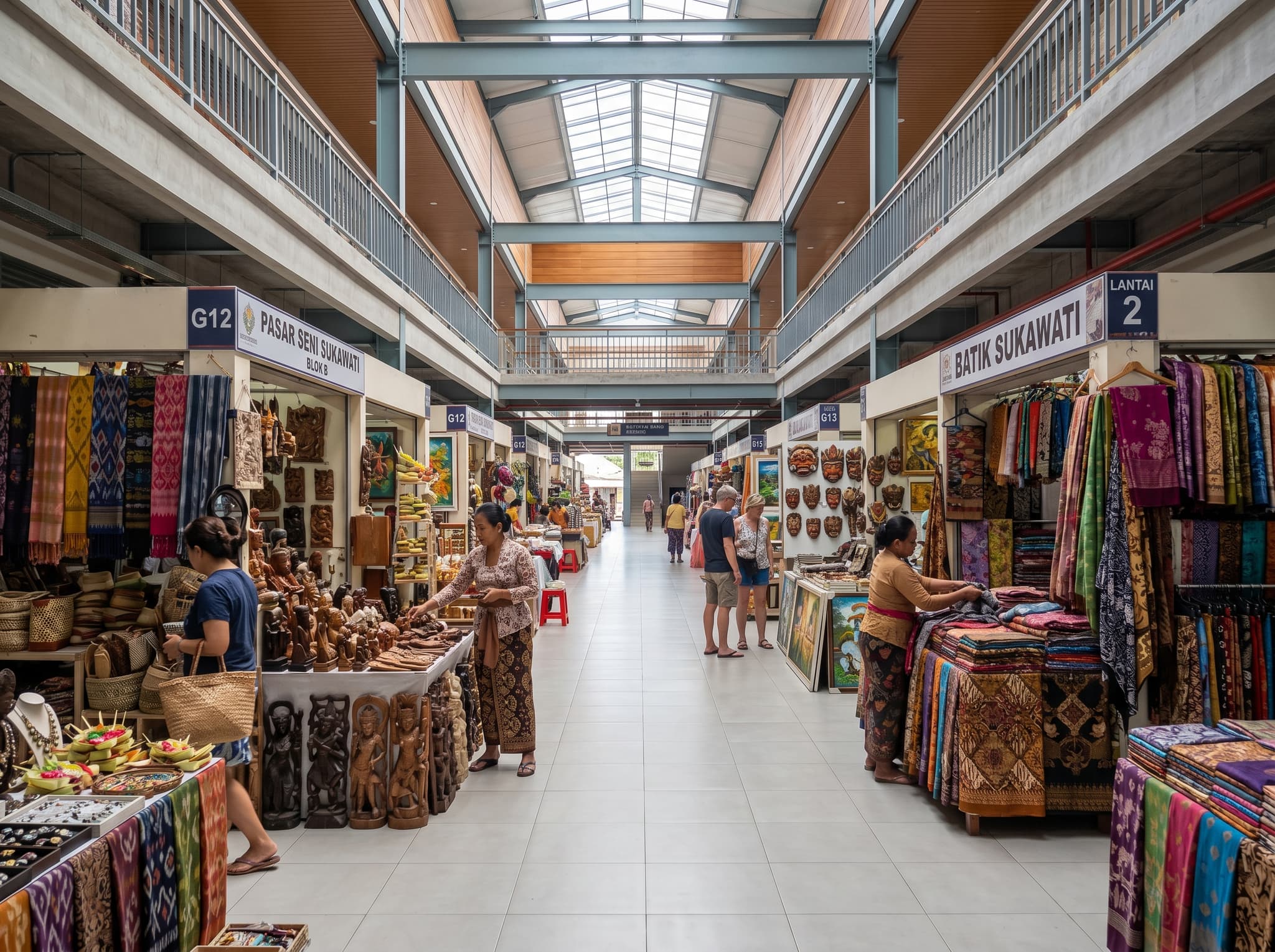
The Sukawati Art Market that exists today is not the one from older travel guides. A full revitalization project, completed in December 2021 at a combined cost of over IDR 168 billion, replaced the aging original structure with a modern three-block complex. Blocks A and B opened in 2020; Block C — a four-story building with 529 vendor stands and 64 kiosks — followed in late 2021.
The result is cleaner and more organized than the old market, with wider aisles and better ventilation. Whether that's an improvement depends on what you're looking for. The maze-like density of the original had a certain atmosphere that the new layout doesn't replicate. But the goods are largely the same, the vendors are the same families, and the negotiation culture hasn't changed.
A traditional street section still runs alongside the modern blocks, and this is where the market feels closest to what it used to be — tighter, more cluttered, more interesting.
What's Worth Looking At
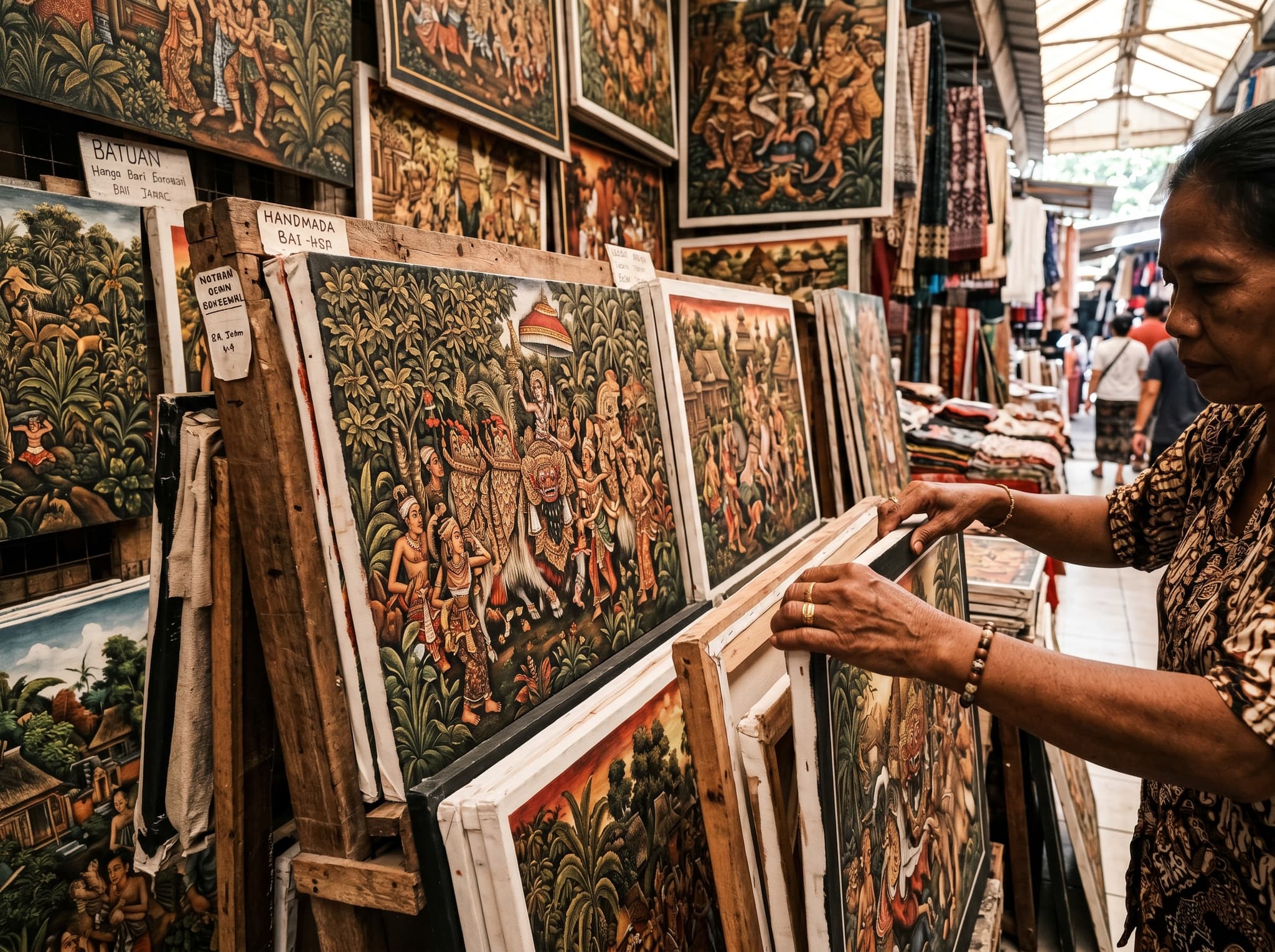
Sukawati Art Market sells what most Bali markets sell: sarongs, wooden carvings, silver jewelry, woven bags, ceremonial fans, incense holders, paintings. The difference is in the concentration of certain goods.
Paintings are one of Sukawati's strengths. The Gianyar Regency has a long painting tradition, and the market reflects that. You'll find everything from small tourist canvases to larger works in traditional Balinese styles — Batuan, Ubud, and Young Artists school influences. Prices for paintings typically range from IDR 300,000 to IDR 750,000 [VERIFY — sourced from March 2024 visitor report], depending on size and style, though the initial asking price will be higher.
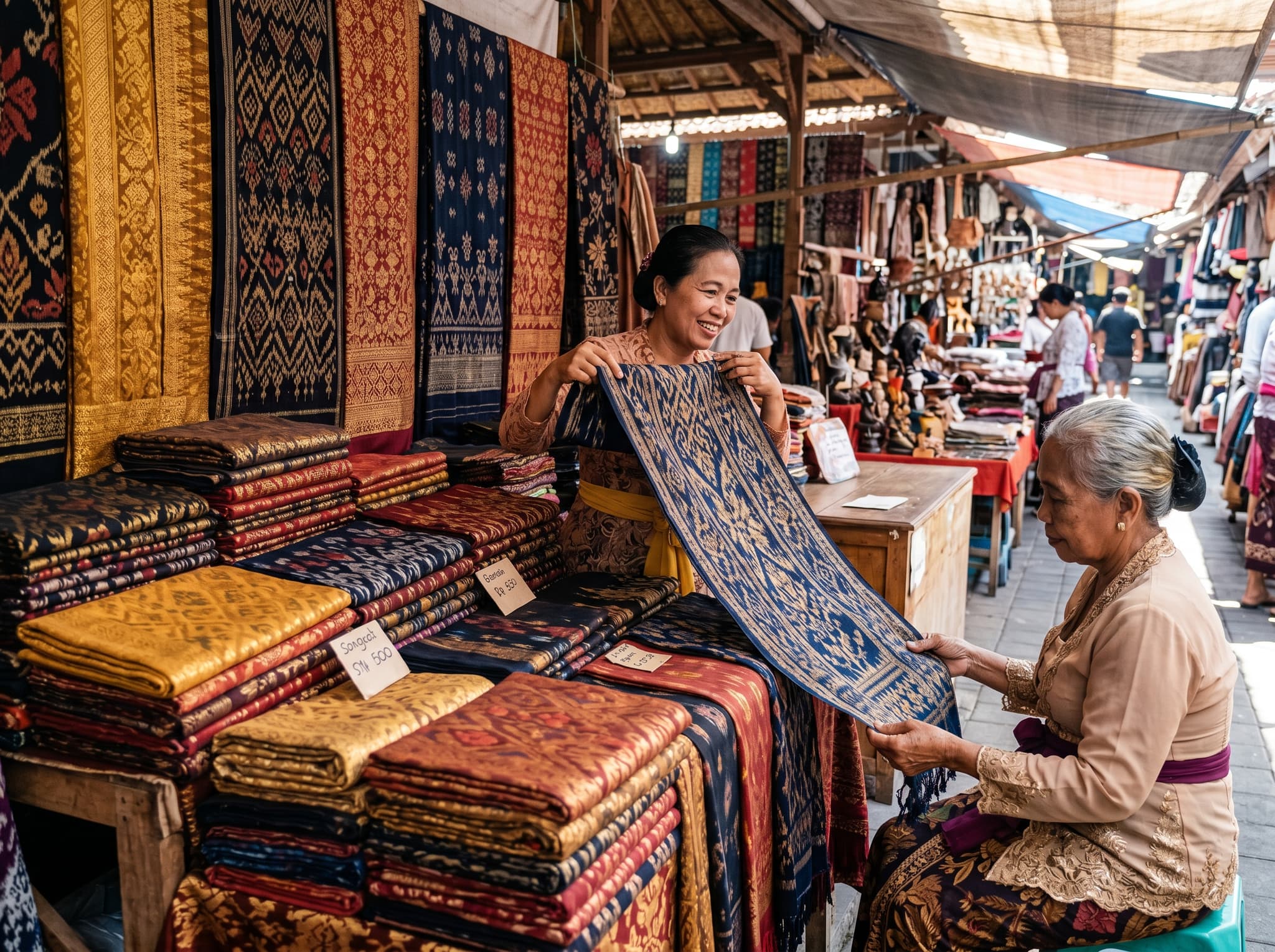
Woven textiles — particularly endek (Balinese ikat) and songket — are another reason to come here rather than Ubud. Several vendors stock handwoven pieces from villages across Gianyar and Klungkung. Ask where the cloth was made. If the vendor can name a village and explain the weaving technique, you're more likely looking at handmade work. If the answer is vague, it's probably factory-produced.
How Bargaining Works Here
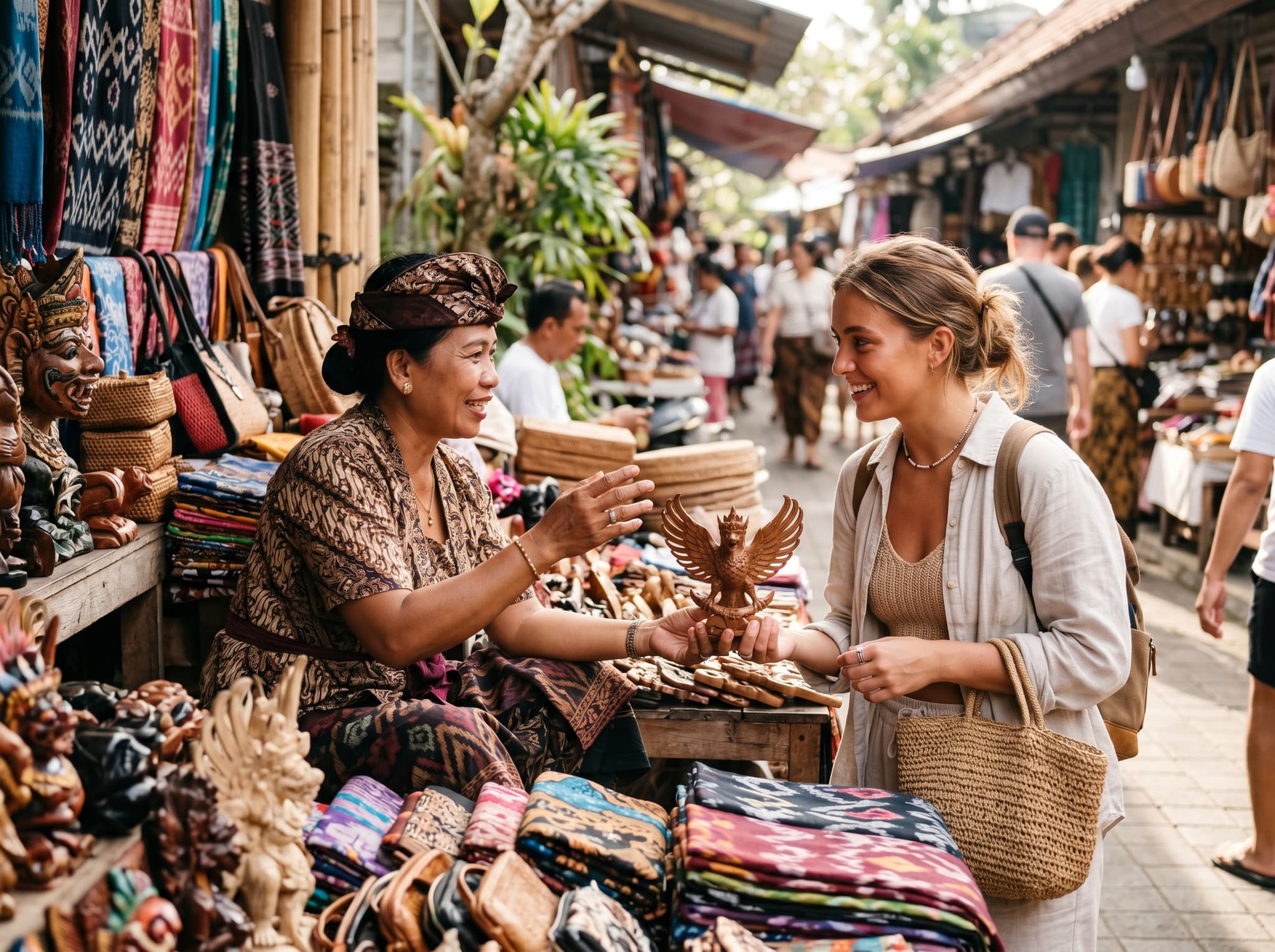
Prices are not fixed. This is expected, not adversarial. The rhythm is straightforward: the vendor names a price, you counter at roughly 30–50% of that figure, and you work toward something in the middle.
A few things that shift the dynamic in your favor:
Bargaining Tips
Arrive early
First sale of the day (called 'penglaris') is considered lucky — vendors are more flexible on price
Go deeper into the market
Stalls in back sections see fewer tourists and offer better starting prices
Buy in quantity
Three items from one vendor yields a better per-piece price than three separate transactions
Carry small bills
Bring IDR 10,000–50,000 notes to avoid 'no change' situations
Walking away is a normal part of the process. If you turn to leave, the vendor may call you back with a lower number. If they don't, the price was already near their floor. Cash is the standard payment method. Some vendors accept digital payments, but don't count on it.
Practical Details
Getting there: Grab and Gojek both operate in the area and offer fixed pricing, which avoids the negotiation-before-the-negotiation that comes with some taxi drivers. If you're riding a scooter, parking is along Jalan Raya Sukawati and costs IDR 2,000. Car parking is IDR 5,000. Spaces fill quickly during peak hours, especially on weekends.
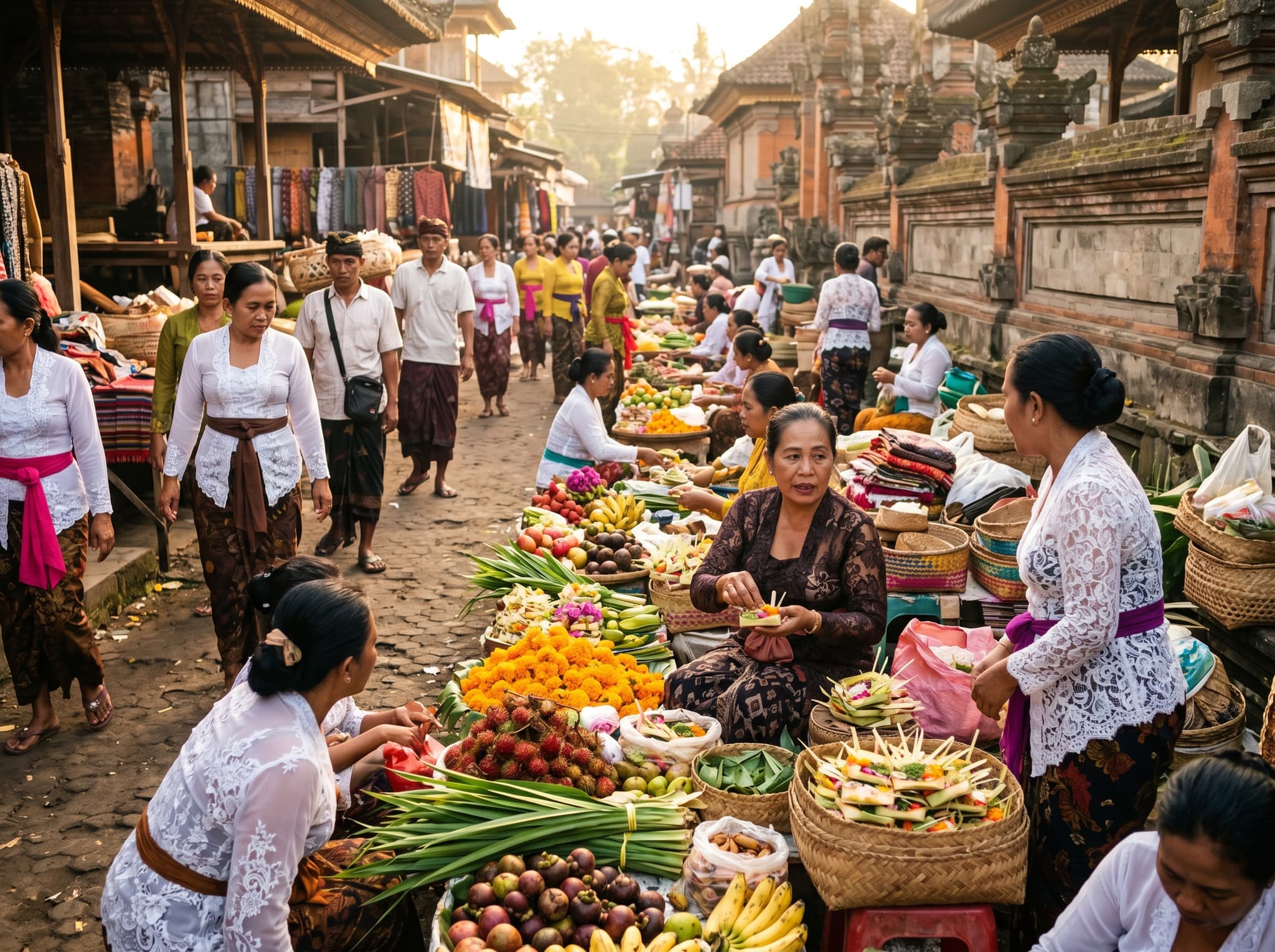
When to go: The market officially opens at 6:00 AM, but the art market vendors — the ones selling crafts, textiles, and paintings — don't fully set up until 9:00 or 10:00 AM. The early-morning section is the local market: produce, offerings, spices. It's worth seeing on its own terms, but if you're here for crafts, plan to arrive between 9:00 and 10:00 AM on a weekday.
Closures: The market closes during Nyepi, Bali's Day of Silence, typically in March. All commercial activity on the island stops for 24 hours.
Sukawati vs. Ubud Art Market
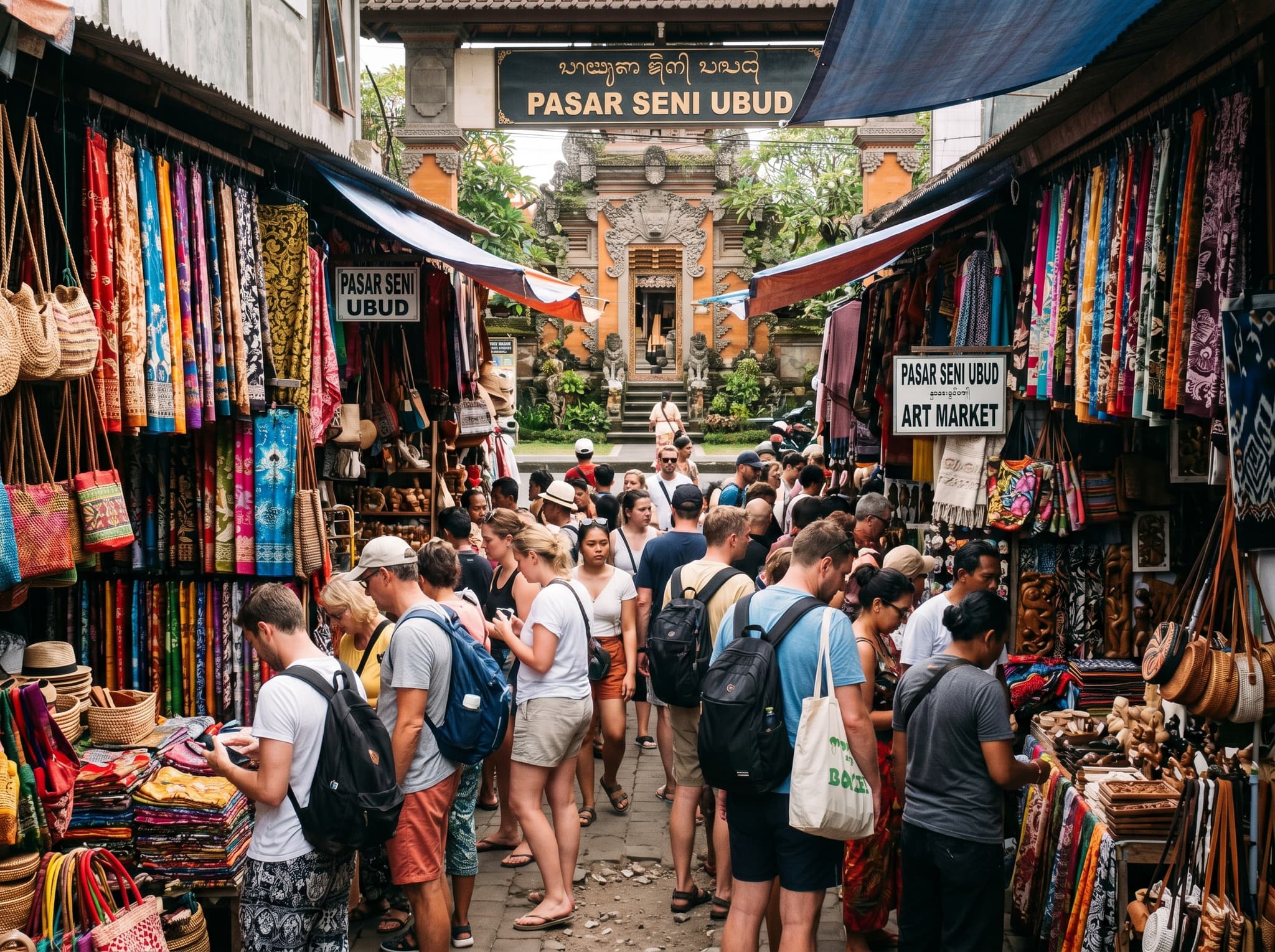
The question comes up constantly, so here's the short version: Ubud Art Market is more central, more visited, and easier to combine with other Ubud sightseeing. Sukawati Art Market is larger, less crowded, and better for textiles and paintings. If you're only going to one market, Ubud is more convenient. If you care about the buying experience — lower starting prices, more room to browse, fewer tour groups at your elbow — Sukawati is the better market.
They're 20 minutes apart. You could do both in a morning.