Yellow Flower Cafe is a traditional warung on Jalan Pengosekan serving honest Indonesian home cooking at local prices — no frills, no smoothie bowls, just good food.
There's a stretch of Jalan Pengosekan, south of Ubud's center, where the cafes start to thin out and the road narrows past motorbike repair shops and small family compounds. Yellow Flower Cafe sits along this stretch — a warung, not a cafe in any Western sense of the word, despite what the name suggests. No espresso machine. No smoothie bowl menu. No Wi-Fi password on the wall. What it has is Indonesian home cooking served in a setting that hasn't been redesigned to photograph well.
That distinction matters more than it used to. Pengosekan has changed in the last decade — yoga studios, co-working spaces, plant-based restaurants with curated interiors. Yellow Flower Cafe predates most of that. It operates on a different logic: cook the food, set it out, let people eat.
What You're Walking Into

The space is small and open-air, the kind of warung where you can see the kitchen from your seat. There's no formal entrance, no host stand. You sit down, you look at what's available, you order. The furniture is basic — plastic chairs, simple tables. A few decorations on the walls, nothing staged.
The name "Yellow Flower" comes from the frangipani that grows around the property, the same flower you'll see at every temple offering in Bali. It's not a brand. It's just what's there.
What strikes you first is the quiet. Jalan Pengosekan has traffic — scooters, the occasional truck — but the cafe sits just far enough back that the noise drops. You hear kitchen sounds, a radio sometimes, conversation from the tables around you. It's the kind of ambient calm that expensive Ubud restaurants try to manufacture with water features and curated playlists. Here it's just the natural result of a small place on a less-trafficked part of the road.
The Food
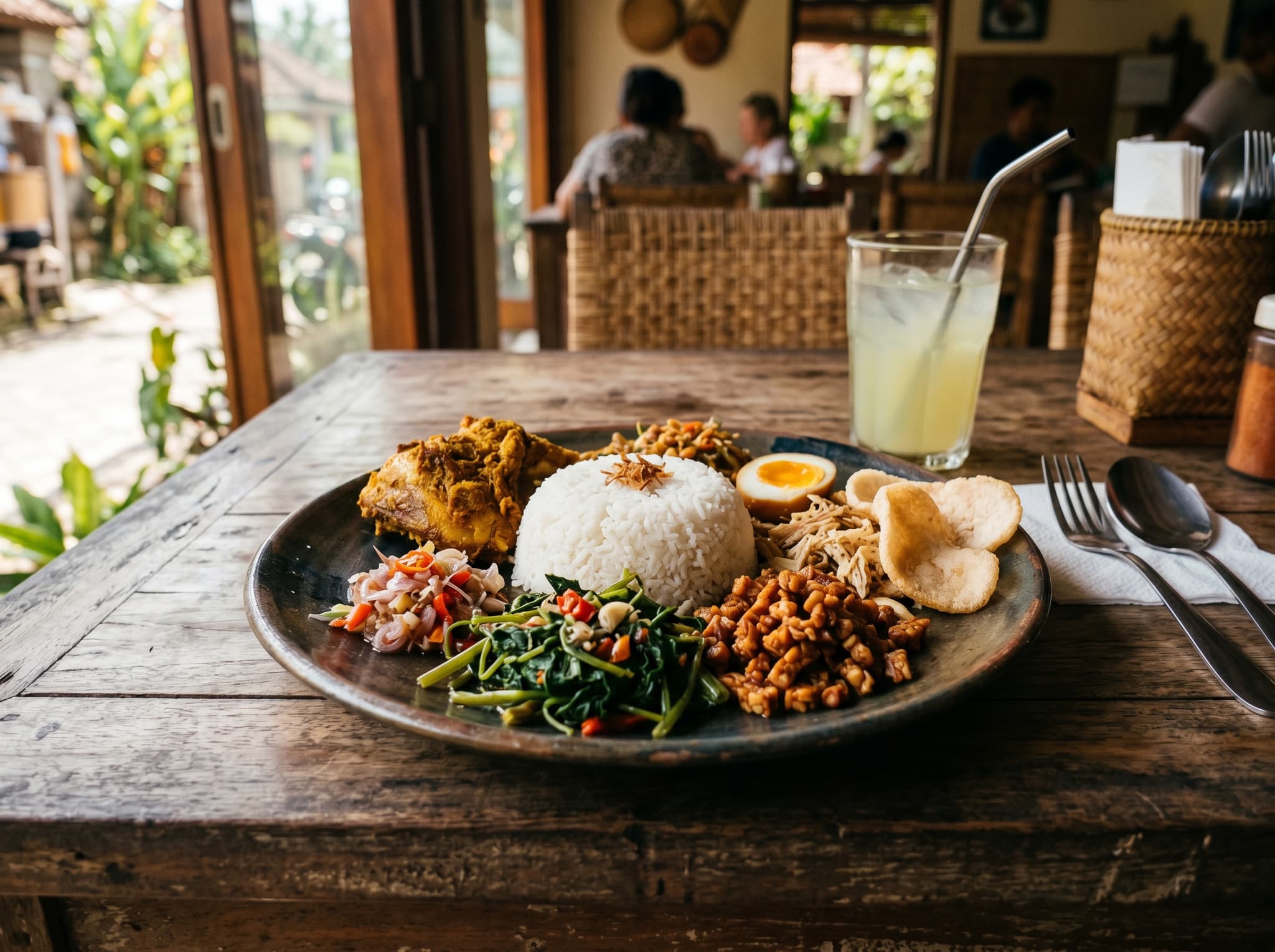
The menu covers Indonesian staples — nasi goreng, mie goreng, nasi campur, gado-gado, cap cay — the dishes you'll find at warungs across the island. The difference isn't in what's offered but in how it's made. The cooking here tastes like someone's kitchen, not a commercial line. Spice levels are genuine. The sambal has heat. Portions are generous for the price.
What to Expect on the Menu
Nasi Campur
Mixed rice plate with small sides — the warung standard
Nasi Goreng
Fried rice, typically with egg, vegetables, krupuk
Gado-Gado
Vegetables with peanut sauce — a good vegetarian option
Cap Cay
Stir-fried vegetables, sometimes with chicken or seafood
Fresh Juice
Fruit juices made to order
Nasi campur is probably the best way to understand a warung. It's a plate of rice with an assortment of small dishes — a bit of sambal, some vegetables, maybe tempeh, a piece of chicken or fish, krupuk on the side. Every warung's version is slightly different, and the differences tell you everything about the cook. At Yellow Flower, the sides have the kind of depth that comes from someone who's been making the same base pastes for years. The flavors are layered, not flat.
The juices are straightforward — fresh fruit, blended. No added powders, no superfood supplements. Just fruit.
I won't claim this is the best warung in Ubud. That kind of ranking doesn't mean much when there are hundreds of warungs, each with their own regulars, each with a cook who learned from their mother or grandmother. What I'll say is that the food here is honest, the portions are real, and the prices haven't been adjusted for the tourist economy the way they have at many places closer to Ubud's center.
Who Eats Here
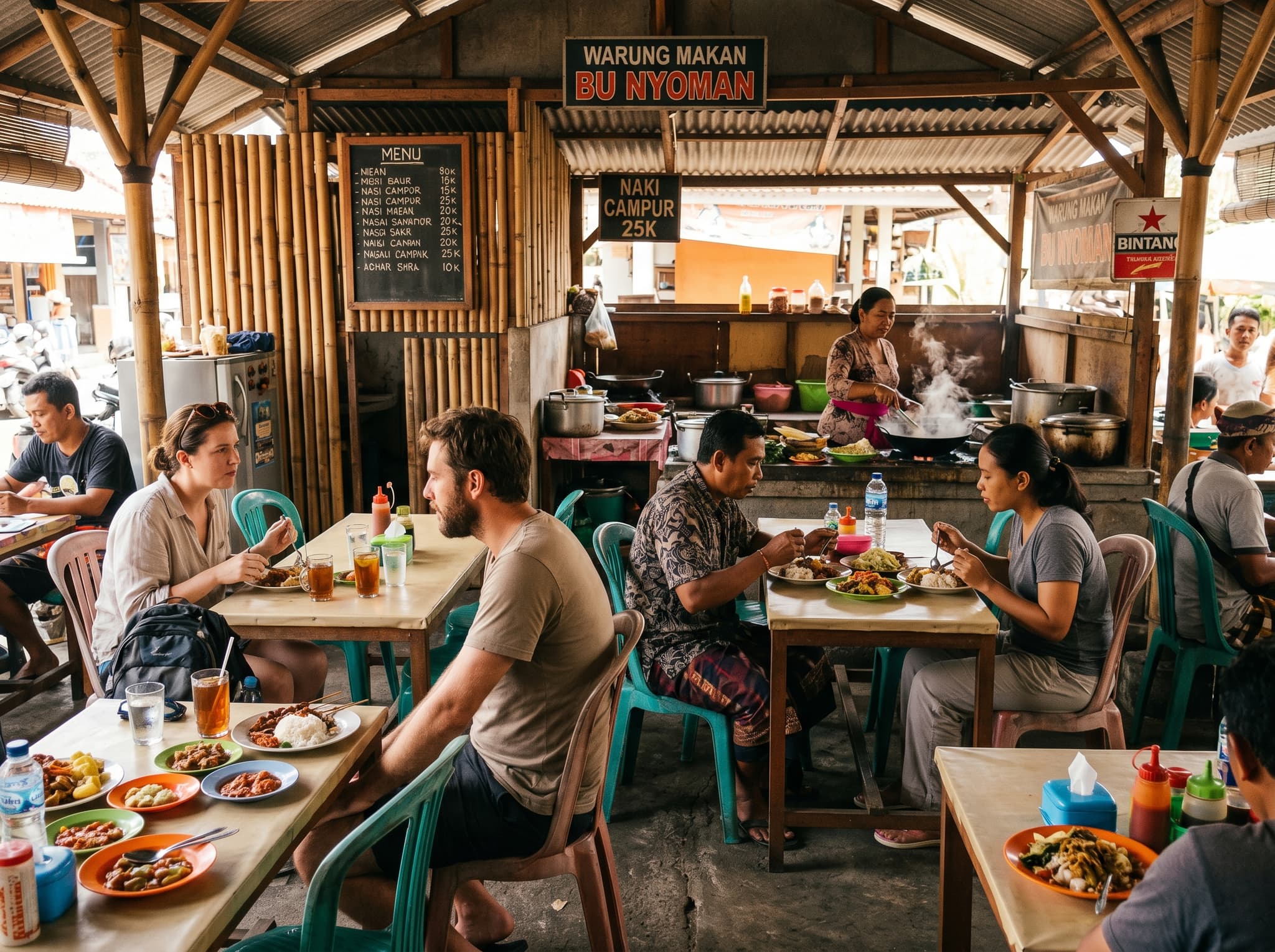
This is part of what makes Yellow Flower worth noting. The crowd is mixed — local Balinese workers on lunch break, long-stay expats who've found their regular spot, tourists who wandered past or heard about it. That mix is increasingly rare in the Ubud area. Most restaurants have self-selected into one audience: either fully local or fully tourist-facing. Yellow Flower hasn't made that choice, or maybe the choice was made by the food and the prices, which appeal to anyone who just wants to eat well without ceremony.
Getting There
Yellow Flower Cafe is on Jalan Pengosekan, the road that runs south from the Pengosekan intersection toward the Agung Rai Museum of Art (ARMA). If you're coming from central Ubud, it's roughly a 10-minute scooter ride or a short trip by car. The cafe is on the east side of the road — easy to miss if you're moving fast, which is true of most warungs worth stopping at.
There's no dedicated parking lot, but you can pull a scooter up to the roadside as you would at any warung along this stretch.
Getting There
From Central Ubud
Roughly 10 minutes by scooter heading south
Landmark
On Jalan Pengosekan, between central Ubud and ARMA
Parking
Roadside scooter parking — standard for the area
What This Place Is and Isn't
Yellow Flower Cafe is not a destination in the way that Ubud's more famous restaurants are destinations. You won't find it in design magazines. Nobody is coming here for the ambiance, at least not in the curated sense. What it offers is simpler and, depending on what you value, more useful: a place to eat good Indonesian food at local prices in a setting that hasn't been optimized for anything except feeding people.
That sounds like a small thing. In this part of Bali, in 2025, it isn't.
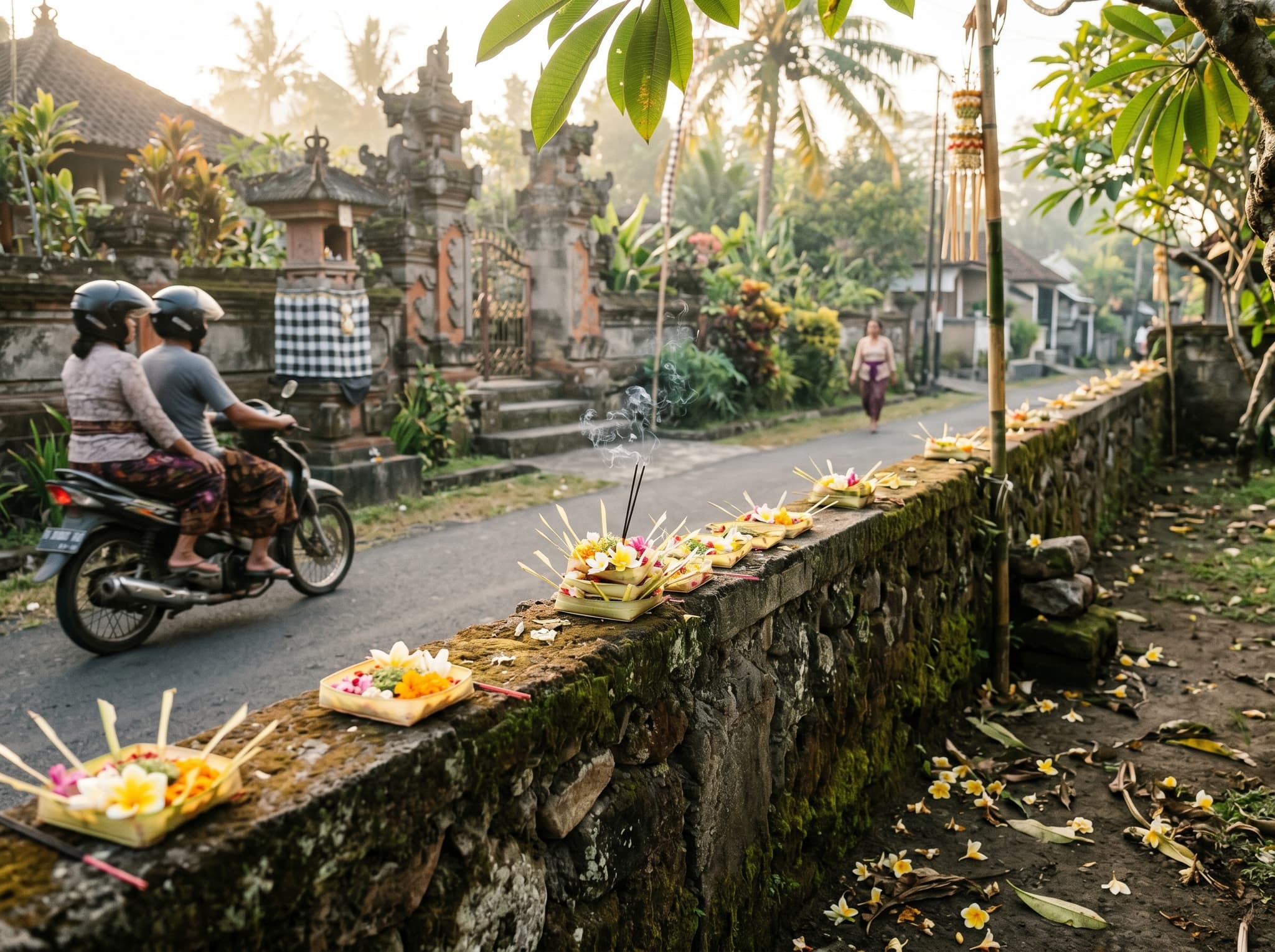
The stretch of Pengosekan around Yellow Flower still has the texture of a Balinese road that existed before the tourism infrastructure filled in around it. Offerings on the sidewalk. Roosters in the morning. The smell of incense mixing with frying garlic. These details aren't curated. They're just what's there, the same way the frangipani is just what's growing.
If you're staying in the Pengosekan or south Ubud area and you want lunch that tastes like someone cooked it for you specifically — not for a menu photo, not for a review site, just for you — walk in, sit down, and eat. That's all this place asks.