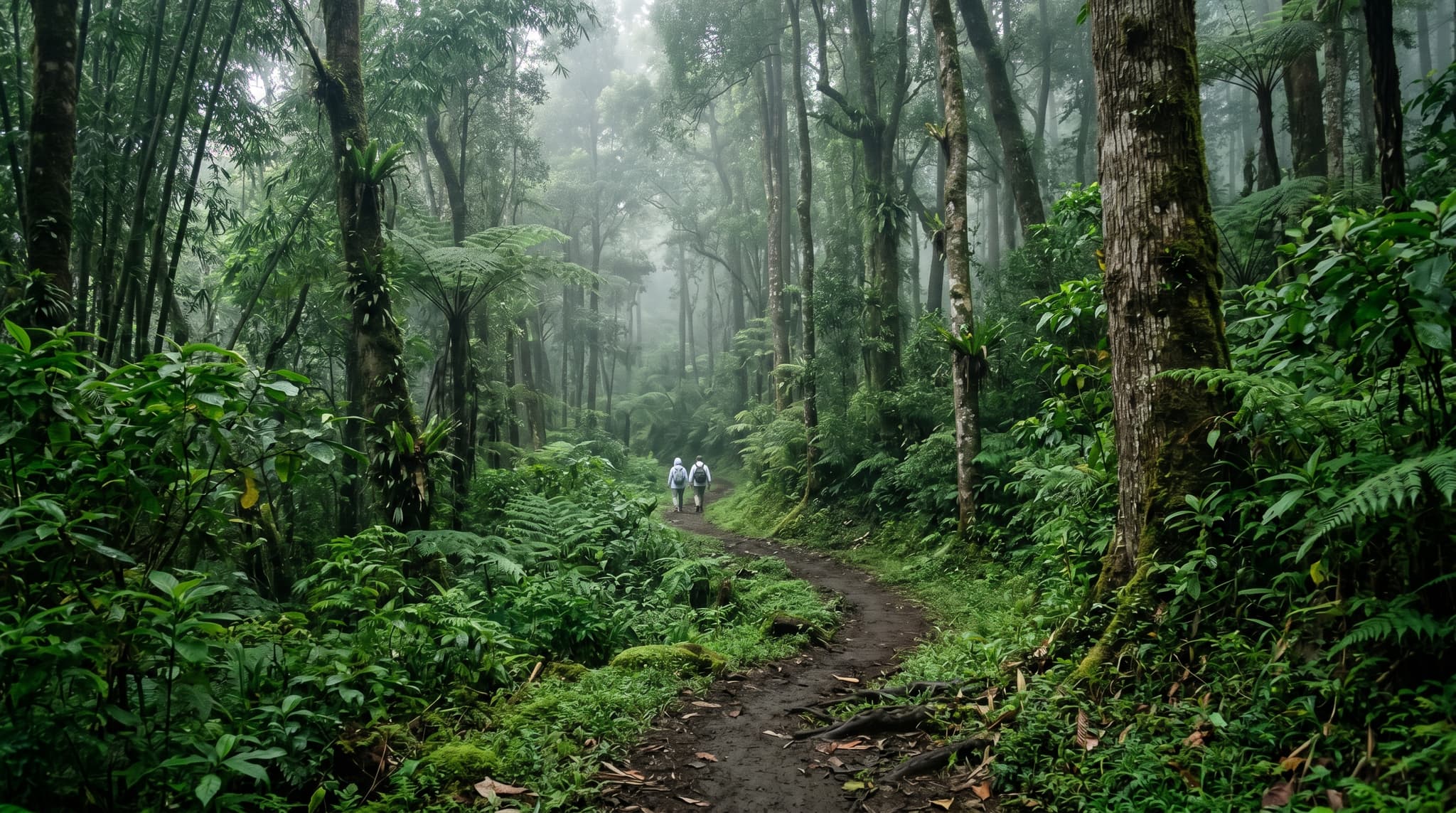
Pengosekan sits just south of central Ubud — a painters' village with working studios, ARMA museum, rice field walks, and a pace that central Ubud lost years ago.
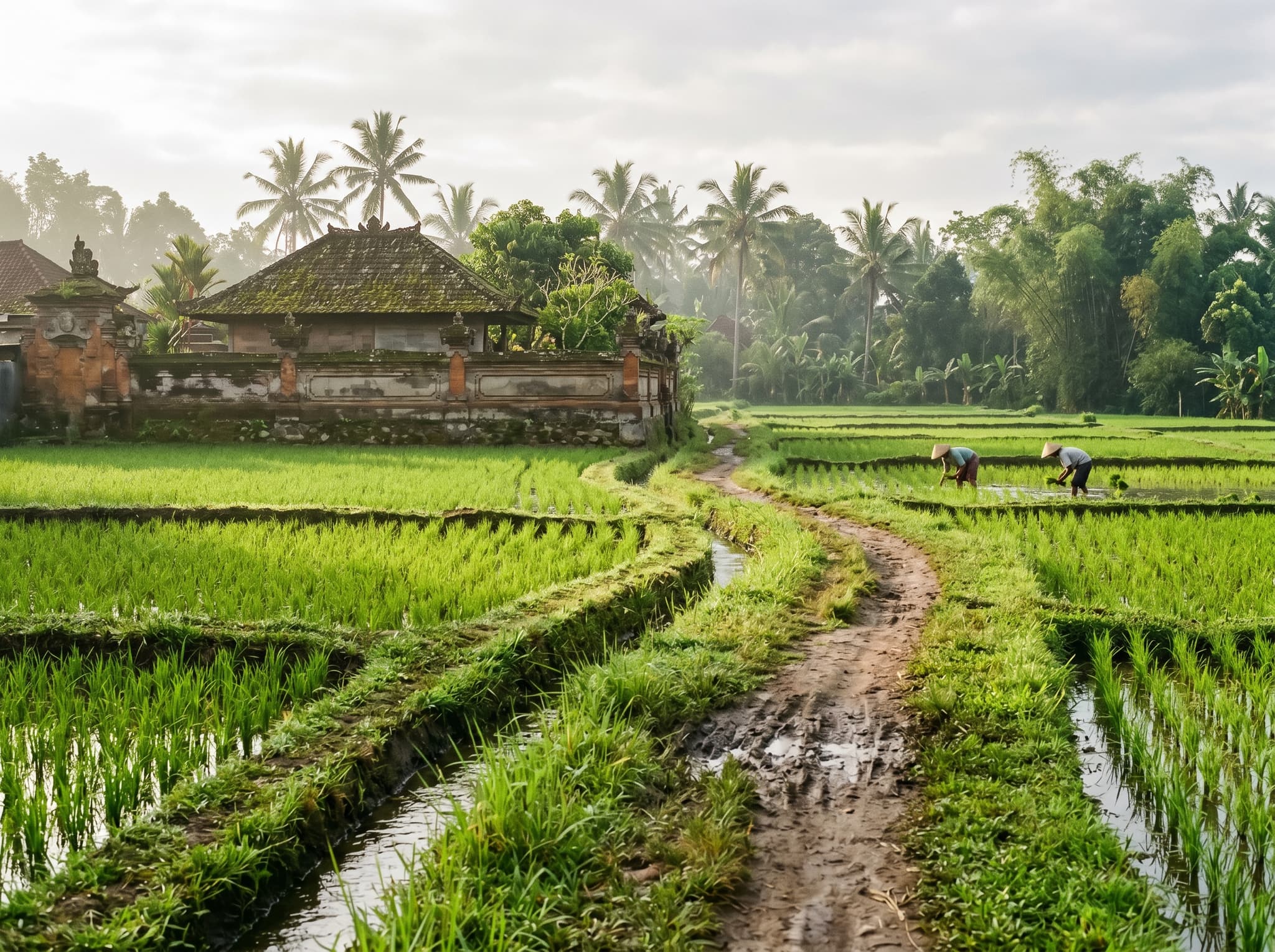
Pengosekan starts where the noise of central Ubud begins to thin. Walk south from the Ubud Royal Palace for about ten minutes — past the market crowds, past the scooter rental shops, past the last of the smoothie bowl cafes — and the road narrows. The sidewalk disappears. Rice paddies open up on your left. You're in a neighborhood that has been producing painters since the 1960s, and that fact is both its defining feature and the thing most visitors drive straight past on their way to somewhere else.
Where Pengosekan Sits
The neighborhood stretches along Jalan Pengosekan, the road that runs south from the ARMA (Agung Rai Museum of Art) intersection toward Nyuhkuning and the Monkey Forest's back entrance. If you're staying in central Ubud, you can walk here. From the main market, head south on Jalan Hanoman until it meets Jalan Pengosekan — the whole walk takes about fifteen minutes at an easy pace. On a scooter, it's five minutes. Grab drivers know the ARMA museum, which sits right at the neighborhood's northern edge and makes the most practical anchor point.
The road itself is the spine of everything. Studios, warungs, a few guesthouses, and the occasional gallery line both sides, interspersed with family compounds where you can hear someone practicing gamelan in the afternoon. It doesn't feel like a destination. It feels like a village that happens to be adjacent to one.
The Painting Tradition
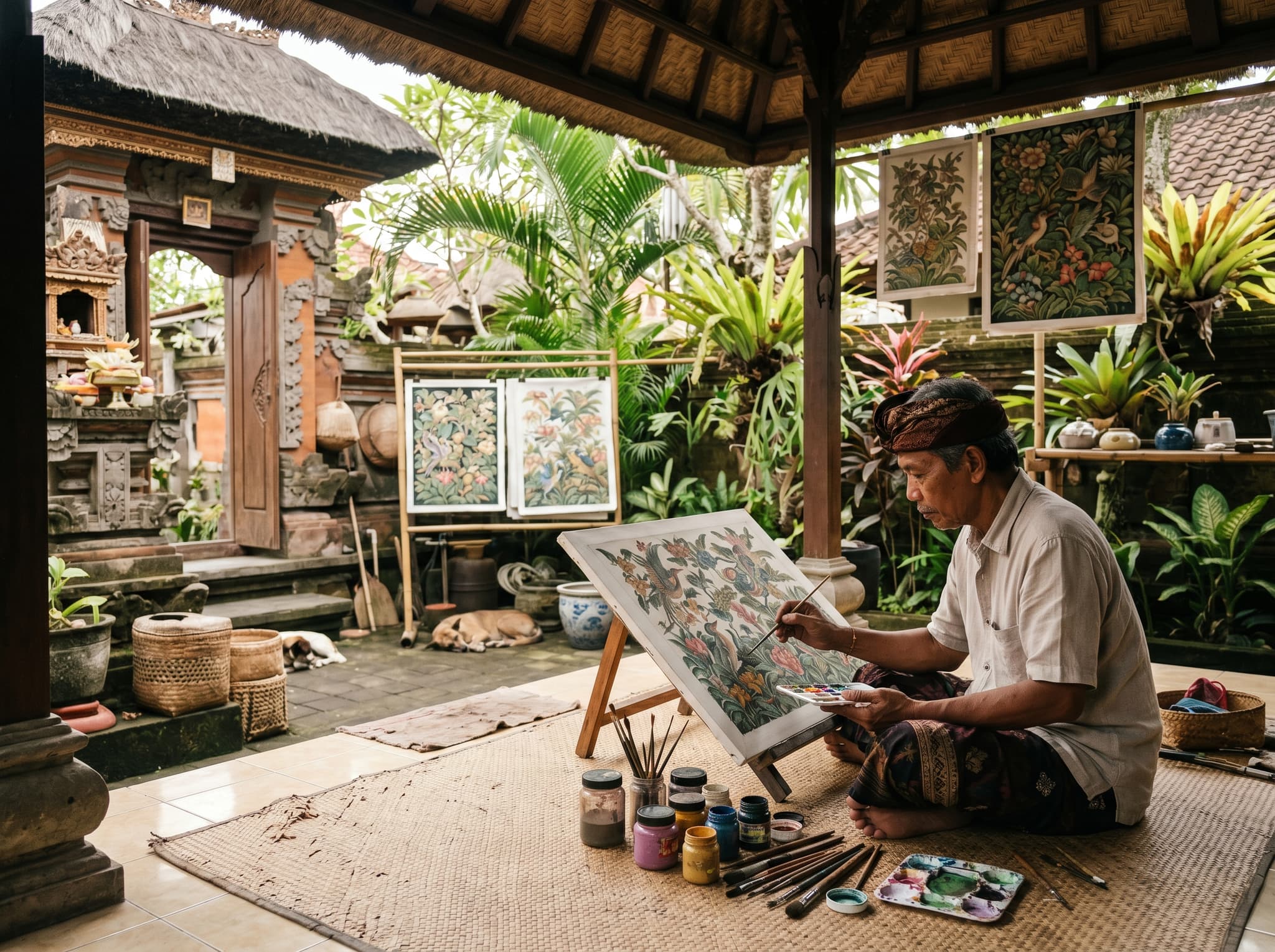
Pengosekan's artistic identity traces to the Pengosekan Community of Artists, a collective that formed in the 1960s under the influence of painters like Dewa Nyoman Batuan. The style that emerged — detailed depictions of birds, insects, and botanical life, rendered with fine brushwork and natural pigments — became known as the Pengosekan school. It was quieter and more naturalistic than the dense narrative paintings of Batuan village or the ink-heavy Ubud style.
What matters for a visitor today is that the tradition didn't die. It just got less visible. Several family compounds along Jalan Pengosekan still have working painters. You won't always see signs. Sometimes it's a canvas drying in a courtyard, or a small handwritten board near a gate. The protocol is straightforward: if a studio looks open, you can ask to look. Most painters are happy to show their work. Purchases happen directly, and prices are significantly lower than what galleries in central Ubud charge for comparable quality.
ARMA: The Anchor
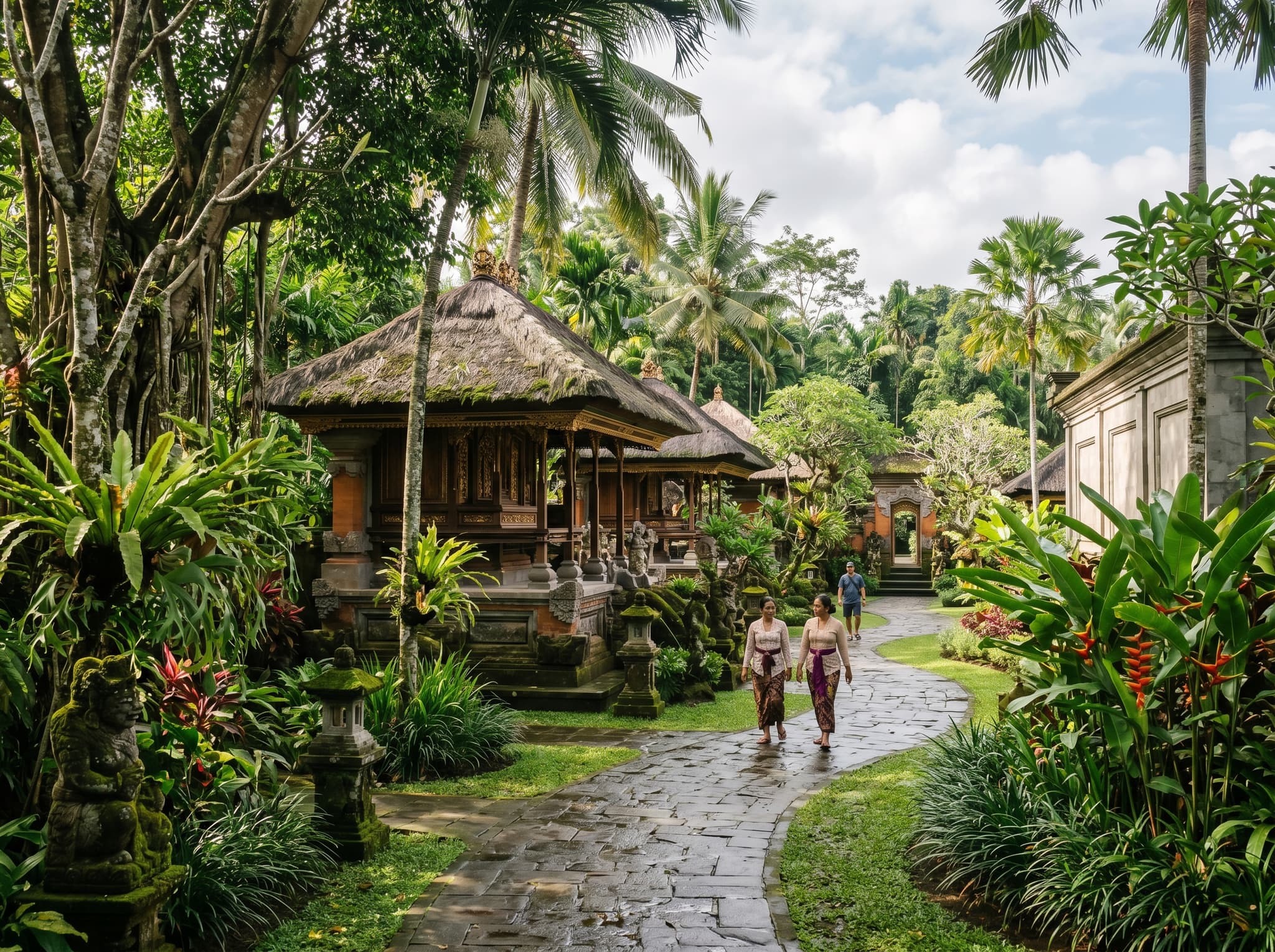
The Agung Rai Museum of Art is the most visible cultural institution in Pengosekan and the reason most visitors encounter the neighborhood at all. The museum sits in landscaped grounds at the north end of Jalan Pengosekan, housing a permanent collection that spans classical Kamasan paintings to modern Balinese and Indonesian work, including pieces by Walter Spies and Arie Smit — the European artists whose presence in mid-twentieth-century Bali reshaped local painting traditions.
ARMA Museum
Location
Jalan Raya Pengosekan, northern end
Hours
Generally 9 AM–5 PM daily
Time needed
1–2 hours
Note
Confirm hours and pricing on arrival — these shift seasonally
The grounds themselves are worth the visit even if you're not deeply interested in painting. There's a small open-air pavilion where cultural performances sometimes take place in the evenings, and the garden paths offer a genuine sense of stillness that central Ubud's museums struggle to match. ARMA doesn't get the foot traffic of the Neka Museum or Ubud Palace, which is part of its appeal.
Beyond the Museum
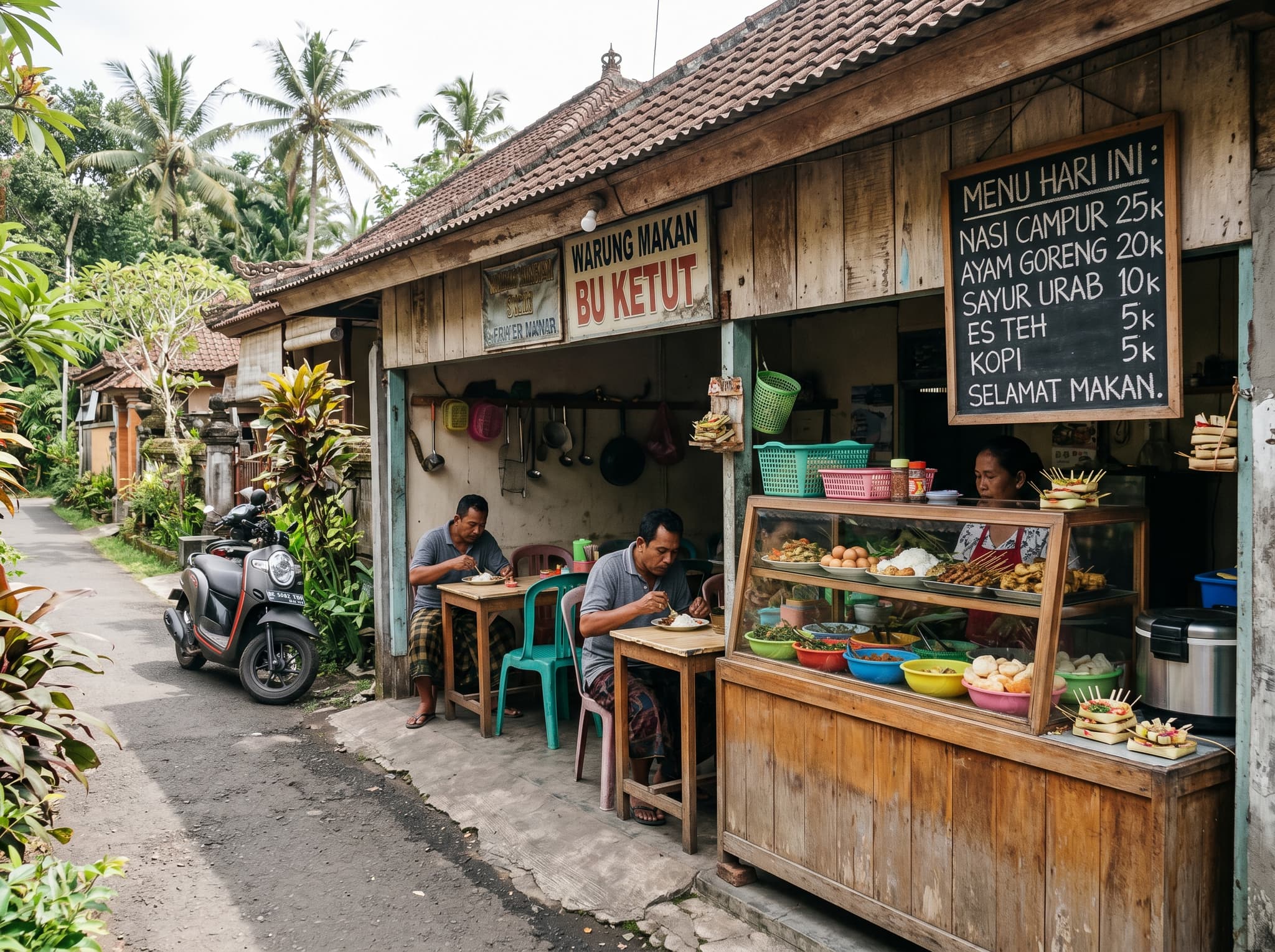
The stretch of Jalan Pengosekan south of ARMA is where the neighborhood reveals itself more slowly. A few things worth noting:
Warungs and cafes. Pengosekan has a handful of small restaurants that cater partly to the yoga crowd — Yellow Flower Cafe and a few others along the main road serve Indonesian and Western food at prices noticeably lower than central Ubud. A nasi campur here runs around IDR 30,000–45,000. The food isn't remarkable, but it's honest, and you eat without the ambient pressure of being in a curated space.
Yoga studios. The Yoga Barn, one of Ubud's most established yoga centers, sits at the Pengosekan end of Jalan Hanoman. Its presence has shaped the neighborhood's recent development more than the painting tradition has — bringing a steady flow of visitors who stay in nearby guesthouses and eat at nearby warungs. Whether this is a good or complicated thing depends on your perspective. It has kept the local economy alive. It has also changed what the local economy looks like.
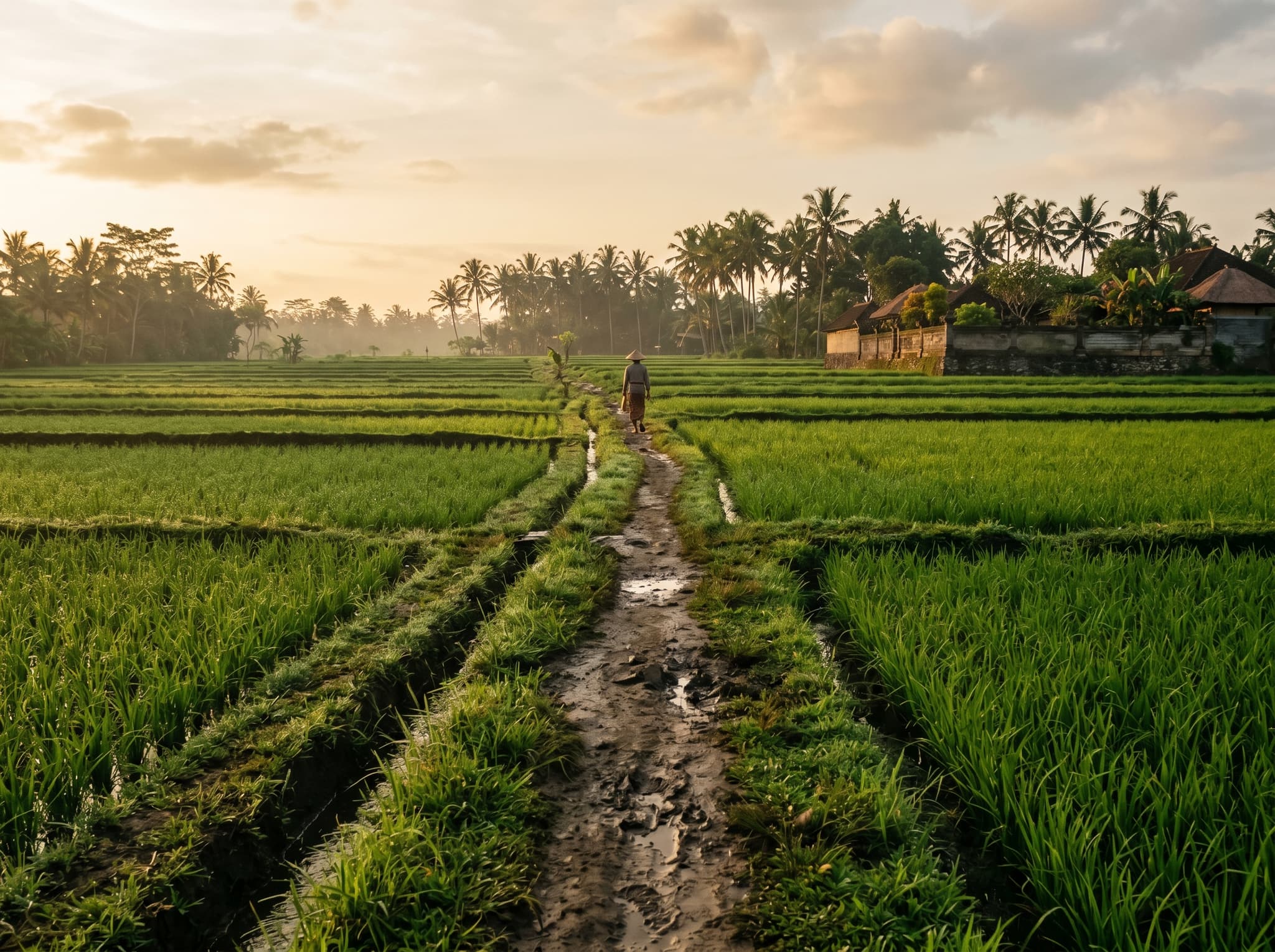
Rice field walks. Paths lead west from Jalan Pengosekan into rice paddies that connect, eventually, to the Campuhan ridge area. These aren't signposted trails — they're irrigation paths between fields. The walking is flat and easy. Early morning is the right time. By midday the heat makes it unpleasant, and by late afternoon the light is beautiful but the mosquitoes arrive with it.
What's Changed, What Hasn't
Pengosekan is not immune to the forces reshaping greater Ubud. Guesthouses have multiplied along the main road. A few villas have gone up in what were rice fields five years ago. The yoga economy has brought smoothie bars and co-working spaces to a neighborhood that had neither a decade ago.
But the compound walls still line the road. The banjar (community hall) still hosts ceremonies that close the street without apology. Painters still work in courtyards that tourists rarely enter. The neighborhood hasn't been preserved — it's just been slower to change than the center, partly because it lacks the foot traffic that drives rapid commercial turnover. Jalan Pengosekan is a road you drive through, not a street you stroll. That's kept things quieter.
How long that lasts is an open question. The pattern in Ubud is consistent: a neighborhood stays quiet, gets mentioned in a few guides, attracts a specific crowd, and then the infrastructure follows the crowd. Pengosekan is somewhere in the middle of that arc — past the beginning, not yet at the end.
Practical Notes
Getting Around Pengosekan
From Ubud center
15-minute walk south via Jalan Hanoman
By scooter
5 minutes; parking easy along Jalan Pengosekan
By Grab/Gojek
Available but drivers may not know smaller studios
On foot within Pengosekan
Everything is along one road — 20 minutes end to end
There's no reason to dedicate an entire day to Pengosekan unless you're specifically interested in buying paintings and want to visit multiple studios. A half-day works well: start at ARMA in the morning, walk south along Jalan Pengosekan, stop at any studios that are open, eat lunch at one of the warungs, and either continue south toward Nyuhkuning or loop back to central Ubud. The neighborhood pairs naturally with the Monkey Forest, whose southern entrance is a short walk away.
The best thing about Pengosekan is that it asks very little of you. There's no itinerary to optimize, no viewpoint to reach before the crowds. You walk a road. You look at paintings if someone invites you in. You eat rice and drink coffee. The village does what it does, and you're welcome to be there while it happens.