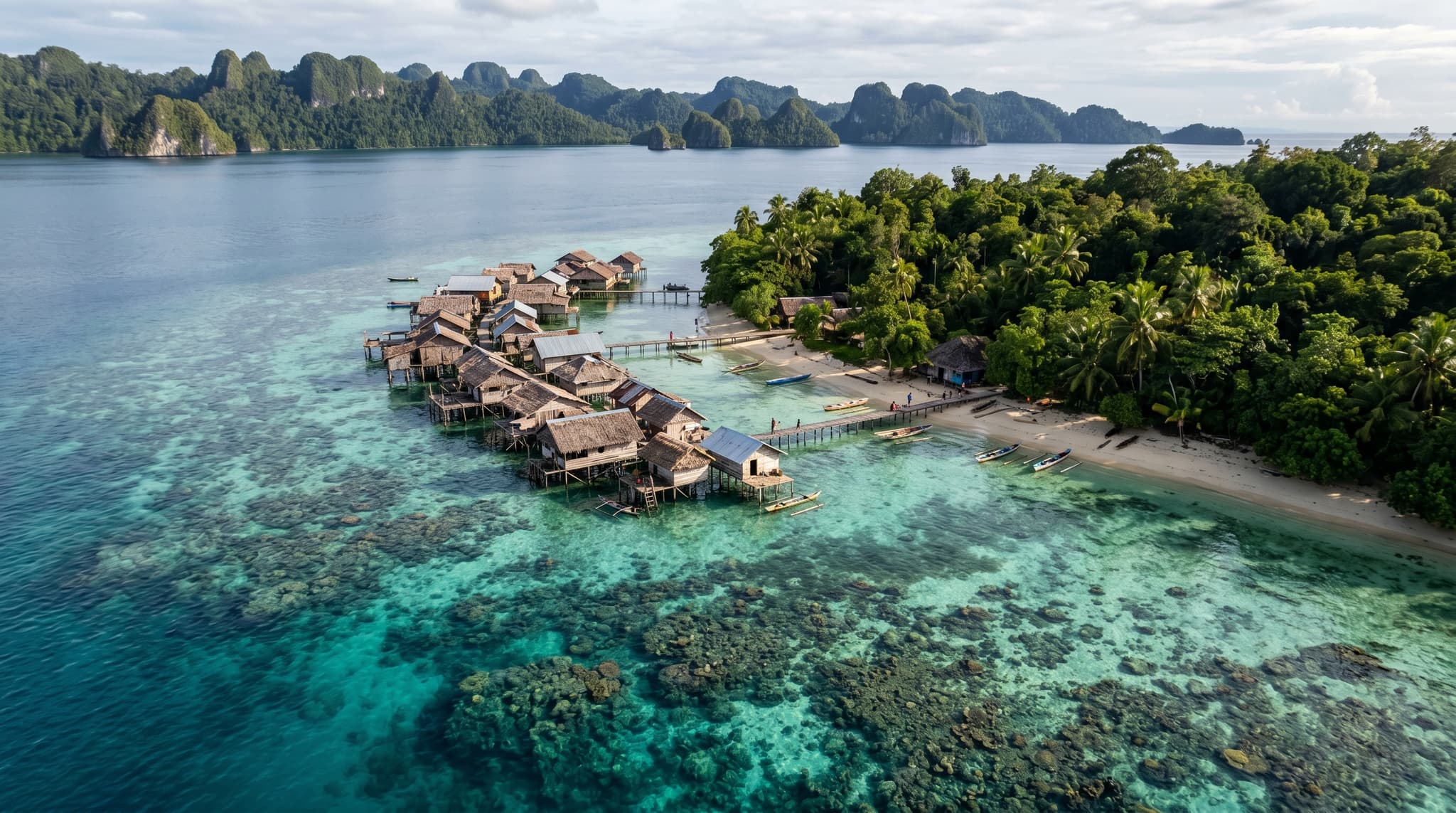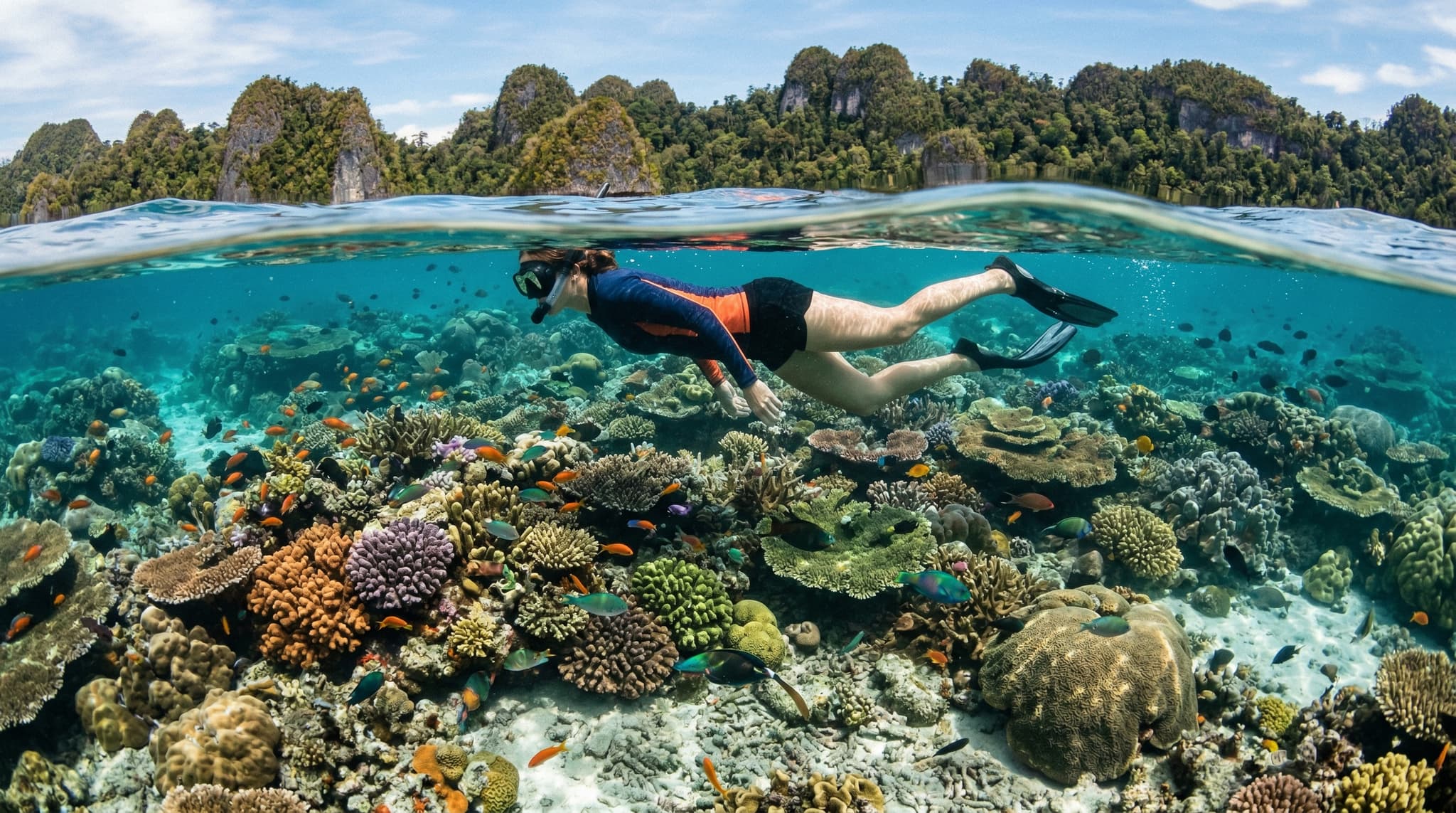
Dayang Island offers some of Raja Ampat's most reliable shore-access snorkeling — turtles, cuttlefish, and pristine coral steps from your bungalow. Here's what to expect.
Dayang Island is one of those Raja Ampat spots that rarely makes the highlight reel — no iconic Pianemo-style viewpoint, no famous dive site name that gets passed around on forums. What it has instead is arguably more valuable: reliable snorkeling directly off the beach, consistent marine life sightings, and the kind of quiet that most Raja Ampat visitors say they came for but rarely find.
The island sits on the western shore of Pulau Dayan, tucked against Batanta's north coast. It's small, secluded, and sees minimal boat traffic. If you're the type of traveler who wants to roll out of a bungalow, walk to the waterline, and be swimming over healthy coral within two minutes — without coordinating a boat trip or sharing a site with fifteen other snorkelers — Dayang delivers that experience more consistently than most places in the archipelago.
What You'll See in the Water

The reef system around Dayang starts shallow — roughly one meter deep at the sandy entry points — and slopes gradually to beyond 10 meters, with dive sites extending to a maximum of about 30 meters. That gentle gradient is what makes the snorkeling here work so well for a range of skill levels. You don't need to free-dive to see anything interesting; the best coral and marine life sits in the 2–5 meter range, well within reach of anyone comfortable floating face-down.
Marine Life at Dayang
Reliable sightings
Sea turtles, cuttlefish, reef fish
Seasonal visitors
Manta rays (Nov–Mar at cleaning stations)
Occasional sightings
Dugongs, dolphins, reef sharks
Visibility (peak)
20–30m (October–April)
Visibility (low season)
10–15m (May–September)
The headline residents are sea turtles and cuttlefish. Turtles are common on the reef slopes — green turtles feeding on seagrass, hawksbills working the coral. They're not guaranteed on every swim, but across a two- or three-day stay during peak season, you'd be unlucky not to encounter several. Cuttlefish are easier to spot than you'd expect; they tend to hover around the sandy patches between coral formations, and once you learn to recognize their shape, you'll start seeing them everywhere.

During November to March, manta rays visit cleaning stations in the broader Batanta area, and schooling fish concentrate around the channels near Dayang. The proximity to deep channels is what makes the marine life here more diverse than you'd expect from such a small island — those channels act as highways, bringing pelagic species close to the reef.
When to Go
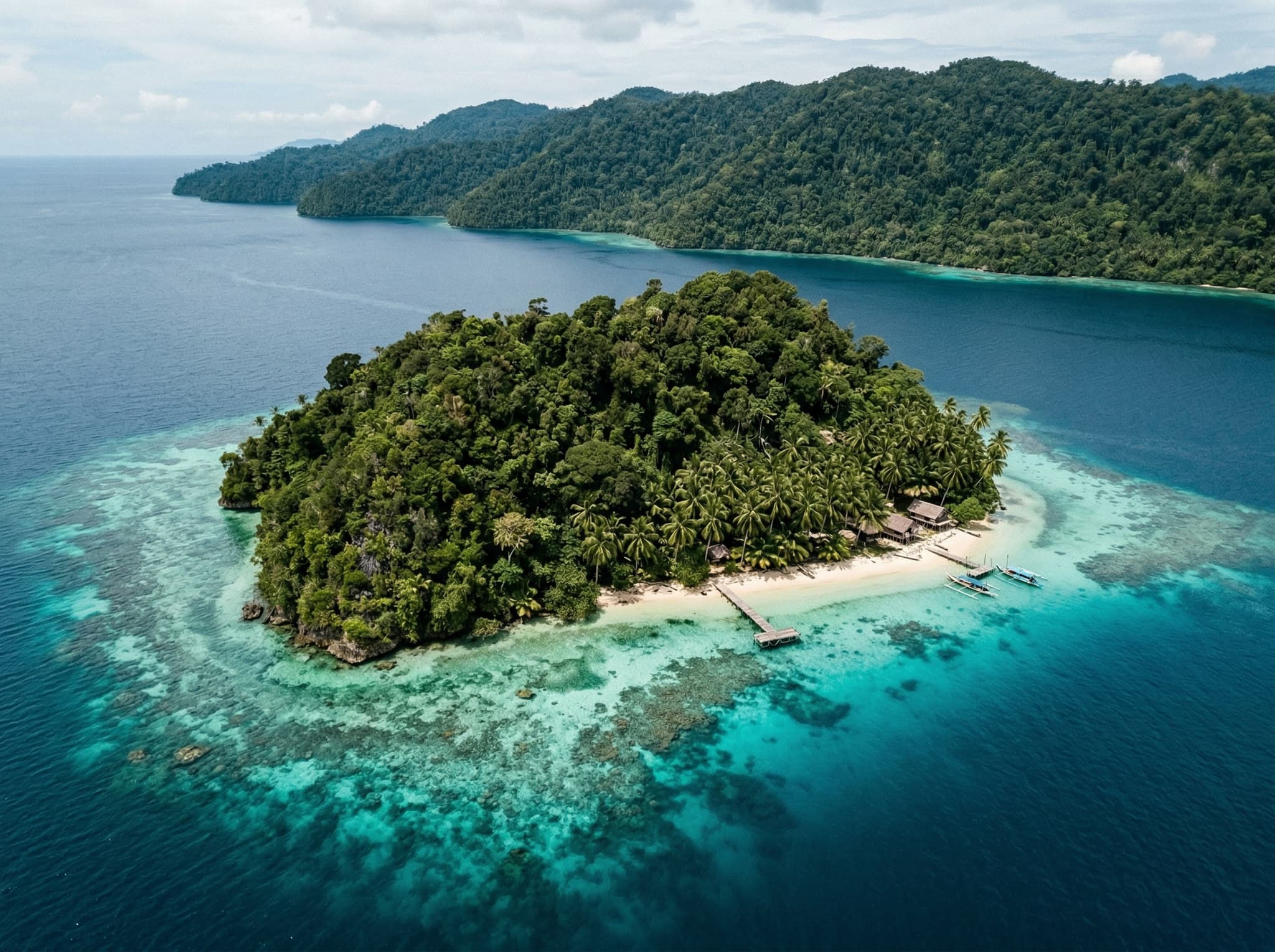
The short answer: November to March for the best conditions across the board. Calm seas, dry weather, visibility pushing 30 meters, and the widest range of marine life. This window works for all skill levels, including first-time snorkelers.
April and October are the shoulder months — fewer visitors, potential discounts on accommodation, and conditions that are still reliably good. If you're flexible on dates and want to avoid the (modest) crowds that peak season brings, these months offer the best trade-off.
May to September is the low season. Seas get rougher, particularly July and August when monsoon winds can suspend diving entirely and make even jungle walks risky. Visibility drops to 10–15 meters. Snorkeling is still possible on sheltered northern sites, but you're gambling on conditions. If you're prone to seasickness or diving is your priority, avoid this window.
Season Comparison
Peak (Nov–Mar)
Best visibility, calmest water, most marine life
Shoulder (Apr, Oct)
Good conditions, fewer visitors, possible discounts
Low (May–Sep)
Rough seas, limited visibility, some sites inaccessible
Where to Stay

Dayang Island has no resorts. This is homestay territory — basic accommodation run by local families, where the emphasis is on reef access and home-cooked meals rather than thread count. Expect no hot water, no air conditioning, and shared bathroom facilities. If that's a dealbreaker, Dayang isn't your island.
Dayan Dive Homestay
The most established option on the island, with six private on-land bungalows (maximum two guests each) and older over-water bungalows. New over-water bungalows were under construction as of late 2025.
Dayan Dive Homestay
Twin share rate
From $38.45/person/night
Single occupancy
From $53.83/person/night
Meals
3 daily meals included (barbecue available)
Rooms
6 on-land bungalows, no ensuite
Amenities
Mosquito nets, hammocks, naturally ventilated (no fan)
The house reef is the main selling point — guests consistently describe it as pristine, with snorkeling accessible directly from the beach. The hosts arrange snorkeling trips to nearby sites and handle boat transfers to and from Waisai or Sorong. The food is plentiful and included in the rate, which makes budgeting straightforward.
Paradise Raja Ampat
Located in the nearby Yensawai area, this beachfront property offers private beach access and a sun terrace. Updated 2026 rates are listed on Booking.com but weren't confirmed in available sources — check directly for current pricing.
Getting There
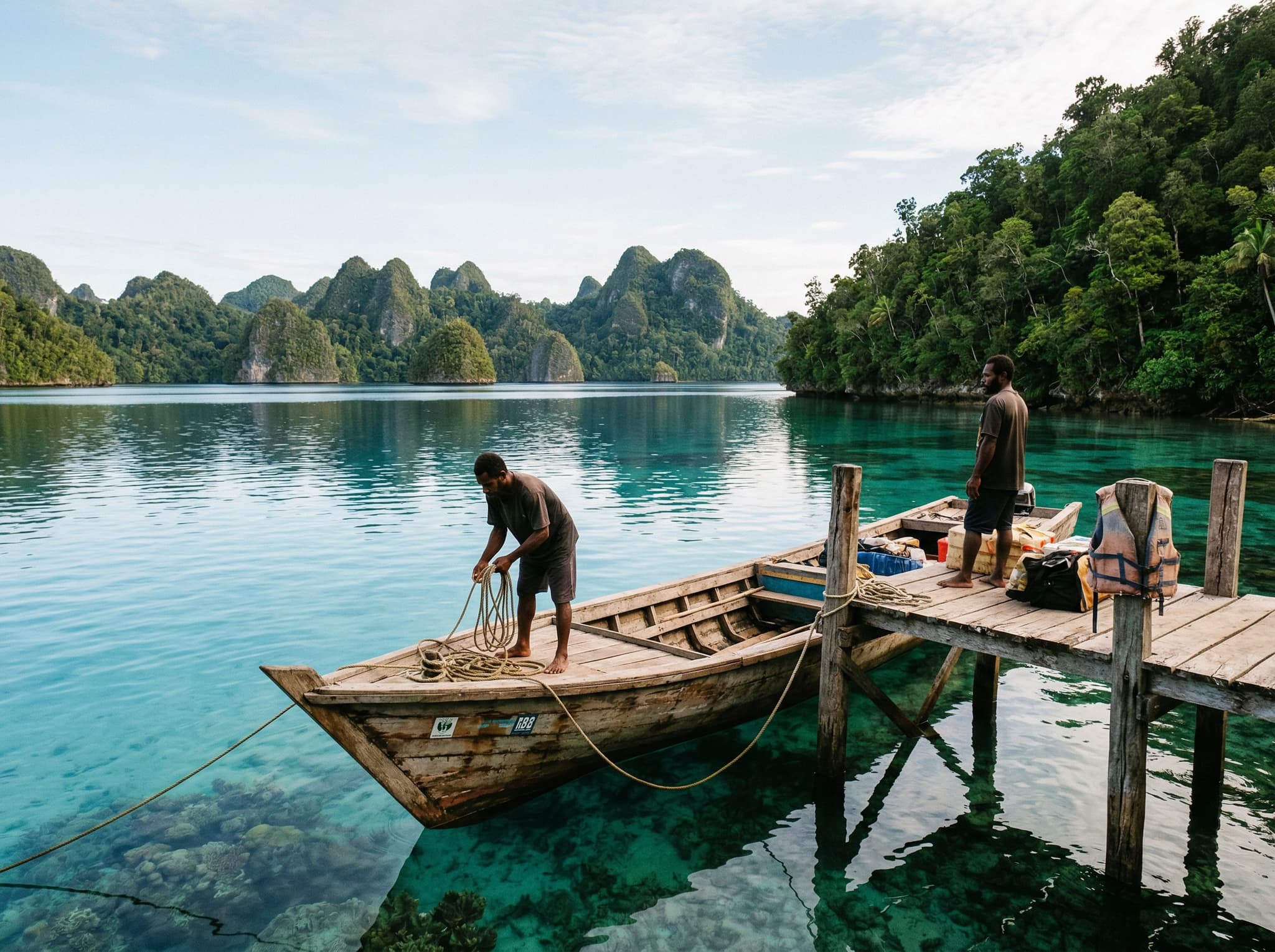
Getting to Dayang requires commitment. There's no airport, no public ferry dock, and no shortcut. Here's the full chain:
Step 1: Fly to Sorong (SOQ). No direct international flights exist. Connect via Jakarta (CGK) on Garuda Indonesia or Batik Air — about 5 hours, daily service. From Bali (DPS), Garuda flies direct three times per week (Thursday, Friday, Sunday, roughly 3 hours). Lion Air connections via Makassar run 7–9 hours total.
Step 2: Sorong to Waisai. Public ferry from Raja Ampat Port takes 2–3 hours, with two departures per day on weekdays (morning and afternoon). Weekend schedules vary — confirm before you go. Private speedboat transfer cuts it to about 2 hours and can be arranged through your homestay or a dive operator.
Step 3: Waisai to Dayang Island. Private longboat or speedboat, 30–60 minutes depending on conditions. Your homestay will arrange this. Operators like Deep Blue Adventures and Papua Diving also handle the full transfer chain.
Total journey time from a major Indonesian city: 1–2 days, factoring in layovers and boat connections. Plan to overnight in Sorong if your flight arrives after the last ferry.
Permits and Fees
Two permits are mandatory for all visitors entering the Raja Ampat Marine Protected Area, including Dayang Island. Enforcement happens through site checks and patrols — don't skip these.
Required Permits — International Visitors
Marine Park Entry Permit (TLPJL)
IDR 700,000 (~$45), valid 12 months
Where to buy TLPJL
Online at kkprajaampat.com or in person in Waisai/Sorong
Visitor Entry Ticket (UPTD)
IDR 300,000–1,000,000 (sources vary)
Where to buy UPTD
Online at sipari-rajaampat.id or Waisai Tourism Office
Indonesian citizens
IDR 425,000 (TLPJL) + IDR 300,000 (UPTD)
Children under 12
Exempt
Who Dayang Island Is For
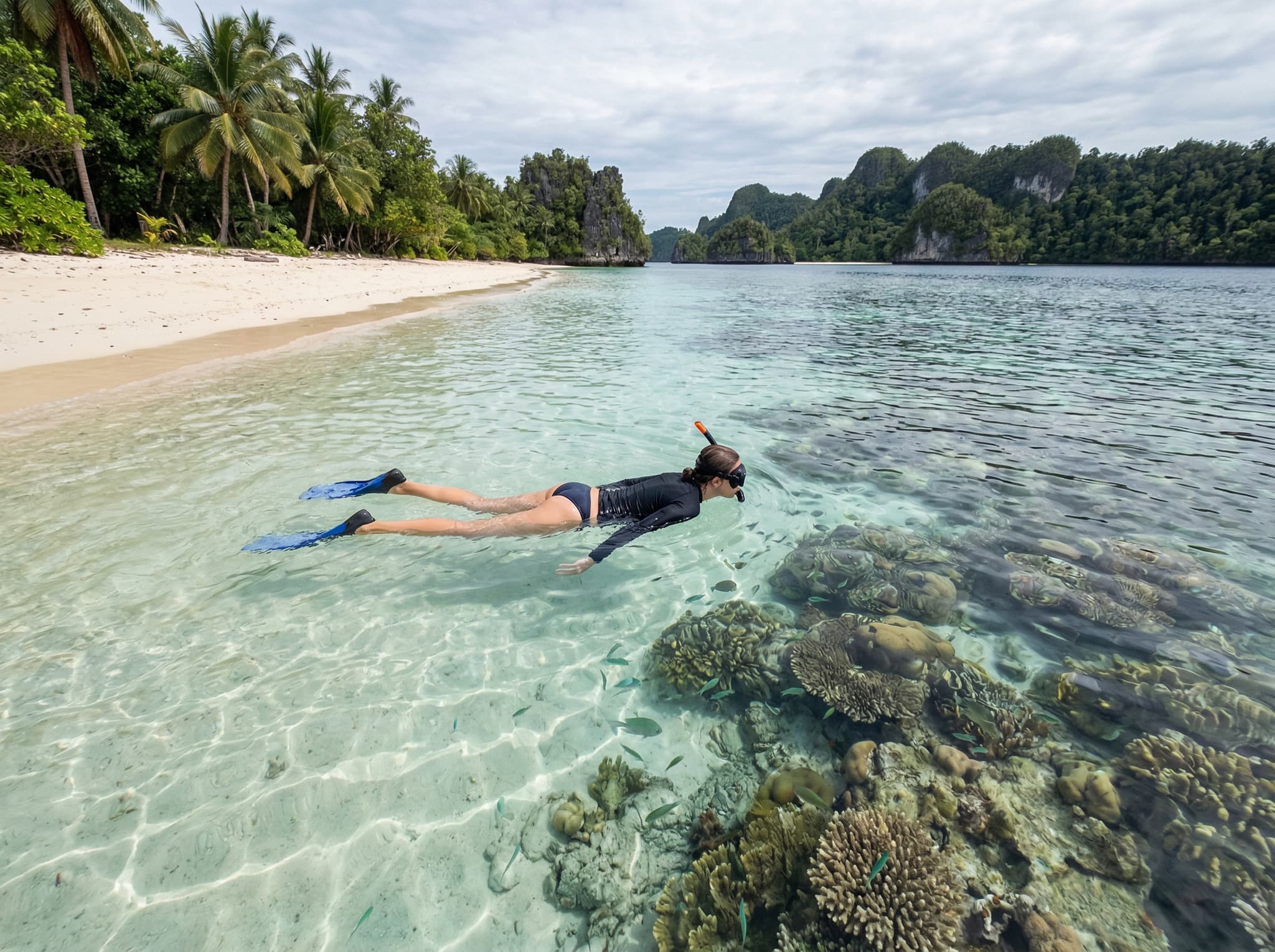
Dayang works best for travelers who want serious snorkeling without serious logistics once they arrive. The reef is right there, the marine life is consistent, and the pace is genuinely slow — not resort-slow where you're choosing between three pools, but small-island-slow where the day's main decision is whether to snorkel before or after lunch.
It's not for travelers who need reliable Wi-Fi, air conditioning, or a range of dining options. It's not a base for island-hopping across Raja Ampat — the location is too remote for that. And if your primary interest is diving rather than snorkeling, the deeper sites around Batanta are better accessed from a liveaboard or a larger dive resort.
But if you want to wake up, walk to the water, and spend an hour floating over coral that most of the world will never see — with turtles drifting past and cuttlefish hovering in the shallows — Dayang delivers that experience with a reliability that justifies the effort of getting there.