Balangan Beach Bali: What to Actually Expect (And Whether It's Worth the Drive)
Balangan Beach delivers a legit reef break, cheap warungs, and clifftop sunsets — but development is closing in. Here's the honest breakdown.
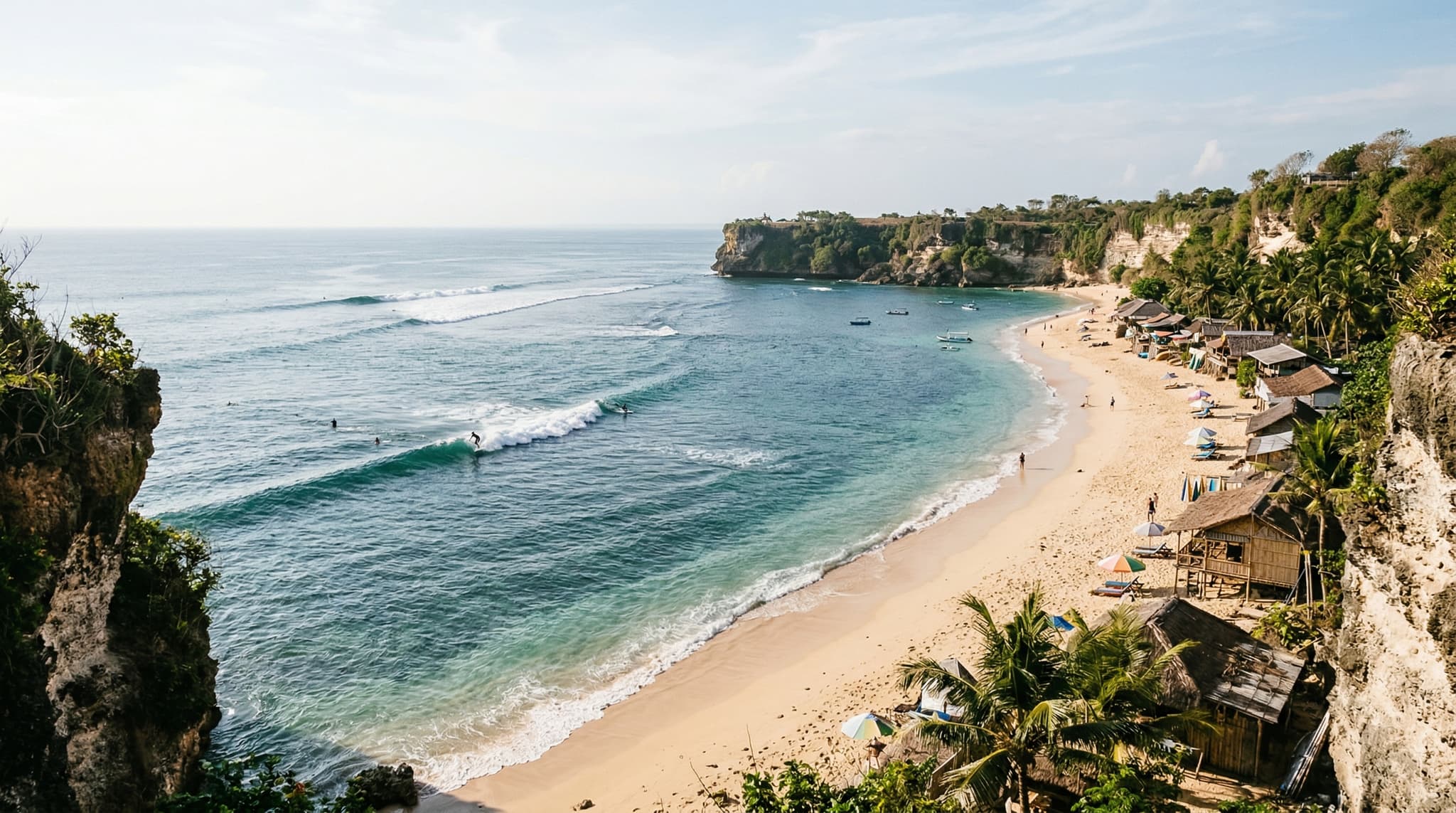
Balangan Beach is one of those Bali spots that people describe as "hidden" despite it appearing on every surf blog and Instagram grid from the last five years. It's not hidden. But it is genuinely good — a crescent of sand backed by limestone cliffs on the Bukit Peninsula, with a left-hand reef break that draws intermediate surfers and a row of warungs that still feel more local than curated. The question isn't whether Balangan is beautiful. It is. The question is whether it's worth the drive from wherever you're staying, and what you'll actually find when you get there.
Getting There
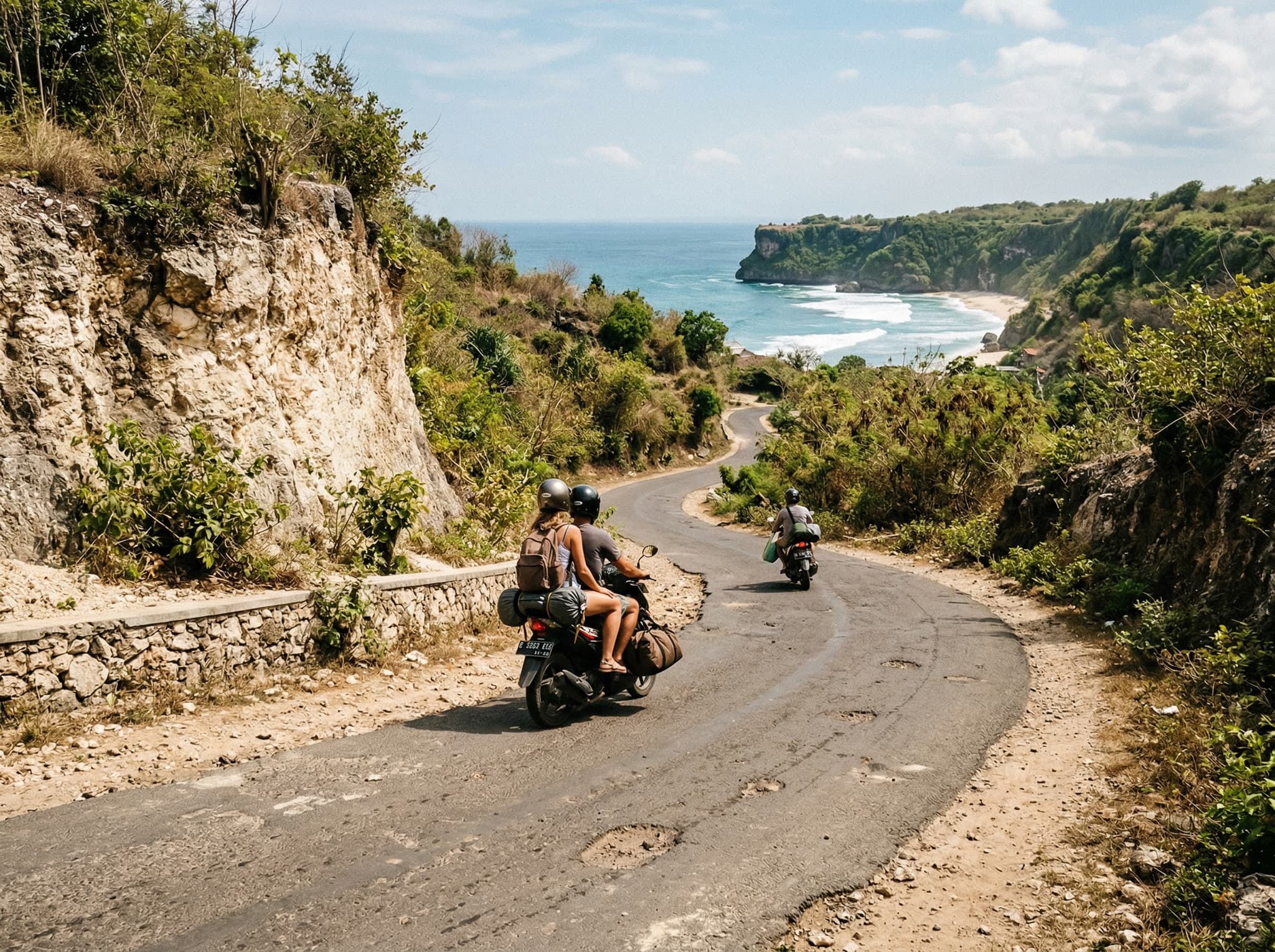
Balangan sits on the southern Bukit Peninsula, roughly between Dreamland Beach to the west and Bingin to the east. If you're coming from Seminyak or Canggu — where most visitors base themselves — expect 60 to 75 minutes by scooter or car, longer during afternoon traffic through Kuta.
Transport Options
Scooter rental
IDR 50,000–100,000/day
Grab/Gojek from Seminyak
IDR 80,000–150,000 one way
Private driver (full day)
IDR 500,000+ for 8–10 hours
From airport
IDR 60,000–200,000 by taxi
There's no public transport to Balangan. None. No bus, no bemo, nothing. A scooter is the most practical option if you're comfortable riding one — the road down to the clifftop parking area is narrow and a bit rough, but manageable. Ride-hailing apps (Grab, Gojek, Maxim) work for getting there, though finding a return ride from the beach can take patience. Book your return in advance or befriend a local driver.
Search "Pantai Balangan" or "Balangan Cliff Viewpoint" on Google Maps. Following signs near Balangan Paradise Hostel leads to the clifftop parking lot. From there, it's a short but steep walk down stairs to the sand.
The Beach Itself
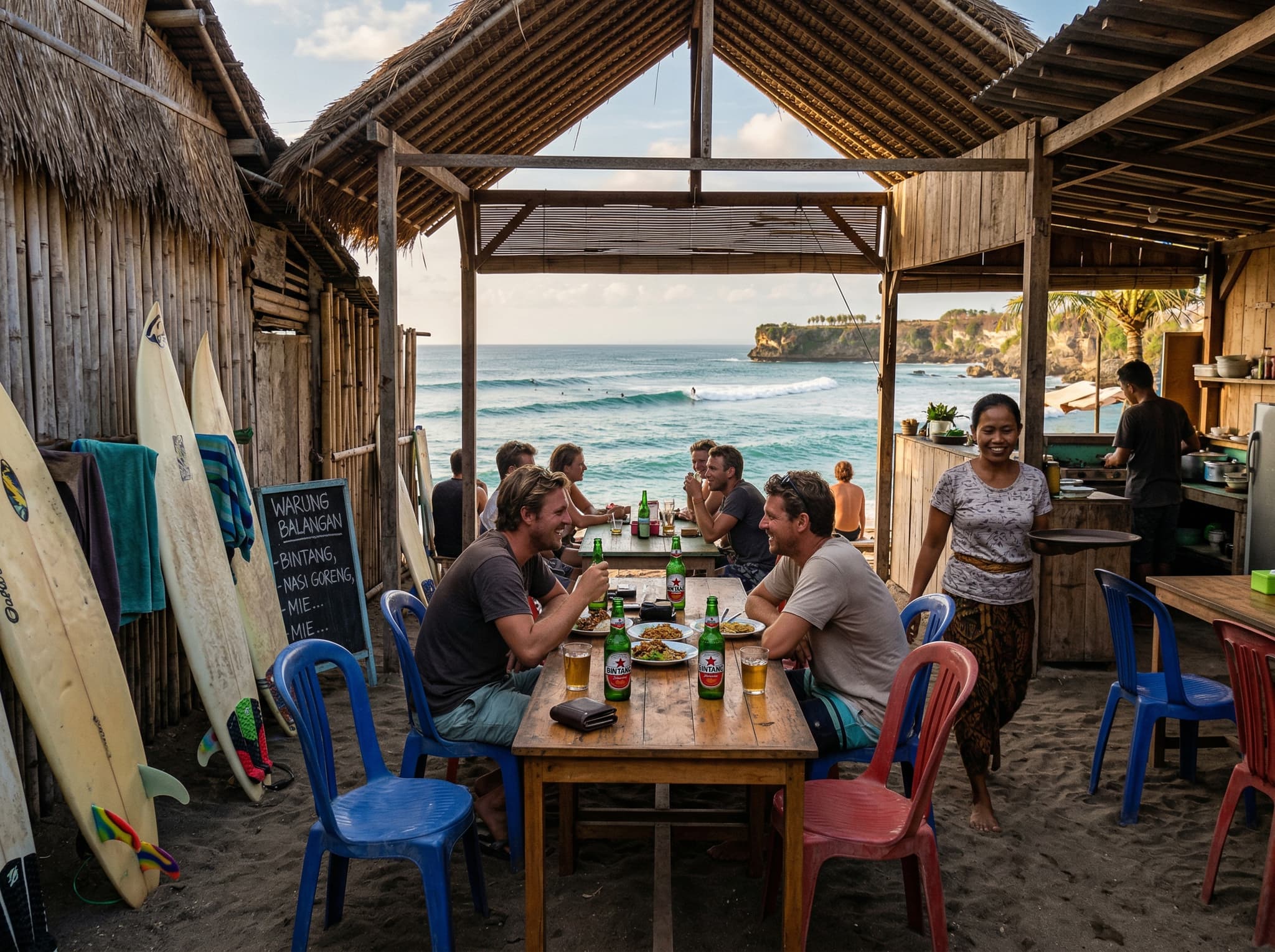
Balangan is compact — maybe 500 meters of sand framed by cliffs on both sides. The sand is golden, the water is turquoise in that way that makes you suspicious your phone is auto-enhancing, and at low tide the reef shelf creates shallow pools worth exploring. It's photogenic. That part of the reputation is earned.
What makes it different from, say, Dreamland or Padang Padang is the pace. There's no beach club with a DJ. No entrance fee. The vibe is warungs with plastic chairs, surfboards leaning against bamboo walls, and cold Bintangs for IDR 30,000–50,000. Sunbed rentals run around IDR 50,000 per day, usually with an umbrella included.
The warung scene is the social infrastructure here. Several line the beachfront, serving nasi goreng, fresh coconut water, and grilled fish at standard Bali beach prices. Froggy's Warung is the one most travelers end up at for sunset drinks — it's not a secret, but the view earns the popularity. Most warungs will watch your bag while you surf if you buy something, which is a fair trade.
Facilities are basic. Toilets are available at warungs (buy a drink, use the bathroom — that's the arrangement across most Bali beaches). Don't expect changing rooms or showers at every spot.
Surfing at Balangan
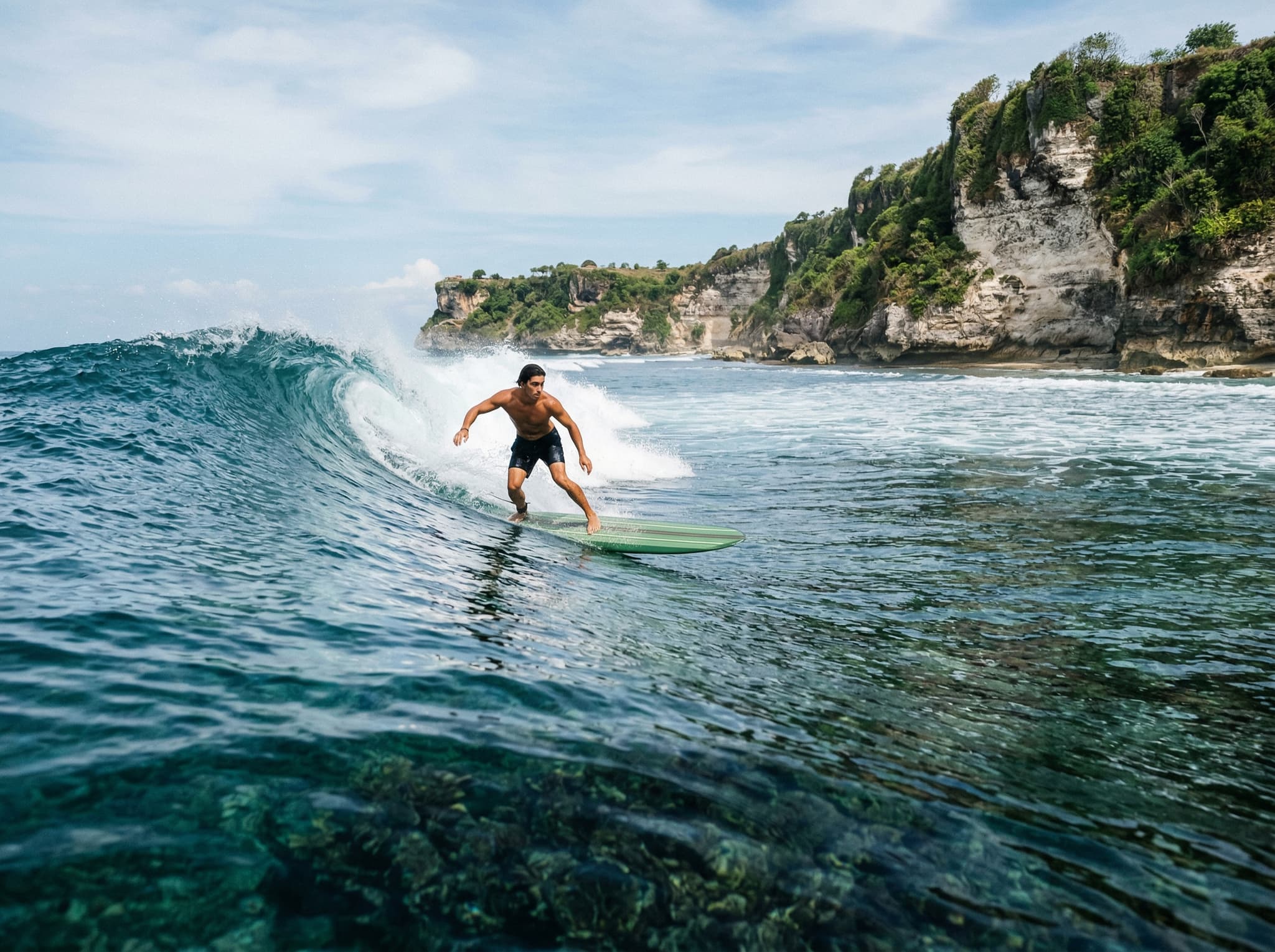
This is the main draw, and it delivers. Balangan produces a consistent left-hand reef break that can run up to 300 meters on a good day. During dry season (April through October), southwest swells combine with southeast offshore winds to create clean, well-formed waves. On big days, swells reach overhead and beyond — 6 to 8 feet is common, with occasional 16-foot faces that are strictly expert territory.
Surf Conditions
Wave direction
Left-hand reef break
Best swell
SW/SSW, 3–8 ft
Optimal wind
SE (offshore, dry season)
Ride length
Up to 300m on perfect days
Hazards
Sharp coral reef, shallow at low tide
Here's the important part: tide matters more than swell size at Balangan. At low tide, the reef gets dangerously shallow — sharp coral, hold-downs, and short-tempered locals who know the lineup. Intermediate surfers should stick to mid-to-high tide when the water covers the reef and the wave is more forgiving. The fun zone for most people is 2 to 6 feet at mid tide. Experienced surfers chase the low-tide peaks for steeper takeoffs and longer rides, but reef booties and confidence are non-negotiable.
The bay's position offers some protection from westerly winds during wet season (November–March), making Balangan surfable year-round — just less consistent and more onshore in the afternoons.
What's Changing
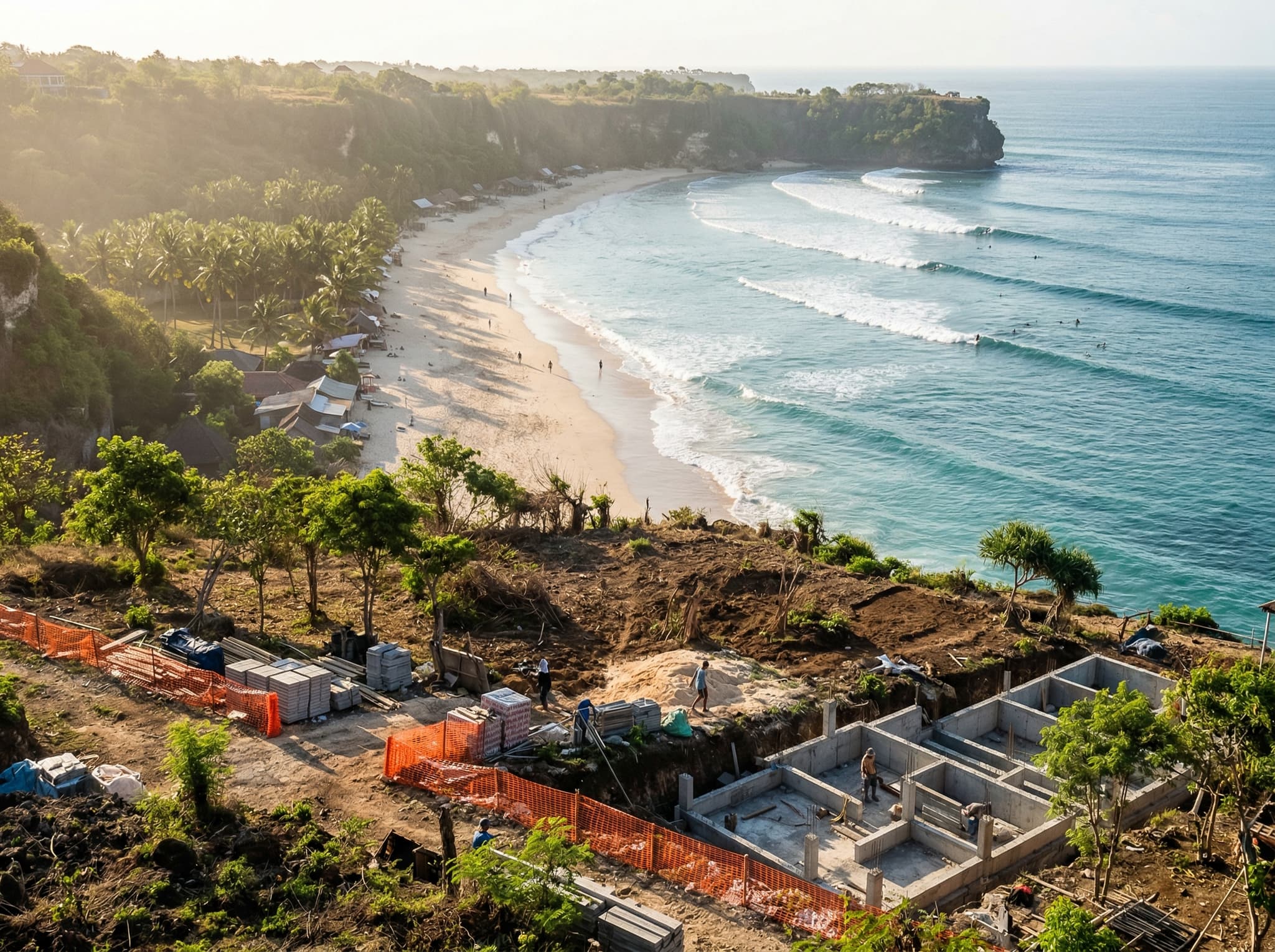
Balangan is in transition, and it's worth being honest about that. As investment shifts south from saturated areas like Canggu, the Bukit Peninsula is attracting villa complexes and luxury developments. Hills adjacent to the beach — including near the Renaissance Hotel — have been cleared of vegetation for construction. Bulldozers are visible from the clifftop.
In late 2025, authorities issued formal warnings to 20 businesses at Balangan for zoning violations under a new spatial plan, part of the same enforcement wave that led to demolitions at nearby Bingin. No structures at Balangan had been demolished as of late 2025, but the regulatory environment is shifting. Some beachfront warungs may look different by the time you visit.
The situation at Balangan is evolving. Government enforcement on coastal zoning is ongoing across the Bukit Peninsula. Verify current conditions before planning a trip — specific warungs or access points mentioned here may have changed.
Is It Worth It?
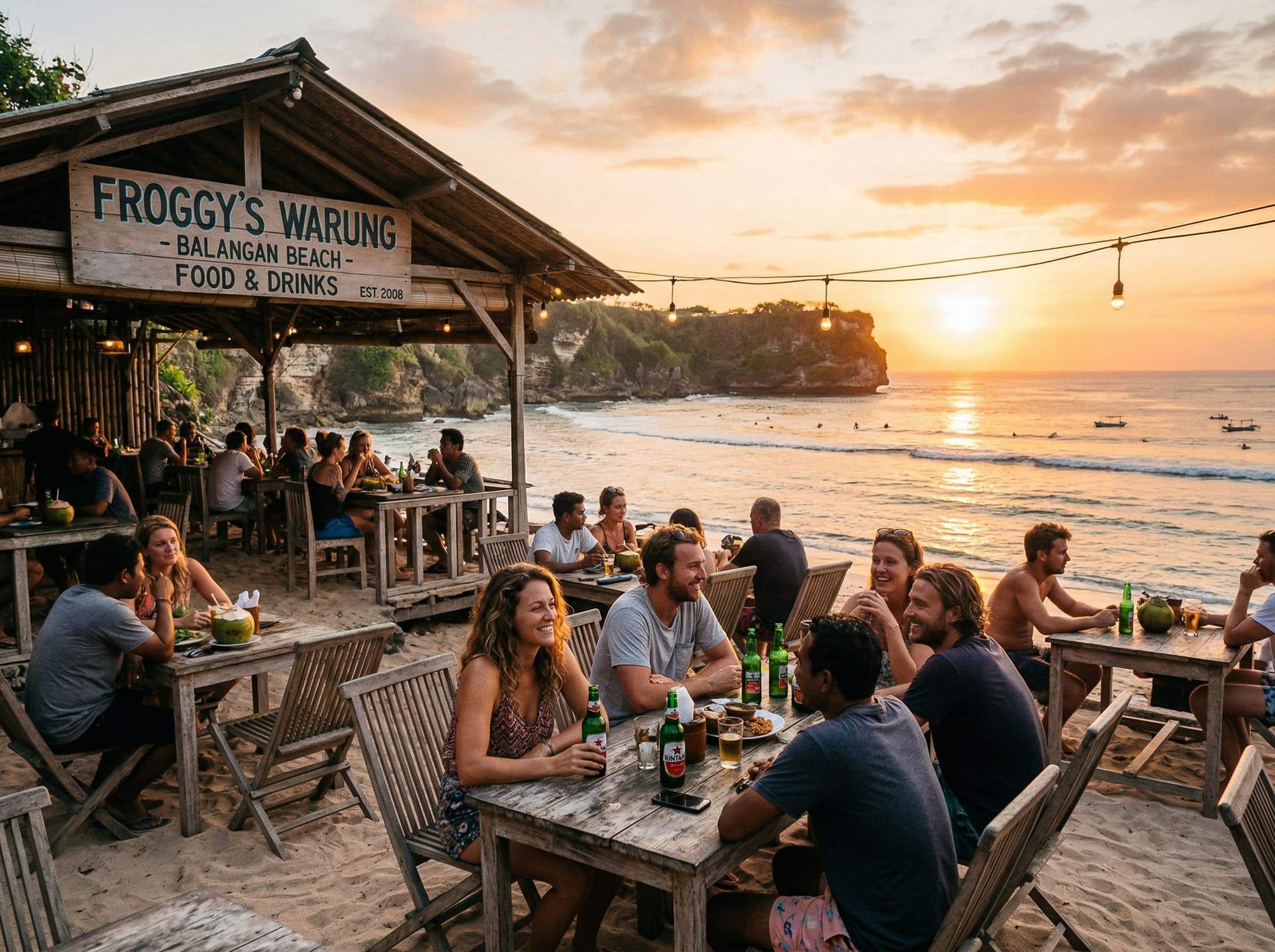
If you're staying in the Bukit area — Uluwatu, Bingin, Padang Padang — Balangan is an easy add and absolutely worth a half day. The surf is legitimate, the warungs are cheap and unpretentious, and the clifftop sunset view rivals anything on the peninsula.
If you're coming from Seminyak or Canggu, the 75-minute drive each way makes it a commitment. For surfers chasing that left-hand reef, it's justified. For beach-goers who mainly want sand and a drink, the Bukit has closer options that deliver a similar feel — Bingin is more compact and walkable, Padang Padang is more dramatic.
Balangan's best quality is also its most fragile one: it still feels like a place where the beach is the point, not the backdrop to a branded experience. How long that lasts is an open question. Go while the warungs still outnumber the villas.